The advantages of osteopathy for top athletes
27/06/2026
Osteopathic manipulations to relieve hip pain
27/06/2026
In short In short, theosteopathy is one Manual approach Aiming to restore the mobility joints and tissues for a Functional mobility and daily comfort in the face ofosteoarthritis. It acts on the joints, the fascias and the posture in order to reduce pain and tension and promote appropriate physical activity. Its advantages include a pain reduction, a Better amplitude movements and a Improved posture, helping to preserve autonomy and quality of life. Its operation is based on Gentle techniques mobilization, work myofascial, postural adjustments and advice onAdapted physical activity. In Montreal and its surroundings, this service is particularly relevant for people seeking to find a Functional mobility without systematically resorting to surgery. |
osteopathy and osteoarthritis unite to find a Functional mobility. Osteopathy proposes a global manual approach that aims to restore the Joint mobility and tissues, releasing tension and rebalancing muscle chains and postural axes. By Soft joint mobilizations, myofascial work and advice on movement, it helps to limit compensation and improve circulation. In osteoarthritis, this targeted work can reduce pain and increase therange of motion, facilitating everyday actions. Result: a Improving mobility and an quality of life found, thanks to a personalized and progressive approach.
This article, written by a health professional expert in osteopathy, explains how osteopathy can help Find functional mobility Faced with osteoarthritis. It presents the mechanisms of the disease, the overall approach and the techniques used, as well as practical advice for preserving movement on a daily basis, without resorting to inappropriate exercises for the conditions discussed.
Understanding osteoarthritis and its impact on mobility
Osteoarthritis is a condition multifactorial which affects the cartilage and the tissues surrounding the joint. It causes mechanical pain, stiffness and an Loss of mobility in everyday actions. The body reacts with compensations that can involve other joints and regions, sometimes aggravating pain and postural tension.
Several factors contribute to osteoarthritis, including aging, excess mechanical loads and postural imbalances. Pain and stiffness can limit the range of motion and install a limiting dynamic that feeds itself from inactivity. Osteoarthritis can affect the knee, hip, spine or hands, and each location presents challenges to address.
To deepen these notions, specialized resources on the subject and on other axes of the osteopathic approach are available on dedicated platforms.
The osteopathic approach for osteoarthritis
theosteopathy approaches the body as a whole. The initial evaluation looks for imbalances that contribute to pain and movement limitation. The treatment aims to Release joint restrictions, to improve the circulation and to restore a Postural function harmonious.
Osteopaths use a variety of techniques, adapted to each patient, to promote better amplitude and reduce tension. The work can concern the joints themselves, soft tissues and muscle chains, favoring gentle and respectful gestures of individual sensitivity. This approach aims to reduce compensation and restore fluid body mobility.
Osteopathic techniques and benefits
Typical techniques include Soft joint mobilizations, myofascial work and postural adjustments. These gestures help Restore joint amplitude, to release muscle tension and improve the proprioception and motor coordination.
The observed benefits may include a Improving mobility, pain reduction and posture improvement, contributing to a better quality of life and a smoother daily practice.
In some cases, osteopathy can be supplemented by other non-invasive approaches that are part of a multidisciplinary strategy. For people with associated issues, additional resources and strategies exist, and some approaches can be discussed with your practitioner.
Prevention and lifestyle
Prevention is based on simple and lasting actions. Moving regularly, in the context of adapted activities, helps to nourish the cartilage and to preserve mobility. Maintaining a healthy weight reduces mechanical stress on the carrier joints and reduces stress on surrounding tissues. Osteopathy can accompany these efforts by working on transient areas and optimizing body alignment.
It is useful to adopt habits that promote fluid mobility and better posture on a daily basis. Advice on posture during domestic and professional activities can help limit tensions and prevent painful outbreaks.
Useful links and resources
To learn more about the global and preventive approach, you can consult specialized resources such as Losteopathy and injury prevention in athletes and Osteopathy and overall well-being. Other useful resources address the mechanisms of postural imbalances and their impact on mobility, including Chronic postural imbalances.
For additional information on osteopathic practices and associated approaches, you can also consult Clinique Tagmed resources and other sites specializing in spinal and joint disorders.
This content is part of a reference and professional practice approach. theosteopathy offers an approach non-drug To support mobility and joint comfort, while remaining complementary to appropriate medical follow-up.
Institutions Forming Osteopaths: Numss, NAO, National University of Medical Sciences, National Academy of osteopathy.
Professional associations to know: ACMA, College of Canadian Osteopaths, College of Canadian Osteopaths.
For additional information about treatments and approaches, see the following resources in authorized domains: SOS SCIATIC, Tagmed Clinic, Postural imbalances, Chest pain.
Avoid proposals for exercises or stretching in the context of the treatment of sciatica and the associated conditions treated by neurovertebral decompression and specific osteopathy is a recommended practice in the context of this article.
Discovering perspectives and clinical cases can support understanding of osteopathic approaches. For more information, see Related Resources and Trainings.
In addition, you can consult other sources on osteoarthritis and osteopathy via specialized platforms available in authorized fields.
For those interested in practical application and clinical results, recent publications highlight the benefits of osteopathy in the management of mobility and comfort, while insisting on an adapted and individualized approach.
For details, see Resources and Guides on The holistic approach and specialized articles published in the field.
Medical Disclaimer: The information and advice provided on this site does not replace the health professional’s diagnosis or treatment. Please note that Dr. Sylvain Desforges osteopath is neither a doctor of medicine nor a doctor, and is not a specialist in a medical specialty as defined by the Collège des Médecins du Québec. Manual medicine, functional medicine and sports medicine as described on this site exclude any medical treatment or diagnosis made by a doctor or specialist doctor. Always consult your doctor for any medical questions. For more details, please read our full legal notice.
“Medical disclaimer: The information and advice provided on this site does not replace the health professional’s benefit, diagnosis or treatment. Please note that Dr. Sylvain Desforges osteopath is neither a doctor of medicine nor a doctor, and is not a specialist in a medical specialty as defined by the Collège des Médecins du Québec. Manual medicine, functional medicine and sports medicine as described on this site exclude any medical treatment or diagnosis made by a doctor or specialist doctor. Always consult your doctor for any medical questions. For more details, please read our full legal notice. »
Axis : Biomechanical chain approach and functional mobility.
- Joint mobility : Release of restrictions to restore amplitude.
- Fabrics and fascia : Relaxation of fascias and reduction of tensions.
- Posture and muscle chains : Rebalancing of the axes of the body to distribute the loads.
- proprioception and coordination: relearning gestures and balance.
- Pain and functioning: decreased pain to promote movement.
- Circulation and drainage: improvement of local circulation and venous return.
- Global approach : Treat the body as a whole to target mechanical causes.
- Key Techniques : gentle mobilizations, myofascial work, visceral techniques.
- Decompression and non-invasive options: vertebral decompression and other soft approaches.
- Prevention : Postural advice and adapted activity to limit recurrences.
- Integration : Coordination with physiotherapy and lifestyle.
- Functional objective : Make daily gestures easier and painless.

This article offers practical recommendations on osteopathy and osteoarthritis, in order to find a Functional mobility thanks to a global, adapted and progressive approach. It favors gentle manual techniques associated with exercises and posture adjustments, to limit pain and restore movement on a daily basis.
Evaluate and plan
An initial assessment makes it possible to identify areas of loss of mobility, symptoms and limitations in daily gestures. The objective is to build a progressive and secure plan, focused on restitution of theJoint amplitude, the Strengthening of muscle chains and the reduction of tensions. A global approach takes into account neighboring joints and the stability of the body as a whole.
The progression is based on simple criteria: avoiding excessive pain during movements, favoring soft and regular amplitudes, and monitoring the evolution of mobility over the course of the sessions. Each patient benefits from a personalized plan, adjusted to their pace, activity and objectives.

How osteopathy improves the quality of life of active people
In short In short, theosteopathy is a global approach that Optimizes mobility and the function of the body of ACTIVE PEOPLE, for a better quality of life. It helps prevent injury and reduce Musculoskeletal pain While promoting the Sports recovery.…

Osteopathy and sports recovery: prepare the body for lasting performance
In short In short, Osteopathy and Sports recovery is one Global manual approach that sustainably prepares the body for the effort by restoring mobility and circulation After the effort. It is a discipline that acts on the sinews, the joints,…
Osteopathic lever for osteoarthritis
Flagship techniques include Soft joint mobilizations To restore the range of motion, Myofascial techniques to release tensions and promote better circulation, as well as approaches visceral and respiratory to optimize the coordination of body structures. These approaches aim to reduce compensation and improve the overall dynamics of muscle and ligament chains.
The work can be extended toPostural analysis and improving proprioception. By treating peripheral areas and hot spots, the osteopath participates in the reduction of pain and better functional stability, without resorting to aggressive or invasive gestures.
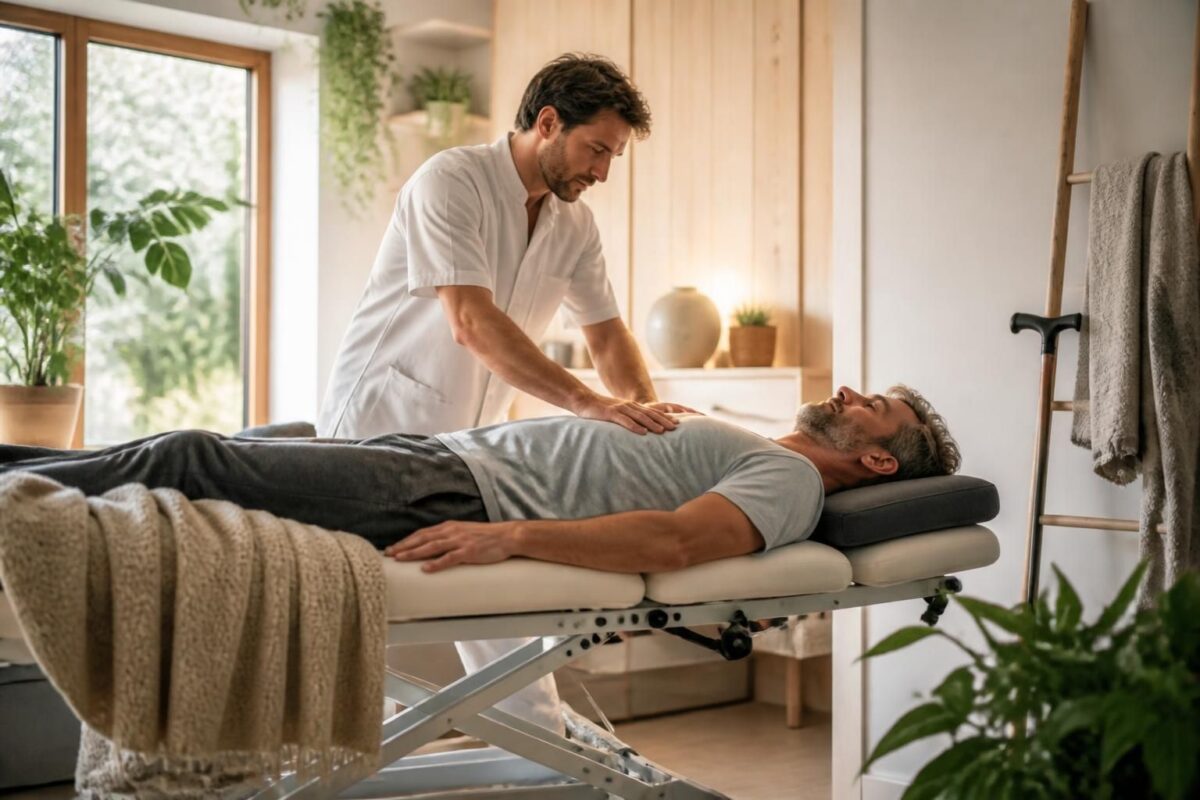
Why Osteopathy Is Essential For Recovery People
In short In short, Osteopathy in convalescence is an approach manual and holistic which helps to accelerate the recovery by restoring The balance, the mobility and a good circulation fabrics. it contributes to Reduce the pain, support the Back to…

Osteopathic manipulations to strengthen post-traumatic muscles
In short In short, Osteopathic manipulations for Strengthen post-traumatic muscles constitute a gentle manual approach aimed at restoring the mobility, reduce the pain and facilitate the Functional rehabilitation After a injury. What is Is it? A series of precise gestures…
Home program and lifestyle
An adapted exercise program, practiced regularly, supports the results and limits relapses. It can include simple movements of rotation, stretching and light reinforcement, without stressing the painful areas. The objective is to gradually improve tissue elasticity, joint stability and confidence in movement.
Maintaining a healthy weight and a suitable physical activity (swimming, walking, cycling) promote joint lubrication and comfort. A balanced diet rich in anti-inflammatory foods can also help reduce swelling and pain. Hydration and sleep also play a key role in pain recovery and management.

Osteopathy and prevention of work-related musculoskeletal disorders
In short theosteopathy is one Manual approach that restores body balance and prevents MSD related to work. Its advantages: reduction of tension, improvement of mobility and prevention of chronic pain. She is preventive and healing, suitable for office and trades…

The benefits of osteopathy to treat muscle imbalances
In short theosteopathy is a manual approach to restore themuscle harmony and postural considering the body as a whole. Its main benefits include the reduction of aches and tensions, the improvement of the mobility and from the posture, and prevention…
Posture and compensation prevention
The posture strongly influences the evolution of osteoarthritis. The osteopath seeks to optimize the alignment of the pelvis, spine and shoulders, in order to distribute the loads and limit joint friction. Correcting mechanical imbalances reduces pain and prevents compensation in other joints.
Proprioception and motor control are improving thanks to targeted exercises, allowing better control of daily gestures and physical activities. A sustainable approach combines manual work, exercises and progressive returns in real life.
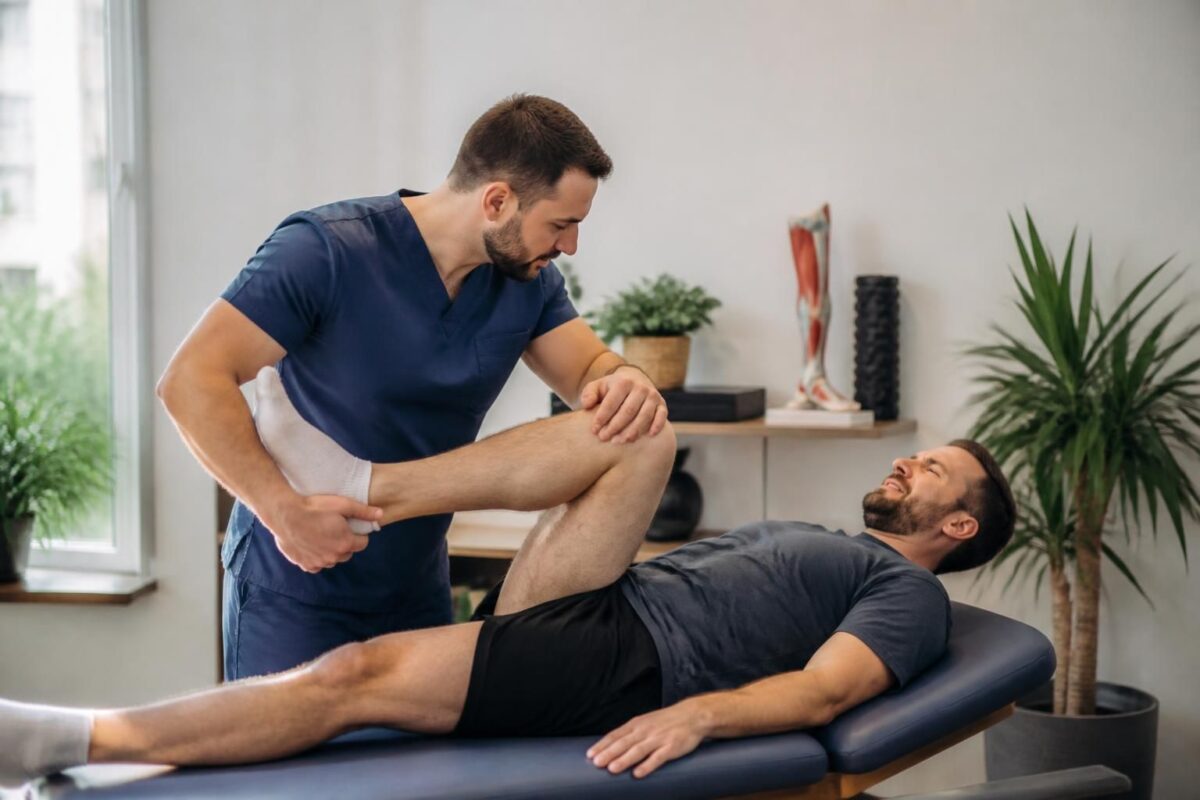
Osteopathy and chronic leg pain: regaining an optimal quality of life
In short In short, Osteopathy is one Global manual approach aimed at reducing Chronic leg pain and improve the quality of life. What is it? Non-drug therapy using the hands to identify restrictions and treat lesional chains. How does it…
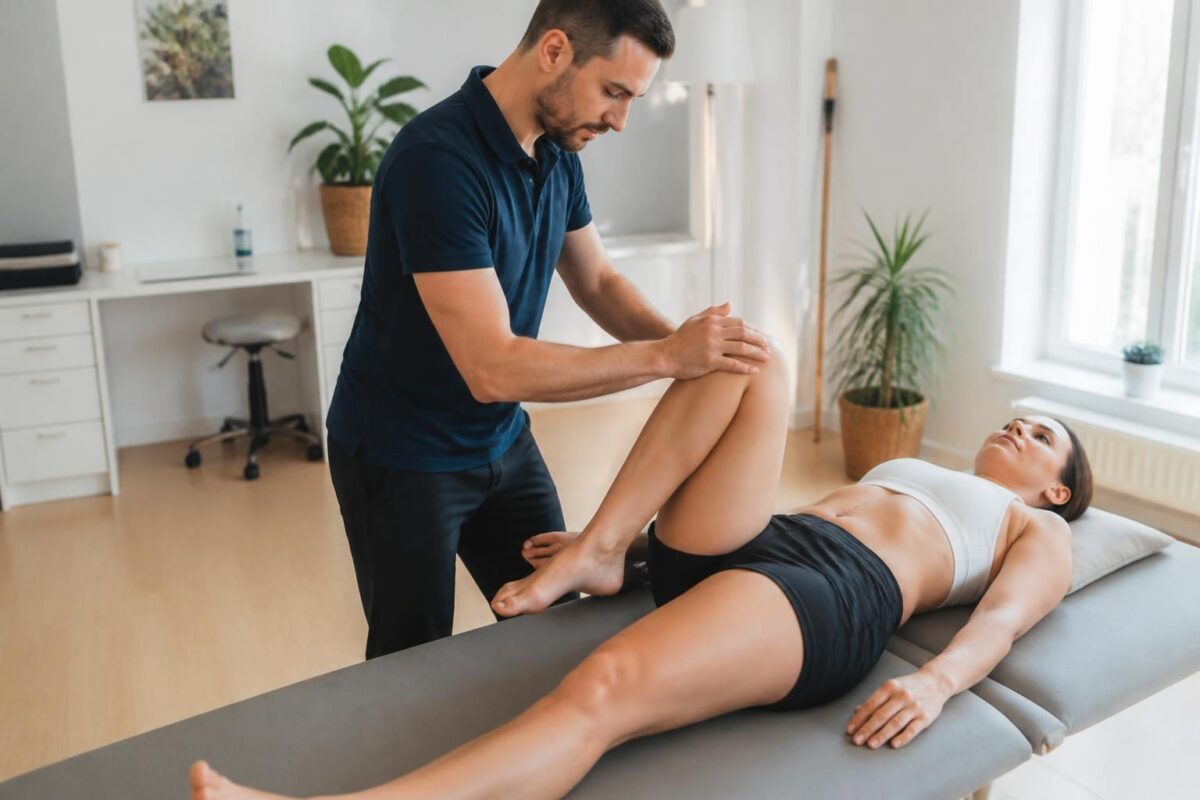
How osteopathy supports recovery after complex surgery
In short In short, Post-operative osteopathy is an approach fresh which supports the recovery After a Complex surgery. It helps to reduce the pain and the fatigue, improves the mobility and accelerates the healing thanks to a better vascularization and…
Coordination and follow-up
Regular follow-up with the osteopath, supplemented if necessary by an opinion from another professional (physiotherapist or doctor), ensures safe progression. Each session aims to free up a specific area and adapt the plan based on the pain, activities and goals of the patient.
Summary of key points
In osteopathy, osteoarthritis is not a fatality: it can be accompanied by Sweet mobilizations, a work of soft tissues and strengthening postural chains to find a Functional mobility. The association of a Custom program at home and a suitable lifestyle is essential to preserve long-term freedom of movement.
| osteopathy | Concise impact on mobility |
|---|---|
| Approach Overall and personalized | mobility increased by Assessment of the body as a whole and appropriate treatments |
| targeting of Joint restrictions and tissues | Improved amplitude and joint shifts, less blockages |
| tecnques joints, myofasciales, visceral | release of tensions, better circulation and Balanced tone |
| Posture and Biomechanical chain | Optimized alignment, reduction of compensation and pain |
| Pain scaled down | Less pain to perform daily gestures |
| Security and non-invasive | Natural approach, drug-free, long-term adapted |
| Monitoring personalized | Progressive plan and reassessments to maintain mobility |
| Role in osteoarthritis | complements medical care, aims to maintain mobility and quality of life |
Testimonials: Osteopathy and osteoarthritis – Find functional mobility
Here are testimonials that illustrate how theosteopathy can help find a Functional mobility Facing theosteoarthritis.
Mary, 62 years old, osteoarthritis of the knee: “Since the first sessions, my mobility has regained its rhythm. Thanks to Joint mobilizations and at work on the posture, I go up the stairs without pain and I found a real range of motion“.”
George, 58 years old, hip osteoarthritis: “The sessions released my tensions and improved my proprioception. I walk longer, and my pain decreases significantly; it’s like a reharmonization of the body thanks to theosteopathy“.”
sophia70 years old, osteoarthritis of the hands and wrist: “I manage to write and open the pots without difficulty. Work on the soft tissues and the joints proximal improved my coordination and my maneuverability daily.”
Antoine, 66 years old, osteoarthritis of the lumbar spine: “After a few months, I found a flexibility and an mobility More fluid, especially when I get up after sitting. My daily gestures resume their naturalness and my quality of life Sen finds improved.”
Clear, 68, multiple osteoarthritis: “The global approach gave me back a freedom of movement for my favorite activities and reduce my aches related to compensation. I relive my days with more serenity.”
Osteoarthritis is a common reality that affects joint integrity and movement capacity on a daily basis. theosteopathy proposes a global and gentle approach to support the restoration of mobility And found her ease during simple gestures. By favoring a vision of the body in its entirety, it aims to release tension, rebalance muscle chains and restore harmony between structure and function, in order to offer lasting freedom of movement.
At the heart of this approach, the Joint mobility is considered a base of well-being. By exploring local restrictions and compensations that often settle away from the painful joint, the osteopath acts on the joints, soft tissues (muscles, fascias, tendons) and fascial organs surroundings. thanks to targeted and tolerable techniques, such as Soft joint mobilizations, from myofascial relaxation and light visceral approaches, it gradually restores a fluid and painless range of motion.
The approach is personalized and dynamic. After attentive listening to the symptoms and history of each, the intervention adapts to the joint concerned (knee, hip, spine, wrist, etc.) and to the patient’s living environment. The goal is to optimize the proprioception and motor coordination, so that the body regains its ability to move with fluidity and safety, without unnecessary tensions or overload zones.
Beyond manual techniques, the osteopathic approach is accompanied by an educational and preventive component. The evaluation integrates the posture, daily habits and repeated movements that can amplify wear. Simple tips on how to sit, climb stairs, or carry a load help reduce stress and preserve body alignment over the long term. This alliance between expert touch and active education makes it possible to limit painful compensation and improve the effectiveness of professional and family activities.
The desired benefit is clear: Reduce the pain, Restore therange of motion, improve the quality of life and promote a relapse prevention. Osteopathy does not aim to “repair” osteoarthritis as such, but to reduce mechanical stresses, restore the flow of biological fluids and support the body in its ability to self-repair. This approach can be combined with other rehabilitation and physical activity practices to optimize long-term results.
By adopting an integrative perspective, osteopathy is a lasting partner in the management of osteoarthritis. It invites everyone to reapply their body, to reconnect with freedom of movement and to move towards more sustained functional mobility, day after day.
osteopathy and osteoarthritis constitute a useful alliance to return to a Functional mobility. This presentation highlights how a suitable manual approach can free the joints, release muscle tension and rebalance the body as a whole, in order to facilitate everyday gestures without systematically resorting to invasive treatments.
In the context of osteoarthritis, the main objective is to restore and maintain a mobility Effective joints, while limiting pain and healthy compensation. osteopathic techniques, whether Joint mobilizations, work myofascial or approaches visceral, target movement restrictions and promote better synchrony between the joint structures and the muscles around them. At the same time, the work on the proprioception And postural balance helps prevent compensatory disorders and optimize daily motor coordination.
Specialized resources emphasize that osteopathy can play a key role in pain reduction, the increase inrange of motion and improving the quality of life in people with osteoarthritis. Dedicated articles and guides describe how an integrative approach can also support the prevention aggravations and promote the maintenance of appropriate physical activities, such as swimming, walking or yoga, which support the Joint mobility without overload.
To deepen the mechanisms and the axes of intervention, several resources present additional perspectives on osteoarthritis and osteopathy, particularly in terms of Joint pain and of mobility. You can view dedicated content on specific cases such as trapezoid, shoulder blades and shoulder pain, as well as specialized journals on osteoarthritis management and mobility. For example, articles address the relationship between osteopathy and neck and back pain, shoulder and elbow benefits, and post-traumatic rehabilitation approaches that complement osteopathic care when needed. Additional resources collect clinical data and feedback on the impact of osteopathy in the management of osteoarthritis and musculoskeletal pain.
In addition, it is recommended to rely on an approach educational and preventive : Adopting an appropriate physical activity, correcting postural imbalances, ensuring a Healthy weight and promote good lifestyle overall. This multidisciplinary approach, which can be based on regular osteopathic advice and follow-up, aims to preserve mobility and limit the debilitating effects of osteoarthritis in the long term.
To enrich your understanding and explore concrete examples of osteopathic management adapted to osteoarthritis, consult the following resources: Osteopathy and trapezoid pain, Osteopathy and osteoarthritis – Joint pain, Osteopathy and osteoarthritis – regain functional mobility.
Finally, the way to a Mobility found In osteoarthritis goes through an attentive and continuous therapeutic relationship, where listening to the body, patient education and adjustment of daily gestures are integrated into osteopathic care. Additional resources underline the importance of combining osteopathy with prevention practices and appropriate care, in order to maintain freedom of movement and comfort over time. To learn more, do not hesitate to consult the articles and guides dedicated to osteoarthritis and osteopathy available in the sources cited.

Dr Sylvain Desforges, B.Sc., D.O., N.D., osteopath, is the founding president of TAGMED and of the ACMA association. He dedicates his practice to chronic spinal pain, low back pain and symptoms compatible with sciatica, particularly when pain radiates toward the buttock, leg, calf, foot or toes.
Through SOS Sciatique, he publishes educational content on sciatica symptoms, possible causes such as disc herniation, disc narrowing, foraminal stenosis or irritation of a lumbar nerve root, as well as non-surgical approaches that may be considered according to the evaluation. At Clinique TAGMED, care may include, depending on the case, motorized neurovertebral decompression, specific osteopathic care or precision percussion.
For an evaluation related to sciatica treatment in Montreal / Mount Royal or sciatica treatment in Terrebonne, please consult the services available at Clinique TAGMED.
Medical disclaimer
The information published on SOS Sciatique is provided for educational purposes only and does not replace a consultation, diagnosis, opinion or treatment provided by a physician or another authorized healthcare professional. The author of this article is neither a medical doctor nor a specialist in a medical specialty recognized by the Collège des médecins du Québec. The osteopathic, manual medicine or functional support approaches described on this site do not constitute medical acts and are not intended to replace medical follow-up.
Consult a physician or emergency service in cases of loss of bladder or bowel control, anesthesia in the saddle area, significant or progressive weakness in the leg or foot, fever, recent trauma, severe pain or rapid worsening of symptoms. For more details, please read our Legal Notice.