Osteopathic approaches to relieve arthritis pain
27/06/2026
Osteopathy and well-being: strengthening functional capacities
27/06/2026
In short
| In short, theosteopathy It front of Chronic postural imbalances is a manual approach that aims to restore thealignment and the mobility body to reduce pain and prevent recurrences. What is it? It is a discipline that assesses the posture in the three planes and treats the tension zones with Manual techniques gentle, taking into account postural muscle chains and proprioceptive system. What are the advantages? Lasting pain relief, improved amplitude and fluidity of movement, reduction of tension, better posture at work and in daily activities. How does it work? It begins with a Postural evaluation To identify the constraints, then Manual techniques targeted, accompanied by exercises and postural advice to maintain thealignment and thePostural balance on a daily basis. accessible and adapted to everyone, osteopathy allows a transversal approach to postural maintenance and chronic pain. |
Here is a short overview of how osteopathy acts on Chronic postural imbalances. It considers the body as a whole and aims to restore thealignment and the Muscle function to prevent and relieve the pain associated with these imbalances.
- Postural evaluation Deepened to identify areas of tension, blockages and root causes that maintain the imbalance.
- Soft manual techniques and targeted mobilizations to release tension, improve joint mobility and restore postural muscle chains.
- Cross-sectional approach which takes into account the interactions between nervous systems, musculoskeletal, articular and proprioceptive, to correct the causes rather than the symptoms alone.
- Postural education and exercises Personalized so that the patient maintains and prolongs the gains in posture on a daily basis and prevents relapses.
- Effects on quality of life Reduction of pain, improvement of mobility, and renewed energy thanks to better body balance and a posture adapted to each activity.
quick summary : Osteopathy acts on chronic postural imbalances by considering the body as a whole. A comprehensive postural evaluation and gentle manual gestures restore overall alignment, reduce stress and allow better adaptation of the body to daily activity, while promoting lasting pain reduction.
Chronic postural imbalances result from an imbalance between the neurological, musculoskeletal and sensory systems. Osteopathy aims to restore coordination between these systems by rebalancing postural muscle chains. This approach starts from a simple and clear understanding: the right posture is a reflection of the harmony between exteroceptor sensors, proprioceptors and higher centers that plan movement and balance.
Postural assessment and diagnosis
Before any intervention, the osteopath performs a Postural evaluation complete. We observe the alignment of the column in the three planes of space and the integration of the different joints. we identify the constraints and the tension zones by Sagittal, frontal and horizontal planes. The diagnosis is based on the observation of static imbalances and adaptations of the body pattern. In particular, we distinguish between profile and face disorders and rotations that disturb the balance.
In this approach, the notion of Ideal posture serves as a reference. It is defined by the alignment of the key points (vertex, cervical axis, lumbar body) and by homeostasis of the reference horizontal lines. This assessment makes it possible to understand why certain areas of the body support more constraints and how these constraints affect the entire musculoskeletal system.
Osteopathic interventions
The Manual techniques Used aim to release tension and mobilize the joints, without pain or aggressiveness. The objective is to restore effective coordination between segments and to restore a balance between contraction and muscle relaxation. The practitioner acts on deep and superficial systems to promote a return of sensory sensors to more efficient motor patterns.
Osteopathic treatment takes a holistic approach, linking painful areas to their underlying postural causes. It is not only a question of raising a occasional pain, but of restoring a body pattern that supports daily gestures and sports movements. Postural muscle chains are the main areas of intervention, in order to reduce the stresses and improve the mechanical tolerance of the body.
Posture and pain
The normal posture is dynamic and depends on morphology and lifestyle. In practice, we learn to continuously adapt gestures and positions to the environment, in order to minimize energy expenditure and excessive tensions. A suitable posture prevents recurrent pain from repetitive gestures or prolonged positions.
The role of osteopathy is therefore to bring the postural system back to a state of balance, taking into account the patient’s personal history, habits and psychic state. This approach promotes better mobility and reduction of chronic pain associated with postural disturbances.
Monitoring and integration
Osteopathic treatment is part of an approach transdisciplinary when necessary. Regular monitoring makes it possible to assess the postural evolution, to adjust the interventions and to prevent the reappearance of pain. At the end of the sessions, the osteopath can offer simple advice and postural landmarks to integrate into everyday life, in order to maintain the progress obtained.
Resources and useful links
To deepen, you can look at resources that have postural balance and osteopathic approaches:
Relieve joint pain without medication thanks to osteopathy
Clinical results proving the efficacy of osteopathy
The Benefits of Osteopathy to Prevent Injuries
How Osteopathy Helps Treat Tendinitis
Osteopathy and sports recovery: optimize performance
Tenosynovitis and carpal tunnel
Training and associations : training in osteopathy is provided by recognized organizations, including NUMSS and NAO (National University of Medical Sciences and National Academy of Osteopathy). In practice, professionals can join associations such as ACMA, the College of Canadian Osteopaths and the College of Canadian Osteopaths for professional standards and the influence of practice.
Medical Disclaimer: The information and advice provided on this site does not replace the health professional’s diagnosis or treatment. Please note that Dr. Sylvain Desforges osteopath is neither a doctor of medicine nor a doctor, and is not a specialist in a medical specialty as defined by the Collège des Médecins du Québec. Manual medicine, functional medicine and sports medicine as described on this site exclude any medical treatment or diagnosis made by a doctor or specialist doctor. Always consult your doctor for any medical questions. For more details, please read our full legal notice.
how osteopathy acts on Chronic postural imbalances – Operational axis
- Evaluation postural global to identify constraints and causes.
- Action on the Postural muscle chains To release tension and restore alignment.
- Manual techniques sweet To improve the mobility and balance.
- rehabilitation of the proprioception and neuromuscular coordination.
- Education postural and practical tips for correcting daily actions.
- Exercise program at home To consolidate gains and prevent pain.
- rebalancing biomechanical areas of stress and axes of the body.
- Regular monitoring and adjustment of the Treatment plan to maintain progress.

This article describes, in a practical and patient-centric way, how theosteopathy acts on the Chronic postural imbalances. Based on a global assessment, the practitioner identifies postural constraints, rebalances muscle and joint chains, and offers simple gestures to implement on a daily basis to sustainably relieve pain and prevent relapses.
Osteopathic assessment and diagnosis
An effective osteopathic approach begins with a Postural analysis deep. The practitioner observes the alignment of the spine, shoulders, pelvis and extremities in the three planes of space, in order to locate the areas of tension and dominance on one side or movement. This assessment is part of a perspective overall, because postural disorders result from interactions between nervous, musculoskeletal and proprioceptive systems.
The diagnosis is based on the identification of Postural chains At stake and on the understanding of personal factors (lifestyle, morphology, stress, physical activity). The objective is to determine which areas require rebalancing and which joint or muscle compensation maintains the imbalance.

How osteopathy improves the quality of life of active people
In short In short, theosteopathy is a global approach that Optimizes mobility and the function of the body of ACTIVE PEOPLE, for a better quality of life. It helps prevent injury and reduce Musculoskeletal pain While promoting the Sports recovery.…

Osteopathy and sports recovery: prepare the body for lasting performance
In short In short, Osteopathy and Sports recovery is one Global manual approach that sustainably prepares the body for the effort by restoring mobility and circulation After the effort. It is a discipline that acts on the sinews, the joints,…
Mechanisms of action of osteopathy
the techniques used aim to release tension and to Mobilize the joints to restore a harmonious function of the body. By working on soft tissues, fascias and joints, the osteopath contributes to reinstate the Engine cycles and the breathing with heart rate, in order to improve the coordination and effectiveness of muscle chains.
At the heart of osteopathic action is a logic of Real-time feedback. The brain adjusts postural strategies based on information from exteroceptors and proprioceptors. The result is a posture better suited to the environment and movement, with optimized energy expenditure and fewer constraints on the joints.
Targeted interventions and cross-cutting approach
Techniques favor an approach Smooth and targeted, adapted to each individual. They are aimed not only at the painful area but the whole body in order to restore the overall balance. In some cases, osteopathy can combine adapted techniques, while remaining focused on the revitalization of postural mechanisms and the prevention of recurrences.
Why Osteopathy Is Essential For Recovery People
In short In short, Osteopathy in convalescence is an approach manual and holistic which helps to accelerate the recovery by restoring The balance, the mobility and a good circulation fabrics. it contributes to Reduce the pain, support the Back to…

Osteopathic manipulations to strengthen post-traumatic muscles
In short In short, Osteopathic manipulations for Strengthen post-traumatic muscles constitute a gentle manual approach aimed at restoring the mobility, reduce the pain and facilitate the Functional rehabilitation After a injury. What is Is it? A series of precise gestures…
Daily integration and postural education
An essential part of the treatment is to accompany the patient in his daily actions. thePostural education offers practical advice for adjusting workstations, travel habits and leisure activities. The goal is toAdapt the postural approach to each activity, in order to limit the constraints and promote progressive and lasting adjustments.
Personalized exercises and simple returns (for example, identifying asymmetries or practicing breathing and posture micro-sequences) help strengthen the Stabilizing muscles And to train the brain to favor more effective patterns. The idea is to move from a reactive mode to a preventive mode, where the body remains resilient in the face of daily requests.

Osteopathy and prevention of work-related musculoskeletal disorders
In short theosteopathy is one Manual approach that restores body balance and prevents MSD related to work. Its advantages: reduction of tension, improvement of mobility and prevention of chronic pain. She is preventive and healing, suitable for office and trades…

The benefits of osteopathy to treat muscle imbalances
In short theosteopathy is a manual approach to restore themuscle harmony and postural considering the body as a whole. Its main benefits include the reduction of aches and tensions, the improvement of the mobility and from the posture, and prevention…
Expected benefits and results
By acting on the Static and dynamic imbalances, osteopathy aims for a lasting reduction in spinal pain (cervicalgia, back pain, low back pain) and a significant improvement in mobility. Patients notice a Better stability during movements, a decrease in recurrent tensions and a Reduction of fatigue related to ineffective posture.
In addition, osteopathic care encourages an approach preventive and better postural stress management. By combining evaluation, manual techniques and education, it offers a solution adapted to the individual to restore body harmony and support an active and lasting quality of life.
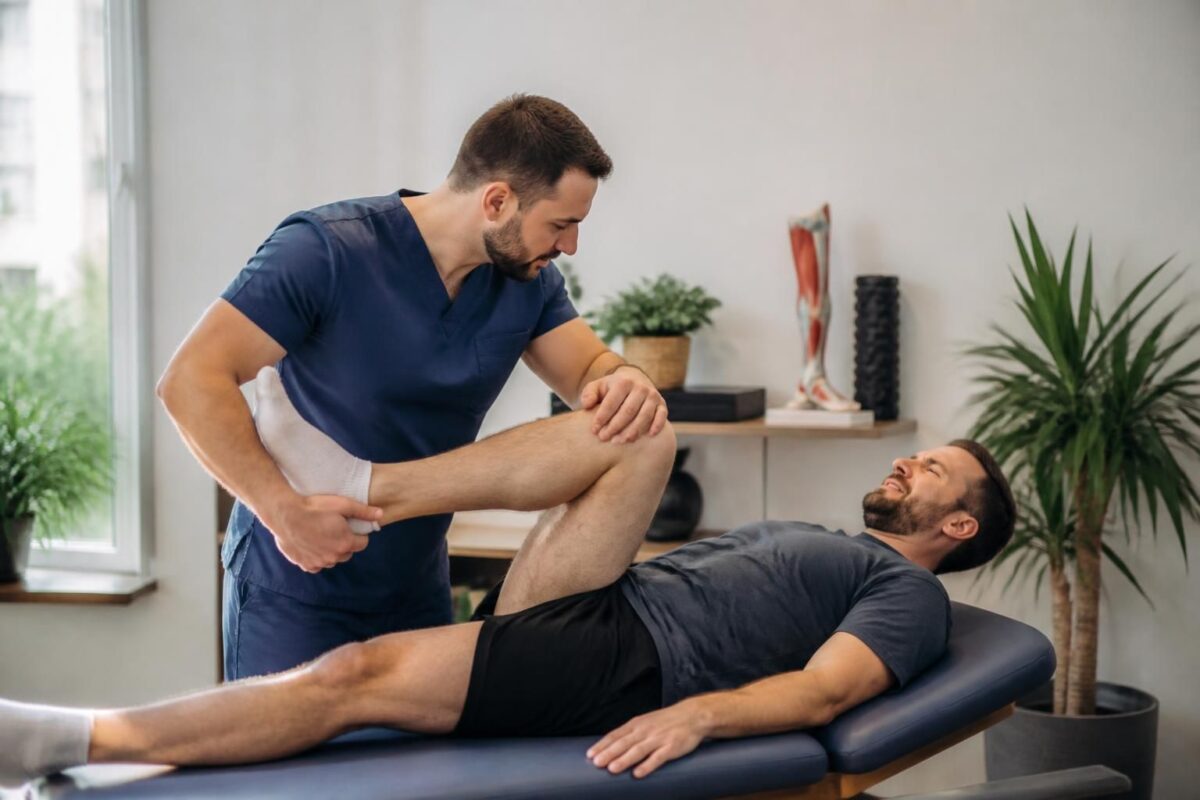
Osteopathy and chronic leg pain: regaining an optimal quality of life
In short In short, Osteopathy is one Global manual approach aimed at reducing Chronic leg pain and improve the quality of life. What is it? Non-drug therapy using the hands to identify restrictions and treat lesional chains. How does it…
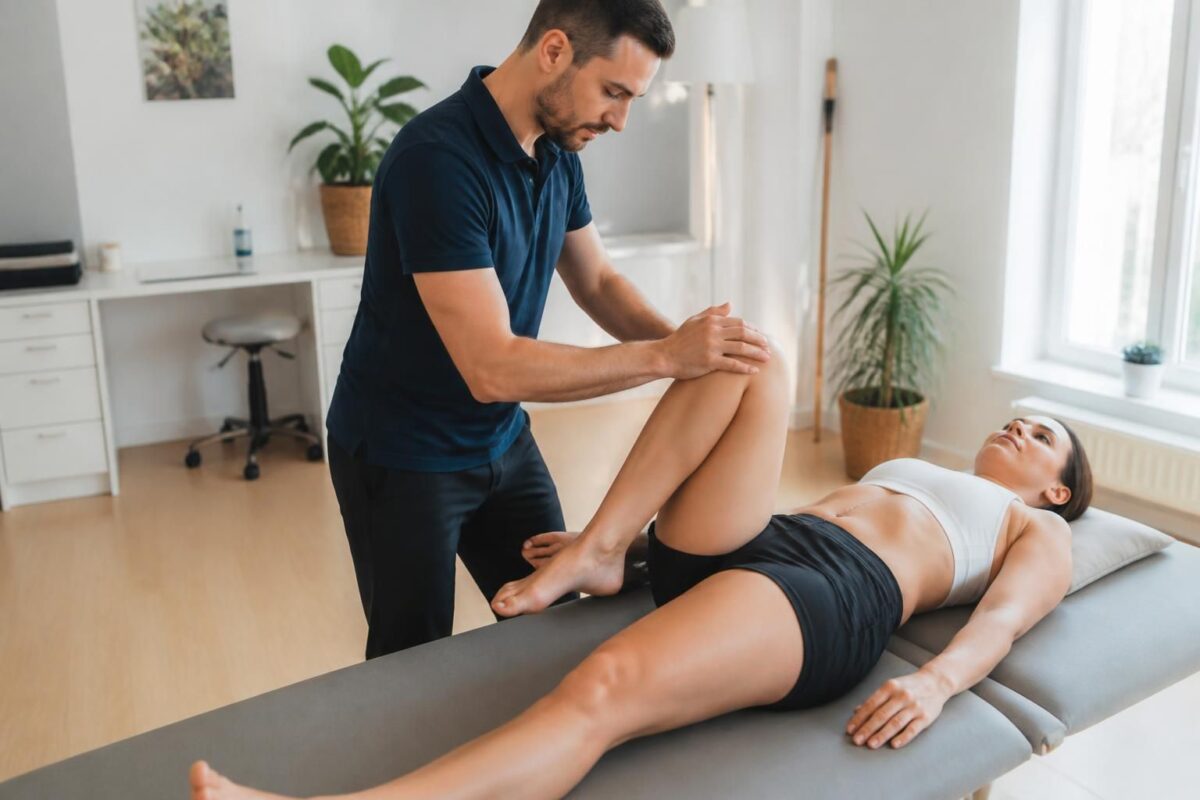
How osteopathy supports recovery after complex surgery
In short In short, Post-operative osteopathy is an approach fresh which supports the recovery After a Complex surgery. It helps to reduce the pain and the fatigue, improves the mobility and accelerates the healing thanks to a better vascularization and…
Analysis of the mechanisms of action of osteopathy on chronic postural imbalances
| Axis | Impact |
|---|---|
| Overall postural evaluation | |
| release of tensions | release of Muscle tensions and fascials to reduce constraints and improve the mobility. |
| Mobilization of postural chains | coordinated mobilization of musculoskeletal groups to restore thebalance and the stability. |
| Alignment correction | Adjusting patterns in the sagittal and frontal plane to reduce hyper-contacts and restore a alignment correct. |
| Neuromuscular control | improvement of Engine control and from the Neuromuscular coherence to stabilize the moving posture. |
| Proprioception & sensory | strengthening of Proprioceptive return to optimize postural strategies. |
| Postural education | Practical advice for Change gestures and avoid harmful repetitions. |
| Adaptation of the workstation | recommendations on furniture and Active breaks To maintain thebalance. |
| Monitoring and reassessment | progress measurement and adjustment of the plan to prevent aches and recurrences. |
Testimonials: how osteopathy acts on chronic postural imbalances
“Before, my posture was misaligned and I felt back pain and tension in my shoulders. Osteopathy analyzed my constraints and worked on my muscle chains to correct the Postural imbalance. After a few sessions, I hold myself better, I have less pain and a feeling ofbalance found. »
“Working standing and in front of screen, my Postural balance deteriorated. Postural evaluation and Soft manual techniques allowed to release tensions and improve my mobility, which allowed me to move more freely on a daily basis. »
“My migraines were related to poor neck posture. The osteopathic approach targeted cervical tension and posture. I noticed a reduction in neck pain And better clarity in my day. »
“As an athlete, I needed a balance solid body to perform. Osteopathy helped me align the bust and hips during movements, improving my performance And preventing discomfort after training. »
“After the postural assessment, I became aware of my habits and the role of external factors on my posture. advice and Personalized exercises allowed me to gradually correct my Body diagram and maintain a stability sustainable. »
“The results were concrete: less pain, better breathing and less fatigue. I feel more focused and my body consciousness increased thanks to the osteopathic approach. »
In an approach osteopathic Focused on posture, the action aims first of all to identify the deep sources of chronic postural imbalances. The approach is based on a global vision of the body, where muscle tension, joints and soft tissues are part of a pattern of reciprocal adjustments. By focusing on the Postural chain, the osteopath seeks to restore a balance that reduces joint stresses and readapts the body pattern to the dynamic environment. This personalized listening makes it possible to act not only on pain, but also on the way in which the body is organized in space and time.
The first step is a Postural assessment meticulous, which is based on the observation in three planes of space and on a fine listening to sensory markers. Exteroceptors (eyes, feet, jaw, inner ear) and proprioceptors (perception of body segments and muscle condition) feed the brain. The practitioner analyzes how the brain integrates this information and develops a cheapest energy strategy to stabilize posture. This understanding makes it possible to distinguish any contributions from the podal plan, the masticating apparatus or the muscle chains involved, and to establish a clear framework for the treatment.
Specifically, the goal is to Rebalance postural chains and improve neuromuscular coordination. We aim to correct tilts and twists that accumulate over time, while reducing the tensions that hold the wrong pattern in place. A healthy posture is not fixed: it continually adapts to everyday gestures, work and physical activity. This is why the treatment combines targeted adjustments and postural education focused on stress reduction, in order to avoid relapses and painful cycles.
The techniques used are part of a gentle and precise logic. Joint mobilizations and tissue releases respect the body without overloading it. Specific approaches, such as craniosacral or visceral techniques, can be integrated when dysfunctions warrant it. The goal is to improve the mobility of the joints, to release tension and to promote better circulation, so that the body regains effective dynamics and better coordinated breathing with the heart rate. This modality manual is based on pragmatic results: a precise location of the areas to be treated and a gradual progression that respects the individuality of each patient.
Beyond the hands, osteopathy acts through education and support. The therapist offers postural advice adapted to the workstation, daily habits and sports practice, as well as personalized exercises intended to strengthen the muscles that support the spine and scapular and pelvic belts. The goal is to make the patient actor of his own posture, in order to maintain a lasting harmony between stability and movement. This approach preventive Helps reduce recurrent pain and optimize long-term quality of life.
In practice, the results are measured by an improvement in the mobility, a decrease in pain and better energy on a daily basis. Osteopathy does not just treat the symptoms: it acts on the deep mechanisms that govern the posture and how the body adapts to its environment. The overall benefit is manifested in a recovery stability, a reduction in fatigue linked to postural stress and better physical performance, whether you are active, employee or athlete.
Quick summary: Osteopathy acts on Chronic postural imbalances By analyzing in depth the posture overall, by correcting the Postural chains And by combining postural education and personalized exercises to preserve alignment and reduce pain in the long term.
In practice, the osteopathic approach considers the body as a Interconnected system where thePostural balance Depends on the harmonious integration of sensors (exteroceptors and proprioceptors), spatial perception and nervous mechanisms. thePostural evaluation Identifies areas of tension and alignment disturbances in the three planes of space, in order to target root causes rather than treating only symptoms. This approach makes it possible to establish a personalized treatment plan that takes into account the patient’s morphology, habits and psychological state.
The Mechanisms of action of osteopathy on postural imbalances are based on the reorganization of the body schema and the restoration of a Key balance between postural muscle chains. By restoring vertical alignment (from the top of the skull to the pelvic belt) and reinventing neuromuscular synchronization, the osteopath improves the Musculoskeletal coordination and the energy efficiency of the body. For this, the intervention is based on targeted manual techniques that release tension and restore the mobility of the joints, favoring a restitution of the natural and fluid movement.
Manual work is accompanied by a Postural education and practical support. The patient receives advice aimed at adapting daily gestures and optimizing the ergonomics of the workstation, while carrying out personalized exercises intended to strengthen postural chains and promote stability. This education-strengthening dimension is essential to prevent recurrences and maintain the benefits obtained during the sessions.
In addition, technological advances and transdisciplinary approaches enrich osteopathic action. resources like Technological advances applied to osteopathy and the sources dedicated to the evaluation and improvement of postural alignment illustrate how these tools complement the manual practice to optimize the posture and alignment. To deepen this topic, you can refer to publications and guides that describe the mechanisms and benefits of osteopathy in the correction of chronic postural disorders.
Finally, the management of chronic postural imbalances is part of a process preventive and sustainable. By correcting the causes and consolidating postural adaptations, osteopathy aims to reduce pain durably, improve mobility and restore a general feeling of well-being. To further explore the benefits and associated methods, check out the resources dedicated to posture and stress and physical stress management.

Dr Sylvain Desforges, B.Sc., D.O., N.D., osteopath, is the founding president of TAGMED and of the ACMA association. He dedicates his practice to chronic spinal pain, low back pain and symptoms compatible with sciatica, particularly when pain radiates toward the buttock, leg, calf, foot or toes.
Through SOS Sciatique, he publishes educational content on sciatica symptoms, possible causes such as disc herniation, disc narrowing, foraminal stenosis or irritation of a lumbar nerve root, as well as non-surgical approaches that may be considered according to the evaluation. At Clinique TAGMED, care may include, depending on the case, motorized neurovertebral decompression, specific osteopathic care or precision percussion.
For an evaluation related to sciatica treatment in Montreal / Mount Royal or sciatica treatment in Terrebonne, please consult the services available at Clinique TAGMED.
Medical disclaimer
The information published on SOS Sciatique is provided for educational purposes only and does not replace a consultation, diagnosis, opinion or treatment provided by a physician or another authorized healthcare professional. The author of this article is neither a medical doctor nor a specialist in a medical specialty recognized by the Collège des médecins du Québec. The osteopathic, manual medicine or functional support approaches described on this site do not constitute medical acts and are not intended to replace medical follow-up.
Consult a physician or emergency service in cases of loss of bladder or bowel control, anesthesia in the saddle area, significant or progressive weakness in the leg or foot, fever, recent trauma, severe pain or rapid worsening of symptoms. For more details, please read our Legal Notice.