Neurovertebral decompression: a non-surgical solution for back pain
25/06/2026
Why choose neurovertebral decompression to relieve chronic pain
25/06/2026
In short
| The neurovertebral decompression is one Non-invasive therapy which reduces the spinal nerve pressure by creating a space between the vertebrae. It acts on the disc To promote the Disc rehydration and the return of height. Advantages: Reduced pain, better mobility, and non-surgical option for slipped disc and the radiculopathy. how it works: a computer-guided table applies a Targeted traction creating a negative pressure, which sucks the kernel inwards and allows water and nutrients to enter the disk. In Montreal, this service is accessible and useful for lower back and cervical pain linked to disc pathologies. |
The Science of the neurovertebral decompression is based on a simple and measurable mechanism: by creating a space between the vertebrae and applying controlled traction, a negative pressure inside the intervertebral disc.
This pressure acts as a aspiration which draws the core inwards and promotes Disc rehydration, the contribution ofoxygen and nutrients, and recovery of disk volume and elasticity.
By reducing protrusion or hernia and decreasing nerve pressure, it can relieve pain and restore mobility and the function.
The most recent evidence shows significant clinical improvements and measurable changes in disc height On imaging after a protocol, validating the link between the disc process and the symptoms.
The treatment is non-invasive and is based on computerized systems that adjust the force in real time to adapt to your body and optimize results.
This article, written by a health professional, exposes the science that supports neurovertebral decompression. It explains the mechanism, current evidence and eligibility criteria, remaining clear and direct. The goal is to understand decompression as a data-based approach and not on marketing promises.
Neurovertebral decompression acts on the disc, which can reduce nerve pressure and restore better spinal function. The process is based on a simple and measurable principle: to create a Space between the vertebrae, which generates a negative pressure Inside the disc, promoting rehydration and disc pitch recovery. This approach targets the cause of the problem, not just the symptoms.
Physiological mechanism
Between each pair of vertebrae is an intervertebral disc, consisting of a gelatinous nucleus and a fibrous ring. With time or aggravating factors (bad posture, repeated effort, trauma), the disc can become dehydrated, flattened and cracked. The nucleus can then push through the ring and form a hernia that Compress the nerves neighbors. neurovertebral decompression acts on this disc by causing negative pressure which draws the nucleus inwards and allows the entry of water and nutrients, favoring the Disc rehydration and recovery of disk shape and volume.
This mechanism differs from approaches that are limited to masking pain. Decompression does not just act on the symptoms; It acts on disk structure and column dynamics.
Technology and protocol
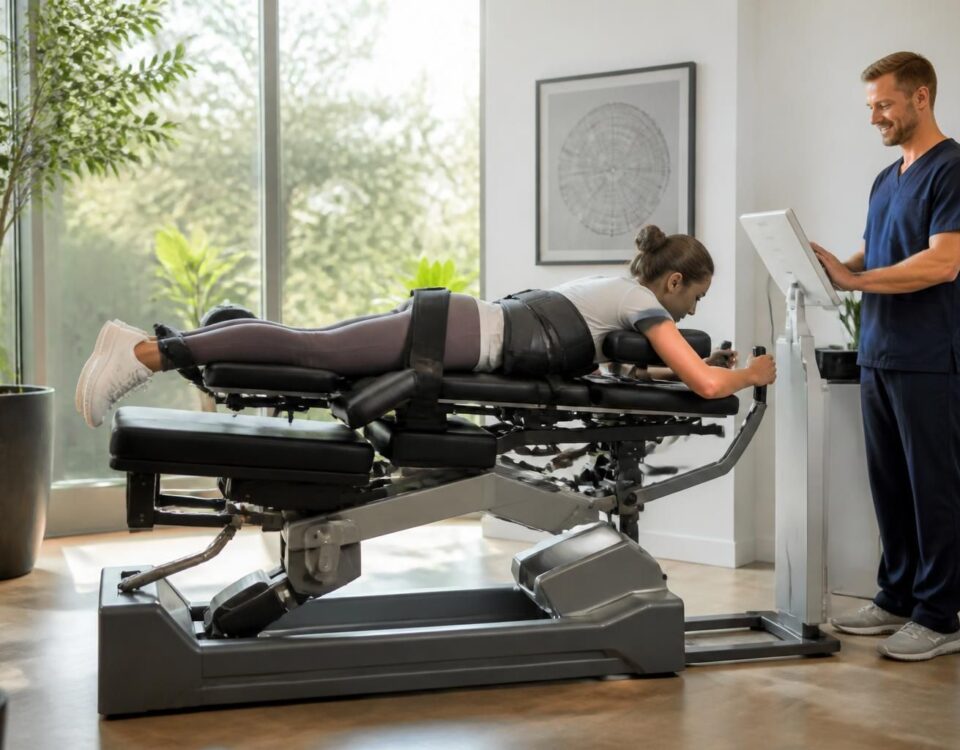
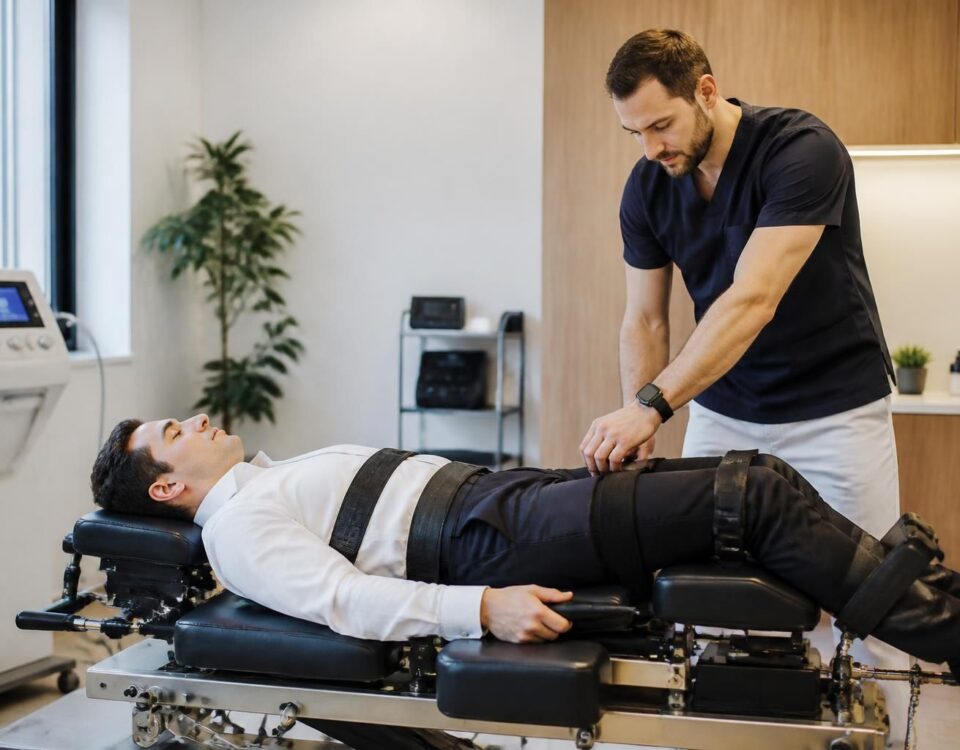
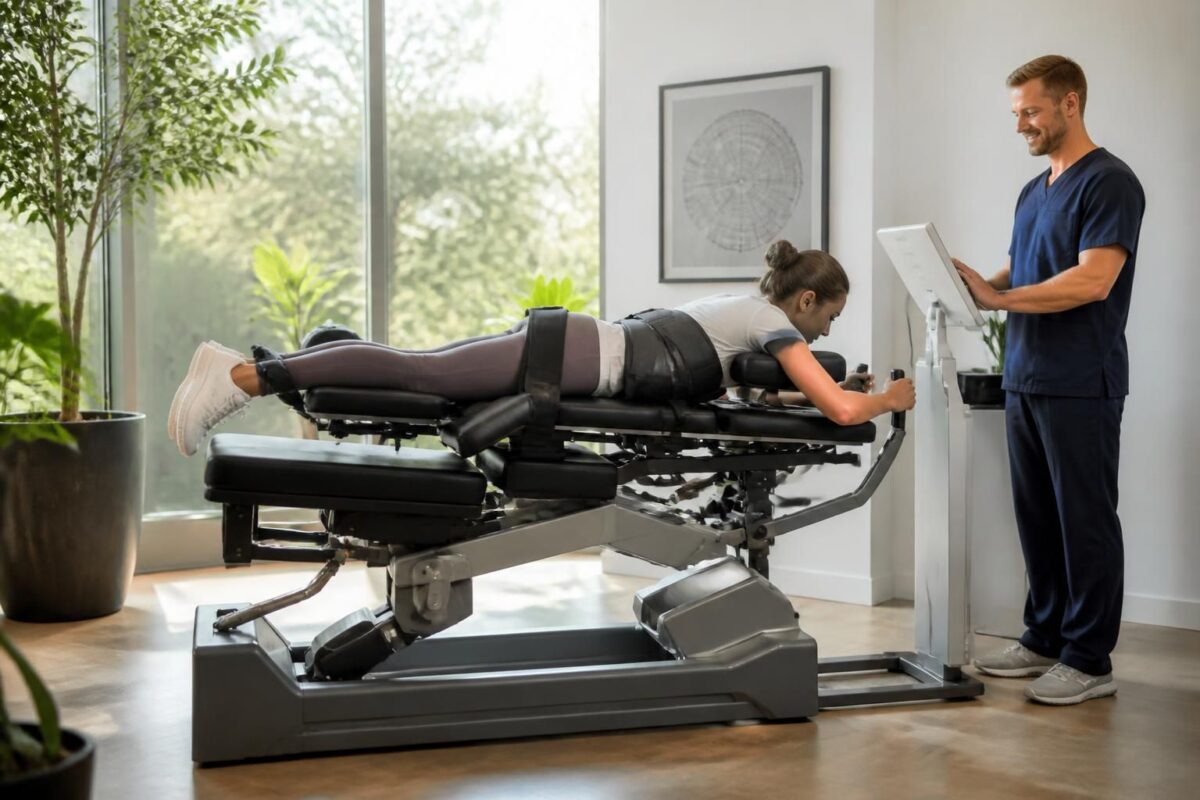
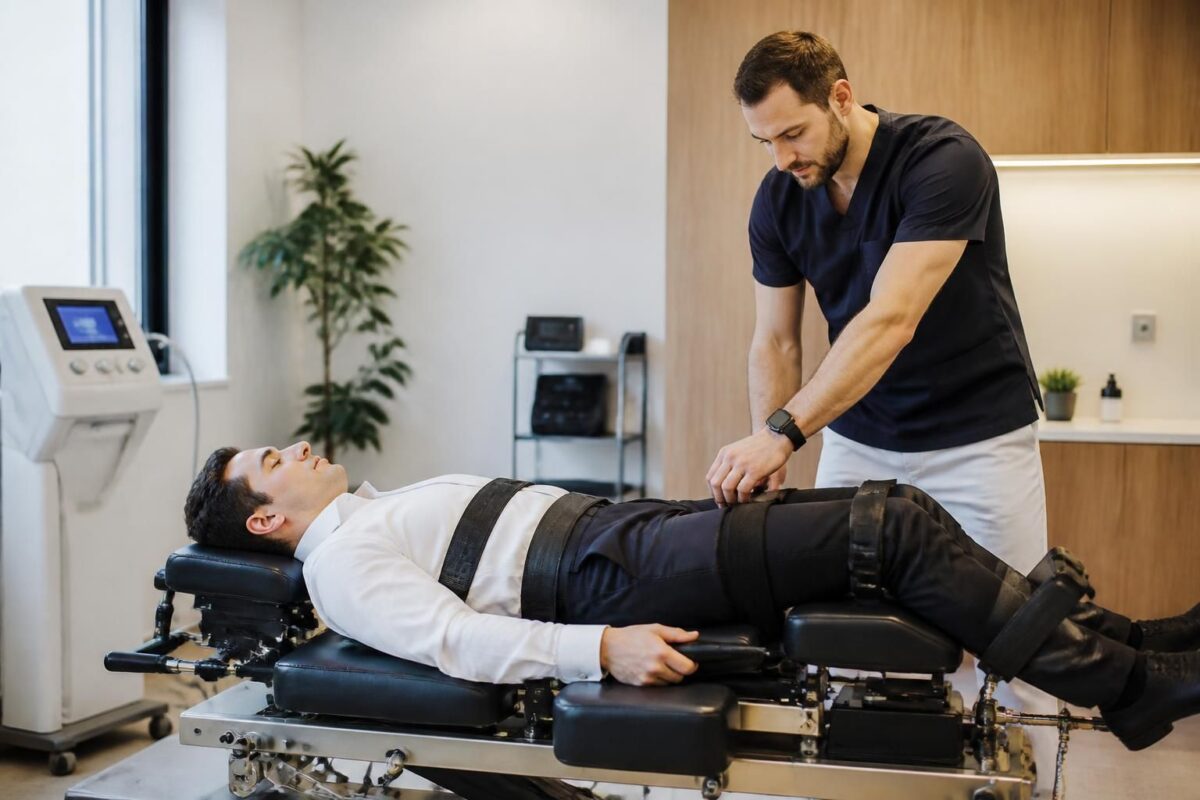
Decompression uses a computer-controlled table that applies an accurate and progressive distraction force to a targeted segment of the column. This force is adjusted in real time to follow the body’s response and avoid muscle reflex contractions. The result is a Custom processing trajectory which maximizes the probability of disc rehydration and functional improvement.
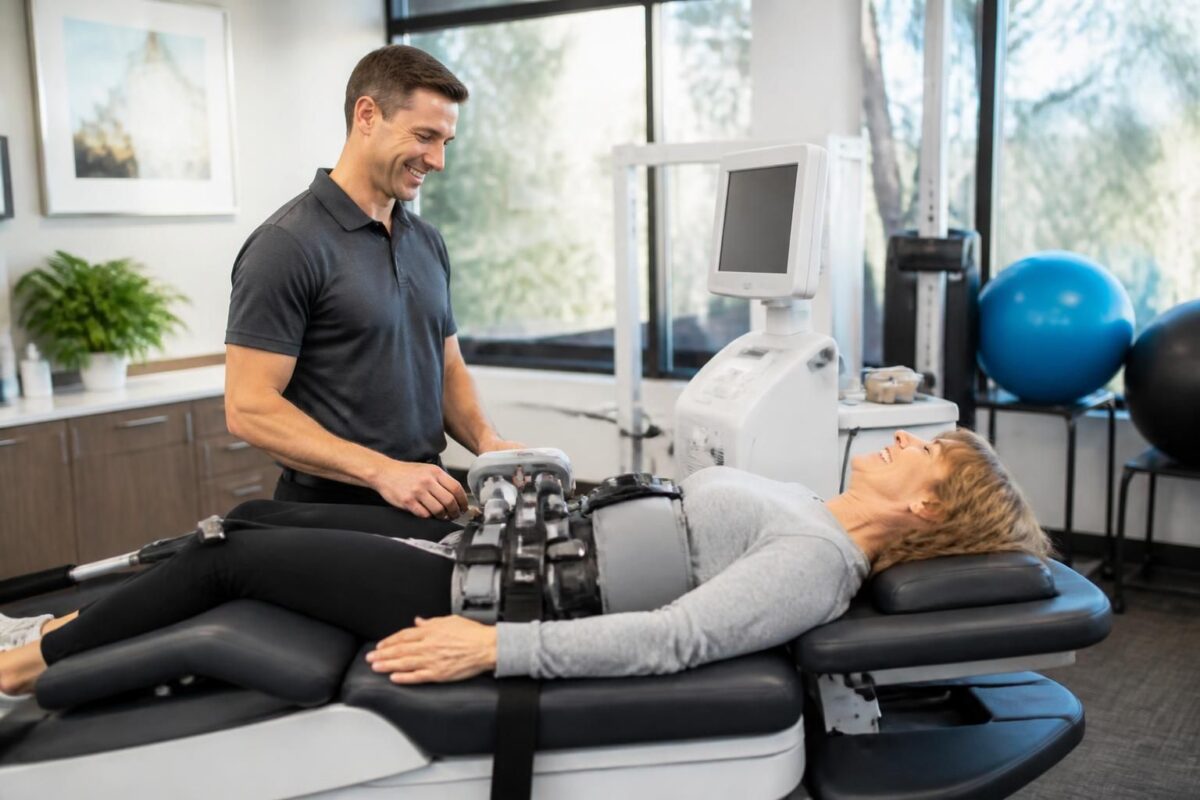
During a session, the patient is comfortably installed and will wear a pelvic harness to target the designated segment during the initial assessment. The device adjusts the strength during the session, and some patients describe a deep and relaxing feeling of stretch. Although the protocols vary, a typical plan includes several dozen sessions spaced out over several weeks.
Recent scientific evidence
Recent data shows encouraging results. A study published in 2025 in the Journal of Contemporary Chiropractic reports a marked reduction in pain and objective improvements in disc height after series of non-surgical decompression. Imaging demonstrated physical changes in the disc, confirming the restoration of its shape and volume.
A study carried out at the University of South Florida and published in the same journal indicates a pain improvement around 80% and a significant reduction in functional disability after 20 sessions, with a Disc height increase Observed by imaging, supporting the idea of a disc regeneration process. Other retrospective analyzes and randomized clinical trials reinforce the idea that decompression can be associated with gains in mobility and quality of life when combined with validated multimodal approaches in musculoskeletal health care.
For professionals and patients, these results contribute to an increasing recognition of neurovertebral decompression as an effective non-surgical option in some indications. Centers and clinics regularly publish their findings and protocols, while respecting ethical and safety standards. Additional resources and specialized publications in this area can be found on the pages dedicated to study and practice.
For additional information and analysis on studies and results, you can view the following resources: Studies and scientific evidence, Spinal stenosis and neurovertebral decompression, Pre-examinations, Adaptation for athletes, benefits, The science behind decompression for herniated disc, Foraminal stenosis, Disc protrusion, Science and relief and Tagmed Clinic.
Indications and safety
Neurovertebral decompression is mainly indicated for certain disc pathologies, including lumbar or cervical disc herniation, disc degeneration and certain forms of radiculopathy. a professional assessment and MRI analysis are essential before initiating a protocol. Contraindications exist, in particular in the presence of metallic implants in the column, a recent vertebral fusion, pregnancy, active fractures, or certain tumor or infectious conditions. An in-depth review allows you to target the best segment and decide on the most suitable approach.
At TagMed Clinic, the assessment incorporates MRI analysis and clinical examination to determine whether decompression is appropriate and which segment to target precisely. This step is crucial to avoid inappropriate treatments and maximize the chances of profit. To learn more about assessment and care options, visit Tagmed Clinic.
What you can expect during a treatment
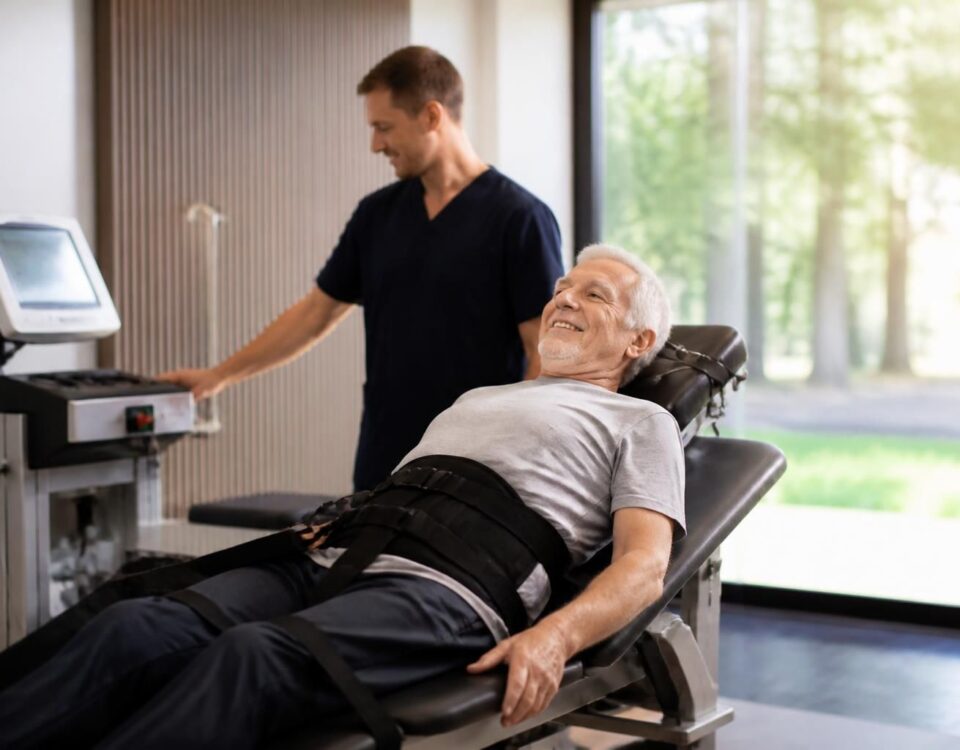
A session generally lasts between 20 and 30 minutes, and the typical protocol includes between 15 and 25 sessions spread over several weeks. During a session, you will be comfortably seated on the table and wear a pelvic harness to target the spinal segment defined on the evaluation. The table then starts moving; You will feel a smooth and progressive traction, described by many patients as a deep and pleasant stretch. The computer system adjusts the force in real time to meet your body’s needs. Some people fall asleep during the session.
Early results observed often include a reduction in morning stiffness, then a gradual decrease in pain when walking, and an improvement in session after session mobility. Recent clinical data confirm these observations with imaging and function measurements.
Impact on quality of life and safety
The chronic pain Dorsal influences sleep, mood and ability to practice daily activities. Neurovertebral decompression offers a targeted approach to the cause, not its symptoms, promoting better hydration and disc rehydration. This non-surgical approach can reduce dependence on pharmacological treatments and delay, when relevant, more invasive interventions.
Side effects are rare and generally mild, and manifest as a fleeting stiffness after the first sessions. Monitoring and customizing the protocol helps minimize discomfort and support progressive recovery.
For patients in the Montreal or Terrebonne region wishing to be evaluated for neurovertebral decompression, professionals and affiliated clinics offer a rigorous and evidence-based approach. For more information and to organize a consultation, consult the following resources: Studies and evidence, Spinal stenosis and decompression, and Tagmed Clinic.
For those who wish to understand how decompression can be integrated into a broader care setting, resources and podcasts on decompression and associated pathologies are available at sossciatica.com and sosherniediscale.com sites.
Medical Disclaimer: The information and advice provided on this site does not replace the health professional’s diagnosis or treatment. Please note that Dr. Sylvain Desforges osteopath is neither a doctor of medicine nor a doctor, and is not a specialist in a medical specialty as defined by the Collège des Médecins du Québec. Manual medicine, functional medicine and sports medicine as described on this site exclude any medical treatment or diagnosis made by a doctor or specialist doctor. Always consult your doctor for any medical questions. For more details, please read our full legal notice.
- Principle : the negative pressure in the disk activates the rehydration and pulls the core inward.
- Disk : theAnnulus fibrosus and the Pulpy core rest on a balance that limits the hernias.
- hydration : Entry ofwater, fromoxygen and of nutrients in the disc fabric.
- Spacing : Distraction creates a space between targeted vertebrae and reduction in nerve pressure.
- Guided traction : table data processing which adjusts the strength in real time and manages muscle reflexes.
- Imagery : demonstrations Disc hypertrophy and visible rehydration at theMRI.
- Recent evidence : clinical trials and reviews report pain reduction and Functional improvement.
- directions : disc herniation, disc degeneration and associated radiculopathies.
- Typical duration : sessions of 20–30 minutes, protocol 15–25 sessions over several weeks.
- Comparison : Computerized traction and segmental targeting vs classic traction.
- Security : no invasive, rare and mild side effects.

Quick Summary: Neurovertebral decompression is a non-invasive approach that creates a space between the vertebrae and applies controlled traction, generating negative pressure in the disc. This dynamic promotes disc rehydration, volume restitution and the reduction of pain related to hernias or degeneration. This article presents the mechanisms, evidence and clinical implications, relying on science rather than marketing.
Mechanical and biological foundations
The intervertebral disc is composed of a gelatinous nucleus and a fibrous ring. It acts as a shock absorber and enables column mobility. When the disc dehydrates or cracks, the nucleus can put pressure on neighboring nerves, causing pain and reduced function.
The heart of the mechanism is based on The negative pressure Created during the distraction between two vertebrae. This internal depression draws the nucleus inwards and opens paths for the infiltration of water, oxygen and nutrients. The process promotes Disc rehydration and the restoration of the elasticity of the disc, which can transform pain and mobility.
Role of controlled traction
a motorized table and Robust in computing Applies a precise distraction force to a targeted segment. If the muscles contract, the system adjusts in real time, ensuring smooth and appropriate traction. This biological feedback allows the body to receive the treatment without overstimulation or excessive tension.
Relationship with discs and nerves
By increasing the intervertebral space, decompression reduces pressure on the nerve roots and improves local blood flow. This improvement promotes the evacuation of metabolites and the supply of nutrients, contributing to functional recovery and the reduction of symptoms.
The long-term benefits of neurovertebral decompression for spinal health
In short In short, the neurovertebral decompression is a non-invasive approach that decreases the Pressure on intervertebral discs and nerves, favoring the Natural regeneration and tissue recovery. Its long-term benefits include Lasting pain reduction, Improving mobility and from the posture,…

Neurovertebral decompression and mobility: a return to an active life
In short In short, the neurovertebral decompression is therapy non-invasive who uses a gentle traction To create a space between the vertebrae and reduce the pressure on the Intervertebral discs and the nerves. It promotes a bloodstream improved, lowers tension…
Clinical evidence and imaging
Recent data indicate a lasting improvement in pain and function in patients treated with non-surgical decompression. Clinically observed improvements are often accompanied by a Disc height gain Measured by imaging, demonstrating physical disc restitution.
Studies show that when the protocol is properly applied, decompression can improve range of motion, decrease numbness and allow a gradual return to activity. The results are reinforced when decompression is integrated into a multimodal and personalized approach.
Imaging and functional evidence
Imaging, including MRI, can document structural changes in the disc and, in some cases, a measurable increase in disc pitch. These radiological signs corroborate the improvement reported by patients and support the idea that the disc can regain part of its lost function.
Evolution of research
Spinal decompression has shifted from a primarily empirical approach to practice supported by clinical series and trials that evaluate pain, function and imaging. This progression reinforces its place in the protocols for the non-surgical management of lumbar and cervical pain related to the disc.
How Neurovertebral Decompression Prevents Diffuse Chronic Pain
In short decompression neurovertebral is one Non-invasive method aimed at reducing the Pressure on the intervertebral discs and the nerves, in order to prevent Diffuse chronic pain. It improves the circulation and thedisc hydration, decreases inflammation and promotes better mobility.…
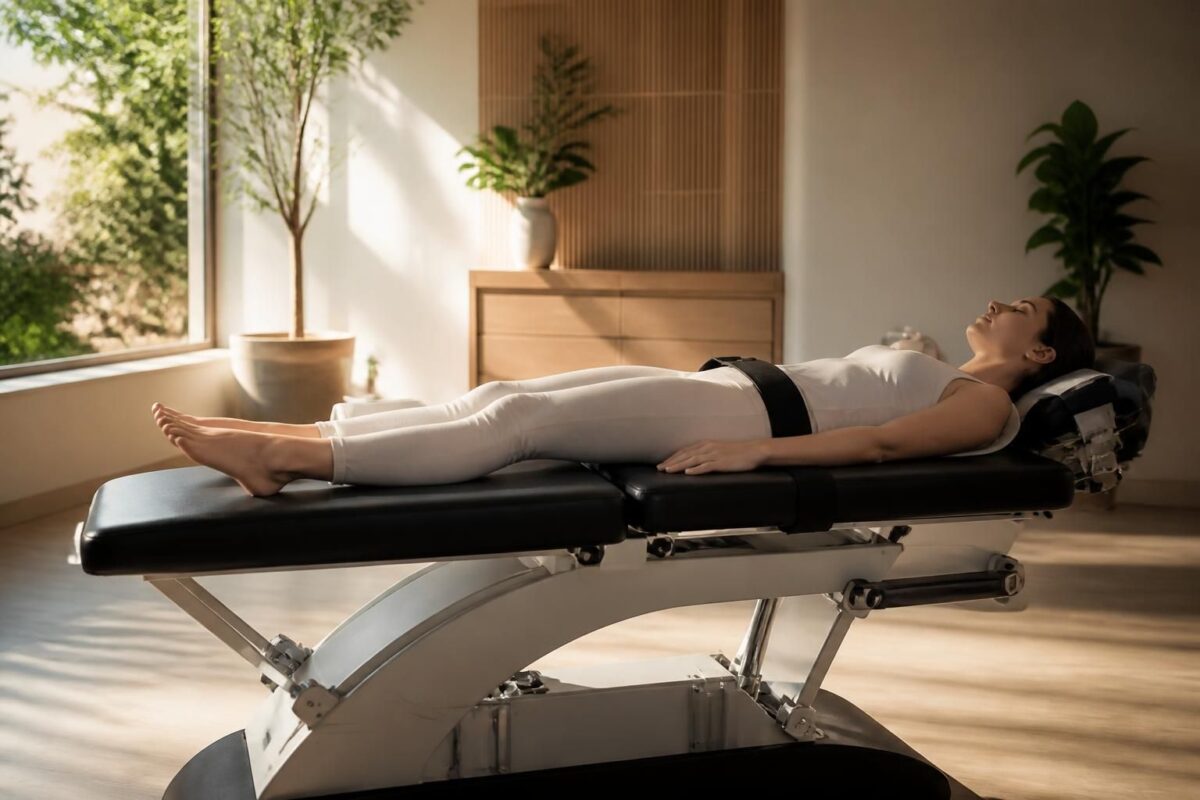
Neurovertebral Decompression and Body Alignment: Restoring Natural Balance
In short In short, neurovertebral decompression is one Non-invasive approach who restores theBody Alignment and thenatural balance back and neck. She acts by a Controlled traction of the spine to widen the intervertebral space and reduce the Pressure on discs…
Indications, contraindications and safety
Typical indications include lumbar or cervical disc herniation, disc degeneration and some radiculopathies. Contraindications include active inert or metallic implants, recent vertebral fracture, pregnancy, active infection or spinal tumors. A professional assessment is essential to determine eligibility.
Security is favored by non-invasiveness and continuous control of applied force. Side effects are rare and generally minor, often limited to a slight fleeting stiffness after the first sessions.
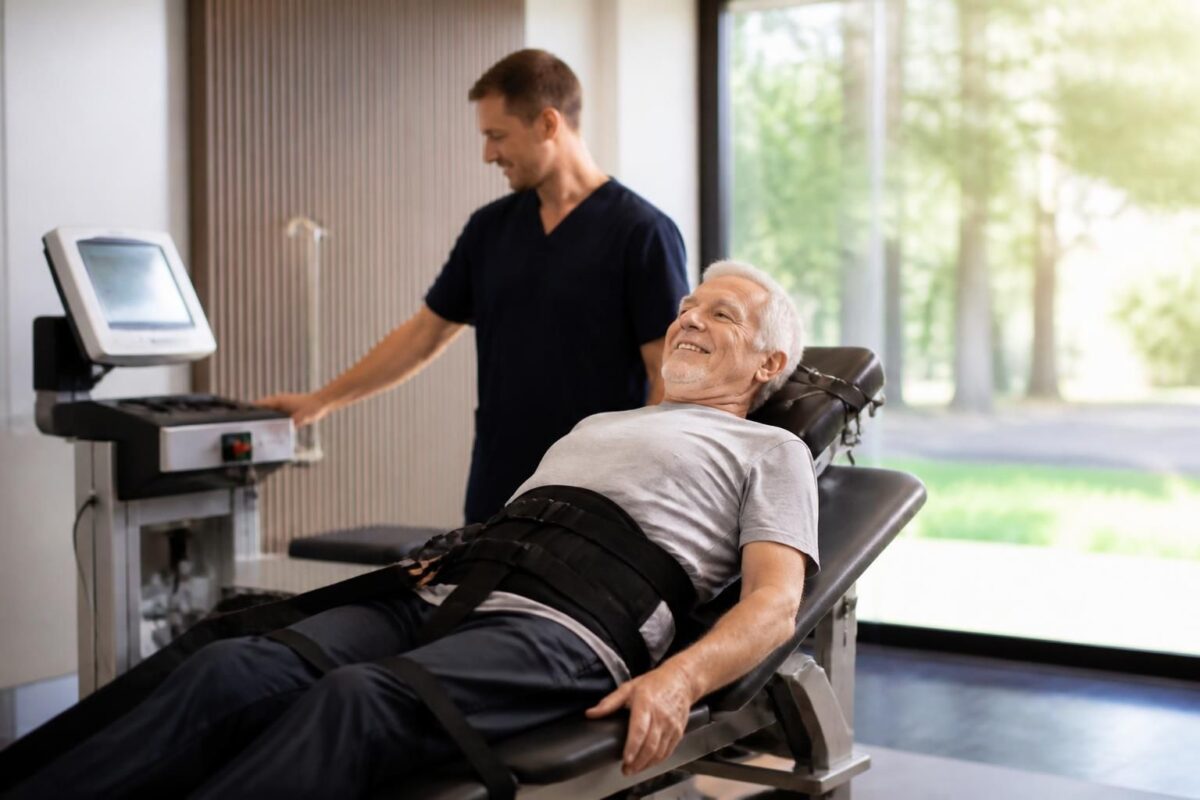
Why neurovertebral decompression is a lasting solution for active seniors
In short In short, the neurovertebral decompression is one Non-invasive therapy which sustainably relieves spinal pain in the spine active seniors By creating, by a Soft and controlled traction, a space between the vertebrae. At Montreal, it is recognized as…
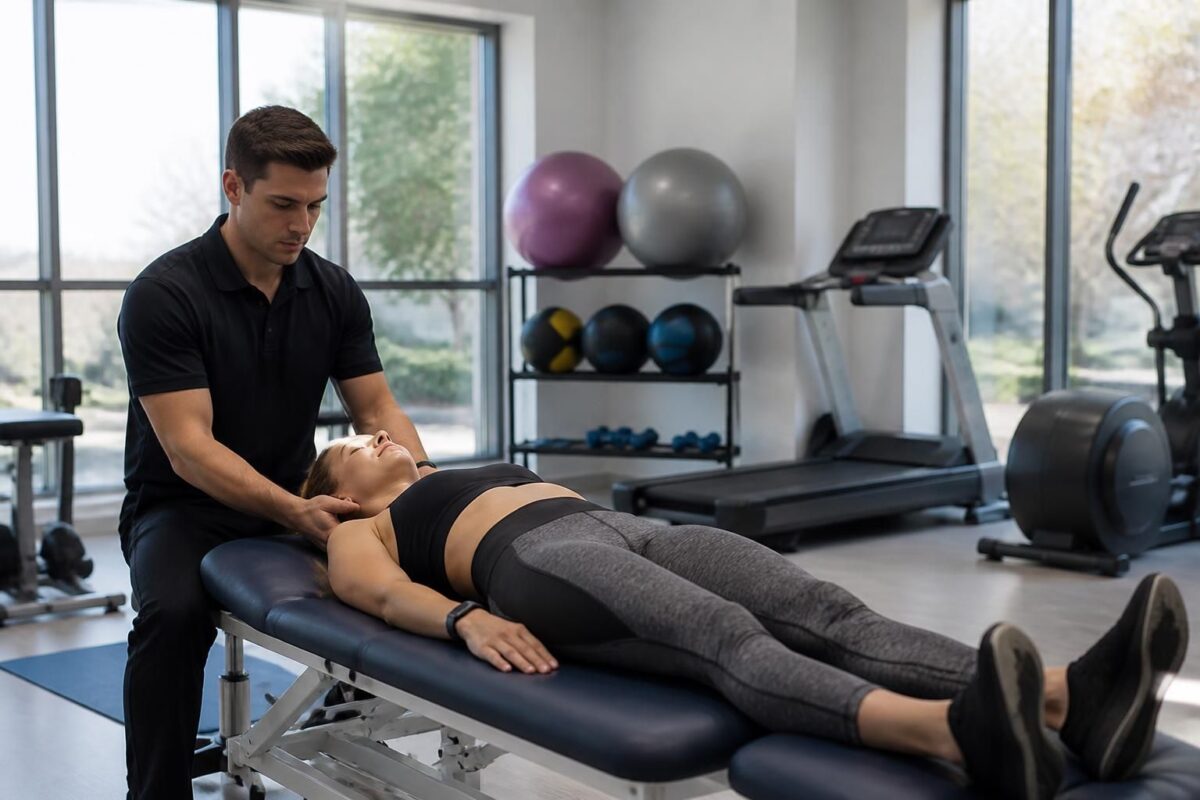
Neurovertebral decompression and recovery after severe sports injury
In short In short, the neurovertebral decompression is one Non-invasive method to Relieve the pressure on the Intervertebral discs and the gristle Via a Controlled traction, to facilitate the recovery After a severe sports injury. It improves the bloodstream towards…
Integration and practical recommendations
To benefit from the best results, neurovertebral decompression must be integrated into a personalized strategy, with a complete initial evaluation and an adapted treatment plan (typically 15 to 25 sessions). Choosing the target segment and monitoring progress through imaging and functional testing are key elements.
In practice, professionals favor an approach evidence-based, sometimes combining complementary therapies such as stability exercises, manual therapies or neuromodulatory technologies to optimize recovery and quality of life.
| Aspect | Concise description |
|---|---|
| Biological principle | The table generates a negative pressure in the disk, pulling the kernel inward and favoring a rehydration of the disc. |
| Effect on disc | a space between vertebrae is created, increasing the disc height and facilitating the contribution of water, oxygen and nutrients. |
| Technology and feedback | System data processing which adjusts the force in real time and compensates for contractions muscular. |
| Recent clinical evidence | Studies show a pain reduction and an disc height increased after the protocol. |
| Indications and contraindications | Indications: slipped disc, disc degeneration; Contraindications: metal implants, recent fusion, pregnancy, active fractures. |
| Safety and side effects | Treatment non-invasive, Side effects Rare: slight stiffness or temporary discomfort. |
| Imaging and structural evidence | Imaging showing physical changes: increase in disc height and disk remodeling. |
| Typical results in patients | reduction in morning stiffness, decrease in walking pain and improvement in mobility over the sessions. |
| Advantages over conventional traction | Computer-guided traction offers precision and Biological reaction, better rehydration and efficiency. |
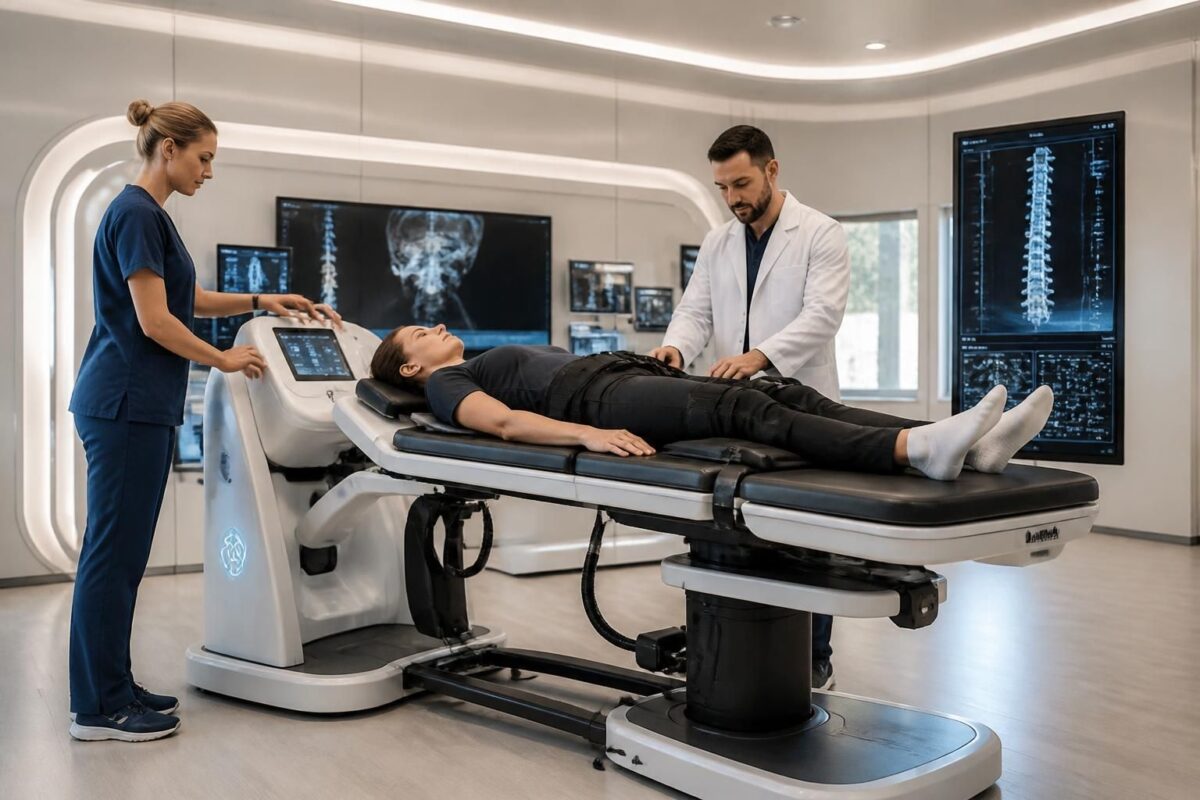
Recent innovations in neurovertebral decompression technologies
In short In short, the neurovertebral decompression is an approach non-invasive Aiming to reduce pressure on discs and nerves, and promote tissue regeneration. At Montreal, it is positioned as an effective option for lower back pain and herniated discs. The…
Neurovertebral decompression and diffuse pain: an appropriate solution
In short In short, the neurovertebral decompression is one Non-invasive solution For diffuse pain related to nerve irritation of the spine. She acts in Reducing pressure on intervertebral discs and nerves and improving the bloodstream, which promotes recovery and the…
Testimonials on the science behind neurovertebral decompression
“When I started exploring my lower back pain, I was told about science rather than promises. What I discovered convinced me: the disc acts as a shock absorber, and the Gelatinous kernel Can move if the space between the vertebrae narrows. Neurovertebral decompression acts by creating a negative pressure which encourages the Disc rehydration and disc volume playback.
“My sister helped me understand the mechanisms: Targeted traction generates a space between the vertebrae and triggers this sucking process that brings the nucleus back to the inside of the disc. I learned that it is not a simple dressing, but an intervention that attacks the cause by promoting the rehydration and the restoration of the disc height.
“I was able to observe the results through patients who followed a structured protocol. After a few sessions, clinical studies observables report a pain reduction And a functional improvement, with measurable changes in the disk itself. This is proof that the science behind decompression is not only theoretical, but tangible.
“Imaging was the real turning point. X-rays and MRIs show Physical changes in the disc: increase in the disc height and partial return of the shape of the disk, testifying to the ability of the system to restore part of its structure and function.
“As a clinician, I am impressed by the Clinical evidence who support this approach. The Randomized controlled trials And specialized journals show benefits not only on pain, but also on patient mobility, endurance and quality of life.
“For me, the most convincing is the impact on everyday life: a more restful sleep, a more stable mood and a regained ability to move without fear of triggering pain. Scientific data and patient feedback converge on an approach that treats pain at its source rather than temporarily eliminating symptoms.
“In the end, what I hear most often in the testimonies are phrases like this: even if science doesn’t promise a miracle, it offers a clear and measurable understanding of why and how decompression. And that changes everything in the motivation and confidence of patients in the face of their rehabilitation. »
Neurovertebral decompression is a non-invasive approach that is based on a simple but powerful principle: to create a targeted space between the vertebrae in order to reduce the pressure exerted on the spinal nerves. This controlled traction, driven by computer, generates a negative pressure inside the intervertebral disc and triggers a Disc rehydration, while facilitating the return of the gelatinous nucleus to its natural location. The objective is to tackle the structural cause, not to mask the symptoms by ad hoc treatments.
To understand why this mechanism can sustainably relieve pain, we must return to disc biology. The intervertebral disc acts as a shock absorber and as a mobile frame between two vertebrae. Over time, the disc may lose hydration, flatten and crack. The nucleus can then put pressure on the fibrous ring and form a herniated disc, causing pain, numbness and decreased mobility due to nerve compression, or radiculopathy.
The decompression process acts in several interdependent steps. First, the distraction between the targeted segments creates a space that promotes the formation of a negative pressure inside the disc. This force acts as an “aspiration” that helps the nucleus reposition itself towards the center. Then, the arrival of water, oxygen and nutrients in the disc tissue facilitates the Disc rehydration and restoration of disc volume and elasticity. Result: an improvement in disc pitch and a reduction in compression on the nerves.
What really sets this approach apart is the technology used. A dedicated decompression table is controlled by a computer system that continuously adjusts the force and traction rate, adapting to the patient’s response. If the muscles contract, the device detects the reflex and reflects the necessary adjustment. This biological feedback ensures that the treatment is tolerated and effective, and not imposed in a sudden manner.
Recent evidence reinforces scientific support for this method. Recent publications report marked improvements in pain and measurable disc pitch gains after a series of sessions; Imaging shows structural changes in the disc associated with clinical relief. Randomized clinical trials and retrospective analyzes have also shown that decompression, coupled with complementary therapies, may offer superior benefits to certain conservative treatments, and can promote return to activity and improve physical function.
Patient selection is essential. Decompression is indicated in particular for lumbar and cervical herniated discs, disc degeneration and certain forms of radiculopathy. Contraindications exist, such as active metal implants in the column, a vertebral fracture, or serious infections; The screening assessment is based on imaging and clinical examination to determine the right segment to target and ensure protocol safety.
In practice, a typical protocol generally provides between 15 and 25 sessions of 20 to 30 minutes each, spread over several weeks. Early results are often manifested by a reduction in morning stiffness and a gradual decrease in walking pain, followed by renewed mobility and a decrease in numbness. The goal is a lasting improvement in function, supported by clinical evidence and better disc biology, rather than a mere passenger relief.
This extract exposes, in a clear and precise way, the scientific foundations of the neurovertebral decompression, its mechanisms, the clinical evidence that supports it and the implications for the management of back pain. It emphasizes the role of negative pressure Inside the disc, the Disc rehydration and the increase in disc height, while recalling that this approach is based on evidence and not on marketing promises.
The neurovertebral decompression acts mainly by creating a space between the targeted vertebrae, which produces a negative pressure inside the disc and allows the gelatinous nucleus to refocus. This action, combined with the delivery of water, oxygen and nutrients, promotes a Disc rehydration and a progressive restitution of the volume and elasticity of the disc. The process is made possible by a computer-controlled decompression table that continuously adjusts the applied force and readjusts in real time in the event of reflex muscle contractions, thus offering gentle but targeted stimulation rather than a simple stretch. For a detailed explanation of the mechanisms and the theoretical framework, you can consult the following resources: neurovertebral decompression On Wikipedia and specialized analyzes of Dr Desforges.
In terms of evidence, recent research is converging towards improvement significant pain and a better function when decompression is integrated into a well-structured protocol. Studies published in recent years report measurable gains in terms of pain, mobility and evenDisc pitch elevation, with imaging evidence that corroborates clinically observed structural changes. To deepen scientific data and interpretations, consult the dedicated resources: Recent studies demonstrating effectiveness, and public summaries on scientific feedback.
In terms of safety and therapeutic choices, decompression is an approach non-invasive which targets the cause of discogenic pain rather than masking symptoms. It is particularly suitable for cases of disc herniation and disc degeneration when contraindications are excluded and professional evaluation confirms eligibility. For an overview of indications, limits and clinical considerations, you can refer to educational resources such as A non-surgical solution for back pain and the page neurovertebral decompression.
For those looking to go further in scientific understanding and therapeutic perspectives, several complementary resources offer detailed views on mechanisms, clinical trials and practical applications: The science behind neurovertebral decompression, Recent studies demonstrating effectiveness, Scientific feedback, and additional educational resources like How does decompression work or Is decompression painful.
Finally, resources for patient and practitioner information present the practical aspects, feedback and opportunities for decompression integration into a multidisciplinary approach: Sports injury podcast, The science behind decompression in sports care, and Suitable for all athletes.

Dr Sylvain Desforges, B.Sc., D.O., N.D., osteopath, is the founding president of TAGMED and of the ACMA association. He dedicates his practice to chronic spinal pain, low back pain and symptoms compatible with sciatica, particularly when pain radiates toward the buttock, leg, calf, foot or toes.
Through SOS Sciatique, he publishes educational content on sciatica symptoms, possible causes such as disc herniation, disc narrowing, foraminal stenosis or irritation of a lumbar nerve root, as well as non-surgical approaches that may be considered according to the evaluation. At Clinique TAGMED, care may include, depending on the case, motorized neurovertebral decompression, specific osteopathic care or precision percussion.
For an evaluation related to sciatica treatment in Montreal / Mount Royal or sciatica treatment in Terrebonne, please consult the services available at Clinique TAGMED.
Medical disclaimer
The information published on SOS Sciatique is provided for educational purposes only and does not replace a consultation, diagnosis, opinion or treatment provided by a physician or another authorized healthcare professional. The author of this article is neither a medical doctor nor a specialist in a medical specialty recognized by the Collège des médecins du Québec. The osteopathic, manual medicine or functional support approaches described on this site do not constitute medical acts and are not intended to replace medical follow-up.
Consult a physician or emergency service in cases of loss of bladder or bowel control, anesthesia in the saddle area, significant or progressive weakness in the leg or foot, fever, recent trauma, severe pain or rapid worsening of symptoms. For more details, please read our Legal Notice.