How neurovertebral decompression relieves herniated discs
25/06/2026
The science behind neurovertebral decompression
25/06/2026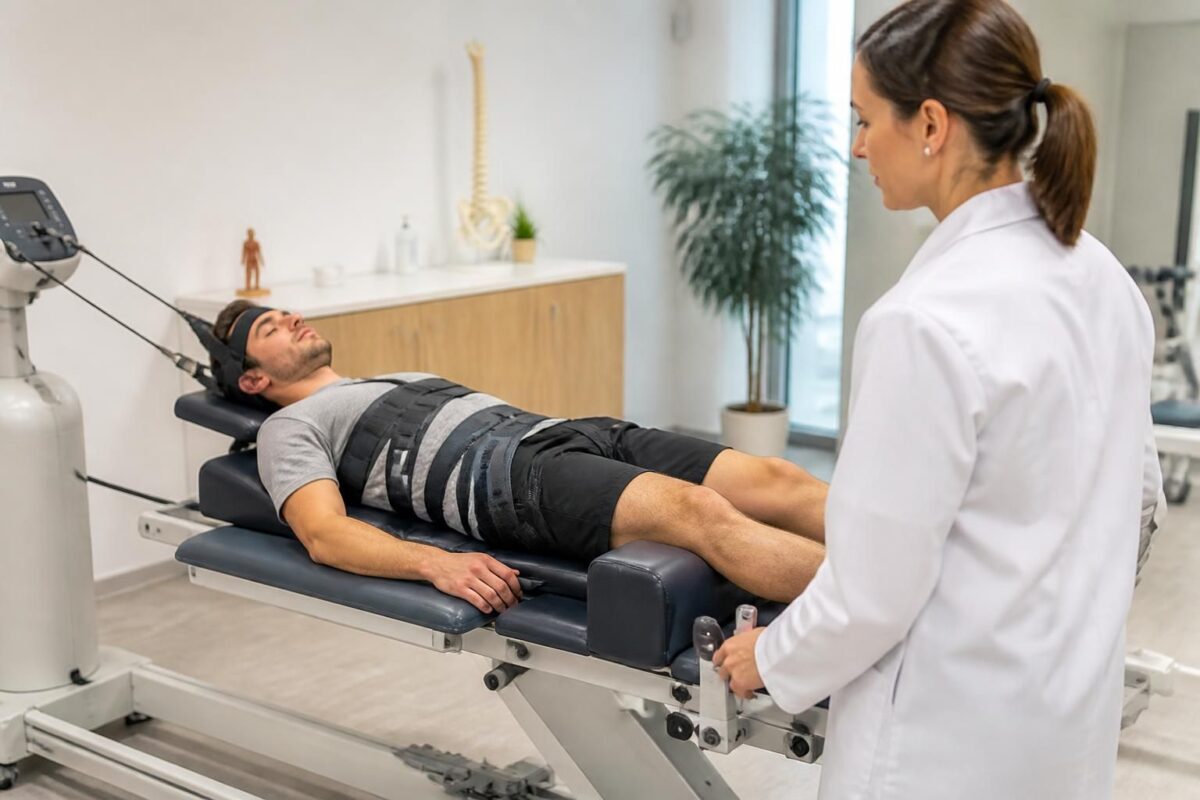
In short |
| In short, the neurovertebral decompression is one Non-surgical solution for the back pain which consists in applying a Controlled traction on the spine in order to create a space between the vertebrae and to allow the Rehydration of intervertebral discs. This mechanism reduces nerve pressure and relieves pain related to herniated discs, lumbar and cervical pain, sciatic pain and facet osteoarthritis. Benefits include a Sustainable relief, improved mobility and an approach safe and non-invasive, often in 6 to 8 weeks. Available in Montreal and on the South Shore, this treatment aims to allow a rapid return to an active life without surgery. |
The neurovertebral decompression is one Non-surgical solution For back pain that acts directly on the Intervertebral discs and the nerves. thanks to a Soft and precise traction Driven by computer-assisted technology, it creates a space between the vertebrae and promotes Disc rehydration and tissue regeneration, thus reducing nerve pressure and pain. A typical protocol takes place on 6 to 8 weeks and aims to restore daily activity as part of a safe and non-invasive treatment.
This analysis written by a health professional explains why the neurovertebral decompression Maybe a Non-surgical solution Effective for back pain. It describes the principle, indications, expected results and points to discuss with your doctor or osteopath. The goal is to enlighten patients and professionals on a clinical data-based approach, without systematically using surgery.
What is neurovertebral decompression?
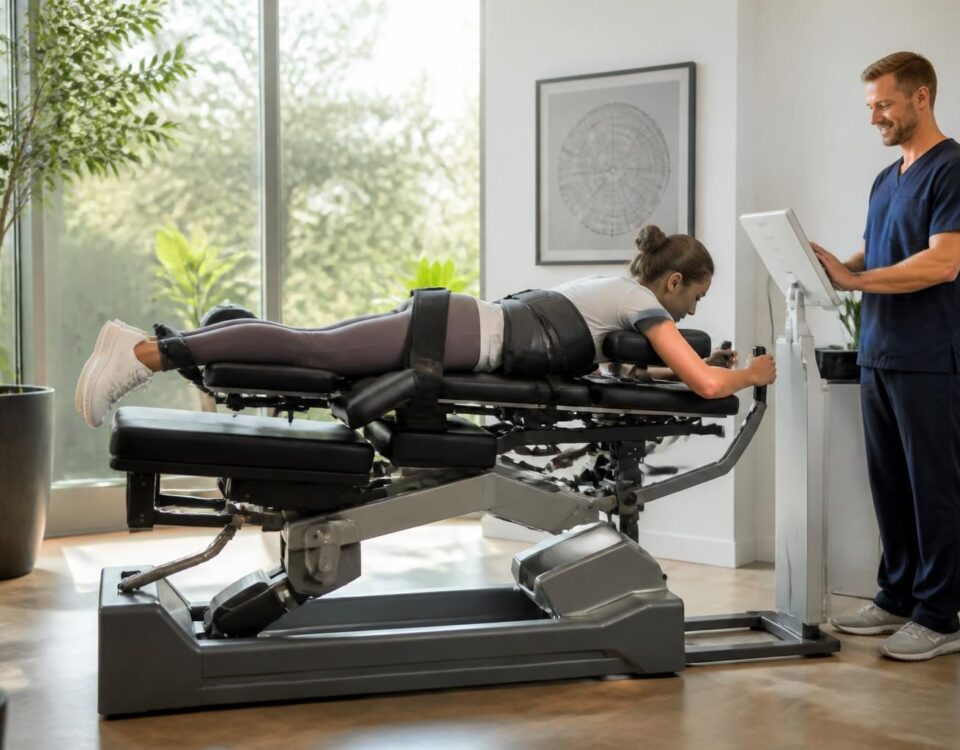
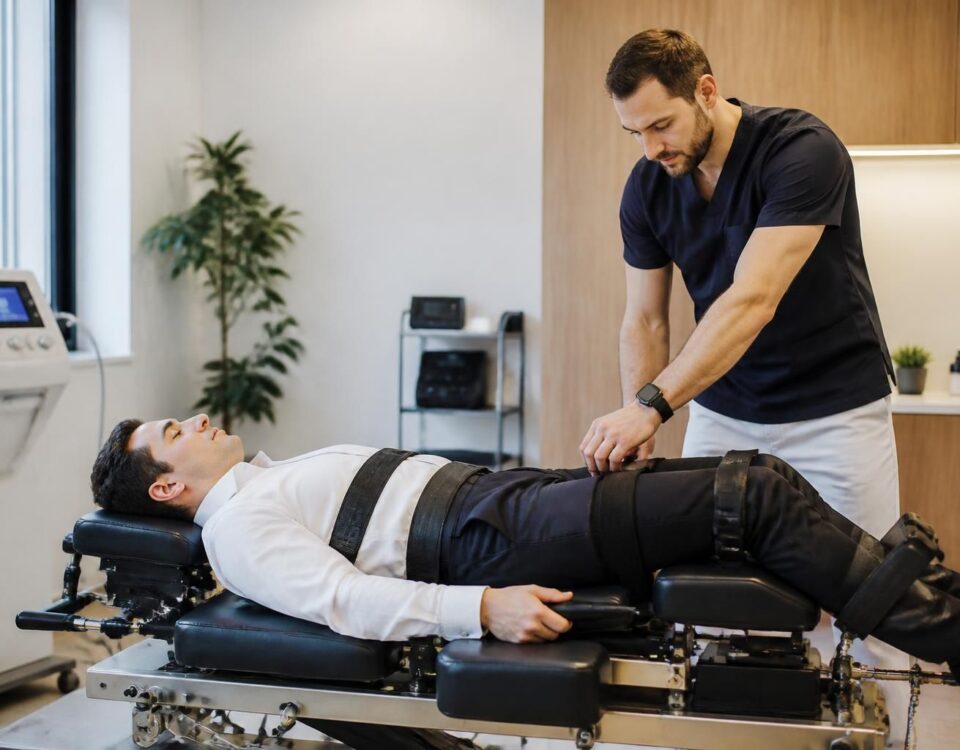
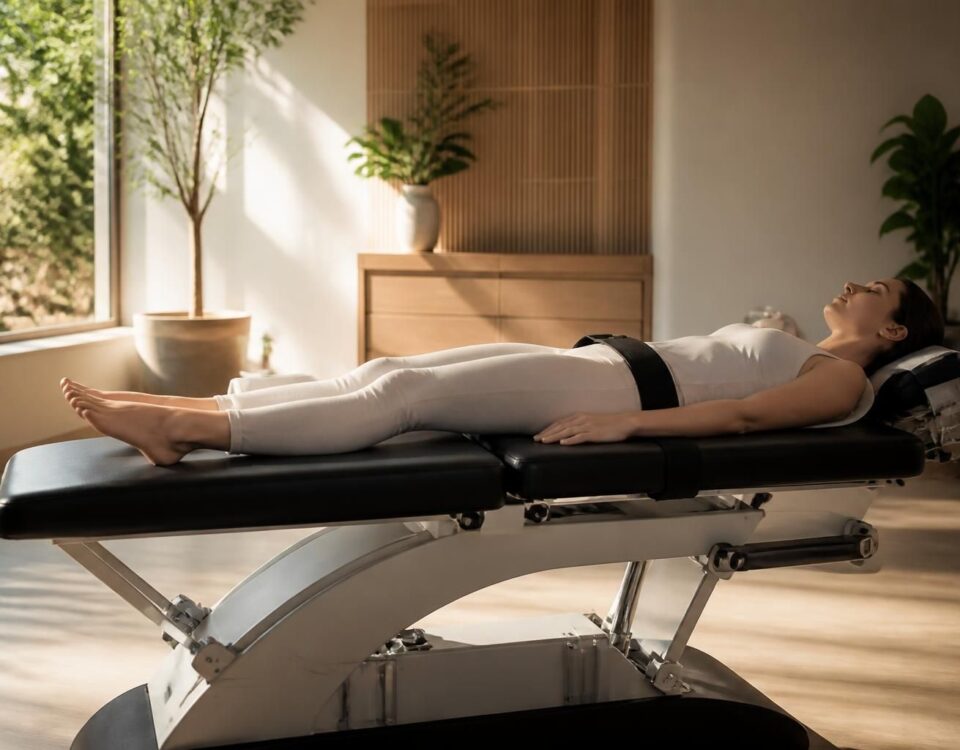
Neurovertebral decompression is a technique non-surgical which aims to reduce the pressure exerted on the nerves and discs of the spine. The treatment uses a computerized and patented system that applies precise microtractions between the vertebrae. This creates additional space between segments and can promote tissue rehydration and regeneration discs.
How does it work?
The device, such as the SpineMed® system, directs traction forces weak and targeted under computer control. This approach produces a negative pressure Inside the discs, without triggering the usual muscle reflexes of conventional traction. The result can be a reduction in the pressure on the nerves and a pain relief.
Indications and expected results
This therapy can be considered for pain associated with abnormalities such as herniated discs, Disc bulges, disc degradation, Facet syndrome, sciatica, and Facet osteoarthritis. A typical program extends over several weeks and requires a pre-assessment by a health professional.
When to consider this therapy?
It is generally proposed after a medical assessment when the pain persists despite non-invasive approaches and when imaging results or symptoms are compatible with mild decompression. Each case is unique, and a decision is made after individual consultation.
Resources and reliability
To deepen, several specialized resources describe the mechanisms and results associated with neurovertebral decompression:
Neurovertebral Decompression — Nonsurgical Solution
Neurovertebral decompression and herniated disc
Neurovertebral and sciatica decompression
What TagMed offers
At the TagMed clinic, we favor an approach non-surgical and evidence-based for back pain management. Neurovertebral decompression can be part of an individualized treatment plan, in coordination with other therapies available in Montreal and Terrebonne.
Training, associations and professional executive
Professionals involved in this field can be trained in recognized institutions such as NUMSS and NAO, as well as in academic networks such as National University of Medical Sciences and National Academy of osteopathy. As part of our practice, we respect the recommendations of relevant professional associations such as ACMA (Canadian Alternative Medicine Alliance), College of Canadian Osteopaths and the College of Canadian Osteopaths.
Comparison and other approaches
Neurovertebral decompression is one of the non-surgical options available. In some cases, physiotherapy may be considered, but it is evaluated on a case-by-case basis and, where appropriate, in a comparative table showing relative effectiveness compared to other therapies. Our priority remains appropriate care for each patient and focused on measurable results.
Medical Disclaimer: The information and advice provided on this site does not replace the health professional’s diagnosis or treatment. Please note that Dr. Sylvain Desforges osteopath is neither a doctor of medicine nor a doctor, and is not a specialist in a medical specialty as defined by the Collège des Médecins du Québec. Manual medicine, functional medicine and sports medicine as described on this site exclude any medical treatment or diagnosis made by a doctor or specialist doctor. Always consult your doctor for any medical questions. For more details, please read our full legal notice. »
- What is it? neurovertebral decompression non-surgical applying controlled traction on the column.
- Principle light and precise distraction, creating an intervertebral space for the Disc rehydration.
- Technology computerized and patented system ensuring traction forces secure.
- Protocol short therapy on 6 to 8 weeks With personalized tracking.
- directions herniated discs, cervical and lumbar pain, disc bulges, degeneration, facet and sciatic syndrome.
- Benefits Relief without surgery and absence of excessive muscle contraction.
- Impact on the movement Reduced nerve pressure and improved mobility.
- Expected results decreased pain and return to normal activity.
- Security Procedure non-invasive Suitable for various vertebral pathologies.
- Effect on discs rehydration and Tissue regeneration.
- Economy of the course May limit the use of surgery.
- Patient commitment Follow the protocol and post-processing advice to optimize results.

neurovertebral decompression is one Non-surgical solution Intended to relieve back pain using controlled, computer-guided traction. This approach aims to restore the space between the vertebrae, to promote the rehydration of the discs and to reduce the pressure on the nerves. This article presents the principle, the indications, the typical course over 6 to 8 weeks and practical advice to start with serenely.
What is neurovertebral decompression?
This technique is designed to treat spinal pain without surgery. In particular, it is aimed at people withherniated discs, of disc degeneration, of Disc bulges, of Facet syndrome, of sciatic pain, of torticollis and ofFacet osteoarthritis. It is based on the principle that reducing pressure on nerve structures improves pain and mobility.
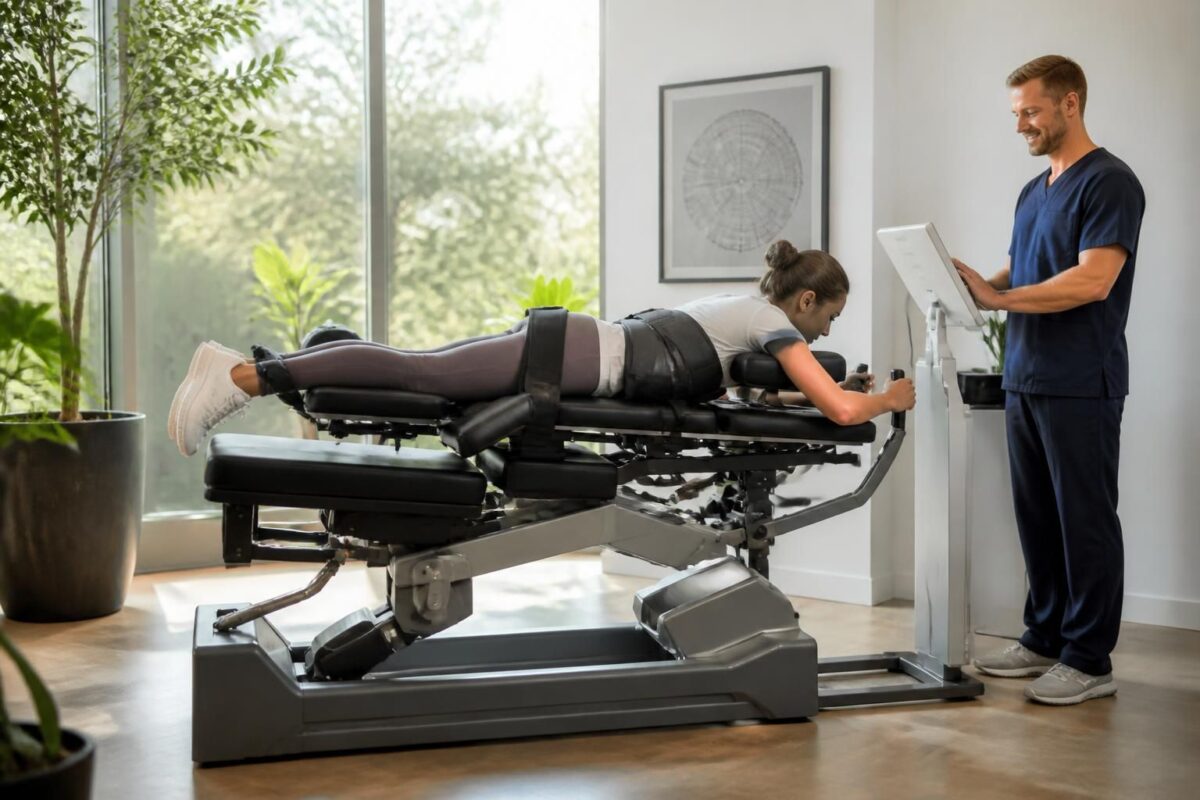
The long-term benefits of neurovertebral decompression for spinal health
In short In short, the neurovertebral decompression is a non-invasive approach that decreases the Pressure on intervertebral discs and nerves, favoring the Natural regeneration and tissue recovery. Its long-term benefits include Lasting pain reduction, Improving mobility and from the posture,…

Neurovertebral decompression and mobility: a return to an active life
In short In short, the neurovertebral decompression is therapy non-invasive who uses a gentle traction To create a space between the vertebrae and reduce the pressure on the Intervertebral discs and the nerves. It promotes a bloodstream improved, lowers tension…
How does it work?
The processing is based on a computerized and patented system that applies microtractions controlled on the spine. By creating a space between the vertebrae, the discs can resume volume and the negative pressure thus generated reduces the pressure on the nerves. This mechanic allows a Disc rehydration and tissue regeneration, while avoiding the usual muscle reflexes associated with conventional traction. The result is a pain reduction and improved mobility.
A secure and non-invasive approach
Designed to be used under professional supervision, this therapy relies on biomechanical principles and advanced technologies to provide intervention secure and non-surgical.
Duration and course of the program
The typical protocol is spread over a period short, usually between 6 and 8 weeks, with regular sessions adapted to your condition. Many patients find a gradual decrease in pain and a resumption of normal activities faster than expected.
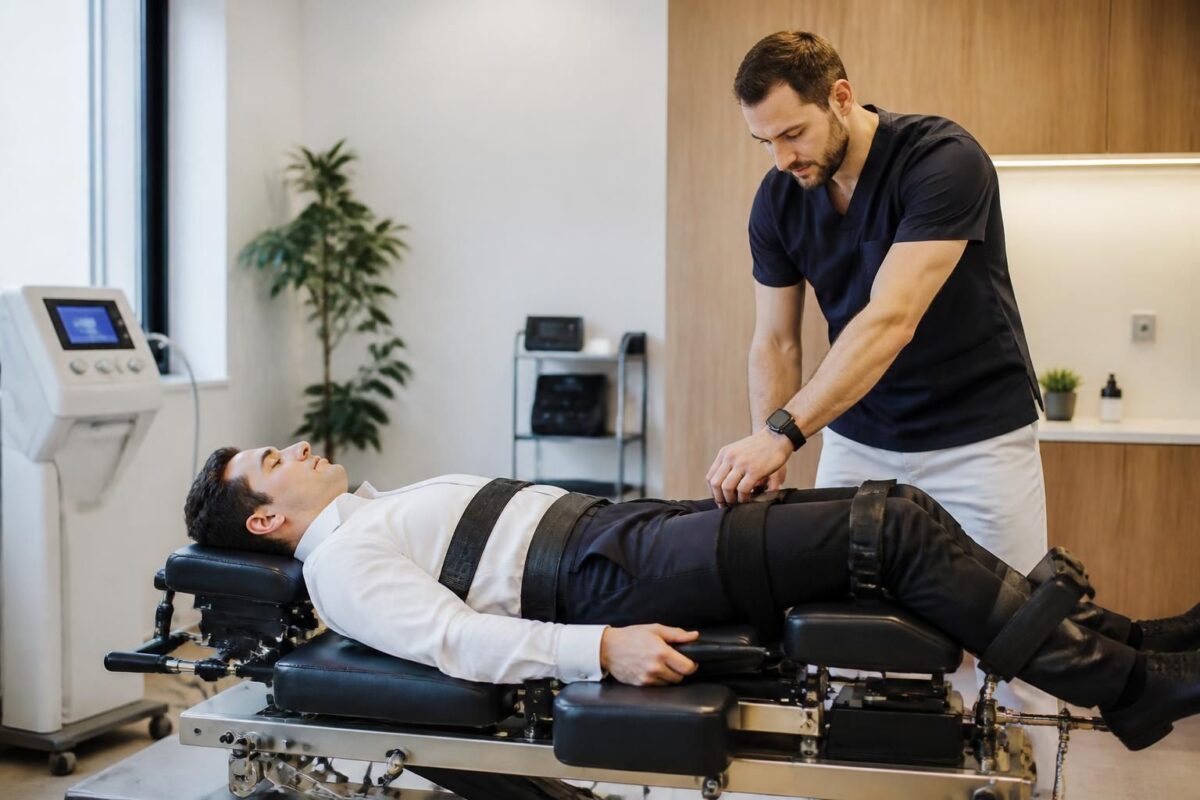
How Neurovertebral Decompression Prevents Diffuse Chronic Pain
In short decompression neurovertebral is one Non-invasive method aimed at reducing the Pressure on the intervertebral discs and the nerves, in order to prevent Diffuse chronic pain. It improves the circulation and thedisc hydration, decreases inflammation and promotes better mobility.…
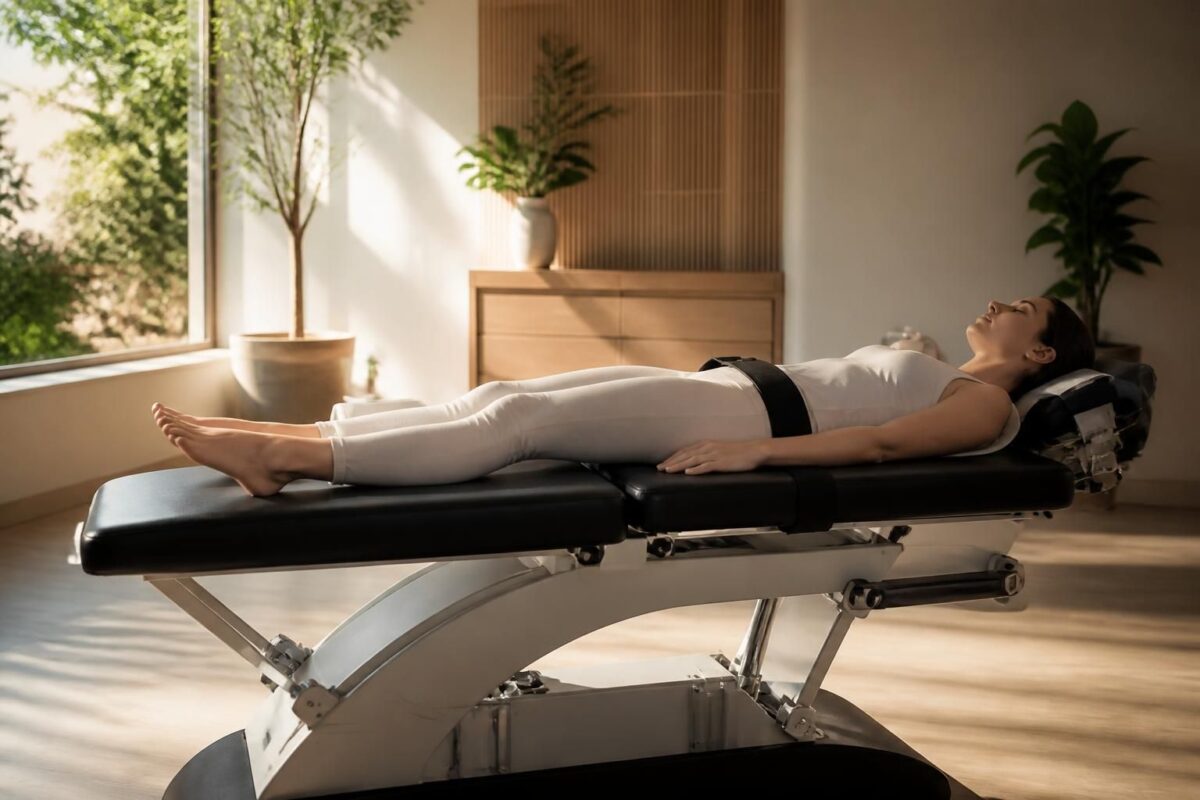
Neurovertebral Decompression and Body Alignment: Restoring Natural Balance
In short In short, neurovertebral decompression is one Non-invasive approach who restores theBody Alignment and thenatural balance back and neck. She acts by a Controlled traction of the spine to widen the intervertebral space and reduce the Pressure on discs…
Who is it suitable for?
This option is primarily aimed at those who wish to avoid an operation or who are looking for a non-surgical approach supported by evidence. It is particularly suitable for people with herniated discs, cervical or lumbar pain related to discus disorders, Facet osteoarthritis or radicular pain when clinical and radiological examinations confirm eligibility.
Practical advice before starting
Before starting the treatment, consult a specialist to assess your eligibility and establish a personalized plan. During therapy, follow the recommendations, maintain good hydration and consider complementary exercises and postural advice to support the results and promote a sustainable recovery from daily activities.
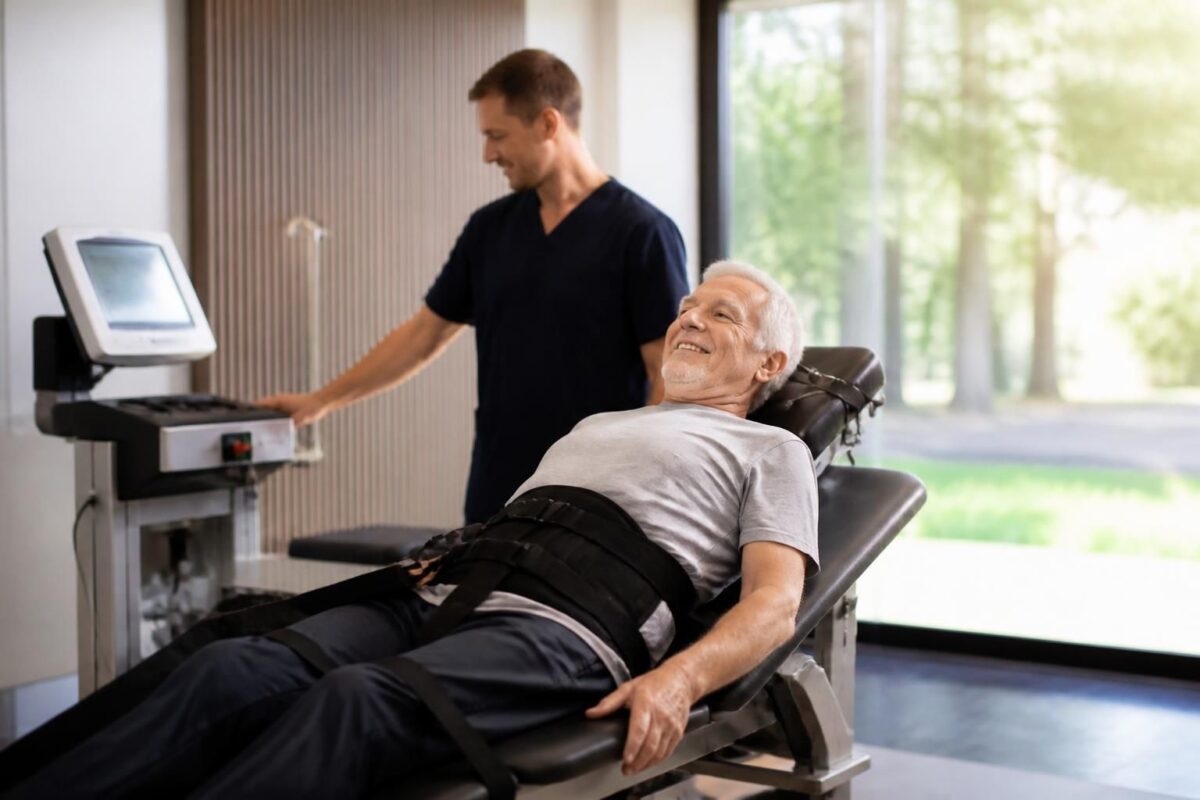
Why neurovertebral decompression is a lasting solution for active seniors
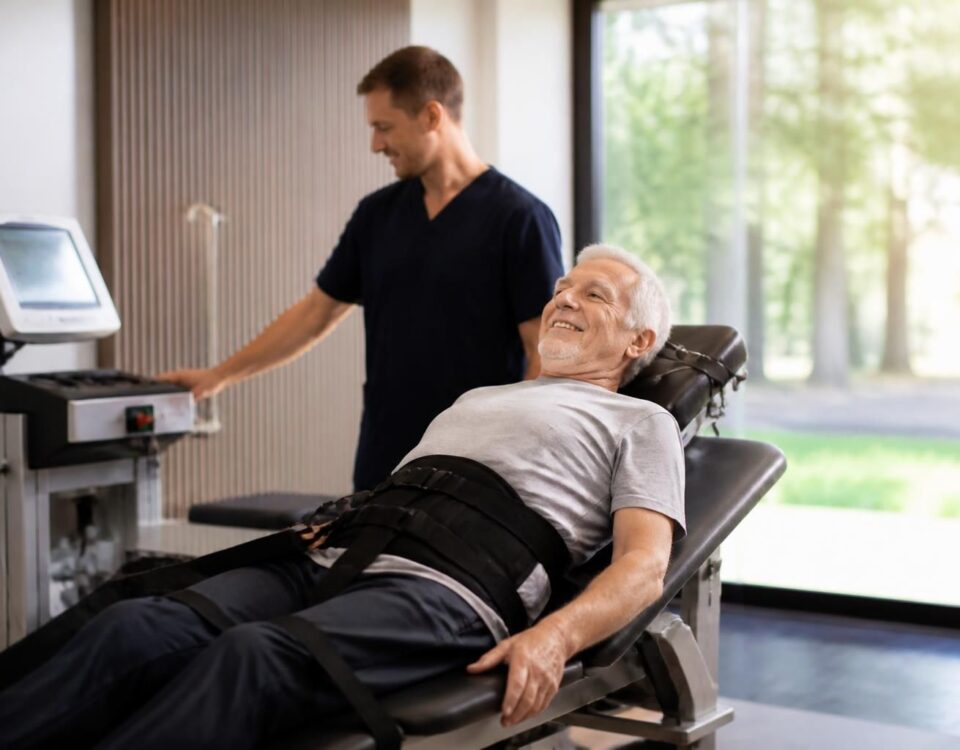
In short In short, the neurovertebral decompression is one Non-invasive therapy which sustainably relieves spinal pain in the spine active seniors By creating, by a Soft and controlled traction, a space between the vertebrae. At Montreal, it is recognized as…
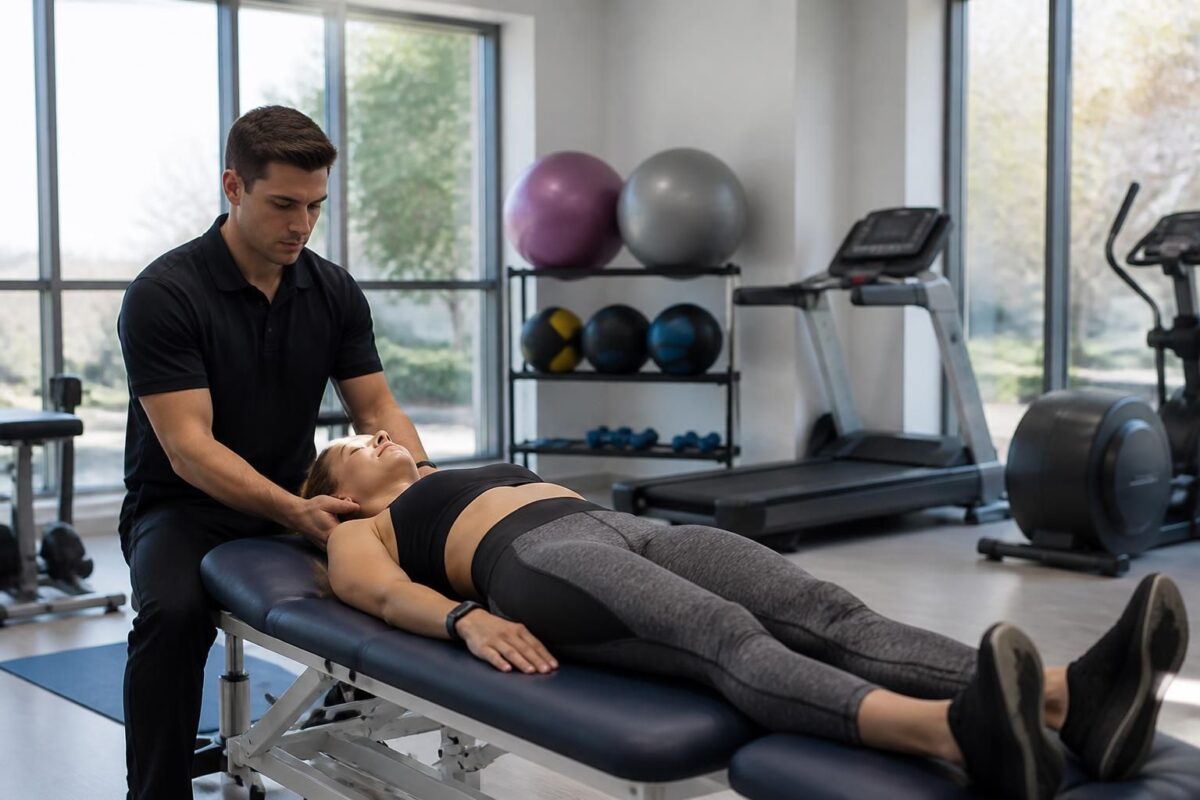
Neurovertebral decompression and recovery after severe sports injury
In short In short, the neurovertebral decompression is one Non-invasive method to Relieve the pressure on the Intervertebral discs and the gristle Via a Controlled traction, to facilitate the recovery After a severe sports injury. It improves the bloodstream towards…
What you can expect and how to start
By choosing this option, you opt for a route non-surgical aimed at reducing disc pressure and promoting better mobility. Improvements may appear over the weeks and depend on the regularity of the sessions and on the respect of the protocol. To get started, schedule an initial assessment with a professional to discuss your story, symptoms and goals. Get in touch to organize this step and start your journey towards a lighter and more mobile back.
| Axis | Description |
|---|---|
| Definition | The neurovertebral decompression is an approach non-surgical Aiming to relieve back pain by acting on the spine. |
| Mechanism of action | fine mechanisms of Precise traction creating a space between the vertebrae and favoring the rehydration discs, without reflex muscle contraction. |
| directions | Lumbar or cervical pain associated with disc or facet disorders and neuralgia/radiculopathy. |
| Key Benefits | Approach non-invasive with security high and reduced pressure on the nerves. |
| Expected effects | Progressive pain reduction and improvement in mobility after treatment. |
| Duration of treatment | usually over a period of 6 to 8 weeks with regular sessions. |
| Security | Technical computer assisted and carried out with strengths Controlled to limit the risks. |
| contraindications | contraindicated in case of unstable fractures, tumors, advanced pregnancy or other specific conditions; Recommended prior assessment. |
| Accessibility and evaluation | Free or preliminary assessment available to determine eligibility and treatment plan. |
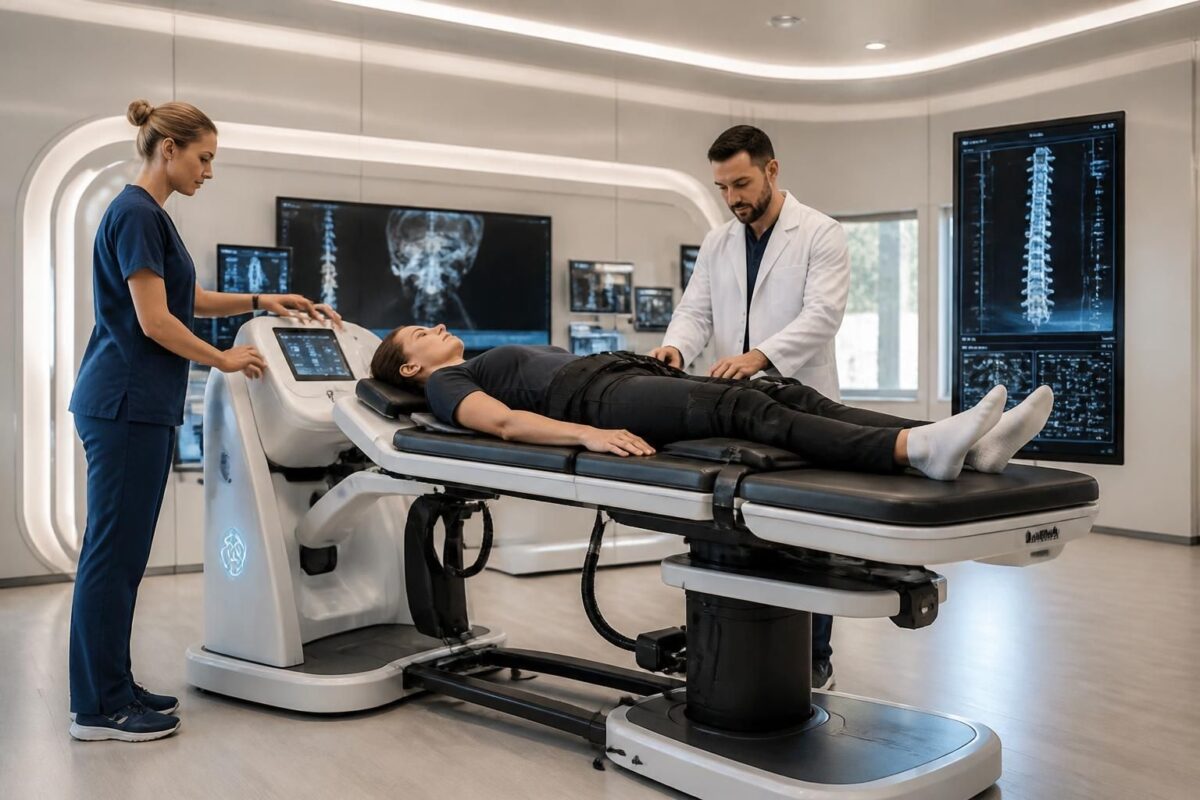
Recent innovations in neurovertebral decompression technologies
In short In short, the neurovertebral decompression is an approach non-invasive Aiming to reduce pressure on discs and nerves, and promote tissue regeneration. At Montreal, it is positioned as an effective option for lower back pain and herniated discs. The…
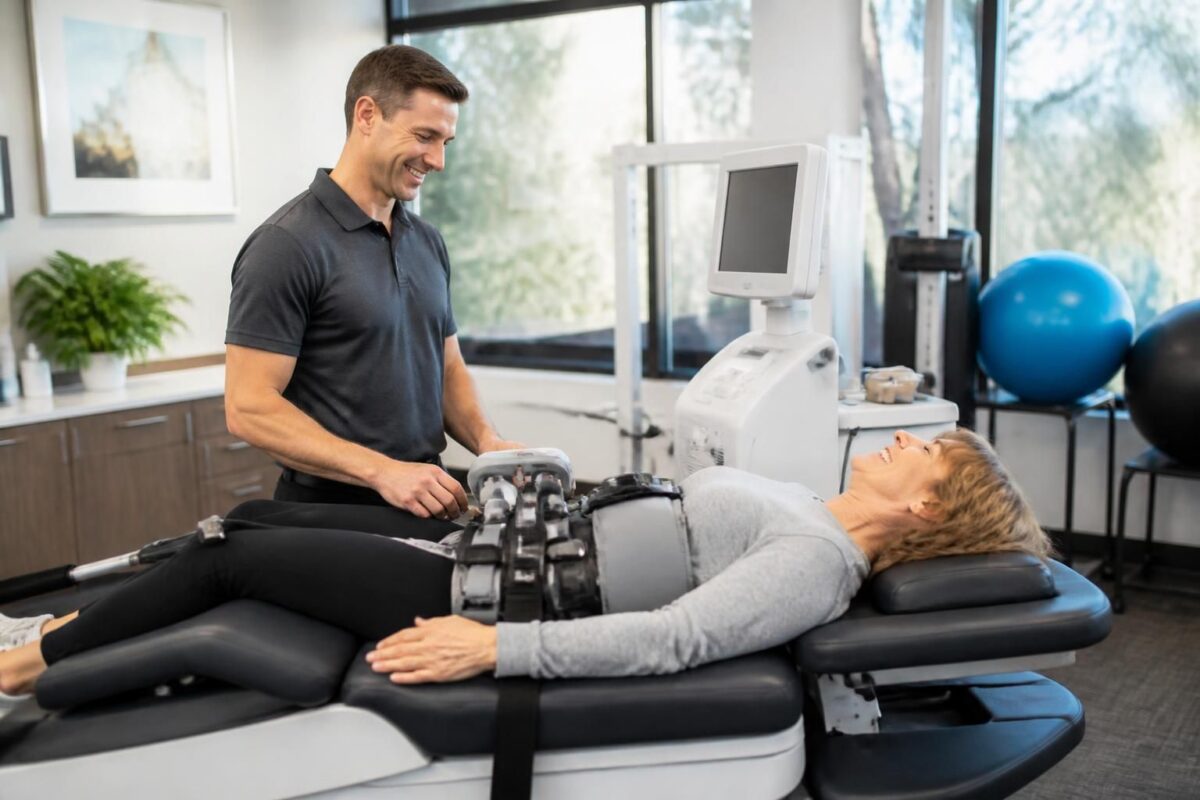
Neurovertebral decompression and diffuse pain: an appropriate solution
In short In short, the neurovertebral decompression is one Non-invasive solution For diffuse pain related to nerve irritation of the spine. She acts in Reducing pressure on intervertebral discs and nerves and improving the bloodstream, which promotes recovery and the…
Testimonials on neurovertebral decompression: a non-surgical solution for back pain
“Before, my lower back pain linked to a herniated disc prevented me from playing sports and sleeping. After a few weeks of sessions, I felt a real relief And an improvement in my mobility without going through surgery. »
“I suffered from neck pain and recurring torticollis. The treatment was quick and without surgery. Thanks to this Non-surgical solution, I found an amplitude and less stiffness on a daily basis thanks to the neurovertebral decompression. »
“After years of sciatic pain, I thought I had to live with it. The neurovertebral decompression made it possible to greatly reduce the pressure on the nerves and the relief is durable without heavy medication. »
“My mobility decline due to disc degeneration worried me. In six to eight weeks, I felt a noticeable improvement. It’s an approach non-surgical which combines safety and efficiency. »
“As an active, I had no more comfort to run and ride a bike. With the neurovertebral decompression, I was able to resume my activities and limit my daily pain; A real solution to stay active without surgery. »
“I highly recommend this approach to anyone looking for a way non-surgical for their back pain. The relief is noticeable and the results are long-term. »
Dr. Sylvain Desforges, expert in osteopathy, naturopathy and manual medicine, pays particular attention to chronic pain and their impact on everyday life. Through its practice, it offers an integrated approach that combines advanced manual techniques with targeted technologies to provide lasting relief and improved quality of life. The neurovertebral decompression is one of the key axes of this approach, presented as a Non-surgical solution Effective for many back and spine pathologies.
The neurovertebral decompression Based on a simple and powerful idea: by applying a controlled and progressive distraction on the column, the space between the vertebrae is reopened. This maneuver allows the intervertebral discs to regain volume and absorb the pressure exerted on the nerves. The intervention is done through a system computer assisted, which accurately adjusts the tensile forces. The result is a negative pressure Inside the discs, promoting their rehydration and tissue regeneration, while avoiding the muscle contraction reflex typical of older traction methods.
This approach is designed to treat the mechanical causes of back pain rather than masking the symptoms. In practice, it is aimed at pain and pathologies such as herniated discs, the neck pain, the Disc bulges, the disc degeneration, the Facet syndrome, the sciatic pain, the torticollis and theFacet osteoarthritis. By acting on structures penalized by movement and wear, the technique aims to reduce the load on the nerves and restore a more normal bodily function.
carried out in a setting secure and non-invasive, this therapy is guided by scientifically based protocols and rigorous clinical supervision. She favors a gentle and gradual approach, avoiding the risks associated with surgical interventions and part of a logic of progressive rehabilitation of the back.
Typical support is deployed over a relatively short period, with clear and measurable goals. As part of a full program, sessions and assessments typically last over 6 to 8 weeks, during which patients can return to an active and less painful life. The objective is clear: allow you to resume your daily activities with less effort and more freedom of movement.
If you suffer from Chronic pain or recurrent at the level of the back, do not hesitate to consider a consultation dedicated to neurovertebral decompression. A personalized evaluation will determine the suitability of this approach to your condition, and to offer you a suitable course, focused on reducing pain and improving your mobility.
This article presents the neurovertebral decompression like a Non-surgical solution For back pain, describing its principle, indications and potential results, while highlighting its safety and evidence-based framework. It is based on controlled and computer-assisted traction that creates an intervertebral space and promotes the rehydration of the discs, in order to reduce the pressure on the nerves and to improve pain and mobility.
The neurovertebral decompression offers a tangible alternative to invasive interventions for common spinal conditions, including slipped disc, the Neck and back pain, the Disc bulges and the Facet syndrome. This approach aims to reduce pain and restore function without surgery, which may be particularly relevant for patients wishing to maintain physical activity and limit operative risks. To learn more about specific benefits and considerations, you can look at resources like the explanation on credible alternatives to invasive solutions and complementary uses in the context of herniated discs: Why neurovertebral decompression is a credible alternative to invasive solutions, and Decompression as a complementary therapy to other herniated disc treatments.
The mechanism is based on a Light and precise traction system driven Patented computing. This configuration allows you to obtain a negative pressure inside the discs and promotes their rehydration, while avoiding the muscle contraction reflex typical of classic traction protocols. the device, often referred to by appellations as spinmed, Performs safe and reproducible microtractions, which contributes to a gradual improvement of symptoms without surgery.
The safety and effectiveness of this approach is based on strong biomechanical principles and advanced biomedical engineering. In practice, it is part of a non-invasive setting, with a low risk profile when carried out by competent professionals and after an appropriate medical evaluation. For athletes and very active people, decompression can be integrated without delaying the training program, provided that it is adapted to each profile and followed by a specialist.
Most programs are designed for a duration 6 to 8 weeks, with planned sessions that aim to gradually restore mobility and function. This time window often allows you to return to normal or improved activity, while maintaining results obtained through a combination of therapies and a healthy lifestyle. Of course, eligibility and evolution depend on accurate diagnosis and individual response to treatment. Always consult your doctor for any medical questions related to your condition.
Integrated into a multimodal care pathway, decompression can address reference pain and be associated with other non-invasive approaches. This may include targeted exercises, manual therapy and rehabilitation programs to maintain gains and prevent recurrences. To deepen applications and benefits, you can explore complementary resources such as experiences and perspectives in the sporting field: Decompression suitable for all athletes and How does neurovertebral decompression work.
For more information on clinical applications and feedback, you can view associated resources and expert opinions on specialized sites and dedicated pages to IDN and related practices: Neurovertebral Decompression – IDN, Disc decompression, and Complementary therapy.
Note that neurovertebral decompression does not replace medical advice or professional diagnosis. For any medical questions, consult your doctor and discuss which options are best for you. For more general information and additional resources, visit the decompression pages and its applications on partner sites.

Dr Sylvain Desforges, B.Sc., D.O., N.D., osteopath, is the founding president of TAGMED and of the ACMA association. He dedicates his practice to chronic spinal pain, low back pain and symptoms compatible with sciatica, particularly when pain radiates toward the buttock, leg, calf, foot or toes.
Through SOS Sciatique, he publishes educational content on sciatica symptoms, possible causes such as disc herniation, disc narrowing, foraminal stenosis or irritation of a lumbar nerve root, as well as non-surgical approaches that may be considered according to the evaluation. At Clinique TAGMED, care may include, depending on the case, motorized neurovertebral decompression, specific osteopathic care or precision percussion.
For an evaluation related to sciatica treatment in Montreal / Mount Royal or sciatica treatment in Terrebonne, please consult the services available at Clinique TAGMED.
Medical disclaimer
The information published on SOS Sciatique is provided for educational purposes only and does not replace a consultation, diagnosis, opinion or treatment provided by a physician or another authorized healthcare professional. The author of this article is neither a medical doctor nor a specialist in a medical specialty recognized by the Collège des médecins du Québec. The osteopathic, manual medicine or functional support approaches described on this site do not constitute medical acts and are not intended to replace medical follow-up.
Consult a physician or emergency service in cases of loss of bladder or bowel control, anesthesia in the saddle area, significant or progressive weakness in the leg or foot, fever, recent trauma, severe pain or rapid worsening of symptoms. For more details, please read our Legal Notice.