The global approach to osteopathy for physical well-being
27/06/2026
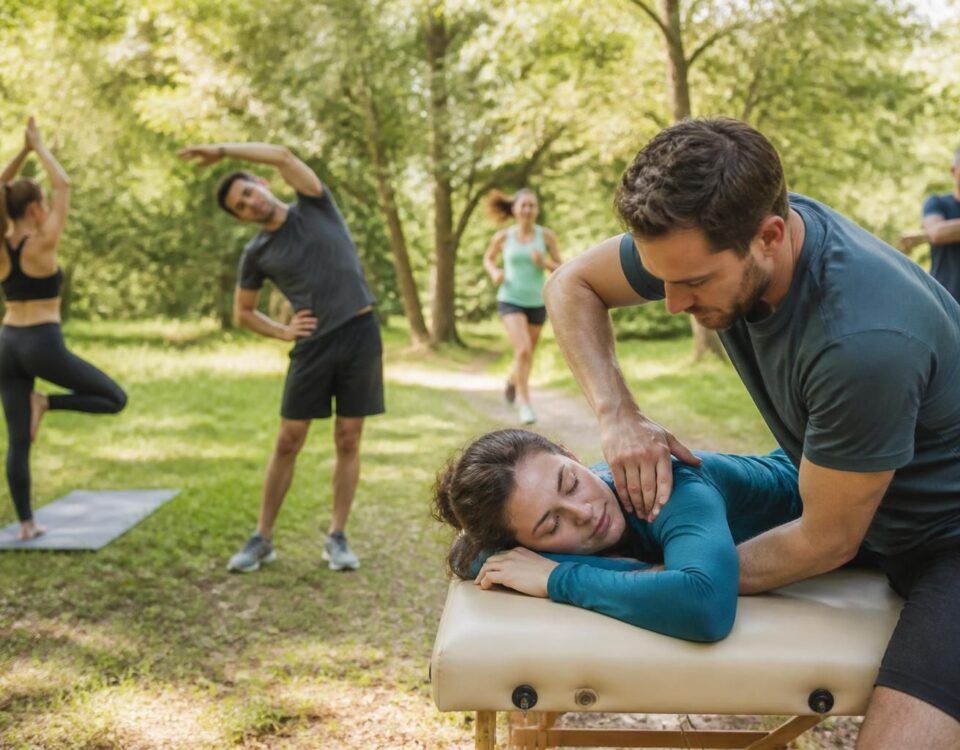
How Osteopathy Prevents Sport Injuries
27/06/2026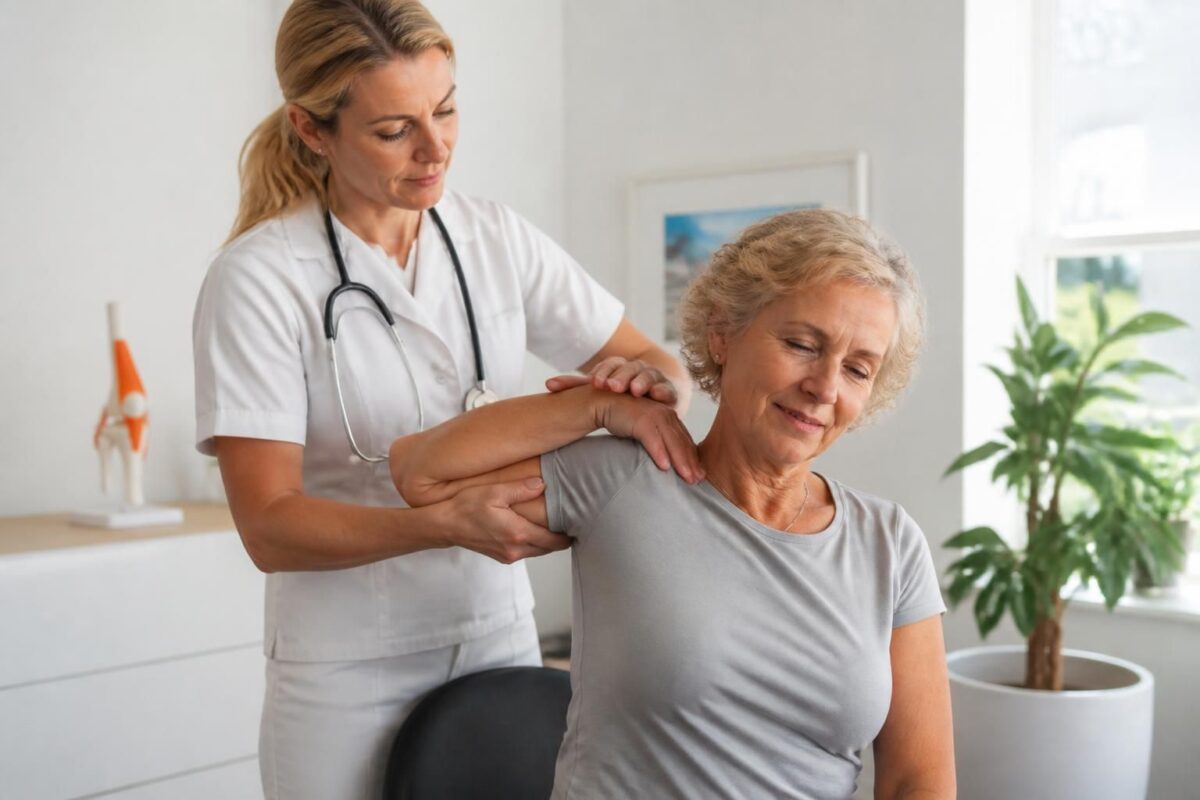
In short
Definition: theosteopathy For theosteoarthritis is an effective manual approach that acts on the structures around the joint (muscles, fascias, ligaments) to restore mobility and reduce pain, without direct manipulation of the cartilage. Key Benefits: pain reduction thanks to better circulation and muscle relaxation, Improving mobility and range of motion, Progression prevention by correcting mechanical imbalances, and a Non-surgical option which can be integrated into medical treatments. Location: at Geneva, osteopathy can accompany conventional care and help to live better with osteoarthritis, by adapting the advice and gestures of everyday life. |
under osteoarthritis, theosteopathy offers an approach natural to decrease pain and improve mobility. By working on soft tissue, fascia and joint play, it promotes better circulation, releases tension and optimizes the environment of the joint without resorting to aggressive manipulations.
This approach, adapted to each patient, can be used in addition to medical follow-up to slow progress, prevent postural compensation and retain a better quality of life on a daily basis.
This publication presents an approach naturalist for the Pain related to osteoarthritis Via theosteopathy, based on gentle techniques and on the improvement of mobility and joint function.
how losteopathy acts on osteoarthritis
Osteopathy is a manual approach that affects the environment of the joint. It improves circulation around the joint and releases muscle tension. It helps to restore an amplitude of motion and to strengthen the surrounding structures to limit pain and blockages.
It does not directly target cartilage, but acts on the tissues around the joint: muscles, fascias and ligaments. It can thus reduce pain, increase the range of motion and promote a more balanced posture.
Osteoarthritis and common location
The most frequent forms affect the knee, hip and spine. The knee can manifest itself in pain, stiffness and swelling. The hip can cause pain in the groin and in the thigh. The spine can lead to lower back or cervical pain and loss of mobility.
When to consult
Consult as soon as mechanical pain appears that limit daily activities. Osteopathy can be offered in addition to medical treatment. In case of inflammatory arthritis, consult your doctor to develop an appropriate plan.
Good practices and lifestyle
Hold a Healthy weight to reduce joint overload. Adopt a suitable and regular physical activity, such as walking or swimming. Prefer an anti-inflammatory diet rich in fruits, vegetables and omega-3s. Avoid repetitive movements and prolonged positions that excessively strain the joints. Sleep and stress management support the healing process.
Security and professional framework
Osteopathy favors gentle techniques adapted to the patient’s condition. The practitioner adjusts his gestures according to tolerance and evolution. A medical evaluation is recommended before osteopathic follow-up, especially in the elderly or with several pathologies.
Training and professional executive
Osteopaths may have taken recognized training such as Numss or NAO, or the National University of Medical Sciences and National Academy of courses osteopathy. The use of compliant professional associations guarantees compliance with the standards in force.
References and Resources
To learn more, you can consult resources on the Principles of Losteopathy and its benefits. Examples of relevant sources in authorized domains:
Principles of Losteopathy,
Benefits for chest pain,
neurovertebral decompression,
Osteoarthritis and herniated disc,
Carpal tunnel syndrome.
Professional training and executive: Numss, NAO, National University of Medical Sciences, National Academy of Osteopathy. For the associative framework, the relevant professional sources remain ACMA and the equivalent organizations recognized.
Medical Disclaimer: The information and advice provided on this site does not replace the health professional’s diagnosis or treatment. Please note that Dr. Sylvain Desforges osteopath is neither a doctor of medicine nor a doctor, and is not a specialist in a medical specialty as defined by the Collège des Médecins du Québec. Manual medicine, functional medicine and sports medicine as described on this site exclude any medical treatment or diagnosis made by a doctor or specialist doctor. Always consult your doctor for any medical questions. For more details, please read our full legal notice. »
- osteopathy Targeted: gentle mobilization and soft tissue work to preserve the amplitude and support the proprioception.
- Activation of the circulation locality and release of tensions to reduce the pain and spasms.
- correction of postural imbalances in order to prevent offsets articular.
- support to a Adapted physical activity and daily habits that preserve the joints.
- gradual improvement in mobility and reduction of stiffness related to the osteoarthritis.
- slowing of joint wear by better stability and posture management.
- reduction of Mechanical pain during movements and efforts.
- Complementary approach to treatments if necessary, with potential reduction of analgesics.

This article presents how theosteopathy can help to Reduce the pain related to theosteoarthritis Naturally, by acting on the environment of the joint (muscles, fascias and ligaments), and by combining simple and effective life advice to preserve the mobility. You will discover gentle therapeutic procedures, prevention strategies and clear indications for integrating osteopathy into a global care plan, without systematically using heavy drug treatments.
Understanding osteoarthritis and the role of osteopathy
theosteoarthritis is a chronic condition where the cartilage diminishes, causing pain and stiffness. The objective of osteopathy is not to “repair” the cartilage directly, but to optimize the functioning of the structures around the joint. By releasing muscle tension, rebalancing the muscle chains and restoring an appropriate static, the osteopath improves the circulation and the proprioception, which helps to reduce pain and promote more fluid movements on a daily basis.

How osteopathy improves the quality of life of active people
In short In short, theosteopathy is a global approach that Optimizes mobility and the function of the body of ACTIVE PEOPLE, for a better quality of life. It helps prevent injury and reduce Musculoskeletal pain While promoting the Sports recovery.…
Soft techniques and objectives
Soft joint mobilizations
preferred techniques are sweet and progressive, intended to maintain the amplitude and to restore the coordination of gestures. They aim to release tensions, without forcing the joint, in order to preserve the stability And to avoid over-exercise that aggravates the pain.
Myofascial release and tissue work
Targeted work of the fascias and soft tissues helps to release the points of tension around the affected joint. This approach promotes better elasticity of the surrounding muscles and contributes to the reduction of mechanical pain, while improving functional mobility.

Osteopathy and sports recovery: prepare the body for lasting performance
In short In short, Osteopathy and Sports recovery is one Global manual approach that sustainably prepares the body for the effort by restoring mobility and circulation After the effort. It is a discipline that acts on the sinews, the joints,…
take care of pain naturally
To optimize benefits, osteopathy is accompanied by practical measures. Adapted physical activity (walking, swimming, soft cycling, yoga), associated with a Anti-inflammatory diet Promoting omega-3s and colored fruits/vegetables, can significantly influence the evolution of symptoms. the management of stress, quality sleep and appropriate posture during daily activities prolong beneficial effects and preserve mobility.
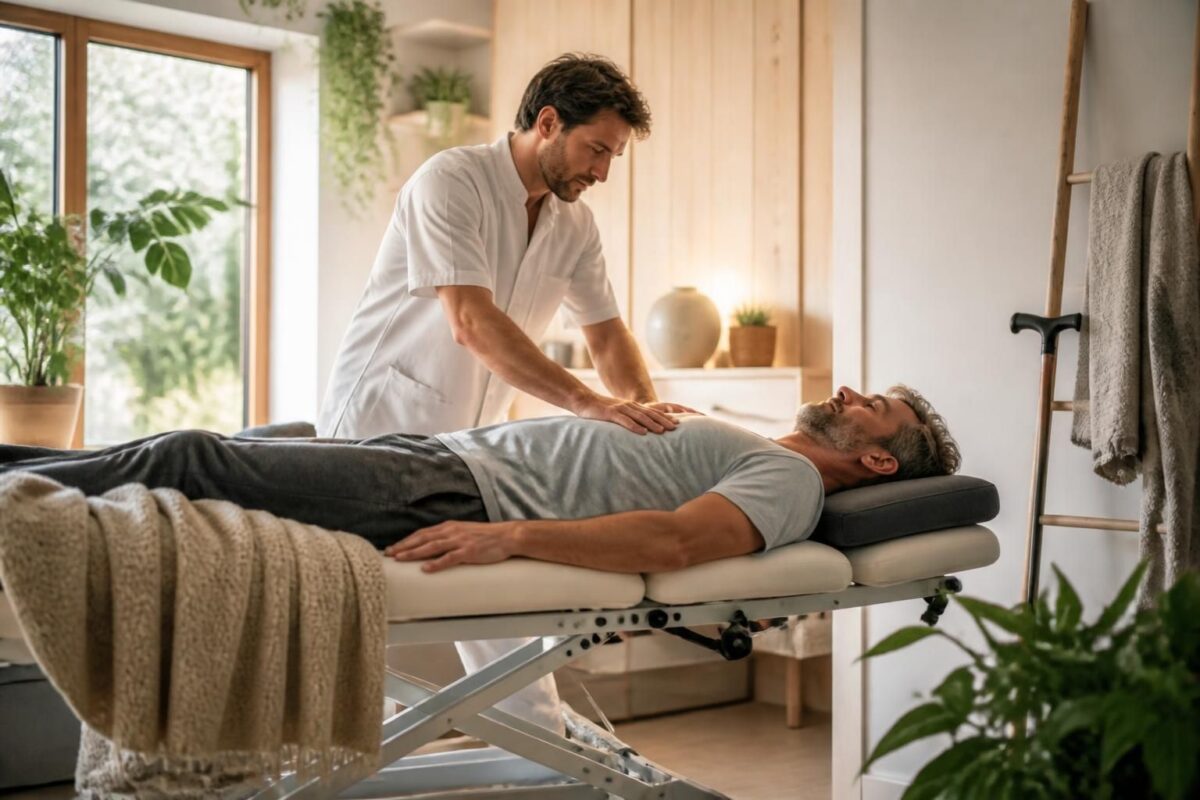
Why Osteopathy Is Essential For Recovery People
In short In short, Osteopathy in convalescence is an approach manual and holistic which helps to accelerate the recovery by restoring The balance, the mobility and a good circulation fabrics. it contributes to Reduce the pain, support the Back to…
When to consult and security
Consult an osteopath at the first signs of osteoarthritis to obtain a personalized diagnosis and care plan. In case ofPersistent inflammation, fever, acute nocturnal pain or suspected fracture, favor a rapid medical assessment. Osteopathy is ideally part of a coordinated approach with your attending physician and, if necessary, other health professionals.

Osteopathic manipulations to strengthen post-traumatic muscles
In short In short, Osteopathic manipulations for Strengthen post-traumatic muscles constitute a gentle manual approach aimed at restoring the mobility, reduce the pain and facilitate the Functional rehabilitation After a injury. What is Is it? A series of precise gestures…
Integrate osteopathy into a global plan
For lasting results, osteopathy fits into a Global plan Including life advice and, if necessary, a collaboration with a physiotherapist. The rhythm of the sessions and the objectives will be adapted to your pathology and your daily life. Together, we are aiming for lasting pain reduction and a clear improvement in your ability to move with ease.
| Element | Impact on pain |
|---|---|
| Pain | Pain Attenuated by muscle relaxation and better circulation. |
| Mobility | Amplitude and proprioception found thanks to gentle mobilizations. |
| Stability and posture | corrected imbalances and alignment Improved to limit tension. |
| articular environment | fabrics around of the joint released, slowing down wear. |
| compensation prevention | Reduces stress on other joints and avoids painful compensations. |
| Adapted activity | Physical activity Soft and regular, suitable for everyone. |
| complementarity | Combine with medical treatments without replacing care. |
| Lifestyle | Nutrition and posture support long-term results. |
| Security | Pre-assessment and personalized follow-up to guarantee safety and efficiency. |

Osteopathy and prevention of work-related musculoskeletal disorders
In short theosteopathy is one Manual approach that restores body balance and prevents MSD related to work. Its advantages: reduction of tension, improvement of mobility and prevention of chronic pain. She is preventive and healing, suitable for office and trades…
Testimonials: Reduce pain naturally through osteopathy and osteoarthritis
“Since I started the sessions ofosteopathy for my osteoarthritis of the knee, the pain is much less present on a daily basis and I find a real mobility. This allowed me to consider activities that I had replaced with pain before. »
“I had nocturnal awakenings with throbbing pains, and stiffness in the morning. After a few weeks, the Sweet mobilizations And the tips for releasing the tensions around the joint made these episodes disappear or decrease, and I decreased my analgesics. »
“At work, posture and gestures have been adapted thanks to osteopathic advice. Since then, my aches space and my mobility improves, which allows me to be more active without forcing my joints. »
“The global approach has been key: Gentle techniques To release myofascial tensions and practical recommendations to preserve thejoint on a daily basis. I felt a real pain reduction and better amplitude of movement. »
“In addition to an adapted activity and a balanced diet, osteopathy helped me to “get back in motion” my body. Today, the pain associated withosteoarthritis is more manageable and I can gradually resume my activities without feeling intense pain. If you are looking for a natural solution to relieve pain, try osteopathic treatment adapted to your osteoarthritis. »
This biography explores the journey of a dedicated practitioner Osteopathy and an approach natural osteoarthritis, centered on the progressive reduction of the pain and sustainable improvement of the mobility. In its practice, osteoarthritis is considered as a biomechanical imbalance that should be treated by global and personalized management, rather than by sudden gestures that could aggravate joint stresses.
Trained in complementary disciplines such as movement sciences and manual therapies, this practitioner relies on an approach holistic of the patient. His philosophy is based on understanding muscle chains, fascias and joints that interact to allow or limit movement. The objective is to restore fluid body dynamics, in order to reduce irritation around the articular surfaces affected by osteoarthritis and to promote better proprioception.
At the developed approach, theosteopathy intervenes on very specific levers. It aims to (1) improve the circulation and the nutritional intake of tissues even when the cartilage evolves, (2) Release muscle tension and fascial tensions that amplify pain and limit movement, (3) preserve and restore amplitude articular by gentle and progressive mobilizations, without ever forcing on sensitive areas, and (4) preventing postural compensations that could create new sources of pain elsewhere in the body.
Concerning the different forms of osteoarthritis, the approach remains targeted and adapted to each location: osteoarthritis of the knee, osteoarthritis of the hip and cervical or lumbar osteoarthritis. For each, the techniques favor the work of soft planes around the joint, the stimulation of dynamic stability and the progressive strengthening of the muscles that support the joint concerned. This approach makes it possible to reduce mechanical pain, improve mobility and delay, when possible, degenerative evolution.
The therapeutic journey is built on a rigorous evaluation and close collaboration with the patient. Each session is part of a personalized plan, which can be supplemented by home exercises, postural advice and simple everyday gestures. The objective is to make the patient an actor of his health, so that he can continue his favorite activity while protecting his joints. In some cases, osteopathy can be associated with complementary lifestyle-focused approaches, such as anti-inflammatory diet, stress management and appropriate physical activity, in order to optimize results without precocedly using more invasive treatments.
It is important to remember that osteopathy does not claim to cure osteoarthritis, but it can offer a lasting reduction in symptoms and a qualitative improvement in daily life. In addition to appropriate medical follow-up, it is part of a prevention and functional support approach, aimed at slowing down the appearance of new limitations and preserving freedom of movement as far as possible.
This presentation shows how Osteopathy can help to Reduce the pain related to theosteoarthritis and find a better mobility, thanks to gentle techniques, better circulation and advice for healthy living. It addresses the mechanisms, forms of osteoarthritis, indications and resources to deepen, favoring a natural and patient-centric approach.

The benefits of osteopathy to treat muscle imbalances
In short theosteopathy is a manual approach to restore themuscle harmony and postural considering the body as a whole. Its main benefits include the reduction of aches and tensions, the improvement of the mobility and from the posture, and prevention…
Approach and mechanisms of osteopathy in the face of osteoarthritis
In osteopathy, the treatment aims to restore the Biomechanical function overall body by releasing mobility restrictions around the affected joints, while respecting the limits related to wear. For osteoarthritis, the goal is to ease the pain and improve therange of motion By acting on the muscles, the fascias and the surrounding ligaments, in order to fluidize everyday gestures.
The techniques used favor softness and progressiveness: passive joint mobilizations, mild myofascial work, and postural normalizations to prevent harmful compensation. The objective is not to repair the altered cartilage, but to create a joint environment conducive to muscle relaxation and mobility, which can slow down the mechanisms of pain and stiffness.
This approach can contribute to a gradual reduction in analgesic needs and better tolerance to effort, in synergy with the Functional rehabilitation and, where applicable, other medical care. By integrating life advice and adapted exercises, osteopathy becomes a valuable aid in preserving the quality of life despite the disease.
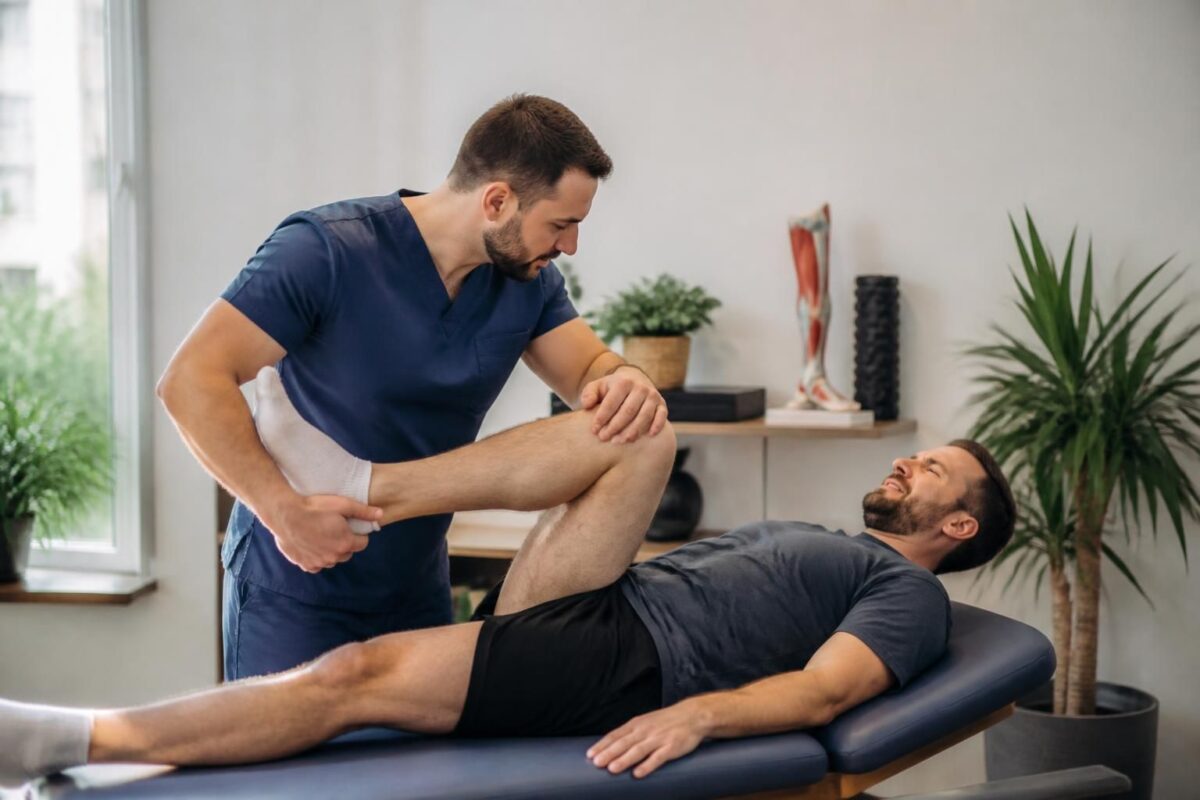
Osteopathy and chronic leg pain: regaining an optimal quality of life
In short In short, Osteopathy is one Global manual approach aimed at reducing Chronic leg pain and improve the quality of life. What is it? Non-drug therapy using the hands to identify restrictions and treat lesional chains. How does it…
Types of osteoarthritis and affected areas
Several forms of osteoarthritis can affect the key joints, each of which requires a specific approach. osteoarthritis of the knee (knee osteoarthritis) is manifested by pain, stiffness and swelling, often related to age, overweight or past trauma. hip osteoarthritis (aki) results in pain in the groin and in the thigh, with alterations in walking. spinal osteoarthritis (spondylarthrosis) May limit back mobility and cause spinal pain. These situations benefit from osteopathic work targeted at the muscle chains and supports, in order to maintain a balanced posture and a smoother walk.
In any case, the approach remains global and personalized: we favor gestures adapted to each location, avoiding sudden manipulations and supporting the natural mechanisms of healing through proprioception and postural control.
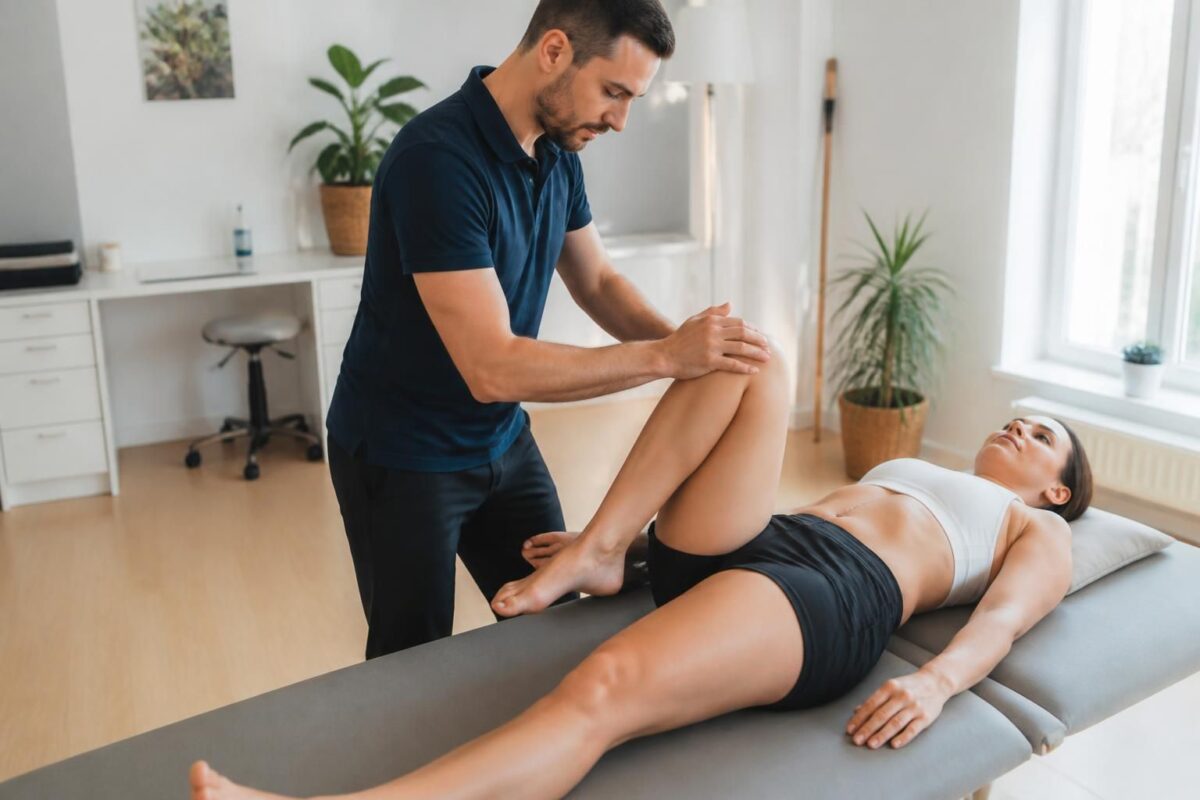
How osteopathy supports recovery after complex surgery
In short In short, Post-operative osteopathy is an approach fresh which supports the recovery After a Complex surgery. It helps to reduce the pain and the fatigue, improves the mobility and accelerates the healing thanks to a better vascularization and…
When to request an osteopath and safety
It is recommended to consult an osteopath when osteoarthritis symptoms appear in order to obtain an additional diagnosis and an appropriate treatment plan. Osteopathy can be integrated as a non-invasive approach and discount pain, in addition to possible medical treatments. Some situations require rapid medical assessment, including in the presence of significant nocturnal pain, marked swelling or fever, to rule out other causes requiring specific medical care.
To ensure safety, the osteopath adjusts the techniques to the patient’s condition and can offer lifestyle advice and exercises to practice outside the sessions. The objective is a collaboration between the doctor, the rheumatologist, the physiotherapist and the osteopath for a coordinated and effective follow-up.
Good practices and prevention
To maximize benefits and prevent painful changes, adopt appropriate habits. Hold a Healthy weight To limit joint load, favor gentle activities such as walking, swimming or yoga, and adopt an anti-inflammatory diet rich in omega-3 and colorful fruits and vegetables. Be careful of a Effective posture On a daily basis and avoid repetitive gestures or prolonged positions that excessively strain the joints.
In addition, work on the proprioception and sheathing, in order to strengthen the supporting muscles and protect the joints. A personalized approach, combining osteopathy, adapted activity and nutritional advice, can help you reduce pain sustainably and improve mobility.
Resources and Deepening
To go further, you can consult specialized resources on the subject and related practice guides: All#ATFP_CLOSE_TRANSLATE_SPAN# For my health – Treating osteoarthritis, Osteomag#ATFP_CLOSE_TRANSLATE_SPAN# – Osteopathy and Osteoarthritis, SOS#ATFP_CLOSE_TRANSLATE_SPAN# Sciatica – Joint Mobility, Osteopath#ATFP_CLOSE_TRANSLATE_SPAN# Chaplain – Relief, SOS#ATFP_CLOSE_TRANSLATE_SPAN# Sciatica – Signs of a need for osteopathy, SOS#ATFP_CLOSE_TRANSLATE_SPAN# Sciatica – Osteopathy and stress management, SOS#ATFP_CLOSE_TRANSLATE_SPAN# Sciatica – Postural pain, Osteopathy#ATFP_CLOSE_TRANSLATE_SPAN# and OA – Reduce pain naturally, Osteopathy#ATFP_CLOSE_TRANSLATE_SPAN# and osteoarthritis – manual approach, What is #ATFP_CLOSE_TRANSLATE_SPAN# that osteopathy and chronic pain.

Dr Sylvain Desforges, B.Sc., D.O., N.D., osteopath, is the founding president of TAGMED and of the ACMA association. He dedicates his practice to chronic spinal pain, low back pain and symptoms compatible with sciatica, particularly when pain radiates toward the buttock, leg, calf, foot or toes.
Through SOS Sciatique, he publishes educational content on sciatica symptoms, possible causes such as disc herniation, disc narrowing, foraminal stenosis or irritation of a lumbar nerve root, as well as non-surgical approaches that may be considered according to the evaluation. At Clinique TAGMED, care may include, depending on the case, motorized neurovertebral decompression, specific osteopathic care or precision percussion.
For an evaluation related to sciatica treatment in Montreal / Mount Royal or sciatica treatment in Terrebonne, please consult the services available at Clinique TAGMED.
Medical disclaimer
The information published on SOS Sciatique is provided for educational purposes only and does not replace a consultation, diagnosis, opinion or treatment provided by a physician or another authorized healthcare professional. The author of this article is neither a medical doctor nor a specialist in a medical specialty recognized by the Collège des médecins du Québec. The osteopathic, manual medicine or functional support approaches described on this site do not constitute medical acts and are not intended to replace medical follow-up.
Consult a physician or emergency service in cases of loss of bladder or bowel control, anesthesia in the saddle area, significant or progressive weakness in the leg or foot, fever, recent trauma, severe pain or rapid worsening of symptoms. For more details, please read our Legal Notice.