

Osteopathic techniques to improve posture
27/06/2026
Osteopathy for optimal post-operative recovery
27/06/2026
In short
| In short, theosteopathy is one Manual approach which acts on the body as a whole To reduce the physical stress. By stimulating the tissues, diaphragms and the cranio-sacral axis, it releases tension, improves the circulation and rebalances the the nervous system, favoring a breathing more fluid and better relaxation. Advantages: pain reduction, improvement of sleep and from the mobility, decrease inanxiety. Functioning: gentle and non-invasive techniques adapted to everyone, with natural body regulation and preventive effect. Accessible via your local osteopath, this approach offers sustainable support to better manage the stress on a daily basis and improve the quality of life. |
In short, theosteopathy is an approach Sweet and holistic for Manage physical stress. it acts on the Muscle tensions, improves the circulation blood and lymphatic and rebalances the the nervous system, which can reduce stress-related pain and promote sleep. using Manual techniques Various, in particular gentle manipulations and cranial approaches, the objective is to harmonize the neurovagal axis and the diaphragms for better regulation of the nervous system. This practice offers a solution preventive and curative To better manage stress on a daily basis and regain a better quality of life.
This article, written by an expert health professional, explains how Osteopathy can help to Manage physical stress. It describes the simple mechanisms, techniques used and practical advice to integrate the osteopathic approach into a wellness routine. The objective is to release tension, improve circulation and promote a balance between the body and the nervous system.
Mechanisms of osteopathy in the face of physical stress
The physical stress Causes muscle tension and can alter breathing and posture. Osteopathy acts on the musculoskeletal structures and on the visceral and cranial axes to bring the body back to balance. By releasing tension, it can improve mobility, reduce pain and promote better blood and lymph circulation. Osteopathic work also aims to regulate the nervous system and support more natural breathing.
Techniques used by osteopathy
Gentle manipulations : They release restrictions in tissues and joints, which can reduce stress and pain associated with stress.
lymphatic drainage : This approach promotes lymphatic circulation to reduce inflammation and improve the elimination of toxins.
Breathing and relaxation techniques : They encourage deeper breathing and muscle relaxation, helping to soothe the nervous system and reduce anxiety.
cranial techniques : they aim to balance movements and pressures in the cranial box, with an impact on the nervous system and general comfort.
Practical cases and feedback
In practice, a patient exposed to severe occupational stress may experience cervical and lumbar pain, accompanied by disturbed sleep. After a few sessions, the tensions loosen, the breathing becomes more fluid and the quality of sleep improves, which contributes to a general reduction in the feeling of stress. Each session aims to respond to the specific tensions of everyday life and to support the return to a more functional posture.
Cardiac coherence and respiration
The Cardiac coherence is an approach that combines controlled breathing and heartbeat to calm the nervous system and balance biological tone. Performed regularly, this technique can reduce anxiety and promote more serene sleep, in addition to osteopathic techniques.
Integrate osteopathy into your life
To benefit from the effects of osteopathy, consult a qualified osteopath. Look for recommendations from your entourage and your doctor, and make sure the practitioner is a graduate of a recognized institution. Before starting the sessions, describe your symptoms and goals so that the therapist adapts his approach to your situation.
Integrating simple gestures into your daily life can reinforce the benefits. Practice slow and deep breathing for a few minutes each day, do some gentle stretching and favor smooth, controlled movements to support circulation and release tension. Adopt a routine that supports posture and breathing, in connection with your osteopath’s advice.
Recommended Resources
To learn more, you can consult the following resources:
SOS SCIATIC, Tagmed Clinic, neurovertebral decompression, SOS Herniated Disc, SOS Herniated Disc, Sostunnel Carpal, sosciatica
Medical disclaimer : The information and advice provided on this site does not replace the advice, diagnosis or treatment of a health professional. Please note that Dr. Sylvain Desforges osteopath is neither a doctor of medicine nor a doctor, and is not a specialist in a medical specialty as defined by the Collège des Médecins du Québec. Manual medicine, functional medicine and sports medicine as described on this site exclude any medical treatment or diagnosis made by a doctor or specialist doctor. Always consult your doctor for any medical questions. For more details, please read our full legal notice.
Axis of action : muscle relaxation and neurovegerative regulation to manage the physical stress.
- Relaxation Muscle and fascia tension.
- Improvement blood and lymphatic circulation.
- Regulation of the nervous system via the cranio-sacral axis and the diaphragm.
- Posture and optimized movement to reduce stress.
- Gentle techniques to release blockages and pain.
- Guided breathing and relaxation during the sessions.
- Home advice (breathing, stretching) to prolong profits.
- Prevention physical stress through an approach preventive and continue.

This article explains how theosteopathy can help manage the physical stress, by acting directly on bodily tensions, breathing and circulation, in order to restore balance and sustainably improve well-being on a daily basis.
What is osteopathy and its approach to stress
theosteopathy is a manual care discipline that aims to Overall well-being By integrating physical, emotional and mental aspects. It starts from the principle that the body has a natural ability to cure when its systems work smoothly. A qualified osteopath intervenes to identify and treat dysfunctions that fuel pain and tension, while favoring a preventive approach and adaptive, patient-centric and lifestyle.

How osteopathy improves the quality of life of active people
In short In short, theosteopathy is a global approach that Optimizes mobility and the function of the body of ACTIVE PEOPLE, for a better quality of life. It helps prevent injury and reduce Musculoskeletal pain While promoting the Sports recovery.…

Osteopathy and sports recovery: prepare the body for lasting performance
In short In short, Osteopathy and Sports recovery is one Global manual approach that sustainably prepares the body for the effort by restoring mobility and circulation After the effort. It is a discipline that acts on the sinews, the joints,…
Osteopathic techniques for physical stress
Gentle manipulations
The Manual techniques gentle aim to release restrictions in soft tissues and joints, which can decrease pain and tension and improve overall mobility. This approach acts on structural balance and promotes better circulation, which directly contributes to a feeling of relaxation and stress control.
lymphatic drainage
The lymphatic drainage is used to optimize lymph circulation, promote the elimination of toxins and reduce local inflammation. By promoting a better elimination of metabolic waste, it contributes to reducing feelings of fatigue and restoring a more stable energy, even in times of psychological tension.
Breathing and relaxation techniques
approaches focused on deep breath and the Muscle relaxation reduce the activation of the sympathetic nervous system and activate the parasympathetic system. These practices, sometimes associated with postural advice, help alleviate anxiety, improve sleep and restore a feeling of inner calm.
cranial techniques
The cranial techniques aim to harmonize movements and pressures in the cranial box, which can soothe the nervous system and promote a lasting state of relaxation. Gently, they support stress regulation and return to smoother breathing.
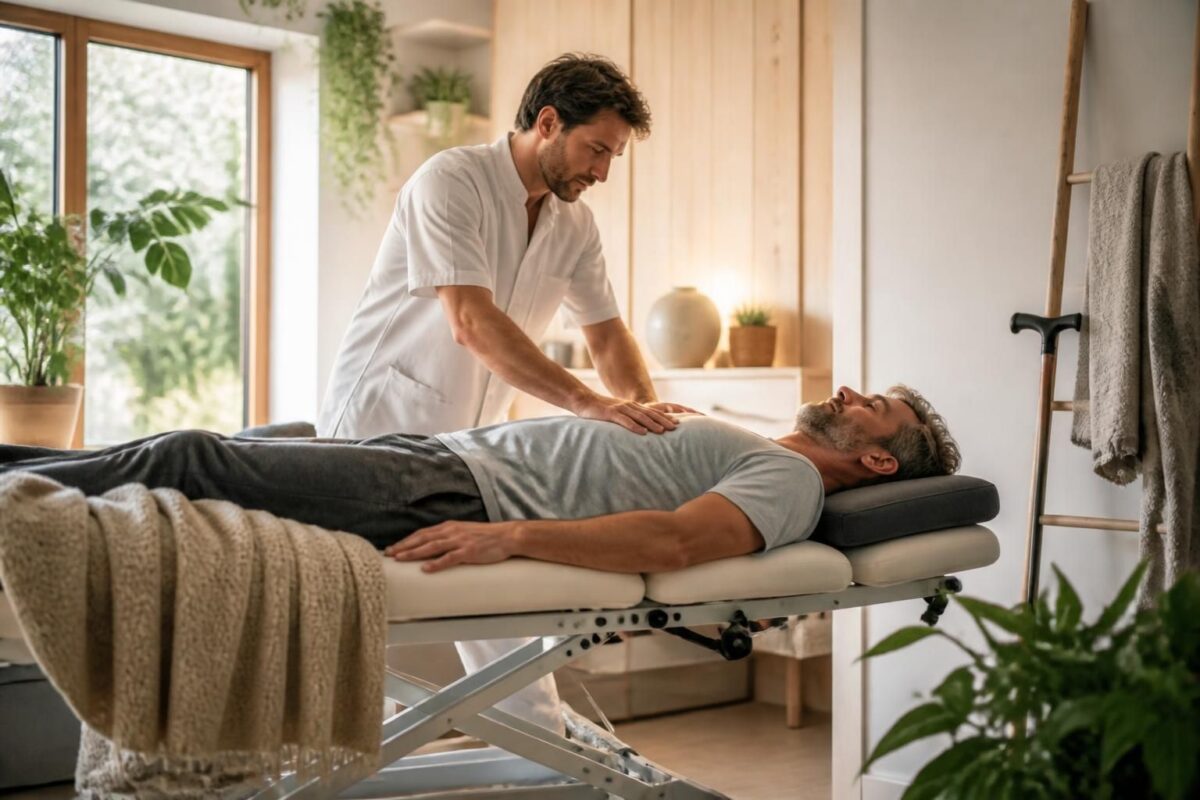
Why Osteopathy Is Essential For Recovery People
In short In short, Osteopathy in convalescence is an approach manual and holistic which helps to accelerate the recovery by restoring The balance, the mobility and a good circulation fabrics. it contributes to Reduce the pain, support the Back to…

Osteopathic manipulations to strengthen post-traumatic muscles
In short In short, Osteopathic manipulations for Strengthen post-traumatic muscles constitute a gentle manual approach aimed at restoring the mobility, reduce the pain and facilitate the Functional rehabilitation After a injury. What is Is it? A series of precise gestures…
Concrete cases and practical advice
When an individual experiences back tensions, stress-related headaches or an accelerated heart sensation, osteopathy can offer a global approach to Release the diaphragms and release the thoraco-abdominal axis. By working on the cranio-sacro axis, the osteopath can promote a better interaction between breathing, posture and energy, which results in a reduction in pain and a feeling of stability.
Integrate osteopathy into your routine
To take full advantage of the benefits, consider sessions with a qualified and qualified osteopath. Ask for recommendations, discuss your symptoms and goals, and plan a suitable progression. In parallel, modestly integrate daily practices such as Diaphragmatic breathing, simple stretches and gentle movements that stimulate circulation and relax the muscles.
Cardio-respiratory coherence can also be beneficial: combining slow breathing and stable heartbeat helps balance the nervous system and reduce stress intensity. Finally, adopt lifestyle habits conducive to sleep and energy, so that the osteopathic action is anchored in a lasting dynamic and beneficial for your well-being.
| Intervention axis | concise effect |
|---|---|
| Activation of the parasympathetic Via theCranio-sacral axis | Calm and recovery of the nervous system activated. |
| release of tensions by Manual techniques and work on diaphragms | Release of tension and better thoracic and cervical mobility. |
| Circulation and drainage blood and lymphatic | Improved circulation and reduced inflammation. |
| Breathing and chest coordination | more effective breathing and reduced chest tension. |
| Nervous System Support Via theCranio-sacral axis | Balance of tone and better nervous regulation. |
| Sleep & energy | More restful sleep and increased energy during the day. |
| Reduction of stress-related pain | Reduced musculoskeletal pain. |
| Advice and lifestyle complementary | Guided breathing and simple habits to adopt. |
| Identification of sources of stress and orientation Towards adequate care | Personalized and preventive approach to avoid relapses. |

Osteopathy and prevention of work-related musculoskeletal disorders
In short theosteopathy is one Manual approach that restores body balance and prevents MSD related to work. Its advantages: reduction of tension, improvement of mobility and prevention of chronic pain. She is preventive and healing, suitable for office and trades…

The benefits of osteopathy to treat muscle imbalances
In short theosteopathy is a manual approach to restore themuscle harmony and postural considering the body as a whole. Its main benefits include the reduction of aches and tensions, the improvement of the mobility and from the posture, and prevention…
Testimonials: How Osteopathy Helps Manage Physical Stress
Testimony of Claire, senior executive: before my extended days, I felt Muscle tensions in the back and cervical pain that increased with stress. After several sessions, I found a more aligned posture and an freer breathing, which decreased my pain and improved my concentration.
Testimony of Marc, amateur athlete: the repeated efforts and the stress associated with my competitions created Joint blockages And pains that ruined my sessions. Thanks to gentle and targeted techniques, my Muscle tensions Relax and I recover faster after exercise, with a Energy level return.
Testimony of Isabelle, freelance and active mother: daily stress is manifested by pain in the neck and migraines. After osteopathy sessions, my posture improves, my headaches decrease and my quality of sleep improves, which allows me to better manage my days.
Testimony of Antoine, project manager: intense mental work created a feeling of chest pressure and a disorder of the nervous system. osteopathic techniques have released my diaphragms, improved my breathing And brought a lasting calm that continues outside the sessions.
Testimony of Julie, therapist and liberal professional: the tensions linked to stress dragged me into a loop of fatigue and irritability. After a few sessions, I noticed a reduction in Muscle tensions, better circulation and a general feeling of welfare which helps me stay focused throughout the day.
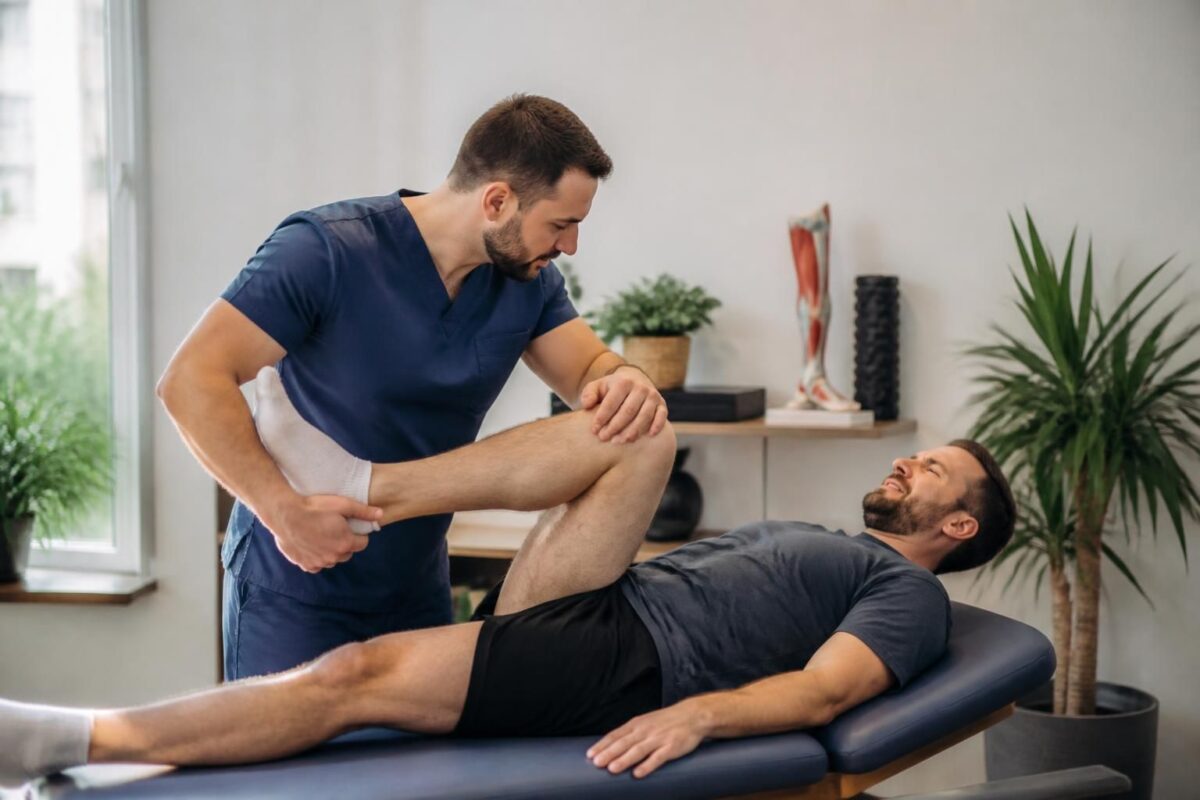
Osteopathy and chronic leg pain: regaining an optimal quality of life
In short In short, Osteopathy is one Global manual approach aimed at reducing Chronic leg pain and improve the quality of life. What is it? Non-drug therapy using the hands to identify restrictions and treat lesional chains. How does it…
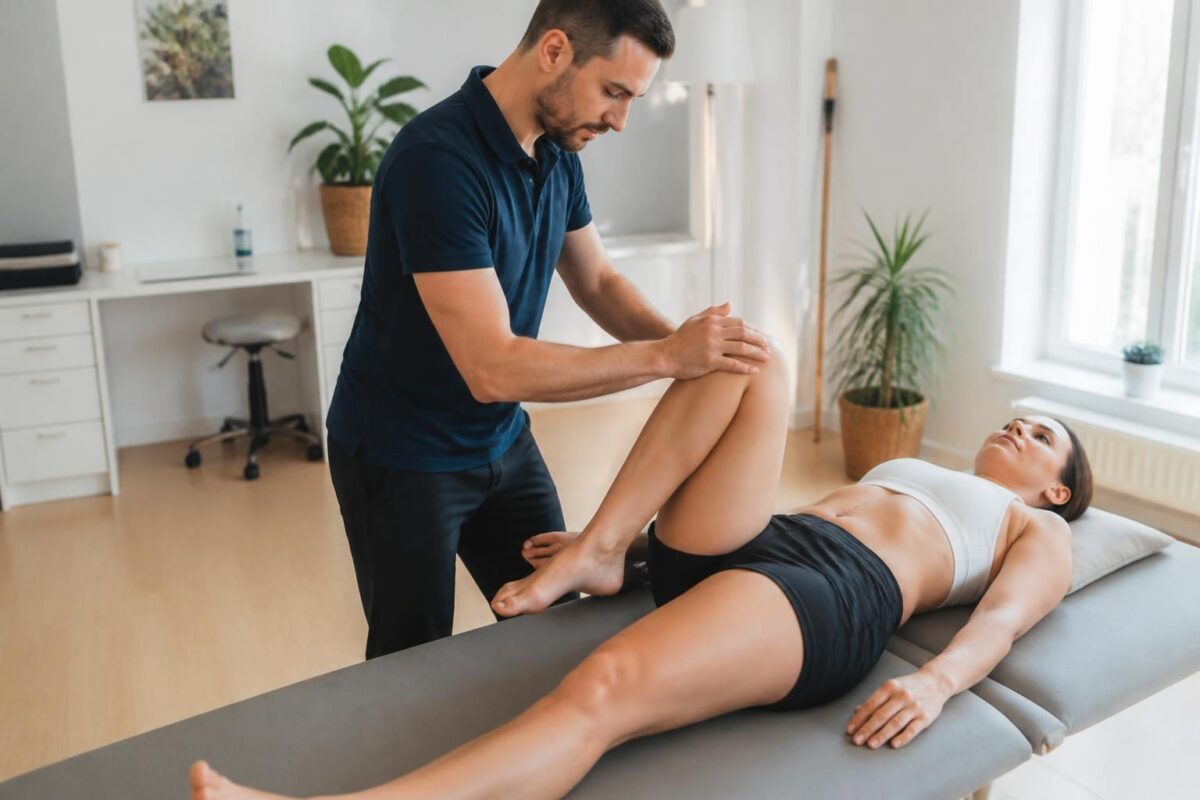
How osteopathy supports recovery after complex surgery
In short In short, Post-operative osteopathy is an approach fresh which supports the recovery After a Complex surgery. It helps to reduce the pain and the fatigue, improves the mobility and accelerates the healing thanks to a better vascularization and…
Osteopathy and physical stress management: an integrated approach
Dr Sylvain Desforges, Expert in osteopathy, naturopathy and manual medicine, works as founding president of TagMed and the ACMA association. His career is guided by a quest forHealthcare innovation, with a marked specialization in the Management of the chronic pain and the integration of avant-garde technologies such as spinal decompression, laser and shock wave therapy. Its mission is to offer evidence-based care to optimize the health and well-being of its patients.
To understand how theosteopathy Helps to manage physical stress, it is worth mentioning its philosophy: the body has an innate healing capacity when its systems work in harmony. This approach holistic Considers that stress does not manifest itself only as an emotion, but as a physical overload that results in muscle tension, pain and functional disorders. The objective is to help the body to self-regulate, by restoring the balance between structure, fluids and nervous system.
Concretely, osteopathy acts on physical stress by reducing tension and tissue adhesions, which improves blood and lymph circulation. Better circulation facilitates the elimination of metabolic waste and stress-related toxins, reducing pain and stiffness. In addition, it contributes to rebalancing the neurovegetative axis, by promoting the passage from the sympathetic system to the parasympathetic when the frame is emotionally or physically charged, thus allowing a faster return to a state of physiological calm.
The techniques employed by Dr Desforges are varied and adapted to each patient: gentle manipulations, structural, visceral and, when necessary, cranial techniques. This palette aims to release blockages and improve tissue elasticity, while supporting breathing and mobility. Each session is part of a logic of personalized evaluation and prevention, in order to treat not only the symptoms but also the potential causes of physical stress and its repercussions.
To prolong the benefits outside the office, it encourages simple and effective practices: diaphragmatic breathing, targeted stretching and gentle movements promoting circulation. He also insists on patient education, addressing lifestyle, sleep and diet, determining factors in how a person reacts to stress. This educational dimension allows everyone to become an actor in their health and to better manage the stressful episodes of everyday life.
The integration of advanced technologies completes the osteopathic approach when relevant. spinal decompression, protocols laser And shockwave therapies can optimize results and accelerate recovery, while remaining consistent with a practice based on respect for tissues and the body as a whole. These tools reinforce manual techniques and support the objectives of reducing tensions and improving mobility.
Driven by a vision centered on continuous improvement and sustainable well-being, Dr Desforges offers personalized plans that combine scientific rigor and attentive listening. Each patient benefits from a suitable course, designed to restore the physiological balance and promote a better quality of life in the face of recurrent or acute physical stress. His approach is based on the idea that stress can be managed proactively through well-directed osteopathy and overall management of the body.
This article presents how theosteopathy Help manage the physical stress By acting on tissues, diaphragms and the autonomic nervous system, thanks to gentle techniques and practical advice to integrate these approaches into daily life.
Key points and practical implications
The global approach Osteopathy makes it possible to apprehend physical stress as an interaction between body and mind. By working on the links between muscle tension, tissues and nervous mechanisms, the osteopath seeks to restore functional harmony rather than treating symptoms only.
Soft manual techniques, lymphatic drainage and work on the cranio-sacral axis release tension and improve blood and lymph circulation. These actions aim to reduce inflammation and promote better tissue oxygenation, which contributes to reducing stress and oppression feelings associated with stress.
The breathing and associated approaches, such as relaxation techniques and cohérence cardiaque, promote the transition from a state of vigilance of the sympathetic nervous system to a calmer parasympathetic tone. This modulation can improve sleep, concentration and emotion management.
Osteopathic work can be supplemented by practical advice and simple exercises to do on a daily basis, such as Soft stretches, breathing exercises and postural habits that support better breathing and lasting diaphragm relaxation.
For those who wish to deepen or assess their needs, it is useful to consult a Graduate osteopath and rely on reliable resources that describe the mechanisms and benefits of osteopathy in stress management. For example, you can consult resources explaining the signs indicating a need for osteopathy and the benefits of visceral and chronic osteopathic management, as well as the associated scientific evidence:
Signs indicating a need for osteopathy
Scientific evidence of the effectiveness of osteopathy
How Osteopathy Helps Manage Physical Stress
These resources and practices are part of an approach that focuses on prevention and proactive stress management, taking into account relaxation mechanisms, improving circulation and returning to a sustainable functional balance.

Dr Sylvain Desforges, B.Sc., D.O., N.D., osteopath, is the founding president of TAGMED and of the ACMA association. He dedicates his practice to chronic spinal pain, low back pain and symptoms compatible with sciatica, particularly when pain radiates toward the buttock, leg, calf, foot or toes.
Through SOS Sciatique, he publishes educational content on sciatica symptoms, possible causes such as disc herniation, disc narrowing, foraminal stenosis or irritation of a lumbar nerve root, as well as non-surgical approaches that may be considered according to the evaluation. At Clinique TAGMED, care may include, depending on the case, motorized neurovertebral decompression, specific osteopathic care or precision percussion.
For an evaluation related to sciatica treatment in Montreal / Mount Royal or sciatica treatment in Terrebonne, please consult the services available at Clinique TAGMED.
Medical disclaimer
The information published on SOS Sciatique is provided for educational purposes only and does not replace a consultation, diagnosis, opinion or treatment provided by a physician or another authorized healthcare professional. The author of this article is neither a medical doctor nor a specialist in a medical specialty recognized by the Collège des médecins du Québec. The osteopathic, manual medicine or functional support approaches described on this site do not constitute medical acts and are not intended to replace medical follow-up.
Consult a physician or emergency service in cases of loss of bladder or bowel control, anesthesia in the saddle area, significant or progressive weakness in the leg or foot, fever, recent trauma, severe pain or rapid worsening of symptoms. For more details, please read our Legal Notice.