


The benefits of osteopathy to improve postural balance
28/06/2026
Osteopathic approaches to prevent workplace injuries
28/06/2026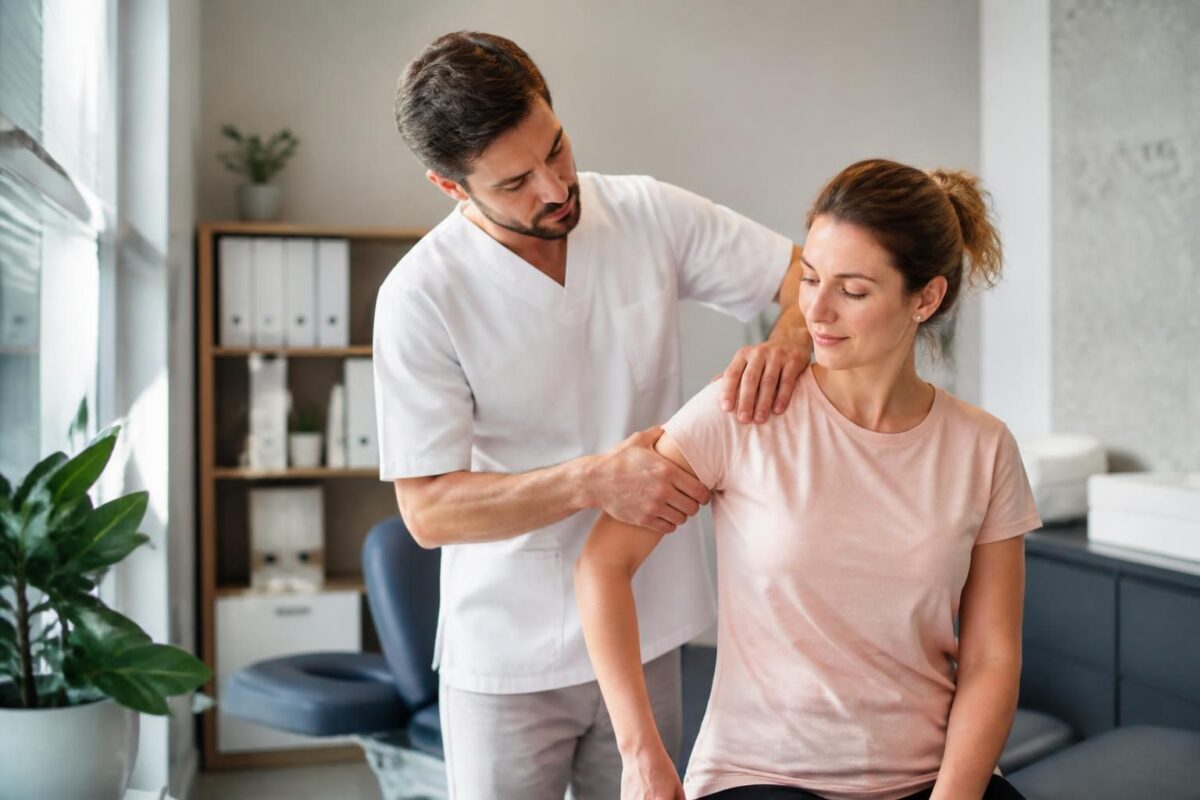
In short
theosteopathy acts on the Chronic shoulder pain By seeking root causes and imbalances that limit the mobility of shoulders and neighboring tissues. the main benefits include a pain reduction, a Better mobility and an Custom support without medication. This approach overall Considers the whole body and can supplement other treatments. In Montreal, this service is particularly useful for people suffering from overwork, muscle tension and postural disorders that cause painful shoulders. |
For the Chronic pain shoulder, theosteopathy offers an approach overall and personalized Who attacks the cause as much as the symptoms. Here’s how it works:
- Overall assessment support and movements of the shoulder, shoulder girdle and posture to identify imbalances and areas to be worked on.
- Joint mobilizations and Myofascial releases aimed at restoring the mobility joints and tissues around the shoulder.
- Improvement of the Scapulo-thoracic mobility and gesture to reduce irritation and friction that fuels pain.
- reduction of Muscle tensions and better circulation fluids, promoting the recovery and reduction of inflammation.
- Approach holistic Who can integrate visceral or cranial techniques if necessary, and who can be associated with other professionals if the need arises.
- Objective: a Lower pain, a Mobility found And a better quality of life on a daily basis, without invasive medication.
Note: This approach is complementary to medical follow-up and does not replace your doctor’s advice.
Quick summary: theosteopathy acts on the Chronic shoulder pain By considering the body as a whole. It seeks to restore tissue mobility, improve the circulation of fluids and treat the root causes of pain, without systematically resorting to drugs. This approach promotes lasting pain reduction, increased range of motion and regained quality of life, through accurate assessment, targeted manual techniques and a self-management and lifestyle approach.
Evaluation and treatment plan
The practitioner begins by listening to the patient’s story and observes daily gestures. It evaluates the shoulder but also the neck, the rib cage and the diaphragm, because these areas influence scapulo-humeral mobility. This global approach makes it possible to identify tensions and often invisible imbalances.
Techniques used for the shoulder
The Joint mobilizations Restore the function of the shoulder and shoulder joints. The Myofascial releases Release tension in the muscles and fascia around the shoulder. The fasciatherapy Acts on the envelopes that surround the muscles and the organs, in order to regain fluid mobility. Visceral techniques can be used when functional links exist between the shoulder and neighboring organs or structures. Finally, the cranial techniques aim to promote the balance of the nervous system and the overall regulation of the body.
Why it can improve function and pain
This approach helps to reduce pain and restore a more normal range of movements. By working on tensions and connections between the different regions, the shoulder regains better coordination with the neck, thorax and arm. This can reduce the frequency and intensity of painful episodes and facilitate everyday gestures.
Advantages of the osteopathic approach
natural and non-invasive : Osteopathy uses gentle techniques adapted to each person, without systematic medication. Global approach : the evaluation takes into account the musculoskeletal, visceral and cranio-sacral systems to detect often hidden imbalances. Quality of life : it aims for a lasting improvement in comfort and mobility, even if the complete disappearance of pain is not guaranteed in all cases.
Role of self-management and lifestyle
Osteopaths also accompany the patient in lifestyle habits that support recovery. They offer simple tips to preserve mobility and avoid aggravating factors. A balanced diet and stress management practices can also positively influence pain perception and recovery.
Collaboration and multidisciplinary approach
In our practice, the osteopath can work with other health professionals to optimize the results. This collaboration may include doctors, physiotherapists or other specialists when needed to address shoulder pain from different angles and provide coordinated care.
What you can expect from a shoulder osteopathy session
After a consultation and a session, you may feel an improvement in mobility and a decrease in pain. Progression is often observed over several sessions, with cumulative effects thanks to the action of techniques on tissues and body systems. To support these benefits, your osteopaths can direct you to complementary resources and practices, including approaches to wellness and stress management.
Recommended resources and readings
To learn more about osteopathy and chronic pain management, you can consult specialized resources on the following pages: Osteopathy and well-being, Prevent overuse injuries, or again Osteopathy and chronic pain management. For additional perspectives on self-management and well-being, you can also consult resources such as Osteopathy, stress and balance and Chronic pain and osteopathy.
Our osteopaths are trained at NUMSS and NAO.
For more information on treatments, you can visit the following reference sites: Tagmed Clinic, neurovertebral decompression and herniated disc and osteopathy.
Medical Disclaimer: The information and advice provided on this site does not replace the health professional’s diagnosis or treatment. Please note that Dr. Sylvain Desforges osteopath is neither a doctor of medicine nor a doctor, and is not a specialist in a medical specialty as defined by the Collège des Médecins du Québec. Manual medicine, functional medicine and sports medicine as described on this site exclude any medical treatment or diagnosis made by a doctor or specialist doctor. Always consult your doctor for any medical questions. For more details, please read our full legal notice.
- Overall assessment Tensions around the shoulder and muscle chains.
- Targeted mobilizations To restore the mobility of the glenohumeral and acromioclavicular joints.
- Myofascial release and fasciatherapy to release the fascias around the shoulder and torso.
- Posture and scapulo-thoracic chain To improve the stability of the shoulder girdle.
- Cervical-thoracic mobility and stimulation of the postural chains for the shoulder.
- Fasciotherapeutic techniques and cranial to improve nervous balance and mobility.
- pain reduction and improvement of self-regulation by soft manual approaches.
- self-management and practical advice (exercises, posture) to practice between sessions.

This article explains how theosteopathy acts on the Chronic pain of the shoulder. Starting from a holistic evaluation, it aims to restore the balance of structures around the shoulder, reduce pain and restore a mobility functional to find an active life. You will discover the mechanisms of action, the techniques commonly used and the results expected during the sessions, as well as the importance of self-management and a multidisciplinary approach.
How osteopathy approaches shoulder pain
The shoulder is a complex joint where bones, muscles, tendons and fascias are coordinated. The osteopath seeks to understand the origin of the pain beyond the sensitive area, by examining the neck, upper back, rib cage and pelvis that influence posture and movement. This approach makes it possible to distinguish local tensions from diffuse imbalances which can maintain pain, and to respond to them with appropriate techniques.

How osteopathy improves the quality of life of active people
In short In short, theosteopathy is a global approach that Optimizes mobility and the function of the body of ACTIVE PEOPLE, for a better quality of life. It helps prevent injury and reduce Musculoskeletal pain While promoting the Sports recovery.…

Osteopathy and sports recovery: prepare the body for lasting performance
In short In short, Osteopathy and Sports recovery is one Global manual approach that sustainably prepares the body for the effort by restoring mobility and circulation After the effort. It is a discipline that acts on the sinews, the joints,…
Mechanisms of action on the shoulder
Restoration of tissue and joint mobility
By working on articular surfaces, muscle tension and fascia, osteopathy aims to improve the flexibility of the structures surrounding the shoulder. When the movements become fluid again, the joint amplitudes widen and everyday gestures become easier, which helps to reduce pain chronicles.
Balance of muscle chains and posture
Shoulder pain is often linked to imbalances between the shoulder, torso and back muscles. The osteopath works to harmonize these chains, especially around the shoulder girdle and the spine, so that the efforts diffuse correctly and that the shoulder moves in a more natural dynamic.
Reduction of tensions and modulation of the nervous system
By acting on irritating tensions and skin and proprioceptive receptors, osteopathy can decrease pain sensitivity and promote better regulation of the nervous system. This contributes to a lasting feeling of comfort and a reduction in painful episodes.
Improved circulation and drainage
Specific techniques stimulate blood circulation and drainage of fluids around the shoulder. Better vascularization supports tissue repair and can accelerate recovery after aggravation or latent injury.
Overall impact on function and quality of life
By bringing these mechanisms together, osteopathy helps to find a better mobility, less painful amplitude and more effective use of the shoulder in everyday gestures and sports or professional activities.

Why Osteopathy Is Essential For Recovery People
In short In short, Osteopathy in convalescence is an approach manual and holistic which helps to accelerate the recovery by restoring The balance, the mobility and a good circulation fabrics. it contributes to Reduce the pain, support the Back to…

Osteopathic manipulations to strengthen post-traumatic muscles
In short In short, Osteopathic manipulations for Strengthen post-traumatic muscles constitute a gentle manual approach aimed at restoring the mobility, reduce the pain and facilitate the Functional rehabilitation After a injury. What is Is it? A series of precise gestures…
Commonly used techniques for chronic shoulder pain
Osteopaths mobilize joint mobilization techniques to release restrictions, myofascial releases to relax muscle tension, and actions on the fascias to improve tissue glide. Visceral and cranial approaches can be preferred when interconnected postural or neurological links influence the shoulder. Each session is adapted to the patient’s profile and the perceived origin of the pain.

Osteopathy and prevention of work-related musculoskeletal disorders
In short theosteopathy is one Manual approach that restores body balance and prevents MSD related to work. Its advantages: reduction of tension, improvement of mobility and prevention of chronic pain. She is preventive and healing, suitable for office and trades…

The benefits of osteopathy to treat muscle imbalances
In short theosteopathy is a manual approach to restore themuscle harmony and postural considering the body as a whole. Its main benefits include the reduction of aches and tensions, the improvement of the mobility and from the posture, and prevention…
Multidisciplinary approach and self-management
In their practice, osteopaths can coordinate with other health professionals to address the physical and functional dimensions of pain. They also provide practical advice for self-management, targeted exercises and lifestyle habits that support a quality of life improved and a mobility more durable.

Osteopathy and chronic leg pain: regaining an optimal quality of life
In short In short, Osteopathy is one Global manual approach aimed at reducing Chronic leg pain and improve the quality of life. What is it? Non-drug therapy using the hands to identify restrictions and treat lesional chains. How does it…

How osteopathy supports recovery after complex surgery
In short In short, Post-operative osteopathy is an approach fresh which supports the recovery After a Complex surgery. It helps to reduce the pain and the fatigue, improves the mobility and accelerates the healing thanks to a better vascularization and…
What to expect during a shoulder session
By entering a session, you can wait for a detailed assessment of your posture, mobility and tensions. The approach will be fresh, personalized and focused on concrete objectives such as pain reduction, improvement of movements and gradual return to your activities. The goal is to help you feel more free in your gestures and less limited by your shoulder.
| Aspect | concise text |
|---|---|
| Main objective | Restore the harmony of the tissues around the shoulder and reduce the pain. |
| Techniques used | joint mobilizations and looseness targeted myofascial around the shoulder. |
| Targeted areas | Rotator cuff, sub-deltoid purse and shoulder girdle. |
| Impact on mobility | Improved rotation and elevation, less blockages. |
| pain management | Progressive decrease in pain intensity and frequency. |
| Nature of the approach | Non-invasive and patient-centric approach, adapted to history. |
| Collaboration | Teamwork with doctors and physiotherapists to optimize results. |
| self-management | Simple exercises and postural advice to practice between sessions. |
How osteopathy acts on chronic shoulder pain — Testimonials
“Before starting the sessions, my Chronic shoulder pain prevented me from raising my arm and performing my daily gestures. After a few appointments osteopathy, I found a mobility more fluid and a noticeable decrease in pain. »
“I worked in a profession that demands the shoulder enormously, and therange of motion was reduced. The approach overall and personalized Osteopaths have targeted tensions and adhesions, and today the shoulder finds a real functionality without persistent pain. »
“I suffered from nocturnal pain and constant tension in the shoulder. After several sessions, I sleep better and I can get up without grimacing. Simple gestures become natural again. »
“By practicing my favorite sport, my shoulder had lost its stability and comfort. Osteopathy worked on tissues and fascias to restore a Functional mobility and lasting comfort during exercise. »
“An old wound had left me with a rigid and painful shoulder. The sessions were gentle but effective, and I found a Comfortable mobility as well as a reduction in tension, without medication. »
“With an approach overall and fresh, I observed a pain reduction and a better quality of life On a daily basis, with fewer limitations in my daily actions. »
The Chronic shoulder pain represent a daily challenge for many people, affecting movement, sleep and confidence in everyday actions. theosteopathy offers a comprehensive and personalized approach that goes far beyond mere pain reduction. Dr. Sylvain Desforges, expert in osteopathy, naturopathy and manual medicine, places the shoulder in its overall context, taking into account the balances of the whole body and the interactions between musculoskeletal, visceral and nervous.
The first step is an in-depth assessment, where theosteopathy Consider the relationship between shoulder pain and the areas that “pull” or limit it, such as the cervical spine, rib cage, diaphragm and hips. This Global approach Identifies causes often far removed from the painful area, such as posture imbalances, chronic muscle tension, or joint restrictions that alter shoulder and shoulder belt movement.
Concretely, osteopathy acts on the mechanisms that fuel inflammation and pain. Thanks to targeted techniques, the shoulder gradually regains better mobility and stability. The sessions aim to:
– Restore the Joint mobility the gleno-humeral joint and associated joints,
– Release the tensions of the rotator muscles and myofascial chains which limit the scapulo-thoracic reasoning,
– Release fascial tensions to improve fluid circulation and reduce areas of tension,
– Promote harmony between the visceral and nervous systems by techniques visceral and cranial, when relevant, in order to clarify the root causes and tissue memories of pain.
In addition to manual techniques – in particular Joint mobilizations and the Myofascial releases – Dr Desforges integrates elements of education and functional rehabilitation. The patient leaves with appropriate exercises, postural advice and lifestyle adjustments that support progression, thus reinforcing the idea that osteopathy is a Natural and personalized solution To reduce the frequency and intensity of the pain, not a simple temporary leak.
The treatment of shoulder-to-earth pain is rarely effective if it remains isolated. That’s why theosteopathy modern is part of an approach multidisciplinary When needed, in collaboration with doctors, physiotherapists and other health professionals. This coordination aims to optimize recovery, reduce limitations and sustainably improve the quality of life of the patient.
Dr. Sylvain Desforges focuses on an evidence-based approach and the integration of advanced technologies when relevant, in order to optimize results. Its commitment is to offer care that respects the body, while promoting better mobility, reduction of pain and regained autonomy in daily activities. To learn more about its approach and services available, contact the TagMed Clinic and discuss your situation with an experienced specialist.
Here’s how theosteopathy acts on the Chronic shoulder pain : It combines a global understanding of the body, gentle manual techniques and a personalized approach to improve mobility, reduce pain and restore functional balance on a daily basis. This article details the mechanisms, gestures and benefits observed, with useful resources to deepen your knowledge and support options.

Dr Sylvain Desforges, B.Sc., D.O., N.D., osteopath, is the founding president of TAGMED and of the ACMA association. He dedicates his practice to chronic spinal pain, low back pain and symptoms compatible with sciatica, particularly when pain radiates toward the buttock, leg, calf, foot or toes.
Through SOS Sciatique, he publishes educational content on sciatica symptoms, possible causes such as disc herniation, disc narrowing, foraminal stenosis or irritation of a lumbar nerve root, as well as non-surgical approaches that may be considered according to the evaluation. At Clinique TAGMED, care may include, depending on the case, motorized neurovertebral decompression, specific osteopathic care or precision percussion.
For an evaluation related to sciatica treatment in Montreal / Mount Royal or sciatica treatment in Terrebonne, please consult the services available at Clinique TAGMED.
Medical disclaimer
The information published on SOS Sciatique is provided for educational purposes only and does not replace a consultation, diagnosis, opinion or treatment provided by a physician or another authorized healthcare professional. The author of this article is neither a medical doctor nor a specialist in a medical specialty recognized by the Collège des médecins du Québec. The osteopathic, manual medicine or functional support approaches described on this site do not constitute medical acts and are not intended to replace medical follow-up.
Consult a physician or emergency service in cases of loss of bladder or bowel control, anesthesia in the saddle area, significant or progressive weakness in the leg or foot, fever, recent trauma, severe pain or rapid worsening of symptoms. For more details, please read our Legal Notice.





