Sciatica in Terrebonne: careful approach to avoid poorly adapted treatments
01/07/2026
Sciatica in telework: chair, posture and pain in the leg
01/07/2026
In short
| In short, the big toe pain evoking L5 corresponds to a Lumbar radiculopathy possible. This allows a rapid diagnosis and an orientation towards effective non-surgical treatments, reducing pain and discomfort. Concretely, we spot the signs (pain with the extension of the big toe, weakness of the levator muscle of the foot, pain radiating the nerve path) and a clinical examination is associated with supplements if necessary. The profit? Targeted support by simple measures: re-education, postural advice and Adapted shoes, to improve comfort and prevent recurrences, quickly and without major complications. |
The pain of big toe can hide a L5 radiculopathy rather than local affection of the foot. Understanding this link facilitates targeted assessment and treatment.
- The Nerf L5 May radiate to the big toe and dorsum of the foot, causing pain that follows the nervous course and may be accompanied by paresthesia.
- Signs of a root cause: Back or lumbar pain with irradiation towards the big toe, and Weakness at the extension of the big toe or altered feeling on the top of the foot.
- When to think of L5: pain associating the back and foot, aggravated by movements of the spine or an activity soliciting the nerve, in the gap only local pathologies of the foot (halux valgus, bursitis, gout).
- Diagnostic approach and treatment: a clinical examination complete and, if necessary, a Lumbar MRI To confirm L5, followed by a plan including anti-inflammatory drugs, physiotherapy and functional adjustments.
Quick Summary: This article explains why big toe pain may reflect L5 lumbar nerve damage. It describes the possible mechanisms, signs that direct L5, useful examinations and options for management at the TagMed clinic. It also emphasizes practical measures to reduce symptoms and prevent recurrences, without prescribing specific exercises neurovertebral decompression.
Big toe pain may arise from a local problem of the foot joint, but it may also be related to damage to the lumbar nerve, in particular the nerve L5.
Understanding the role of L5 in toe pain
the nerve L5 Controls certain sensations and functions of the feet. It innervates the dorsal side of the foot, including the big toe area. It can also influence the movement of muscles that lift the big toe and participate in walking. An attack of this nerve can be manifested by pain that follows the path of the nerve, tingling or a burning sensation on the big toe, and sometimes weakness during dorsiflexion.
Signs that point towards L5
Pain that feeds or extends along the path of the nerve and that touches the big toe can point towards L5.
Numbness or sensory discharge on the top of the foot and on the big toe may be present.
Weakness when dorsiflexing the foot or extending the big toe may appear.
The pain may be accentuated with walking or prolonged standing, and may be associated with other symptoms in the lumbar journey.
Examinations and investigations
An in-depth clinical examination makes it possible to identify the signs of L5 radiculopathy. Magnetic resonance imaging (MRI) is often useful for visualizing a possible herniated disc or foraminal narrowing that compresses the L5 root.
Additional tests may be considered depending on the context, but imaging should be interpreted with caution and in correlation with symptoms.
Causes to consider
In addition to L5 radiculopathy, other causes may explain big toe pain. It may be a local problem of the great toe joint, peripheral neuropathy, sprain, or vascular disorder.
For a differentiated approach, you have to evaluate all the symptoms, the painful course and the aggravating or relieving factors.
Support options
At TagMed Clinic, a complete assessment allows you to choose the appropriate approaches according to the established diagnosis. Available options include targeted osteopathic care and motorized neurovertebral decompression techniques when this is part of the overall assessment and treatment plan.
In all cases, the treatments are individualized and do not replace a complete medical evaluation. The doctor can refer to specialists if necessary.
Practical advice and prevention
Take simple steps to reduce pain and prevent recurrences. Wear comfortable and suitable shoes, favor good foot support and a balanced pressure distribution.
Maintain rigorous podiatry hygiene and watch for signs that could indicate more extensive or nervous damage.
Avoid positions that aggravate the pain and check quickly if the pain is associated with marked weakness, loss of urinary control or any worrying signs.
Additional Resources and Readings
To learn more about mechanisms and approaches related to sciatica and lumbar nerve, you can consult the following resources in authorized domains:
Treatment and management of sciatic pain
Sciatica and lumbar disc herniation
For additional information on causes and clinical approaches, see the resources available at CliniqueTagmed.com and Decompressionneurovertbrale.com, as well as SoshernieDiscale.com and SosherniatedDdisc.com.
For any context, refer to your doctor or osteopath at the TagMed Clinic.
Medical Disclaimer: The information and advice provided on this site does not replace the health professional’s diagnosis or treatment. Please note that Dr. Sylvain Desforges osteopath is neither a doctor of medicine nor a doctor, and is not a specialist in a medical specialty as defined by the Collège des Médecins du Québec. Manual medicine, functional medicine and sports medicine as described on this site exclude any medical treatment or diagnosis made by a doctor or specialist doctor. Always consult your doctor for any medical questions. For more details, please read our full legal notice. »
- radiating pain to the big toe and the dorsal side of the foot
- altered sensitivity or paresthesia on the back of the foot and the big toe
- Weakness at extension big toe (difficulty lifting your finger)
- Difficulty walking on the heels or pain that gets worse on exertion
- associated lumbar pain or disc episode evoking an impairment L4-L5 / L5
- Quickly consult for a clinical examination and orientation towards lumbar imaging
- Make Simple tests (Extension of the big toe, dorsiflexion) to confirm L5 involvement
- Additional examinations can be considered: Lumbar MRI and neurovascular assessment
- Treatment plan: anti-inflammatory, rehabilitation and, if necessary, adapted equipment
- Adopt preventive measures: Adapted shoes, foot hygiene and strengthening exercises

Quick Summary: Big toe pain may result in local deffctions, but it may also reflect L5 nerve irritation or compression. Thinking about L5 helps to identify a radiculopathy that can modify the treatment and prevent complications. This guide helps you to recognize the signs, understand relevant reviews, and take practical steps to act quickly.
Why think of L5 when the pain affects the big toe?
The L5 level nerve contributes to the sensitivity and motor control of the outer part of the foot and the extension of the big toe. Compression or inflammation at this level can cause pain that radiates to the big toe and back of the foot, sometimes associated with weakness when the big toe is extended. This may occur in case of lumbar disc herniation, foraminal stenosis or other radicular damage. At the same time, purely local causes of the finger (local arthritis, bursitis, nail conditions, hallux valgus) can coexist and complicate the diagnosis.

Sciatica and foot weakness: risk of drop foot
IN BRIEF In brief, sciatica and weakness of the foot can cause a drop foot, the inability to lift the front of the foot. This situation occurs when the peroneal nerve or the sciatic nerve is compressed or injured. The…

Sciatica and weakness in the thigh: possible lumbar cause
IN BRIEF Sciatica with thigh weakness is a possible manifestation of a lumbar cause irritating a nerve root (L4-L5, L5-S1). Advantages: a quick diagnosis and a targeted treatment plan with rehabilitation to regain strength and mobility and prevent recurrences. Operation:…
Signs and symptoms that point towards L5
Typical clinical signs
Suggestive signs of L5 radiculopathy include pain that follows the nerve path to the big toe, a feeling of weakness when extending the big toe and tingling or a decrease in sensitivity on the top of the foot and face dorsal toes. The pain can be accentuated in case of cough, sneeze or prolonged standing, and may be accompanied by discomfort that sometimes goes down to the leg without obvious local pain at the ankle.
to differentiate from local causes
Conditions such as the ingrown toenail, bursitis of the big toe or osteoarthritis of the foot joints can produce more local pain centered on the finger itself. In these situations, the pain is generally more constant in the thumb of the foot and does not necessarily follow the root path. A medical evaluation makes it possible to distinguish these origins and to guide the treatment.
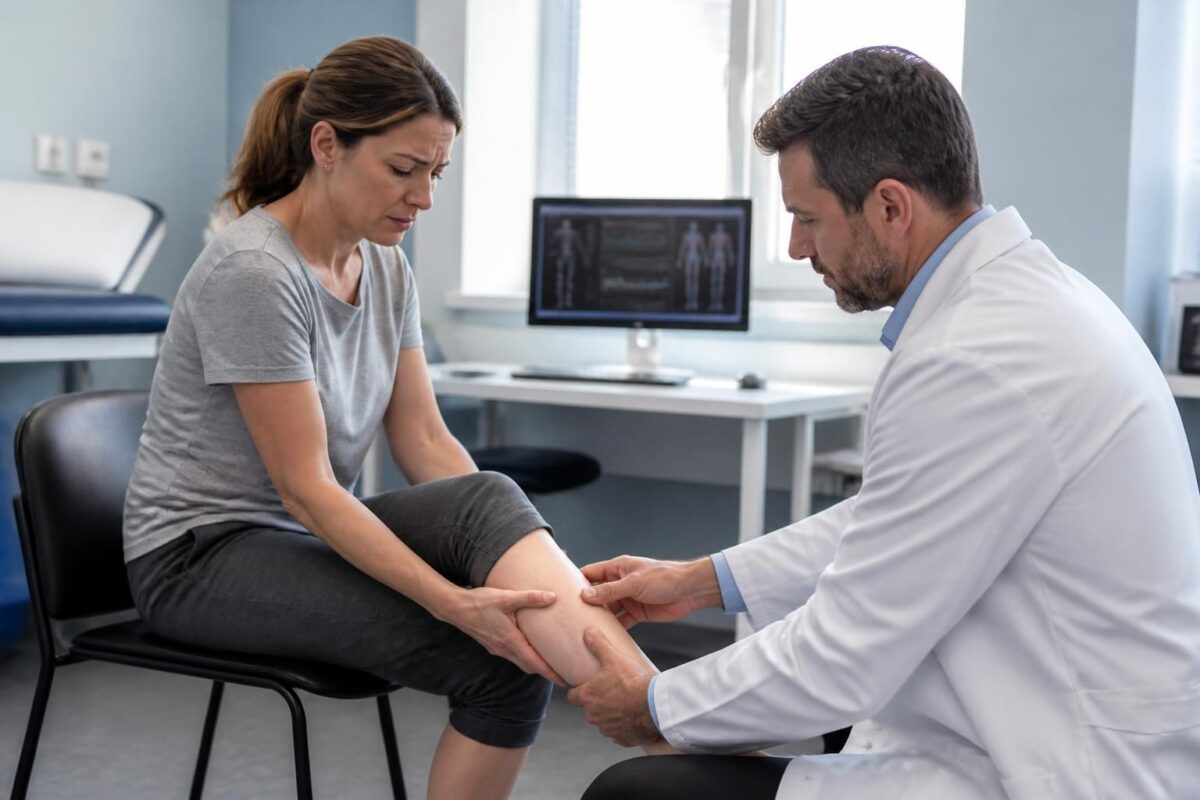
Sciatica and calf weakness: what should be monitored?
IN SHORT In short, sciatica and weakness in the calf describe a lumbar radiculopathy where pain follows the path of the sciatic nerve and may reach the calf. Benefits: a targeted non-surgical management, quick relief, and an improvement in mobility…

Sciatica and difficulty walking on tiptoes: possible S1 root
IN BRIEF In brief, sciatica with difficulty walking on tiptoes may reflect an involvement of the S1 lumbar root. What is it? a radicular pain that can limit foot elevation and walking on tiptoes. What are the benefits? an accurate…
Examinations and diagnosis
Practical assessment
A detailed clinical examination looks for signs of L5 radiculopathy: sensitivity tests, muscle strength for big toe extension and foot reflection, and assessment of the painful journey. The lower limb conduct test can be used to assess possible root pain.
Additional examinations
In the suspicious L5 context, imaging tests may be indicated to confirm nerve compression or exclude other causes. Targeted lumbar spine imaging, such as an MRI, helps visualize possible herniated disc or other abnormalities affecting L5. Additional examinations can also be proposed if vascular, diabetic or inflammatory concerns exist.
Sciatica and difficulty walking on heels: possible L5 root
IN BRIEF The sciatica associated with a difficulty walking on the heels is generally due to an involvement of the L5 root of the sciatic nerve, with a pathway that starts from the lower back, crosses the buttock, and goes…

Sciatica and difficulty lifting the foot: emergency or quick consultation?
IN BRIEF The drop foot is a weakness of the foot dorsiflexors that causes a steppage gait and may reveal sciatica with compression of the nerve in the lumbar region. When it is associated with sciatic pain and loss of…
Prevention and practical care
Measures to be adopted on a daily basis
Adopt comfortable shoes with enough toe space and proper foot support. Maintain daily foot hygiene and practice simple foot and ankle mobility and strengthening exercises to preserve the function of the big toe and foot as a whole. Avoid excessive loads and positions that aggravate pain.
Treatment and rehabilitation
Depending on the etiology, management can combine self-care measures and targeted therapies: reduction of inflammation if necessary, physiotherapy or osteopathy To restore mobility and function, and specific exercises to strengthen dorsiflex muscles and foot stabilizers. Appropriate rehabilitation can facilitate the return to normal walking and prevent recurrences.

Sciatica and loss of strength: a sign not to be taken lightly
IN SHORT In short, sciatica is pain that follows the path of the sciatic nerve. A loss of strength in the leg is a sign that should not be taken lightly. It’s a warning indicating nerve damage that may require…

Sciatica and numb foot sensation: when to consult?
IN BRIEF In brief, sciatica and numbness in the foot refer to pain that follows the path of the sciatic nerve and may be accompanied by tingling or numbness in the foot. This summary specifies when to seek consultation, distinguishing…
When to consult quickly
Consult urgently if the pain is accompanied by marked weakness, loss of urinary or intestinal control, acute lower back pain with fever, or if signs of infection or deformity appear. A professional evaluation confirms the L5 origin and adapts the treatment for a quick and lasting recovery.
| Evaluation item | Concise observation |
|---|---|
| Origin | Pain that can be referred by the root L5; often associates weakness of theHallux Extensor and pain on the dorsum of the foot. |
| Location | mostly on the dorsum of the foot and the First web space; The big toe can be involved without obvious local arthritis. |
| Motor signs | weakness of The extension of the hallux and sometimes dorsiflexion; pain that can limit walking. |
| Sensitivity | paresthesia or hypoaesthesia in the First web space and on the top of the foot. |
| clinical examination | Evaluate the strength of theHallux Extensor, dorsal sensitivity and dorsiflexion tests; Search for radiocular signs. |
| Additional examinations | Lumbar MRI if suspected of radiculopathy L5; local imaging if foot pathology; EMG if uncertain diagnosis. |
| Initial approach | physiotherapy, targeted exercises, postural correction; Anti-inflammatory and shoe adapted according to tolerance. |
| Indices deemed convincing | Pain that increases with extension and can wake up at night; EHL or dorsiflexion loss of strength, dorsal paresthesias. |
| Emergency/Consultation | rapid motor deficit, severe pain with fever, marked loss of sensitivity or deformation; Quick consultation recommended. |
Testimonials: big toe pain — Why think about L5?
“Before, I was living with a big toe pain which seemed purely local. I was first told about osteoarthritis or inflammation, but the tests showed a L5 radiculopathy: the pain actually came from irritation of the nerve root in the lumbar level, and not from a purely pediolo-podological problem. After a column-oriented evaluation, the treatment was adapted and the pain gradually subsided. »
“As a runner, I believed that my pain in big toe came from rubbing or an ingrown nail. The examination revealed a Nerve reference Around L5, with pain that radiated to the big toe and the soles of the foot. The rehabilitation plan and the osteopathic adjustments targeting the column made it possible to resume training without doubting it. »
“My doctor was thinking first of a big toe bursitis. Rather, the evaluation showed a Root L5, sign of a radiculopathy May cause distal toe pain. Integrated care was instituted and I found correct mobility and a noticeable reduction in pain. »
“I had diffuse pain on my back and big toe, especially after a long walk. a local problem was considered, but the tests confirmed an involvement of the L5, with pain referred to the toe. The treatment centered on the spine and rehabilitation, and the symptoms subsided, which allowed me to become active again. »
Dr Sylvain Desforges, osteopath and multidisciplinary practitioner, is the founding president of the Tagmed and ACMA clinics. With a practice focused on innovation in health care, he specializes in the management of chronic pain and the integration of advanced technologies such as neurovertebral decompression, laser and shockwave therapies. Its mission is to offer evidence-based care in order to optimize the health and well-being of its patients. In the context of big toe pain, his approach aims to untangle the local causes of pain and pathologies that may emerge from a lumbar nerve node.
the link between localized big toe pain and Root L5 May seem unexpected, but it is central in the modern assessment of podal pain. The dermatomy associated with L5 can cause pain that spreads along the foot to the big toe, sometimes felt as referred pain rather than purely local damage. This approach makes it possible to distinguish, in the patient, purely articular or tissue pain from the symptom reflecting lumbar nerve irritation. In practice, this means that some big toe pain could translate an origin at the lumbar level rather than isolated toe damage.
In this perspective, Dr. Desforges favors a global and structured evaluation. Signs that direct to an L5-related cause may include pain that extends from the back or buttock to the foot, paresthesias or weakness in dorsiflexion of the foot, and particular sensitivity on the path of the nerve. On the other hand, strictly local pain in the toe, linked to conditions such as the ingrown toenail, the hallux valgus or skin conditions, require a different approach. The objective is to quickly identify whether the pain is rooted in roots and to direct the patient to the most relevant therapeutic course.
The diagnostic process is based on a clinical examination meticulous, supplemented by imaging elements and neuro-verified tests when necessary. Dr Desforges combines his expertise in osteopathy and manual medicine with modern tools to assess lumbar mobility, reflexes and peripheral muscle strength. In case of suspicion of herniated disc, foraminal stenosis or root irritation, additional examinations direct towards targeted treatments, always in a logic Evidence-guided.
On a therapeutic level, the approach is Multidisciplinary and personalized. It can include osteopathic interventions and techniques of neurovertebral decompression To release mechanical stress, associated with physical therapies and rehabilitation programs of the feet and ankles. the use of technologies such as laser and the shock waves Can be considered when relevant, in order to improve vascularization, reduce inflammation and promote functional recovery. Practical advice on posture, exercises and footwear choices play a key role in preventing relaps and supporting recovery.
Dr. Desforges’ approach focuses on a Patient education and proactive support. The objective is not only to soothe the pain in the big toe but also to optimize the function of the foot and to reduce the risk factors in the long term, in particular in connection with the back and the lumbar spine. By integrating the latest clinical advances into an expert manual care practice, it offers a holistic view that can transform the management of big toe pain and referred pain.
To find out more about its approach and the services available at the TagMed clinic, contact the team and benefit from a personalized initial assessment. Dr. Desforges offers you a clear, progressive and results-oriented approach to help you regain comfort, mobility and quality of life.
This text summarizes why a big toe pain may involve impairment of the Root L5, details the signs to monitor, useful examinations and treatment options, and offers practical advice to prevent recurrences and preserve the mobility of the foot and spine.
think of a L5 radiculopathy When the big toe hurts can be explained by innervation: the muscle that allows you to extend the big toe, theExtensor Hallucis Longus, is mainly controlled by the Root L5. A pain radiating on the top of the foot and the big toe, associated with a weakness in the extension of the big toe and a sensitivity on the dorsal area of the foot, can thus direct towards a lumbar origin rather than purely local. This distinction is key because it guides the examinations and the treatment plan differently.
Clinical signs that support L5 involvement include pain that extends from the back or the outer part of the leg to the big toe, paresthesia in the first web space area and alteration of the dorsal function of the foot. Elements such as pain that worsens on walking or exertion, and progressive weakness of dorsiflexion, reinforce the hypothesis of radiculopathy rather than a solely local pathology of the toe. In the presence of fever, loss of urinary control, rapid aggravation or serious weakness, urgent consultation should be considered.
To confirm the diagnosis and guide the treatment, examinations such as Imaging (MRI) Lumbar spine and in-depth clinical evaluations are useful. In osteopathy and manual medicine, the approach can also be aimed at detecting and treating lumbar and pelvic dysfunctions that accentuate pain and neurological tension. The goal is to reduce pressure on the nerve root and restore normal segment and foot mobility.
Practical and preventive measures play an essential role: improvement of posture and walking, rehabilitation programs focused on strengthening and flexibility of the foot and spine, choice of suitable shoes and appropriate hygiene of the feet. Simple tips such as targeted exercises for stretching myo-fascial chains, balance and stability can limit recurrences and promote sustainable functional recovery. Osteopathy can be useful to optimize the mobility of the joints of the foot and spine, in addition to a suitable treatment plan.
To deepen common approaches and related pathologies, you can consult these information and support resources:
Common pathologies supported by osteopathy,
Sciatica and lumbar osteoarthritis,
Big toe pain – Causes and treatments,
Sciatica after lumbar surgery,
Sciatica and walking: useful or aggravating,
Dictionary: toe pain,
Big toe tips,
Big toe pain – Causes and treatments,
SOS SCIATIC,
throbbing big toe pain — what can she reveal.

Dr Sylvain Desforges, B.Sc., D.O., N.D., osteopath, is the founding president of TAGMED and of the ACMA association. He dedicates his practice to chronic spinal pain, low back pain and symptoms compatible with sciatica, particularly when pain radiates toward the buttock, leg, calf, foot or toes.
Through SOS Sciatique, he publishes educational content on sciatica symptoms, possible causes such as disc herniation, disc narrowing, foraminal stenosis or irritation of a lumbar nerve root, as well as non-surgical approaches that may be considered according to the evaluation. At Clinique TAGMED, care may include, depending on the case, motorized neurovertebral decompression, specific osteopathic care or precision percussion.
For an evaluation related to sciatica treatment in Montreal / Mount Royal or sciatica treatment in Terrebonne, please consult the services available at Clinique TAGMED.
Medical disclaimer
The information published on SOS Sciatique is provided for educational purposes only and does not replace a consultation, diagnosis, opinion or treatment provided by a physician or another authorized healthcare professional. The author of this article is neither a medical doctor nor a specialist in a medical specialty recognized by the Collège des médecins du Québec. The osteopathic, manual medicine or functional support approaches described on this site do not constitute medical acts and are not intended to replace medical follow-up.
Consult a physician or emergency service in cases of loss of bladder or bowel control, anesthesia in the saddle area, significant or progressive weakness in the leg or foot, fever, recent trauma, severe pain or rapid worsening of symptoms. For more details, please read our Legal Notice.