Burning pain in the leg: is it sciatica in Terrebonne?
13/08/2026
Extruded disc herniation and sciatica: clinical significance
13/08/2026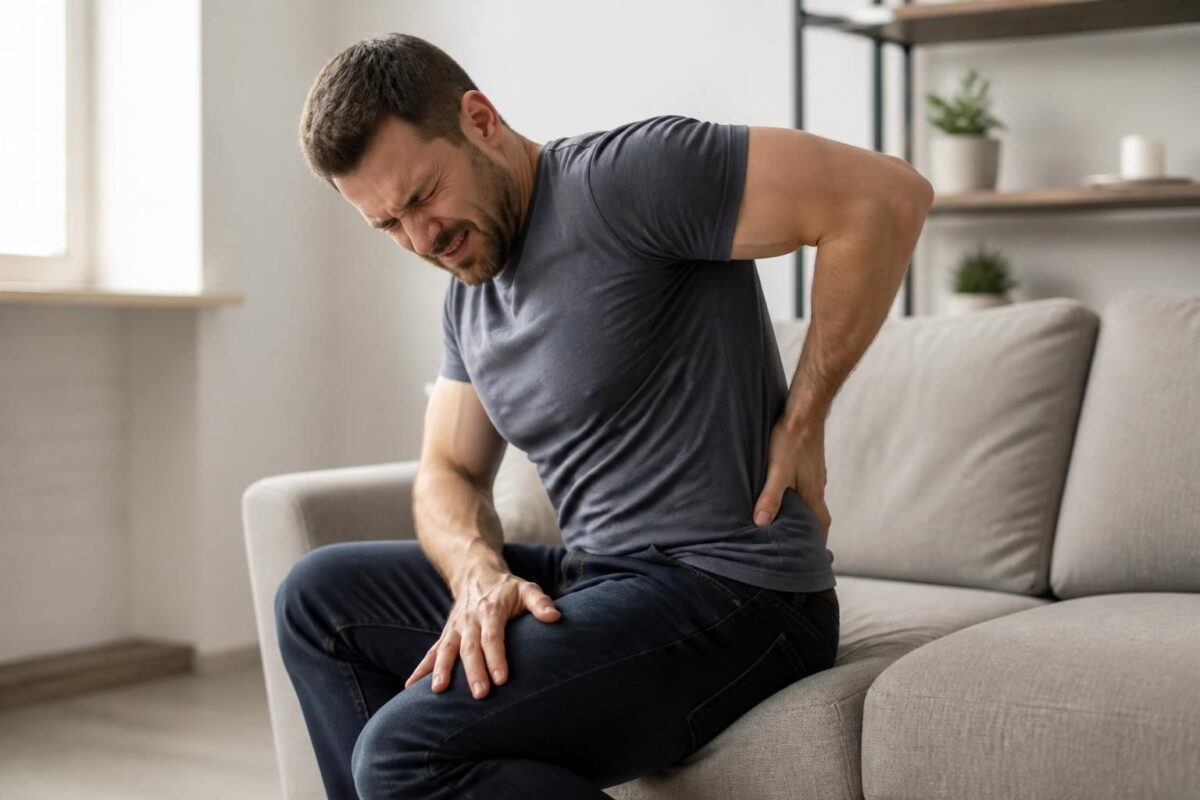
IN BRIEF
| Sciatica associated with lower back pain with radiation is pain caused by the irritation or compression of a lumbar nerve root, most often L5/S1. It starts in the lower back and typically radiates to the buttock and leg, sometimes all the way to the foot. The benefits: understanding the mechanism allows for appropriate management, reducing the risk of immobility and guiding toward effective non-surgical options. How it works: when the sciatic nerve is irritated, the pain follows its path down to the lower limb; the treatment aims to reduce inflammation, restore mobility, and prevent recurrences. The main options: physical therapy, anti-inflammatories, adapted physical activity, and, if necessary, injections or other non-surgical approaches. In Montreal, this service is particularly recommended for lower back pain with radiation and to prioritize personalized non-surgical management. |
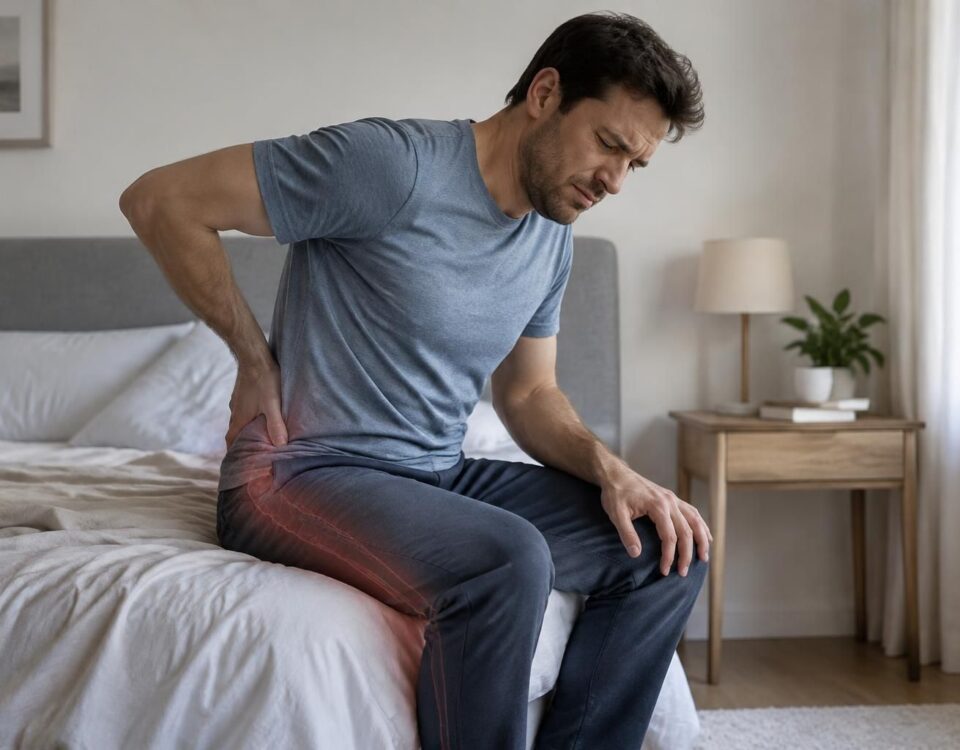
Sciatica is a radiculopathy caused by the irritation or compression of a lumbar nerve root, most often L5 or S1. It manifests as a sharp pain that starts in the lower back and radiates to the buttock, thigh, leg, sometimes all the way to the foot.
- Common causes: lumbar disc herniation, lumbar osteoarthritis, lumbar canal stenosis.
- Signs and symptoms: sharp or burning pain, electric shocks, paresthesia; possible weakness or difficulty walking.
- When to worry: progressive weakness, urinary issues, perineal numbness, extremely severe pain or rapid worsening.
- Duration and evolution: in 70–90% of cases, improvement within a few weeks; if pain persists >3 months, it is referred to as chronic sciatica.
- Treatment: maintaining an adapted physical activity, physical therapy, analgesics/anti-inflammatories, possible injections; surgery is rare depending on the case.
Quick summary: This article, written by a healthcare professional, explains the relationship between sciatica and sharp pain in the lower back radiating to the leg. It describes the mechanism, warning signs, common causes, and management options, favoring non-surgical approaches and clinical support at the TAGMED Clinic. The text aims to help you understand the pain and guide your care pathway.
What is sciatica and what is its path?
Sciatica is pain related to the irritation or compression of a lumbar nerve root, most often L5 or S1. It starts in the lower back and follows the path of the sciatic nerve toward the buttock, the back of the thigh, the leg, and sometimes the foot. This radiation explains why the pain may be felt far from the spine and sometimes bilaterally depending on the affected root.
Common causes
The most common causes are lumbar disc herniation, lumbar osteoarthritis, and lumbar canal stenosis. Other factors exist but are less frequent. These elements can create irritation or compression of the nerve roots responsible for pain that travels down the leg.
Signs and symptoms
The pain is typically violent, sometimes described as an electric shock or burning sensation. It is often accompanied by tingling, numbness, or muscle weakness. The symptom may worsen with prolonged sitting, during exertion, or when coughing. The radiation can affect the buttock, back or side of the thigh, the calf, and sometimes the foot.
Evaluation and diagnosis
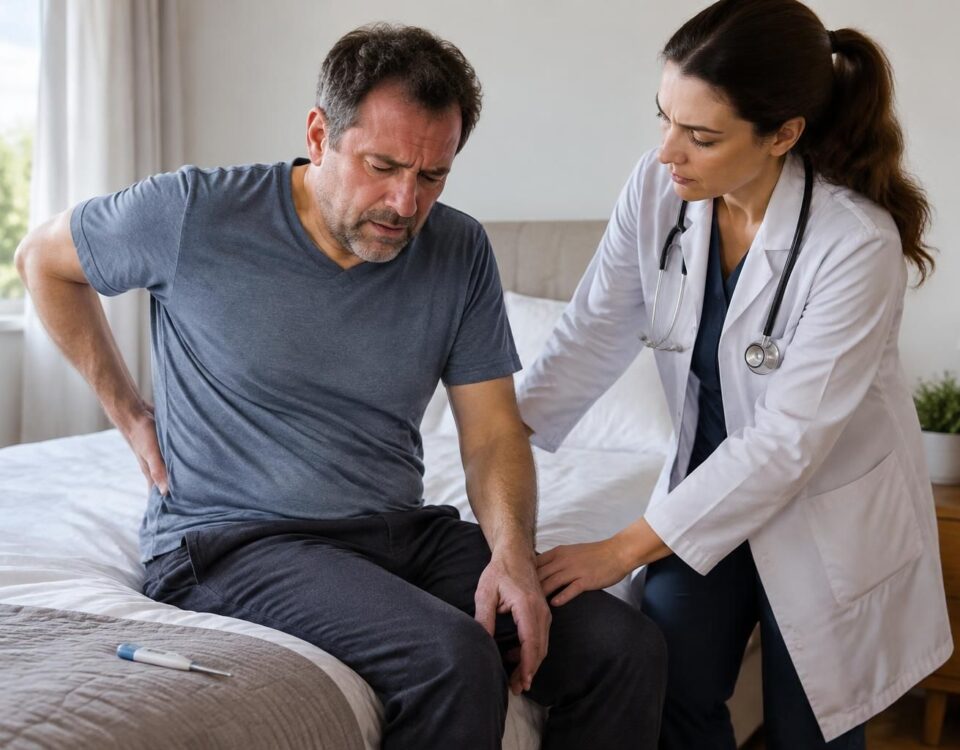
The evaluation is based on a clinical examination and the history of symptoms. The aim is to determine whether the pain originates from a lumbar nerve and to assess any alarm signs that require prompt medical attention. To deepen your understanding of the relationship between lumbar disc and sciatic nerve, you can consult specialized resources on sciatica and lumbar disc.
Treatment options
Sciatic pain often evolves favorably with appropriate management. The treatment aims to control pain, restore mobility, and limit the risk of recurrence. At the TAGMED Clinic, in Montreal or Terrebonne, care may include non-surgical approaches tailored to the case, such as motorized neurovertebral decompression or specific osteopathy, as well as the use of precision instruments when relevant.
Non-surgical options may be considered based on the evaluation, including interventions to reduce inflammation around the sciatic nerve and improve comfort, while remaining within the framework of care provided at TAGMED. It is important to note that specific treatments, especially regarding decompression or other advanced techniques, should be discussed with your practitioner and do not replace an individual medical assessment. For additional information on non-surgical treatments, see dedicated resources: Non-surgical treatment in Terrebonne and intermittent pain.
In some cases, options like neurovertebral decompression may be considered after specialized evaluation. For general information on this approach, consult neurovertebral decompression.
Surgery and when to consider it
Surgery is rarely necessary. It may be indicated when pain persists despite well-conducted treatment or in the presence of a progressive neurological deficit that affects mobility or daily safety. The types of interventions depend on the cause and may include discectomy or decompression. To better understand the indications and surgical options, see the dedicated resources: central disc herniation and signs to watch for.
Prevention and daily life
Staying active within the limits of pain is helpful. Maintain regular physical activity and adopt protective postural habits. If symptoms reappear, seek prompt medical evaluation to adjust the treatment plan and avoid complications.
For additional information on mechanisms and signs, you can consult these resources: Relationship between lumbar disc and sciatic nerve, Signs to watch for.
Prevention also includes maintaining a balance between protection and movement. To explore additional resources on causes and options, you can visit the sites affiliated with SOS Sciatique and TAGMED.
Medical disclaimer: The information and advice provided on this site do not replace the opinion, diagnosis, or treatment of a health professional. Please note that Sylvain Desforges, B.Sc., D.O., N.D., Doctor of Osteopathy, is neither a medical doctor nor a physician and does not specialize in a medical specialty as defined by the Collège des médecins du Québec. Manual therapy, functional medicine, and sports medicine as described on this site exclude any treatment or medical diagnosis made by a physician or medical specialist. Always consult your doctor for any medical questions. For more details, please read our complete Legal Notice.
Useful references and additional resources:
Relationship between lumbar disc and sciatic nerve: sossciatique
Pain and descending irradiation: sos sciatiques
Non-surgical treatment and management: sos sciatiques
Neurovertebral decompression: Neurovertebral decompression
TAGMED clinics in Montreal and Terrebonne: TAGMED Clinic
Axis: Quick diagnosis and concise management
- Sciatica: radicular lumbar pain radiating into the leg.
- Typical pathway: lower back → buttock → thigh → leg → foot.
- Nature: sharp pain, burning, or electric shocks.
- Warning signs: progressive weakness, urinary disorders, perineal anesthesia.
- Evaluation: quick consultation if warning signs; appropriate follow-up based on context.
- Initial treatment: moderate physical activity, analgesics/anti-inflammatories, physiotherapy.
- Activity: stay active, avoid prolonged strict rest.
- Rehabilitation: gradual trunk exercises and targeted mobility.
- Emergency: intense pain with loss of strength, incontinence, or acute buttock pain.

Sciatica is manifested by band-like pain in the lower back with radiation along the buttock and leg. This article provides a clear and practical approach to understanding the causes, recognizing the signs, and taking concrete action to reduce pain, improve mobility, and prevent recurrences.
Understanding sciatica and its pathway
The pain usually comes from irritation or compression of one or more roots of the sciatic nerve, often at the level of the L5 or S1 segments. The sciatic nerve originates in the lower back, crosses the buttock, descends into the back of the thigh, and continues to the foot. This trajectory explains why pain felt as “band-like” can be localized in the back but radiated far away, even to the foot. We refer to it as lumbar sciatica when lumbar pain is associated with radiation into the leg.
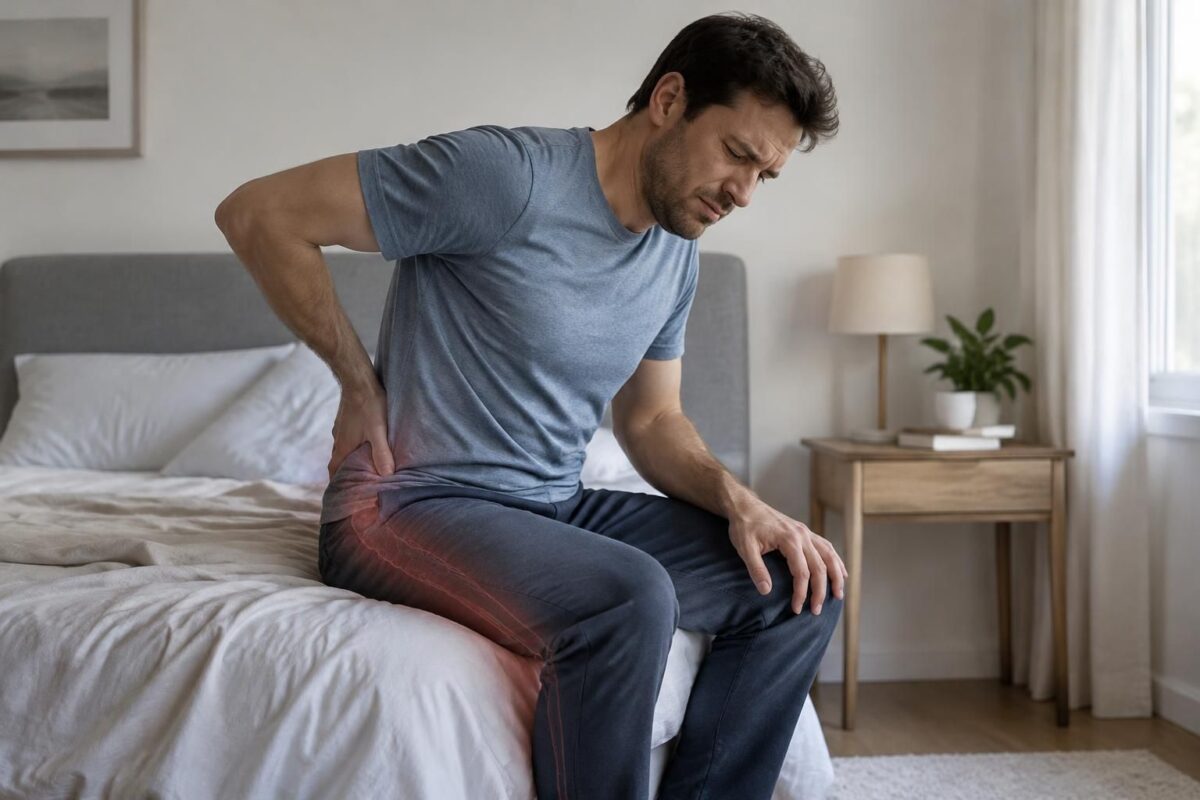
Sciatica and pain with saddle numbness
IN BRIEF Cauda Equina Syndrome refers to pain radiating down the leg accompanied by a loss of sensation around the genitals, anus, or inner thighs. This symptom may indicate severe nerve compression: it is not discomfort to treat at home.…
Signs and symptoms
Typical symptoms include sharp pain, burning, or electric discharge, sometimes accompanied by tingling or numbness. The pain is often worsened by prolonged sitting, coughing, or physical exertion. Neurological signs like weakness, difficulty lifting the foot or walking on heels or toes, or diminished reflexes may appear. If the pain is associated with a loss of bladder or perineal control, emergency consultation is required, as it may indicate a serious complication.
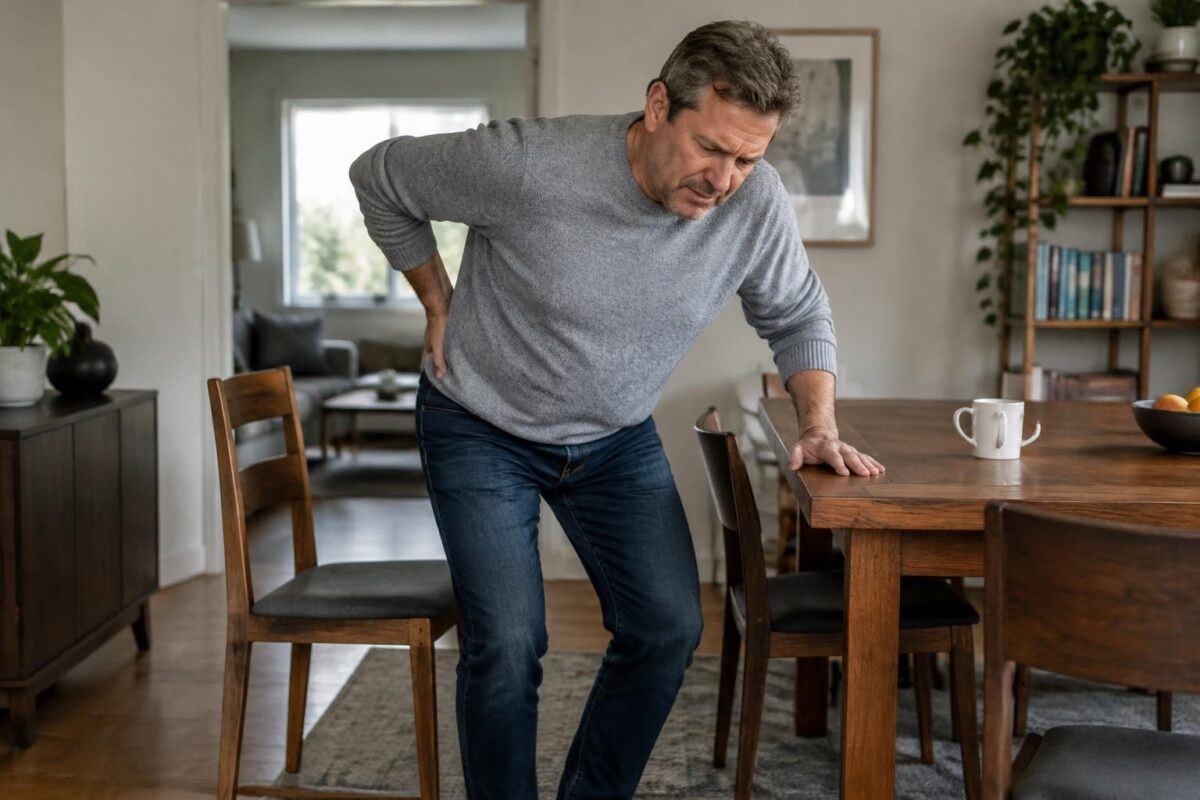
Sciatica and pain with progressive weakness
IN BRIEF Sciatica causes pain that radiates from the lower back down the leg; however, progressive muscle weakness is not a symptom to be taken lightly. It requires quick medical evaluation to search for the cause and determine the appropriate…
Common causes and triggers
The most common cause is a lumbar disc herniation that compresses a nerve root. Other factors include lumbar osteoarthritis and spinal canal stenosis, which primarily manifest with age and during walking. Less common causes exist (spondylolisthesis, tumor, infection, fracture), but they remain rare. Adapting one’s lifestyle and activities can often prevent episodes or reduce their frequency and intensity.

Sciatica and pain with general discomfort
IN BRIEF A sciatica causes pain that starts in the lower back or buttock and radiates down the leg. A general discomfort, especially if accompanied by fever or rapid worsening, should not be automatically attributed to sciatica: consult a healthcare…
Concrete action plan: what to do in practice
Step 1: assess the intensity and associated signs. Note if the pain starts from the lower back and radiates to the buttock and leg, and what aggravates it (sitting position, effort, cough). Step 2: stay active without overexerting. Take regular walks and favor positions that relieve the pain, without remaining strictly at rest. Step 3: use the treatments prescribed by your doctor and avoid prolonged self-medication. Step 4: initiate suitable rehabilitation aimed at reducing pain, restoring mobility, and strengthening the trunk. Step 5: re-evaluate if the pain persists or worsens. A consultation is recommended if new signs appear or if weakness progresses.

Sciatica and pain with a history of cancer: caution
IN BRIEF Sciatica causes pain that can radiate from the lower back down to the leg. With a history of cancer, new, persistent, or worsening pain should be quickly evaluated by a healthcare professional: its cause must be identified before…
Treatment Strategies and Rehabilitation
Initial Approaches and Self-Care
First-line measures include analgesics or anti-inflammatories as advised by a medical professional, combined with gentle exercises and regular physical activity. Prolonged rest is generally counterproductive and can delay recovery. Good sleep hygiene and suitable ergonomic positions facilitate the resumption of daily activities.
Role of Physiotherapy and Advanced Interventions
Physiotherapy is central to relieving pain and restoring mobility. It offers progressive exercises, decompression techniques, and postural advice. In cases of persistent pain, interventions such as injections may be considered to reduce inflammation and allow for continued rehabilitation. Surgery remains rare and is only considered when conservative treatment does not yield improvement and significant neurological deficits appear.
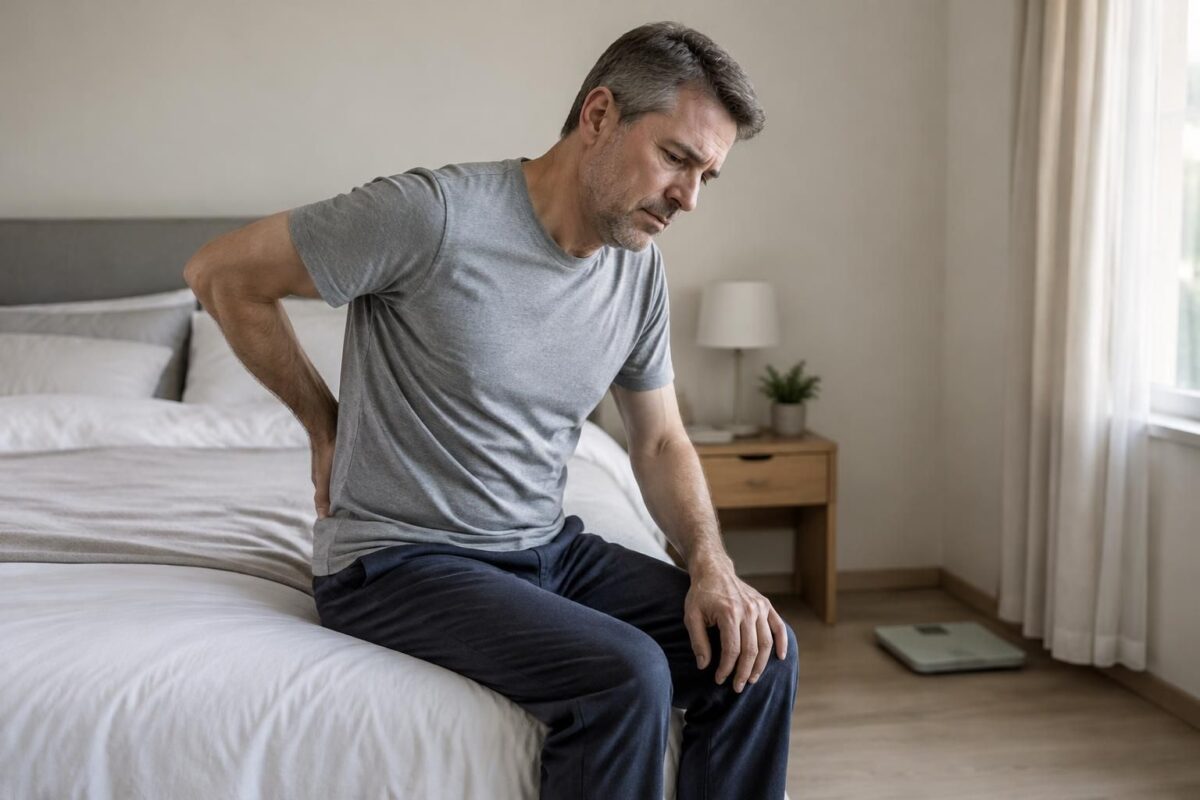
Sciatica and pain with unexplained weight loss
IN BRIEF Sciatica causes pain that can radiate from the lower back to the buttock and leg. Associated with unexplained weight loss, it requires medical evaluation to investigate the cause: this sign alone does not confirm a precise diagnosis. Consult…
When to Worry and Seek Emergency Care
Consult quickly if you notice loss of urinary or bowel control, perineal numbness, increasing weakness, or unbearable pain that does not respond to usual treatments. In other situations, regular medical evaluation and a personalized rehabilitation plan generally offer a good outcome.
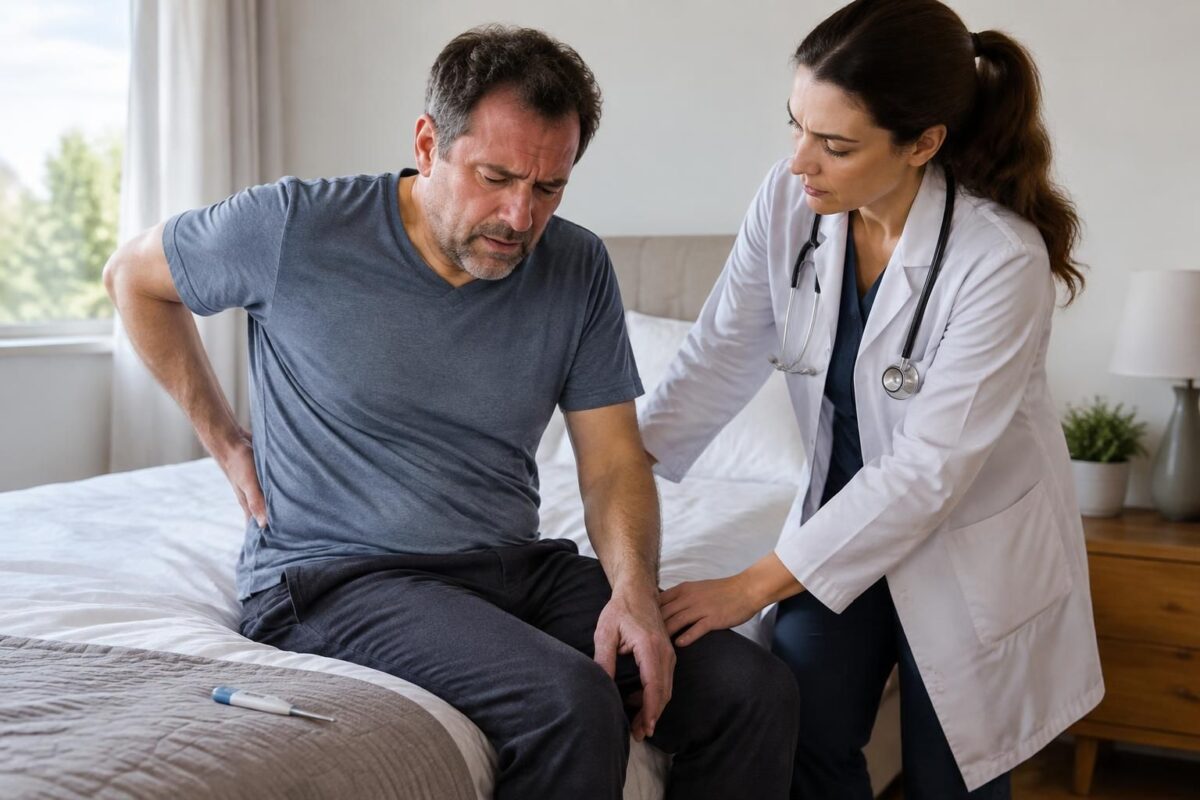
Sciatica and pain with fever: why consult?
IN BRIEF Sciatica with pain and fever deserves a medical evaluation: fever is not usual in simple sciatica and may signal an infection or another problem requiring care. Consult promptly, especially if the pain is intense or worsening. In cases…
Quick Comparison: Sciatica vs. Lower Back Pain with Radiation
| Definition | Sciatica: radiculopathy of the sciatic nerve, path from lower back → buttock → leg → foot; Lower back pain with radiation: radicular lower back pain with possible radiation but non-specific path. |
| Location and Path | Sciatica: follows the sciatic nerve (buttock → leg → foot); Lower back pain: centered on the lower back, variable radiation. |
| Typical Symptoms | Sciatica: sharp pain, burning or electric shocks; Lower back pain: dull/cramping pain, less marked radiation. |
| Frequent Causes | Sciatica: lumbar disc herniation, foraminal stenosis; Lower back pain: lumbago, muscle tightness, facet arthrosis. |
| Neurological Signs | Sciatica: weakness, decreased reflexes; Lower back pain: neurological deficits rare or absent. |
| Progression and Duration | Sciatica: improvement in a few weeks; Lower back pain: variable progression, may become chronic depending on the cause and management. |
| Emergencies / Warning Signs | Sciatica: emergency if loss of urinary/anal control or progressive weakness; Lower back pain: same signals in case of nerve compression or motor deficit. |
| Initial Treatment | Sciatica: NSAIDs, analgesics, physiotherapy; Injections depending on persistence; Lower back pain: analgesics, anti-inflammatories, suitable rehabilitation. |
| Surgery | Sciatica: rare surgery (discectomy/decompression depending on the cause); Lower back pain: rare surgery depending on treatment failure or progressive deficit. |

Sciatica and pain after trauma: warning sign
IN BRIEF A sciatica after trauma is pain that starts from the lower back or buttock and can radiate down the leg after a fall or impact. An assessment helps to investigate the cause and determine the appropriate course of…
Testimonials on Sciatica and Lower Back Pain with Radiation
“My name is Élise, I am 41 years old and my sciatica appeared after a long day at work. I felt a bar-like pain in my lower back with radiation to my buttock and thigh, then my calf. It was intense and I felt like every movement worsened the pain, which worried me at first.”
“At 56, my sciatica was triggered after a lifting effort at work. A bar-like pain in my lower back and radiation down my right leg kept me from sleeping. The diagnosis clarified things and I started a suitable rehabilitation that allowed me to gradually resume my activities.”
“My sciatica came after an intense running session and left me stuck with a bar-like pain in my lower back and radiation sometimes rising toward my spine. I quickly understood that the sciatic nerve could be irritated without major severity, and that gentle and regular movement was essential for improvement.”
“As the child of an athlete, I felt a bar-like pain in my lower back radiating down to my calf. It felt like an electric current with every step, a clear sign of sciatica. With guided exercises and a progressive approach, the radiation decreased and I regained better mobility.”
“My lower back was pulling and the radiation went down to my buttock and foot, a sign of significant sciatica. After a few weeks of targeted strengthening and advice on positions, the pain gradually decreased and I can now walk normally again without marked radiation.”
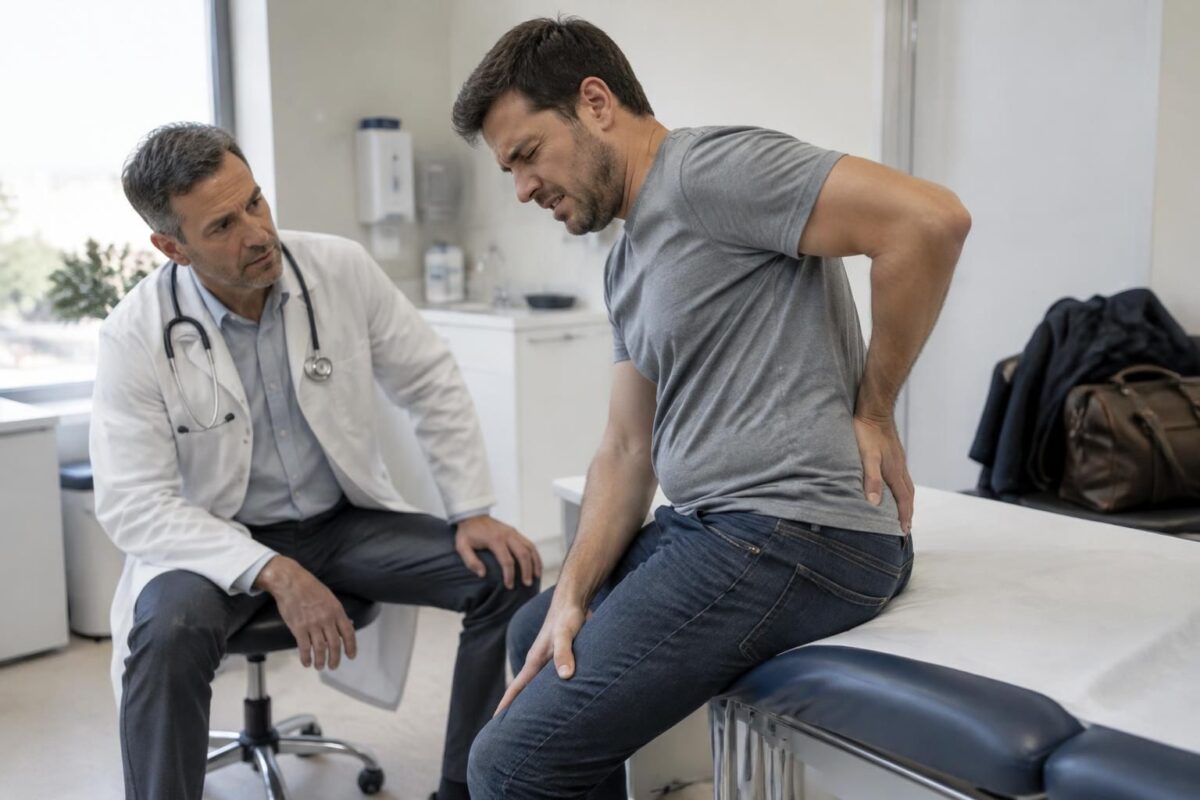
Sciatica and pain that appeared after an accident
IN BRIEF Sciatica after an accident is pain related to irritation or compression of the sciatic nerve, sometimes triggered or revealed by a fall or impact. It can start from the lower back or buttock and radiate down the leg.…
Detailed Biography: Sciatica and Lumbar Pain with Radiation
Sylvain Desforges, a graduate osteopath in osteopathy, naturopathy, and manual medicine, is the founding president of the TAGMED clinics and the ACMA association. With a career focused on innovation in healthcare, he specializes in the management of chronic pain of the spine and the integration of advanced technologies such as motorized neurovertebral decompression, laser, and shock wave therapy. His mission is to provide evidence-based care to optimize the health and well-being of his patients while offering a holistic and personalized approach to the treatment of lumbar pain with radiation.
In the field of sciatica, Dr Desforges relies on a deep understanding of radiculalgia, pain related to the irritation or compression of lumbar roots, most often L5 or S1. He describes the classic pain pathway: starting from the lower back, it radiates to the buttock, the thigh, and the leg, sometimes down to the foot. This radiation follows the path of the sciatic nerve, the longest in the body, and justifies adopting a differentiated approach between isolated low back pain and sciatica with associated radiculalgia.
The diagnostic approach he favors is rigorous and patient-centered. It combines a precise clinical examination, neurodynamic tests, and, when necessary, coordination with other professionals to screen for a lumbar disc herniation, a lumbar canal stenosis, or another nerve compression, and to assess neurological functioning. This evaluation then guides the choice of treatments and the progression of the care plan, avoiding misdiagnoses that could hinder recovery.
On the therapeutic side, the approach is progressive and personalized, prioritizing non-surgical methods whenever possible. Osteopathy and manual medicine techniques aim to relieve tensions around the nerve roots and restore mobility to the spine. When necessary, Dr Desforges combines advanced modalities such as motorized neurovertebral decompression, laser, and shockwave therapy. A personalized rehabilitation program, postural advice, and home exercises complement the treatment to reduce pain and improve daily function.
His practice is guided by an evidence-based approach and a patient-centered vision. He strives to clearly explain the pain mechanism, set realistic goals, and encourage appropriate physical activity to promote recovery and prevent recurrences. This philosophy, which combines manual techniques, patient education, and modern technologies, aims to provide comprehensive and tailored care for each person suffering from lumbar pain with irradiation and sciatica.
Beyond individual care, Dr Desforges participates in the development of a coordinated network within the TAGMED clinics and the ACMA association to offer an integrated and accessible service. His mission remains to provide evidence-based care to optimize the health and well-being of those facing sciatica and low back pain. To discover his approach and the available services, reach out to the TAGMED Clinic and engage in a personalized discussion about your care journey.
Quick summary: a sciatica presents as a sharp or shooting pain in the lower back that radiates along the buttock down to the leg, sometimes to the foot. Understanding the mechanism, distinguishing the causes, and knowing the management options allows for effective action, without waiting for the pain to settle or worsen.
Understanding the mechanism and symptoms
Sciatica results from the irritation or compression of a lumbar nerve root, most often at the levels of L5 or S1. The sciatic nerve originates in the lower back and follows a path that traverses the buttock, the back of the thigh, then passes behind the knee to descend to the foot. This location explains why the pain can be felt in the leg, even when the primary cause is at the lumbar level.
Typical symptoms include sharp pain, a burning sensation, or electric shocks, often aggravated by prolonged sitting, coughing, or exertion. Tingling, numbness, or discomfort while walking may also be observed. In some cases, neurological signs such as muscle weakness, difficulty lifting the foot, or walking on heels or toes, or a decrease in reflexes may appear.
It is important to distinguish isolated low back pain from pain that follows the course of the sciatic nerve. The presence of irradiation in the leg is the key sign that points to sciatica rather than simple low back pain.
Common causes and warning signs
The most common cause is a lumbar disc herniation, when the intervertebral disc bulges and compresses a nerve root. Other common factors in older adults include lumbar osteoarthritis and lumbar canal stenosis, which can cause pain while walking and bilateral radiation in some cases.
Less frequent but important causes exist, such as spondylolisthesis, a tumor, or an infection; these situations remain rare but require appropriate medical evaluation.
Warning signs requiring prompt consultation include progressive weakness of the lower limb, urinary or bowel disorders (e.g., urinary retention or loss of control), perineal numbness (“saddle” anesthesia), extremely intense pain, rapid worsening of symptoms, or any history of cancer. In the presence of these elements, it is recommended to seek consultation without delay.
To further explore the causes and mechanisms, you can consult additional resources such as those addressing the causes and symptoms of sciatica and non-surgical approaches.
Progression and duration
On average, an acute sciatica evolves favorably within a few weeks with appropriate management and progressive physical activity. However, when pain persists beyond three months, it is referred to as chronic sciatica, and a thorough assessment becomes necessary to adapt the treatment.
The duration depends on several factors, including the underlying cause, the degree of nerve compression, adherence to the treatment plan, and the maintenance of appropriate activity. Consistent efforts to stay active and avoid prolonged strict rest positively influence recovery.
Treatment options and management
The initial treatment is most often medical and may include analgesics, anti-inflammatories, and, if needed, treatments targeting nerve pain. Strict rest is no longer recommended as the sole approach; the goal is to gradually restore movement and function.
Physical therapy plays a central role in relieving pain, improving mobility, and preventing recurrences through progressive and adapted exercises. Advice on resting and sleeping positions can also help improve daily comfort.
In case of persistent pain, injections may be considered to reduce inflammation around the sciatic nerve and postpone, if possible, surgery. Non-drug approaches, such as massage performed by a professional, can complement treatment by reducing associated muscle tension.
Surgery remains rare and is considered when pain persists despite well-managed treatment or in the presence of progressive neurological deficits. Possible interventions depend on the cause and may include procedures such as discectomy or lumbar decompressions. For a broader understanding of the indications and procedures, specialized resources can be consulted.
Useful resources:
For information on non-surgical care and treatments in Montreal, consult Treatment of Sciatica in Montreal – Role of Non-Surgical Care.
For an overview of causes and symptoms, you can read Sciatica: Causes, Symptoms, and Definition.
Additional and varied resources on sciatica are available via informative link on sciatica and Le Traumato.
For practical in-depth information, see Sciatica in Terrebonne and Mild Sciatica.
For general information on sciatica and its treatments, consult Indirect Medicine – Sciatica and Link L5 and Pain in the Big Toe.

Sylvain Desforges, B.Sc., D.O., N.D., docteur en ostéopathie
Dr Sylvain Desforges, B.Sc., D.O., N.D., osteopath, is the founding president of TAGMED and of the ACMA association. He dedicates his practice to chronic spinal pain, low back pain and symptoms compatible with sciatica, particularly when pain radiates toward the buttock, leg, calf, foot or toes.
Through SOS Sciatique, he publishes educational content on sciatica symptoms, possible causes such as disc herniation, disc narrowing, foraminal stenosis or irritation of a lumbar nerve root, as well as non-surgical approaches that may be considered according to the evaluation. At Clinique TAGMED, care may include, depending on the case, motorized neurovertebral decompression, specific osteopathic care or precision percussion.
For an evaluation related to sciatica treatment in Montreal / Mount Royal or sciatica treatment in Terrebonne, please consult the services available at Clinique TAGMED.
Medical disclaimer
The information published on SOS Sciatique is provided for educational purposes only and does not replace a consultation, diagnosis, opinion or treatment provided by a physician or another authorized healthcare professional. The author of this article is neither a medical doctor nor a specialist in a medical specialty recognized by the Collège des médecins du Québec. The osteopathic, manual medicine or functional support approaches described on this site do not constitute medical acts and are not intended to replace medical follow-up.
Consult a physician or emergency service in cases of loss of bladder or bowel control, anesthesia in the saddle area, significant or progressive weakness in the leg or foot, fever, recent trauma, severe pain or rapid worsening of symptoms. For more details, please read our Legal Notice.