Sciatica and cold sensation in the foot: what should be checked?
27/08/2026
Sciatica and daily commute: when driving becomes an aggravating factor
27/08/2026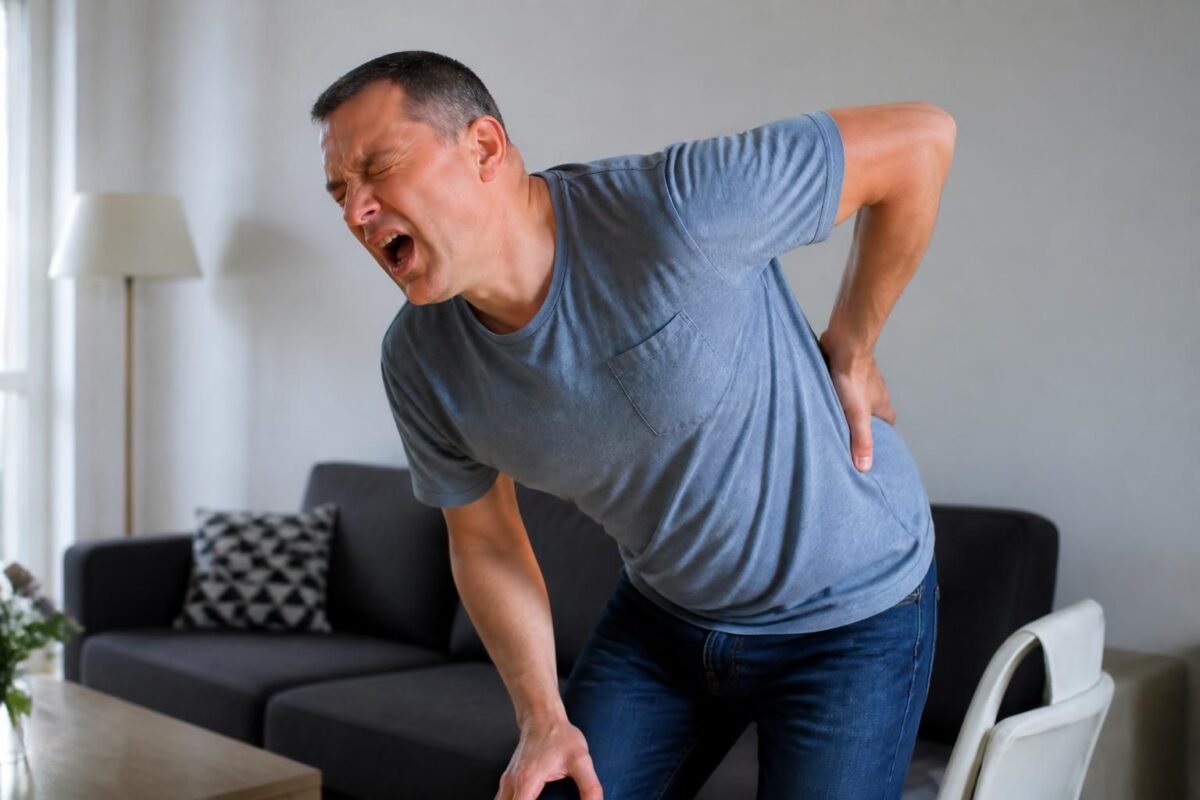
IN BRIEF
| In brief, a herniated disc is the rupture of the envelope of an intervertebral disc that can cause the nucleus to bulge and compress a nerve root. It causes pain radiating along the nerve path, sometimes accompanied by numbness or weakness, and can be triggered or worsened by a sneeze. The benefits of early diagnosis and conservative treatment are significant: rapid relief, return to activities without surgery in the majority of cases, and prevention of recurrences through physical therapy, better posture, and appropriate physical activity. How it works: most cases improve within weeks to months without surgery, with appropriate activity, exercises, and pain management. In Montreal, this service is particularly recommended for quick assessment and the implementation of a personalized rehabilitation plan that supports recovery and minimizes risks. |
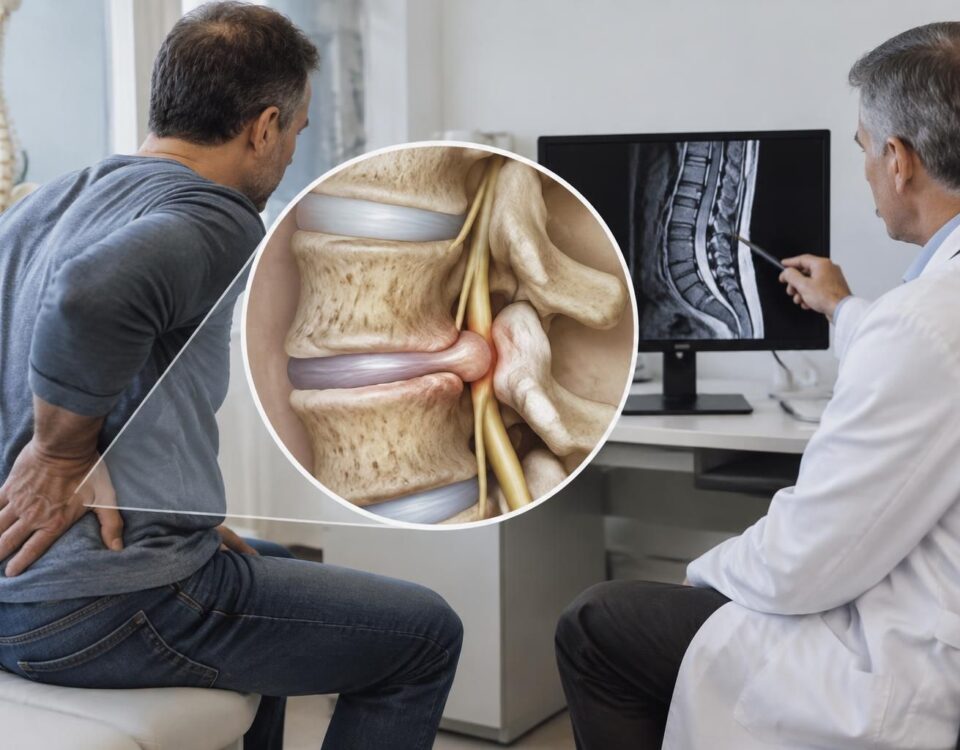
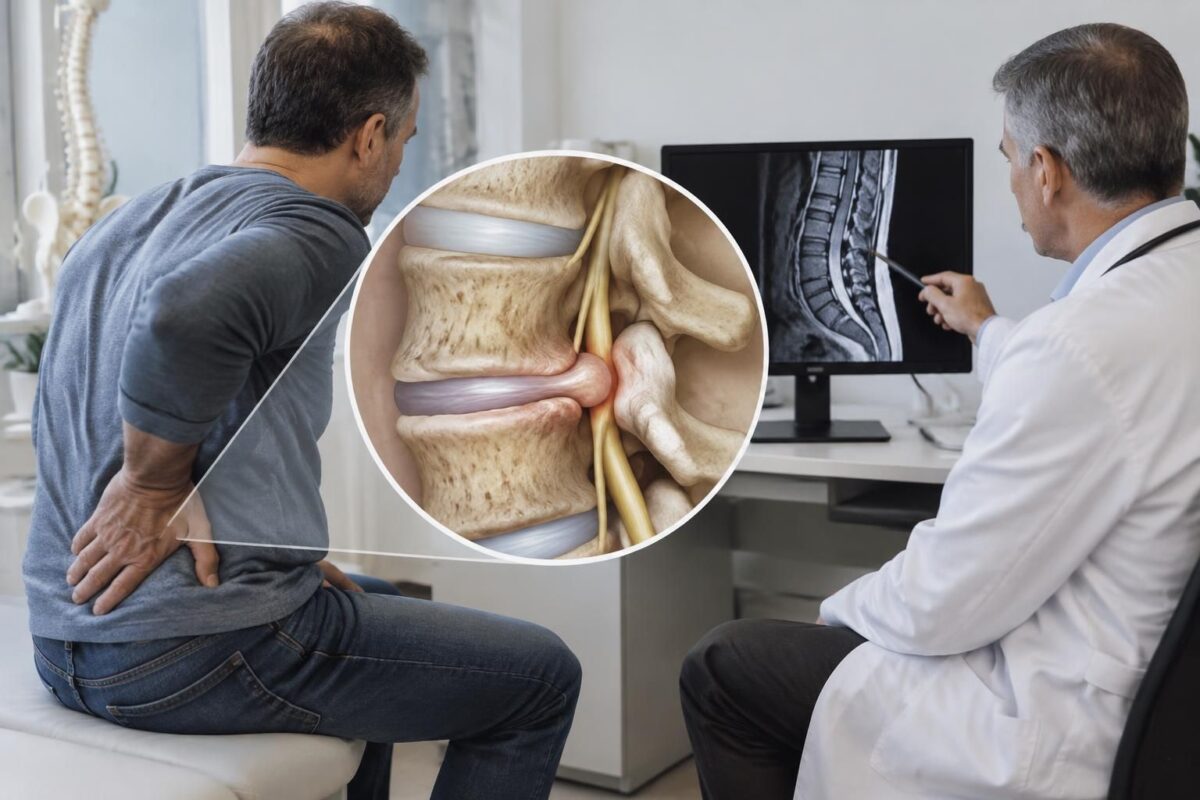
A herniated disc occurs when the nucleus of an intervertebral disc pushes through the ring and can compress a nerve root, causing pain, numbness, or weakness along the nerve path. Pain may radiate to the buttock and leg in the case of lumbar, or to the arm in the case of cervical. A possible disc sign is pain that worsens when sneezing or coughing, as these actions increase pressure on the affected nerve. Not all discs are painful, and diagnosis requires medical evaluation to determine the appropriate treatment.
When sneezing, intradiscal pressure increases. If an intervertebral disc is ruptured, the episode can trigger pain that radiates along the affected nerve. This article describes the link between sneezing and disc-related pain, the signs to watch for, diagnosis, and management options, with practical guidelines for quick action, notably at the TAGMED Clinic.
Physiological Mechanism and Significance
An intervertebral disc acts as a cushion between vertebrae. During a sneeze, the abdominal thrust increases pressure intrusion on the disc, potentially pushing the gelatinous nucleus against a nerve root. This causes radiated pain rather than just local pain. The disc sign is particularly present when pain travels along the nerve pathway, typically in the lower back and leg in cases of radicular low back pain.
Signs of a Disc Sign During Sneezing
Radiated pain descending into the buttock, thigh, or calf during sneezing. Numbness or tingling in the leg or foot. Occasional muscle weakness that may hinder walking or lifting feet. Pain may worsen with coughing, sneezing, or prolonged sitting.
Diagnosis and Evaluation
A doctor or physical therapist evaluates the symptoms, location of pain, and neurological signs. Imaging (MRI) may be considered depending on diagnostic uncertainty, but treatment is guided by symptoms and functional impairment. It should be noted that abnormalities may appear on imaging without corresponding pain; diagnosis relies on the clinical picture.
Warning Signs and Emergency
Medical emergency if there is loss of bladder or bowel control, perineal numbness, marked bilateral weakness or rapid progression, associated fever, or rapidly worsening pain. If these signs are present, contact emergency services immediately.
Management Options
For most cases, management is conservative and tailored to pain, mobility, and function. It is recommended to remain active within pain limits and avoid prolonged bed rest. Non-surgical interventions may be considered based on assessment and evolution. Information and services are available at the TAGMED Clinic and in related resources such as Hernie discale and pain stronger in the leg, as well as on Hernie discale and calf pain. For information on neurovertebral decompression and associated precautions, see Neurovertebral decompression and prevention of disc complications.
Surgery remains rare and is considered when symptoms persist despite appropriate treatment or in cases of severe neurological impairment. Informative resources and specific options can be consulted via sosherniediscale.com and central herniated disc and sciatic pain.
Note: solutions such as neurovertebral decompression and other specialized approaches should be considered after thorough evaluation and do not replace medical follow-up. For more information on available options in your area, consult your clinician and the resources mentioned above.
If you are looking for management tailored to Montreal or Terrebonne, the TAGMED Clinic can offer an approach focused on radicular pain and vertebral mechanisms, based on personalized evaluation.
For more information, you can consult the following resources: Paramedian herniated disc and possible painful trajectory, Central herniated disc and sciatic pain.
Medical disclaimer: The information and advice provided on this site do not replace the opinion, diagnosis, or treatment of a healthcare professional. Please note that Dr. Sylvain Desforges, osteopath, is neither a doctor of medicine nor a physician, and is not a specialist in a medical specialty as defined by the Collège des médecins du Québec. Manual medicine, functional medicine, and sports medicine as described on this site exclude any treatment or medical diagnosis made by a physician or medical specialist. Always consult your doctor for any medical questions. For more details, please read our full Legal Notice.
- Potential signs when sneezing
- Pain that follows the path of a nerve and appears during sneezing
- Lower back or cervical pain that worsens with sneezing
- Tingling or numbness in the affected limb
- Transient weakness of the foot or hand
- Pain that intensifies with coughing or exertion
- What this implies
- May indicate a herniated disc and requires an evaluation
- Referral for physical therapy and targeted exercises
- Maintain appropriate activity and correct posture
- Monitor signs of emergency: loss of urinary control, perineal numbness, bilateral weakness
- If persistent > a few weeks or intense pain: consult quickly

This article provides practical recommendations for recognizing a herniated disc when pain occurs or worsens while sneezing, explaining why this sign can be revealing, and sharing simple actions to promote recovery without surgery, as well as the criteria for knowing when to consult quickly.
Sneezing and disc pain: what is the real connection?
When an intervertebral disc fissures and a fragment of the gelatinous nucleus may compress a nerve root, any increase in pressure can trigger referred pain. Sneezing temporarily increases intra-abdominal pressure and pressure around the spine, which can accentuate pain and nerve irritation. This mechanism explains why some patients feel pain that starts in the lower back or neck and radiates down the leg or arm as soon as they sneeze.
This disc sign is not automatic with every sneeze and does not rule out other causes. However, when accompanied by radiation, tingling, numbness, or weakness in the limb, it may signal nerve compression related to a herniated disc. The location (lower back or neck) determines the painful path: sciatica in the lumbar region and cervicobrachial neuralgia in the cervical region.
Typical associated signs when sneezing
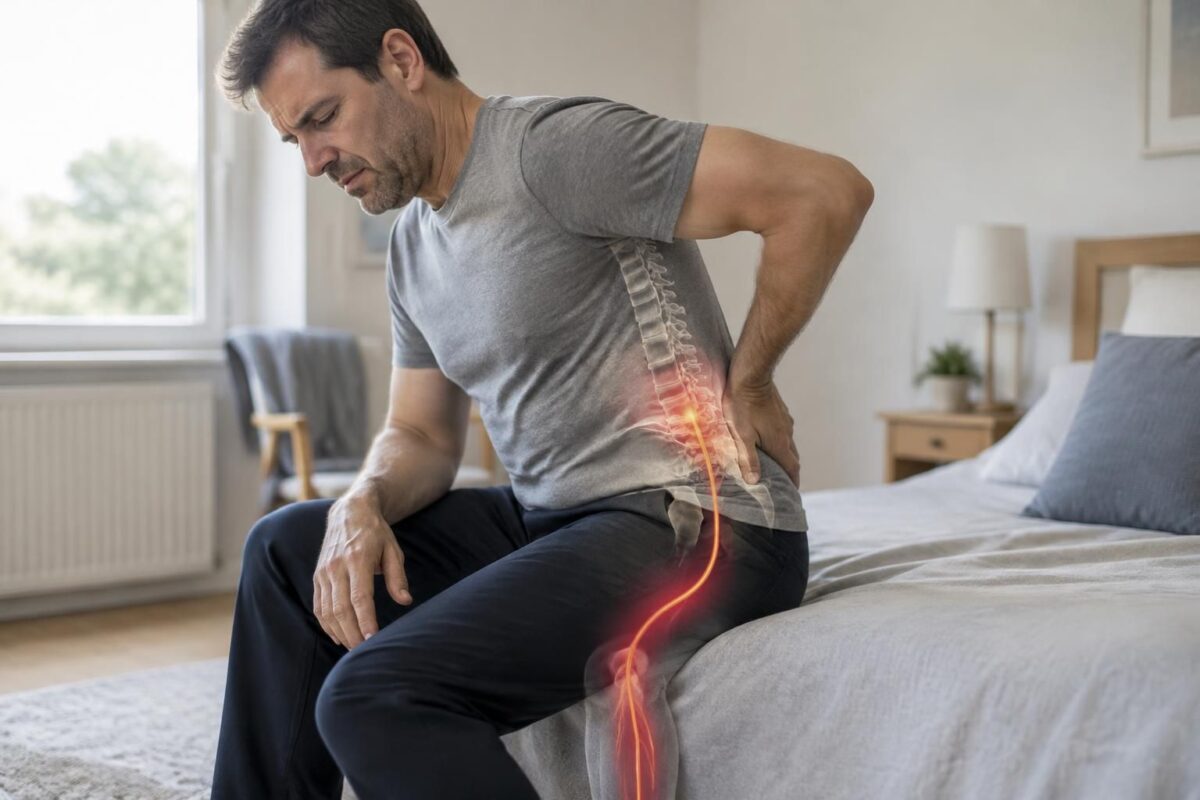
In the lumbar region, the pain may extend from the buttock to the foot, sometimes with numbness of the foot or weakness in lifting the foot. In the cervical region, the pain may affect the shoulder, arm, and hand, with tingling in the fingers and possible loss of strength. The intensity and character of the pain vary depending on the nerve involved and the degree of compression.
It is important to note that not all hernias cause permanent or obvious pain on imaging; the diagnosis primarily relies on symptoms and clinical evaluation, not just on imaging results.
When does sneezing reveal a true disc pathology?
If the pain triggered by sneezing is repeated, painful, and associated with neurological signs (numbness, tingling, muscle weakness), this may warrant specialized evaluation. Pain that worsens with exertion, persists beyond a few weeks, or accompanies loss of control of urine or stools constitutes an emergency and requires prompt management.
For appropriate management, a consultation with a physician or physical therapist helps to distinguish a herniated disc from other causes of spinal pain (lumbago, contracture, osteoarthritis). The treatment plan then focuses on maintaining activity, targeted exercises, and measures to reduce pain and pressure on the nerve.
Practical management and prevention without surgery
Adopt a progressive approach focused on movement: staying active within the limits of pain is preferable to prolonged rest. Physical therapy plays a key role at the front line, with trunk strengthening exercises, controlled stretching, and gentle mobilization techniques to restore mobility and decrease nerve compression.
Improve posture in daily life: keep a straight back, use appropriate lumbar support while sitting, and alternate positions to avoid prolonged strain on one area. Use simple tools like a support cushion or gentle stretching schemes at home, always without forcing and respecting pain signals.
During acute periods, heat and analgesics can help reduce muscle tension and pain. A gradual return to activity, with well-managed loads and progressive exercises, is essential to prevent recurrences and promote sustainable recovery.
When to consider specialized evaluation or intervention
Surgery is rare and generally reserved for cases that do not respond to conservative treatment or that present with progressive neurological impairment. In most situations, a focus on adapted physical activity and rehabilitation allows for significant improvement in a few weeks to a few months.
| Aspect | Concise response |
|---|---|
| Location and radiation | Pain that follows the path of the affected nerve (lower back or neck) possibly radiating to the buttock/leg or the shoulder/arm. |
| Trigger due to sneezing | Sneezing increases pressure and may intensify the radicular pain. |
| Associated symptoms | Numbness, tingling, and weakness in the affected limb. |
| Type of pain when sneezing | Sharp pain or electric shock feeling when sneezing, sometimes worsened by coughing or exertion. |
| Neurological signs | Loss of strength or difficulty in lifting the foot, or loss of sensation in the limb. |
| Diagnosis | Diagnosis guided by clinical examination; imaging can confirm but is not sufficient alone. |
| Initial management | Adapted activity, physical therapy, core strengthening exercises, correct posture, analgesics; avoid prolonged rest. |
| When surgery | In case of failure of conservative treatment or progressive neurological impairment. |
| Urgent warning signs | Loss of urinary/fecal control, saddle anesthesia, bilateral weakness, fever. |
Testimonials on pain when sneezing and possible disc sign
Élodie, 41 years old — “When sneezing, a sharp pain shot from my lower back to my buttock and leg. It felt like an electric shock. I immediately thought something was wrong with my back. My doctor mentioned the possibility of a herniated disc, and I consulted a physical therapist. What I learned: the possible disc sign represented by the pain when sneezing deserves serious evaluation and appropriate management.”
Marc, 49 years old — “When sneezing, I felt pain radiating from my neck to my arm and tingling in my fingers. At first, I thought it was a neck stiffness, but the persistence of the symptoms led me to consider a cervical herniated disc. The assessment and physical therapy helped reduce the pain and strengthen my neck. It was indeed a possible disc sign, a useful warning not to neglect when sneezing triggers pain in the arm.”
Julie, 33 years old — “A sneeze triggered a sharp pain in my back and radiation to my buttock. I felt like my nerve was irritated. My specialist mentioned a lumbar herniated disc and advised a conservative approach with physical therapy and vigilance. Today, after a few weeks, the pain has decreased, and I can resume my activities without fear at every sneeze; the possible disc sign was a helpful alert to act early.”
Luc, 56 years old — “After sneezing, an intense lower back pain forced me to stop abruptly. The path was clear: examination, then a physical therapy plan focused on trunk strengthening and improving posture. I was explained that this type of pain can be related to a herniated disc and that it is better to stay active rather than accumulate rest. What struck me is that this possible disc sign can be the first urgent warning that prompts early consultation.”
Sophie, 42 years old — “Every sneeze could turn painful during a period of lower back pain. The painful path that descended into my leg worried me. After the assessment, the phenomenon was linked to a herniated disc and I started active rehabilitation and gentle exercises. The possible disc sign was clear: pain that occurs upon sneezing is not normal, and one should consult. Today, I feel much better, and I understand the importance of moving smartly.”
Herniated disc and pain when sneezing: possible disc sign
Dr. Sylvain Desforges, an experienced osteopath active in the field of manual medicine and body architecture, puts his expertise to work in managing spinal pain and radicular manifestations. At 59 years old, he holds leadership positions within clinical and associative networks, with a practice focused on therapeutic innovation and the integration of advanced technologies. His goal is to provide evidence-based care to optimize health and well-being for everyone, emphasizing a human, gradual, and personalized approach.
In his daily work, he pays particular attention to the distinction between herniated disc and other causes of lower back pain or neck pain. His evaluation is based on a global observation of movement, symptoms radiating along the nerve pathway, and warning signals that may require rapid intervention. For him, a herniated disc is not just an image; it is primarily an experience lived by the patient, where pain can manifest as radiation, numbness, or weakness in a leg or an arm. He emphasizes that the symptomatology depends on the nerve involved and that imaging examinations must be interpreted in light of the troubles expressed by the patient.
A striking aspect of his approach is the attention paid to the pain caused by simple actions, such as sneezing. In some cases, a sneeze provokes a sudden increase in intra-abdominal pressure that can exacerbate an already present pain and sensitize a compressed nerve root. Dr. Desforges explains that this disc sign, while suggestive, is not sufficient on its own to make a diagnosis; it fits into a broader picture where daily activity, posture, and treatment plan play a key role. Moreover, he prioritizes patient education on the precautions to take and strategies for managing painful episodes, in order to preserve mobility and avoid early recourse to immobility.
To effectively treat a herniated disc, he advocates for a clear and tailored therapeutic progression. The first line focuses on maintaining adapted activity, targeted physical therapy exercises to strengthen the stabilizing muscles of the spine and improve posture, and gentle measures to soothe the pain. Then, active rehabilitation becomes central, with core stability programs, proprioception, and progressive strengthening. In some cases, the combined use of technologies such as motorized spinal decompression, laser modalities, or shock wave therapies may be considered to complement manual work and accelerate recovery. The red thread of his approach remains the active involvement of the patient, so that everyone can regain their functionality and limit recurrence.
Dr. Desforges’ message is clear: the majority of herniated discs progress favorably without surgery thanks to conservative management and appropriate mobilization. He sees anticipation and foundational work as a key to reducing pain, restoring mobility, and allowing the patient to return to their normal life. His commitment is to activate the body’s resources and accompany each person towards a better quality of life, remaining attentive, rigorous in evaluation, and generous in sharing concrete and effective solutions.
Quick summary: Herniated disc can manifest as an irradiating pain that intensifies during a sneeze or a turn. In most cases, conservative management (appropriate activity, physiotherapy, posture improvement, and patience) allows for significant improvement without surgery. This text specifies the mechanisms, the signs to watch for, and the treatment options, with practical advice for staying active when pain occurs during sneezes.
Understanding the link between sneezing and disc pain
During a sneeze, intra-abdominal and intra-discal pressure briefly increases. If the disc is ruptured, the nucleus may compress a nerve root and trigger an irradiating pain that follows the path of the affected nerve, whether towards the leg in the case of lumbar or towards the arm in the case of cervical. This dynamic explains why a sneeze can awaken or amplify disc pain.
It is important to note that not all disc herniations cause intense pain and that the presence of an anomaly on imaging does not necessarily lead to symptoms. The diagnosis and treatment plan rely more on symptoms and clinical evaluation than on MRI alone.
To delve deeper into the mechanisms and signs to recognize, you can consult specialized resources such as Body House Kiné and Doctissimo.
Practical management and non-surgical treatments
In the vast majority of cases, conservative treatment allows for notable improvement without surgery. Staying active within the limits of pain, following a physiotherapy program focused on trunk strengthening and stability, and sustainably correcting posture are the pillars of recovery. Prolonged rest is generally counterproductive, and controlled, gradual movement is preferred.
Resources indicate that most patients experience a reduction in symptoms within a few weeks to a few months thanks to targeted exercises and appropriate pain management. For additional information and practical approaches, see this informational article and the guide from Body House Kiné.
Warning signs and when to consult quickly
If serious signs appear, consulting quickly is essential: loss of bladder or bowel control, anesthesia around the saddle, marked and progressive weakness of a leg or foot, or pain that does not subside despite treatment. In these cases, it may indicate a syndrome requiring urgent management.
Helpful resources describe these warning signals and situations to watch for, including pages dedicated to pain associated with numbness and weakness of the foot.
Practical advice regarding sneezing and daily life
In case of pain during sneezes, prioritize actions that reduce pressure on the disc and support the back: stay active, take regular breaks when seated, and work on a neutral posture with suitable lumbar support. Gentle trunk strengthening exercises and controlled stretching can help prevent recurrences and improve spinal stability.
Assistive tools, such as support devices and stretchers, can improve comfort and posture daily without healing the hernia alone. These aids should be used in conjunction with a physiotherapy program and a gradual exercise plan. For advice on symptoms and actions to take, consult these dedicated resources and Medecindirect.
Resources and further reading
To explore further, you can consult these guides and articles that detail the symptoms, possible causes, and treatment options associated with herniated disc and its manifestations during sneezing:
Sciatica, hernia, stenosis or nerve irritation, numbness and signs of nerve irritation, Vidal, Doctissimo, Évitalink, Body House Kiné, and SOS Sciatique.
Disc herniation and persistent pain in the leg
IN BRIEF A disc protrusion is a bulging of a disc that can irritate a nerve and cause persistent pain in the leg, sometimes accompanied by tingling or numbness. Imaging alone does not confirm the origin of the symptoms: clinical…
Disc herniation and lumbar degeneration
IN BRIEF A lumbar disc protrusion is a bulging of a disc often related to disc degeneration. It does not always cause symptoms but can contribute to lower back pain or pain radiating down the leg if a nerve is…
Disc protrusion and disc pinching: combined mechanisms
IN BRIEF A disc protrusion is a bulging of the disc, while a disc narrowing refers to a decrease in its height. These changes can coexist and sometimes irritate a nerve root, leading to pain or radiation, but they can…

Disc herniation and associated foraminal stenosis
IN BRIEF A disc protrusion associated with foraminal stenosis occurs when a bulging disc coexists with a narrowing of the opening through which a nerve root passes. This association can lead to lower back pain radiating into the leg, tingling,…

Spinal disc protrusion and nerve inflammation
IN BRIEF A disc protrusion is a bulging of the disc that can irritate or compress a nerve, without necessarily causing symptoms. When it leads to nerve inflammation, it can cause pain in the back or neck, sometimes accompanied by…

Disc protrusion and irritation of L5
IN SHORT A disc protrusion is a bulging of the disc that can irritate the L5 root and cause lower back pain radiating to the buttock, leg, or foot, sometimes with tingling or weakness. MRI alone is not sufficient to…

Disc protrusion and pain after twisting the back
IN BRIEF A disc protrusion is a bulging of the disc that can contribute to pain after a back twist, but it alone does not confirm the cause. The pain can remain in the lower back or radiate to the…

Disc herniation and pain after lifting
IN BRIEF A disc protrusion is a bulging of a disc between the vertebrae. Pain that appears after lifting a load does not prove that it is the cause: the MRI must be interpreted alongside the symptoms and the clinical…

Dr Sylvain Desforges, B.Sc., D.O., N.D., osteopath, is the founding president of TAGMED and of the ACMA association. He dedicates his practice to chronic spinal pain, low back pain and symptoms compatible with sciatica, particularly when pain radiates toward the buttock, leg, calf, foot or toes.
Through SOS Sciatique, he publishes educational content on sciatica symptoms, possible causes such as disc herniation, disc narrowing, foraminal stenosis or irritation of a lumbar nerve root, as well as non-surgical approaches that may be considered according to the evaluation. At Clinique TAGMED, care may include, depending on the case, motorized neurovertebral decompression, specific osteopathic care or precision percussion.
For an evaluation related to sciatica treatment in Montreal / Mount Royal or sciatica treatment in Terrebonne, please consult the services available at Clinique TAGMED.
Medical disclaimer
The information published on SOS Sciatique is provided for educational purposes only and does not replace a consultation, diagnosis, opinion or treatment provided by a physician or another authorized healthcare professional. The author of this article is neither a medical doctor nor a specialist in a medical specialty recognized by the Collège des médecins du Québec. The osteopathic, manual medicine or functional support approaches described on this site do not constitute medical acts and are not intended to replace medical follow-up.
Consult a physician or emergency service in cases of loss of bladder or bowel control, anesthesia in the saddle area, significant or progressive weakness in the leg or foot, fever, recent trauma, severe pain or rapid worsening of symptoms. For more details, please read our Legal Notice.