Herniated disc and centralizing pain: sign to interpret
03/09/2026
Sciatica in Montreal: pain towards the top of the foot and L5 root
04/09/2026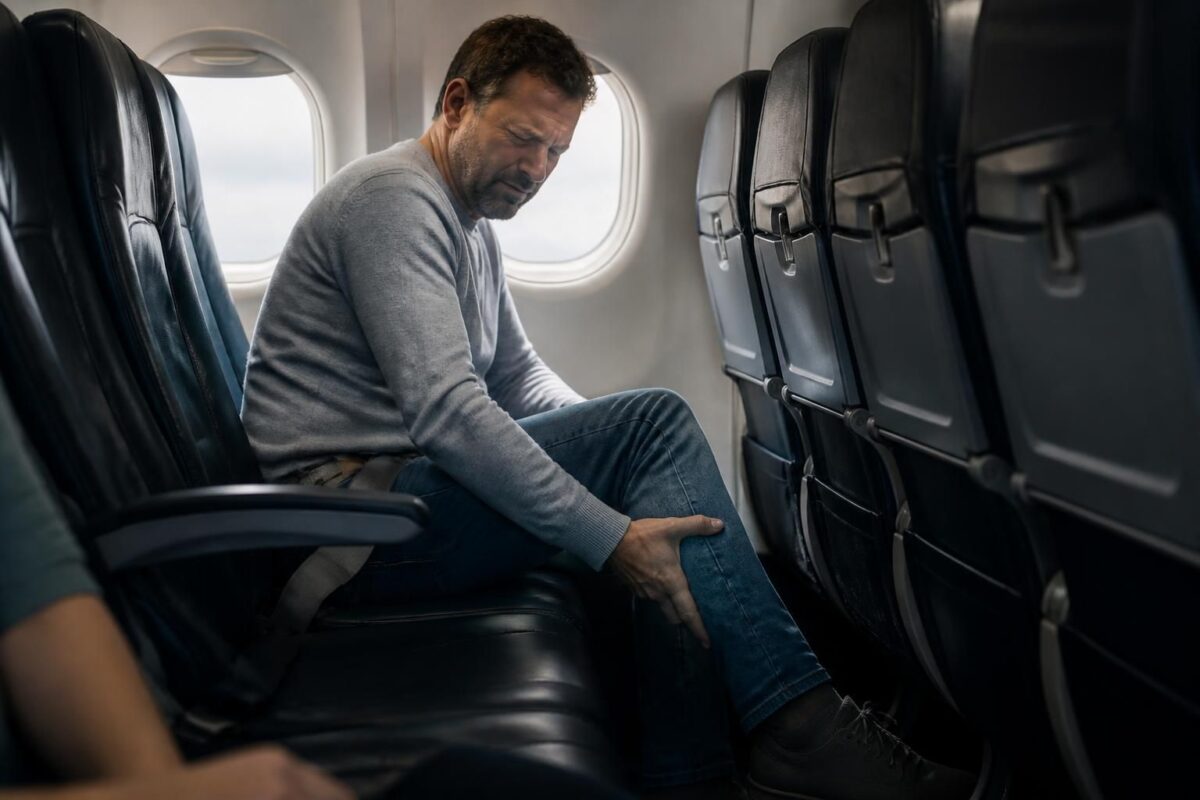
IN BRIEF
| In brief, sciatica related to prolonged sitting on the plane describes pain that arises or worsens when one remains seated for long periods during a flight, due to pressure on the lumbar discs and the sciatic nerve. How to act: prioritize a neutral posture with lumbar support, feet flat, and insert micro-breaks every 30–45 minutes with gentle stretching and improved ergonomics of the workspace onboard or at the seat, in order to reduce pain and improve circulation. The benefits: pain relief, better mobility, and sustained comfort without invasive intervention. Accessible in Montreal and the surrounding area, this advice applies to both professional travelers and passengers to prevent worsening and optimize comfort during the flight. |
On an airplane trip, prolonged sitting-related sciatica can manifest as pain radiating down the leg after long periods without movement. To limit this pain, adopt a neutral posture with lumbar support, keep your feet flat, and schedule micro-breaks every 30-45 minutes with gentle stretching and small leg movements; if possible, alternate sitting/standing and walk in the aisle. In case of persistent pain, consult a professional for a personalized plan.
This article written by a healthcare professional explains how sciatica can be aggravated by prolonged sitting on an airplane. It details the mechanism, the preferred postures, and simple actions to adopt during the flight to limit leg pain without resorting to invasive measures. You will discover practical tips to reduce pressure on the lumbar discs and protect the path of the sciatic nerve as soon as you board.
Pain can intensify when sitting for long periods in a confined space like an airplane. Prolonged position increases pressure on the lumbar discs and can irritate the sciatic nerve. Although the airplane limits movements, a few simple adjustments can mitigate risks and improve comfort.
Understanding the mechanism and warning signals
The sciatic nerve originates in the lumbar region and follows down the leg. Poor posture or twisting of the pelvis increases pressure on this nerve. Pain that travels from the lower back to the buttock or leg, tingling, or an electric sensation indicate excessive strain. Note the conditions during the flight to guide postural adjustments.
Ideal posture and equipment for the airplane
Sit at the back of the seat, with your back slightly supported. Place both feet flat on the floor and knees roughly at hip height. Use a small lumbar cushion or a rolled-up towel to maintain the natural curve of your back. Avoid crossing your legs and slouching. If possible, choose a seat with active lumbar support and adjust your position to limit pelvic twisting. For detailed advice on postures to avoid, consult this guide.
Adjust the screen and accessories to avoid tension in the neck and shoulders. If you have a footrest, use it to keep your thighs and legs in a natural position. A slight recline of the backrest can also help maintain the pelvis in a neutral position and limit pressure on the discs.
During the flight: simple actions and micro-movements
Change your position slightly every 30 to 45 minutes. Stand briefly when possible and take a few steps in the aisle. Make gentle ankle movements and light trunk rotations to stimulate blood circulation and decrease pressure around the sciatic nerve. For practical travel-adapted ideas, see Traveling with Sciatica and How to Sit with Sciatica.
In case of pain, increase breaks and prioritize simple micro-methods such as gentle stretches and controlled back flexions, without forcing. For additional resources on trips and postures, you can consult this resource.
To avoid and useful alternatives
Avoid prolonged static positions and twisting of the pelvis. Avoid seats that are too low or too hard, which can increase pressure on the lumbar discs. Using a lumbar cushion and a small seat cushion can help maintain a neutral position and reduce irritation.
If you travel frequently, consider setups that promote movement and back stability during flights. For additional illustrated advice and comparisons, consult specialized resources like Sciatica and Prolonged Sitting.
When to consult or consider a comprehensive approach
If pain persists despite adjustments and breaks, consider an assessment by a healthcare professional. Some situations require a multidisciplinary approach and tailored non-invasive options. You can inquire about available options at the TAGMED clinic in Montreal or Terrebonne and discuss non-invasive plans with your doctor.
Resources and useful links
For practical advice and similar scenarios, you can consult the following resources:
Postures to avoid and ergonomics: Sciatica – Postures to Avoid
Sitting tips and delivery of recommendations: How to Sit with Sciatica
Travel and pain on the plane: Vibrations and Symptoms
Additional reference items: Progressive Numbness Towards the Foot
For solutions providing non-surgical alternatives and clinical perspectives, you can also consult cliniquetagmed.com.
For additional information, examples of measures to consider, and descriptions of the mechanisms, you can explore the following resources among the approved domains: sossciatique.com, sosherniediscale.com, sosherniatedisc.com, sostunnelcarpien.com, decompressionneurovertebrale.com.
Avoid associating specific exercises or stretches when the content concerns neurovertebral decompression or similar conditions. For professional practices, refer to non-invasive approaches and individualized advice provided by your healthcare professional and the clinical resources mentioned above.
April 2026 — this text is written to clarify the mechanisms and propose simple and safe actions to limit pain associated with sciatica during a flight. The recommendations remain general and do not replace personalized medical advice.
“Medical disclaimer: The information and advice provided on this site do not replace the opinion, diagnosis, or treatment of a healthcare professional. Please note that Dr. Sylvain Desforges, osteopath, is neither a doctor of medicine nor a physician and is not a specialist in a medical specialty as defined by the Collège des médecins du Québec. Manual medicine, functional medicine, and sports medicine as described on this site exclude any treatment or medical diagnosis made by a physician or specialist doctor. Always consult your doctor for any medical questions. For more details, please read our full Legal Notice.”
Focus: Practical management of sciatic pain during a flight — Before / During the flight
Before the flight
- Adopt a neutral posture with lumbar support.
- Adjust the seat: knees at hip level, feet flat.
- Use a lumbar cushion or a rolled towel for the curvature.
- Plan for micro-breaks every 30-45 min from boarding.
During the flight
- Perform micro-movements and gentle ankle stretches.
- Alternate between sitting and standing when possible.
- Keep your shoulders relaxed and your back supported.
- Use a slightly inclined seat cushion to reduce pressure.
- Stay hydrated and prioritize slow breathing to support circulation.

This article explains why sciatica may worsen during a flight due to prolonged sitting, and provides concrete recommendations for traveling by plane with a lower risk of leg pain. You will learn how to adopt a neutral posture with lumbar support, arrange for micro-breaks, and perform simple actions on board to maintain your mobility and comfort.
Understanding the context in-flight
In the cabin, even though space is limited, sitting too long can increase pressure on the lumbar discs and strain the sciatic nerve. The combination of lack of movement, fixed position, and dehydration associated with travel can lead to pain, tingling, or an electrical sensation radiating down the leg. The aim is therefore to introduce active breaks and improve back support throughout the journey.
Sciatica and aggressive stretches: possible sign of worsening
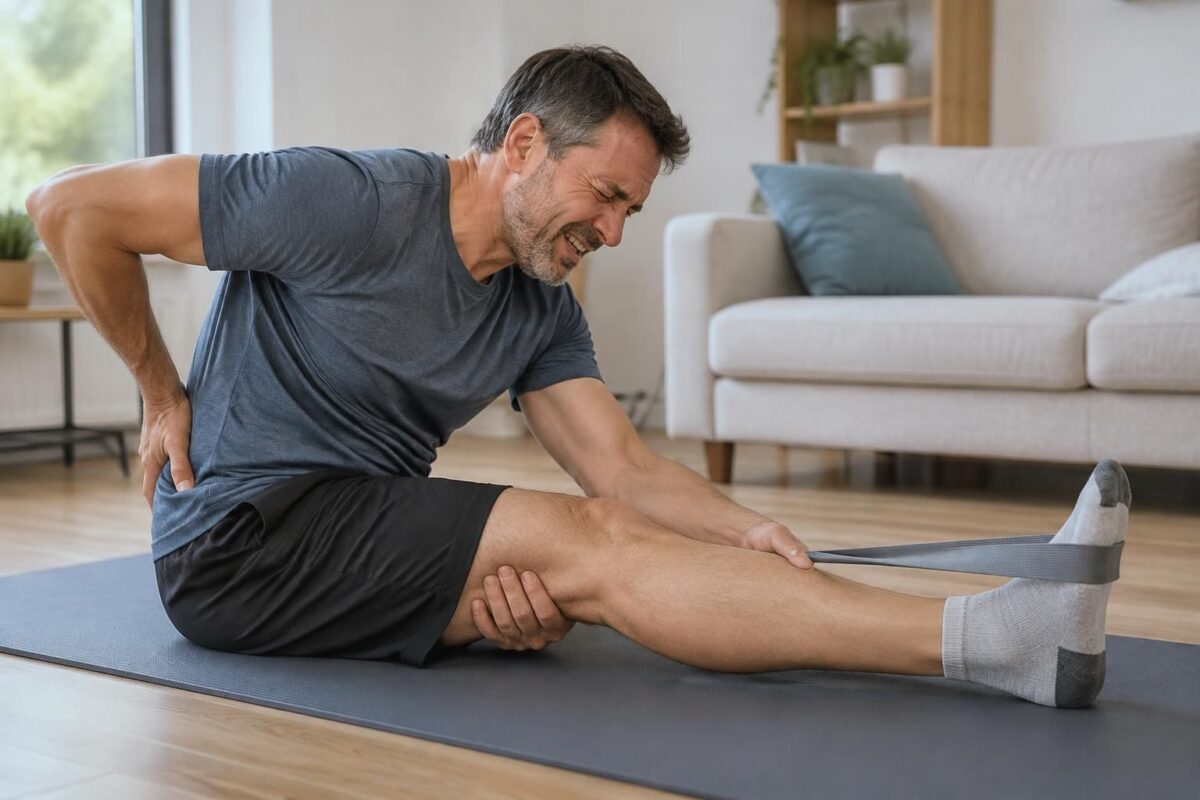
IN BRIEF Sciatica is pain that radiates from the lower back or buttock down the leg. Aggressive stretching does not necessarily relieve the nerve and can intensify the pain, especially if it moves further down to the foot or is…

Sciatica and calf stretching: when the pain increases
IN SHORT A calf stretch can exacerbate sciatica if it further irritates the nerve. It should not cause pain that increases or radiates down the leg: stop the movement and do not push through. Stretches may help with some tensions,…
Posture and seat arrangement
Ideal position and mistakes to avoid
To limit strain, adopt a neutral posture: sit at the back of the seat, with your back slightly supported by the backrest and your shoulders relaxed. Your knees should be roughly level with your hips, feet flat and shoulder-width apart. Use a lumbar support or a rolled towel in the curve of your back to maintain the natural curvature and avoid slumping. Avoid crossing your legs, slouching, or twisting your pelvis.
Useful equipment on board
Bring a small lumbar cushion and, if possible, a seat cushion that tilts slightly forward to promote a neutral pelvic position. A footrest can help position the feet properly and reduce pressure on the sciatic nerve. Take the time to adjust the backrest and armrests to find a comfortable stability throughout the flight.
Sciatica and hamstring stretching: possible nerve tension
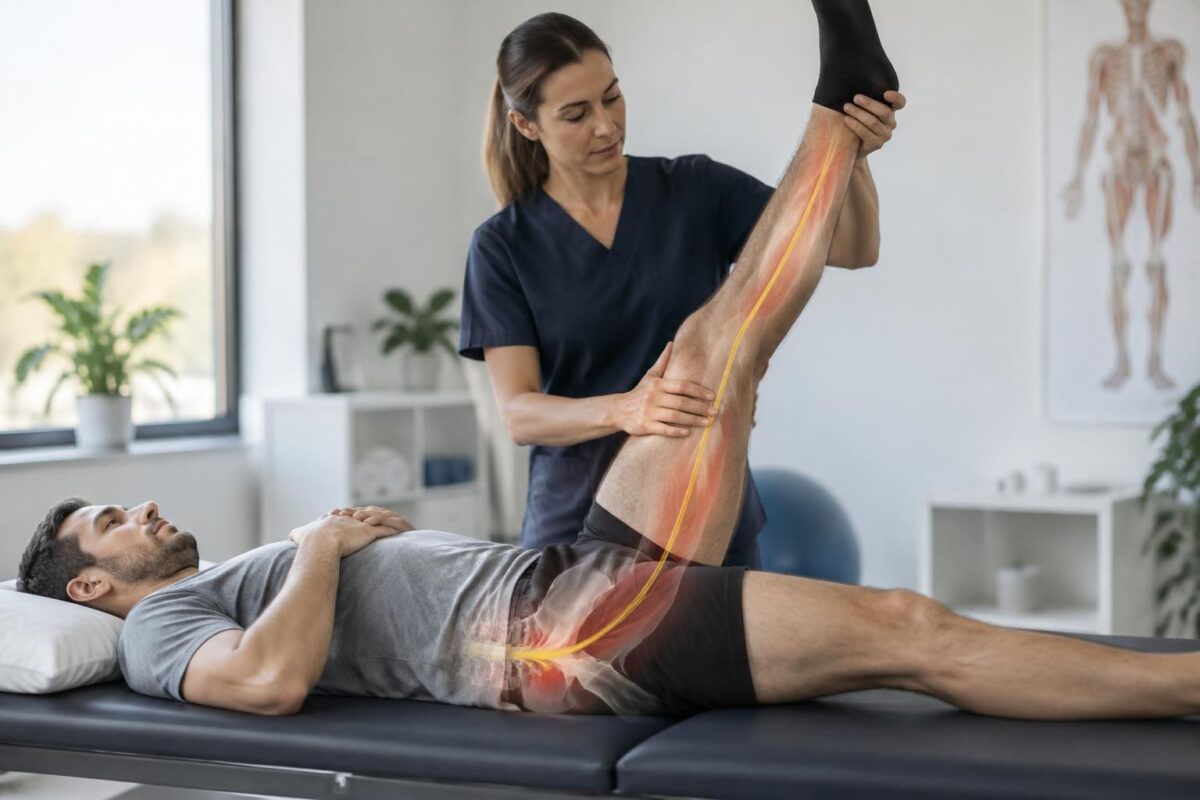
IN BRIEF Sciatica can make stretching the hamstrings uncomfortable, as the tension felt may come from the nerve rather than the muscle. A gentle stretch, with a straight back and without seeking maximum range, can help loosen the back of…
Sciatica and piriformis stretching: useful or worsening depending on the case
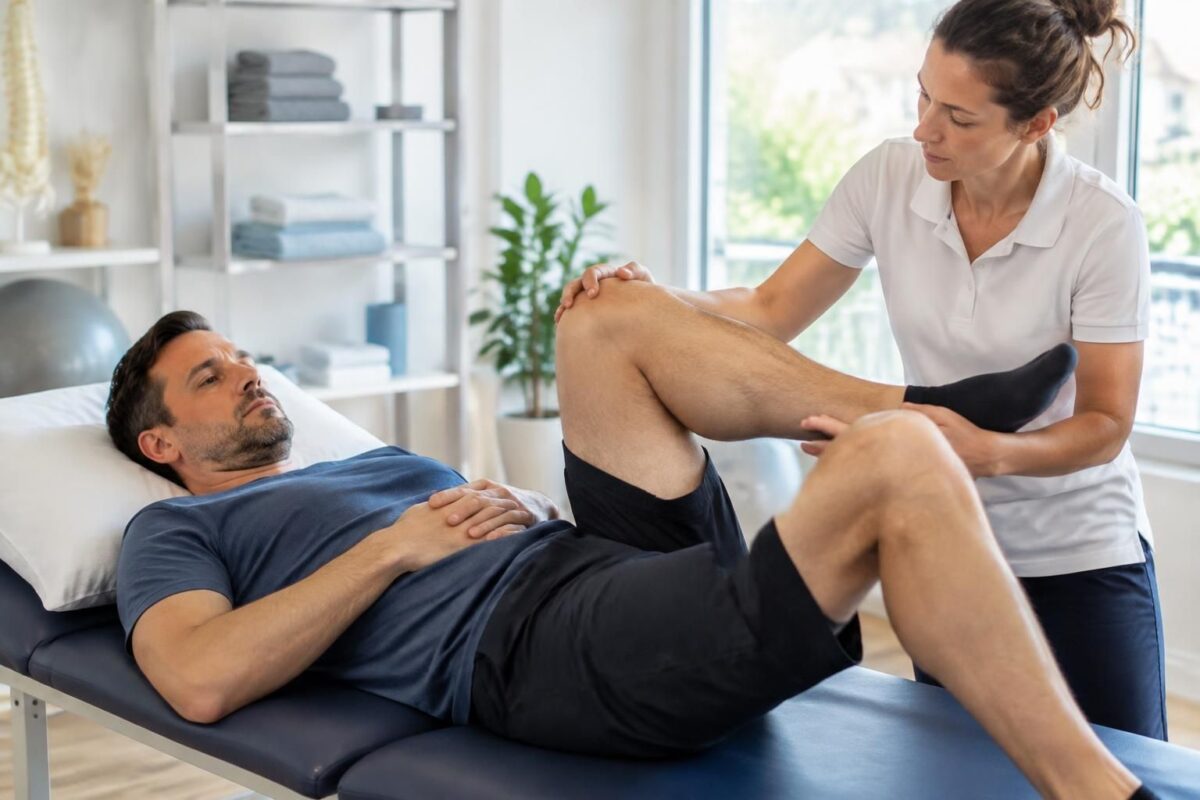
IN BRIEF Piriformis-related sciatica can cause deep pain in the buttock, sometimes radiating down the back of the thigh. A gentle stretch can loosen the hip and relieve discomfort if the muscle is involved, but it can worsen symptoms if…
Exercises and active breaks during the flight
Incorporate micro-breaks every 30 to 45 minutes to relieve the discs and stimulate circulation. Perform simple movements without leaving your seat: gentle pelvic rotations, ankle flexions and extensions, foot circles, and slight knee bends. If space allows and with the staff’s agreement, stand briefly to walk a few steps in the aisle and return to your seat. These movements support venous return and decrease stiffness.

Sciatica and popular stretches: why to stay cautious
IN BRIEF Sciatica causes pain that radiates from the lower back down the leg. Popular stretches, such as the pigeon pose or hamstring stretches, are not always suitable: pulling on an irritated nerve can worsen the symptoms. Favor gentle movements,…

Sciatica and Pilates: movements to adapt
IN SHORT Sciatica causes pain that can radiate from the lower back down to the leg. The Pilates Reformer can promote a gradual return to movement and strengthen core control, provided that the movements, range, and resistance are adapted. Favor…
Hydration and general comfort
Drink water regularly and avoid diuretic beverages that promote dehydration. Maintaining adequate hydration helps the muscles and tissues around the sciatic nerve stay more supple. Dress comfortably and choose clothing that allows a range of motion; a light layer can also help you adapt to temperature variations in the cabin.

Sciatica and core stability: variable tolerance depending on symptoms
IN BRIEF Core strengthening in case of sciatica consists of progressively strengthening the trunk muscles. Its tolerance varies depending on pain and symptoms: suitable without worsening the pain, it can support mobility and the resumption of activities, but does not,…

Sciatica and lunges: leg pain to watch out for
IN BRIEF Sciatica is pain that starts from the lower back or buttock and radiates down the leg. If a lunge triggers or worsens this pain, stop the movement and adjust your activity: this exercise does not address sciatica. Consult…
When to consult and warning signs
If pain persists after the flight, accompanied by weakness in the leg or loss of sensitivity, quickly contact a healthcare professional. Note the moments and positions that trigger the pain to adjust your posture habits for future travel and to evaluate potential appropriate rehabilitation options.
| Criterion | Concise Statement |
|---|---|
| Trigger in flight | A prolonged sitting increases pressure on the lumbar discs and may irritate the sciatic nerve, causing leg pain. |
| Ideal posture | Adopt a straight posture: back against the backrest, buttocks to the back, knees at hip height, feet flat; avoid crossing legs. |
| Lumbar support | Use a lumbar cushion or a rolled towel to maintain the natural curve. |
| Seat adjustment | Adjust height and tilt to align hips and knees; backrest slightly tilted; screen at eye level. |
| Micro-breaks | Take a break every 30-45 minutes to walk and do gentle stretches. |
| Useful accessories | Consider footrests and pressure relief cushions to reduce pressure on the sciatic nerve. |
| Signs and actions | If pain persists or worsens, quickly consult a professional and consider appropriate rehabilitation. |
| Post-flight | Upon arrival, prioritize walking and simple stretches to boost circulation and limit painful spikes. |
Testimonials: Sciatica and flying — prolonged sitting and leg pain
“Before my long-haul flights, my sciatica would worsen after several hours of prolonged sitting in the plane. By adopting a neutral posture and using a lumbar support, and then taking micro-breaks every 30 to 45 minutes to walk and stretch slightly, the pain decreased and I arrived much more rested.” — Marie, administrative officer
“As a traveling salesman, I spent hours on planes, and the pain often radiated down my leg after each trip. I added a footrest, a lumbar support, and I do simple stretches at each layover. Since then, flights no longer hold me back, and I’m ready to work right after landing.” — Ahmed, traveling salesman
“For my conferences, my flights were getting longer, and I felt that my sciatica was holding me back at every step. I learned to alternate positions: stable sitting with back support, feet flat, and relaxed shoulders, then a short standing break at each service. Some gentle stretches and an appropriate ergonomics made a difference.” — Elise, developer
“Long-distance flights caused me pain for hours. Now, I sit at the back of the seat, I use a lumbar support, and I adjust my knees to about 90 degrees. I get up 2 to 3 times during the flight and do simple stretches in the aisle. Result: less pain and more comfort.” — Marc, traveling salesman
“As a student traveling for exchanges, the flights often triggered leg pain. The secret is to sleep on your side with a pillow between your knees and take micro-breaks to walk and move your ankles. My sciatica has improved significantly, and I recover faster.” — Sophie, student
“I travel a lot for work, and prolonged sitting in the plane can trigger sciatic nerve pain. Today, I adopt a neutral posture, maintain a lumbar support, and give myself active breaks at each layover to prevent worsening and maintain my mobility.” — Claire, administrative officer
Sciatica and airplane: prolonged sitting and leg pain — profile of Dr. Sylvain Desforges
Dr. Sylvain Desforges is a recognized expert in the fields of osteopathy, naturopathy, and manual therapy. Founder and president of the TAGMED clinics and the ACMA association, he embodies a comprehensive approach to care, combining medical knowledge and innovation. Throughout his career, he has committed to improving patients’ quality of life by exploring non-invasive and sustainable solutions for chronic pain and functional movement disorders.
His work is part of a dynamic focused on continuous improvement of clinical practices. Dr. Desforges prioritizes an evidence-based approach and precise evaluation of the mechanisms that cause pain, particularly when sciatica is triggered by factors such as prolonged sitting and travel periods. He develops protocols that combine patient education, adapted posture, and advanced technologies to optimize nerve and musculoskeletal function.
In the context of travel, whether for work or personal reasons, his approach emphasizes preventing painful flare-ups related to air travel. He stresses the importance of balancing movement and rest, effective lumbar support, and dedicated micro-break intervals for blood circulation and reducing pressure on the lumbar discs. This approach is based on the idea that leg pain can be alleviated when the trunk is properly aligned and the sciatic nerve has a clear and stable pathway during long flights.
Among the technologies he integrates into his practice are vertebral decompression, laser, and shockwave therapy. These tools, when used in a targeted and tailored manner for each patient, help reduce inflammation, improve mobility, and limit the recurrence of crises without resorting to surgical interventions. Dr. Desforges sees these techniques as vectors for active rehabilitation, promoting a quick return to daily life and travel without pain.
The physician-inventor’s trajectory is marked by a strong educational and collaborative dimension. He believes every patient deserves a personalized and multidisciplinary approach, integrating postural advice, gentle exercises, and ergonomic adjustments at home or in the workplace, especially when mobility is challenged by air travel. His commitment to evidence and continuous improvement is reflected in how he organizes care around the patient and their lifestyle.
Ultimately, Dr. Sylvain Desforges’ journey illustrates a vision where sciatica and the challenges of the airplane are not a fatality, but situations to anticipate and manage through an adapted posture, active breaks, and effective non-invasive treatments. His holistic approach aims to preserve mobility and well-being, even during the longest trips, by restoring balance between stability and movement.
This text examines how sciatica and airplane intersect when prolonged seating triggers or worsens leg pain. It recalls the mechanisms, offers simple gestures for more comfortable travel in the cabin, and provides useful resources to optimize ergonomics and movements during the journey.
During a flight, the immobility imposed by the seat and space constraints can increase pressure on the lumbar discs and further stress the sciatic nerve. To limit irritation, it is crucial to maintain a well-aligned spine and encourage regular micro-movements. Practical advice exists to improve comfort on the plane and prevent painful flare-ups.
Before departure, choose your seat carefully and prepare your workspace in the cabin. Prefer a seat that allows you to keep your knees approximately level with your hips, feet flat, and back supported. Using a small lumbar cushion or a rolled towel can help maintain the natural curve and reduce pressure on the lumbar discs. If possible, opt for a seat that offers good back support and a neutral trunk position. To delve deeper into ergonomic recommendations, you can consult dedicated guides like those offered on Ergony.
During the flight, integrate micro-breaks every 30 to 45 minutes and prioritize simple movements without leaving your seat. Gentle foot rotations, light bends and stretches of the back and hips, as well as pelvic tilts can boost circulation and decrease pressure on the sciatic nerve. Avoid crossing your legs and keep your feet flat; if space is limited, adjust your position slightly and stay mindful of your alignment. For practical advice on postures to adopt while traveling, specialized resources offer protocols tailored to airplane travel and other means of transport, such as those described in guides dedicated to sitting posture and preventing sciatica pain while traveling.
If pain persists, or if it is accompanied by weakness, significant tingling, or other worrying signs, it is recommended to consult promptly. Non-invasive options can be discussed with your doctor or a physiotherapist, including specific strategies for travel and neuro-spinal decompression when justified. For additional information on travel and sciatica, dedicated online resources provide targeted advice for travelers and professionals on the move.
After the flight, it may be helpful to gradually resume light physical activity and perform some gentle stretches to restore mobility and promote recovery. If pain reoccurs or intensifies after arrival, explore effective non-surgical management options and adjust your postural habits for future trips. Specialized guides and associated resources offer concrete action plans to limit painful episodes during airplane journeys and other modes of transport.
To learn more about the causes and strategies related to sciatica while traveling, you can consult useful resources such as Sciatica and tingling in the calf, Sciatica tips for travelers, and Sciatica should we avoid prolonged sitting. Other resources like Sciatica and train — pain after a long journey or Ergonomics guides and sitting position will help you adapt your travel habits.

Dr Sylvain Desforges, B.Sc., D.O., N.D., osteopath, is the founding president of TAGMED and of the ACMA association. He dedicates his practice to chronic spinal pain, low back pain and symptoms compatible with sciatica, particularly when pain radiates toward the buttock, leg, calf, foot or toes.
Through SOS Sciatique, he publishes educational content on sciatica symptoms, possible causes such as disc herniation, disc narrowing, foraminal stenosis or irritation of a lumbar nerve root, as well as non-surgical approaches that may be considered according to the evaluation. At Clinique TAGMED, care may include, depending on the case, motorized neurovertebral decompression, specific osteopathic care or precision percussion.
For an evaluation related to sciatica treatment in Montreal / Mount Royal or sciatica treatment in Terrebonne, please consult the services available at Clinique TAGMED.
Medical disclaimer
The information published on SOS Sciatique is provided for educational purposes only and does not replace a consultation, diagnosis, opinion or treatment provided by a physician or another authorized healthcare professional. The author of this article is neither a medical doctor nor a specialist in a medical specialty recognized by the Collège des médecins du Québec. The osteopathic, manual medicine or functional support approaches described on this site do not constitute medical acts and are not intended to replace medical follow-up.
Consult a physician or emergency service in cases of loss of bladder or bowel control, anesthesia in the saddle area, significant or progressive weakness in the leg or foot, fever, recent trauma, severe pain or rapid worsening of symptoms. For more details, please read our Legal Notice.