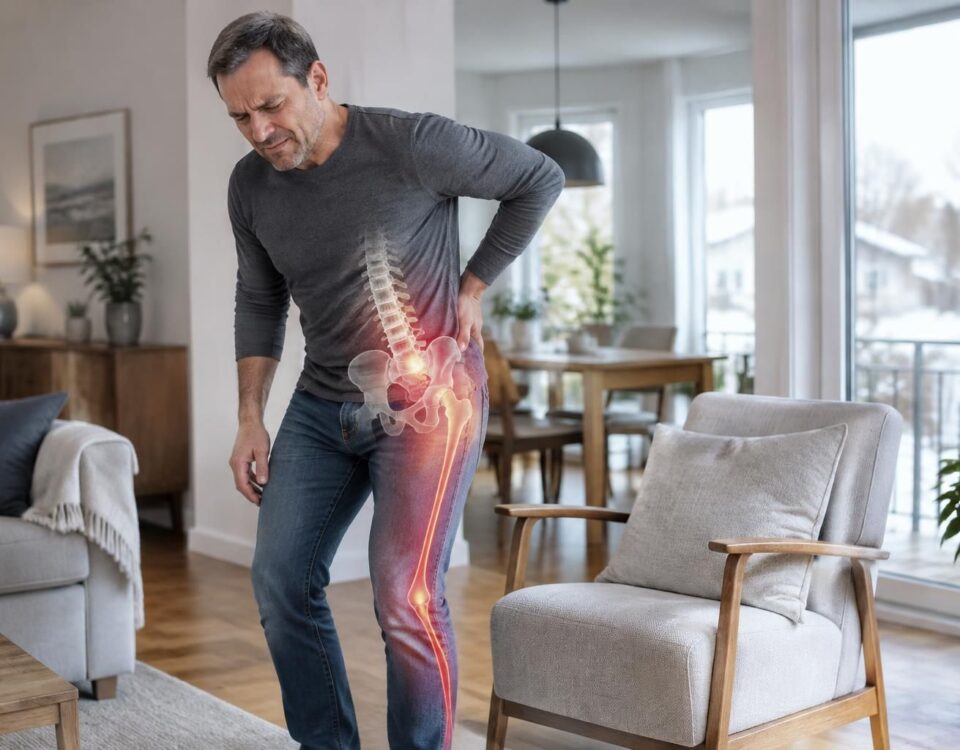
Sciatica in Montreal: intermittent pain or constant pain?
20/09/2026
Sciatica and pain when getting up from a chair
20/09/2026
IN BRIEF
| Sciatica is pain that follows the path of the sciatic nerve, starting from the lower back to the buttock and leg. In this context, we distinguish between intermittent pain and constant pain, depending on the episodes and causes (herniated disc, narrow spinal canal, muscle conflict, postural disorder). Understanding this profile helps quickly direct examinations and treatments: appropriate activity, rehabilitation, possible injections, and lifestyle adjustments to improve quality of life. In Terrebonne, this approach allows for a targeted, localized, and gradual management, promoting a return to activity while preserving comfort and mobility. |
In Terrebonne, sciatica can present as either intermittent pain or constant pain.
The manifestation varies according to activity, posture, and inflammation, and depends on the underlying cause (for example, herniated disc, foraminal stenosis, or conflict with an adjacent structure). Episodes may alternate with periods of partial relief.
A precise diagnosis and an appropriate management plan – supervised physical activity, manual therapies, and postural adjustments – often allow for an improvement in quality of life. If symptoms persist beyond a few weeks or if warning signs occur (weakness, urinary problems), it is advisable to consult a specialist.
Reading time: 12 min
Sciatica in Terrebonne: intermittent pain or constant pain? This article, written by a healthcare professional, reviews the pain that follows the path of the sciatic nerve, the reasons for its persistence or fluctuations, and the options available at TAGMED clinic for the Terrebonne area. You will discover the signs to watch for, the elements of the diagnosis, the adapted non-surgical approaches, and tips to improve your daily life without exacerbating the pain.
Sciatic pain can be intermittent and flow in episodes, or it can become constant and stable over several weeks. In some cases, it alternates between painful periods and phases of improvement, which can complicate follow-up and treatment. The onset or resumption of constant pain may reflect an evolution in the underlying cause and requires an appropriate evaluation at TAGMED clinic.
Understanding the Signs and Causes
The pain may start in the lower back or buttock and radiate down the back of the leg to the calf or foot. It may be accompanied by burning, tingling, numbness, or muscle weakness. Possible causes include a poorly resolved herniated disc, foraminal stenosis, a conflict between the nerve root and an anatomical structure (for instance, the piriformis muscle), or postural and muscular imbalances. These factors may contribute to persistent pain or pain that comes in successive waves.
Common risk factors include lack of physical activity, being overweight, professions involving repeated physical work, smoking, and a history of lumbar issues. Distinguishing between pain radiating to the buttock and leg (L5/S1 roots) and other lumbar pains is essential for guiding evaluation and therapeutic choices.
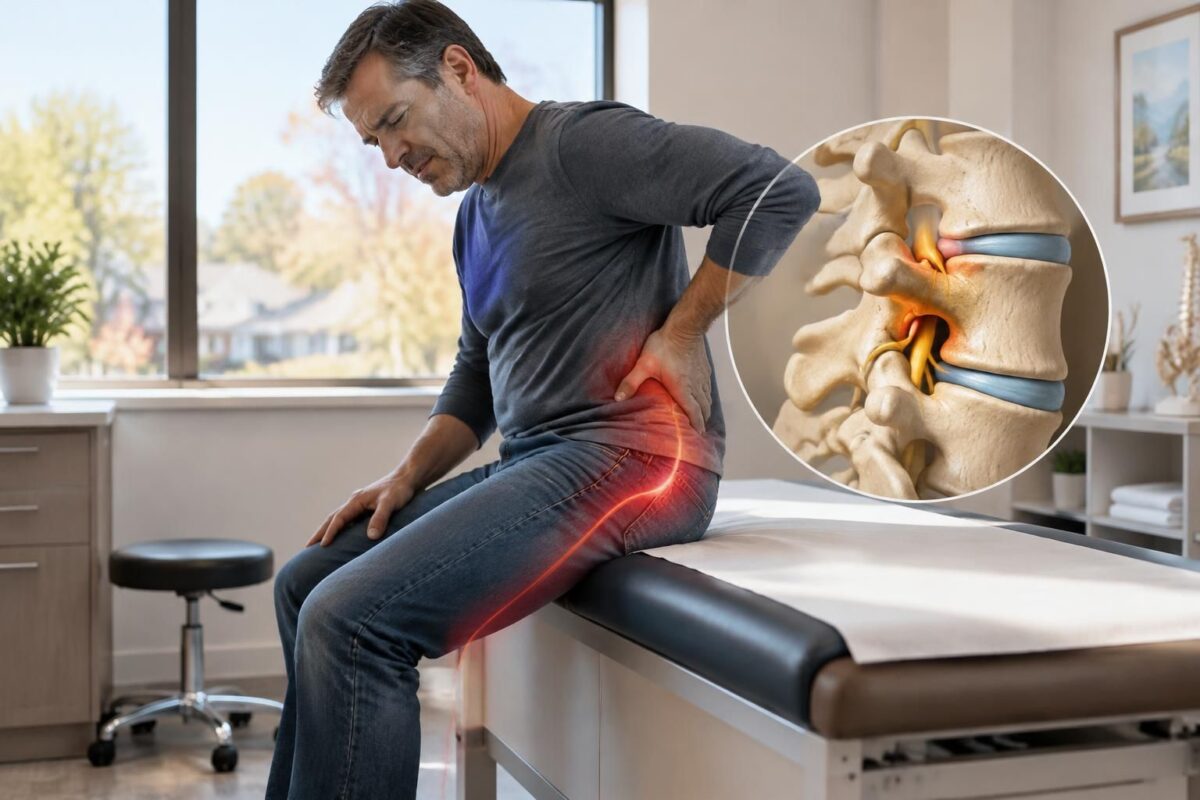
Sciatica in Terrebonne: understanding the L5-S1 foraminal compression
IN BRIEF The L5-S1 foraminal compression corresponds to a narrowing of the opening through which a nerve root passes, potentially contributing to sciatica. In Terrebonne, the assessment compares the side and course of the symptoms, neurological examination, imaging, and limited…
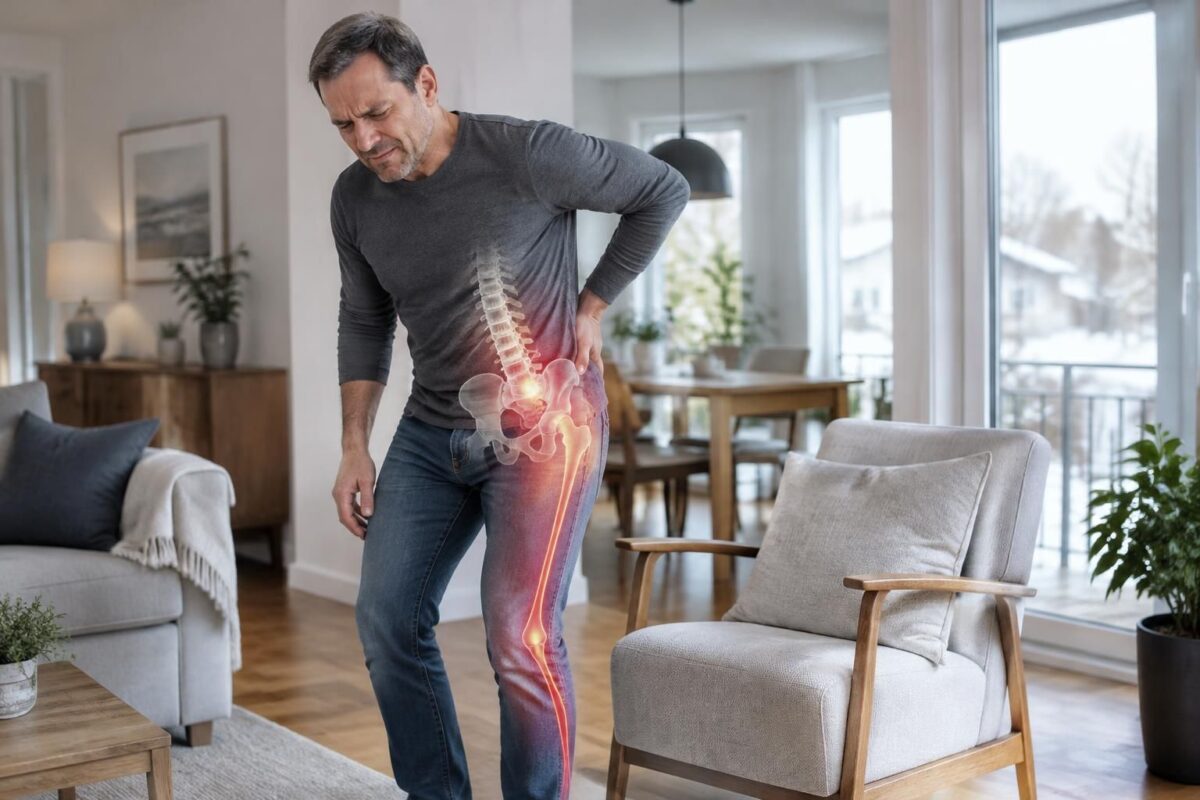
Sciatica in Terrebonne: why L5-S1 is often involved
IN BRIEF Sciatica corresponds to pain related to the irritation of a nerve root, which can extend from the buttock down to the leg. The L5-S1 level is often involved, as a disc herniation or irritation at this location can…
Diagnosis and Follow-up
If the pain persists beyond several weeks and especially beyond 3 months, a new examination may be useful, and depending on the symptoms, imaging (MRI or CT scan). Signs such as the onset of weakness or progressive numbness warrant a rapid specialized evaluation. Targeted treatments, including guided injections, may be considered when initial measures are insufficient to control the pain.
For Terrebonne, resources and options can be discussed during an appointment at the TAGMED Clinic, which offers a multidisciplinary approach suitable for sciatica and its functional repercussions.
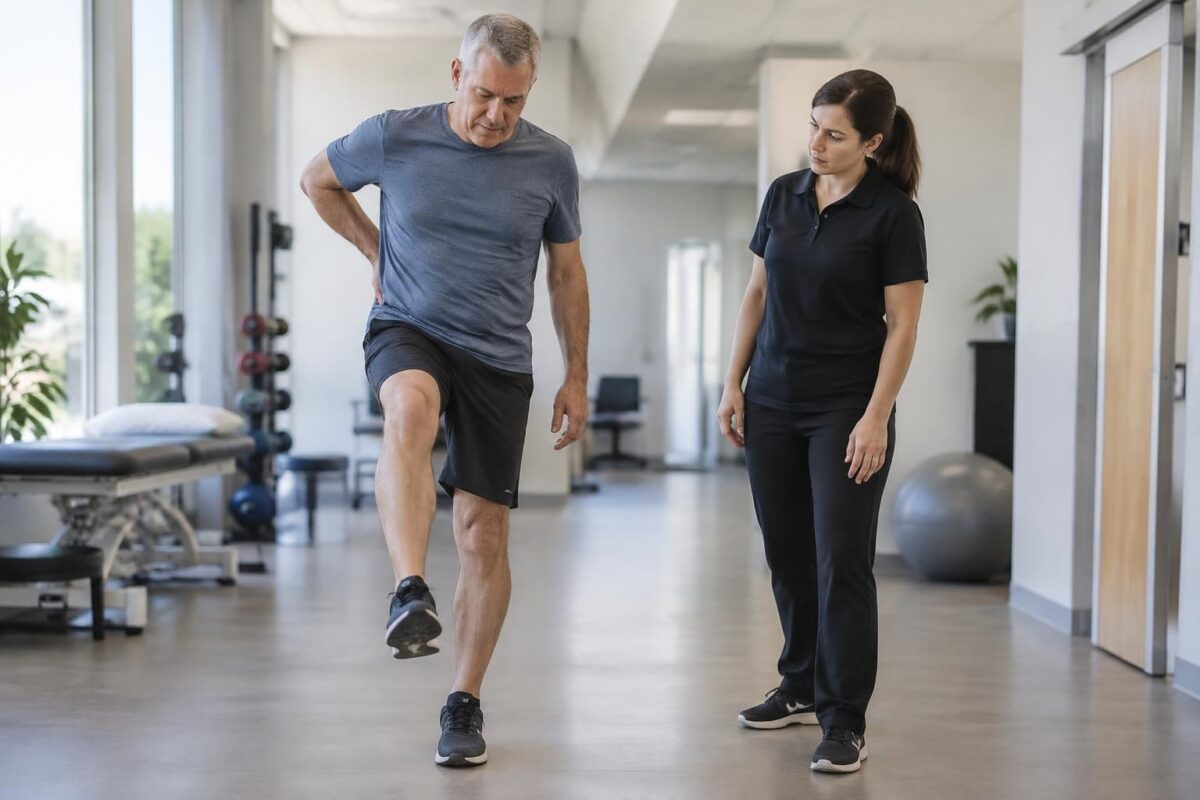
Sciatica in Terrebonne: L5 and difficulty lifting the foot
IN SHORT The L5 sciatica can cause pain or numbness on the side of the leg, the top of the foot, and the big toe, sometimes with difficulty lifting the foot. In Terrebonne, an evaluation compares strength, sensitivity, reflexes, and…
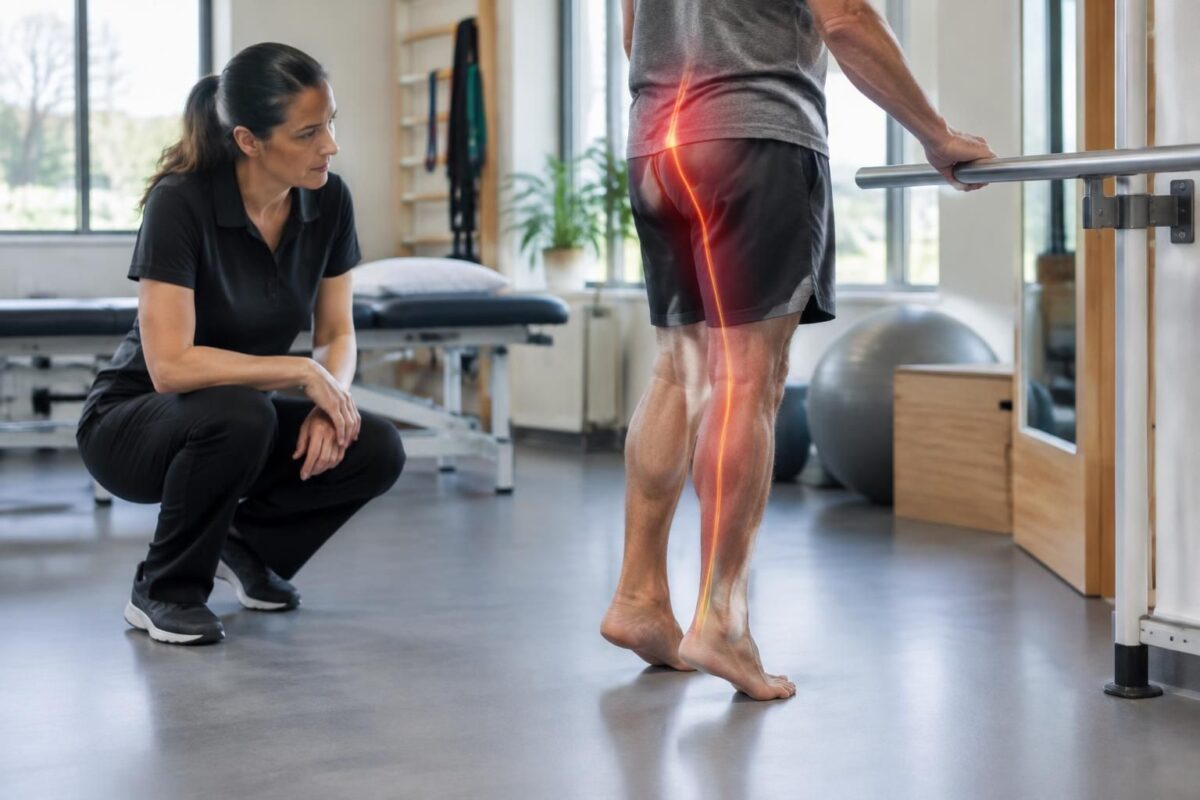
Sciatica in Terrebonne: S1 and difficulty standing on tiptoe
IN SHORT An S1 sciatica can irritate the nerve root associated with the calf and make it difficult to rise onto the balls of the feet. This sign should be evaluated with strength, sensitivity, reflexes, and walking: the pathway of…
Non-Surgical Treatment Options (with respect for medical limits)
In a comprehensive non-surgical approach, several options may be considered based on the evaluation:
- Specific osteopathy and other adapted manual techniques to improve mobility and reduce tension; these approaches complement postural advice and the resumption of activity.
- Epidural or foraminal injections when symptoms remain resistant; these are performed under guidance and can provide significant temporary relief.
- Motorized neurovertebral decompression in specific cases, as part of a non-surgical strategy tailored to clinical evaluation.
- Medications based on the clinical profile: non-steroidal anti-inflammatory drugs, analgesics, and sometimes treatments for neuropathic pain, with monitoring of side effects and efficacy over time.
To understand the various options and compare approaches, you can refer to specialized resources on sciatica pain and non-surgical solutions offered by professionals in Terrebonne and Montreal. For example, articles and guides dedicated to sciatica pain and disc degeneration are available through the community resources of SOS Sciatique.
Integrating an active and adapted lifestyle is crucial. In the context of an evaluation at TAGMED clinic, a progressive and functional approach is prioritized. The use of specific exercises or stretches related to decompressions is not systematically recommended without a personalized assessment tailored to each patient.

Sciatica in Terrebonne: L4-L5 and pain towards the top of the foot
IN BRIEF A L4-L5 sciatica can radiate to the outer side of the leg and the top of the foot, sometimes reaching the big toe. This pathway can guide the assessment, though it does not suffice to confirm the cause:…

Sciatica in Terrebonne: L5-S1 and symptoms in the calf
IN BRIEF A L5-S1 sciatica can cause pain that radiates down the calf, sometimes accompanied by tingling, numbness, or weakness. At Terrebonne, an assessment at the TAGMED Clinic helps to examine the symptom pathways, strength, and sensitivity, and then discuss…
When to Consult and Situations to Consider Specialized Management
Consult a specialist when pain appears or persists beyond 3 months, if it is accompanied by weakness, significant numbness, or urinary or intestinal issues. A thorough evaluation allows for considering the most suitable options and directing toward appropriate management in Terrebonne.
For a comparative view of the available treatments, here is a simplified overview of the options and their relative effectiveness according to clinical situations:
| Options | Relative Effectiveness |
|---|---|
| Guided infiltrations | Often effective in the short term, useful when conservative treatments fail |
| Specific osteopathy | Often improves mobility and pain in cases without major neurological impairment |
| Motorized neurovertebral decompression | Non-surgical option in certain patient profiles |
| Physiotherapy | Sometimes less effective compared to other therapies; useful in a comparative context, to be discussed with your clinician |
Daily Life and Tips for Terrebonne
Adapting daily life is essential. Varying positions and avoiding prolonged periods in a sitting or standing position can limit pain. Ensure proper posture at work and scheduled sleep. Simple and gradual movements can help maintain mobility and prevent recurrences, while remaining within a non-aggressive approach with the sciatic nerve.
Appropriate physical activity, such as regular walking or light swimming, can promote pain control and functional recovery, always under medical supervision when necessary. To obtain an evaluation tailored to your case, you can contact the TAGMED Clinic in Terrebonne or Montreal via the link below.
Useful Links and Resources
To explore further, refer to the following resources:
Sciatica in Terrebonne – pain from the lower back to the calf
To better understand the causes and mechanisms of sciatic pain, this practical guide may be useful: Understanding Sciatic Pain
For management options and information on alternatives, refer to official resources:
For additional information regarding associated pathologies, you can explore the general resources offered by SOS Sciatique and their dedicated pages on pain and posture.
Sciatica and pain when changing position
Professional association and reference framework: ACMA, College of Canadian Osteopaths, Collège des Ostéopathes Canadiens.
Medical disclaimer: The information and advice provided on this site do not replace the opinion, diagnosis, or treatment of a healthcare professional. Please note that Dr. Sylvain Desforges, osteopath, is neither a medical doctor nor a physician, and is not specialized in a medical specialty as defined by the Collège des médecins du Québec. Manual medicine, functional medicine, and sports medicine as described on this site exclude any medical treatment or diagnosis made by a physician or medical specialist. Always consult your doctor for any medical questions. For more details, please read our complete Legal Notice.
Sciatica in Terrebonne — Intermittent Pain
- Signature episodes that appear and then disappear
- Triggers activity and repetitive movements
- Impact brief interruptions of activities
- Strategy controlled movement and adapted rehabilitation
Sciatica in Terrebonne — Constant Pain
- Signature pain present continuously
- Evaluation re-evaluation and imaging if necessary
- Strategy multidisciplinary approach: medication, physiotherapy, targeted infiltrations
- Objective to regain functional activity and restful sleep

This article offers practical recommendations for sciatica in Terrebonne, clearly distinguishing between intermittent and constant pain to improve your daily life and guide your care decisions. You will find simple guidelines to recognize signs, adapt your activity, and consider the most relevant management options.
Intermittent Pain or Constant Pain: What are the Differences?
Sciatica can manifest as fluctuating or persistent. Intermittent pain occurs in episodes, with periods when the pain is mild or absent, then it reappears. In contrast, constant pain is present most of the time, even at rest, and can worsen during simple daily activities. In both cases, the intensity may vary and nerve signals (tingling, numbness, weakness) may accompany the path of the sciatic nerve, generally from the buttock to the foot.
Common Causes in Terrebonne
Several mechanisms can explain intermittent or constant pain: a partially absorbed disc herniation, lumbar canal stenosis, a conflict between the nerve root and an anatomical structure (for example, a piriformis muscle), or postural disorders and muscular imbalances that maintain nerve irritation. Understanding these causes helps to guide therapeutic choices and activities to prioritize or limit.
How to Effectively Manage Your Sciatica in Terrebonne
Evaluation and Follow-up
If the pain persists for several weeks to several months, a complete evaluation is recommended. A professional can propose a targeted clinical examination and, if necessary, imaging studies to specify the source of the pain and adapt the treatment plan.
Non-medical and Non-invasive Strategies
Stay active with activities suited to your pain and fitness level. Core strengthening exercises, gentle stretching, and mobility movements can reduce nerve irritation and prevent flare-ups. Osteopathy or physiotherapy, practiced by qualified professionals, can help restore muscle balance and improve the mobility of structures affecting the spine and nerve.
Medical and Targeted Approaches
Pharmacological measures may be considered to relieve inflammation and pain when necessary, with appropriate medical supervision. Targeted injections (epidural or foraminal) may be considered in cases of resistant pain or persistent radiological signs, under guidance and after individual assessment. In certain complex cases, surgical options may be discussed, but these remain relatively rare and specific to each situation.
Daily Adaptations and Prevention
Improve the ergonomics of your workspace and avoid prolonged positions without movement. Integrate regular and progressive physical activity, prioritize suitable sleep habits (mattress and resting position that support the back without compressing the nerve), and pay attention to weight management. Daily walks and supervised swimming or gentle yoga practices can promote a gradual and lasting recovery.
When to Consult Quickly
Seek a consultation quickly if you observe significant loss of strength, urinary or intestinal issues, or pain that worsens rapidly and does not respond to relative rest and usual measures. Early management often helps prevent progression and quickly improve your quality of life in Terrebonne.
| Evaluation Aspect | Condition in Terrebonne |
|---|---|
| Frequency | Pain can be intermittent or constant depending on the episode and activities. |
| Location and Spread | Lower back and buttock; the path may descend down to the calf and foot, varying by patient. |
| Triggers and Aggravating Factors | Movements, prolonged standing, and strain increase pain. |
| Impact on Activities | Intermittent: tolerance between flare-ups; constant: adaptation of daily life. |
| Rest and Sleep | Rest: intermittent may sleep better; constant may disturb sleep. |
| Response to Treatment | Variable response; NSAIDs and rehabilitation may help, but persistence may require reevaluation. |
| Useful Examinations | Suggested imaging: MRI or CT scan to specify the cause and guide management. |
| Management Tips | Adapted activity, ergonomics, and strengthening; consult quickly in case of alarm signs. |
Sciatica Testimonials in Terrebonne: intermittent pain or constant pain?
In Terrebonne, many patients describe their sciatica as either intermittent or constant. Here are recent testimonials that illustrate these two realities and show how tailored management can help regain an active life.
“For about six months, my sciatic pain has mostly been intermittent. It manifests as episodes that occur after a long day of sitting and disappear after a few days. With each attack, I fear I won’t be able to resume my activities. After a consultation in Terrebonne, I followed a personalized program focused on gentle exercises and better posture. The attacks are less frequent, and when they return, they are less intense.”
“For me, sciatica has become constant for nearly a year. A dull pain persists in the lower back and sometimes radiates into the buttock and leg. Thanks to an assessment in Terrebonne and a tailored multimodal plan, combining mobility and strengthening, I have regained mobility and can go for my daily walks without pain stopping me consistently.”
“My case is quite intermittent: episodes come and go without obvious reason. The most disturbing is the uncertainty and discomfort that arise when I sit for long periods. After personalized advice and exercises in Terrebonne, I learned to adjust my position and perform simple stretches that help reduce the intensity of the spikes.”
“I suffered from chronic sciatica with constant pain and very severe flare episodes. In Terrebonne, the journey has been gradual: tailored exercises, posture work, and progression of activities. Today, the baseline pain is less present and the flare-ups become increasingly rare, allowing me to resume my daily activities.”
Expert in osteopathy, naturopathy, and manual medicine, this professional is the founding president of TAGMED clinics and the ACMA association. His career is dedicated to innovation in healthcare and managing chronic pain, with particular attention to sciatica. He incorporates advanced technologies such as motorized spinal decompression, laser, and shockwave therapy to optimize results. His approach is based on evidence and a trusting relationship with patients to sustainably improve their quality of life.
In Terrebonne, this expert offers an integrated approach to sciatica that can manifest as either intermittent pain or constant pain. The goal is to understand the specific pattern in each patient, as pain variations influence the choice of treatments and the pace of rehabilitation. This personalization helps avoid generic solutions and targets underlying factors, whether it is nerve irritation, muscle imbalance, or repeated inflammatory episodes.
Sciatica is characterized by pain that starts from the lower back or a buttock and typically follows the path of the nerve down the leg. However, each journey is unique: for some patients, the pain may fluctuate between sharp spikes and quieter periods; for others, it persists fluidly over several weeks. Understanding the distinction between intermittent pain and constant pain helps evaluate potential causes — persistent disc herniation, stenosis, conflict between the nerve and anatomical structure — and tailor interventions accordingly.
The diagnosis relies on a comprehensive clinical assessment and, when necessary, imaging examinations. If symptoms persist beyond a few months, or in the presence of neurological signs, the team may recommend appropriate imaging and a re-evaluation of the treatment plan. The focus is on global assessment to identify contributing factors to chronicity and quickly adjust therapeutic approaches to prevent stiffness and feelings of disappointment due to persistent pain.
Among the preferred non-surgical options are specialized osteopathy, motorized spinal decompression, laser, and shockwave therapy, used as appropriate and guided by demonstrated effectiveness. Complementary approaches, such as posture work, gentle mobility, and active rehabilitation, help reduce inflammation, improve mobility, and promote a gradual return to daily activities. Each plan is designed to be personalized and evidence-based.
Beyond physical treatments, support includes education and psychological support to maintain motivation and prevent relapses. The key lies in a progressive and active approach that encourages patients to remain mobile, optimize their sleep, and adjust their work and living environment. To discover available services and start a care plan tailored to your situation in Terrebonne, contact TAGMED Clinic.
This article explores sciatica in Terrebonne, distinguishing between intermittent pain and constant pain, and covering possible causes, evaluation, treatments, and practical advice for improving daily life when pain persists.
Understanding Sciatica in Terrebonne
Sciatica is pain that can start in the lower back and radiate to the buttock, thigh, then calf and sometimes the foot. In Terrebonne as elsewhere, common causes include disk herniation, foraminal stenosis, or conflict between a nerve root and an anatomical structure such as the piriformis muscle. This pain can be intermittent or become persistent when mechanical factors are not corrected. To delve deeper into the mechanisms and signs to watch for, you can consult specialized resources such as MSD Manuals or Hello Santé.
Intermittent Pain vs Constant Pain
Intermittent pain can evolve into constant pain if aggravating factors remain present (poor posture, repetitive activities, muscular weakness). Conversely, constant pain may reflect active nerve compression or degenerative changes. Identifying the characteristics (radiation, pain quality, triggering hours or situations) aids diagnosis and targeted management. For specific cases in Terrebonne, descriptions like “pain after a few minutes of walking” or “nighttime pain in the leg” can guide evaluation and therapeutic choices. Additional resources on these manifestations are available on S.O.S Sciatique and The Spine Page – Terrebonne.
Evaluation and Diagnosis
When pain persists, a re-evaluation may be indicated, especially if the condition evolves after several months. Complementary examinations such as MRI or CT scans may be necessary to understand the origin and adjust treatment. In the presence of significant neurological signs (weakness, marked numbness, urinary or bowel issues), a prompt consultation is recommended. To enhance your understanding, consult resources like S.O.S Sciatique – nighttime pain and The Spine Page – Terrebonne.
Treatment Options and Daily Management
Management often combines medications, active rehabilitation, and, if necessary, targeted injections (epidural or foraminal) under guidance. Complementary approaches such as osteopathy or physiotherapy can enhance mobility and reduce nerve irritation. Appropriate physical activity (walking, swimming, gentle yoga) and working on ergonomics and sleep are essential levers to limit relapses. For additional information, consult sources such as The Spine Page – Terrebonne and MSD Manuals.
Living with Sciatica in Terrebonne Daily
To limit the impact of pain in daily activities, break up prolonged positions and integrate gentle movements every 30 to 45 minutes. Focus on an appropriate posture, prioritize walking periods, and favor targeted strengthening and stretching exercises. A gradual recovery and active rehabilitation under supervision can promote a return to active life. To expand your knowledge, here are practical resources on the path and causes of sciatic pain: Hello Santé, S.O.S Sciatique – pain after prolonged standing, and Doctissimo.

Sciatica in Terrebonne: pain in the big toe, L5 root or another cause?
IN BRIEF Pain in the big toe accompanied by pain in the buttock or leg may be compatible with irritation of the L5 root, but other causes are possible. In Terrebonne, the evaluation notably compares strength, sensitivity, and gait to…

Sciatica in Terrebonne: why the affected root changes the pain path
IN BRIEF Sciatica is a pain related to the irritation of a lumbar nerve root, the path of which varies depending on the affected root. Damage to L5 can radiate to the top of the foot, while damage to S1…

Dr Sylvain Desforges, B.Sc., D.O., N.D., osteopath, is the founding president of TAGMED and of the ACMA association. He dedicates his practice to chronic spinal pain, low back pain and symptoms compatible with sciatica, particularly when pain radiates toward the buttock, leg, calf, foot or toes.
Through SOS Sciatique, he publishes educational content on sciatica symptoms, possible causes such as disc herniation, disc narrowing, foraminal stenosis or irritation of a lumbar nerve root, as well as non-surgical approaches that may be considered according to the evaluation. At Clinique TAGMED, care may include, depending on the case, motorized neurovertebral decompression, specific osteopathic care or precision percussion.
For an evaluation related to sciatica treatment in Montreal / Mount Royal or sciatica treatment in Terrebonne, please consult the services available at Clinique TAGMED.
Medical disclaimer
The information published on SOS Sciatique is provided for educational purposes only and does not replace a consultation, diagnosis, opinion or treatment provided by a physician or another authorized healthcare professional. The author of this article is neither a medical doctor nor a specialist in a medical specialty recognized by the Collège des médecins du Québec. The osteopathic, manual medicine or functional support approaches described on this site do not constitute medical acts and are not intended to replace medical follow-up.
Consult a physician or emergency service in cases of loss of bladder or bowel control, anesthesia in the saddle area, significant or progressive weakness in the leg or foot, fever, recent trauma, severe pain or rapid worsening of symptoms. For more details, please read our Legal Notice.