Sciatica and Insoles: What You Need to Understand Without Exaggeration
26/09/2026
Sciatica in Terrebonne: pain in the buttock without back pain
27/09/2026
IN BRIEF
| In brief, sciatica in Montreal, pain in the buttock without back pain, is a pain due to irritation of the sciatic nerve that can radiate into the leg. It may manifest as an electric, burning sensation or tingling, and can exist even without marked low back pain. In Montreal, this phenomenon is primarily managed through non-surgical approaches, with a quick assessment and a personalized plan to relieve pain and restore mobility. Benefits: rapid relief, non-invasive options, return to activities, and long-lasting improvement through a maintenance program. How it works: a clinical assessment, postural advice and tailored exercises, then a treatment plan incorporating manual therapies, strengthening, and ergonomic measures. |
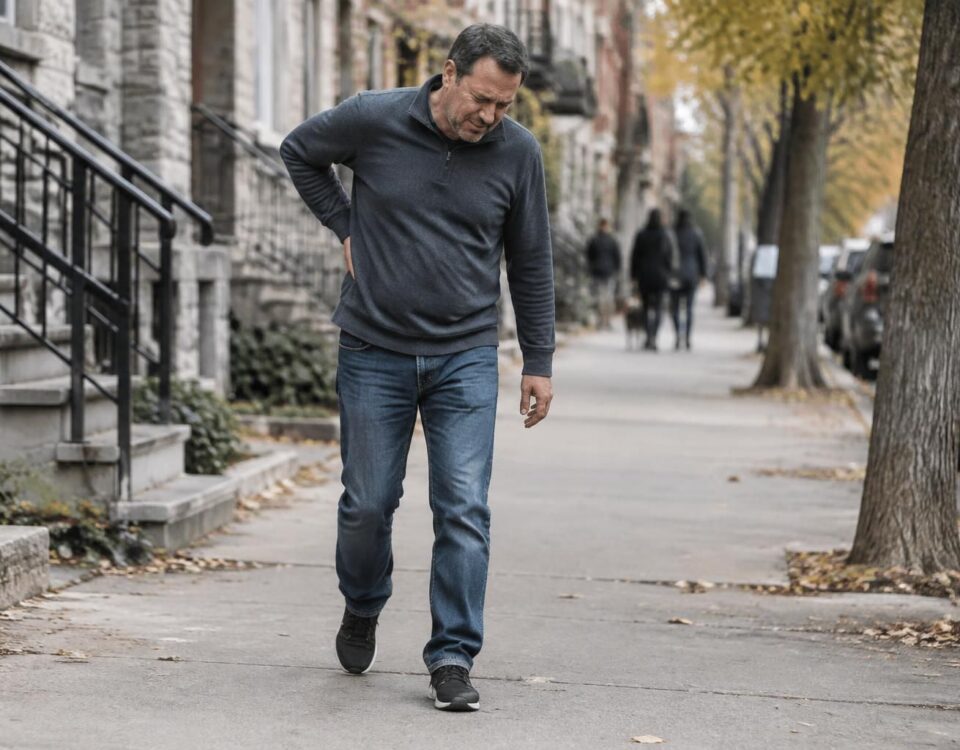
In Montreal, sciatica may sometimes present as buttock pain without back pain.
This pain is generally a root irritation that follows the course of the sciatic nerve and may be accompanied by burning, tingling, or numbness, extending down the leg.
Possible causes include irritation of the nerve by the piriformis muscle, sacroiliac joint disorders, or nerve compression related to lower back issues. If the pain persists, quickly consult a specialist in Montreal for a proper diagnosis and treatment plan, particularly with an osteopath.
This article, written by a health professional specializing in osteopathy, addresses the specific situation: “Sciatica in Montreal: buttock pain without back pain.” It describes the signs, possible causes, evaluation options, and management pathways available in Montreal, with clear indicators to understand why pain may focus on the buttock without marked lower back pain, and what a clinic like TAGMED can offer.
About the author
Dr. Sylvain Desforges, B.Sc., D.O., N.D., osteopath, is the founding president of
TAGMED
and the ACMA association. He dedicates his practice to chronic pain of the spine, lumbar pain, and pain consistent with sciatica, notably when pain radiates towards the buttock, leg, calf, foot, or toes.
Through SOS Sciatique, he publishes educational content on sciatica symptoms, possible causes such as herniated discs, disc pinching, foraminal stenosis, or irritation of a lumbar nerve root, as well as non-surgical approaches that may be considered based on the evaluation. At TAGMED Clinic, care may include, depending on the case, motorized neurovertebral decompression, specific osteopathy, or precision impactor.
For an evaluation related to
sciatica treatment in Montreal / Mont-Royal
or to
sciatica treatment in Terrebonne,
consult the services available at the
TAGMED Clinic.
Sciatica is a pain that can affect a leg and follow the course of the sciatic nerve, but in some cases, the pain may manifest mainly in the buttock and along the buttock area without obvious lower back pain. The pain can take the form of a burning sensation, an electric feeling, or a dull ache that radiates along the nerve path.
Signs and symptoms to watch for
Often, pain follows the course of the sciatic nerve, sometimes associated with tingling, numbness, or altered sensitivity in the foot. In some presentations, the pain is primarily localized in the buttock or thigh without marked lower back pain.
Possible causes and diagnosis
The most frequent causes include irritation of the sciatic nerve due to compression or inflammation. A herniated disc or narrowing of the lumbar canal may be involved, but other factors such as localized mechanical tension or inflammatory episodes around the nerve chain may also play a role. A diagnostic examination performed by a professional will help identify the exact source and differentiate purely buttock pain from more extensive sciatica.
When to consult and how to assess
Consult if there is pain that persists, worsens, or is accompanied by significant neurological symptoms (severe weakness, loss of sensitivity, or pain that progressively extends). A clinical evaluation may be supplemented by imaging tests if necessary, depending on the symptoms and progression.
Management and treatments in Montreal
At the TAGMED Clinic in Montreal, management can combine osteopathic approaches and specialized techniques tailored to each patient. Depending on the assessment, motorized neurovertebral decompression may be proposed, along with other non-surgical interventions tailored to the identified pathology.
Non-surgical options and multidisciplinary approach
The management aims to relieve pain, improve mobility, and promote a return to daily functional activity. Specific manual therapies may be considered after a targeted assessment. For patients, resources and supplementary articles available online can help better understand the mechanisms and options related to sciatica, notably on dedicated sciatica pages and its manifestations on sossciatique.com and other relevant content.
Elements to avoid in certain diagnoses
In cases of neurovertebral decompression or associated pathologies (herniated disc, protrusion, foraminal stenosis, spinal stenosis, disc compression, or disc degeneration), it is important to follow the recommendations of a professional. Engaging in unsupervised exercises or stretches may be inappropriate depending on the precise diagnosis. For these reasons, care and advice must be personalized and based on a clinical assessment.

Sciatica in Montreal: why L5-S1 is often involved
IN BRIEF The sciatica L5-S1 often corresponds to irritation of the S1 root, sometimes related to a herniated disc. The pain may start in the buttock and descend behind the thigh to the calf or the foot. In Montreal, understanding…
Sciatica in Montreal: L5 and difficulty lifting the foot
IN BRIEF The difficulty in lifting the foot with sciatica can indicate weakness related to the involvement of the L5 root, sometimes caused by a herniated disc. This foot drop increases the risk of falling and requires prompt medical evaluation;…
To delve deeper, you can refer to the following sources (authorized areas):
- Sciatica and descent towards the calf or foot
- Sciatica or pain in the buttock – differences and osteopathic treatment
- Sciatica and pain when coughing
- Sciatica in Terrebonne – pain in a seated position
- MSD Manual – Sciatica
- Top Santé – Sciatica
- Sciatica – ChiroRéseau
- Sciatica in Montreal – pain that prevents driving
- Herniated disc and sciatica – precise diagnosis
- Sciatica evaluation – Montreal
Medical disclaimer: The information and advice provided on this site do not replace the opinion, diagnosis, or treatment of a healthcare professional. Please note that Dr Sylvain Desforges, osteopath, is neither a doctor of medicine nor a physician, and is not a specialist in a medical specialty as defined by the Collège des médecins du Québec. Manual medicine, functional medicine, and sports medicine as described on this site exclude any treatment or medical diagnosis made by a physician or medical specialist. Always consult your doctor for any medical questions. For more details, please read our full Legal Notice.

In the case of sciatica manifested by pain in the buttock without significant lower back pain, it is useful to approach the subject from the perspective of clinical evaluation, possible causes, and management options available in Montreal. This article provides practical recommendations focused on non-invasive approaches that fit into daily life.

Sciatica in Montreal: S1 and difficulty rising up on the toes
IN BRIEF S1 sciatica can cause pain from the buttock to the calf and foot, as well as difficulty getting on tiptoe. This weakness may suggest irritation of the S1 nerve root, but is not sufficient to establish a diagnosis.…

Sciatica in Montreal: L4-L5 and pain towards the top of the foot
IN BRIEF The sciatica related to L4-L5 can radiate from the lower back to the buttock and the leg; pain on the top of the foot may suggest involvement of the L5 root, but the pathways vary and symptoms overlap.…
Understanding buttock pain and sciatica without low back pain
Sciatica can sometimes present as localized pain in the buttock, which may then radiate along the path of the sciatic nerve down the leg. Even without evident back pain, the pain may follow the route of the longest nerve in the body and adopt varying intensities, ranging from a tugging sensation to an electric or burning feeling.
This presentation may be due to irritation or compression of one of the lumbar nerve roots, leading to what is called radiculopathy. In this context, the main goal is to assess the involved nerve tissue and propose appropriate measures to limit pain and promote a return to mobility.

Sciatica in Montreal: pain in the big toe, L5 root or another cause?
IN BRIEF Pain that radiates toward the big toe may indicate irritation of the L5 root, sometimes related to a herniated disc, but other causes are possible. In Montreal, evaluating the pain pathway, strength, sensitivity, and walking helps guide management…

Sciatica in Montreal: why the affected root changes the pain pathway
IN BRIEF Sciatica refers to pain or nerve symptoms that vary depending on the affected lumbar root. Pain, tingling, or numbness may manifest in the buttock, thigh, calf, or foot. Understanding this distribution helps guide the assessment, without diagnosing based…
Possible causes and signs to watch for
Nerve origin and pathway of the nerve
The sciatic nerve can be irritated along its path, which explains pain that extends from the buttock to the leg, sometimes down to the foot. The evolution of symptoms, particularly the appearance or worsening of weakness, numbness, or tingling, can guide diagnostic orientation and treatment choices.
Triggering factors and associated processes
Sometimes, a herniated disc or lumbar osteoarthritis may be the source of this buttock pain. Repeated actions, prolonged posture, or improvement after a period of inactivity can also influence the onset and intensity of pain. In pregnant women, postural changes may favor these symptoms, which usually evolve after childbirth.
Evaluation and management in Montreal
When to consult and how to prepare
If pain persists beyond a few weeks, is accompanied by increasing weakness or significant numbness, it is recommended to consult a specialist in Montreal. A thorough clinical evaluation will help identify the affected tissues, rule out more serious causes, and determine the appropriate care plan.
Non-surgical approach and osteopathy
Non-surgical options are the first line of management. A combination of osteopathy, manual therapies, and tailored exercises can reduce pain and improve mobility. A personalized program may also include postural advice, myofascial release techniques, and gradual strengthening of the trunk and hip muscles.
Daily conduct and prevention
Activity and daily gestures
Maintaining regular physical activity is crucial. Favor short and frequent walks, avoid prolonged rest, and incorporate recovery periods to help prevent recurrences. If possible, work with ergonomists or local professionals to optimize your workspace in Montreal.
Simple exercises and safety
Gentle and progressive exercises can promote mobility without aggravating pain. Make sure to get professional advice before starting and adjust gestures to your tolerance. A personalized plan, tailored to your situation and activities, will help you regain function and limit painful episodes.
| Criteria | Details |
|---|---|
| Key symptoms | Pain in the buttock unilaterally, sometimes radiating to the thigh, without marked low back pain at the start. |
| Location and path | Depending on the irritated root: L5 follows buttock → thigh → outer edge of the leg → big toe; S1 goes to calf, heel, and sole of the foot. |
| Probable causes | Herniated disc, narrowing of the lumbar canal or root irritation without major back pain. |
| Emergency signs | Loss of urinary or bowel control, rapid foot weakness, fever, or severe low back pain require quick assessment. |
| Useful examinations | Initial clinical examination; imaging recommended if persistent beyond 6–8 weeks or neurological symptoms. |
| Immediate approaches | Relative rest, progressive activity, manual therapies, NSAIDs, and paracetamol as tolerated; avoid prolonged immobility. |
| Non-surgical treatment | Tailored exercises, follow-up by an osteopath or chiropractor; targeted therapies based on evaluation; injection possible after consultation. |
| When to consult | Pain persists >2 weeks or worsens; plan a medical or specialist visit to evaluate options in Montreal based on availability. |
| Prevention and advice | Strengthening back and abdomen, good posture, active breaks during long periods standing or sitting. |
Testimonials on sciatica in Montreal: pain in the buttock without back pain
“In Montreal, I first experienced a pain in the buttock without back pain. It was puzzling: everything pointed to a sciatica manifesting along the nerve path, but without obvious low back pain. Fortunately, a specialized evaluation allowed me to understand the cause and choose an appropriate treatment.”
“While working in Montreal, I discovered that my pain in the buttock was due to a sciatica gradually radiating to the thigh. The manual approach and osteopathy practiced here limited the symptoms and allowed me to return to my activities pain-free. I would recommend this treatment to anyone looking to avoid surgery.”
“In Montreal, my pain in the buttock was not coming from my back, but from an inflamed nerve. After a consultation and targeted exercises, the sciatica became manageable and mobility returned. The treatment was gentle and effective.”
“As an athlete, I had a pain in the buttock that prevented me from running. In Montreal, I was diagnosed with sciatica and guided towards a non-invasive treatment focused on osteopathy. After a few sessions, I regained my stride painlessly.”
“As an active mother, I suffered from a pain in the buttock without low back pain. In Montreal, resorting to gentle care helped quickly, and the treatment allowed me to resume my daily and sports activities without relapse. Osteopathy was the key factor.”
“My experience in Montreal was transformative: a sciatica presenting as a pain in the buttock without back pain, but with an osteopathy-based solution and a personalized treatment. Today, I can enjoy my outings again without fear.”
In Montreal, sciatica can manifest as localized pain in the buttock that, in some individuals, seems to settle without apparent low back pain. This sensation may evoke an electric shock, burning, or pulling sensation that sometimes radiates to the lower back and spreads along the path of the sciatic nerve, the longest nerve in the body. Signs such as numbness, tingling, or sensory disturbances in the foot may accompany this picture and complicate the precise identification of the cause.
The sciatic nerve follows a complex path: two roots from the lumbar region may give rise to pain. L5 sciatica can descend from the lumbar region to the buttock, then follow the outer edge of the leg to the big toe. S1 sciatica starts at the lower back and extends to the calf, heel, sole of the foot, and fifth toe. When the pain is severe and motor weaknesses appear, we speak of motor deficit, and when it is limited to the leg without back involvement, it is referred to as truncated sciatica.
The causes of this pain can be varied. The herniated disc remains the primary origin in those under 50, compressing a root of the sciatic nerve and causing inflammation and pain. In older individuals, lumbar osteoarthritis can reduce the spinal canal, leading to stenosis and nerve irritation. Lumbar trauma, poorly executed movements, or prolonged periods of inactivity associated with poor postures are also contributing factors. Pregnancy can alter posture and increase the risk, although these episodes typically remain transient and resolve after childbirth.
To recognize sciatica, one must consider the association between low back pain, pain in the buttock, and radiating pain along the leg. In some cases, the pain persists even without significant back pain, and the location may include the buttock and along the path of the sciatic nerve down to the foot.
Treatment is based on a gradual and personalized approach. Initially, non-steroidal anti-inflammatory medications and, if necessary, simple analgesics may be used. In the case of recurring or persistent pain, a doctor may suggest stronger options or refer to a specialist, who evaluates the need for local injections, lumbar infiltration, or treatment with gabapentinoids. Non-drug measures, such as manual therapies, targeted exercises, and a functional approach, play a key role in reducing inflammation and improving mobility. Targeted decompression, stimulation through laser, or shock wave therapy may be considered in certain cases to facilitate recovery, always under medical supervision.
Regarding daily activities, it is advisable to limit painful positions and favor postures that relieve. Walking remains recommended as part of a balanced program to prevent inactivity that can worsen pain. Gentle and adapted exercises, supervised by a professional, help improve range of motion, strengthen the back and core muscles, and reduce tension around the nerve roots.
The duration of sciatica varies among individuals. Many patients notice improvement within a few weeks, but some cases may require several months, and in rare cases, imaging evaluation or surgical intervention may be considered if symptoms persist or worsen. The goal is always to identify the exact cause and respond with evidence-based care tailored to the patient’s context.
For individuals living in Montreal, multidisciplinary support will offer tailored solutions, whether through manual therapies, rehabilitation programs, or targeted interventions aimed at restoring mobility and preventing recurrences.
This article details sciatica in Montreal with a focus on localized pain in the buttock without significant lumbar pain, its typical symptoms, possible causes, and non-surgical treatment approaches available in the region, as well as local resources for appropriate assessment.
Understanding Buttock Pain Related to Sciatica
Sciatica is often described as a pain that follows the path of the sciatic nerve, the longest in the body. It may manifest as a burning, electric, or stabbing sensation in one buttock and then descend along the leg, sometimes down to the foot. In some cases, the pain may be felt mainly in the buttock without marked lumbar pain, which can complicate diagnosis and requires careful clinical evaluation to distinguish possible origins.
Common Causes and Montreal Context
The pain may stem from irritation or inflammation of the sciatic nerve, often related to lumbar sciatica. Common causes include a herniated disc, which can compress a nerve root, or lumbar vertebra osteoarthritis leading to narrowing of the lumbar canal. Trauma, poorly performed movements, or persistent poor posture can also trigger this pain. In Montreal and surrounding areas, the combination of inactivity, long periods of sitting, and remote work may exacerbate symptoms and the importance of biomechanical rebalancing.
Red Flags and When to Consult
Beyond pain in the buttock, certain signs should prompt quick attention: loss of urinary or bowel control, numbness in the genital area (potentially serious sign), progressive weakness of the leg or foot, fever, or recent trauma. If pain persists despite initial measures, or if symptoms spread and worsen, it is important to quickly consult a doctor or specialist for a thorough evaluation and, if necessary, imaging tests.
Treatments and Resources in Montreal
First-line treatments target pain reduction and inflammation, as well as maintaining or returning to appropriate physical activity. This may include non-steroidal anti-inflammatory drugs (NSAIDs) and a mild analgesic, sessions of manual therapies, and muscle stimulation and stretching exercises. Complementary options such as local injections or specific treatments may be considered after medical evaluation. For those living in Montreal looking for local resources, several services and informative articles can be consulted, including:
– Sciatica – buttock pain
– Symptoms in Montreal: numbness and low back pain
– Understanding Your Sciatica
– Symptoms to watch for when walking on a slope
– Herniated disc and persistent pain
– Buttock/foot pain
– Sciatica pain – what to really do
– Sciatica pain
– Frequent breaks while walking
– Slow walking – better tolerated or not
To deepen and obtain a suitable assessment, it may be helpful to turn to specialists in osteopathy and manual therapy available in Montreal, who can offer approaches such as targeted decompression, specific osteopathic techniques, and tailored strengthening programs, in order to enhance lumbar and pelvic range while remaining within a non-surgical approach.
About the author
Dr Sylvain Desforges, B.Sc., D.O., N.D., osteopath, is the founding president of
TAGMED
and the ACMA association. He dedicates his practice to chronic spinal pain, lower back pain, and pain associated with sciatica, particularly when the pain radiates to the buttock, leg, calf, foot, or toes.
Through SOS Sciatique, he publishes educational content on the symptoms of sciatica, possible causes such as herniated disc, disc pinch, foraminal stenosis, or irritation of a lumbar nerve root, as well as non-surgical approaches that may be considered based on the assessment. At the TAGMED Clinic, the care may include, depending on the case, motorized neurovertebral decompression, specific osteopathy, or precision percussion.
For an evaluation related to the treatment of sciatica in Montreal / Mont-Royal or to the treatment of sciatica in Terrebonne, consult the services available at the TAGMED Clinic.

Sciatica in Montreal: L4-L5 disc, L5-S1 disc, and leg pain
IN BRIEF Sciatica refers to pain that can radiate from the lower back or buttock down the leg, sometimes related to nerve irritation near the L4-L5 or L5-S1 discs. The level of the disc alone is not sufficient to identify…

Sciatica in Montreal: understanding the lumbar levels on an MRI
IN BRIEF A lumbar MRI shows the levels of the spine, such as L4-L5 and L5-S1, where a narrowing or herniation may sometimes be associated with sciatica. In Montreal, understanding these images along with the pain pathway, walking, and neurological…

Dr Sylvain Desforges, B.Sc., D.O., N.D., osteopath, is the founding president of TAGMED and of the ACMA association. He dedicates his practice to chronic spinal pain, low back pain and symptoms compatible with sciatica, particularly when pain radiates toward the buttock, leg, calf, foot or toes.
Through SOS Sciatique, he publishes educational content on sciatica symptoms, possible causes such as disc herniation, disc narrowing, foraminal stenosis or irritation of a lumbar nerve root, as well as non-surgical approaches that may be considered according to the evaluation. At Clinique TAGMED, care may include, depending on the case, motorized neurovertebral decompression, specific osteopathic care or precision percussion.
For an evaluation related to sciatica treatment in Montreal / Mount Royal or sciatica treatment in Terrebonne, please consult the services available at Clinique TAGMED.
Medical disclaimer
The information published on SOS Sciatique is provided for educational purposes only and does not replace a consultation, diagnosis, opinion or treatment provided by a physician or another authorized healthcare professional. The author of this article is neither a medical doctor nor a specialist in a medical specialty recognized by the Collège des médecins du Québec. The osteopathic, manual medicine or functional support approaches described on this site do not constitute medical acts and are not intended to replace medical follow-up.
Consult a physician or emergency service in cases of loss of bladder or bowel control, anesthesia in the saddle area, significant or progressive weakness in the leg or foot, fever, recent trauma, severe pain or rapid worsening of symptoms. For more details, please read our Legal Notice.