


Herniated disc and muscle strength: why to test it
19/09/2026
Sciatica in Montreal: intermittent pain or constant pain?
20/09/2026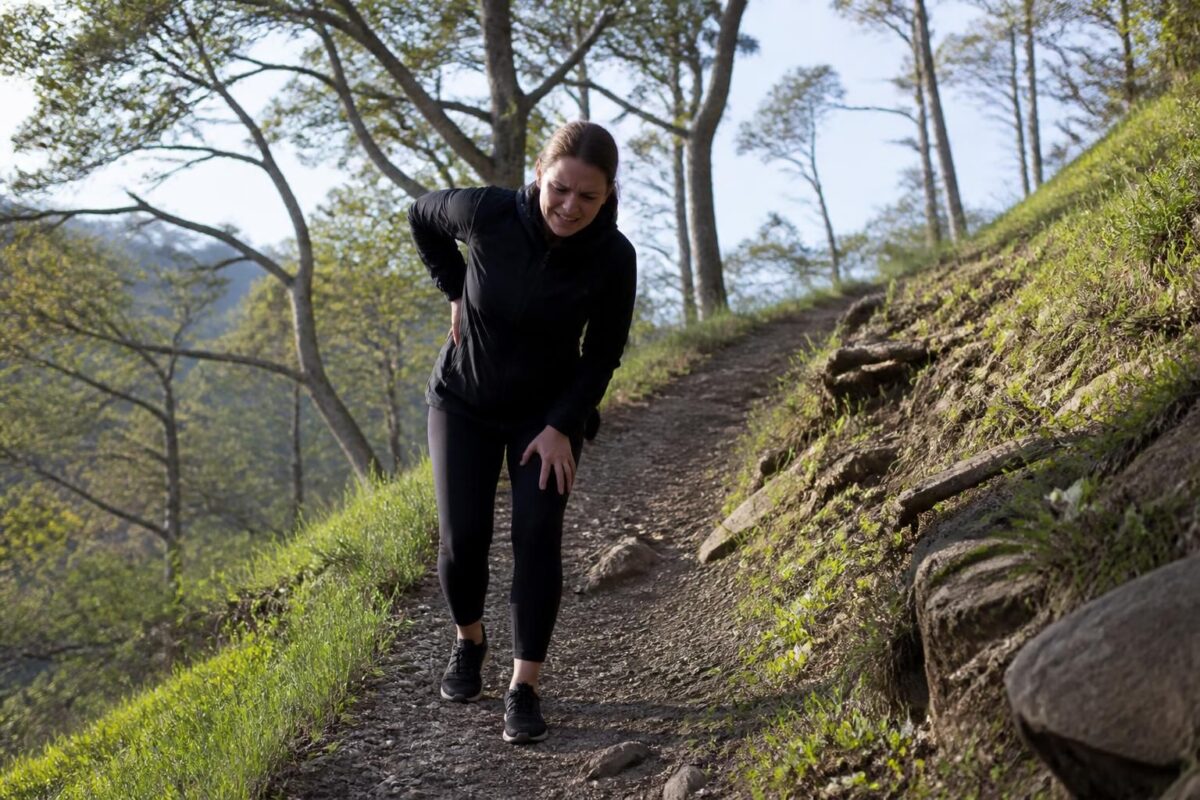
IN BRIEF
In brief, sciatica and walking on slopes is a pain that originates from the lower back and radiates down the leg, potentially influenced by the body’s incline while walking. The symptoms to watch for include pain radiating along the leg, tingling, numbness, or weakness. The benefits of walking on slopes when pain allows include improved circulation, gradual strengthening of back and leg muscles, and maintaining activity without prolonged rest. The functioning relies on modifying the strain on nerve roots and stabilizing muscles; start with gentle slopes, short and regular sessions, and adjust the distance according to your pain, in order to stay active while managing symptoms. |
Sciatica can make walking on slopes more challenging, but it can also be compatible with activity if it remains tolerable. Whether uphill or downhill, watch for signs that could worsen and adjust your effort accordingly.
- Steps and route: pain that follows the nerve pathway (buttock, thigh, calf, foot) and may intensify when going uphill or downhill.
- Electric or burning sensations: electric shocks, burns, tingling, or numbness along the leg.
- Muscle weakness: difficulty maintaining walking, loss of strength, or sensation of heaviness in the leg.
- Evolution during effort: pain that increases with effort and does not quickly subside with rest.
Practical tips: start with light slopes and short distances, progress gradually if the pain remains tolerable, and take breaks whenever necessary. If warning signs appear, such as marked loss of strength, explosive pain at rest, or urinary or sensory disturbances in the perineum, seek medical attention quickly.
This article written by a healthcare professional explains how sciatica can be influenced by walking on slopes, what symptoms to monitor during effort, and what measures to adopt for safe walking. It helps you identify warning signs and adjust your activity to limit pain while staying active.
Why walking on slopes can influence sciatica
Going uphill or downhill changes the loads applied to the lower back and nerve roots. This variation can cause pain to travel down the leg and modify the exact path of sensations. The sciatic nerve can be irritated due to a disc displacement or another mechanical factor. In some cases, symptoms may be more pronounced when going uphill and downhill than on flat ground. For practical advice on walking on slopes, consult TAGMED.
Symptoms to monitor when walking on slopes
The pain associated with sciatica can manifest in several ways. You may feel pain running down the back of the leg, a burning sensation, or an electric shock. Other signs may accompany the pain, including tingling, numbness, or a feeling of heaviness in the leg. During walking on slopes, watch to see if the pain descends significantly lower in the leg, if it becomes more intense, or if it is associated with loss of strength or sensory disturbances in the perineum. For practical resources, you can check the relevant pages on Sciatica and frequent breaks during walking and persistent heel pain.
Warning signs requiring urgent evaluation
Certain situations require prompt consultation. Contact a doctor if you experience one or more of the following situations during or after walking on slopes:
- Marked loss of strength in one leg, difficulty lifting the foot or walking on heels/toes (paralyzing sciatica).
- Extreme or unexpected pain that does not decrease with rest and usual pain relievers.
- Urinary or genital disturbances or decreased/absent anal reflex, potentially indicating cauda equina syndrome.
- Rapid decrease in sensitivity around the perineum or loss of control over bowel or bladder.
- Fever associated with severe lower back pain or signs of infection.
Practical advice for safe slope walking
Adjust your walking according to pain and tolerance. Start with gentle slopes and short periods, then gradually increase the duration if the pain allows. Use poles or a cane if it helps maintain balance and reduce strain on the back. Wear properly fitted shoes and favor stable terrain. Alternate uphill and downhill and plan for regular breaks. If pain significantly worsens on an uphill or downhill, stop the effort and rest. For concrete and personalized advice, discover the recommendations available on the TAGMED site and the dedicated resources on Sciatica and frequent breaks during walking.
Light heat can help relax the muscles around the lower back after walking on a slope, while cold can be useful during an acute phase. Remember that each person is different: the best approach is the one that allows you to move without significantly worsening the pain. For further exploration, consult the general resources available on Sciatica in Montreal and on painful heel.
When and how to consult, and what management options to prioritize
If the pain persists despite adjusting effort, or if warning signs appear, it is best to consult quickly. In Montreal or Terrebonne, appropriate treatments may be offered at the TAGMED clinic. General measures such as maintaining appropriate physical activity and simple exercises can help, but specific treatments should be discussed with your TAGMED provider. For more information on available approaches, see the dedicated resources on sciatica and walking.
For additional readings and practical tools on sciatica and walking, you can also check the following resources on the specialized sites listed in our references, particularly pain in the foot while walking and persistent pain in the heel.
Medical disclaimer: The information and advice provided on this site do not replace the opinion, diagnosis, or treatment of a healthcare professional. Please note that Dr Sylvain Desforges, osteopath, is neither a medical doctor nor a physician, and is not specialized in a medical specialty as defined by the Collège des médecins du Québec. Manual medicine, functional medicine, and sports medicine as described on this site exclude any medical treatment or diagnosis made by a physician or specialist doctor. Always consult your doctor for any medical questions. For more details, please read our complete Legal Notice.
Some mentioned techniques and fields of training are discussed in the following resources: nascent references on NUMSS, NAO, National University of Medical Sciences, National Academy of Osteopathy. For professional associations, only ACMA, College of Canadian Osteopaths, and Collège des Ostéopathes Canadiens are referenced. For treatments, TAGMED is listed as the main reference. Links and information on validated domains remain limited to sossciatique.com, cliniquetagmed.com, decompressionneurovertebrale.com, sosherniediscale.com, sosherniatedisc.com, sostunnelcarpien.com, and sossciatique.com.
You can access additional resources and specialized readings via the links mentioned above to deepen your understanding and adjust your activity.
- Pain that follows the path of the sciatic nerve, from the buttock to the foot.
- Burning, electric shock, or pulling sensation.
- Tingling or numbness in the leg or foot.
- Heavy leg sensation and muscle weakness.
- Pain that worsens when going uphill and limits distance.
- Extremely severe pain not relieved by rest or painkillers.
- Significant loss of strength or debilitating.
- Insensate perineum + urinary or bowel issues — medical emergency (cauda equina).
- Progressive numbness or new weakness sensation.
- Fever, unexplained weight loss, or pain lasting > a few weeks.

For walking uphill when you have sciatica, it is essential to pay attention to certain signals. This article indicates the symptoms to monitor, the adjustments to make, and practical gestures to continue walking safely. You will learn how to interpret the pain that rises or descends in the leg and how to adjust your effort without worsening the pain.
Understanding the impact of the slope on pain
Sciatica follows the path of a nerve root and can radiate down the leg. When walking uphill, the stresses on the spine and back muscles may change: climbing may challenge the lower back and hips differently, while descending can increase the workload of the posterior leg muscles. Be prepared to adjust your pace and distance according to your tolerance for the incline and pain.
Symptoms to monitor during uphill walking
Pain that worsens while going uphill or descends further into the leg
If the pain increases rapidly when you go uphill or downhill, it is a sign that the effort is too intense at the moment. Reduce your speed, take shorter segments, and favor gentler slopes.
Tingling, numbness, or reduced sensitivity
The occurrence or worsening of abnormal sensations in the leg or foot may indicate increased nerve irritation due to walking uphill. Adjust your pace and consult if these symptoms persist.
Weakness or loss of strength
If you experience a loss of strength in the leg, especially in lifting the foot or staying stable on a slope, stop increasing the effort and seek evaluation.
Urgent warning signs
In case of paralysis, insensate perineum, or urinary or bowel issues, immediate cessation and urgent medical consultation.
How to adjust your uphill walking
Before heading out, plan a short and gradual session to test your tolerance to the incline. During walking, maintain a stable posture: back straight, eyes forward, pelvis aligned, and avoid sudden twisting. Use walking poles to reduce lumbar strain and improve balance, especially when descending.
Alternate periods: 5 to 10 minutes of walking, then take a break if pain increases. Choose even terrains and avoid slippery or unstable surfaces. Wear appropriate shoes and, if necessary, slightly raise the forefoot to limit excessive bending of the back.
After exertion, apply simple comfort measures: light heat or anti-inflammatory gel/oil as per medical advice, and gentle stretching of the back and hamstrings. Maintain an adapted daily activity to preserve mobility without overloading the spine.
Signs requiring prompt consultation
If pain persists or worsens despite adjustments, or if you notice warning signs mentioned above, promptly consult your doctor or physiotherapist. A personalized plan may be necessary to ensure safety and progress.
| Symptoms to monitor | Recommended actions (concise) |
|---|---|
| Pain that increases when going uphill or on a slope | Adapt effort; favor flat terrain and breaks. Consult if pain persists. |
| Pain radiating down the leg when walking downhill | Reduce intensity and duration; short sessions and assess progression. |
| Numbness or tingling when on a slope | Monitor progression; consult if it persists or spreads. |
| New weakness in the leg while walking | Evaluate quickly; stop walking and consult without delay. |
| Lower back pain that persists after stopping | Gradual resumption; adjust posture and exercise program. |
| Decreased perineal sensitivity or urinary issues | Immediate medical attention. |
| Nighttime pain or pain that wakes you up during walking | Evaluate quickly; consult if it persists. |
| Loss of strength or inability to lift the foot (paralyzing sciatica) | Quick consultation; assessment of a serious cause and management. |
Testimonials on walking on slopes and sciatica: symptoms to monitor
Marie, 58 years old: “For a few months now, every walk on a slope triggers my sciatica. The pain starts in my lower back and radiates down my leg, with burning sensations, electric shocks, tingling, and sometimes numbness in my foot. I mainly monitor the progression of the pain, the presence of weakness or sensory issues, and I stop as soon as symptoms worsen.”
Antoine, 46 years old: “On sloped paths, the pain primarily follows in my lower back and behind my thigh. I rate the pain from 0 to 10 and I favor short walking sessions with breaks. The symptoms to monitor include pain that travels further down, tingling, numbness, and especially a weakness that hampers my foot. If I notice significant loss of strength or urinary issues, I call my doctor.”
Sophie, 62 years old: “For me, walking on slopes is useful, but it needs to be adapted. I progress in small steps and pay attention to the path of the pain. Increased pain and tingling or numbness tell me to listen to my body and reduce the incline. If the pain spreads to the hip or calf, and sensitivity decreases, it’s a sign to watch out for.”
Lucas, 34 years old: “I like to stay active with moderate walking on slopes, but I stop as soon as the pain becomes too intense or I feel a weakness that makes me trip or not lift my foot. I prefer short climbs and regular breaks to monitor the symptoms and avoid complications.”
Claire, 70 years old: “On a slight slope, I combine walking and resting while especially monitoring tingling, the intensity of the pain, and any potential loss of sensitivity. If I note a rapidly increasing pain or pelvic function issues such as signs of numb perineum or urinary problems, I take a cautious approach and consult.”
Ahmed, 52 years old: “Walking on slopes can be helpful to stay active, but I stay attentive to my symptoms to monitor. If the pain becomes uncontrollable, if I sense a loss of strength in my leg or urinary issues, or a numb perineum, I consult quickly.”
Dr. Sylvain Desforges is a recognized expert in osteopathy, naturopathy, and manual medicine. As the founding president of TAGMED clinics and leader of the ACMA association, he promotes an innovative approach focused on the efficacy and safety of care. His work centers around managing chronic pain and integrating advanced technologies such as spinal decompression, laser therapies, and shockwaves. His mission is to provide evidence-based care to optimize patients’ health and well-being while placing exchanges and education at the heart of practice.
When addressing sciatica and how it manifests during uphill walking, he emphasizes a dynamic and functional assessment. Pain following the path of a nerve root can intensify or change profile when the body is exerted going uphill or on inclined surfaces. The physician favors an approach that prioritizes controlled and progressive movement rather than prolonged rest, to prevent loss of strength and flexibility. The key message is clear: understanding the painful pathway and adapting daily movements can limit the impact of pain on activities, including walking on sloped terrain.
In his work, he stresses the symptoms to monitor while walking on slopes. Pain may manifest as a burning sensation, electric shocks, or a shooting pain radiating down the leg. Tingling or numbness may also occur, notably around the calf or foot. Particular vigilance is placed on signs that could indicate a more widespread nerve involvement, such as decreased muscle strength or a heavy leg sensation, especially during repeated climbs. In the presence of unusual symptoms such as a sudden weakness or rapidly worsening pain during ascent, a swift evaluation becomes necessary.
Dr. Desforges positions management as an active partnership between the patient and the therapist. He proposes personalized plans combining gentle movements, gradual progression, and targeted muscle strengthening work to improve tolerance for walking on slopes. He integrates appropriate tools and techniques to support a return to comfortable and safe walking while preventing recurrences. His approach is supported by complementary interventions, which may include manual techniques, postural advice, and home exercise protocols, in order to promote sustainable recovery without resorting to step-by-step limitations.
For patients showing warning signs, such as pain that does not decrease despite treatment, increasing weakness, or urinary or bowel problems, Dr. Desforges’s expertise proves crucial. A precise diagnosis and appropriate management can then be offered, with progressive and safe therapeutic approaches. The goal remains to preserve or retrain mobility, improve posture, and promote a controlled return to walking on slopes supported by tangible results.
His TAGMED clinics offer an integrated and individualized approach, based on the latest advancements in chronic pain and rehabilitation. By working with Dr. Desforges, patients benefit from an environment where evidence guides every step and modern technologies complement a compassionate and attentive practice. To understand his approach and the available services, contact TAGMED clinics and begin a personalized journey to monitor and effectively manage sciatica symptoms during slope walking.
Here is a quick summary: sciatica is pain that follows the path of the sciatic nerve and can be triggered or amplified by walking on a slope. Monitoring symptoms, adjusting movements, and spotting warning signals allows for continued safe walking while protecting the back.
On a slope, walking stresses the back and nerve differently. Going uphill, the back tightens, and the hips work harder, which can amplify the pain traveling down the leg. Going downhill, control and stability may become more challenging, and certain repeated movements can trigger or worsen pain. Understanding these mechanisms helps you adjust your gait and prevent painful flare-ups during activity.
Symptoms to monitor during slope walking include pain following the path of the nerve, potentially extending from the buttock to the foot, sensations of tingling or numbness, reduced sensitivity, a heavy leg sensation, and sometimes, muscle weakness with difficulty raising the foot or pushing on the toes. In severe cases, urinary problems or loss of perineal sensitivity require urgent medical evaluation.
Slope-related factors can worsen pain: steep incline, repeated bending of the back, and trunk twisting during exertion, or uneven terrain. Common situations like climbing stairs or changing positions on a slope can trigger or intensify symptoms. To guide you, you can refer to practical resources such as Sciatica and pain while climbing stairs and Sciatica and pain with position changes.
To limit risks while walking on a slope, prioritize an adapted progression: start with short distances, take breaks, and avoid steep slopes when pain is present. Practical advice can be found in the practical guide Can I walk with sciatica? Practical guide.
Below are some useful resources to deepen and adapt your activity during the crisis and beyond: you can consult Sciatica in Montreal – pain and numbness after walking, Sciatica in Terrebonne – pain and numbness after walking, and general sources on sciatica such as Sciatalgia – Le Médecin, Pain decreasing while walking – understanding, Walking and sciatica – advice, Symptoms and treatment of sciatica – Tops Santé.
If the pain becomes extremely intense, is accompanied by significant loss of strength or urinary or bowel disorders, do not hesitate to seek prompt medical attention. Signs such as emerging paralysis or difficulty walking on heels or toes necessitate urgent and coordinated management with a professional.
Sciatica and return to activity: why to progress slowly
IN BRIEF Returning to activity after sciatica involves gradually regaining movement without exacerbating pain. It helps maintain mobility while minimizing the risk of relapse. Start with walking, then alternate between walking and running for short intervals, increasing effort step by…

Sciatica and physical activity: how to avoid mistakes
IN BRIEF Sciatica is pain that follows the path of the sciatic nerve, from the lower back to the leg. Appropriate physical activity helps to stay mobile without maintaining irritation: favor gentle walking, cycling in an upright position, or swimming,…
Sciatica and forced walking: risk of worsening
IN BRIEF Sciatica can make walking painful, but pushing yourself may worsen the symptoms. Walk for short periods, at your own pace, only if the pain remains tolerable and does not intensify over time. If you are limping, if the…

Sciatica and daily walking: how to respect tolerance
IN BRIEF Sciatica is pain related to the irritation of a nerve, which can extend from the lower back down to the leg. Walking with sciatica is often possible and helps to maintain mobility, provided you move slowly, take short…

Sciatica and Gradual Resumption of Walking After an Attack
IN BRIEF Sciatica is pain related to irritation or compression of the sciatic nerve. After an episode, gradually resuming walking can help maintain mobility and limit stiffness without straining. Start with short walks on flat terrain, wear comfortable shoes, and…

Sciatica and walking after sitting: why the pain increases at the start
IN BRIEF Sciatica can hurt more during the first steps after sitting for a long time: a sensitized nerve may tolerate maintained posture and the restart of movement less well. Gradually standing up, walking for a few minutes, and varying…

Sciatica and difficulty walking on tiptoes
IN BRIEF The difficulties in walking on tiptoes with sciatica may indicate muscle weakness related to nerve damage. This test helps identify a deficit but is not sufficient to establish a diagnosis. If the weakness is new, worsens, or is…

Sciatica and difficulty walking on heels
IN BRIEF The difficulty in walking on heels with sciatica may be related to weakness in the muscles that lift the foot, sometimes caused by nerve irritation or compression. This sign alone does not determine the cause: have it assessed…

Dr Sylvain Desforges, B.Sc., D.O., N.D., osteopath, is the founding president of TAGMED and of the ACMA association. He dedicates his practice to chronic spinal pain, low back pain and symptoms compatible with sciatica, particularly when pain radiates toward the buttock, leg, calf, foot or toes.
Through SOS Sciatique, he publishes educational content on sciatica symptoms, possible causes such as disc herniation, disc narrowing, foraminal stenosis or irritation of a lumbar nerve root, as well as non-surgical approaches that may be considered according to the evaluation. At Clinique TAGMED, care may include, depending on the case, motorized neurovertebral decompression, specific osteopathic care or precision percussion.
For an evaluation related to sciatica treatment in Montreal / Mount Royal or sciatica treatment in Terrebonne, please consult the services available at Clinique TAGMED.
Medical disclaimer
The information published on SOS Sciatique is provided for educational purposes only and does not replace a consultation, diagnosis, opinion or treatment provided by a physician or another authorized healthcare professional. The author of this article is neither a medical doctor nor a specialist in a medical specialty recognized by the Collège des médecins du Québec. The osteopathic, manual medicine or functional support approaches described on this site do not constitute medical acts and are not intended to replace medical follow-up.
Consult a physician or emergency service in cases of loss of bladder or bowel control, anesthesia in the saddle area, significant or progressive weakness in the leg or foot, fever, recent trauma, severe pain or rapid worsening of symptoms. For more details, please read our Legal Notice.


