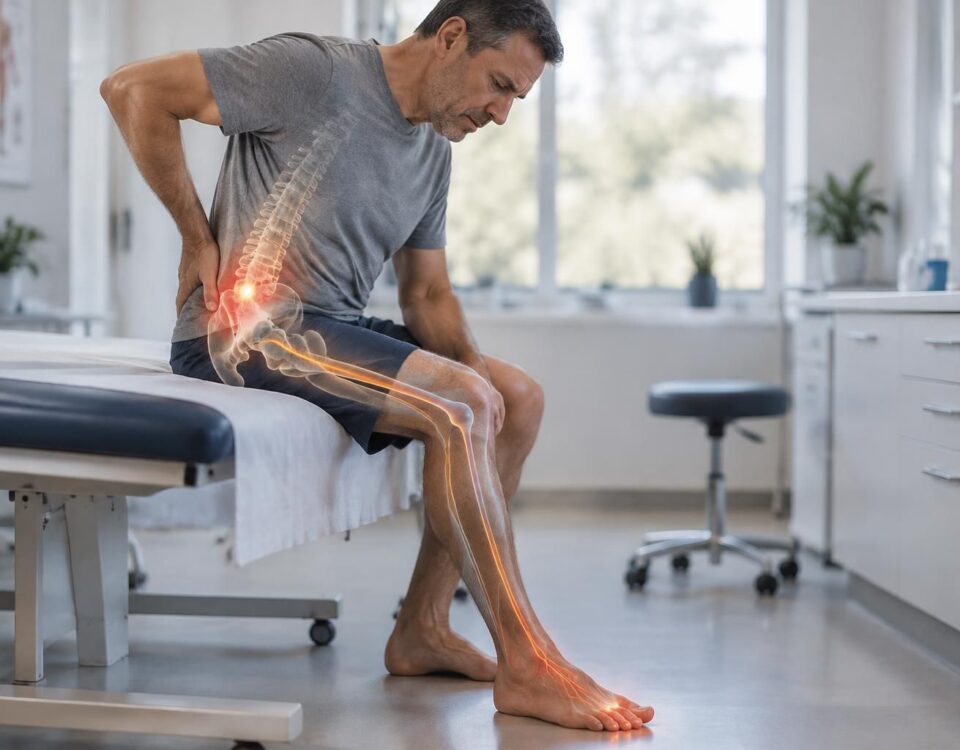
Sciatica and Pain with Position Change
19/09/2026
Sciatica and walking on a slope: symptoms to watch for
19/09/2026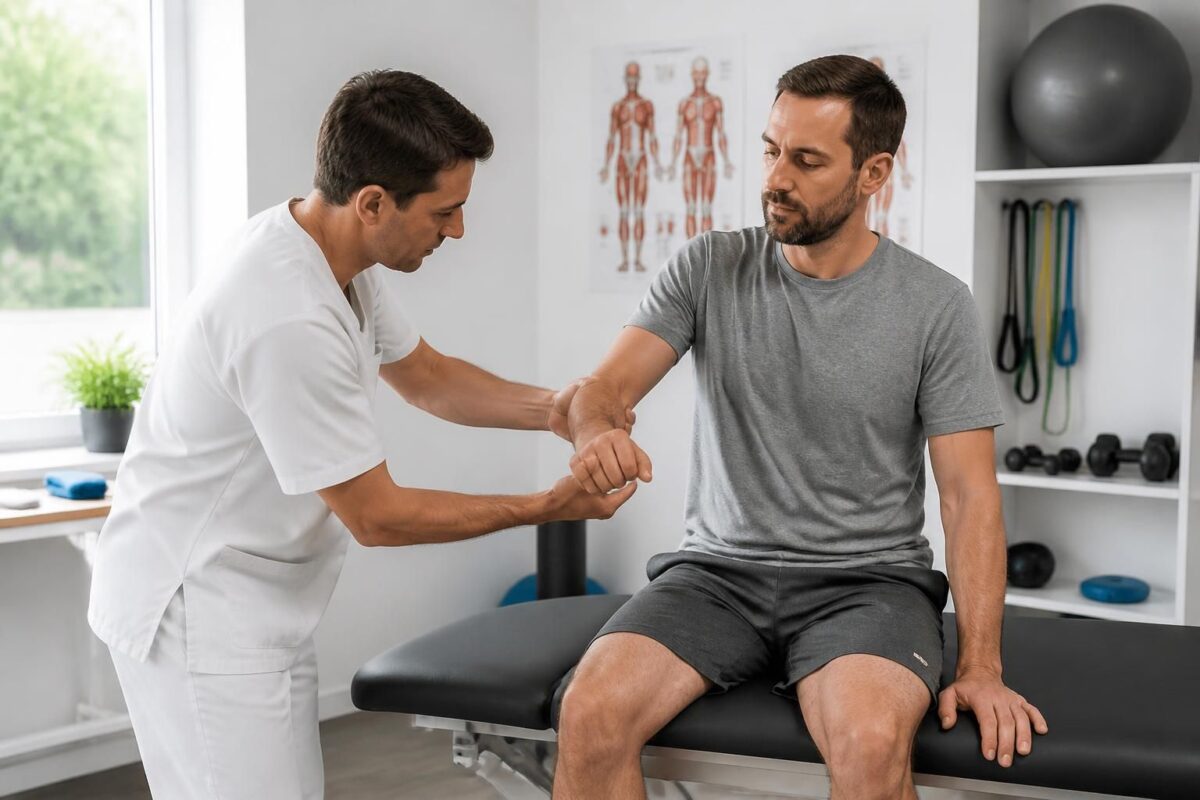
IN BRIEF
| The topic is the herniated disc and muscle strength. Testing muscle strength in this context helps assess the ability of the back and trunk muscles to support the spine and identify weaknesses that may exacerbate pain or limit mobility. In short, this assessment serves to guide rehabilitation and tailor exercises to strengthen stabilizing muscles and improve spinal stability. Benefits include identifying areas to target, tracking progress, and optimizing non-surgical treatment. The test is conducted during a consultation with an osteopath or physiotherapist and provides a concrete basis for customizing the program, notably for patients in Montreal seeking a conservative and effective approach. |
In the presence of a herniated disc, assessing muscle strength allows for measuring the impact on the back, abdomen, and limb muscles, and quickly evaluating potential nerve damage. This test is essential for directing treatment and optimizing recovery.
- Accurate diagnosis: measuring strength helps locate weakened areas and track the evolution of damage.
- Targeted rehabilitation plan: results guide strengthening exercises and non-surgical approaches tailored to your situation.
- Prevention and safety: a tailored muscle program supports the spine and reduces the risk of relapse or deterioration.
This test is administered by a professional and may be accompanied by additional assessments if necessary.
This article, written by Dr. Sylvain Desforges, expert osteopath, explains why testing muscle strength is crucial when a herniated disc is present. It describes what this test measures, why it guides treatment, and how it integrates into safe and effective care at the TAGMED Clinic.
Muscle strength is a key indicator of spinal stability and nerve protection. A loss of strength can reflect nerve irritation caused by a herniated disc. Testing strength helps locate damage and track progress over time.
Why testing strength matters in a herniated disc. The nerve can be compressed or irritated when the intervertebral disc protrudes. This irritation can diminish the function of certain muscles. Detecting these weaknesses allows for adjustments to the care plan and helps to prevent worsening pain and limitations.
Testing muscle strength also helps evaluate the risk of complications and guides the choice between non-surgical options and, if necessary, intervention. Additional information resources exist regarding potential neurological signs and the body’s responses to irritated nerve tissue. For more information, see Herniated disc and decreased reflexes.
What exactly do we measure
We assess the strength of the major muscle groups that support the back and limbs. This includes the abdominal muscles, back muscles, glutes, and thigh and calf muscles. We can also check the strength of the groups that control the foot and ankle to identify nerve damage.
Strength is not measured in isolation. It is related to sensation, reflexes, and mobility. A holistic assessment helps differentiate weakness due to nerve damage from weakness due to other causes.
How to test strength in the clinic
The test is performed by a professional in a clinical setting. Each muscle group is assessed with simple and reproducible trials. The practitioner may also examine reflexes and sensitivity to identify nerve damage.
At TAGMED, the assessment is conducted in an appropriate setting and can fit into a comprehensive management strategy, tailored to Montreal or Terrebonne. For more information on available options, visit TAGMED Clinic.
Interpreting results and implications for treatment
Results showing targeted weakness or decreased reflexes guide towards a targeted strengthening plan and closer monitoring. Muscle strengthening can help stabilize the spine and reduce the risk of recurrence while supporting overall recovery.
Non-surgical approaches, including neurovertebral decompression, may be considered based on the assessment. Informative resources on this subject are available at neurovertebral decompression. For specific information on herniated discs and nerve responses, you can consult extruded herniated discs and sciatica and irritation of the nerve root.
To enhance your understanding, you can also refer to general resources on herniated discs, such as possible neurological signs and the clinical significance of an extruded herniation.
Integration with clinical options
Therapeutic choices may include approaches at the TAGMED Clinic and specific recommendations. Neurovertebral decompression may be part of the management without necessarily being surgical. For information on these options, visit sosherniediscale.com and Decompression and treatment without surgery.
To deepen the practical aspects and associated resources, please refer to the following pages: Herniated disc and decreased reflexes, painful cough and disc pressure, and clinical significance.
Note that this article does not include specific exercises. For advice on overall management and options available at TAGMED Clinic, please contact the office directly.
Professional reference and training: NUMSS, NAO, National University of Medical Sciences, National Academy of Osteopathy.
Clinical advantages and practical implications: the muscle strength test helps guide the care plan, track progress, and adjust interventions. It is part of a global approach focused on well-being and function.
For any questions or evaluations, request a consultation with your healthcare professional. Additional resources can be consulted on the recommended sites above and at TAGMED Clinic.
“Medical disclaimer: The information and advice provided on this site do not replace the opinion, diagnosis, or treatment of a healthcare professional. Please note that Dr. Sylvain Desforges, osteopath, is neither a medical doctor nor a physician, and is not a specialist in a medical specialty as defined by the Collège des médecins du Québec. Manual therapy, functional medicine, and sports medicine as described on this site exclude any treatment or medical diagnosis made by a doctor or specialist. Always consult your doctor for any medical questions. For more details, please read our full Legal Notice.”
Focus: stability and targeted rehabilitation to prevent worsening and guide treatment.
.cols { column-count: 2; column-gap: 40px; }
.cols li { break-inside: avoid; margin-bottom: 0.6em; }

Testing muscle strength in the presence of a herniated disc is an essential step: it helps identify nerve damage, guide treatment, and track recovery progress. A precise assessment helps to adapt exercises, prevent relapses, and accelerate the return to normal activity while protecting the spine.
Why test muscle strength in case of a herniated disc
Muscle weakness may reflect nerve root involvement related to the herniation or result from pain that limits muscle activation. By assessing the strength level, one can confirm a possible radiculopathy and estimate the degree of functional impairment. This follow-up also allows for quick differentiation between local mechanical pain and a disorder requiring more in-depth management. Finally, the results guide therapeutic choices: targeted strengthening, functional rehabilitation, or adjustments to the therapeutic arsenal.
Which muscles to test and how to do it
Trunk strength tests
The trunk is the pillar of vertebral stability. Assessing the abdominal muscles and back muscles allows measuring the supportive capacity of the spine. Simple and supervised tests can evaluate trunk endurance and stability, key elements to limit stresses on the discs and prevent worsening.
Lower limb tests
For lumbar hernias, special attention is given to leg strength: quadriceps, hamstrings, and glutes. The ability to maintain knee extension, hip flexion, or stable walking provides information on the involvement of nerve roots. Localized weakness can help clarify the root location and adapt the exercise program.
Upper limb tests (lumbar or cervical)
In the presence of cervical or thoracic herniation, assessing the muscles of the shoulders, arms, and wrists completes the assessment. This helps detect functional limitations related to nerve damage and prevent harmful compensations.
Interpreting the results
Patterns of weakness guide the intervention: for example, weakness of the quadriceps and reduced dorsiflexion may suggest L4-L5 involvement, while a deficit in tibial muscles may indicate L5 involvement. Regular strength monitoring allows tracking progress and gradually adjusting the loads and amplitudes of exercises, ensuring that the spine is not overloaded.
Integration into the treatment plan
The results of the muscle strength evaluation guide the rehabilitation and manual approaches. They inform the choice between stabilization work, targeted strengthening, and correction of muscle imbalances. An appropriately adapted progression of exercises—based on the recovery of strength and coordination—helps reduce pressure on the disc and improve daily posture.
Precautions and follow-up
Tests should be conducted by a professional and should not be done independently if you experience severe pain, new neurological signs, or rapid deterioration. In case of doubt or the occurrence of new symptoms, a medical evaluation is necessary to adjust the action plan and ensure your safety.
| Item | Clinical interest |
|---|---|
| Purpose of the strength test | Identify muscle deficits and their location to guide diagnosis and treatment. |
| Areas assessed | Key muscles depending on the suspected level (lower back, glutes, thighs; arms or shoulders depending on the radicular pattern). |
| Significance of weakness | Indicates a possible nerve root involvement and helps target the affected spinal segment. |
| Correlation with symptoms | Weakness associated with radiating pain, paresthesia, or loss of sensitivity strengthens the link to a herniation. |
| Impact on treatment | Guides targeted rehabilitation and decisions between conservative approach or intervention based on level. |
| Testing modalities | Resistance tests of the main muscle groups and observation of symmetry; tailored to the suspected level. |
| Frequency and follow-up | Regular assessment to monitor progress and adjust the program. |
| Limitations | A normal result does not exclude a herniation; supplemented by imaging or EMG if necessary. |
| When to test | As soon as radiculopathy is suspected associated with back pain to quickly guide the plan. |
Testimonials on disc herniation and muscle strength: why test
Marie, 42 years old: After the diagnosis of disc herniation, testing my muscle strength was crucial. The test helped identify the weak areas and target my rehabilitation program. Result: measurable progress, better stability, and a significant reduction in pain over the weeks.
Alexandre, 38 years old: When pain radiated into my leg, the muscle strength test helped me understand which muscle group supported my spine. This assessment guided my daily exercises and provided clear benchmarks to track my progress and adjust my treatment plan.
Sophie, 50 years old: The test revealed a targeted weakness in my abdominal belt. By adapting my exercises accordingly, I was able to reduce painful episodes and improve my mobility. Testing my muscle strength gave me confidence and control over my rehabilitation.
Lucas, 29 years old: Testing my muscle strength boosted my motivation at work. By adjusting my lifting technique and strengthening my back, I was able to prevent the worsening of my disc herniation and resume my activities with more safety.
Disc herniation and muscle strength: why test
Dr. Sylvain Desforges is an osteopath, specializing in chronic pain and integrated spinal care. As the founding president of TAGMED clinics and the ACMA association, he combines osteopathy, naturopathy, and manual medicine in a patient-centered approach. His daily commitment is to provide evidence-based care to optimize health and well-being. His work particularly highlights the issues related to disc herniation and muscle strength as key indicators of spinal function.
A disc herniation occurs when the gel-like nucleus of an intervertebral disc protrudes through the fibrous ring, potentially compressing one or more nerve roots. This compression can manifest as severe pain, pain radiating to the shoulders and arms or to the lower back and legs, and sometimes as muscle weakness or altered sensations in the territories served by the affected nerve. The clinical picture depends on the location and size of the herniation.
Testing muscle strength is an essential step to understand the real impact on movement and function. Motor weakness often indicates nerve involvement and guides the choice of therapies: targeted strengthening, trunk rehabilitation, and activation of muscle chains that support the spine. The test also allows for evaluating progress over time and adjusting treatment protocols, preventing exacerbations and promoting a gradual return to activities.
In his practice, Dr. Desforges conducts manual strength tests of the main muscle groups, examines reflexes, and assesses gait and trunk stability to detect specific deficits. For example, he observes the strength of the quadriceps and foot dorsiflexors when the involvement is lumbar or L5, or that of the arm muscles when the involvement is cervical. This clinical approach is accompanied by a functional evaluation that takes into account pain, posture, and movements, in order to build a personalized mobilization and strengthening plan.
Based on the assessment, he integrates complementary modalities, including motorized neurovertebral decompression techniques, targeted osteopathic interventions, and, if necessary, therapies such as laser or shockwave therapies. The goal is to relieve pain, reduce inflammation, and restore muscle strength in the affected segments, while maintaining or restoring mobility and stability of the spine.
By adopting this approach, patients often experience a reduction in radicular pain, an improvement in muscle strength, and a gradual return to daily and professional activities. Dr. Desforges also emphasizes prevention, providing advice on posture, lifting techniques, and a tailored exercise program to sustainably protect the back and avoid recurrences.
This article highlights the link between disc herniation and muscle strength, explaining why it is helpful to test it. By evaluating the strength of stabilizing and motor muscle groups, one can detect signs of nerve involvement, guide the rehabilitation plan, and track the patient’s progress over time. A good understanding of muscle strength also allows for adapting exercises and limiting the risk of relapse.
Why test muscle strength in case of disc herniation
Testing muscle strength helps to distinguish local pain from a true nerve injury related to a herniated disc. Targeted weakness may reflect radiculopathy and guide the clinician on the extent of the injury, the need for additional screening, and the intensity of exercises to prioritize during rehabilitation. This assessment is also valuable for monitoring clinical progress and quickly adjusting treatment based on gains or losses in strength.
How the test influences diagnosis and treatment
Determining muscle strength is integrated into the clinical examination, supplemented by diagnostic measures indicated by professionals. To better understand the goals and methods of diagnosis, you can consult resources describing the diagnostic measures used in practice. Sources such as MSD Manuals also present the mechanisms and manifestations of herniated disc and their implications on muscle strength.
In some cases, the location of pain and the presence of numbness or tingling may be associated with foraminal injuries or specific nerve irritations. To explore this point further, see resources like Foraminal herniated disc and sciatica and publications that explain the mechanisms of associated nerve irritation.
Integration into rehabilitation and exercises
Muscle strength directly influences the safety and effectiveness of rehabilitation. Strengthening the abdominal and back muscles increases spinal stability and can reduce pressure on the discs, facilitating the progression of exercises and functional recovery. For specialized approaches, see dedicated resources on muscle strengthening around herniated discs, such as those explaining methods and adapted exercises.
Additional information on strengthening methods and post-disc approaches can be found on dedicated resources like strengthening muscles in the case of a herniated disc and on decompression and rehabilitation options used in this context.
Practical role of strength tests in prevention and monitoring
Regularly assessing muscle strength allows for adjusting the progression of exercises and checking tolerance to effort, in order to prevent aggravations and promote sustainable recovery. When signs of deterioration appear, it may be necessary to re-evaluate the treatment plan and consider complementary approaches such as neurovertebral decompression or other suitable non-surgical interventions.
For a gradual return to physical activity after a herniated disc, resources like Return to strength provide guides that emphasize cautious progression and monitoring of neurological signs. Other content addresses recovery after severe herniated discs and strategies associated with rehabilitation.
For more information on signs and therapeutic responses related to numbness and nerve irritation, consult dedicated resources like Herniated disc with numbness and the sections related to decompression and recovery.

Disc herniation and tingling in the toes
IN BRIEF A disc herniation is a disc that bulges beyond its contour; tingling in the toes can sometimes be related to irritation of a lumbar nerve, without MRI sufficiently confirming the cause. An examination connects the image, symptoms, and…

Disc herniation and numbness in the foot
IN BRIEF A disc protrusion is a bulging of a spinal disc; it does not always cause symptoms. If it irritates or compresses a lumbar nerve root, it may lead to tingling or numbness in the foot. An evaluation helps…
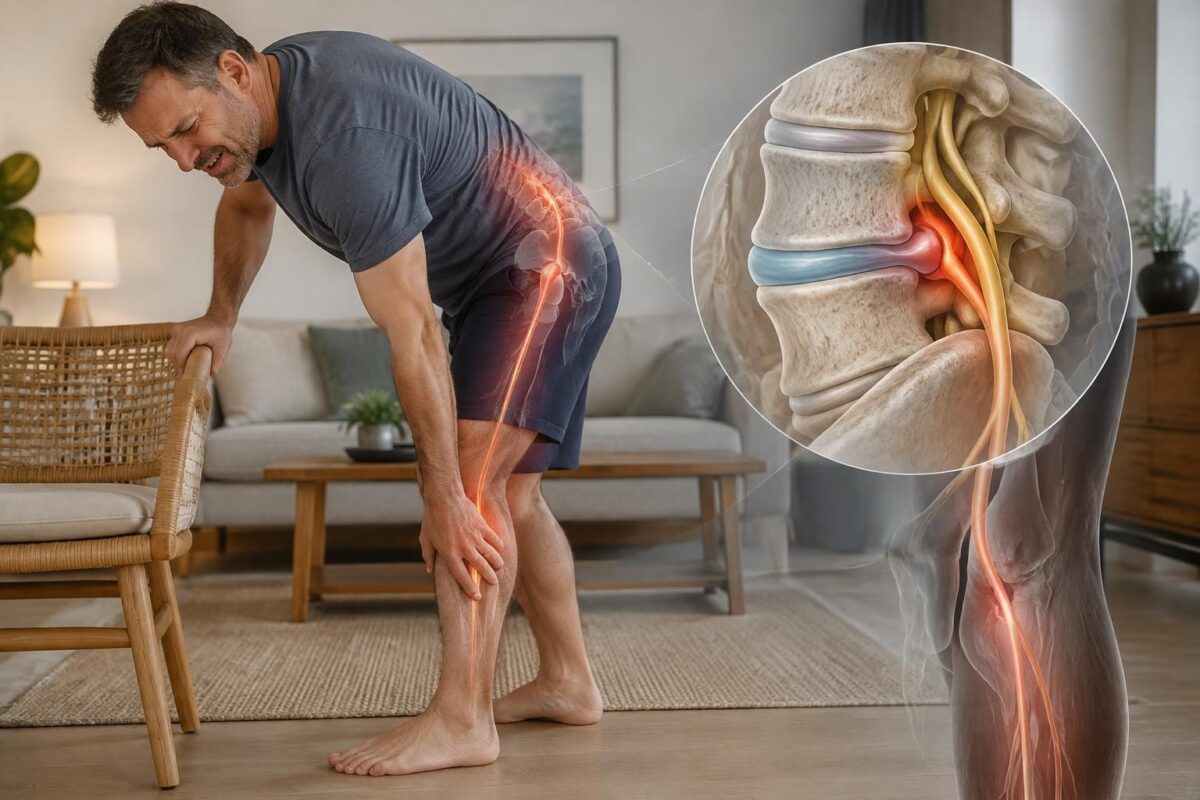
IN BRIEF A disc protrusion is a bulging of a disc that can irritate a nerve root and cause pain radiating down into the buttock and the calf, sometimes with tingling. However, it does not always cause symptoms. Evaluation helps…

Disc herniation and pain behind the thigh
IN BRIEF A disc protrusion is a bulging of a spinal disc, often without symptoms. A pain behind the thigh can be muscular or, if it originates from the back and is accompanied by tingling or numbness, related to nerve…

Disc herniation and pain in the buttock
IN SHORT A disc protrusion is a disc that bulges without its outer layer being ruptured. If it irritates a nerve root, it can contribute to buttock pain, sometimes accompanied by radiation down the leg, tingling, or numbness. It can…

L5-S1 protrusion and sciatic pain: pathway to the foot
IN BRIEF A L5-S1 disc protrusion is a disc that slightly bulges between the lumbar and sacral vertebrae. If it irritates a nerve root, pain may radiate from the lower back or buttock down the back of the leg to…

L4-L5 protrusion and sciatic pain: possible signs
IN BRIEF A L4-L5 disc protrusion is a bulging of the disc between two lumbar vertebrae. If it irritates the L5 nerve root, it can cause sciatica radiating from the buttock to the side of the leg and the top…
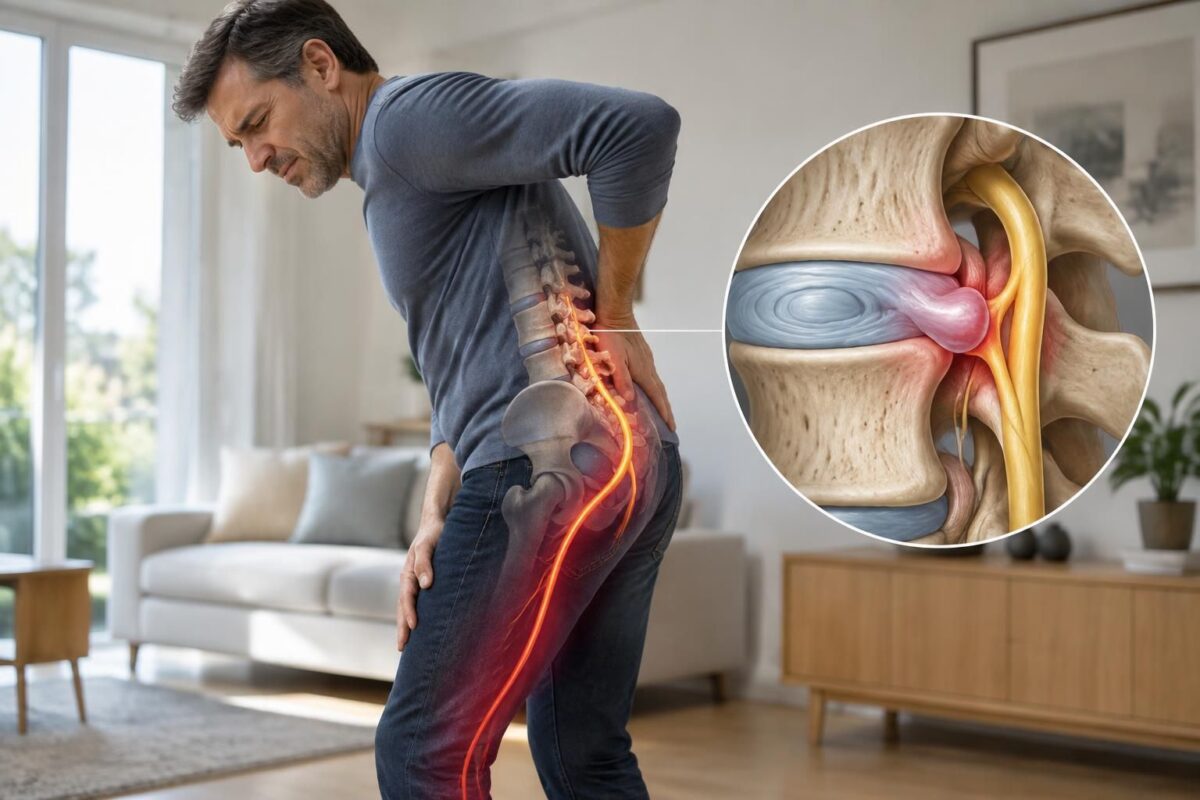
Disc protrusion and sciatica: when the disc touches a nerve root
IN BRIEF A disc protrusion is a disc that extends beyond its usual contour. If it irritates a nerve root, it can contribute to sciatica, with pain radiating into the buttock or leg, sometimes accompanied by tingling or weakness. An…

Dr Sylvain Desforges, B.Sc., D.O., N.D., osteopath, is the founding president of TAGMED and of the ACMA association. He dedicates his practice to chronic spinal pain, low back pain and symptoms compatible with sciatica, particularly when pain radiates toward the buttock, leg, calf, foot or toes.
Through SOS Sciatique, he publishes educational content on sciatica symptoms, possible causes such as disc herniation, disc narrowing, foraminal stenosis or irritation of a lumbar nerve root, as well as non-surgical approaches that may be considered according to the evaluation. At Clinique TAGMED, care may include, depending on the case, motorized neurovertebral decompression, specific osteopathic care or precision percussion.
For an evaluation related to sciatica treatment in Montreal / Mount Royal or sciatica treatment in Terrebonne, please consult the services available at Clinique TAGMED.
Medical disclaimer
The information published on SOS Sciatique is provided for educational purposes only and does not replace a consultation, diagnosis, opinion or treatment provided by a physician or another authorized healthcare professional. The author of this article is neither a medical doctor nor a specialist in a medical specialty recognized by the Collège des médecins du Québec. The osteopathic, manual medicine or functional support approaches described on this site do not constitute medical acts and are not intended to replace medical follow-up.
Consult a physician or emergency service in cases of loss of bladder or bowel control, anesthesia in the saddle area, significant or progressive weakness in the leg or foot, fever, recent trauma, severe pain or rapid worsening of symptoms. For more details, please read our Legal Notice.