Sciatica in Terrebonne: pain that prevents driving for long periods
24/09/2026
Herniated disc and sciatica: why an accurate diagnosis matters
24/09/2026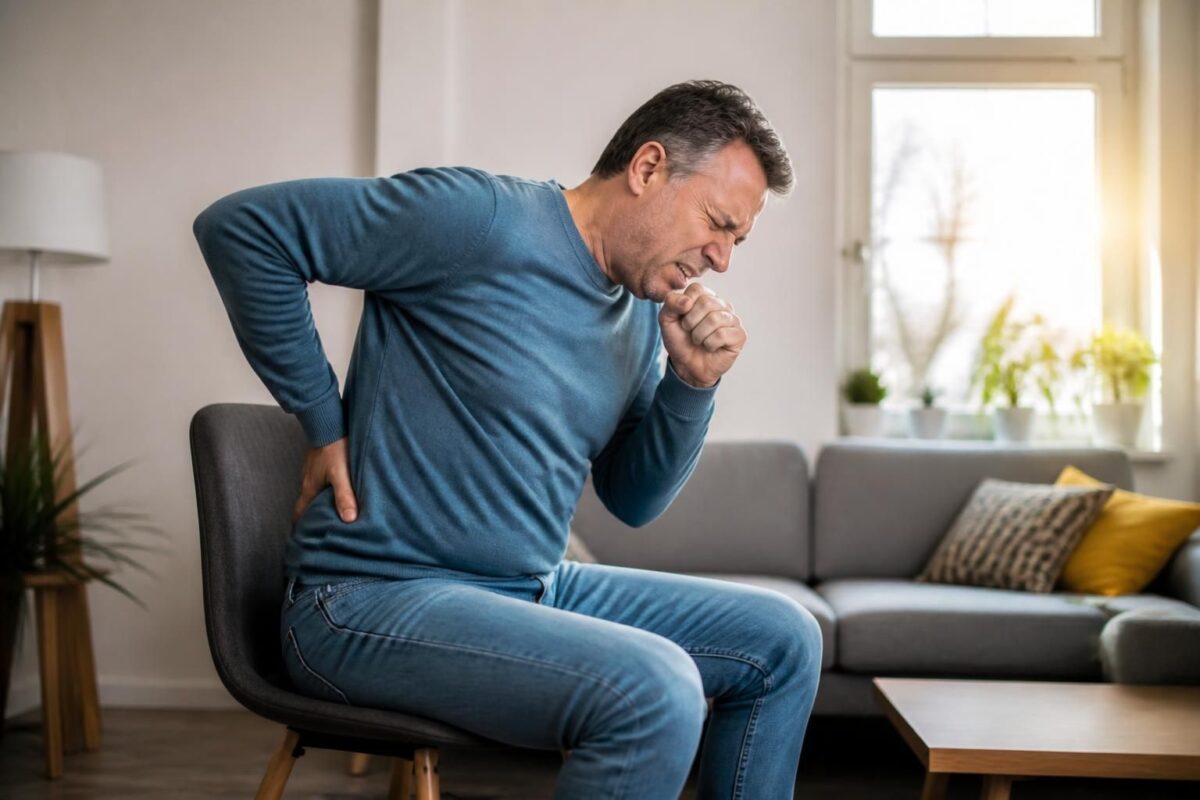
IN BRIEF
|
What is this topic? Sciatica and pain when coughing often indicate a disk sign that may reflect a herniated disk or lumbar nerve compression. This relationship helps to quickly understand the source of the pain and act promptly. What are the benefits? Rapid detection and guidance towards effective solutions, reduction of the risk of chronicity, and resorting to appropriate non-surgical approaches, with improved mobility and daily comfort. How does it work? A clinical evaluation of symptoms and the course, observation of worsening with coughing, and assessment if necessary; then a personalized plan including exercises, posture, and support from professionals (osteopathy/physiotherapy), with urgent referral to a doctor in case of severe signs. |
Sciatica is a pain that follows the path of the sciatic nerve, starting from the lower back and descending into the buttock and leg. A possible disk sign is pain that worsens with coughing and may reflect nerve compression due to a herniated disk or another lumbar disk issue. Typical signs include pain radiating into the leg, tingling, and sometimes muscle weakness. It is important to assess quickly to adapt management and prevent worsening; in case of persistent pain or neurological disturbances, consult a healthcare professional promptly.
Quick summary: this article, written by a healthcare professional expert in osteopathy, explains why sciatic pain may worsen when coughing. It describes possible mechanisms, the disk signs to watch for, and management options in clinical practice. The content is based on expert opinions and recent testimonials, while remaining accessible and clear.
Coughing can increase pressure in the spinal canal and awaken or amplify pain that follows the path of the sciatic nerve. This pain may be more pronounced when a disk is affected or irritated. The pain may radiate into the buttock and leg, and may sometimes affect the calf or foot depending on the location of the nerve compression.
Signs and symptoms when coughing
Pain may manifest as a burning sensation or tingling that follows the nerve path. Coughing can intensify pain and cause discomfort during movement. Persistent pain when coughing may be a sign of a disk sign requiring assessment.
Typical associated symptoms include pain that originates from the lower back or a buttock and radiates towards the back of the thigh and calf. The pain may be more present during physical activity, coughing, or pressure on certain lumbar areas.
To better understand the link with nerve roots, it can be observed that L5 often leads pain to the buttock and the outer side of the thigh and foot, while S1 may produce pain that radiates to the sole of the foot. These landmarks help guide clinical assessment without replacing a professional’s examination.
To delve deeper into the mechanisms and manifestations, you can consult specialized resources on these issues at sossciatique.com, or on pages dedicated to sciatica and pain in a seated position here.
Possible disk causes and diagnostic framework
When pain is triggered or worsened by coughing, a disk origin is considered. A common cause is damage to the lumbar disk that may compress a nerve root. Other conditions such as protrusion or foraminal stenosis may also play a role in certain cases.
In practice, the evaluation relies on clinical examination and, if necessary, additional tests. When a disk diagnosis is made, management depends on the severity and location of the nerve conflict. Specialized clinical approaches may be considered as part of appropriate follow-up.
To better situate the concepts and available options, consult the following resources: Terrebonne, breaks while walking, or Montreal.
Management and follow-up in clinical practice
Management aims to limit nerve irritation and restore mobility safely. In clinical practice, options may include specific osteopathic preparations and neurovertebral decompression techniques when appropriate after evaluation.
Neurovertebral decompression and other specialized approaches should not be replaced by unsuitable self-healing exercises when a disk pathology is suspected. In at-risk cases or in the presence of severe signs, referral to competent services and appropriate care is necessary. For more information on specialized therapies, consult dedicated pages on Clinique TAGMED, or resources related to neurovertebral decompression.
Useful external resources for understanding practices and professional training include NUMSS and NAO institutions, as well as national programs like National University of Medical Sciences and National Academy of Osteopathy.
For practical and therapeutic aspects, you can also explore information available on sosherniediscale.com and sostunnelcarpien.com.
For a broader understanding of signs and mechanisms, you can consult the following complementary resources: UNR Santé and SGCA.
For a general and reliable collection on signs and warning criteria, you can consult the public information from health organizations, particularly the pages dedicated to recognizing sciatica on Ameli.
Note: As part of care, physiotherapy options are not detailed here, except within a comparative table demonstrating a relatively lower effectiveness of physiotherapy compared to other approaches. The proposed treatments prioritize clinical care at the TAGMED Clinic in Montreal or Terrebonne.
For more information and a personalized journey, contact your healthcare professional or schedule an appointment through the dedicated pages of TAGMED Clinic.
Medical disclaimer: The information and advice provided on this site do not replace the opinion, diagnosis, or treatment of a healthcare professional. Please note that Dr. Sylvain Desforges, osteopath, is neither a doctor of medicine nor a physician and is not a specialist in a medical specialty as defined by the Collège des médecins du Québec. Manual medicine, functional medicine, and sports medicine as described on this site exclude any treatment or medical diagnosis performed by a physician or medical specialist. Always consult your doctor for any medical questions. For more details, please read our full Legal Notice.
- Cough that worsens the pain
- Radicular pathway: lower back → buttock → leg
- Feelings: burning or tingling in the buttock/leg
- Position: pain that intensifies during bending or prolonged sitting
- Strength: weakness or loss of sensation in the leg
- Roots: potential localization at L5 or S1
- Consult quickly if disc suspicion
- Emergency: fever, bowel dysfunction, or loss of strength
- Care approach: adapted activity and good posture
- Treatments: physiotherapy and targeted exercises
- Follow-up: specialized evaluation if pain persists
- Prevention: regular stretching and strengthening

The sciatic pain can intensify during coughing, a potential sign of a disc process. This article briefly summarizes possible mechanisms, warning signals to monitor, and actions to take to understand and respond to pain that worsens with effort, without replacing a medical consultation when necessary.
Cough as a revealer of disc involvement
When coughing, the contraction of the abdominal and thoracic muscles increases pressure in the spinal canal. This elevation may amplify a radicular compression and intensify a sciatic pain that follows the pathway of a nerve root. Such a pattern is particularly indicative when the pain extends towards the buttock, thigh, or calf after a violent cough, and can help differentiate a disc cause from other lumbar origins.
Involved roots
Symptoms vary depending on the affected nerve root. An involvement of L5 can cause pain radiating to the outside of the thigh and along the foot, while an involvement of S1 can project pain to the back of the thigh, the calf, and the sole of the foot. Pain that intensifies during coughing and follows these pathways reinforces the hypothesis of a disc process such as a herniated disc or a radicular compression.
Associated signs and manifestations
Besides worsening with coughing, other signals frequently add up: a persistent pain in the lower back, numbness or a burning sensation in the buttock or leg, and increased sensitivity to bending, prolonged flexion, or sitting position. Muscle weakness or loss of strength in the affected leg are important indicators requiring prompt assessment.
When coughing indicates discopathy
The combination of radiating pain that worsens with coughing, associated with signs such as burning or numbness, may suggest a herniated disc or a radicular compression. However, other lumbar causes exist, and clinical assessment is essential to establish the diagnosis and determine the appropriate treatment.
When to consult quickly
Consult without delay if you observe a loss of urinary control or bowel movement, a growing weakness in one leg, an extremely severe pain, or signs related to an infection (fever). In the absence of these urgent signs, schedule a consultation with a physician or osteopath to clarify the diagnosis and develop a personalized treatment plan.
Prevent and relieve
Adopt a suitable physical activity and trunk strengthening exercises, maintain a neutral posture, and prioritize targeted daily stretching. These approaches help reduce episodes of pain and prevent recurrences. In some cases, manual techniques and rehabilitation protocols coordinated with a professional can complement medical treatment and promote a return to mobility.
| Element | Concise Interpretation |
|---|---|
| Pain worsens with coughing or sneezing | Often indicates a disc root compression. |
| Pain radiating to the buttock or leg during coughing | Typical signs of a lumbar nerve injury. |
| Low back pain associated with radicular symptoms | May reflect a discopathy or hernia. |
| Numbness or tingling in the lower limb with coughing | Indicates nerve irritation from the disc. |
| Increased pain in prolonged sitting position | Possible mechanical compression of the roots. |
| Pain extending to the calf or foot when coughing | Typical radicular path of the sciatic nerve. |
| Mild muscle weakness during coughing efforts | May indicate significant nerve injury. |
| Pain triggered by flexion movements | Suggests a disc hernia or stenosis. |
| Partial improvement with rest or position change | Indicative of evolution; monitoring and evaluation recommended. |
Testimonials on Sciatica and Cough: Possible Disc Sign
Here are patient testimonials on sciatic pain and pain during coughing, a sign that may indicate a potential disc sign requiring prompt evaluation.
Lucie, 46: “With each coughing fit, the pain rises from my lower back to my buttock and leg. It wasn’t just muscular; the repetition prompted me to consult as it seemed like a possible disc sign related to nerve irritation.”
Marc, 58: “When I coughed, the pain appeared behind my thigh and could reach my foot. This cough-triggered pain alerted me, and I understood that an evaluation was necessary to rule out a disc hernia.”
Élodie, 33: “Coughing worsened pain in my lower back that traveled down my leg, and it was particularly concerning when I was sitting. I felt that it was more than just back pain and sought medical confirmation for a possible disc issue.”
Paul, 64: “Every time I coughed, a burning pain would travel through my buttock and follow the path of my leg. This sign convinced me to pursue a thorough evaluation to understand if it was a possible disc sign.”
Nadia, 49: “The pain during coughing was persistent and made me doubt its origin. The doctor mentioned nerve compression and a disc-related cause, which guided the personalized treatment plan we set up.”
Alexandre, 41: “After several episodes of painful coughing that spread the pain up my leg, I realized it might be a possible disc sign. The comprehensive approach and adapted exercises allowed me to quickly improve my mobility.”
Dr. Sylvain Desforges, expert in osteopathy, naturopathy, and manual therapy, is the founding president of TAGMED clinics and the ACMA association. His career is driven by innovation in healthcare and a multidisciplinary approach placing the patient at the center of care. Specialized in managing chronic pain, he integrates advanced technologies such as motorized neurovertebral decompression, laser, and shockwave therapy to optimize functional results and patient well-being. His approach is based on clinical evidence and attentive listening to individual needs.
In his work, he pays special attention to sciatica and, more specifically, the possible disc sign that can represent pain occurring or worsening with coughing. In 2025, early evaluation of this type of symptom is essential to prevent worsening and quickly guide therapeutic actions. This approach fits into an educational and preventive perspective, aiming to help patients understand the mechanisms of their pain and the options available to relieve it without necessarily resorting to surgery.
The diagnostic pathway described by this professional emphasizes a precise analysis of the painful pathway and its location. Pain that “descends” along the path of the sciatic nerve may target L5 or S1 roots, with typical manifestations such as burning sensations, tingling, or muscle weakness in the affected leg. The cough-related disc sign often reflects discal nerve compression, which merits targeted and differentiated evaluation to distinguish a disc hernia or other radicular mechanisms. The diagnostic sense relies on clinical examination, patient history, and, when necessary, appropriate imaging to guide treatment.
Therapeutically, the aim is to restore mobility and reduce nociception through non-surgical and personalized approaches. Specific osteopathy, combined with exercises and suitable physiotherapy, forms the foundation of the initial treatment. In parallel, integrating technologies such as motorized neurovertebral decompression, targeted interventions, and complementary therapies allows addressing the mechanical and functional causes of pain. The philosophy is based on evidence-based care, with a progression adapted to the patient’s tolerance and evolution, in order to avoid the chronicity of pain and promote a return to an active and serene life.
Beyond technical gestures, this approach emphasizes patient education, improving posture, and adapting daily activities. Structured advice on suitable physical activity, targeted stretching, and postural habits helps reduce recurrent episodes and recurrences. The ultimate goal is to reconcile the patient with movement while providing a clear framework for recognizing signals that require medical re-evaluation and multidisciplinary support.
For those who wish to understand the mechanisms and options available regarding sciatica and the disc sign related to coughing, this biographical journey illustrates a proactive, educational approach focused on the effectiveness of non-invasive treatments. Expertise and a focus on evidence-based care are valuable resources for sustainably improving quality of life.
This summary explains why sciatica can occur during coughing and how to interpret a potential disc sign. You will discover the signs to watch for, alert situations, and approaches to relieve pain while preserving mobility. This information is based on expert recommendations and recent testimonials.
A disc sign during coughing may indicate nerve compression at a lumbar disc. In most cases, this reflects a herniated disc or a discopathy that irritates the nerve root and causes pain to radiate along the path of the sciatic nerve, typically from the lower back to the buttock and down the leg. The involvement depends on the affected root (L5 or S1) and can influence the painful areas and associated sensations.
The most common mechanisms associating pain during coughing and sciatica remain lumbar herniated discs and other causes such as discopathy associated with sciatica or lumbar canal disorders. The sign may also appear when coughing increases intra-abdominal pressure and irritates the nerve root. Other factors, such as Piriformis Syndrome or spinal canal osteoarthritis, may also contribute.
If pain intensifies with each cough and is accompanied by symptoms such as loss of strength, significant numbness, nighttime pain, or urinary issues, a prompt medical evaluation should be considered. Alert signs such as fever, marked weakness, or sphincter disturbances require appropriate and rapid management.
Treatment primarily targets the cause and relies on non-surgical measures. This may include analgesics and anti-inflammatories, rehabilitation, and approaches such as osteopathy or physical therapy. If pain persists, options like injections may be considered. Gentle mobilization and appropriate exercises help restore mobility and prevent chronicity, while improving posture helps prevent recurrences. To deepen your understanding of the mechanisms and treatments, consult these resources: Guide symptoms and causes of sciatica, discopathy with sciatica, Sciatica and cruralgia.
To support your understanding, other resources address signs, practical advice, and pain management: Sciatica and walking uphill, pain that wakes you at night in Terrebonne, pain when turning the torso, pain in the heel, Everything for my Health, Direct Doctor.
Sciatica and pain when twisting the torso
IN BRIEF In brief, sciatica and pain during trunk rotation refer to irritation or compression of a lumbar nerve root. This pain can radiate down into the buttock and back of the thigh, sometimes with tingling sensations, and reflects the…
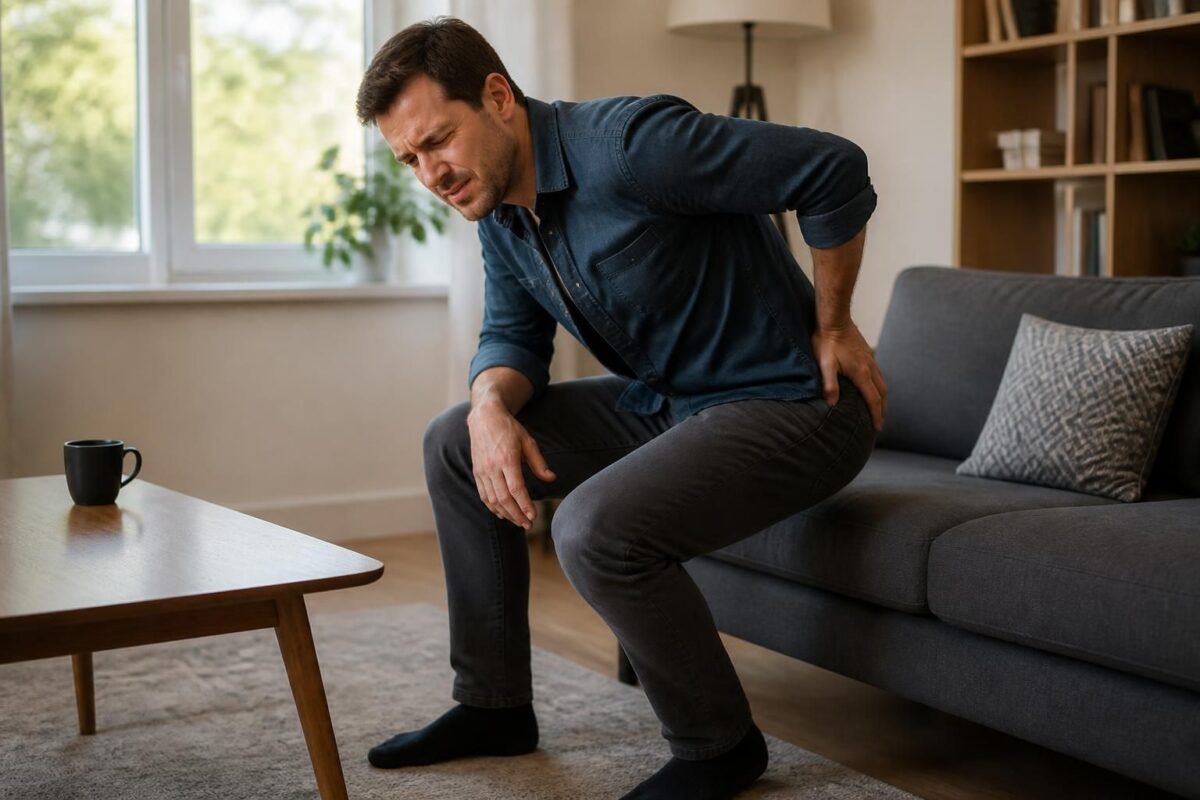
Sciatica and pain when straightening up
IN BRIEF In brief, Sciatica and pain when standing up is a pain radiating along the sciatic nerve, often triggered or worsened by the effort of standing up and maintaining an upright posture. It most often results from a nerve…
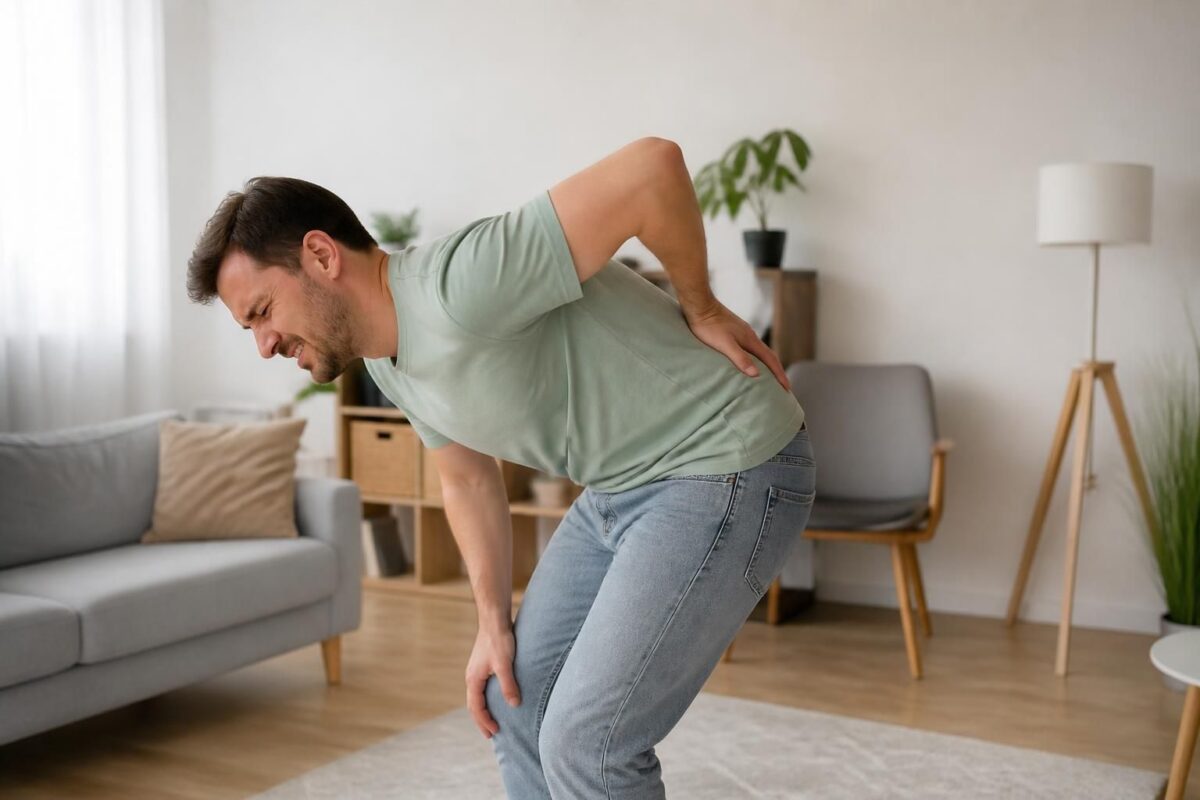
Sciatica and pain when leaning forward
IN BRIEF In brief, Sciatica and pain when bending forward describe lower back pain that radiates into the leg when flexing, often due to irritation of a nerve root or disc compression. This page offers a clear definition, common causes,…
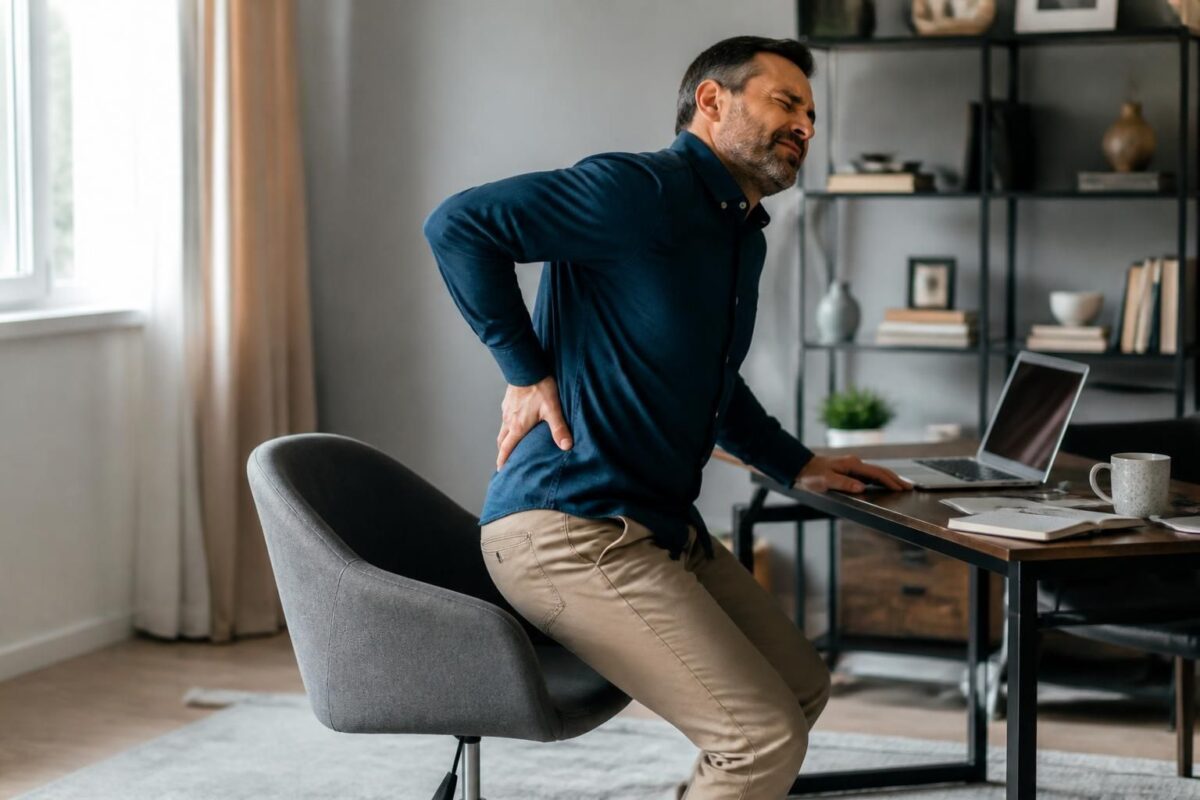
Sciatica and pain when getting up from a chair
IN BRIEF In brief, sciatica and pain when getting up from a chair refer to lower back discomfort triggered by the transition from sitting to standing, often related to irritation of a lumbar nerve root or poor posture. What is…

Sciatica and Pain with Position Change
IN BRIEF In brief, sciatica and pain during position change is pain radiating along the sciatic nerve triggered or worsened by postural changes and prolonged postures. Benefits: identifying positions to avoid and adopting ergonomic adjustments helps reduce pain, improve comfort,…
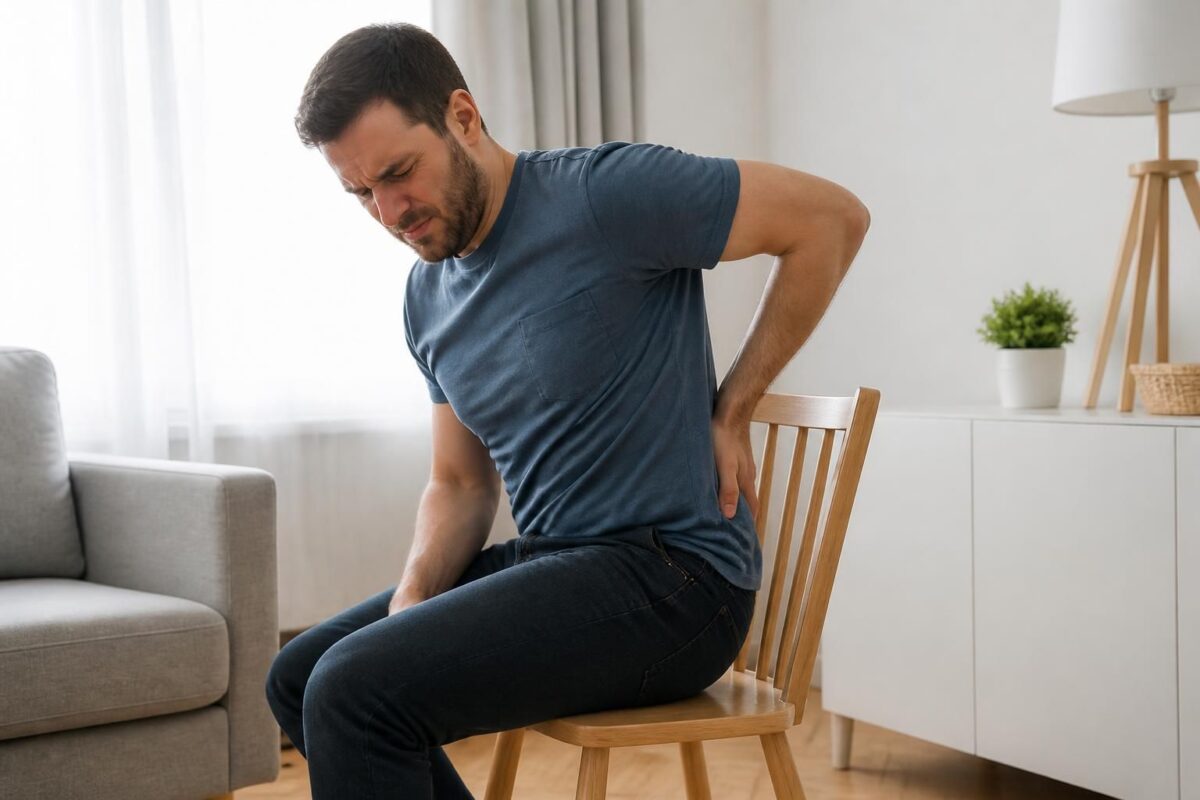
Sciatica and difficulty sitting
IN BRIEF In brief, Sciatica and difficulty sitting describes pain that follows the path of the sciatic nerve, often worsened by prolonged sitting. This approach aims to break up sitting periods and adjust posture to reduce pressure on the lumbar…
Sciatica and difficulty standing upright
IN BRIEF In brief, sciatica and difficulty standing refer to painful radiation starting from the lower back down the leg, which can significantly hinder standing. What is it? A pain that may radiate into the buttock and leg, with sensations…

Sciatica and pain when going down the stairs
IN SHORT Sciatica and the pain felt when going down the stairs is a pain that radiates along the path of the sciatic nerve and can be triggered by descending steps. This condition may be related to causes such as…

Dr Sylvain Desforges, B.Sc., D.O., N.D., osteopath, is the founding president of TAGMED and of the ACMA association. He dedicates his practice to chronic spinal pain, low back pain and symptoms compatible with sciatica, particularly when pain radiates toward the buttock, leg, calf, foot or toes.
Through SOS Sciatique, he publishes educational content on sciatica symptoms, possible causes such as disc herniation, disc narrowing, foraminal stenosis or irritation of a lumbar nerve root, as well as non-surgical approaches that may be considered according to the evaluation. At Clinique TAGMED, care may include, depending on the case, motorized neurovertebral decompression, specific osteopathic care or precision percussion.
For an evaluation related to sciatica treatment in Montreal / Mount Royal or sciatica treatment in Terrebonne, please consult the services available at Clinique TAGMED.
Medical disclaimer
The information published on SOS Sciatique is provided for educational purposes only and does not replace a consultation, diagnosis, opinion or treatment provided by a physician or another authorized healthcare professional. The author of this article is neither a medical doctor nor a specialist in a medical specialty recognized by the Collège des médecins du Québec. The osteopathic, manual medicine or functional support approaches described on this site do not constitute medical acts and are not intended to replace medical follow-up.
Consult a physician or emergency service in cases of loss of bladder or bowel control, anesthesia in the saddle area, significant or progressive weakness in the leg or foot, fever, recent trauma, severe pain or rapid worsening of symptoms. For more details, please read our Legal Notice.