Sciatica in Montreal: pain that wakes you up at night
22/09/2026
Sciatica and pain when straightening up
22/09/2026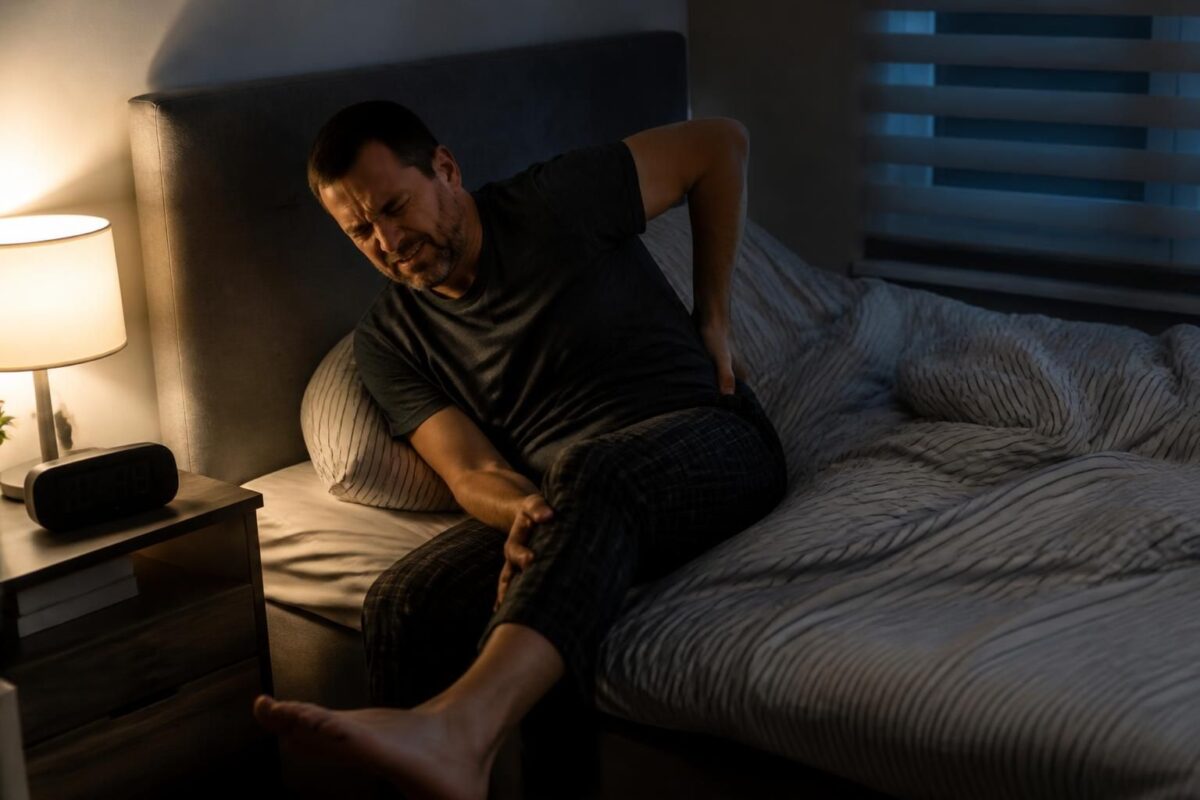
IN BRIEF
| In brief, nocturnal sciatica is pain from the sciatic nerve that occurs at rest and can wake you up at night. In Terrebonne, simple adjustments to posture and sleep environment allow for quick relief, notably by sleeping on your side with a pillow between the knees or on your back with support under the calves. Benefits: reduction of disc pressure, more restorative sleep, and reduction of nightly awakenings. The effectiveness lies in the alignment of the spine and the drainage of inflammatory toxins, promoting muscle relaxation without invasive measures. This approach is accessible in Terrebonne and the region and prioritizes non-invasive and effective solutions to regain rest and limit nerve irritations. |
In Terrebonne, nocturnal sciatica can be a pain that wakes you unexpectedly, disturbing your rest and recovery.
This pain can be explained by nocturnal immobility and the temporary decrease in nutritional support to the nerve, promoting inflammation around the nerve root. Common causes include herniated disc, lumbar osteoarthritis, or spinal stenosis, with radiations that can reach the foot.
Simple gestures can help: sleeping on your side with a pillow between the knees or on your back with support under the calves, opting for a semi-firm mattress, and keeping the room at an appropriate temperature. Avoid sleeping on your stomach and consulting a local professional can speed up the return to restorative sleep.
This broadcast, written by an expert health professional, aims to clarify sciatica in Terrebonne that often wakes the patient at night. It identifies the biological mechanisms and associated postural factors and offers simple and effective choices to improve sleep. The text also highlights the solutions available at TAGMED Clinic, including non-surgical approaches tailored to your local context.
Nocturnal pain related to sciatica can be explained by a nighttime reduction in cortisol and stagnation of inflammatory fluids around the nerve. Lack of movement during sleep promotes the accumulation of toxins and can increase nerve sensitivity. Adjustments to posture and appropriate bedding can quickly reduce pressure on the nerve and improve rest. For cases requiring advanced management, neurovertebral decompression and other expert care are available at TAGMED Clinic.
Nocturnal Causes and Biological Mechanisms
Nocturnal pain rarely disappears without action. The brain focused on lumbar signals can intensify the perception of pain when inflammation progresses without movement. The accumulation of metabolic waste and the local decrease in circulation can worsen irritation of the sciatic nerve during sleep. These mechanisms explain why night is often more painful than day and why an adapted posture can quickly alleviate the pain.
Role of Posture and Bedding
An adapted posture, combined with appropriate bedding, helps maintain spinal alignment and reduce pressure on the nerve. Simple gestures requiring little muscular effort can have an immediate impact:
– Sleeping on your side with a pillow between the knees to limit twisting and preserve lumbar alignment. If possible, placing a pillow under the hips can also optimize support.
– Sleeping on your back with support under the knees to relax the lumbar muscles and relieve intervertebral discs.
– Avoid positions that aggravate lumbar hyperextension and prefer a semi-firm bedding that supports pressure points without blocking natural movements.
The choice of mattress and pillow directly influences nocturnal posture. A mattress that conforms to the body’s contours without restricting mobility and a pillow suited to your morphology support reliable cervical and lumbar alignment.
For more in-depth information on these aspects, useful resources on sleep and nocturnal pain are available at Nocturnal Sciatica and Sleep.
Care Pathways and Options in Local Practice
In case of persistent nocturnal pain, prioritize a specialized evaluation to rule out structural causes such as herniated disc, osteoarthritis, or stenosis. The use of neurovertebral decompression and specific osteopathic approaches may be considered based on clinical evaluation. In Terrebonne, you can turn to services offered at the TAGMED Clinic, or to decompression options offered by specialized centers such as neurovertebral decompression.
To understand the different treatment perspectives and available alternatives, consult resources related to discussions on herniated discs and associated pathologies on the referenced sites, including Sos Hernie Discale and Sos Herniated Disc. These sources complement the information provided here and are part of a coordinated approach with local care.
When to Consult and Nocturnal Warning Signs
Consult promptly if you notice a progressive loss of strength in the leg, sensory disturbances, or altered urinary or bowel control. Pain that persists despite rest or that is accompanied by an acute character may require thorough medical evaluation and possibly imaging. For information on signs requiring prompt attention, visit this article.
Practical Tips and Resources
To sleep better with a sciatica, prioritize suitable bedding, correct posture, and an environment conducive to rest. Additional tips and resources are available on Nocturnal Sciatica and Sleep and on pain in sitting position. For general information and practical resources, visit sciatica in Terrebonne.
Factors to consider for the sleep environment: prioritize a stable temperature (18–20°C), avoid excessive humidity, and ensure easy access to suitable bedding. These details help reduce muscle tension and pressure on the nerve during deep sleep phases.
For more information and clinical stories related to Terrebonne and other similar contexts, you can refer to the relevant resources listed above and those dedicated to decompression and treatment of disc pathologies in authorized fields.
Medical disclaimer: The information and advice provided on this site do not replace the opinion, diagnosis, or treatment of a healthcare professional. Please note that Dr. Sylvain Desforges, osteopath, is neither a doctor of medicine nor a physician, and is not a specialist in a medical specialty as defined by the Collège des médecins du Québec. Manual therapy, functional medicine, and sports medicine as described on this site exclude any medical treatment or diagnosis made by a physician or specialist. Always consult your doctor for any medical questions. For more details, please read our complete Legal Notice.
Sciatica in Terrebonne: pain that awakens at night — focus: nocturnal causes vs practical solutions
- Nighttime cortisol decrease increases inflammation near the nerve
- Lymphatic stagnation and toxin accumulation around the root
- Nerve compression worsened in a lying position
- Tight psoas and lower back stiffness irritating the sciatic nerve
- Side posture with a cushion between the knees to align the spine
- Support under the knees if lying on the back
- Semi-firm bed and suitable pillow for neutral alignment
- Diaphragmatic breathing to reduce cortisol and soothe the nerve

This practical guide, dedicated to Nocturnal Sciatica in Terrebonne, offers concrete recommendations to regain control of your nights. You will discover why pain may intensify at rest, how to adjust your posture and bedding, what quick actions to adopt before bedtime, and when it is useful to consult. All aimed at quickly reducing pressure on the nerve and promoting restorative sleep without heavy medication.
Understanding why Sciatica wakes you up at night in Terrebonne
Nocturnal sciatic pain often worsens when you remain still for long periods. Lack of movement can promote stagnation of inflammatory fluids around the nerve root, while cortisol, the anti-inflammatory hormone, decreases during sleep. As a result, the tissues around the nerve become more sensitive, and the pain wakes up more easily.
At the same time, the structures of the back – disc, joints, and deep muscles – can be stressed by variations in nighttime positioning. Mechanisms like nerve irritation or local compression explain why pain can radiate down to the leg when lying down. Understanding these mechanisms allows for quick action through simple adjustments in posture and bedding.
Sciatica in Terrebonne: symptoms that worsen at the end of the day
IN BRIEF In brief, sciatica is pain associated with the sciatic nerve that starts in the lower back and can radiate down into the buttock and leg. In Terrebonne, it can worsen at the end of the day after prolonged…

Sciatica in Terrebonne: intermittent pain or constant pain?
IN BRIEF Sciatica is pain that follows the path of the sciatic nerve, starting from the lower back to the buttock and leg. In this context, we distinguish between intermittent pain and constant pain, depending on the episodes and causes…
Simple actions to calm pain during the night
Adjusting your sleep posture
To limit pressure on the nerve root, prioritize sleeping on your side with a cushion between your knees. This position helps maintain the natural alignment of the hips and relax the lower back. If the pain is more pronounced on one side, also try the opposite position to identify what works best for you.
In the supine position, place a support under the calves to slightly bend your legs and reduce lumbar curvature. Slightly spread your knees to free up space around the nerve roots and facilitate drainage of tension.
To avoid and quick tips
Avoid sleeping on your stomach, which increases lumbar hyperlordosis and stresses the nerves. If this choice is unavoidable, slide a flat cushion under the abdomen to tilt the pelvis and reduce lumbar pressure.

Sciatica in Terrebonne: burning pain behind the thigh
IN BRIEF In brief, sciatica in Terrebonne, pain described as a burning sensation behind the thigh, is a nerve irradiation due to irritation or compression of a lumbar root that follows the pathway of the sciatic nerve. Benefits: precise local…
Sciatica in Terrebonne: numbness of the big toe and lower back pain
IN BRIEF In brief, sciatica associated with numbness in the big toe and lower back pain is pain that radiates along the sciatic nerve, starting from the lower back and spreading to the buttock, the back of the thigh, and…
Choosing suitable bedding in Terrebonne
The mattress and support
Opt for a semi-firm mattress that offers good support without completely restricting the movements of the pelvis. A mattress that is too soft can cause sinking of the pelvis and worsen lower back pain, while a mattress that is too hard can create unnecessary tension.
Pillow and accessories
Use a pillow suitable for your morphology, ideally memory foam, that supports the neck without excessively elevating the head. Wedge cushions or supports under the legs can improve alignment and promote a calmer night.

Sciatica in Terrebonne: loss of sensation in the toes
IN BRIEF In brief, Sciatica with loss of sensation in the toes describes a compression of the sciatic nerve that runs from the lower back to the feet, causing numbness and tingling. In Terrebonne, non-surgical approaches aim to identify the…
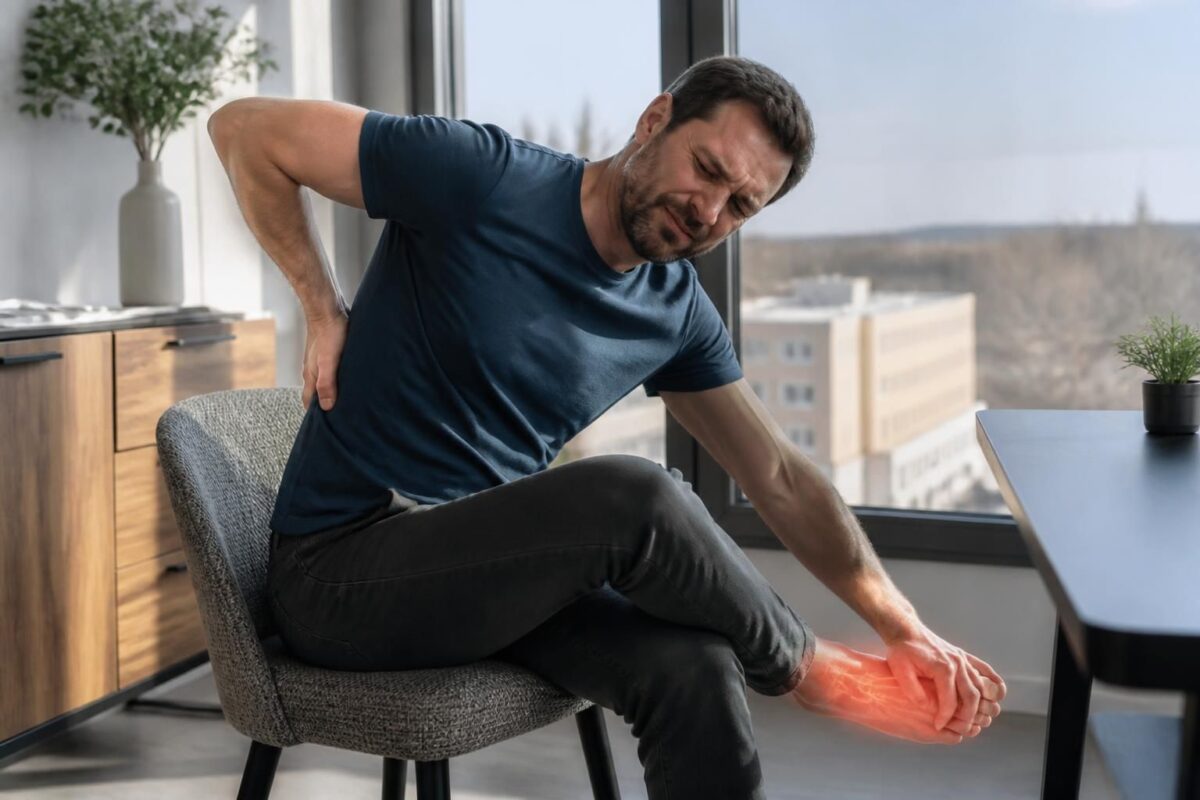
Sciatica in Terrebonne: pain while sitting with tingling in the foot
IN BRIEF In brief, sciatica in Terrebonne is characterized by a pain radiating from the buttock to the leg and foot, triggered or worsened by the sitting position and sometimes accompanied by tingling. This approach suggests sitting adjustments and regular…
When to consult and nighttime warning signs
If nighttime pain is accompanied by progressive loss of strength, incontinence, or intense pain that persists despite measures, quickly consult a healthcare professional. A precise evaluation can identify a herniated disc, stenosis, or other structural causes requiring appropriate treatment.

Sciatica in Terrebonne: leg pain after prolonged standing
IN BRIEF In brief, Sciatica in Terrebonne is pain that starts in the lower back and radiates to the leg after a prolonged standing due to irritation or compression of the sciatic nerve. The key benefits of appropriate support include…

Sciatica in Terrebonne: pain and numbness after walking
IN BRIEF In brief, sciatica in Terrebonne is pain and numbness that follow the path of the sciatic nerve after walking, which may affect the buttock, the back of the thigh, the calf, and the foot. This condition is mainly…
In practice in Terrebonne
A multidisciplinary approach, including physiotherapy, osteopathy, and personalized advice, can help reduce inflammation and strengthen the supporting mechanisms of the back. Request a targeted assessment to tailor movements and bedding to your situation, to prevent nighttime awakenings and regain lasting restorative sleep.
| Aspect | Brief Description |
|---|---|
| Nighttime Origin | Sciatic pain intensifies at rest when cortisol drops and inflammatory toxins stagnate around the nerve. |
| Sleeping Position | Sleeping on your side with a pillow between your knees or on your back with support under your calves immediately reduces disc pressure. |
| Type of Pain | Pain radiating along the sciatic pathway, potentially waking you at night. |
| Aggravating Factors | Nighttime immobility, unsuitable bedding, and tense muscles increase inflammation and nerve compression. |
| Bedding Arrangement | Medium-firm mattress with a suitable pillow and a moderate temperature (18–20°C) limit stiffness. |
| Protective Posture | Lumbar pillow and wedges under the legs stabilize the pelvis and free up nerve space. |
| Circadian Rhythm | The circadian cycle influences inflammation and cortisol; acting on the nighttime routine helps calm pain. |
| Warning Signs | Loss of strength, persistent numbness, incontinence, or unbearable pain require prompt consultation. |
| Quick Actions | Test simple postural adjustments tonight and consult if symptoms worsen or persist. |
Testimonials on sciatica in Terrebonne: pain that wakes you at night
“I live in Terrebonne and my sciatica woke me every night around 2 AM. The pain was so intense that sleep became impossible. After adjusting my posture with a pillow between my knees and trying different positions, I found longer, more restorative sleep.”
“In the midst of a nighttime crisis in Terrebonne, I would wake up suddenly due to a stabbing pain in my leg. A simple change in posture and using a pillow under my knees immediately relieved pressure on the nerve. Since then, my nights are calmer and my awakenings much less painful.”
“Living in Terrebonne, my sciatica pulled me out of bed every night. My therapist showed me how to support my spine and relax the muscles around the nerve. Within weeks, my nighttime awakenings became less frequent and my sleep deeper.”
“I suffered from nighttime awakenings due to nagging low back pain in Terrebonne. Thanks to posture advice and gentle exercises done before bed, the pain doesn’t spike as quickly, and I manage to stay asleep longer. Those around me also notice that I am less tired the next day.”
“In Terrebonne, night was the hardest time for my sciatica. The sessions focused on pelvic stability and spinal alignment. By adopting a lateral position with a pillow between my knees and adjusting my pillow, I regained nights without painful awakenings and woke up feeling lighter.”
Sciatica in Terrebonne: pain that wakes you at night — portrait of Dr. Sylvain Desforges
Dr. Sylvain Desforges, an expert in osteopathy, naturopathy, and manual medicine, is the founding president of TAGMED clinics and the ACMA association. His career is dedicated to innovation in healthcare and the management of chronic pain, with particular attention to low back pain and nighttime sciatica that awaken patients during their rest. His commitment aims to provide evidence-based care to optimize the health and well-being of his patients, including those in Terrebonne facing pain that intensifies at night.
In the Terrebonne area, Dr. Desforges helps individuals whose nighttime awakenings are caused by stubborn sciatica. He understands that nighttime mechanisms often involve an interaction between inflammation, hormonal fluctuations, and lack of movement, which can increase pressure on nerve fibers. His approach is based on accurately assessing muscle tensions, spinal alignment, and nighttime postural dynamics to break the painful cycle that sets in when the body is at rest.
His therapeutic approach combines osteopathy, manual medicine, and naturopathic principles to promote the drainage of metabolic waste and reduce inflammation around the sciatic nerve. Dr. Desforges also integrates advanced technologies, such as motorized spinal decompression, the use of laser protocols, and shock wave stimulation when indicated, to provide measurable and lasting improvement for his patients.
In everyday practice, he prioritizes a comprehensive approach that goes beyond the pain itself. For the residents of Terrebonne, this translates into practical advice on bedding arrangements, nighttime postural adjustments, and simple routines designed to promote restorative sleep. Simple actions, such as using support under the knees or a suitable pillow, can begin to reduce pressure on the discs and soothe irritated nerves from the first nights.
The clinical profile of Dr. Desforges emphasizes patient education and self-management. He focuses on explaining the differences between lumbosciatica and simple sciatica, potential structural causes, and warning signs that require prompt care. In his work in Terrebonne, he emphasizes a partnership between manual therapies, natural approaches, and technological interventions to provide comprehensive and tailored care for each painful nighttime journey.
His goal is clear: to allow each patient to regain pain-free sleep and take back control of their day. By placing the individual at the center of the approach, Dr. Desforges combines scientific expertise with attentive listening to transform nighttime awakenings into a thing of the past and restore quality of life within the Terrebonne community.
This text analyzes Sciatica in Terrebonne when nighttime pain arises and details the mechanisms that fuel it, the simple gestures to adopt before bedtime, the choices of environment, and care pathways. You will discover why pain can intensify at night, how to optimize your posture and bedding, and what resources to consult to regain restorative sleep, all while remaining in a practical and non-surgical approach.
Causes and nocturnal mechanisms
Nocturnal sciatic pain can be driven by biological factors that settle in at rest. The decrease in nighttime cortisol reduces the natural anti-inflammatory effect, making the tissues around the nerve more sensitive. Meanwhile, inactivity promotes the accumulation of metabolic waste in the muscles, which stimulates nerve irritation and increases the perception of pain when the brain is less distracted by external stimuli. For illustration, hormonal variations and reduced nighttime circulation can keep the tissues around the nerve root in a state of tension, amplifying pain during sleep.
Structural causes such as herniated discs, lumbar osteoarthritis, or spinal stenosis also play a role. In a lying position, the absence of movement can accentuate pressure on the sciatic nerve and surrounding nerve networks. Other factors like a tight psoas or musculoskeletal imbalances can also contribute to this sensation of nerve strangulation when the body relaxes at night. To better understand these mechanisms and their signs, you can consult resources such as sciatica and pain that decreases when walking and sciatic pain at night – causes and how to sleep better.
Posture, bedding, and environment for the night
Adopting a favorable posture can immediately reduce pressure on the discs and nerve roots. Sleeping on your side with a pillow between your knees helps maintain hip alignment and limits lumbar twisting. If you prefer sleeping on your back, place a support under your calves to slightly flex your legs and weight down your lower back against the mattress. In both cases, the goal is to reduce disc pressure and limit the tension points that irritate the sciatic nerve.
The choice of bedding is central: a medium-firm mattress that supports without blocking hip movements is generally preferable to excessive rigidity or insufficient softness. The pillow should respect the curvature of the neck and spine; favoring ergonomic or memory foam models can help reduce lumbar and cervical tension.
The temperature and humidity of the room also play a role: aiming for an atmosphere around 18–20°C can promote muscle relaxation and limit nighttime contractions, in addition to a dry but comfortable environment.
Practical tips and routines before bedtime
Simple adaptations can make a significant difference. Abdominal breathing techniques for a few minutes before falling asleep help lower cortisol and reduce anxiety, which can alleviate stiffness and pain. Gentle exercises, inspired by the McKenzie method, can help position the disc more favorably and relieve symptoms when the pain is still localized in the back rather than in the leg.
For tingling and burning, alternating between cold and heat can be effective: gel or ice for short sessions to decrease inflammation, then local heat to relax the muscles. A regular routine of gentle stretching and relaxation can also improve circulation and the drainage of toxins around the lumbar area.
Useful resources for exploring these practical approaches include guides on the relationship between posture and nocturnal pain and tips for nighttime positioning that you can find through articles such as Sciatica at night and Sciatica night – sleeping.
Care pathways and when to consult
If nighttime pain persists despite postural adjustments and sleep hygiene advice, a more thorough examination may be necessary to identify a specific structural cause (herniated disc, stenosis, osteoarthritis). The doctor may propose medication treatments or physiotherapy techniques aimed at strengthening the abdominal belt and stabilizing the back, in order to reduce pressure on the nerve. Specialized resources discuss diagnostic pathways and complementary approaches, such as this general explanation of the diagnostic process and treatment options.
In some cases, dedicated resources and professionals in the field can help assess the impact of nighttime pain and offer tailored solutions. To enhance your understanding and access diverse recommendations, you can consult additional information such as Sciatica and pain when getting up from a chair and Sciatica and difficulty going down stairs.
Additional resources and useful links
To explore the practical aspects and mechanisms surrounding night pain associated with sciatica, here are relevant resources: Sciatica and pain that decreases while walking, Sciatica and night pain – Isiland, UNR Santé, Electric sensation in the calf, Pain when getting up from a chair, Difficulty going down stairs, Walking on a slope – symptoms, Causes and solutions, Isiland, and UNR Santé.

Dr Sylvain Desforges, B.Sc., D.O., N.D., osteopath, is the founding president of TAGMED and of the ACMA association. He dedicates his practice to chronic spinal pain, low back pain and symptoms compatible with sciatica, particularly when pain radiates toward the buttock, leg, calf, foot or toes.
Through SOS Sciatique, he publishes educational content on sciatica symptoms, possible causes such as disc herniation, disc narrowing, foraminal stenosis or irritation of a lumbar nerve root, as well as non-surgical approaches that may be considered according to the evaluation. At Clinique TAGMED, care may include, depending on the case, motorized neurovertebral decompression, specific osteopathic care or precision percussion.
For an evaluation related to sciatica treatment in Montreal / Mount Royal or sciatica treatment in Terrebonne, please consult the services available at Clinique TAGMED.
Medical disclaimer
The information published on SOS Sciatique is provided for educational purposes only and does not replace a consultation, diagnosis, opinion or treatment provided by a physician or another authorized healthcare professional. The author of this article is neither a medical doctor nor a specialist in a medical specialty recognized by the Collège des médecins du Québec. The osteopathic, manual medicine or functional support approaches described on this site do not constitute medical acts and are not intended to replace medical follow-up.
Consult a physician or emergency service in cases of loss of bladder or bowel control, anesthesia in the saddle area, significant or progressive weakness in the leg or foot, fever, recent trauma, severe pain or rapid worsening of symptoms. For more details, please read our Legal Notice.