Intervertebral disc protrusion and neurological symptoms
27/10/2026
IN BRIEF
| A sciatic pain that goes lower after a stretch may indicate that the movement is further irritating the nerve. A stretch should not intensify the pain or cause new tingling sensations: stop it and avoid forcing. Only resume gentle movements if they remain tolerable. If symptoms persist or worsen, seek advice from a healthcare professional. |
If the pain of sciatica goes lower in the leg after a stretch, stop immediately: the movement may worsen your symptoms. Do not force and only resume movements that remain comfortable. If the pain persists or intensifies, seek advice from a healthcare professional.
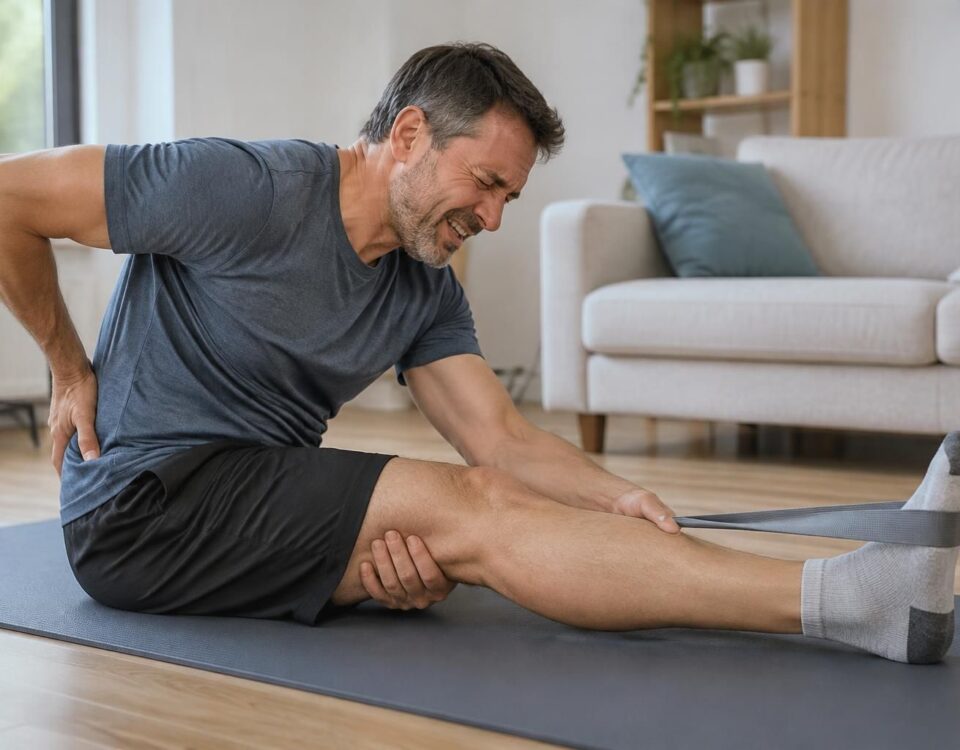
If the sciatic pain goes lower in the leg after a stretch, stop this movement: it may further irritate the tissues or the nerve. This alone does not indicate if an injury has worsened. However, the reaction should be taken seriously. Avoid forcing and seek medical advice if the pain persists, intensifies, or is accompanied by unusual symptoms. Sciatica describes pain that follows the path of the sciatic nerve, from the lower back or buttock down the leg. It may be related to irritation of a lumbar nerve root, especially in certain situations associated with a herniated disc. Only a healthcare professional can assess the cause of your symptoms. After a stretch, pain that radiates to the calf or foot, or becomes sharper, may indicate that the movement is not well tolerated. An increase in tingling or burning sensations is also a reason to stop the stretch. Do not try to “release” the nerve by pulling more. Slowly ease out of the position and stop the stretch that triggered the reaction. Avoid repeating it to “check” if the pain returns. Note the movement performed, where the pain manifests, and how long it takes for it to lessen. This information may help the consulted professional. If the pain returns to its usual level and no worrying signs appear, maintain light daily activities that you tolerate. Avoid prolonged strict rest, but do not engage in activities that increase symptoms. Positions that relieve vary from person to person: some guidelines are presented in this article on positions and gestures that may help. A stretch can put tension on the muscles, the tissues around the nerve, or the nerve itself. If the area is already sensitive, the intensity or range of the movement may exceed your current tolerance. More widespread pain does not automatically prove that the nerve is damaged, but it indicates that the exercise is not suitable for you under these conditions. The response also depends on the cause of the symptoms and the adopted position. For example, some individuals feel more pain while sitting or after prolonged travel. You can consult this information on pain aggravated while sitting and pain after a long journey. Stretches of the piriformis, glutes, or back of the thigh are not suitable for every type of sciatica. If a movement increases pain in the leg, do not continue it without professional advice. To better understand possible reactions, consult this resource on the piriformis stretch and its variable effects. The prone position can also be uncomfortable for some individuals. If it exacerbates your symptoms, do not insist. Additional information is available on sciatic pain in the prone position. No, not the exercise that causes a clear aggravation or pain that goes further down the leg. General recommendations on movements do not replace an evaluation of your situation. Particularly, if a herniated disc is suspected or diagnosed, do not start a stretching or exercise program without the agreement of a professional familiar with your case. The advice and exercises presented in general resources, such as this page on exercises for sciatica or this article on sciatica stretching, may not be suitable for everyone. Choose movements based on your symptoms and seek advice if you are unsure what to avoid. Pain that increases while walking or that changes depending on positions should also be considered. Read this information on pain that worsens while walking and positions that may aggravate or sometimes relieve. For general information on sciatica, you can also consult the MSD Manual. Contact a doctor if the pain remains more intense after stopping the stretch, if it goes further down the leg, or if tingling and numbness increase. Also consult if the pain limits your mobility or significantly disrupts your sleep. A professional can examine your symptoms and determine the appropriate course of action. Seek urgent medical help in case of new or significant weakness in a leg, loss of sensation around the genitals or anus, or difficulty controlling the bladder or bowels. These symptoms require prompt evaluation. Do not force a stretch and do not try to achieve maximum range. Temporarily avoid the movement that triggered the pain, as well as gestures or positions that clearly exacerbate it. Pain radiating down the leg is not a stretching goal to pursue. If you need support, first ask a healthcare professional to check the cause of your symptoms and the movements suitable for your situation. General information available on walking with sciatica does not replace this individual advice. Medical Disclaimer: The information and advice provided on this site do not substitute for the opinion, diagnosis, or treatment of a healthcare professional. Please note that Dr Sylvain Desforges, osteopath, is neither a medical doctor nor a physician, and is not a specialist in any medical specialty as defined by the Collège des médecins du Québec. Manual medicine, functional medicine, and sports medicine as described on this site exclude any treatment or medical diagnosis made by a physician or medical specialist. Always consult your physician for any medical questions. For more details, please read our complete Legal Notice.What to do immediately?
Why can pain extend further after a stretch?
A stretch may not be suitable for everyone
Should you continue exercising when pain spreads?
When to seek medical advice?
How to avoid triggering symptoms again?
- Stop stretching as soon as the pain goes lower in the leg.
- Do not force and do not resume the movement if it rekindles the symptoms.
- Get back into a comfortable position; walk gently only if it does not worsen the pain.
- Consult a professional if symptoms persist or worsen. Significant weakness, numbness between the legs, or urinary/intestinal issues: seek emergency care.

If the pain goes lower in the leg after stretching, stop that movement immediately and do not try to gain range. Pain that extends further, or is accompanied by tingling or burning, may indicate that the exercise is irritating your symptoms. Sciatica does not react the same way in everyone: prioritize gentle movements that suit your situation and seek advice from a professional if the pain persists or intensifies.
Why can the pain go lower after stretching?
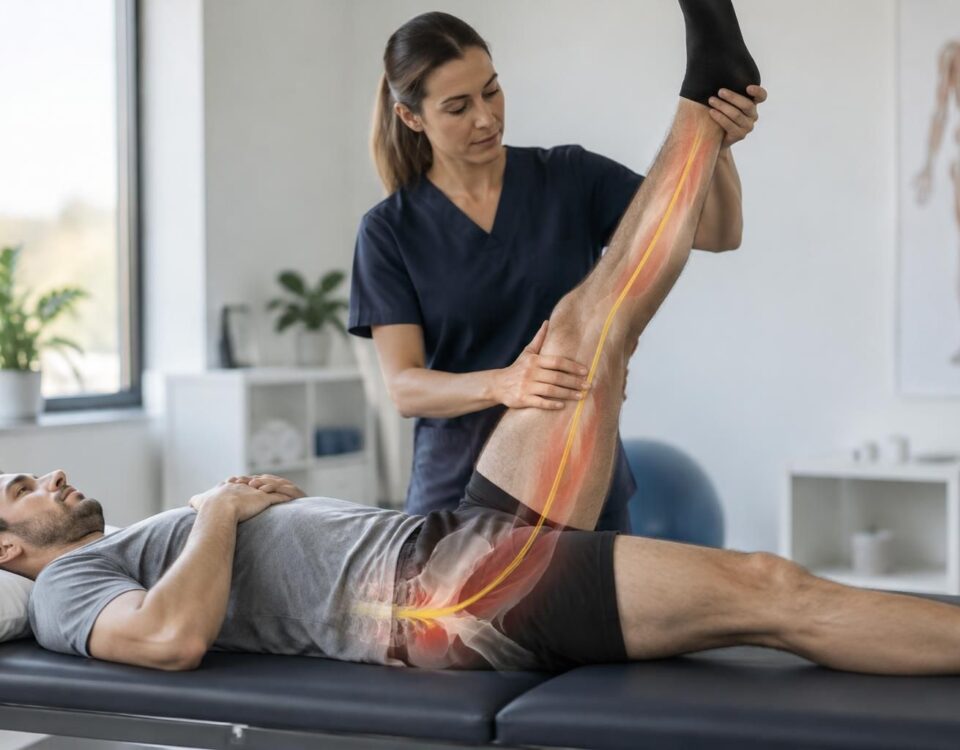
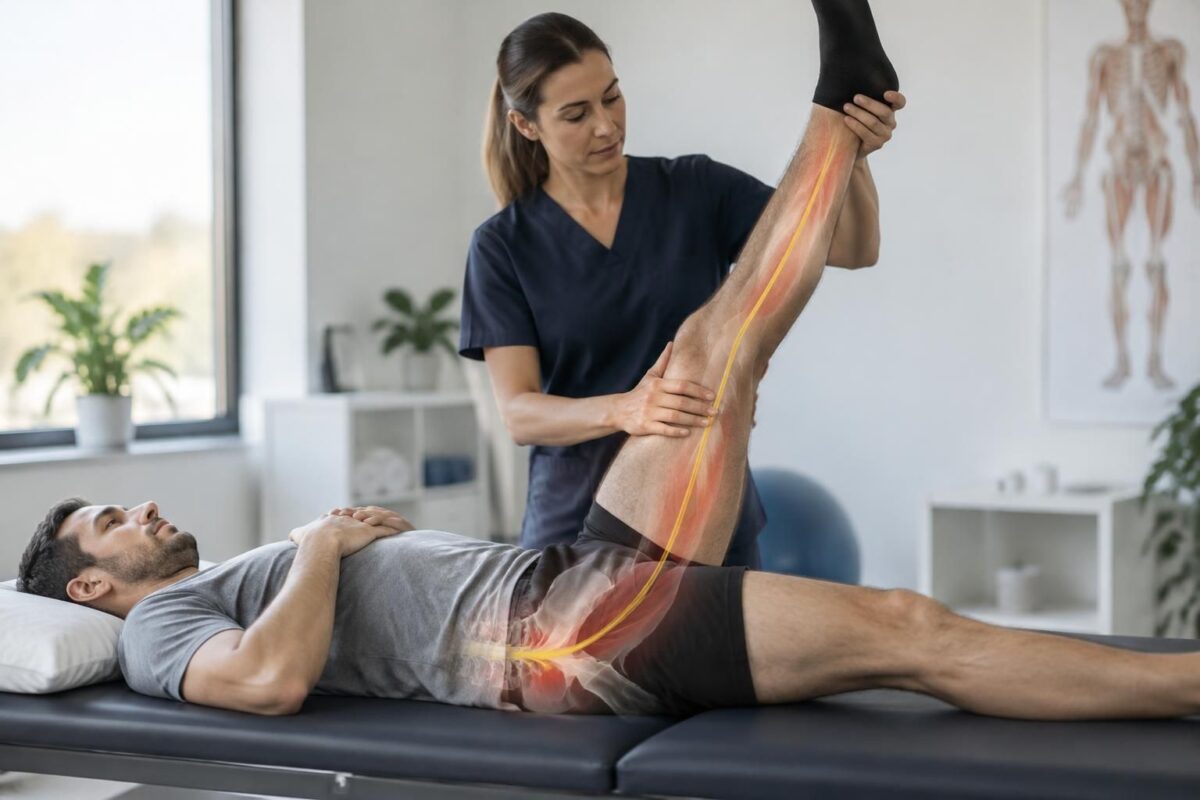
The sciatic nerve starts from the lower back, travels through the buttock, and runs down the back of the thigh, sometimes down to the calf and foot. When it is irritated, certain movements that stretch the leg, back, or gluteal muscles can temporarily increase the tension felt along its path.
A slight stretching sensation is not necessarily concerning, but a pain that progresses down the leg should not be ignored. It does not necessarily mean that an injury has worsened, but it is a signal to stop the exercise and reassess what works for you.

Sciatica and aggressive stretches: possible sign of worsening
IN BRIEF Sciatica is pain that radiates from the lower back or buttock down the leg. Aggressive stretching does not necessarily relieve the nerve and can intensify the pain, especially if it moves further down to the foot or is…

Sciatica and calf stretching: when the pain increases
IN SHORT A calf stretch can exacerbate sciatica if it further irritates the nerve. It should not cause pain that increases or radiates down the leg: stop the movement and do not push through. Stretches may help with some tensions,…
What to do immediately after the onset of this pain?
Stop the movement and monitor the evolution
Gently release the position and return to a comfortable posture. Avoid repeating the stretch to “test” the pain, and do not force to achieve maximum range. Observe whether symptoms decrease after stopping or if they remain pronounced. Note the triggering movement: this information may be useful to a doctor or a physiotherapist.
Resume gentle activity if it remains tolerable
Strict bed rest is usually not the only option. If you can walk without limping and without worsening your symptoms, try brief periods of walking or light movement. Stay within a tolerable intensity: increasing pain during activity or further descending into the leg indicates that you should slow down, modify the movement, or interrupt it.
Sciatica and hamstring stretching: possible nerve tension
IN BRIEF Sciatica can make stretching the hamstrings uncomfortable, as the tension felt may come from the nerve rather than the muscle. A gentle stretch, with a straight back and without seeking maximum range, can help loosen the back of…
Sciatica and piriformis stretching: useful or worsening depending on the case
IN BRIEF Piriformis-related sciatica can cause deep pain in the buttock, sometimes radiating down the back of the thigh. A gentle stretch can loosen the hip and relieve discomfort if the muscle is involved, but it can worsen symptoms if…
How to adapt your exercises for sciatica?
Stretches for the piriformis, glutes, or back of the thigh are not suitable for all types of sciatica. Similarly, back flexion movements, such as bringing the knee toward the chest or adopting the child’s pose, may be poorly tolerated by some individuals, especially when these positions increase pain in the leg.
If an exercise induces pain that radiates lower, tingling, or burning, stop it rather than continue. Do not automatically try another stretch: the choice depends on the cause of the symptoms and their response to movements. A professional can help you distinguish between exercises to avoid and those suitable for your situation.

Sciatica and popular stretches: why to stay cautious
IN BRIEF Sciatica causes pain that radiates from the lower back down the leg. Popular stretches, such as the pigeon pose or hamstring stretches, are not always suitable: pulling on an irritated nerve can worsen the symptoms. Favor gentle movements,…

Sciatica and Pilates: movements to adapt
IN SHORT Sciatica causes pain that can radiate from the lower back down to the leg. The Pilates Reformer can promote a gradual return to movement and strengthen core control, provided that the movements, range, and resistance are adapted. Favor…
When to seek medical advice?
Consult a doctor or physiotherapist if the pain persists, returns with each exercise, intensifies, or limits your daily activities. Seek medical help quickly in case of new or significant weakness in the leg, loss of sensation around the genitals or anus, or difficulty controlling the bladder or bowels.
While waiting for advice, avoid movements that worsen symptoms and follow the recommendations of the professional who knows your history. General advice cannot replace a personalized evaluation, especially if your sciatica is related to a herniated disc or if you have already received specific medical instructions.
| What you observe | What to do |
|---|---|
| The pain goes lower during stretching | Stop the movement and gently return to the starting position. |
| The pain increases or persists after exercise | Do not resume this stretch for now; do not force. |
| Tingling or burning sensation occurs | Stop the exercise and seek advice from a health professional. |
| The symptoms remain mild and quickly ease | Possibly resume more gently, without exceeding a tolerable pain. |
| The pain persists or intensifies | Consult a doctor or physiotherapist to adapt the movements. |

Sciatica and core stability: variable tolerance depending on symptoms
IN BRIEF Core strengthening in case of sciatica consists of progressively strengthening the trunk muscles. Its tolerance varies depending on pain and symptoms: suitable without worsening the pain, it can support mobility and the resumption of activities, but does not,…

Sciatica and lunges: leg pain to watch out for
IN BRIEF Sciatica is pain that starts from the lower back or buttock and radiates down the leg. If a lunge triggers or worsens this pain, stop the movement and adjust your activity: this exercise does not address sciatica. Consult…
Sciatica: when the pain goes lower after stretching
“I wanted to gently stretch my leg”
“I had pain in my buttock and the back of my thigh. After a stretch, it went down to my calf. I stopped immediately and rested. I didn’t know if it was normal, so I sought advice from a health professional.”
“The stretch awakened my tingling”
“During the movement, I felt tingling that went lower in the leg. I understood that I should not force it. I stopped the exercise and monitored the evolution of my symptoms.”
“I thought I needed to pull more”
“I felt tension behind my thigh, so I insisted on going further. The pain then increased and spread to my foot. In hindsight, I should have stopped as soon as the symptoms intensified.”
“The movement did not suit me”
“A stretch recommended for sciatica heightened my pain in the leg. I stopped doing it because everyone reacts differently, and an exercise useful in one case may not be suitable in another.”
“I resumed more cautiously”
“After stopping the stretch that increased my pain, I sought the advice of a physiotherapist. He helped me choose suitable movements and do them without trying to exceed my limit.”
These testimonials are illustrative examples and do not constitute medical advice. A stretch should not cause pain that worsens or travels further down the leg. Stop the movement if aggravation, burning, or tingling occurs, and seek advice from a healthcare professional if symptoms persist or intensify.
Dr Sylvain Desforges: an approach to sciatica and pain that travels down after a stretch
Dr Sylvain Desforges is presented as an expert in osteopathy, naturopathy, and manual medicine. Founding president of TAGMED clinics and the ACMA association, he has dedicated his career to innovation in health and the management of persistent pain. His approach particularly focuses on individuals living with sciatica, lower back pain, or symptoms that extend into the hip and leg.
Sciatica refers to irritation of the sciatic nerve or one of its roots. It can cause pain that starts from the lower back or the hip and travels down the thigh, calf, sometimes to the foot. After a stretch, some people notice that the pain seems to travel lower down the leg or is accompanied by burning sensations, tingling, or pull. This change should be taken seriously: it does not necessarily mean that an injury is worsening, but may indicate that the movement irritates the symptoms further.
As part of his activities dedicated to managing chronic pain, Dr Desforges emphasizes a tailored approach to each patient’s situation. A stretch is not automatically beneficial just because it targets the back, hip, or back of the thigh. If the pain intensifies, spreads further down the leg, or persists after exercise, it is wise to stop the movement rather than push through or multiply repetitions. Tolerance varies by individual, the cause of symptoms, and their progression.
His professional background also includes the integration of advanced technologies, notably spinal decompression, laser, and shockwave therapy. These methods can be considered by professionals as part of an assessment and individualized care plan. However, they do not replace a medical diagnosis and may not be suitable for all causes of sciatic pain. The stated goal of his approach is to rely on evidence-based data to optimize the health and well-being of patients.
In the face of pain that travels further after a stretch, it is important not to try to “unblock” the nerve by pushing the amplitude. Gentle activity may be preferable to strict rest, but it must remain tolerable and not exacerbate symptoms. A healthcare professional can help determine which movements are appropriate, check the possible origin of the pain, and guide the progression of exercises. New weakness in the leg, significant loss of sensation, or urinary or bowel issues require prompt medical evaluation.
The mission assigned to Dr Desforges fits within a vision of care that integrates clinical expertise, innovation, and attention to individual needs. For those facing sciatica after a stretch, this approach reminds us of the importance of adapting exercises, monitoring the progression of symptoms, and seeking advice when pain worsens or does not improve.
Sciatica can cause pain that starts from the lower back or the hip and travels down the leg. Stretching and gentle movements can sometimes help, but if the pain travels lower during or after exercise, it is a sign that effort should be reduced and the movement reassessed rather than trying to stretch further.
What to do if the pain travels lower after a stretch?
A pain that extends further into the thigh, calf, or foot after a stretch may indicate that the movement irritates the symptoms. Stop the exercise if the pain increases, if tingling or a burning sensation appears, or if symptoms persist after releasing the position. Do not push to achieve a greater range: a stretch should remain gentle and not worsen the pain in the leg.
Return to a comfortable position and allow symptoms to return to their usual level. During a potential new attempt, reduce the amplitude or choose a lighter movement. If the pain reappears or travels even lower, do not repeat this stretch without professional advice. Sciatic nerve mobilization exercises are not suitable for all causes of sciatica; supplementary advice on sciatic nerve stretches and movements sometimes used to relieve pain do not replace a personalized assessment.
As long as the pain permits, prioritize daily movements and short periods of activity rather than prolonged strict rest. Walking may be suitable as long as it remains tolerable and does not worsen symptoms. If you are limping, if the pain increases in the car, or if it disrupts your sleep, adjust your activities and seek advice from a doctor or physiotherapist. You can also consult information on pain related to sitting position in the car and sciatica during sleep.
Consult a professional promptly if the pain persists, intensifies, or is accompanied by weakness of the leg. Loss of bladder or bowel control, or numbness in the groin area requires urgent medical attention. Nerve symptoms must be taken seriously, as this resource reminds us of neurological signs not to be underestimated.

Dr Sylvain Desforges, B.Sc., D.O., N.D., osteopath, is the founding president of TAGMED and of the ACMA association. He dedicates his practice to chronic spinal pain, low back pain and symptoms compatible with sciatica, particularly when pain radiates toward the buttock, leg, calf, foot or toes.
Through SOS Sciatique, he publishes educational content on sciatica symptoms, possible causes such as disc herniation, disc narrowing, foraminal stenosis or irritation of a lumbar nerve root, as well as non-surgical approaches that may be considered according to the evaluation. At Clinique TAGMED, care may include, depending on the case, motorized neurovertebral decompression, specific osteopathic care or precision percussion.
For an evaluation related to sciatica treatment in Montreal / Mount Royal or sciatica treatment in Terrebonne, please consult the services available at Clinique TAGMED.
Medical disclaimer
The information published on SOS Sciatique is provided for educational purposes only and does not replace a consultation, diagnosis, opinion or treatment provided by a physician or another authorized healthcare professional. The author of this article is neither a medical doctor nor a specialist in a medical specialty recognized by the Collège des médecins du Québec. The osteopathic, manual medicine or functional support approaches described on this site do not constitute medical acts and are not intended to replace medical follow-up.
Consult a physician or emergency service in cases of loss of bladder or bowel control, anesthesia in the saddle area, significant or progressive weakness in the leg or foot, fever, recent trauma, severe pain or rapid worsening of symptoms. For more details, please read our Legal Notice.