Sciatica and generic exercises: why they are not suitable for everyone
28/10/2026
Sciatica in Terrebonne: L4-L5 protrusion and leg pain
29/10/2026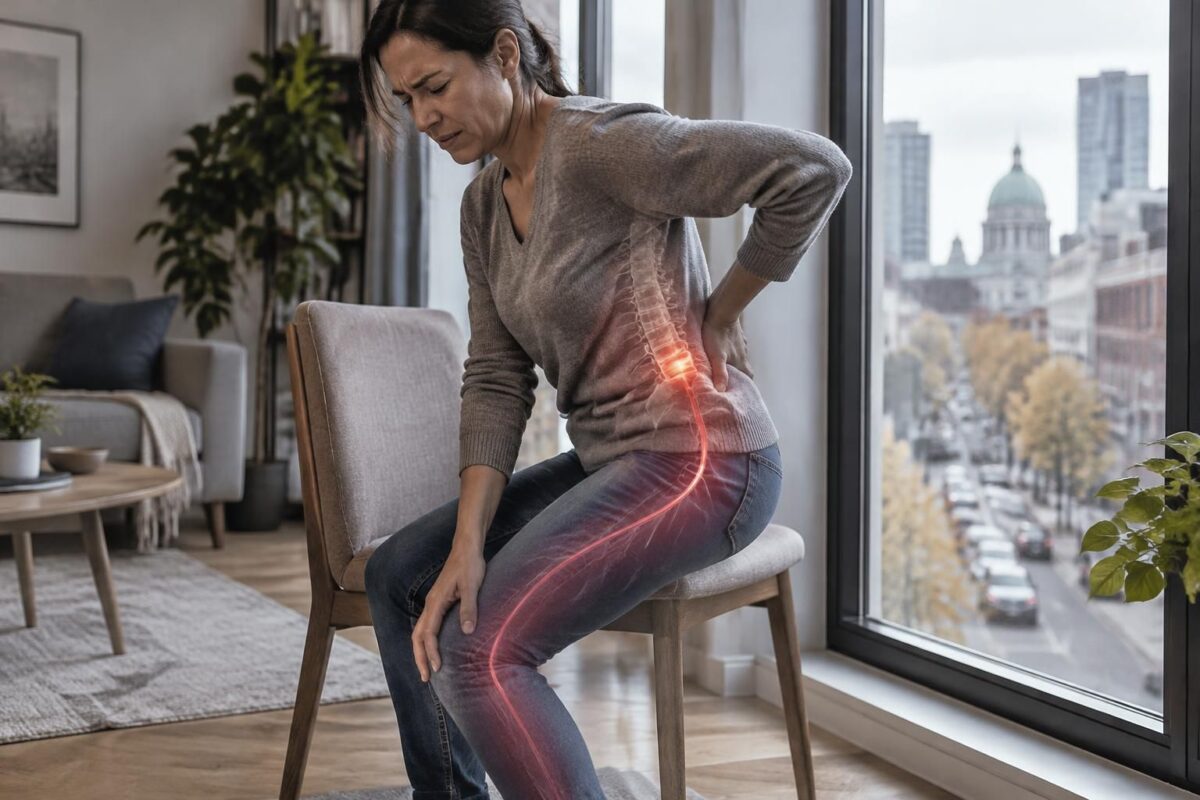
IN BRIEF
| An L4-L5 disc protrusion is a bulging of the disc that can irritate a nerve root and cause sciatica, with pain in the buttock and leg. However, it does not always cause symptoms. In Montreal, an assessment can clarify the origin of the pain and guide the suitable management options, without assuming that surgery is necessary. |
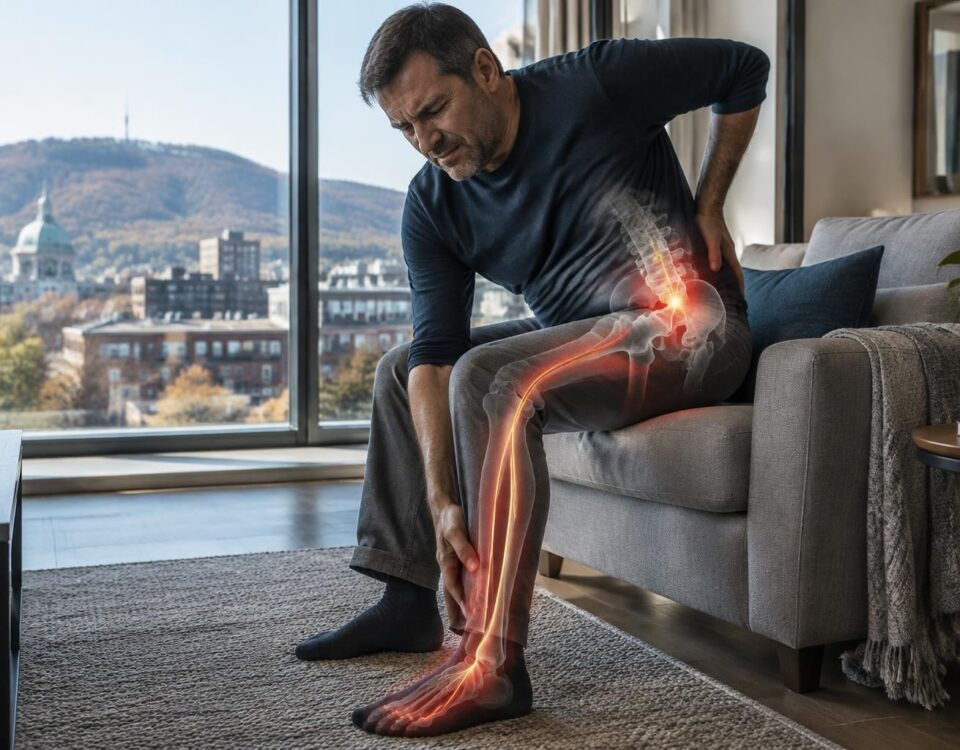
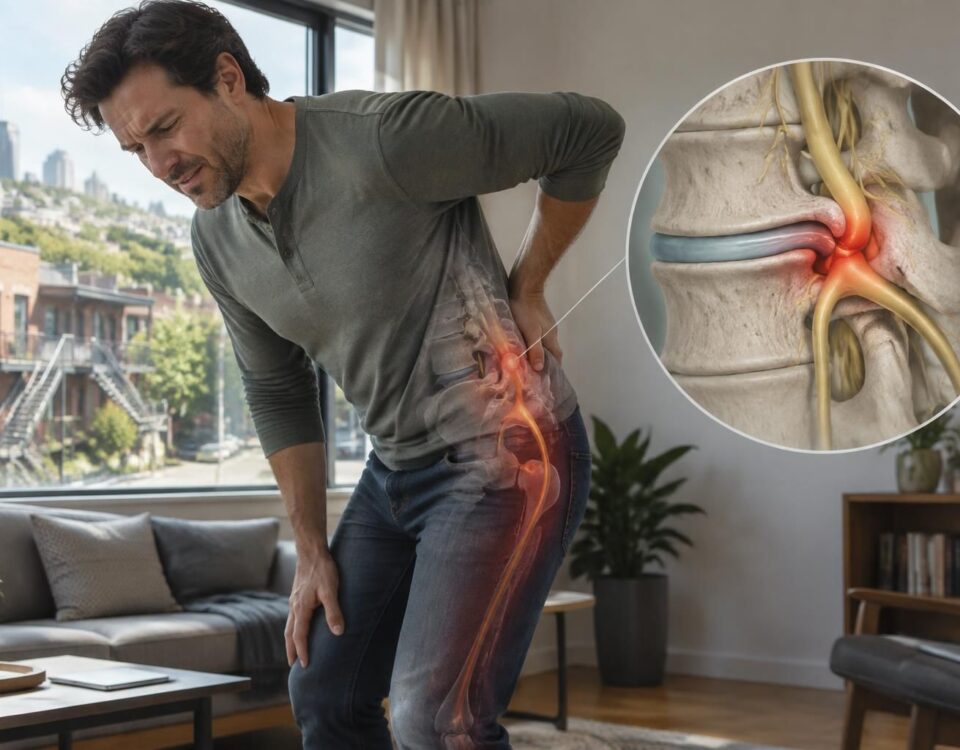
An L4-L5 disc protrusion can irritate a nerve root and cause sciatica, with pain that starts in the lower back or buttock and radiates down the leg. However, a protrusion visible on imaging does not always cause symptoms: the assessment considers the pain pathway, sensitivity, and strength.
In Montreal, a personalized assessment can help determine suitable non-surgical options for your situation. Consult a doctor promptly if there is significant or progressive weakness, loss of bladder or bowel control, or numbness around the saddle area.
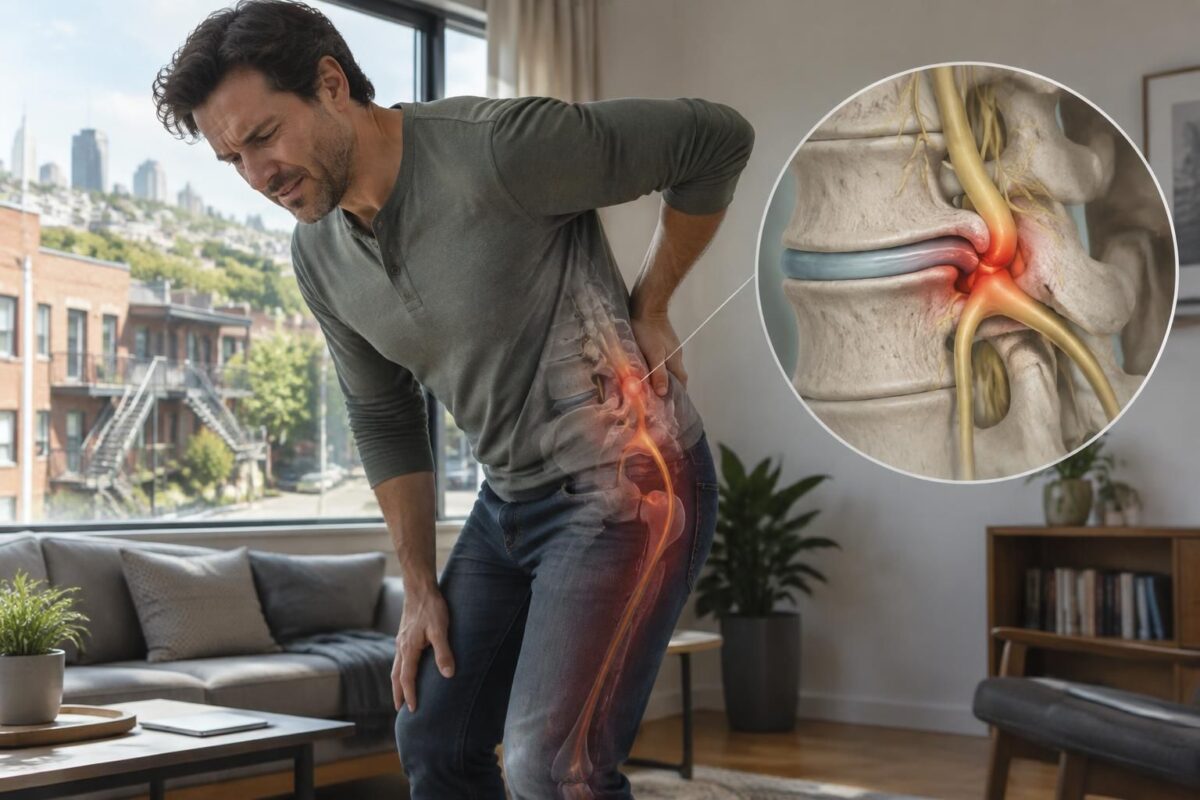
An L4-L5 disc protrusion may be visible on imaging without causing pain. However, if it irritates or compresses a nerve root, it can contribute to pain that starts in the lower back or buttock and radiates down the leg. In Montreal, the assessment takes into account symptoms, strength, sensitivity, and reflexes: imaging alone cannot determine the cause of the pain. The lumbar vertebrae are denoted by the letter L and numbered from L1 to L5. The L4-L5 level corresponds to the disc located between the last two lumbar vertebrae. A protrusion is a bulging of the disc. It does not automatically mean that a nerve is affected or that it explains the symptoms. A protrusion can be present without pain. To link it to sciatica, the healthcare professional compares the imaging result with the pain’s pathway and the signs observed during examination. To learn more about this difference, consult the resources on L4-L5 disc protrusion and on L4-L5 protrusion symptoms and management options. A nerve root can be irritated or compressed near the disc. This irritation can produce radicular pain: pain that follows part of the nerve’s pathway in the buttock and leg. It is sometimes described as burning, shooting, or sharp pain. Tingling, numbness, or weakness may also occur. The pathway varies depending on the affected root. Pain related to L4-L5 can radiate down the leg, but symptoms do not always allow for a clear determination of the affected root. The L5-S1 level may also be involved. An overview of the lumbar levels associated with sciatica is available in this guide on L4-L5 and L5-S1 sciatica in Montreal and in this guide on sciatica related to a herniated disc. Pain that stays in the lower back does not necessarily correspond to sciatica. Sciatica generally describes pain that radiates into the buttock and leg. Hip pain can have several origins; the examination helps distinguish local pain from nerve irritation. Also check the information on hip pain or nerve radiation. The pain pathway may change over time. Some people notice pain that radiates down the leg and then returns up towards the buttock. Heel pain or a heavy leg sensation may also accompany different presentations. These signs do not, by themselves, confirm a protrusion; they must be interpreted with the overall examination. Refer to the pages on pain that returns to the buttock, heavy or painful leg, and persistent pain in the heel. The assessment begins with questions about the onset of the pain, its pathway, its evolution, and its effect on daily activities. The professional then checks sensitivity, muscle strength, and certain reflexes. They may also examine gait and perform clinical tests suitable for the situation. An MRI or CT scan is not necessary in all cases. A doctor may request imaging if the symptoms persist, if the examination reveals neurological deficits, or if the results can guide management. Electrodiagnostic tests can sometimes help specify the level of involvement or distinguish radiculopathy from another nerve issue. Leg weakness requires particular attention, especially if it progresses or interferes with walking. To better understand this sign, consult the information on leg weakness and confidence in walking. Management depends on the examination, the intensity of the symptoms, and their evolution. A doctor can discuss suitable options, including measures to relieve pain and further examinations when warranted. Do not start or change a medication without ensuring it is suitable for you, especially in the presence of other health issues or ongoing treatments. Surgery is not indicated for every protrusion. A doctor may consider it, particularly in the presence of significant or progressive weakness, certain neurological deficits, or persistent pain that does not respond to conservative care. The decision depends on the symptoms, the examination, and the imaging. At TAGMED Clinic, an assessment can allow for discussing suitable non-surgical approaches, such as specific osteopathy or motorized neurovertebral decompression, when the professional deems these options appropriate. These services do not replace a medical diagnosis or follow-up by a doctor. You can consult the TAGMED Clinic guide on sciatica and herniated discs and then check the services offered in Montreal or Terrebonne. Consult a doctor or emergency service immediately in case of difficulty controlling urine or bowel movements, numbness around the genitals or anus, or significant or worsening weakness in the leg or foot. Severe pain, fever, recent trauma, or rapid worsening also requires medical evaluation. Sylvain Desforges, B.Sc., D.O., N.D., Doctor of Osteopathy and Naturopath, is the founding president of TAGMED and the ACMA association. His practice focuses on chronic pain of the spine, lower back pain, and pain associated with sciatica, particularly when the pain radiates down to the buttock, leg, calf, foot, or toes. Through SOS Sciatique, he publishes educational content on the symptoms of sciatica, its possible causes — including herniated discs, disc protrusions, foraminal stenosis, or irritation of a lumbar nerve root — and the non-surgical approaches that can be considered after an evaluation. At TAGMED Clinic, care may include, depending on the case, motorized neuro-vertebral decompression, specific osteopathy, or precise percussion. For an assessment related to sciatica treatment in Montreal / Mont-Royal or sciatica treatment in Terrebonne, consult the available services at TAGMED Clinic. The information published on SOS Sciatique is provided for educational purposes. It does not replace a consultation, diagnosis, advice, or treatment performed by a physician or another licensed health professional. The author of this article is neither a doctor nor a specialist in a medical specialty recognized by the Collège des médecins du Québec. The approaches of osteopathy, manual medicine, or functional support described on this site do not constitute medical acts and are not intended to replace medical follow-up. Consult a physician or an emergency service if concerning symptoms arise. For more details, please read our Legal Notice. Medical disclaimer: The information and advice provided on this site do not replace the advice, diagnosis, or treatment of a health professional. Please note that Sylvain Desforges, B.Sc., D.O., N.D., Doctor of Osteopathy, is neither a medical doctor nor a physician, and is not a specialist in a medical specialty as defined by the Collège des médecins du Québec. Manual medicine, functional medicine, and sports medicine as described on this site exclude any treatment or medical diagnosis made by a physician or medical specialist. Always consult your doctor for any medical questions. For more details, please read our complete Legal Notice.What does an L4-L5 disc protrusion mean?
How can an L4-L5 protrusion cause pain in the leg?
Lower back pain or sciatica pain?
How is the assessment conducted in Montreal?
What management options can be considered?
When should you seek urgent medical help?
About the author
Medical Disclaimer
- L4-L5 Protrusion: disc bulging, which does not always cause symptoms.
- If a nerve root is irritated, the pain may start from the lower back and radiate into the buttock and leg.
- Numbness, tingling, or weakness may also occur.
- The path of the pain and the examination of strength, sensitivity, and reflexes help guide the assessment.
- An MRI is not systematic: it may be considered if symptoms persist or if neurological signs are present.
- In Montreal, seek a professional opinion; consult urgently in case of significant weakness or bowel or bladder issues.

An L4-L5 disc protrusion can irritate a nerve root and cause pain that starts from the lower back or buttock and radiates into the leg. However, a protrusion visible on imaging is not always the cause of symptoms. In Montreal, the priority is therefore to evaluate pain, strength, and sensitivity, and then to tailor care to your situation rather than relying solely on MRI results.
Understanding an L4-L5 Protrusion
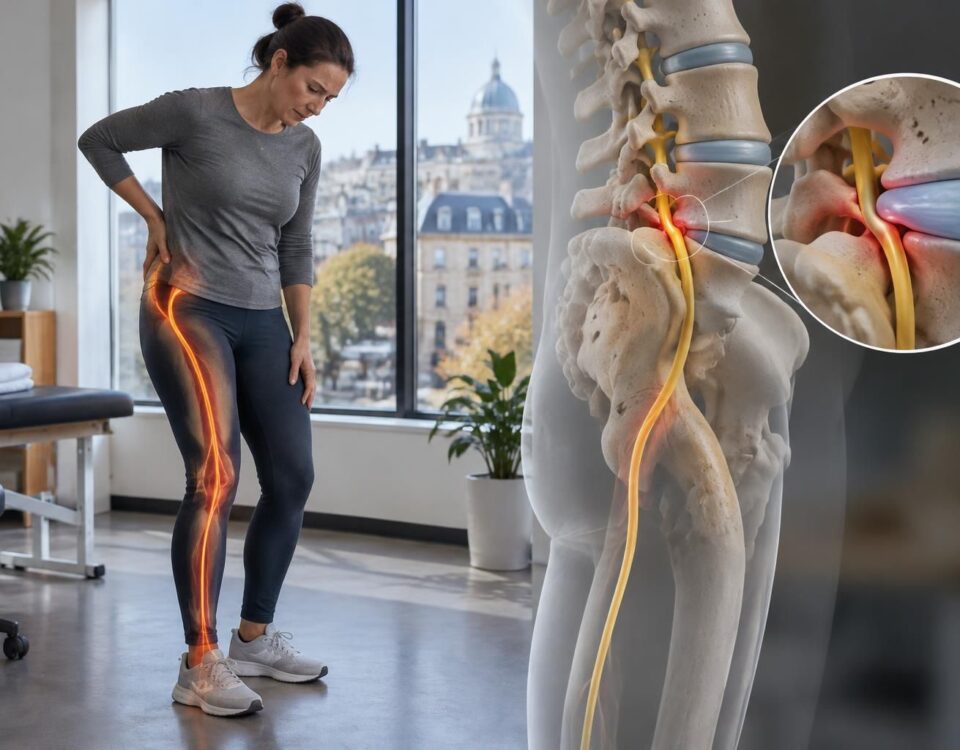
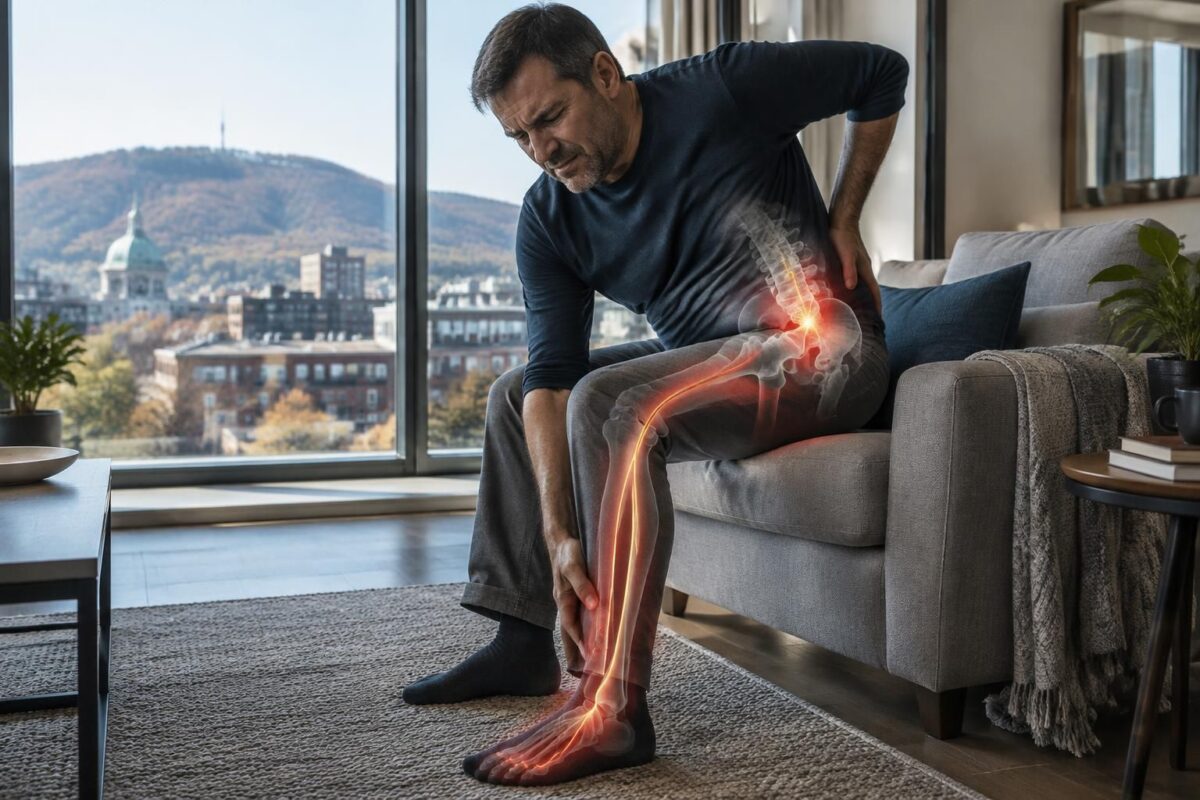
L4-L5 refers to the disc located between the fourth and fifth lumbar vertebrae. A protrusion corresponds to a bulging of the disc; it does not automatically mean that a nerve is compressed. If a nerve root is irritated, the pain may radiate to the buttock and leg, sometimes down to the foot. Numbness, tingling, or weakness may also occur.
The path of the symptoms is not sufficient to confirm which nerve root is affected. A healthcare professional evaluates sensitivity, muscle strength, and reflexes, and checks if the signs align with imaging. Pain that remains in the lower back, without radiation into the leg, may correspond to another issue than radiculopathy.
Sciatica in Montreal: L5-S1 Herniation and Pain Towards the Foot
IN BRIEF A L5-S1 disc herniation can irritate the S1 nerve root and cause sciatica in Montreal, with pain or numbness radiating down to the calf, heel, or foot. The assessment correlates symptoms, strength, and sensitivity with imaging, if relevant;…
Sciatica in Montreal: what “disc-root conflict” means
IN BRIEF A disc-root conflict refers to possible contact or pressure between an intervertebral disc and a nerve root. In Montreal, this mention in the MRI can help understand a sciatica, but does not by itself prove that the disc…
What to do at the onset of pain?
Stay active according to tolerance
If there are no signs of emergency, try to continue light activities and temporarily modify those that significantly worsen the pain. Short walks and regular changes in position may be preferable to prolonged bed rest. Reduce heavy lifting, repeated twisting, and movements that trigger marked radiation, and then gradually resume your activities as you improve.
Seek advice before choosing a treatment
A doctor or another licensed professional can determine whether further examination is indicated. An MRI or CT scan is not always necessary right away; it may be considered when symptoms persist, worsen, or are accompanied by neurological deficits. Medications, injections, and physical therapy should be discussed with a professional who will consider your medical history and contraindications.
If you are seeking care in Montreal or Mont-Royal, prioritize an individualized assessment. At TAGMED Clinic, non-surgical approaches, such as specific osteopathy or motorized neuro-vertebral decompression, may be considered based on your case and after evaluation. They do not replace a medical diagnosis or follow-up with a doctor.
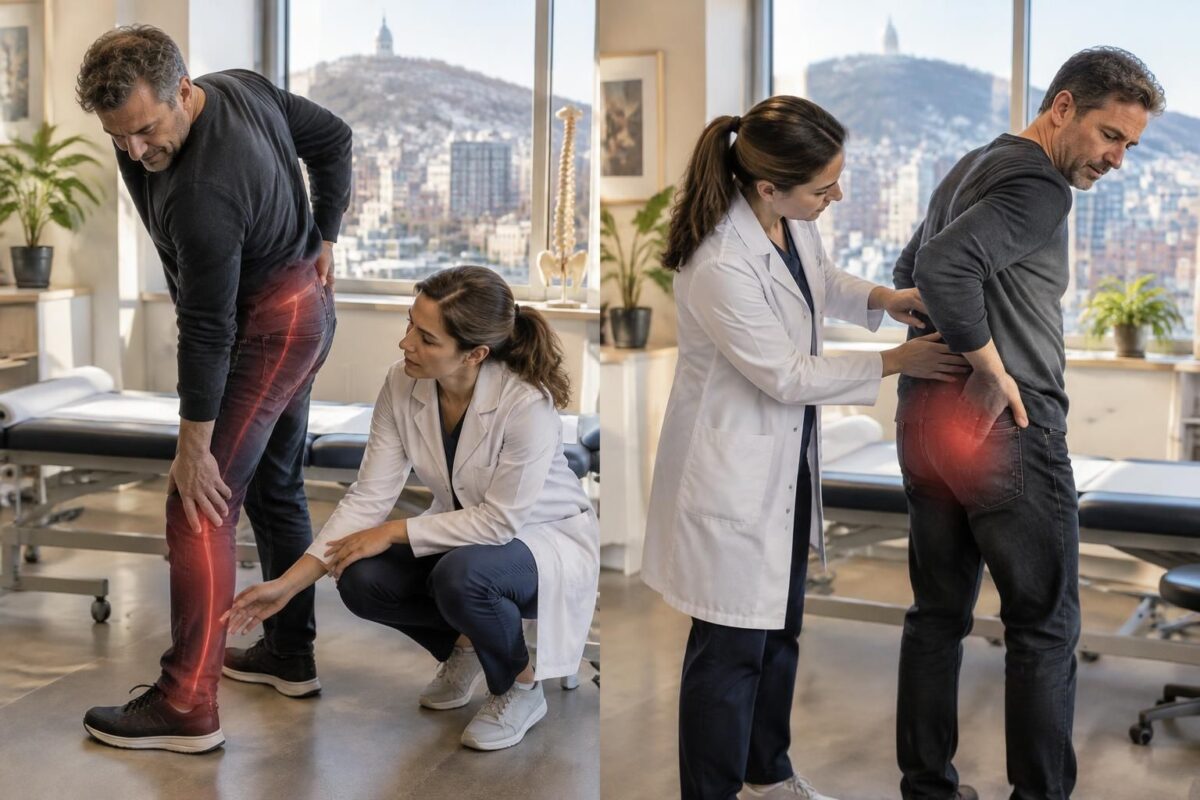
Sciatica in Montreal: radicular pain versus referred pain
IN BRIEF Radicular sciatica corresponds to irritation of a nerve root, while referred pain can spread to the buttock or leg without direct nerve involvement. In Montreal, distinguishing these pains helps guide the evaluation by linking the symptom route to…
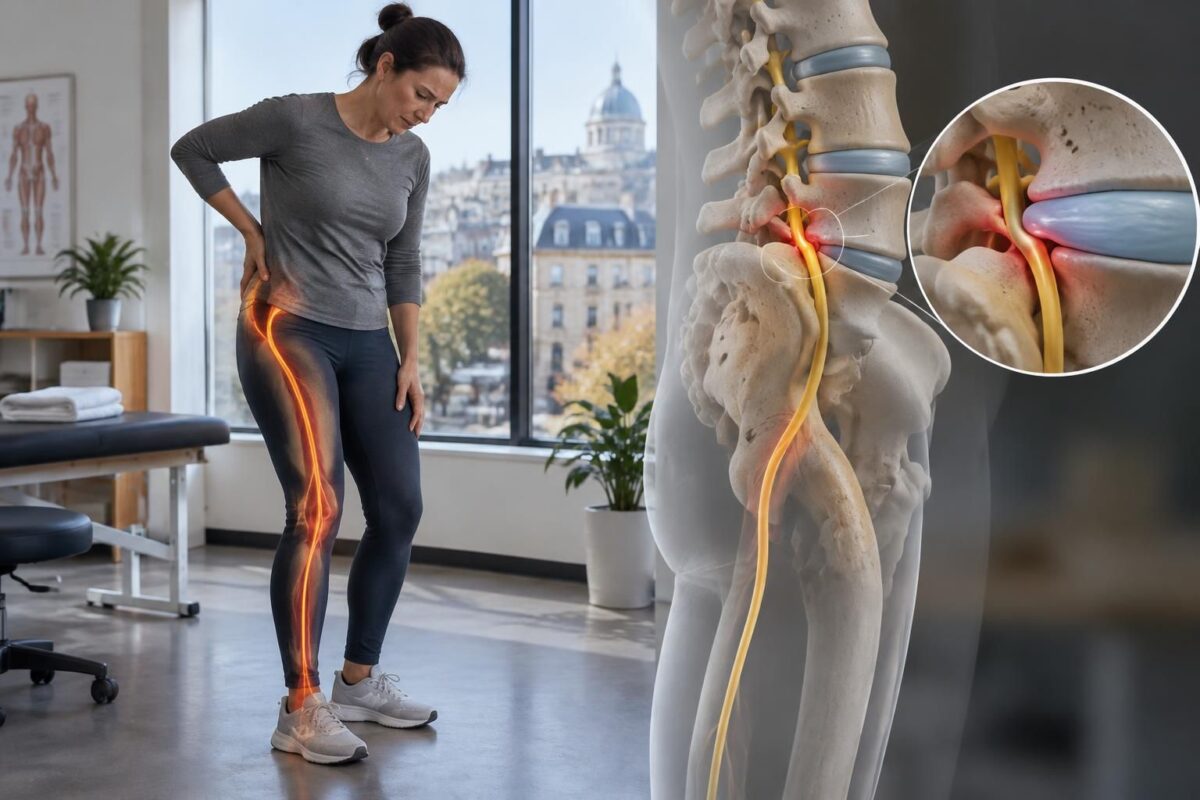
Sciatica in Montreal: nerve root, disc, and foramen explained simply
IN BRIEF Sciatica corresponds to pain linked to the irritation of a nerve root, sometimes near a lumbar disc or a narrowed foramen. In Montreal, distinguishing an L4-L5 issue that may affect the L5 root from an L5-S1 problem that…
When to seek prompt consultation?
Consult an emergency service without delay if you experience new difficulty urinating, loss of bowel control, loss of sensation around the anus or genitals, or significant or progressive weakness of the leg or foot. A fever, recent trauma, severe pain, or rapid worsening also require medical evaluation. These signs should not be treated solely by manual therapy or exercises.

Sciatica in Montreal: understanding L5-S1 foraminal compression
IN BRIEF L5-S1 foraminal compression is a narrowing of the opening where a nerve root exits, which can cause sciatica with pain, tingling, or weakness in the buttock and leg. In Montreal, an assessment allows for correlating symptoms, clinical examination,…

Sciatica in Montreal: why L5-S1 is often involved
IN BRIEF The sciatica L5-S1 often corresponds to irritation of the S1 root, sometimes related to a herniated disc. The pain may start in the buttock and descend behind the thigh to the calf or the foot. In Montreal, understanding…
Adapting activities and work
For work tasks, temporarily limit activities that trigger pain and seek advice from your doctor or occupational health professional about possible adjustments. The duration of a leave depends on the type of work and the progression of symptoms. A gradual return, with adjusted tasks when possible, can help avoid prolonging inactivity.
| Clinical marker | What it may indicate |
|---|---|
| L4-L5 protrusion | A bulging disc may irritate a nerve root. |
| Pain in the buttock and leg | A path consistent with sciatica. |
| Tingling or numbness | A possible impairment of nerve sensitivity. |
| Weakness in the leg or foot | A motor deficit to be evaluated quickly. |
| Pain only in the lower back | Less suggestive of radiculopathy. |
| Evaluation in Montreal | The clinical examination guides the next steps. |
| MRI or other tests | Considered based on the examination, duration, and evolution of symptoms. |
| Urinary problems or significant loss of strength | Medical emergency: consult without delay. |
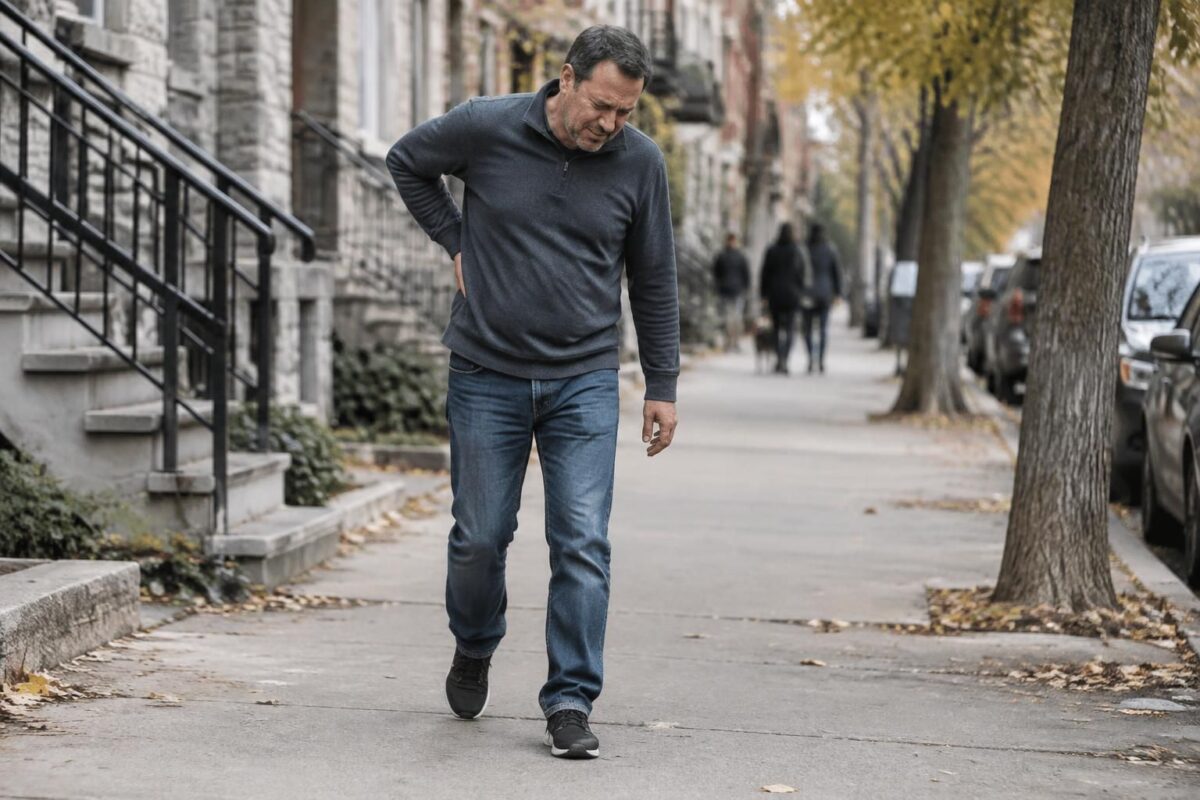
Sciatica in Montreal: L5 and difficulty lifting the foot
IN BRIEF The difficulty in lifting the foot with sciatica can indicate weakness related to the involvement of the L5 root, sometimes caused by a herniated disc. This foot drop increases the risk of falling and requires prompt medical evaluation;…

Sciatica in Montreal: S1 and difficulty rising up on the toes
IN BRIEF S1 sciatica can cause pain from the buttock to the calf and foot, as well as difficulty getting on tiptoe. This weakness may suggest irritation of the S1 nerve root, but is not sufficient to establish a diagnosis.…
Illustrative testimonials: sciatica in Montreal, L4-L5 protrusion, and leg pain
Important note: the accounts below are fictional examples, written for informational purposes. They do not come from real patients and do not describe guaranteed outcomes.
“The pain ran from my buttock down to my calf”
For several weeks, I had pain in my lower back and discomfort that extended into my buttock and the back of my leg. An MRI showed an L4-L5 disc protrusion. I realized that an MRI image alone is not enough to explain the symptoms: it is also necessary to check the strength, sensitivity, and reflexes, and then correlate these results with the path of the pain.
“I wanted to know if my protrusion was really the cause”
In Montreal, I was seeking an evaluation because my pain varied with movements and was bothering me at work. I was told that an L4-L5 protrusion can sometimes irritate or compress a nerve root, but it can also be present without causing symptoms. The clinical examination and the complete file help determine if the imaging results actually correspond to the pain in the leg.
“Staying active seemed difficult at first”
When the pain was strong, I tended to want to stay lying down. I learned that management depends on the intensity of the symptoms and the evaluation, and that a gradual return to tolerated activities may be preferable to prolonged immobility. Exercises and physiotherapy may be considered depending on the situation; a health professional can help me choose an appropriate approach.
“The pain didn’t always follow the same path”
Sometimes, it followed the back of the leg; at other times, I mainly felt discomfort in my thigh. I understood that the path, sensitivity, strength, and reflexes contribute to determining which nerve root could be involved. Pain at the front of the thigh does not necessarily correspond to sciatica and deserves appropriate evaluation.
An L4-L5 disc protrusion does not automatically mean that intervention is necessary. The choice of management depends on the symptoms, their progression, and the findings from the examination. Imaging or complementary tests may be indicated by a doctor when symptoms persist, worsen, or are accompanied by neurological signs.
For an evaluation of lower back pain radiating into the leg in Montreal or Mont-Royal, TAGMED Clinic offers non-surgical support services depending on the situation, which may include specific osteopathy or motorized neurovertebral decompression. These approaches do not replace a medical diagnosis or follow-up by a licensed health professional.
Consult a doctor or emergency service quickly if you experience difficulty urinating, loss of bowel control, numbness around the anus or genitals, or significant or progressive weakness in the leg or foot. Rapid deterioration, fever, or recent trauma also require medical evaluation.
About the author
Sylvain Desforges, B.Sc., D.O., N.D., Doctor of Osteopathy and naturopath, is the founding president of TAGMED and the ACMA association. His practice focuses particularly on chronic spinal pain, lower back pain, and pain consistent with sciatica. Through SOS Sciatique, he publishes educational content on symptoms, possible causes, and non-surgical approaches that may be considered depending on the assessment.
Medical disclaimer
The information presented is educational and does not substitute for a consultation, diagnosis, or treatment by a doctor or another licensed health professional. The author is neither a doctor nor a specialist in a medical field recognized by the Collège des médecins du Québec. Osteopathy, manual medicine, or functional support approaches are not medical acts and do not replace medical follow-up.
In Montreal, pain that starts in the lower back or buttock and radiates into the leg may suggest sciatica. When imaging mentions an L4-L5 disc protrusion, it is natural to wonder if this finding explains the symptoms. However, the answer depends on the clinical examination: a disc can bulge without affecting a nerve root and without causing pain. The image must therefore be interpreted in relation to the trajectory of the symptoms, strength, sensitivity, and reflexes.
The term L4-L5 refers to the disc located between the fourth and fifth lumbar vertebrae. A protrusion corresponds to a bulging of the disc whose envelope remains intact. If this bulge irritates or compresses a nerve root, pain may radiate from the buttock to the thigh, leg, or foot. It can be burning, stabbing, or accompanied by tingling and numbness. Weakness or changes in reflexes may also be present.
The path of the pain alone is not enough to confirm that an L4-L5 protrusion is involved. Other changes, such as a herniated disc, bone spurs, or narrowing of the canal or a nerve passage, can also contribute to radicular symptoms. Conversely, pain limited to the lower back without radiation into the leg does not necessarily correspond to sciatica. An individual evaluation helps distinguish these situations and determine the next steps.
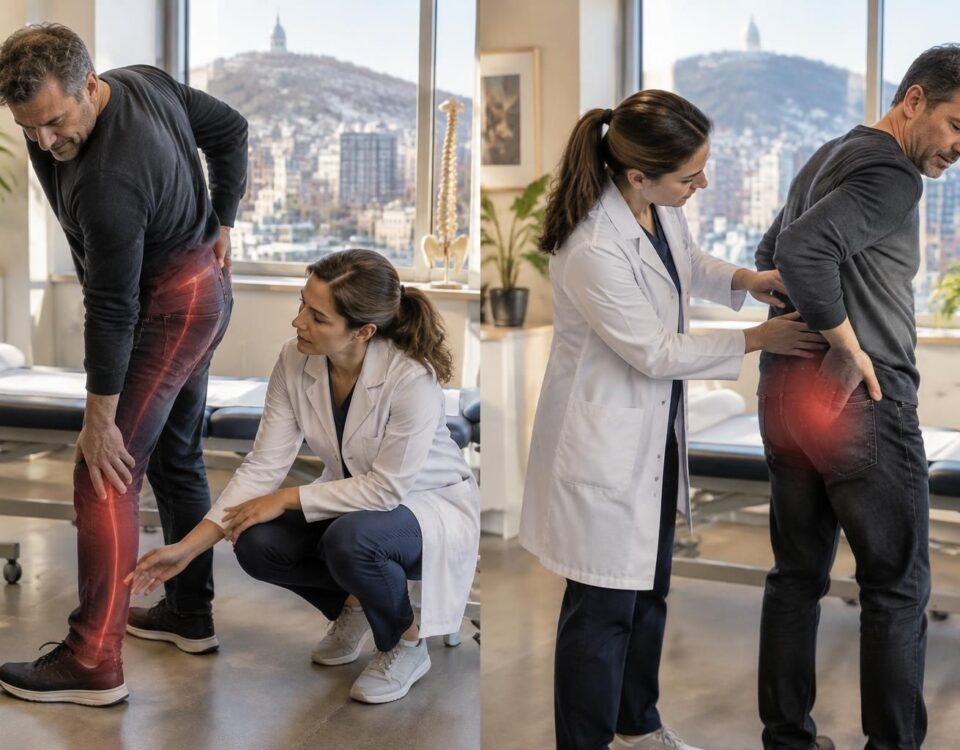
During a consultation, the healthcare professional gathers information about the onset of pain, its progression, activities that exacerbate it, and its impact on sleep or work. The examination may include observing gait as well as checks of strength, sensitivity, and reflexes. An X-ray, MRI, or other examination is not automatically required at the start; the doctor may consider it if symptoms persist, worsen, or are accompanied by neurological signs. A diagnosis and decisions regarding examinations fall under an authorized professional.
Management depends on the clinical picture and history. It may include measures to relieve symptoms, recommendations to temporarily adjust certain activities, and, when appropriate, physiotherapy or other conservative approaches. The goal is to encourage a gradual return to tolerated activities, rather than imposing a uniform strategy on all individuals. Surgery is reserved for certain situations, particularly when significant or progressive neurological deficits are observed, or when severe symptoms persist despite appropriate management.
Sylvain Desforges, B.Sc., D.O. and N.D., is an osteopath and naturopath, as well as the founding president of TAGMED and the ACMA association. His practice focuses especially on chronic spinal pain, lower back pain, and symptoms compatible with nerve irritation. Depending on the evaluation and the individual’s needs, the services offered at TAGMED Clinic may include specific osteopathy, motorized neurovertebral decompression, or precision impact therapy. These approaches do not replace a medical consultation or a diagnosis.
In case of loss of bladder or bowel control, numbness in the saddle area, or significant or progressive weakness in the leg or foot, a medical assessment should be obtained promptly. These signs require special attention, just like severe pain or rapid worsening.
In Montreal, a L4-L5 disc protrusion may contribute to pain radiating down the leg if it irritates or compresses a nerve root. However, a visible anomaly on imaging is not sufficient to explain the symptoms: the pain pathway, sensitivity, strength, and reflexes must also be assessed by a healthcare professional.
L4-L5 protrusion and leg pain
L4-L5 refers to the disc located between the fourth and fifth lumbar vertebrae. A protrusion corresponds to a bulging of the disc; it does not necessarily cause pain. When a nerve root is irritated, the pain can start from the lower back or buttock and extend into the thigh or leg. For a better understanding of this type of injury, consult the article on L4-L5 disc protrusion and information on lumbar disc herniation at this level.
Recognizing radicular symptoms
Pain that follows a nerve pathway may be accompanied by burning sensations, tingling, numbness, or weakness. The path varies based on the affected root: for example, an S1 involvement may lead to pain towards the calf or the little toe. Resources describe the pain towards the little toe, irritation of the S1 root, and the loss of sensitivity in the toes. Pain radiating from the lower back to the calf may also be consistent with nerve irritation, but it does not alone determine the cause.
Leg pains are not all sciatica. Clinical examination helps distinguish nerve root irritation from other possible causes. To learn more about the relationship between disc herniation and sciatica, or the general features of sciatica, these resources can complement the information provided in consultation. Nerve symptoms that should not be trivialized justify appropriate evaluation.
Evaluation and management options
The assessment generally begins with questions about symptoms and an examination of strength, sensitivity, and reflexes. An MRI or other imaging is not necessary in all cases at the outset; it may be considered when symptoms persist, worsen, or are associated with neurological signs. Depending on the situation, a doctor may also request additional tests. The reference on lumbar radiculopathy presents the main causes, clinical signs, and possible examinations.
Management depends on the evaluation, the intensity of symptoms, and their progression. It may include relief measures, maintaining an activity compatible with tolerance, and exercises or physiotherapy when appropriate. Medications should be discussed with a healthcare professional, especially in the presence of contraindications or other medical issues. Surgery may be considered in certain situations, for example, in cases of progressive neurological deficit or persistent and disabling pain despite non-surgical management.
When to seek urgent help
Consult a doctor or emergency service without delay in case of difficulty urinating, loss of bowel control, numbness around the genitals or anus, or significant or worsening weakness in a leg or foot. Fever, recent trauma, severe pain, or rapid worsening also require medical advice. These signs should not be automatically attributed to a disc protrusion.
Resources and evaluation in Montreal
If lower back pain radiates into the leg, an individualized assessment allows for checking if the symptoms correspond to radicular involvement and discussing appropriate options. For available services, consult the page dedicated to sciatica treatment in Montreal / Mont-Royal or contact the TAGMED Clinic. The information presented here is educational and does not replace a consultation, diagnosis, or treatment by an authorized healthcare professional.

Sylvain Desforges, B.Sc., D.O., N.D., docteur en ostéopathie
Dr Sylvain Desforges, B.Sc., D.O., N.D., osteopath, is the founding president of TAGMED and of the ACMA association. He dedicates his practice to chronic spinal pain, low back pain and symptoms compatible with sciatica, particularly when pain radiates toward the buttock, leg, calf, foot or toes.
Through SOS Sciatique, he publishes educational content on sciatica symptoms, possible causes such as disc herniation, disc narrowing, foraminal stenosis or irritation of a lumbar nerve root, as well as non-surgical approaches that may be considered according to the evaluation. At Clinique TAGMED, care may include, depending on the case, motorized neurovertebral decompression, specific osteopathic care or precision percussion.
For an evaluation related to sciatica treatment in Montreal / Mount Royal or sciatica treatment in Terrebonne, please consult the services available at Clinique TAGMED.
Medical disclaimer
The information published on SOS Sciatique is provided for educational purposes only and does not replace a consultation, diagnosis, opinion or treatment provided by a physician or another authorized healthcare professional. The author of this article is neither a medical doctor nor a specialist in a medical specialty recognized by the Collège des médecins du Québec. The osteopathic, manual medicine or functional support approaches described on this site do not constitute medical acts and are not intended to replace medical follow-up.
Consult a physician or emergency service in cases of loss of bladder or bowel control, anesthesia in the saddle area, significant or progressive weakness in the leg or foot, fever, recent trauma, severe pain or rapid worsening of symptoms. For more details, please read our Legal Notice.