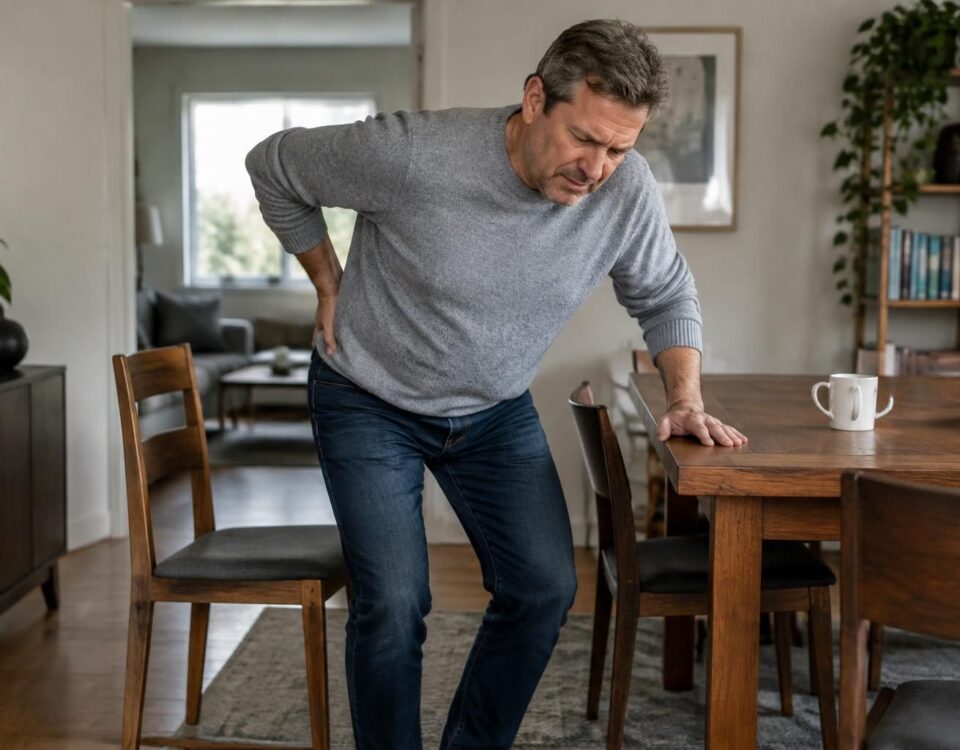
Sciatica and disc pinching in Terrebonne: when space decreases
15/11/2026
Disc bulge and tingling in the foot
15/11/2026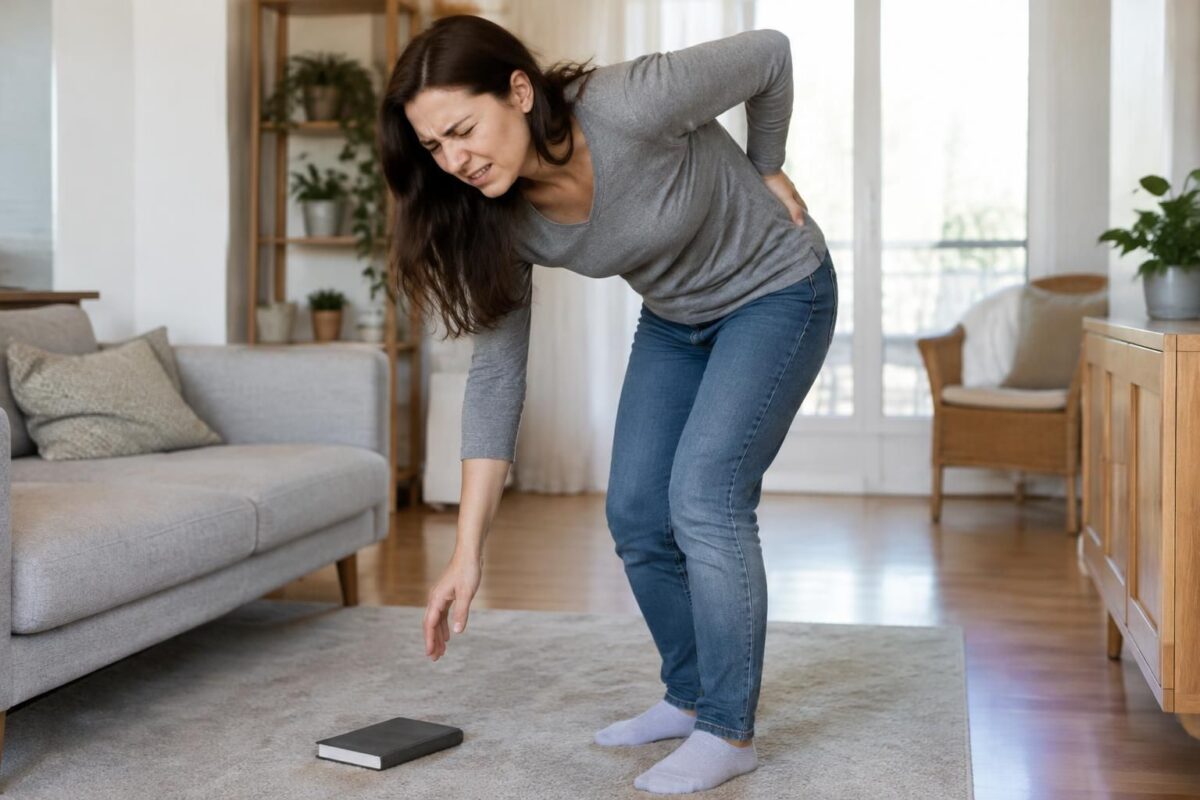
IN BRIEF A sciatica that appeared after a sudden movement corresponds to a lower back pain that can radiate into the buttock and leg, sometimes down to the foot. The movement may trigger or worsen the symptoms, without revealing the cause by itself. An evaluation helps to guide the care and consider appropriate non-surgical approaches. Consult quickly if significant or progressive weakness, loss of bladder or bowel control, or numbness in the saddle region occurs. |
A sciatica after a sudden movement may present as pain in the lower back that descends into the buttock or leg. Several causes are possible, including irritation of a nerve or disc involvement; only a professional can determine the origin. If the pain is accompanied by significant weakness, loss of bladder or bowel control, or numbness in the saddle region, seek medical attention promptly.
Pain that descends into the buttock or leg after a sudden movement may be consistent with sciatica, but it does not allow for determining the cause by itself. The intensity, path of the pain, strength, and sensitivity of the leg help guide the evaluation. Certain signs require prompt consultation. A sudden movement can occur while bending, lifting a load, or twisting the torso. The pain may appear immediately or increase over the subsequent hours. It may remain in the lower back or spread to the buttock, thigh, calf, or foot. The term sciatica often describes pain that follows the path of the sciatic nerve. This pain may be accompanied by tingling, numbness, or a burning sensation. These symptoms do not confirm, by themselves, a disc herniation or specific nerve involvement. A healthcare professional must consider all signs. A sudden movement can irritate tissues in the lower back or make existing pain more sensitive. Pain that descends into the leg may also be consistent with irritation of a nerve root. Several causes are possible, including a disc pinching, a disc herniation, or stenosis. Only a proper evaluation can help clarify the situation. To understand the possible link between sciatica and decreased space between the discs, consult our article on sciatica and disc pinching in Terrebonne. Note where the pain starts and how far it extends. Also observe whether it changes with daily movements, if an area becomes numb, or if the leg seems weaker. This information can help the consulted professional guide their evaluation. A mild sciatica also deserves monitoring if the pain persists, returns, or spreads. You can read our article on signs to watch for in cases of mild sciatica. Localized pain after exertion may resemble muscle soreness. Pain that descends below the knee, accompanied by tingling or numbness, may require evaluation to check for possible nerve irritation. These indicators are not sufficient to establish a diagnosis. To better distinguish these situations, consult the information about pain after exercise, muscle soreness, and nerve irritation. Seek professional advice if the pain is severe, persists, worsens, or limits your activities. An evaluation may examine strength, sensitivity, and reflexes, as well as how the pain distributes in the leg. These observations help determine the appropriate next steps, without replacing a medical diagnosis when it is necessary. Discover the elements examined during a sciatica evaluation in Terrebonne. Consult urgently in case of loss of bladder or bowel control, numbness in the saddle region, significant or progressive weakness of the leg or foot, fever, recent trauma, or rapid worsening. Severe or unusual pain also warrants quick medical attention. After a sudden movement, it is common to fear that every move will increase the pain. This fear may lead to avoiding many activities. It is better not to force and to seek advice if a movement causes significant worsening or if symptoms change. Exercises and stretches are not suitable for all causes of pain, especially in the presence of possible disc involvement. Our article explains the possible link between sciatica, fear of movement, and the vicious cycle of avoidance. Management depends on the symptoms, their progression, and the results of the evaluation. At the TAGMED Clinic, services may include, depending on the case, specific osteopathy, motorized neurovertebral decompression, or precision percussion. These approaches do not replace a diagnosis or follow-up care and may not be suitable for everyone. To learn about available services, check the pages dedicated to sciatica treatment in Montreal and Mont-Royal or sciatica treatment in Terrebonne. Sylvain Desforges, B.Sc., D.O., N.D., Doctor of Osteopathy and naturopath, is the founding president of TAGMED and the ACMA association. He dedicates his practice to chronic spinal pain, lower back pain, and pains consistent with sciatica, especially when the pain descends into the buttock, leg, calf, foot, or toes. Through SOS Sciatique, he publishes educational content on the symptoms of sciatica, possible causes such as disc herniation, disc pinching, foraminal stenosis, or irritation of a lumbar nerve root, as well as non-surgical approaches that may be considered based on the evaluation. At TAGMED Clinic, care may include, depending on the case, motorized neurovertebral decompression, specific osteopathy, or precision percussion. For an evaluation related to the sciatica treatment in Montreal / Mont-Royal or sciatica treatment in Terrebonne, consult the available services at the TAGMED Clinic. The information published on SOS Sciatica is provided for educational purposes and does not replace a consultation, diagnosis, opinion, or treatment performed by a physician or another licensed healthcare professional. The author of this article is neither a doctor nor a specialist in a medical specialty recognized by the Collège des médecins du Québec. The approaches of osteopathy, manual medicine, or functional support described on this site do not constitute medical acts and are not intended to replace medical follow-up. Consult a physician or an emergency service in case of loss of urinary or intestinal control, anesthesia in the saddle area, significant or progressive weakness of the leg or foot, fever, recent trauma, severe pain, or rapid worsening. For more details, please read our Legal Notice. Medical disclaimer: The information and advice provided on this site do not replace the opinion, diagnosis, or treatment of a healthcare professional. Please note that Sylvain Desforges, B.Sc., D.O., N.D., doctor in osteopathy, is neither a doctor of medicine nor a physician and is not a specialist in a medical specialty as defined by the Collège des médecins du Québec. Manual medicine, functional medicine, and sports medicine as described on this site exclude any medical treatment or diagnosis made by a physician or specialist. Always consult your doctor for any medical questions. For more details, please read our Complete Legal Notice.Why a sudden movement may trigger pain
What symptoms to monitor after the movement
Pain after activity: muscle soreness or nerve irritation?
When to seek an evaluation
Prevent the fear of movement from worsening the situation
What options to discuss with a professional
About the author
Medical disclaimer
Sciatica after a wrong move: initial guidelines
- Identify the pain: it may start from the lower back and radiate down into the buttock or leg.
- Keep moving: favor small tolerated movements rather than prolonged rest.
- Avoid straining: temporarily limit actions that noticeably worsen the pain, particularly twisting and heavy lifting.
- Do not conclude too quickly: a wrong move may precede the pain without solely determining its cause.
- Request an evaluation: consult a healthcare professional if the pain persists, intensifies, or interferes with your activities.
- Urgency: consult immediately in case of significant or progressive weakness, numbness in the saddle region, or loss of urinary or intestinal control.

A pain that appears after a wrong move can irritate the structures of the lower back and sometimes cause pain consistent with sciatica, radiating into the buttock or leg. In the initial days, favor gentle movements, avoid efforts that significantly worsen symptoms, and monitor their evolution. Persistent, severe pain or pain accompanied by unusual signs warrants evaluation by a healthcare professional.

Sciatica and pain with progressive weakness
IN BRIEF Sciatica causes pain that radiates from the lower back down the leg; however, progressive muscle weakness is not a symptom to be taken lightly. It requires quick medical evaluation to search for the cause and determine the appropriate…

Sciatica and pain with general discomfort
IN BRIEF A sciatica causes pain that starts in the lower back or buttock and radiates down the leg. A general discomfort, especially if accompanied by fever or rapid worsening, should not be automatically attributed to sciatica: consult a healthcare…
After a wrong move: what to do initially?
A sudden movement, a twist, or lifting a load in an uncomfortable position can trigger lower back pain. If the pain follows the path of a nerve root, it may radiate into the buttock, thigh, calf, or foot. However, the presence of leg pain alone is not enough to confirm sciatica: several issues can produce similar symptoms.
As much as possible, maintain a light and regular activity. Short walks and frequent position changes are often preferred to prolonged immobility. Stay within a tolerable range: if a movement significantly intensifies the pain or increases numbness, stop it and choose a more comfortable position.
Avoid movements that trigger the pain
For a few days, reduce movements that clearly trigger symptoms, such as rapid twists, repeated bends, or lifting heavy loads. This does not mean you should avoid all movement. Gradually resume daily tasks, keeping the load close to the body and pivoting with the feet rather than twisting abruptly at the back.

Sciatica and pain with a history of cancer: caution
IN BRIEF Sciatica causes pain that can radiate from the lower back down to the leg. With a history of cancer, new, persistent, or worsening pain should be quickly evaluated by a healthcare professional: its cause must be identified before…
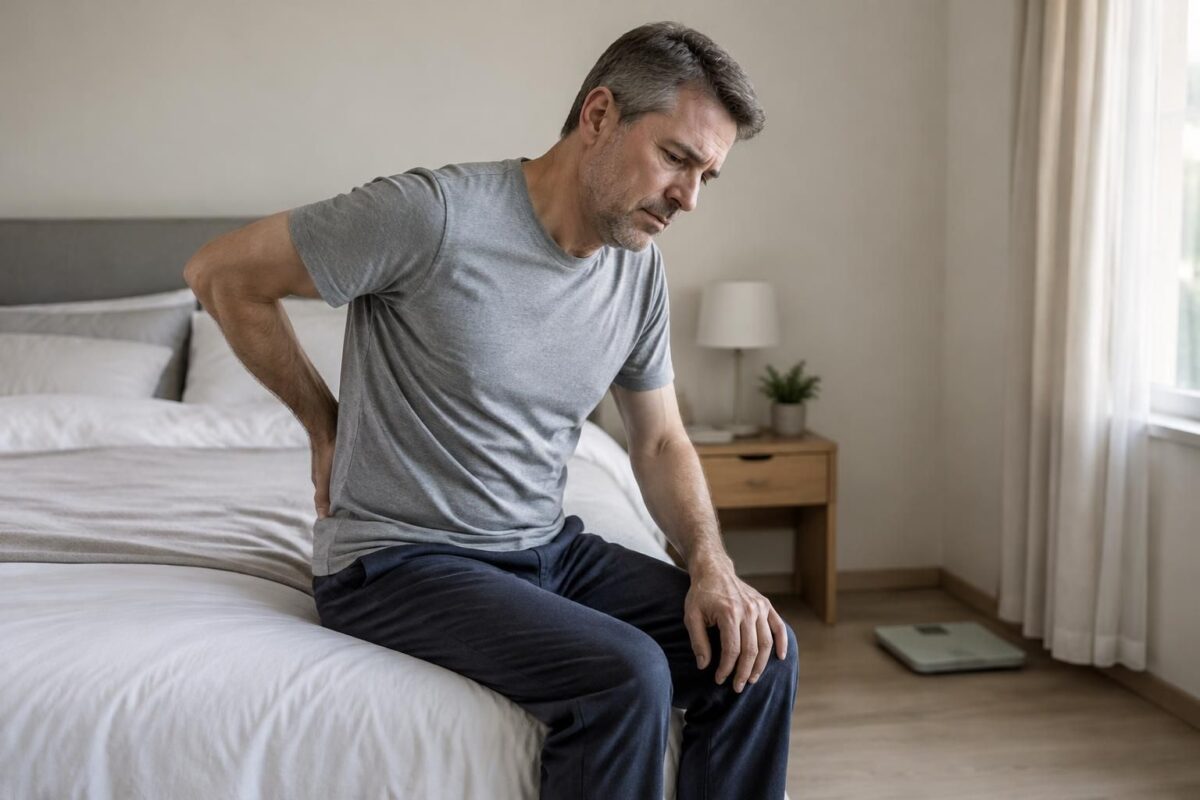
Sciatica and pain with unexplained weight loss
IN BRIEF Sciatica causes pain that can radiate from the lower back to the buttock and leg. Associated with unexplained weight loss, it requires medical evaluation to investigate the cause: this sign alone does not confirm a precise diagnosis. Consult…
Observe the evolution of symptoms
Note where the pain is located and if it radiates down the leg. Be attentive to the onset of tingling, loss of sensation, or weakness. This information will assist the consulted professional in understanding the evolution of the problem. Also, try to identify the positions that relieve or worsen the symptoms, without multiplying painful tests.
A consultation is indicated if the pain is intense, significantly limits your activities, worsens, or does not start to improve. A physician or licensed healthcare professional can evaluate the situation, consider possible causes, and determine if any examinations or particular follow-up are necessary. Manual care or exercises should be tailored to your condition and do not replace a medical diagnosis.
When to seek urgent help
Quickly consult an emergency service in case of loss of bladder or bowel control, numbness in the saddle area, or significant or progressive weakness of a leg or foot. Fever, recent trauma, severe pain, or rapid worsening also justify immediate medical evaluation.

Sciatica and pain with fever: why consult?
IN BRIEF Sciatica with pain and fever deserves a medical evaluation: fever is not usual in simple sciatica and may signal an infection or another problem requiring care. Consult promptly, especially if the pain is intense or worsening. In cases…

Sciatica and pain after trauma: warning sign
IN BRIEF A sciatica after trauma is pain that starts from the lower back or buttock and can radiate down the leg after a fall or impact. An assessment helps to investigate the cause and determine the appropriate course of…
Gradually resume activities
As symptoms decrease, gradually increase the duration of walking and daily activities. Avoid immediately resuming intense efforts or exercises that reproduce leg pain. If in doubt, seek advice from a healthcare professional, especially if you have previously suffered from lower back pain or if symptoms return.
The information in this article is educational and does not replace a consultation, diagnosis, or treatment by a licensed professional. Support in osteopathy or manual therapy does not constitute a medical act and does not replace medical follow-up.
| Sciatica | Pain after a misstep |
|---|---|
| Possible origin | A lumbar nerve root may be irritated. |
| Triggering | A sudden movement may cause or reveal the pain. |
| Path | The pain may radiate from the buttock down to the leg, sometimes to the foot. |
| Possible sensations | Burning, tingling, or numbness in the leg. |
| Mainly local pain | A discomfort limited to the back may suggest mechanical pain, without confirming its cause. |
| Evolution | The duration and intensity vary; an evaluation may clarify the situation. |
| When to consult quickly | Progressive weakness, loss of urinary or bowel control, or numbness in the saddle area. |
Illustrative Testimonies: Sciatica and Pain after a Misstep
These testimonies are fictional examples, written for informational purposes. They do not correspond to identifiable patients and do not predict the outcomes of care. Pain that radiates into the buttock or leg after a misstep can have various causes and deserves appropriate evaluation.
“While bending to move a box, I felt a sharp pain in my lower back. The next day, it radiated down to my buttock and the back of my thigh. I became concerned thinking about sciatica. I made an appointment with a healthcare professional to evaluate my symptoms and understand what to monitor.”
“I quickly turned my back while getting out of the car and pain appeared in my lower back. A few hours later, I also had shooting pains in my leg. The evaluation helped me describe precisely where the pain went and which movements triggered it.”
“After lifting a basket, I felt pain starting from my buttock extending towards my calf. I wasn’t sure if it was sciatica or another cause. I sought advice rather than concluding myself, and I followed the recommendations received for follow-up.”
“A misstep while gardening triggered lower back pain accompanied by tingling in my foot. As the sensations were new, I consulted to have the situation checked. I understood that it was important to report any weakness, any worsening numbness, or any changes in my symptoms.”
Pain after a misstep alone does not establish the cause. Consult a doctor or emergency service quickly in case of loss of urinary or bowel control, numbness in the saddle area, significant or progressive weakness in the leg or foot, fever, recent trauma, or rapid worsening.
Sylvain Desforges: Supporting Understanding of Sciatica after a Misstep
Sylvain Desforges, B.Sc., D.O., N.D., is a doctor of osteopathy and a naturopath. The founding president of TAGMED clinics and the ACMA association, he has dedicated his career to health innovation and supporting people living with persistent pain. His interest includes spinal pain, lower back pain, and symptoms that may suggest sciatica.
A pain that appears after a misstep can be sharp and destabilizing. It sometimes occurs after lifting a load, bending, turning the trunk suddenly, or simply getting up. The pain may remain localized in the lower back or radiate to the buttock and leg. When it follows this path, some people refer to it as sciatica. However, the term describes a set of symptoms: it does not allow, by itself, to identify the cause of the pain.
In his educational content, Sylvain Desforges helps differentiate possible signs of irritation of a lumbar nerve root from mechanical pain felt in the back or buttock. A disc herniation, a narrowing of the space where a nerve exits, or other factors may be involved, but the onset of symptoms after movement does not confirm any diagnosis. An appropriate evaluation takes into account their intensity, evolution, localization, and the person’s history.
His approach emphasizes an individualized understanding of the situation and non-surgical care options that may be considered based on evaluation. In TAGMED clinics, services may include specific osteopathy and, when appropriate, technologies such as neurovertebral decompression, laser or shockwave therapies. These interventions are not necessarily suitable for everyone; their relevance depends on the profile, symptoms, and goals of the person. They do not replace a medical consultation when it is required.
After a misstep, it is useful to monitor the evolution of the pain rather than jumping to conclusions. Pain radiating down the leg, tingling, or a sensation of numbness deserve particular attention, especially if they persist or worsen. A licensed healthcare professional can determine if examinations or medical follow-up are necessary and guide the person to appropriate options. General advice does not replace a personal evaluation.
Sylvain Desforges’ mission is to make information about chronic pain and sciatica more accessible while presenting approaches cautiously and based on available data. He is neither a doctor nor a specialist in a medical specialty recognized by the Collège des médecins du Québec. Educational information and approaches in osteopathy or manual medicine do not constitute a diagnosis or medical treatment.
In case of loss of urinary or bowel control, numbness in the saddle area, significant or progressive weakness in the leg or foot, fever, recent trauma, or rapid worsening, it is essential to consult a doctor or emergency service without delay.
A sciatica-type pain that appeared after a misstep may be related to nerve irritation, a disc herniation, or a muscular injury, without being able to determine the cause based solely on when the pain started. The evolution of symptoms, their pathway in the leg, and clinical examination help guide the next steps, particularly in choosing between monitoring, professional evaluation, or further examinations.
After a sudden movement: essential guidelines
After a sudden movement, pain in the lower back that radiates to the buttock or leg should be observed carefully. Note if it is accompanied by tingling, numbness, or weakness, and whether it improves or intensifies. A herniated disc can sometimes irritate a nerve root, but an imaging result should always be interpreted in relation to symptoms and examination: see why an MRI must be correlated with symptoms.
A disc bulge observed on imaging does not necessarily explain the pain by itself. To better understand this distinction, consult the article on disc bulge and sciatica. If a herniation is considered, the link between symptoms and results should also be evaluated on a case-by-case basis, as explained in this content about sciatica and herniated disc.
In the early days, complete rest is not always the best option. Depending on the pain and your capabilities, gradually resuming tolerated activities may be preferable to staying inactive for long periods; however, avoid movements that significantly worsen symptoms. The article Sciatica and complete rest: helpful or counterproductive provides guidelines to think about this issue. If the pain persists, recurs, or changes in nature, a reassessment of sciatica and chronic pain can help revisit the assumptions and management options.
Quickly consult a doctor or emergency service in case of loss of bladder or bowel control, numbness in the saddle area, significant or progressive weakness of the leg or foot, fever, recent trauma, severe pain, or rapid worsening. This information is educational and does not replace an evaluation by a licensed healthcare professional.
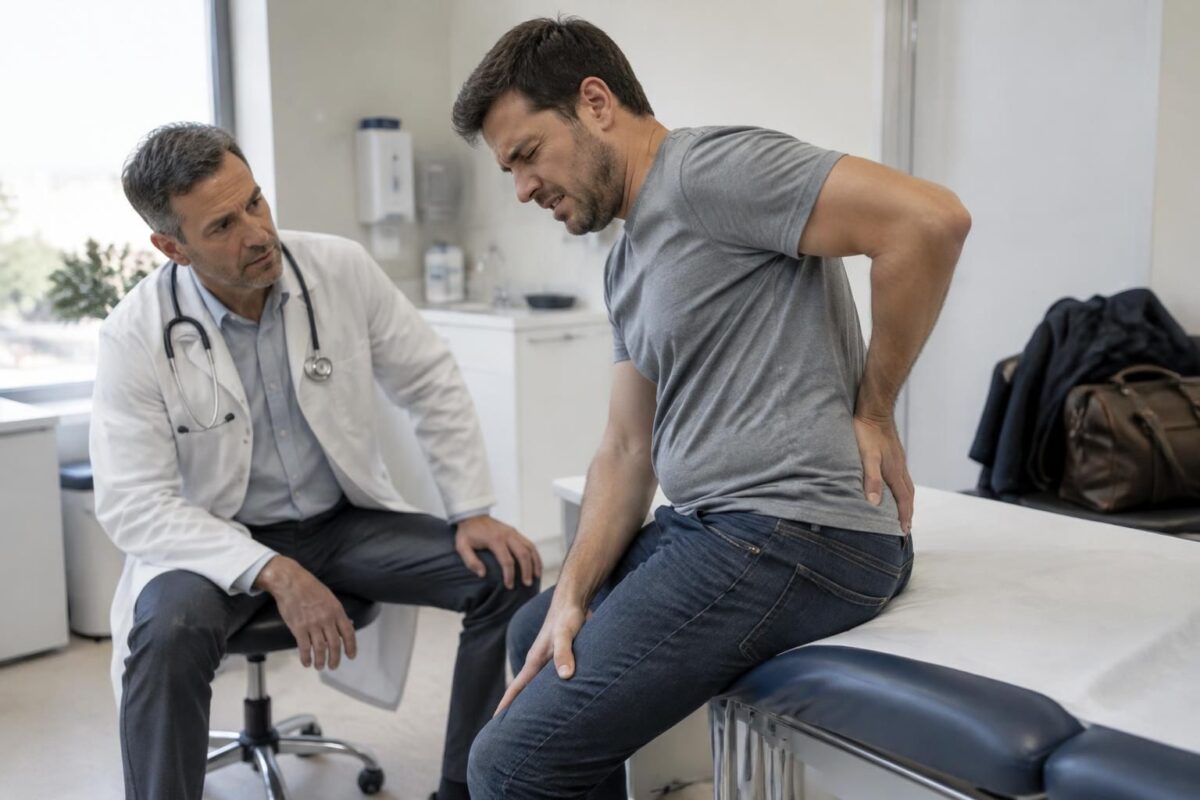
Sciatica and pain that appeared after an accident
IN BRIEF Sciatica after an accident is pain related to irritation or compression of the sciatic nerve, sometimes triggered or revealed by a fall or impact. It can start from the lower back or buttock and radiate down the leg.…
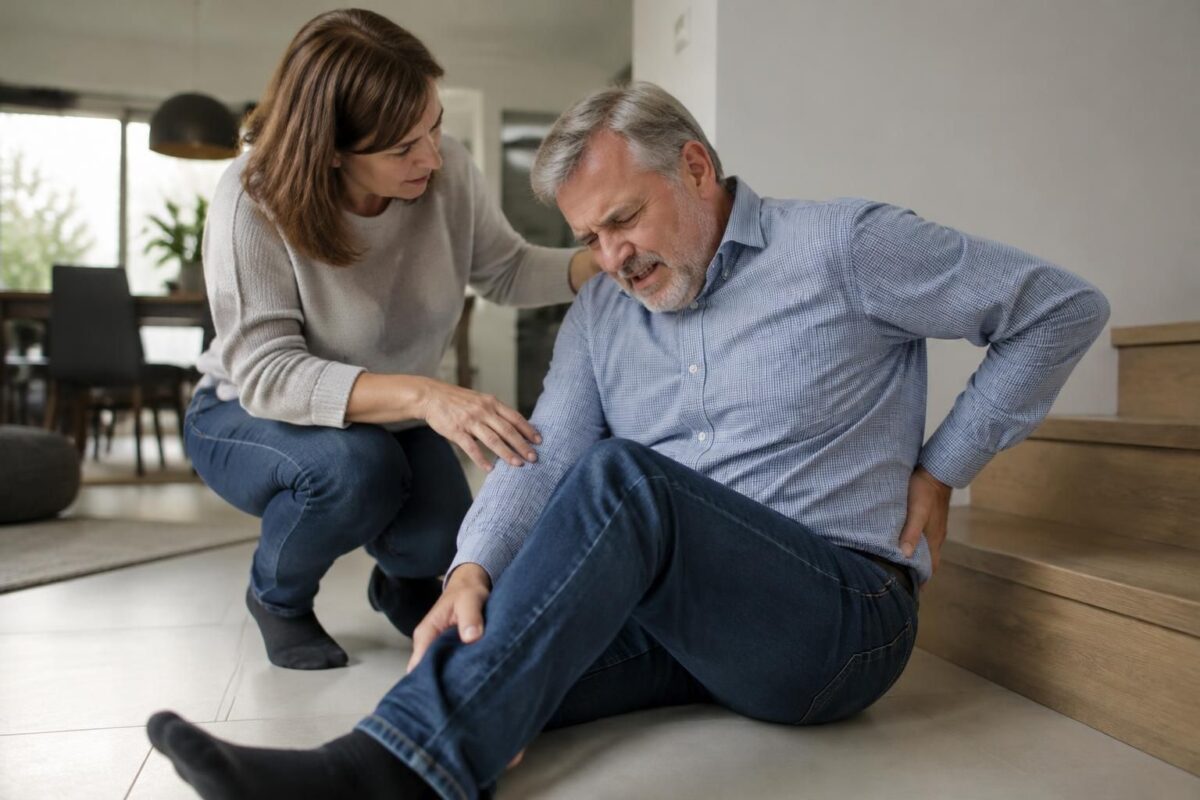
Sciatica and pain appeared after a fall
IN BRIEF A sciatic pain after a fall may stem from nerve irritation or an injury to the hip, buttock, or lower back. It can radiate down the leg and be accompanied by tingling or numbness. Rest, avoid movements that…

Sylvain Desforges, B.Sc., D.O., N.D., docteur en ostéopathie
Dr Sylvain Desforges, B.Sc., D.O., N.D., osteopath, is the founding president of TAGMED and of the ACMA association. He dedicates his practice to chronic spinal pain, low back pain and symptoms compatible with sciatica, particularly when pain radiates toward the buttock, leg, calf, foot or toes.
Through SOS Sciatique, he publishes educational content on sciatica symptoms, possible causes such as disc herniation, disc narrowing, foraminal stenosis or irritation of a lumbar nerve root, as well as non-surgical approaches that may be considered according to the evaluation. At Clinique TAGMED, care may include, depending on the case, motorized neurovertebral decompression, specific osteopathic care or precision percussion.
For an evaluation related to sciatica treatment in Montreal / Mount Royal or sciatica treatment in Terrebonne, please consult the services available at Clinique TAGMED.
Medical disclaimer
The information published on SOS Sciatique is provided for educational purposes only and does not replace a consultation, diagnosis, opinion or treatment provided by a physician or another authorized healthcare professional. The author of this article is neither a medical doctor nor a specialist in a medical specialty recognized by the Collège des médecins du Québec. The osteopathic, manual medicine or functional support approaches described on this site do not constitute medical acts and are not intended to replace medical follow-up.
Consult a physician or emergency service in cases of loss of bladder or bowel control, anesthesia in the saddle area, significant or progressive weakness in the leg or foot, fever, recent trauma, severe pain or rapid worsening of symptoms. For more details, please read our Legal Notice.