
Sciatica in Terrebonne: disc herniation and painful cough
23/11/2026
IN BRIEF Sciatica causes pain that radiates from the lower back down the leg; however, progressive muscle weakness is not a symptom to be taken lightly. It requires quick medical evaluation to search for the cause and determine the appropriate management. Significant or worsening weakness, urinary or bowel issues, or numbness in the saddle area necessitate an emergency consultation. |
A sciatica can cause lower back pain that radiates down the leg, sometimes accompanied by tingling or numbness. Progressive muscle weakness in the leg or foot is a warning sign: consult a healthcare professional quickly.
If the weakness worsens, or if it is accompanied by loss of bladder or bowel control or numbness in the saddle area, go to the emergency room immediately.
A pain that starts in the lower back and radiates down the leg may be accompanied by muscle weakness. If this weakness increases, consult a healthcare professional quickly: it may indicate nerve involvement that requires medical evaluation. This article explains the signs to watch for, the steps to take, and the possible role of osteopathic support after the medical evaluation.
Why progressive weakness requires quick attention
Sciatica describes pain that follows the path of the sciatic nerve or one of its roots. Nerve irritation can also cause tingling, numbness, or decreased strength in the leg or foot. A sudden onset of pain deserves particular attention, especially if other symptoms develop simultaneously: sciatica and sudden onset pain.
A weakness is deemed progressive when it intensifies, for example, when lifting the foot becomes more difficult, the leg gives way, or walking becomes increasingly challenging. This sign alone cannot determine the cause. However, it justifies a quick medical evaluation, without waiting several days to see if the situation resolves.
Changes in strength to note
Notice if you have new difficulties climbing stairs, walking on your heels or toes, or maintaining balance. Also, note the affected side, when the weakness started, and how it is evolving. This information can help the healthcare professional assess your situation.
Pain accompanied by weakness can be related to various causes. A herniated or bulging disc can irritate a nerve root, but only a clinical examination can help specify the origin of the symptoms. To learn more about bulging discs, refer to this article on sciatica and potential nerve irritation related to a bulging disc. An issue located between the L4 and L5 vertebrae can also be accompanied by pain radiating towards the foot: L4-L5 disc herniation and pain towards the foot.

Sciatica and pain with general discomfort
IN BRIEF A sciatica causes pain that starts in the lower back or buttock and radiates down the leg. A general discomfort, especially if accompanied by fever or rapid worsening, should not be automatically attributed to sciatica: consult a healthcare…
When to seek emergency care
Call emergency services or go to the emergency room if the weakness is significant or worsens rapidly, if you lose control of your bladder or bowels, or if you feel numbness in the perineum area, between the legs, or around the genitalia. These signs may indicate nerve involvement that needs to be evaluated without delay.
Also request a quick medical evaluation if the pain is accompanied by fever, general malaise, recent trauma, or loss of sensation that is spreading. Additional information is available on sciatica accompanied by general malaise.
While awaiting evaluation, avoid driving if your leg is not responding normally or if you have difficulty controlling your foot. Also, avoid forced manipulations and movements that significantly increase pain or weakness. Do not start exercises or stretches in an attempt to correct progressive weakness without the advice of a healthcare professional.

Sciatica and pain with a history of cancer: caution
IN BRIEF Sciatica causes pain that can radiate from the lower back down to the leg. With a history of cancer, new, persistent, or worsening pain should be quickly evaluated by a healthcare professional: its cause must be identified before…
How the evaluation process works
The healthcare professional will ask you about the pain, its pathway, and the evolution of your strength. They may check the strength of your legs and feet, sensitivity, and certain reflexes. Depending on the results and signs present, they will determine if additional tests or referral to another service is necessary.
A progressive weakness shifts the priority: it is essential first to check the cause and the level of risk. A lumbar belt, manual therapy, or another support device does not replace this evaluation and should not delay a consultation.
To better understand the signs and possible causes, you can refer to a general presentation of sciatica, its symptoms, and treatments, as well as this resource on its definition, causes, and symptoms. Another guide summarizes the symptoms, causes, and relief options for sciatica.

Sciatica and pain with unexplained weight loss
IN BRIEF Sciatica causes pain that can radiate from the lower back to the buttock and leg. Associated with unexplained weight loss, it requires medical evaluation to investigate the cause: this sign alone does not confirm a precise diagnosis. Consult…
The fear of moving and pain
Pain can make every movement worrisome. However, progressive weakness should not be attributed solely to fear, pain, or lack of activity. First, have this change evaluated. After this step, a professional can guide you on the movements that are appropriate for your situation. To understand the link between pain and apprehension of movement, read our article on sciatica and the fear of movement.
Resources dedicated to the management of sciatica can also help you prepare your questions for a consultation. Check this page on physiotherapy and sciatica and this scientific article on care related to lower back pain: scientific publication on ScienceDirect.

Sciatica and pain with fever: why consult?
IN BRIEF Sciatica with pain and fever deserves a medical evaluation: fever is not usual in simple sciatica and may signal an infection or another problem requiring care. Consult promptly, especially if the pain is intense or worsening. In cases…
After the medical evaluation
When the medical evaluation has ruled out an urgent situation, support can be considered based on the cause, symptoms, and recommendations received. At the Clinique TAGMED, an evaluation can allow for discussion of non-surgical approaches suitable for your situation. Motorized neurovertebral decompression, specific osteopathy, or the precision impactor may not be suitable for everyone and do not replace a medical diagnosis.
For an evaluation in Montreal or Mount Royal, check the information on the sciatica treatment in Montreal and Mount Royal. For Terrebonne, consult the page on sciatica treatment in Terrebonne. In case of progressive weakness, get a quick medical evaluation first.

Sciatica and pain after trauma: warning sign
IN BRIEF A sciatica after trauma is pain that starts from the lower back or buttock and can radiate down the leg after a fall or impact. An assessment helps to investigate the cause and determine the appropriate course of…
About the Author
Sylvain Desforges, B.Sc., D.O., N.D., Doctor of Osteopathy and naturopath, is the founding president of TAGMED and the ACMA association. His practice focuses on chronic pain of the spine, lower back pain, and pain associated with sciatica.
Through SOS Sciatique, he publishes educational content on the symptoms of sciatica, its possible causes, and non-surgical approaches that can be considered after an appropriate evaluation. At Clinique TAGMED, care may include, depending on the case, motorized neurovertebral decompression, specific osteopathy, or the precision impactor.
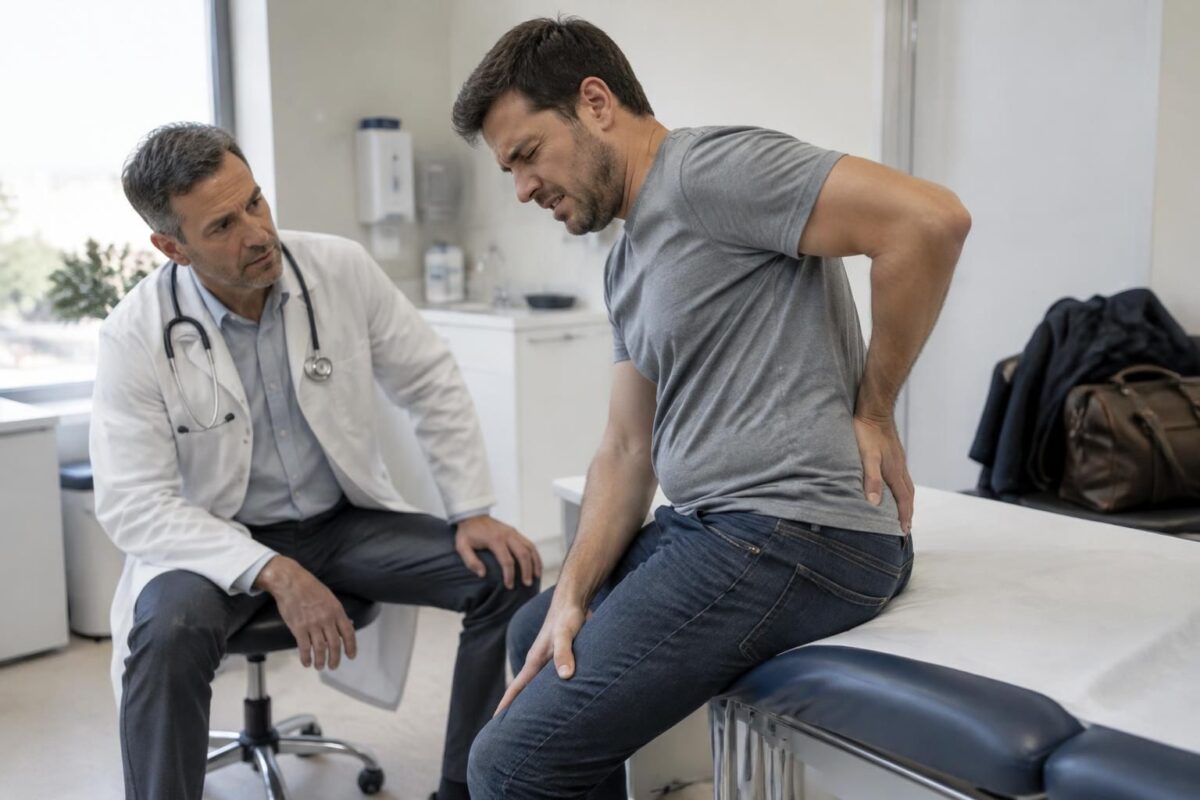
Sciatica and pain that appeared after an accident
IN BRIEF Sciatica after an accident is pain related to irritation or compression of the sciatic nerve, sometimes triggered or revealed by a fall or impact. It can start from the lower back or buttock and radiate down the leg.…
Medical Disclaimer
Medical disclaimer: The information and advice provided on this site do not replace the opinion, diagnosis, or treatment of a healthcare professional. Please note that Sylvain Desforges, B.Sc., D.O., N.D., doctor of osteopathy, is neither a medical doctor nor a physician and is not a specialist in a medical specialty as defined by the College of Physicians of Quebec. Manual medicine, functional medicine, and sports medicine as described on this site exclude any treatment or medical diagnosis made by a physician or specialist doctor. Always consult your doctor for any medical questions. For more details, please read our Complete Legal Notice.
- Sciatica accompanied by worsening weakness.
- Increasing difficulty in walking or lifting the foot.
- Loss of strength requiring a prompt evaluation.
- Consult promptly with a healthcare professional.
- Go to the emergency room if the weakness becomes significant or worsens rapidly.
- In case of urinary or intestinal issues, or numbness of the perineum: immediate emergency.

A sciatica accompanied by progressive muscle weakness requires a rapid medical evaluation. If the leg or foot is losing strength, if the weakness is worsening, or if urinary, intestinal disorders, or loss of sensation in the intimate area occur, consult the emergency room without delay. While waiting for professional advice, avoid actions that exacerbate the symptoms and do not rely on a belt or exercises to replace this evaluation.
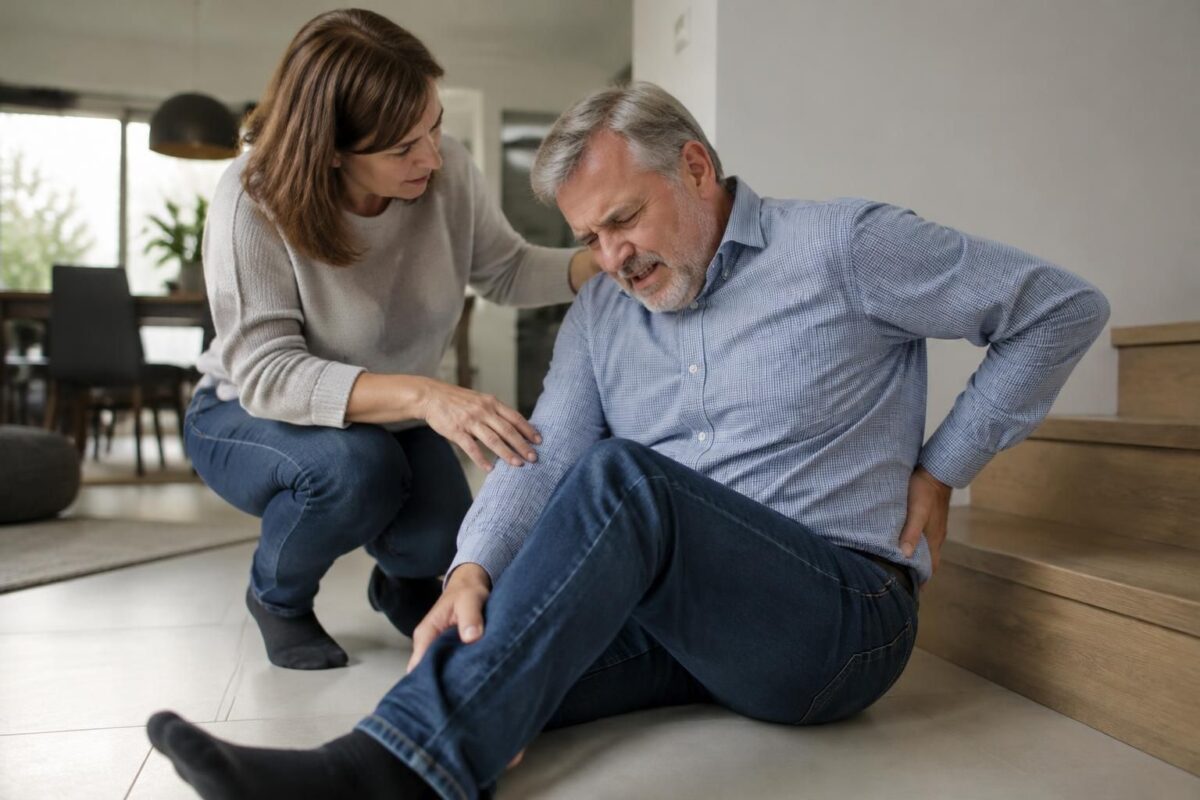
Sciatica and pain appeared after a fall
IN BRIEF A sciatic pain after a fall may stem from nerve irritation or an injury to the hip, buttock, or lower back. It can radiate down the leg and be accompanied by tingling or numbness. Rest, avoid movements that…
Why Progressive Weakness Should Be Taken Seriously
Sciatica corresponds to pain related to irritation of a nerve root in the lower back. It can radiate into the buttock, thigh, calf, or down to the foot and may be accompanied by burning, electrical sensations, tingling, or numbness. Muscle weakness may also occur, for example, when it becomes difficult to lift the foot or stand on tiptoes.
Weakness that worsens over time is different from pain alone: it can signal nerve damage that requires quick examination. It is not possible to determine the cause solely based on symptoms. A healthcare professional will evaluate strength, sensitivity, reflexes, and gait, then decide if further tests are necessary.

Sciatica and pain that occurred after a wrong move
IN BRIEF A sciatica that appeared after a sudden movement corresponds to a lower back pain that can radiate into the buttock and leg, sometimes down to the foot. The movement may trigger or worsen the symptoms, without revealing the…
When to Seek Medical Help
Consult Quickly
Contact a doctor or healthcare service without delay if you notice new or increasing loss of strength, a leg giving way, a foot dragging on the ground, or growing difficulty in walking. Even if the pain remains tolerable, these changes warrant evaluation. If the weakness progresses rapidly or becomes significant, go to the emergency room.
Recognize Emergency Signs
Call emergency services or go immediately to the hospital in case of loss of control of the bladder or bowels, sudden difficulty urinating, numbness of the perineum or the area called “saddle”, or significant weakness affecting one or both legs. Fever associated with pain, recent trauma, or pain that worsens dramatically also warrants quick medical attention.
What to Do While Waiting for Evaluation
Avoid staying in bed for prolonged periods. If it does not increase the pain and your safety allows, move gently within your capabilities. Reduce activities that exacerbate pain or weakness, such as lifting loads, twisting, and repeated bending. Do not force a stretch or exercise that triggers more symptoms in the leg.
A comfortable position or a short rest period may help temporarily. Cold or heat may also provide relief to some individuals, without addressing the cause of weakness. Do not perform vigorous manipulation of the back and do not start a targeted exercise program without professional advice if your strength is decreasing.
What a Support Device Can — and Cannot — Do
A lumbar belt can sometimes provide temporary support during certain activities, if a professional deems it appropriate. It does not necessarily decompress a nerve, does not correct the cause of sciatica, and should never delay a consultation in the presence of progressive weakness. The choice and duration of use should be discussed based on your situation.
Medical warning: this content is educational and does not replace a consultation, diagnosis, or treatment by a licensed healthcare professional. The author is neither a doctor nor a specialist in a medical field recognized by the Collège des médecins du Québec. Osteopathy or manual medicine approaches do not replace medical follow-up. In case of loss of bladder or bowel control, numbness in the saddle region, or significant or progressive weakness, consult emergency services.
| Observed situation | Recommended action |
|---|---|
| Back pain without loss of strength | A medical consultation allows for the evaluation of symptoms. |
| New or worsening muscle weakness | Consult a doctor promptly. |
| Increasing difficulty walking or lifting the foot | Urgent medical evaluation is necessary. |
| Weakness with loss of bladder or bowel control | Go immediately to the emergency room. |
| Numbness in the intimate area | Consult immediately at the emergency room. |
Illustrative testimonies: sciatica and progressive weakness
Important: the stories below are fictional and serve only to illustrate possible situations. A progressive weakness in a leg or foot requires prompt medical evaluation; these testimonies do not replace professional advice.
“The pain went down to my foot” — Marc, 46 years old
At first, I had pain in my lower back that radiated into my buttock and the back of my leg. I also felt tingling. A few days later, I noticed that my foot was responding less well and that my leg seemed to be weakening. I contacted a healthcare professional without delay, rather than trying to manage this worsening on my own.
“I was tripping more and more often” — Isabelle, 58 years old
My pain felt like an electric shock that started in my back and went down my leg. The numbness was accompanied by increasing difficulty in lifting the front of my foot. As the weakness progressed and disrupted my walking, I quickly sought medical evaluation. The professional checked my strength, sensitivity, and any signs that might require urgent intervention.
“The symptoms changed from day to day” — Karim, 39 years old
I had burning and pulling sensations in my leg, sometimes with a loss of sensitivity. I tried to stay gently active, but my leg was gradually becoming weaker. I realized that sciatica accompanied by worsening weakness should not be simply monitored at home: I sought medical advice quickly.
In case of significant or progressive weakness, foot drop, difficulty walking, numbness in the saddle region, or loss of bladder or bowel control, consult a doctor or emergency service without delay.
Sylvain Desforges: supporting the understanding of sciatica and progressive weakness
Sylvain Desforges, B.Sc., D.O., N.D., Doctor of Osteopathy and naturopath, is the founding president of TAGMED and the ACMA association. His career is dedicated to supporting individuals living with chronic pain, particularly those affecting the spine, lower back, and lower limbs. Through his educational content, he helps the public better understand symptoms compatible with sciatica and the various stages of appropriate evaluation.
Sciatica refers to pain that often follows the path of a lumbar nerve root and may radiate from the lower back or buttock down to the thigh, calf, and foot. It can present as a burning, pulling, or electric shock-like sensation, sometimes accompanied by tingling, numbness, or loss of sensitivity. A herniated disc is a possible cause, but other spine or surrounding tissue problems can produce similar symptoms. The term “sciatica” therefore describes a set of symptoms: it does not, by itself, identify the cause.
In his publications, Sylvain Desforges emphasizes the importance of distinguishing between pain radiating into the leg and localized lower back pain. The path of the symptoms, their progression, the sensations reported, and the possible presence of decreased strength are important elements to communicate to a healthcare professional. A clinical examination can help guide evaluation. Imaging exams are considered depending on the context and do not replace the medical analysis of symptoms.
A progressive weakness in the leg or foot requires particular attention. Increasing difficulty in walking, lifting the foot, or standing on heels or toes may signal nerve damage requiring prompt medical evaluation. Attempting to treat this change solely with exercises, a belt, or manual care is not advisable. In cases of significant or progressing weakness, one should contact a doctor or emergency service without delay.
Associated signs also require urgent management: loss of bladder or bowel control, numbness in the perineum, fever, or rapid worsening of pain. These manifestations should be evaluated without delay. The educational information published by Sylvain Desforges aims to foster a better understanding of symptoms and to remind when medical advice is a priority.
At TAGMED Clinic, support options may include, depending on the evaluation and the individual’s situation, specific osteopathy, motorized neurovertebral decompression, or precision impactor. These approaches are not suitable for everyone and do not replace a medical diagnosis or the follow-up by a licensed professional. In the presence of progressive weakness, the priority is to obtain a medical evaluation before considering complementary care.
His approach emphasizes information, individualized assessment, and caution when neurological symptoms appear or evolve. The content on SOS Sciatique presents possible causes, general relief measures, and prevention tips, without claiming to establish a remote diagnosis. Advice should be tailored to each situation and discussed with a healthcare professional, especially when pain is accompanied by loss of strength, numbness, or persistent worsening.
Medical warning: this information is provided for educational purposes and does not replace a consultation, diagnosis, or treatment performed by a doctor or another licensed healthcare professional. Sylvain Desforges is neither a physician nor a specialist in a medical specialty recognized by the Collège des médecins du Québec. Osteopathy, manual medicine, and functional support are not medical acts.
Pain that radiates from the lower back down the leg may indicate sciatica. If it is accompanied by progressively worsening weakness — increasing difficulty walking, foot dragging, or loss of strength when standing on tiptoes — do not wait for the situation to resolve simply with rest or a support belt: a prompt medical evaluation is necessary to seek the cause and determine the appropriate course of action.
Sciatica refers to pain related to the irritation of a nerve root, often caused by a herniated disc, but also by other lumbar issues. The pain can feel like burning, pulling, or electrical shock and can extend from the buttock down to the calf, foot, or toes. Tingling or numbness may also occur. To better understand the symptoms and possible causes, refer to the information from Vidal on sciatica pain or this presentation on sciatica pain and its management.
It is important to distinguish a leg that appears weak because pain prevents movement from a true loss of muscle strength. Worsening weakness, new difficulty lifting the foot, or a leg that gives way may signal nerve damage requiring immediate examination. The progression of symptoms is just as important as their intensity: even if the pain remains manageable, an increasing loss of strength should not be ignored. You can also read information about sciatica associated with a herniated disc and leg weakness.
In the presence of progressive weakness, quickly contact a healthcare professional to assess strength, sensitivity, and reflexes, then determine if further examinations are necessary. An urgent consultation is warranted in case of loss of bladder or bowel control, numbness in the intimate area, or significant or rapidly worsening weakness. These signs may correspond to a neurological emergency. A recent fall or trauma associated with the pain also justifies particular medical attention; refer to the guidelines regarding sciatica pain that appeared after a fall.
While awaiting an evaluation, avoid forcing the leg or repeating movements that markedly worsen symptoms. Prolonged complete rest is generally not a solution, but activity should be adapted to your condition and should not delay a consultation when strength is decreasing. Daily activities, like repeated bending to make the bed, can sometimes exacerbate the pain: advice is provided in this article on repeated bending and lumbar irritation. For other causes, symptoms, and management options, you can also refer to this guide on sciatica pain.
Mild or intermittent pain should also be monitored if accompanied by new numbness, decreased sensitivity, or loss of strength. The ability to walk or continue certain activities is not enough to rule out a problem requiring professional advice. Guidelines are offered on monitoring mild sciatica and on debilitating sciatica that limits activities.
The resumption of walking or sports should be gradual and adapted to the symptoms. Do not resume running if weakness increases, if the foot drags, or if pain intensifies during exertion; consult a professional for advice on the right time and steps for resuming activities. Also refer to the recommendations on running with sciatica and general guidelines on the symptoms, duration, and treatment of sciatica.

Sylvain Desforges, B.Sc., D.O., N.D., docteur en ostéopathie
Dr Sylvain Desforges, B.Sc., D.O., N.D., osteopath, is the founding president of TAGMED and of the ACMA association. He dedicates his practice to chronic spinal pain, low back pain and symptoms compatible with sciatica, particularly when pain radiates toward the buttock, leg, calf, foot or toes.
Through SOS Sciatique, he publishes educational content on sciatica symptoms, possible causes such as disc herniation, disc narrowing, foraminal stenosis or irritation of a lumbar nerve root, as well as non-surgical approaches that may be considered according to the evaluation. At Clinique TAGMED, care may include, depending on the case, motorized neurovertebral decompression, specific osteopathic care or precision percussion.
For an evaluation related to sciatica treatment in Montreal / Mount Royal or sciatica treatment in Terrebonne, please consult the services available at Clinique TAGMED.
Medical disclaimer
The information published on SOS Sciatique is provided for educational purposes only and does not replace a consultation, diagnosis, opinion or treatment provided by a physician or another authorized healthcare professional. The author of this article is neither a medical doctor nor a specialist in a medical specialty recognized by the Collège des médecins du Québec. The osteopathic, manual medicine or functional support approaches described on this site do not constitute medical acts and are not intended to replace medical follow-up.
Consult a physician or emergency service in cases of loss of bladder or bowel control, anesthesia in the saddle area, significant or progressive weakness in the leg or foot, fever, recent trauma, severe pain or rapid worsening of symptoms. For more details, please read our Legal Notice.