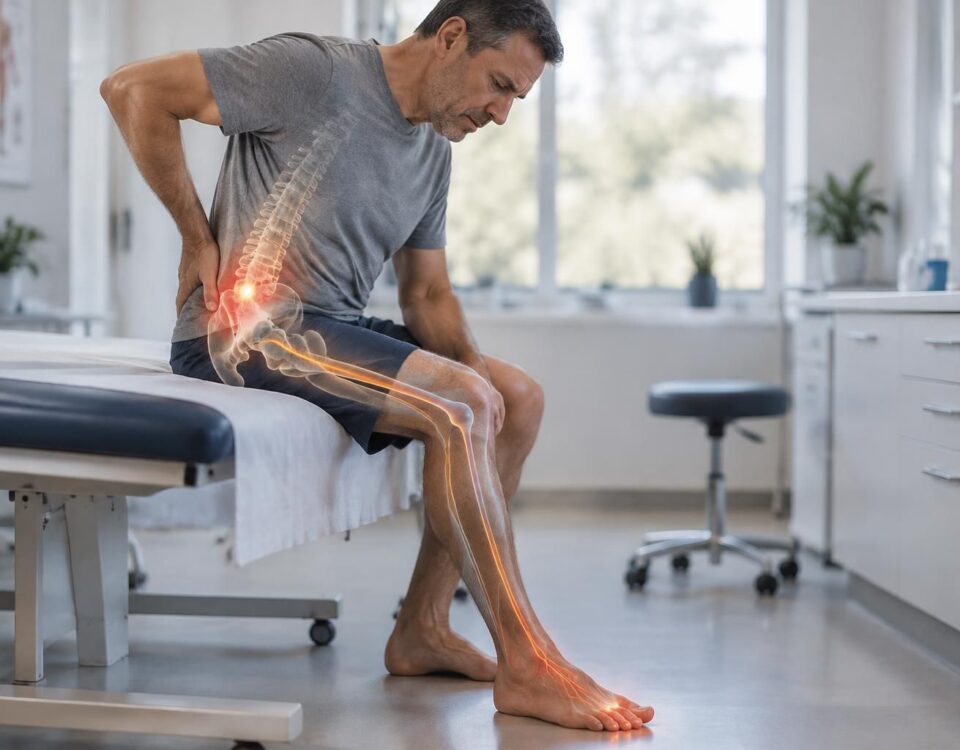
Sciatica and pain when getting up from a chair
20/09/2026
Sciatica and climbing stairs: pain in the leg
20/09/2026
IN BRIEF
| In brief, Herniated disc and cauda equina syndrome describe severe compression of the lumbar roots with warning signs requiring urgent management. The warning signs help prevent major sequelae and facilitate rapid referral to emergency services. The benefits include a reduction in complications and optimized recovery when action is swift, thanks to early detection and appropriate management. How does it work? In the presence of low back pain associated with sphincter disturbances, contact emergency services immediately; an urgent MRI confirms the diagnosis and surgical decompression may be indicated within 48 hours if necessary. This framework aims to facilitate rapid and appropriate action to prevent lasting disability. |
Brief summary on herniated disc and cauda equina syndrome with warning signs.
- Herniated disc: protrusion of an intervertebral disc that can compress a nerve root. Warning signs: acute low back pain with pain radiating down the leg, paresthesias, or progressive weakness of the lower limb muscles, loss of sensation in the corresponding area.
- Cauda equina syndrome: neurosurgical emergency due to compression of the caudal roots. Warning signs: severe low back pain associated with sphincter disturbances (incontinence or urinary retention, fecal incontinence), saddle anesthesia (loss of sensation in the perineum/genital area), and weakness or paralysis of the legs.
In the presence of these signs, contact emergency services immediately.
This article summarizes the links between herniated disc and cauda equina syndrome, details the warning signs that require urgent medical care, and outlines the diagnostic pathway and treatment options. The goal is to quickly recognize symptoms that indicate a neurosurgical emergency and to know what to do in case of suspicion, to limit the risks of sequelae.
Warning Signs and Symptoms to Recognize
Intense low back pain associated with symptoms of the lower limbs may indicate compression of the nerve roots. Warning signs include:
Urinary retention or urinary incontinence, saddle anesthesia (loss of sensation around the genital and anal area), and sphincter disturbances.
Motor and sensory signs can worsen rapidly: weakness or paralysis of the legs, pain radiating to the buttocks and legs, and loss of control of the bladder or bowel.
Presentation can be gradual or abrupt. If you notice several of these elements together, you should consult an emergency unit or a neurosurgeon without delay. For further details, consult dedicated resources on S.O.S Sciatique here and other related articles here.
Specific signs associated with cauda equina syndrome include low back pain associated with sphincter disturbances, and a loss of perineal sensation that may precede motor deficits. These signs constitute an emergency and require rapid evaluation by a specialized team.
For a summary of the manifestations and mechanisms, see the following resources: leg/back pain and pain when sneezing.
Diagnostic Pathway and Management
The rapid differential diagnosis is based on clinical examination and appropriate imaging. In case of suspicion of cauda equina, an urgent MRI or, when MRI is not available, suitable imaging should be considered without delay. The evaluation focuses on motor and sensory deficits, as well as sphincter functions. If necessary, urgent intervention by a neurosurgical team is required for surgical decompression and better functional recovery.
Teleconsultation cannot replace an in-person evaluation when neurological or sphincter signs suggest an emergency. In the case of apparent severity, contact emergency services or go to a dedicated facility. For more details, consult specialized resources on S.O.S Sciatique and reference guides.
Supplementary resources allow for a deeper understanding of the subject and provide practical information, particularly around herniated discs and their impact on pain and nerve function. Consult related pages, such as Herniated disc and mechanical compression of the nerve, and related articles.
Neurovertebral Decompression and Treatment Options
In the case of cauda equina, neurovertebral decompression is often necessary, and the decision depends on clinical and radiological evaluation. Treatments may include rapid surgical intervention to relieve the compressed roots and preserve motor and sphincter functions. In some cases, medical treatments and tailored rehabilitation accompany the intervention, to optimize functional recovery.
In Montreal and Terrebonne, specialized care may be offered at the TAGMED Clinic, using multidisciplinary approaches as needed. For more information, visit Clinique TAGMED.
Additional resources address the mechanisms and warning signs, including articles dedicated to cauda equina syndrome and nerve compression on the reference sites: Herniation – more severe leg pain, pain while sneezing, and numbness and nerve irritation.
Resources and Additional Reading
For further exploration, you can consult:
Herniation and nerve compression
Herniation and pain in the big toe
More severe pain in the leg than in the back
Pain when sneezing – possible disc sign
For general information on the mechanisms and signs, you can also consult specialized resources dedicated to neurovertebral decompression and clinical options on the partner pages of TAGMED and our affiliated partners.
In the context of teaching and training, professionals work within recognized institutions such as NUMSS, NAO, National University of Medical Sciences, and National Academy of Osteopathy. These organizations are benchmarks for developing skills in osteopathy and related sciences.
Relevant professional associations: ACMA (Canadian Alliance of Alternative Medicine), College of Canadian Osteopaths, and Canadian Osteopaths College.
For legal information and questions related to ethics and safety, please consult the official resources and professional opinions available on our partner portals.
Medical Disclaimer: The information and advice provided on this site do not replace the opinion, diagnosis, or treatment of a healthcare professional. Please note that Dr. Sylvain Desforges, osteopath, is neither a doctor of medicine nor a physician, and is not a specialist in any medical specialty as defined by the Collège des médecins du Québec. Manual medicine, functional medicine, and sports medicine as described on this site exclude any treatment or medical diagnosis made by a physician or specialist. Always consult your doctor for any medical questions. For more details, please read our complete Legal Disclaimer.
Herniation
- Low back pain with root irradiation in one or more leg(s)
- Paresthesia or decreased sensitivity in the root territory
- Weakness or loss of muscle strength in the lower limbs
- Pain that intensifies with effort or coughing/sneezing
Cauda Equina Syndrome
- Acute urinary retention or incontinence
- Saddle anesthesia or loss of perineal sensitivity
- Weakness or loss of mobility in the lower limbs
- Low back pain associated with sphincter dysfunction
- Loss of bowel control or sexual dysfunction

This article presents clear recommendations on the warning signs related to herniation and cauda equina syndrome, in order to quickly identify urgent situations and effectively guide management. The goal is to promote early recognition of symptoms and avoid delays that could compromise recovery.
Herniation: Warning Signs
Signs and Symptoms to Monitor
A low back pain that sets in suddenly or progressively, associated with irradiation in one or more thighs, calves, or feet, may indicate a herniation. Patients often describe paresthesia or muscle weakness in the areas served by the affected roots. The appearance of pain that intensifies with coughing, sneezing, or bending may be an indicator of nerve compromise.
Specific signs such as motor weakness or decreased sensitivity in the feet and toes may signal a worsening that requires rapid assessment. In the absence of neurological deficit, medical monitoring is still recommended if symptoms persist beyond a few weeks.
When to Consult Urgently
Consult immediately if you develop progressive motor deficit or urinary incontinence or urinary retention, signs that indicate serious nerve damage. Intense low back pain associated with sphincter dysfunction can compromise motor prognosis and bladder-sphincter function and requires urgent care.
In the presence of associated fever, suspicion of infection, or significant trauma to the spine, contact emergency services or go to the emergency room quickly. In any case, even in the absence of major signs, a rapid consultation is recommended when pain persists or worsens.
Care Pathway
The diagnostic process is based on a comprehensive clinical examination and appropriate imaging, usually an urgent lumbar MRI when an emergency is suspected. Treatment may combine anti-inflammatory and analgesic measures, physiotherapy, and, depending on the context, rapid surgical intervention for severe cases.
Cauda equina syndrome: warning signs
Key signs
The major warning sign is saddle anesthesia, which is a loss of sensation in the perineal area. Sphincter disturbances (urinary incontinence, retention, constipation) and weakness in the legs or difficulty walking are signals requiring urgent medical evaluation.
Low back pain may be associated with altered urinary or digestive symptoms. The sudden onset of motor deficits in the lower limbs, especially bilateral, is an absolute alarm sign and justifies immediate consultation.
Emergency and management
Diagnosis and resorting to surgical decompression should ideally be performed within 48 hours after symptom onset. In case of severe signs, call for help (emergency services) and head to the emergency department. Rapid multidisciplinary care improves chances of recovery and limits sequelae.
What you can do right now
Note the essential data: moment of onset, symptom evolution, history of spinal pathologies, and current presentation. This information helps professionals prioritize evaluation and adapt care without delay.
Practical tips and preventive measures
Prevent and recognize quickly
Maintaining good spinal health through appropriate physical activity and correct posture can reduce the risk of disc herniations and possible episodes of cauda equina syndrome. In the workplace, adopting appropriate ergonomics and protecting the back while lifting loads are simple yet effective gestures.
Warning signs: Disc herniation vs cauda equina syndrome
| Category | Concise warning signs |
|---|---|
| Low back pain and radiation | Disc herniation: low back pain with radicular radiation; Cauda equina syndrome: possible pain but sphincter and motor signs require urgent evaluation |
| Sphincter disturbances | Disc herniation: lack of significant sphincter involvement at the outset; Cauda equina syndrome: urinary urgency and/or incontinence |
| Perineal anesthesia | Cauda equina: frequent saddle anesthesia; disc herniation: rare sign |
| Motor deficit in the legs | Disc herniation: possible motor deficit but typically asymmetric; Cauda equina syndrome: progressive bilateral motor deficit requiring urgent evaluation |
| Sensitivity and paresthesias | Disc herniation: localized radiculopathy; Cauda equina syndrome: frequent saddle sensory deficit |
| General signs | Disc herniation: rare fever; Cauda equina syndrome: possible infectious signs but less frequent and require investigation |
| Imaging and emergency | Disc herniation: MRI depending on diagnostic doubt; Cauda equina syndrome: urgent MRI and decompression if indicated |
| Management and prognosis | Disc herniation: management tailored to the stage; Cauda equina syndrome: neurosurgical emergency with decompression |
Testimonials and warning signs: Disc herniation and cauda equina syndrome
“At first, my low back pain seemed benign. Then it began radiating and spreading to my buttock and leg, accompanied by tingling and weakness in walking. It was the obvious sign of a disc herniation.”
“What changed completely was the onset of pain that did not go away and progressively spread throughout my leg. I felt persistent numbness and muscle weakness that hindered my movements. I realized it was a disc herniation and sought evaluation without delay.”
“Then came more alarming signs: saddle anesthesia and urinary disturbances. These signs convinced me it was an emergency, and I was taken care of quickly.”
“I also experienced urinary retention and difficulty urinating. These factors accelerated my decision to go straight to the emergency room.”
“Upon arrival, the team performed a neurological examination and an urgent MRI. The doctor explained to me that the compression might require surgical decompression if the signs persisted.”
“After treatment, rehabilitation started quickly to regain mobility and continence. This multidisciplinary approach is essential to optimize recovery.”
“If you experience similar signs, don’t wait. Every minute counts. Seek immediate consultation and get quickly evaluated for a disc herniation or cauda equina syndrome.”
Dr Sylvain Desforges, osteopath and specialist in low back pain, puts at the heart of his work an integrated approach that combines osteopathy, manual medicine, and naturopathy. A pioneer in spinal care and the associated painful manifestations, he works to demystify the painful mechanisms related to disc herniation and the resulting spinal syndromes, while focusing on treatments based on evidence. His approach relies on precise symptom evaluation, understanding risk factors, and the reasoned use of advanced technologies to optimize recovery and quality of life for his patients.
At the heart of spinal pathologies, a herniated disc occurs when the nucleus of the intervertebral disc protrudes beyond its annulus and exerts pressure on the nerve roots. This complication can manifest as lower back pain radiating along a nerve root pathway, paresthesia, tingling, or muscle weakness in the leg. Dr. Desforges favors personalized care, prioritizing non-surgical approaches whenever possible, while being mindful of clear surgical indications when nerve compression severely impairs motor function or when pain persists in a debilitating manner. His approach integrates gentle manual techniques, postural advice, targeted strengthening programs, and, when necessary, technological options such as motorized decompression and complementary therapies to promote optimal functional recovery.
The warning signs related to the herniated disc and the syndrome that may arise require vigilance, as certain presentations necessitate rapid and specialized management. Among the signals to monitor: acute lower back pain associated with sensory or motor disturbances of the lower limbs, progressive worsening of pain, decreased or loss of control of the bladder or bowels, or loss of sensation in the perineal area. These elements indicate a potential cauda equina syndrome, a neurological emergency that requires urgent neuro-surgical evaluation and imaging studies, most often an MRI, to decide on rapid decompression if indicated. Dr. Desforges emphasizes that teleconsultation cannot replace emergency care; in the presence of serious signs, one should go to the emergency services.
In parallel, the physician establishes careful monitoring and interdisciplinary coordination once the diagnosis is made. The pathway may include surgical intervention in critical cases, as well as early rehabilitation, vascular-sphincter support, and psychological assistance to help the patient regain autonomy. Dr. Desforges relies on a multidisciplinary team to propose early and tailored interventions while remaining faithfully committed to protocols that prioritize evidence and patient safety.
His mission remains to offer personalized and effective care, ensuring that each patient understands their pathology and the available therapeutic options. By combining clinical expertise, advanced technologies, and a comprehensive patient-centered approach, he seeks to reduce the duration of symptoms, prevent complications, and promote lasting recovery after a herniated disc or cauda equina syndrome.
This text reviews the link between herniated disc and cauda equina syndrome, emphasizing the warning signs and the actions to take in case of doubt, in order to prevent serious sequelae. Rapid and appropriate management can make the difference between complete recovery and significant disabilities.
The warning signs of cauda equina syndrome require medical urgency and rapid neuro-surgical evaluation. Lower back pain associated with sphincter disturbances (incontinence or urinary retention) or saddle anesthesia should immediately lead to emergency services and an urgent MRI. Any delay can lead to irreversible deficits and compromise mobility and quality of life. To delve deeper into the mechanisms and signs, you can consult recognized resources such as the MSD Manual pages on the subject, which detail clinical criteria and associated emergencies, or public guides on cauda equina syndrome.
In practice, when these signs appear, surgical decompression may be necessary and should be considered as early as possible, ideally within the first 24 to 48 hours following the onset of symptoms. The delay between diagnosis and intervention is a key factor in prognosis, and rapid intervention is associated with better chances of recovery of motor and sensory functions, while reducing the risk of permanent urinary retention and other sphincter complications. To better understand the options and timelines, feel free to consult specialized resources on the subject, including clinical guidelines and professional opinions.
To enrich your approach, you can explore the following resources that address the mechanisms of herniated disc and its implications, as well as indications for decompression and expected outcomes: Maison Santé – cauda equina syndrome, MSD Manual – cauda equina syndrome (professionals), MSD Manual – cauda equina syndrome (home), SOS Sciatique – neurovertebral decompression and chronic hernias, SOS Sciatique – extruded herniated disc and sciatica, SOS Sciatique – sitting position and disc pain, SOS Sciatique – foraminal hernia and root space, RIS17 – irreversible disability, SOS Sciatique – disc bulge not to be confused, Hospital Territories – cauda equina syndrome.
For any suspicious situation, prioritize a quick consultation with a doctor or neurosurgeon and avoid teleconsultation when acute neurological signs are present. Additional information and specific recommendations can also be found in the above reference resources, which will guide you in the appropriate assessment and management for your case.

Disc herniation and tingling in the toes
IN BRIEF A disc herniation is a disc that bulges beyond its contour; tingling in the toes can sometimes be related to irritation of a lumbar nerve, without MRI sufficiently confirming the cause. An examination connects the image, symptoms, and…

Disc herniation and numbness in the foot
IN BRIEF A disc protrusion is a bulging of a spinal disc; it does not always cause symptoms. If it irritates or compresses a lumbar nerve root, it may lead to tingling or numbness in the foot. An evaluation helps…
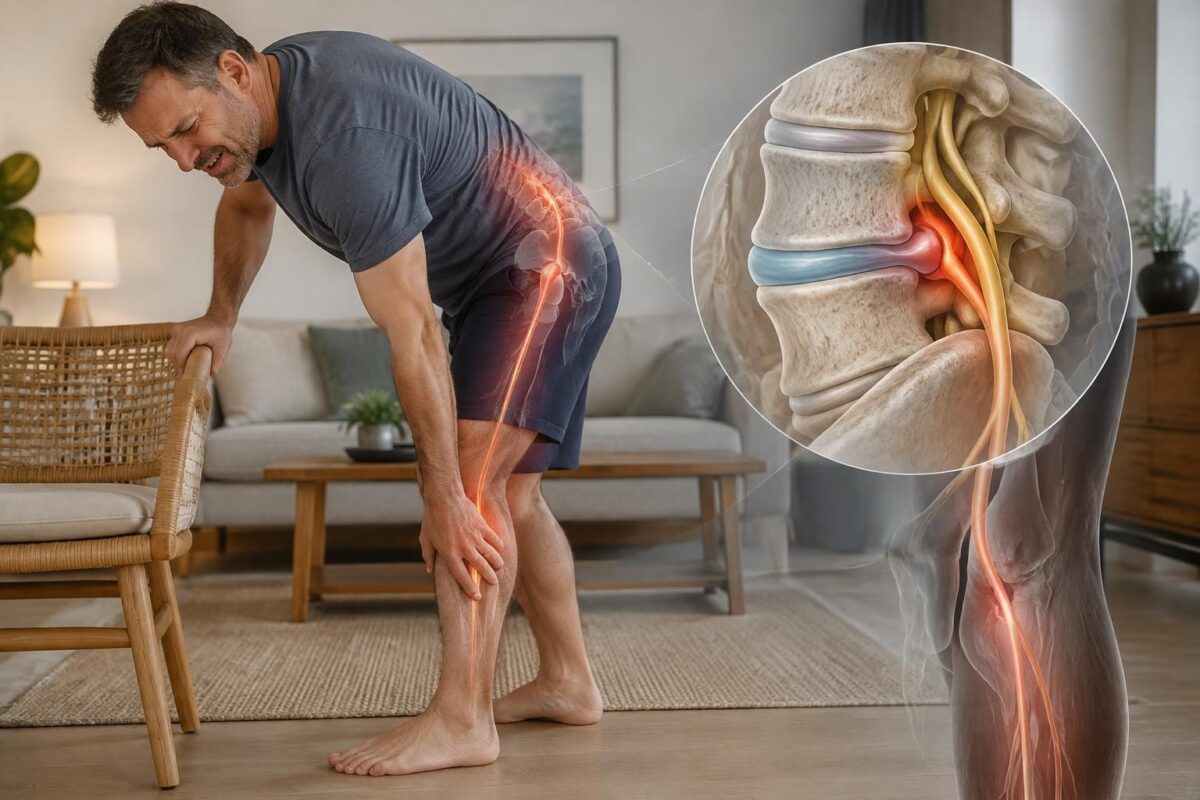
IN BRIEF A disc protrusion is a bulging of a disc that can irritate a nerve root and cause pain radiating down into the buttock and the calf, sometimes with tingling. However, it does not always cause symptoms. Evaluation helps…

Disc herniation and pain behind the thigh
IN BRIEF A disc protrusion is a bulging of a spinal disc, often without symptoms. A pain behind the thigh can be muscular or, if it originates from the back and is accompanied by tingling or numbness, related to nerve…

Disc herniation and pain in the buttock
IN SHORT A disc protrusion is a disc that bulges without its outer layer being ruptured. If it irritates a nerve root, it can contribute to buttock pain, sometimes accompanied by radiation down the leg, tingling, or numbness. It can…

L5-S1 protrusion and sciatic pain: pathway to the foot
IN BRIEF A L5-S1 disc protrusion is a disc that slightly bulges between the lumbar and sacral vertebrae. If it irritates a nerve root, pain may radiate from the lower back or buttock down the back of the leg to…

L4-L5 protrusion and sciatic pain: possible signs
IN BRIEF A L4-L5 disc protrusion is a bulging of the disc between two lumbar vertebrae. If it irritates the L5 nerve root, it can cause sciatica radiating from the buttock to the side of the leg and the top…
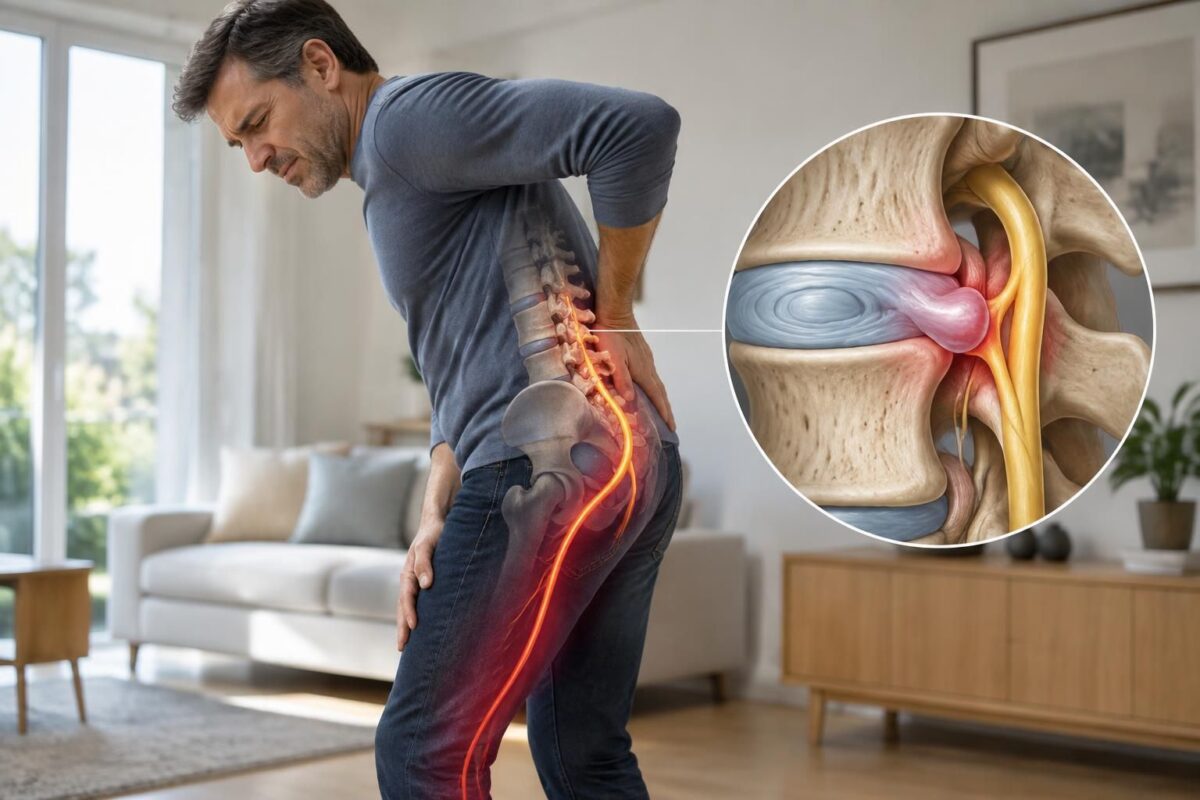
Disc protrusion and sciatica: when the disc touches a nerve root
IN BRIEF A disc protrusion is a disc that extends beyond its usual contour. If it irritates a nerve root, it can contribute to sciatica, with pain radiating into the buttock or leg, sometimes accompanied by tingling or weakness. An…

Dr Sylvain Desforges, B.Sc., D.O., N.D., osteopath, is the founding president of TAGMED and of the ACMA association. He dedicates his practice to chronic spinal pain, low back pain and symptoms compatible with sciatica, particularly when pain radiates toward the buttock, leg, calf, foot or toes.
Through SOS Sciatique, he publishes educational content on sciatica symptoms, possible causes such as disc herniation, disc narrowing, foraminal stenosis or irritation of a lumbar nerve root, as well as non-surgical approaches that may be considered according to the evaluation. At Clinique TAGMED, care may include, depending on the case, motorized neurovertebral decompression, specific osteopathic care or precision percussion.
For an evaluation related to sciatica treatment in Montreal / Mount Royal or sciatica treatment in Terrebonne, please consult the services available at Clinique TAGMED.
Medical disclaimer
The information published on SOS Sciatique is provided for educational purposes only and does not replace a consultation, diagnosis, opinion or treatment provided by a physician or another authorized healthcare professional. The author of this article is neither a medical doctor nor a specialist in a medical specialty recognized by the Collège des médecins du Québec. The osteopathic, manual medicine or functional support approaches described on this site do not constitute medical acts and are not intended to replace medical follow-up.
Consult a physician or emergency service in cases of loss of bladder or bowel control, anesthesia in the saddle area, significant or progressive weakness in the leg or foot, fever, recent trauma, severe pain or rapid worsening of symptoms. For more details, please read our Legal Notice.