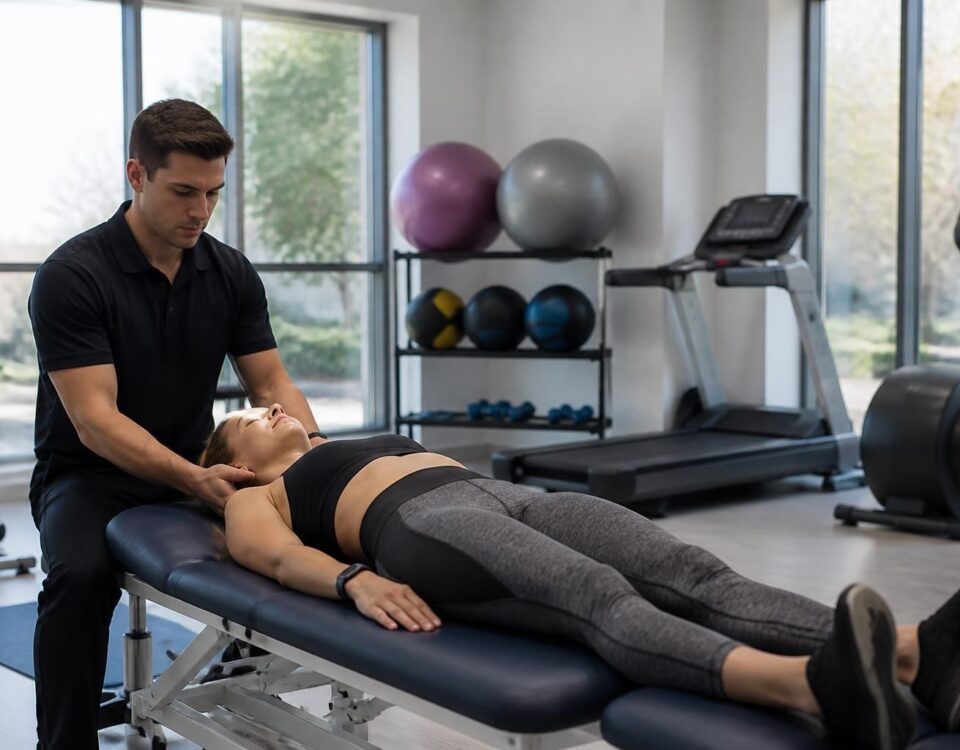
How neurovertebral decompression improves disc circulation
25/06/2026
Neurovertebral decompression and relief from pain related to degenerative discs
25/06/2026
In short
| In short, the neurovertebral decompression is one Non-invasive approach which applies a Controlled traction on the spine to reduce the pressure on the Intervertebral discs and the gristle. Its benefits keys include the relief fast from the pain and an Improving mobility Without surgery, with a reduced risk and one Quick return to activity. This method targets the lumbar and the cervical and can be associated with other therapies to optimize results. At Montreal, this service is particularly recommended for Chronic pain column and root symptoms, offering a quality of life improved while remaining non-invasive and effective. |
The innovations in neurovertebral decompression transform the treatment of back and cervical pain by offering a pathway non-invasive To improve the quality of life.
- Controlled axial traction on tables computerized and equipped with sensors to adjust the force in real time.
- Using advanced devices like DRX9000 which combines traction and relaxation to precisely target discs.
- dynamic follow-up and biofeedback to adapt the protocol according to the patient’s response.
- Custom Protocol Taking into account lifestyle and comorbidities, to maximize efficiency and safety.
- Integration with complementary therapies (laser, shock waves) for Reduction of inflammation and acceleration of healing.
- Potential Results: Decreased Pain, Improved Mobility and Faster Return to Daily Activities.
For those who wish to avoid surgery, these innovations offer a Effective alternative and sustainable to preserve spinal health.
The Innovations in neurovertebral decompression offer an approach non-invasive To relieve chronic spinal pain and improve quality of life. This article introduces key technologies, mechanisms and current clinical benefits. It also describes the possible care pathway in specialized clinics in Montreal and elsewhere. The goal is to provide clear, data-based information for patients with low back pain, neck pain and sciatica.
Context and objectives
Spinal pain affects a large number of people and impacts their daily activities. The neurovertebral decompression aims to reduce the pressure on the discs and on the nerves, without resorting to surgery. This approach improves mobility, function and well-being, while minimizing the risks associated with invasive interventions. It is part of an evidence-based care strategy adapted to each patient.
Key technologies and mechanisms
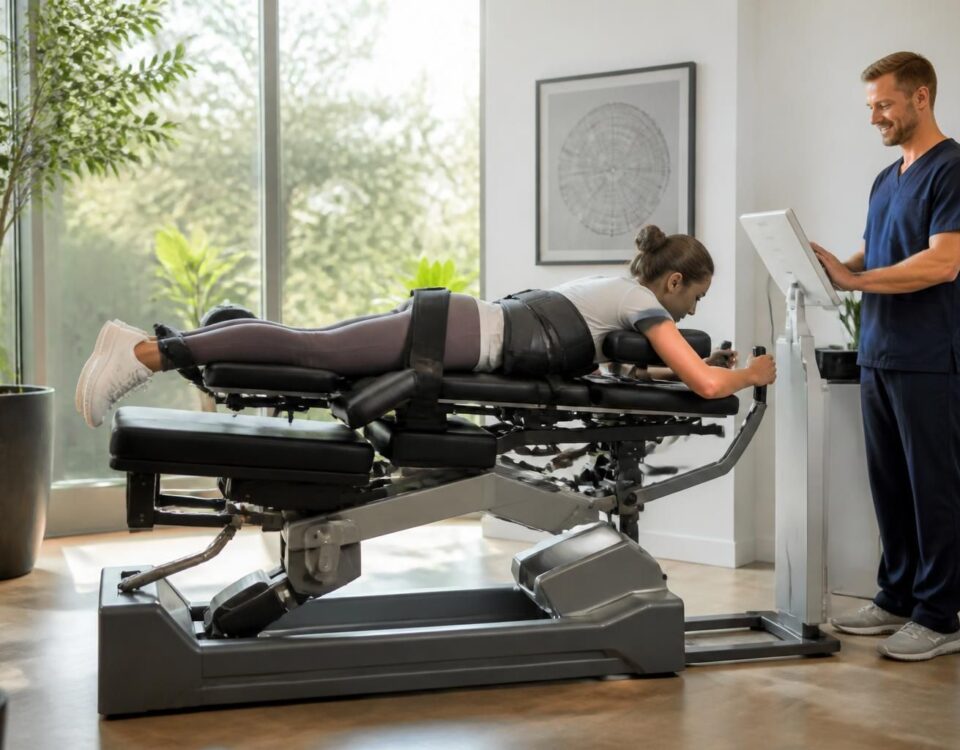
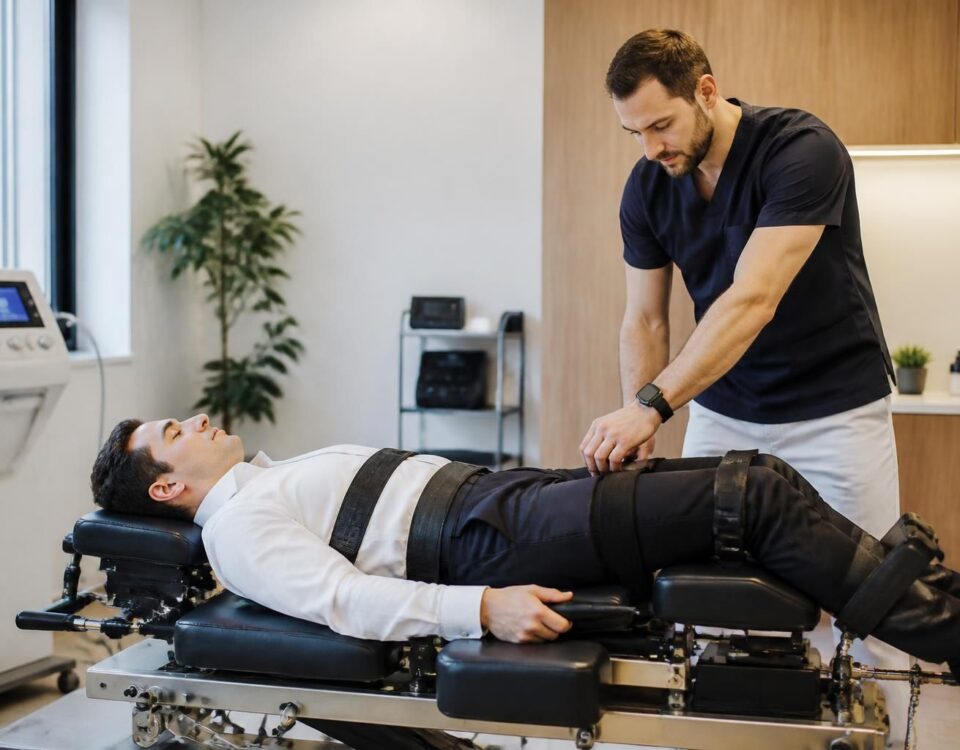
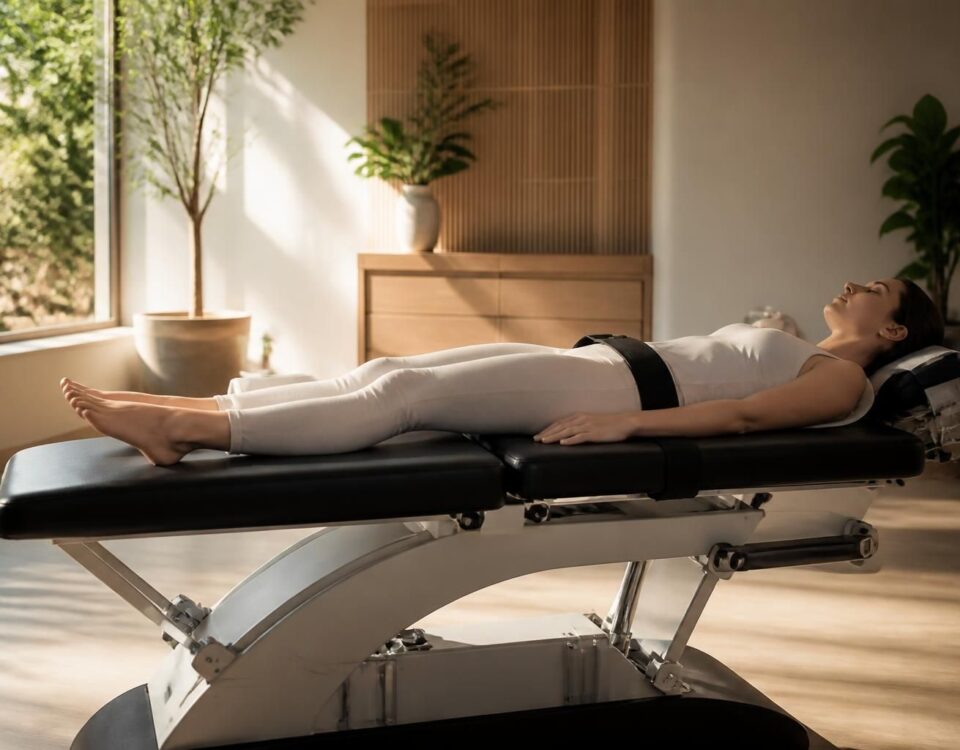
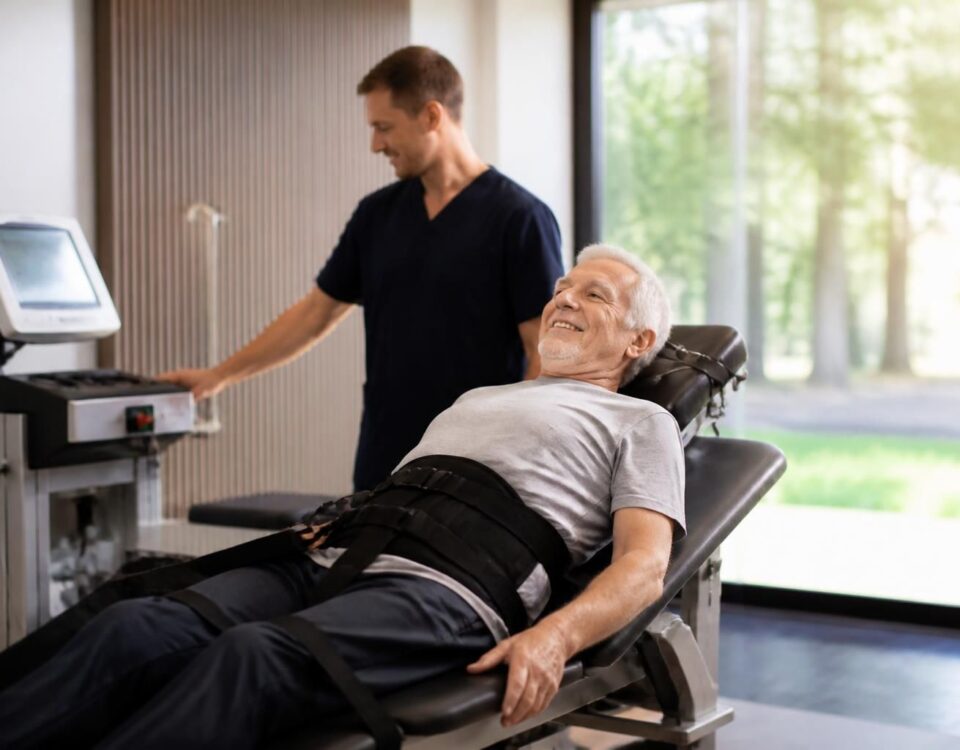
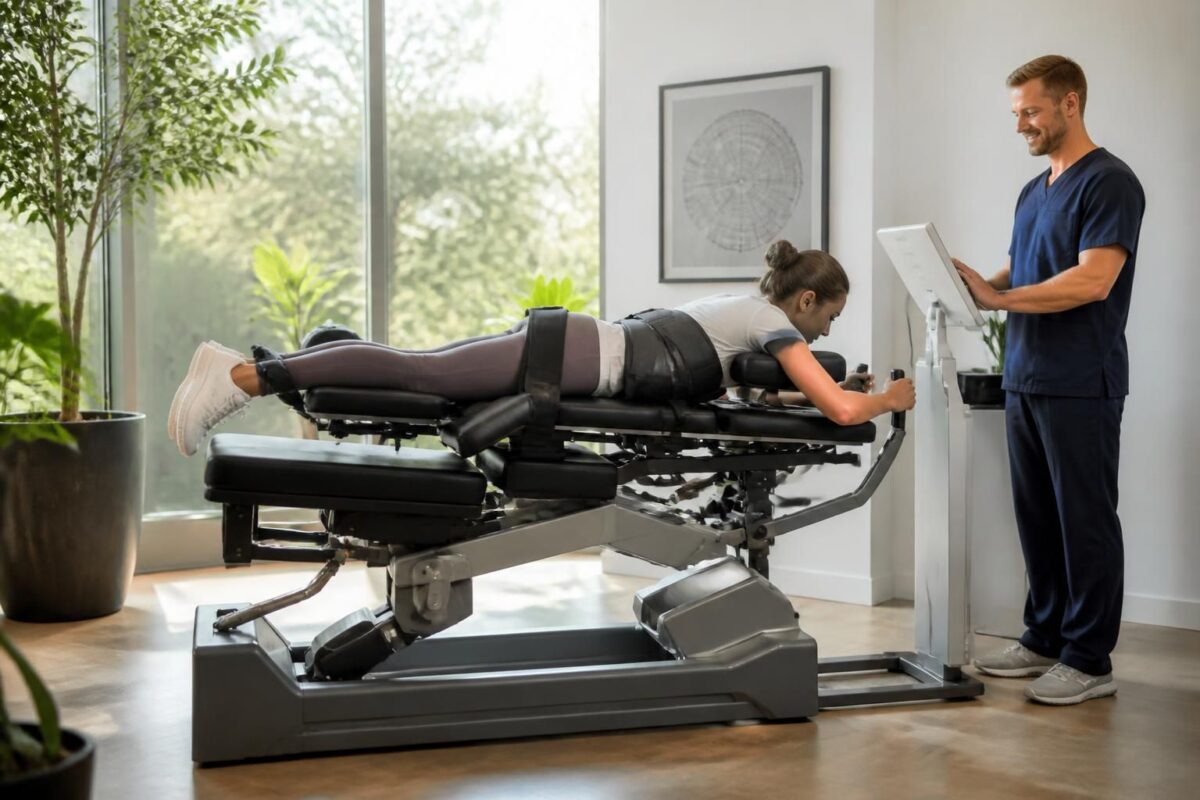
systems computerized traction apply a axial traction soft and targeted on the spine. These tables adjust the force in real time according to the patient’s response, for a personalized and comfortable treatment. the device DRX9000 Represents a major advance, combining traction and relaxation to promote healing and reduce pain in affected areas.
Another major advance is the use of the negative pressure, which promotes the retraction of discs and the improvement of local circulation. These modern technologies allow effective processing while remaining non-invasive, which reduces the risks and allows a quick return to the usual activities.
Integration and support
Decompression innovations can be associated with complementary therapies to optimize results. For example, modalities such as Class IV laser therapy and shock wave therapy can act in synergy with traction to decrease inflammation and support tissue healing. To explore these options, you can inquire with specialized clinics and dedicated resources such as neurovertebral decompression.
Evidence and results
Clinical reviews and recent studies highlight improved pain and mobility in patients with various spinal conditions following a decompression protocol. The reported results describe a sustained reduction in symptoms and a better quality of life, while avoiding complications associated with surgery. For those considering a non-surgical approach, these technologies offer a reliable and safe alternative.
Patient and safety journey
The care pathway is based on a screening assessment and adaptive protocols. Modern devices allow real-time monitoring and continuous adjustment of applied forces, in order to optimize treatment efficiency while maximizing comfort. This approach is particularly relevant for pathologies such as disc protrusions, stenosis and disc degeneration, without prescribing exercises or invasive stretching.
Access and resources
To learn more about technologies and services, you can consult the following resources and related clinics. The Tagmed Clinic offers services in Montreal and Terrebonne. You can also listen to dedicated content such as podcasts on sossciatica.com and access additional information on technologies and their impact on post-intervention recovery.
specialized resources describe the Technological innovations in decompression equipment and clinical perspectives. For a practical and technical vision, consult the pages dedicated to computerized systems, advanced decompression tables and devices such as the DRX9000™. Articles and guides from clinical sources help to understand how these protocols fit into a multidisciplinary approach focused on safety and efficacy.
In addition, access to these technologies is facilitated by clinics recognized as TagMed, where professionals trained in establishments such as NUMSS and NAO are involved in a logic of practice based on evidence. Relevant professional associations, such as ACMA and the College of Canadian Osteopaths, support the ethical and scientific framework for these treatments.
To better understand the mechanisms and results of decompressions, you can consult resources like Decompression-neurovertebral.Technology, and other sites specializing in non-surgical approaches. However, we recommend discussing each option with your doctor or certified osteopath.
To learn more about innovations and services, visit TagMed – Technological Innovations.
“Medical disclaimer: The information and advice provided on this site does not replace the health professional’s benefit, diagnosis or treatment. Please note that Dr. Sylvain Desforges osteopath is neither a doctor of medicine nor a doctor, and is not a specialist in a medical specialty as defined by the Collège des Médecins du Québec. Manual medicine, functional medicine and sports medicine as described on this site exclude any medical treatment or diagnosis made by a doctor or specialist doctor. Always consult your doctor for any medical questions. For more details, please read our full legal notice. »
Innovations in neurovertebral decompression — Performance and safety axis for a better quality of life
- Controlled axial traction — Targeted reduction in disc and nervous pressure.
- Computerized devices with sensors — Real-time adjustment and custom protocol.
- DRX9000 — Combination traction and relaxation to accelerate healing.
- SpineMed tables and equivalents — Accurate decompression via negative pressure.
- negative pressure — Promotes disc retraction and improves local blood supply.
- Real-time tracking — Measurement of response and adaptation of treatment.
- Complementary therapies — Integrated laser and shock waves to reduce ignition.
- Custom protocols — Adaptation to the patient’s needs and lifestyle.
- Accessibility and security — Non-invasive approach, rapid resumption of activities.
- Improved quality of life — Sustainable reduction of pain and regained mobility.

This article highlights the latest advances in the neurovertebral decompression and explains how they can sustainably improve the quality of life. It describes the technologies, personalized approaches and possible synergies with other therapies, while offering practical recommendations for patients and professionals.
Controlled axial traction and computerized systems
Recent innovations are based on a Controlled axial traction which acts gently on the spine to reduce the pressure exerted on the intervertebral discs and nerves. Modern decompression tables, with sensors and algorithms, adjust strength and duration in real time depending on the patient’s response. This customization enhances comfort during the sessions and maximizes the effectiveness of the treatment, without the need for surgery.
flagship technologies and devices
Systems such as computerized devices and advanced equipment enable precise targeting of painful areas. Their dynamic adjustment ability helps to optimize protocols and reduce risks, providing a more secure and more appropriate experience for each clinical profile.
Dynamic tracking and security
Real-time tracking allows you to evaluate the effects of each session and to adjust the parameters immediately. This data-driven approach improves tolerance, accelerates recovery and can prevent recurrences by rapidly adapting the treatment plan to fluctuations in the patient’s condition.
The long-term benefits of neurovertebral decompression for spinal health
In short In short, the neurovertebral decompression is a non-invasive approach that decreases the Pressure on intervertebral discs and nerves, favoring the Natural regeneration and tissue recovery. Its long-term benefits include Lasting pain reduction, Improving mobility and from the posture,…

Neurovertebral decompression and mobility: a return to an active life
In short In short, the neurovertebral decompression is therapy non-invasive who uses a gentle traction To create a space between the vertebrae and reduce the pressure on the Intervertebral discs and the nerves. It promotes a bloodstream improved, lowers tension…
Integration with complementary therapies
Decompression technologies integrate seamlessly with other non-invasive approaches, such as laser therapies and shock waves. This Therapeutic synergy Acts on inflammation, promotes local circulation and supports tissue repair, while reducing pain and functional limitations.
holistic and personalized approach
By combining decompression, targeted stimulation and rehabilitation programs, it is possible to adapt the care pathway to daily activities and patient mobility objectives. This customization promotes not only diminished pain, but also the quick return to meaningful gestures and activities.
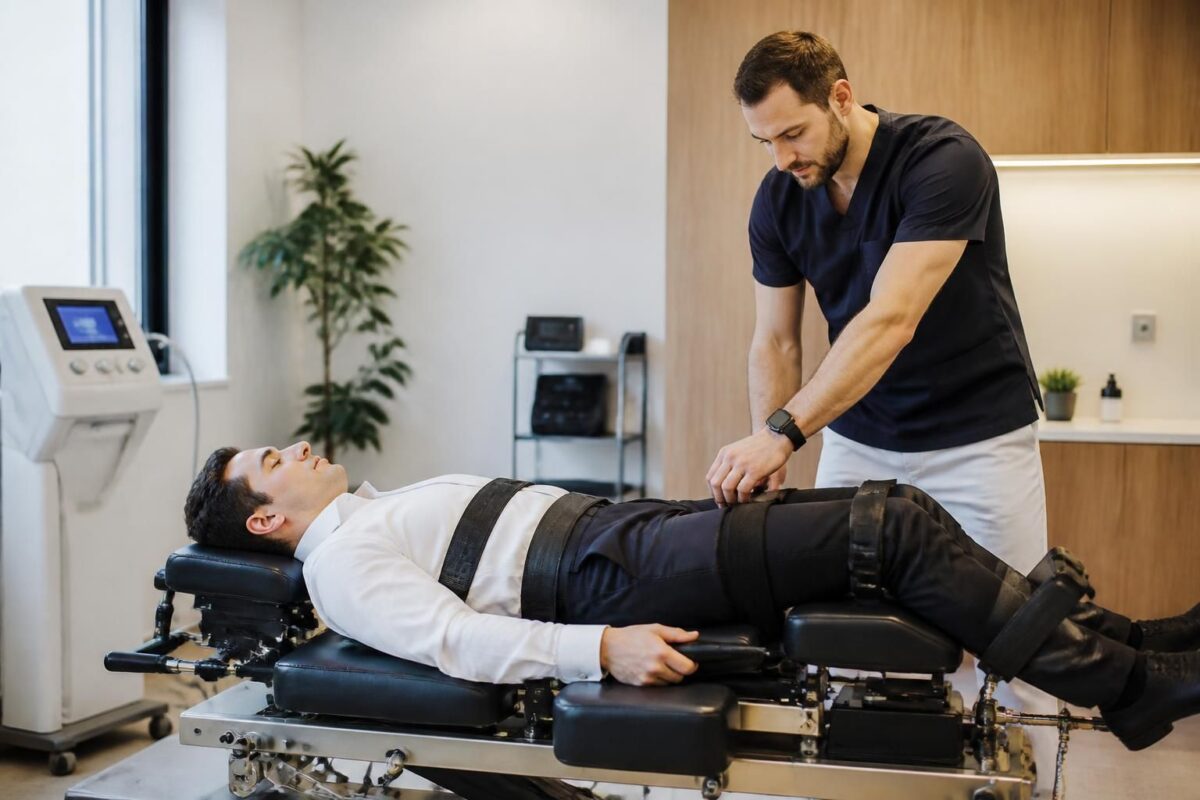
How Neurovertebral Decompression Prevents Diffuse Chronic Pain
In short decompression neurovertebral is one Non-invasive method aimed at reducing the Pressure on the intervertebral discs and the nerves, in order to prevent Diffuse chronic pain. It improves the circulation and thedisc hydration, decreases inflammation and promotes better mobility.…
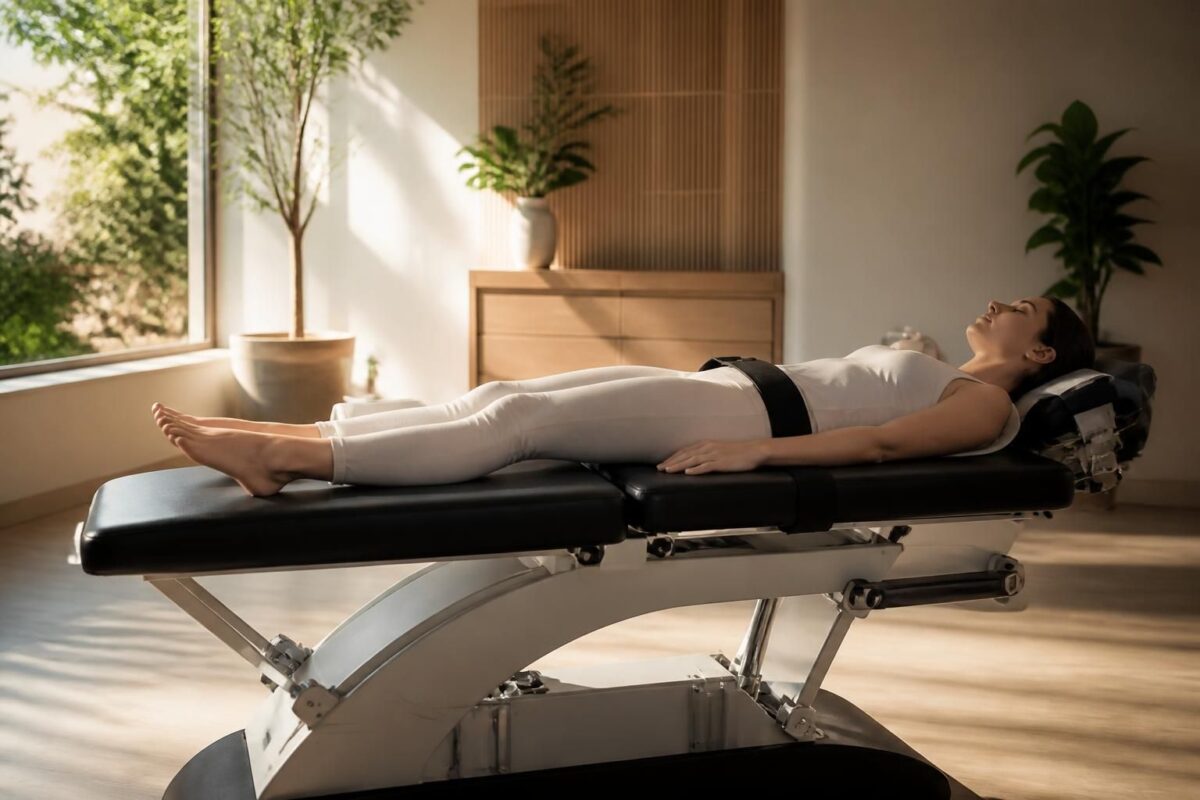
Neurovertebral Decompression and Body Alignment: Restoring Natural Balance
In short In short, neurovertebral decompression is one Non-invasive approach who restores theBody Alignment and thenatural balance back and neck. She acts by a Controlled traction of the spine to widen the intervertebral space and reduce the Pressure on discs…
Patient-centric approach and practical advice
To make the most of innovations, it is recommended to carry out an early assessment and build a Custom Plan which takes into account lifestyle, age and comorbidities. The goal is to achieve lasting results and a reduction in painful episodes.
Key elements of the course
– Choose a multidisciplinary care including osteopathy, physiotherapy and ergonomic advice.
– Prioritize non-invasive sessions and adaptive protocols that take into account tolerance and recovery rate.
– Adopt favorable lifestyle habits: adapted physical activity, sufficient hydration and weight control, in order to support the long-term effects of decompression.
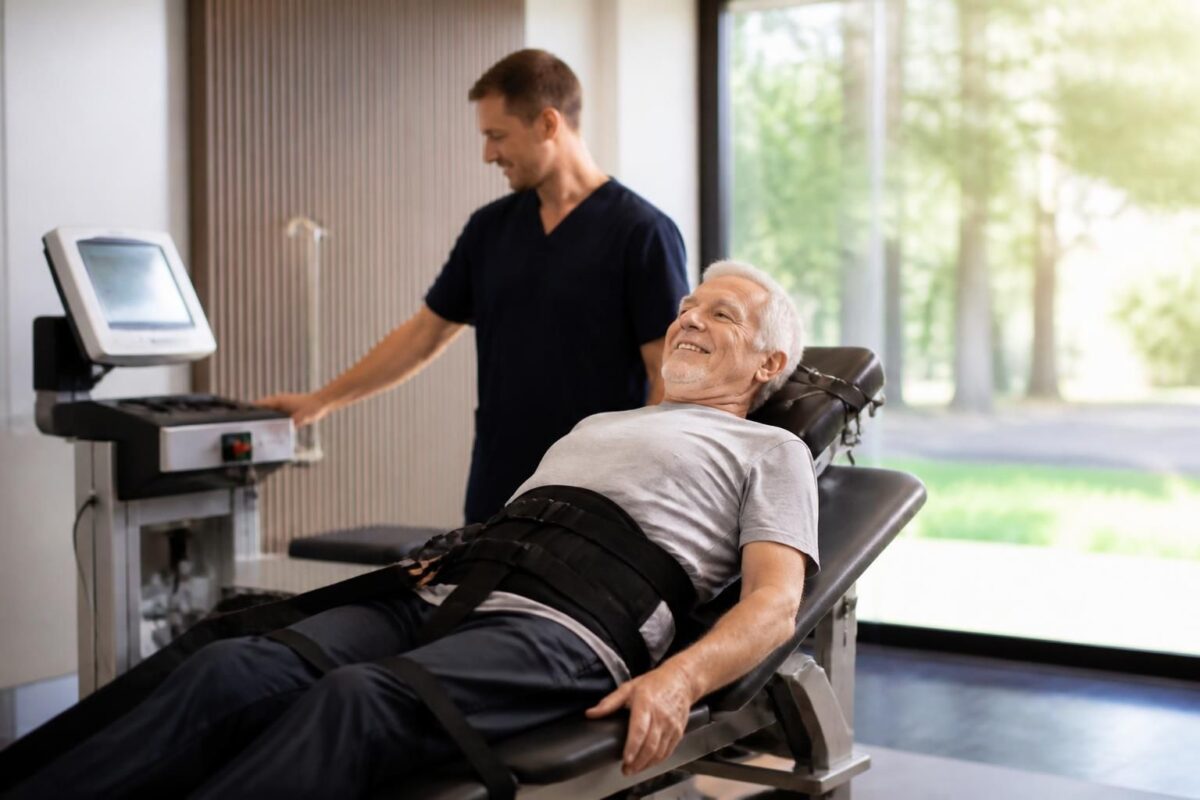
Why neurovertebral decompression is a lasting solution for active seniors
In short In short, the neurovertebral decompression is one Non-invasive therapy which sustainably relieves spinal pain in the spine active seniors By creating, by a Soft and controlled traction, a space between the vertebrae. At Montreal, it is recognized as…
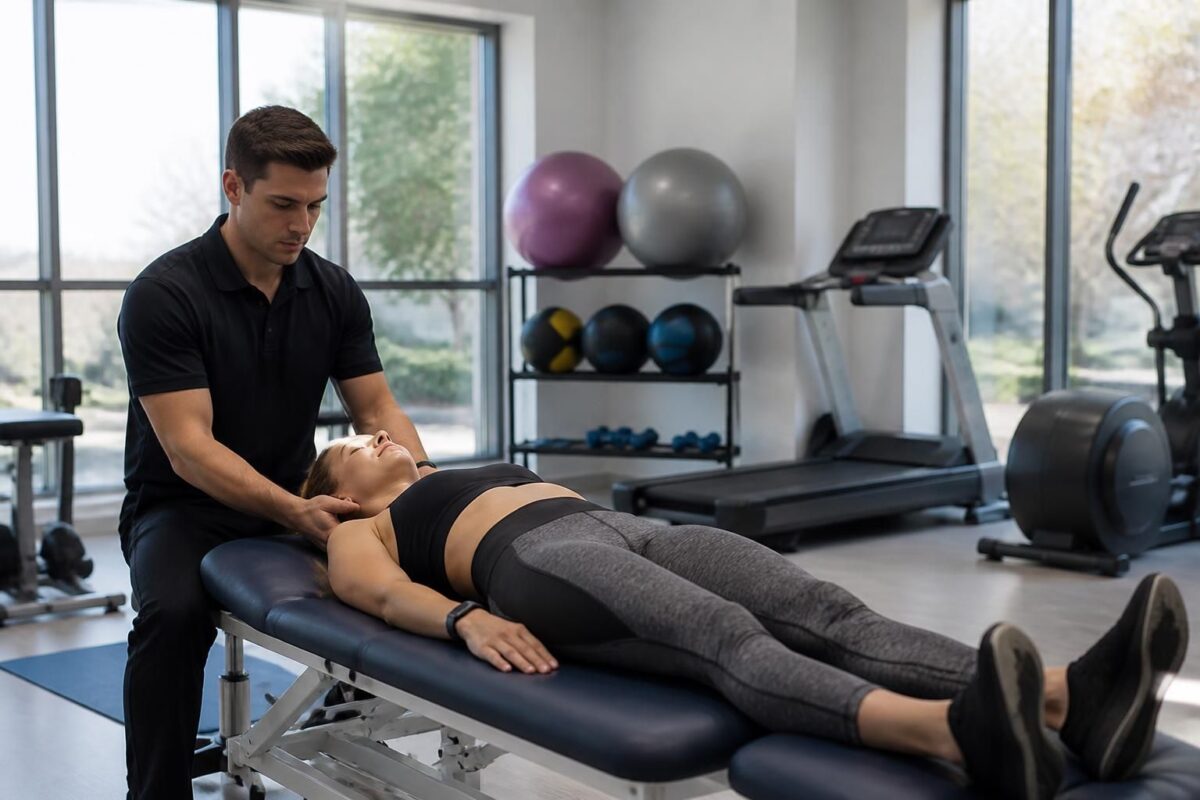
Neurovertebral decompression and recovery after severe sports injury
In short In short, the neurovertebral decompression is one Non-invasive method to Relieve the pressure on the Intervertebral discs and the gristle Via a Controlled traction, to facilitate the recovery After a severe sports injury. It improves the bloodstream towards…
Prevent recurrences and optimize well-being
Innovations offer real prospects to prevent recurrences of pain related to spinal disorders. By integrating supervised decompression with gentle mobility exercises and targeted rehabilitation, patients can sustainably improve their range of motion and spinal stability, while reducing the use of drug treatments.
Final recommendations
Consider neurovertebral decompression as a key step in a personalized care plan, in addition to a healthy lifestyle and regular follow-up. Request data-based assessments, focus on adaptive protocols, and ensure support from competent professionals to maximize long-term benefits and quality of life.
| Innovation / Technology | Impact on quality of life |
|---|---|
| Controlled axial traction (DRX9000 and similar systems) | Reduces disc pressure, relieves pain and improves mobility without surgery |
| Computerized decompression tables | Customization and increased comfort thanks to real-time adjustments |
| Negative pressure and vacuum effect | Disk retraction and healing acceleration |
| Integration of complementary therapies (laser, shock waves) | Reduced inflammation and faster recovery |
| Dynamic tracking systems and sensors | Measured progress and rapid adaptation of the protocol |
| Synergistic traction-relaxation | Double action on discs and nerves, better pain reduction |
| Non-invasive approach vs surgery | Less risk and quick return to activities |
| Personalized protocol according to lifestyle | Targeted sessions and adaptation of daily activities |
| Accessibility and long-term cost | Sustainable quality of life and better cost-effectiveness |
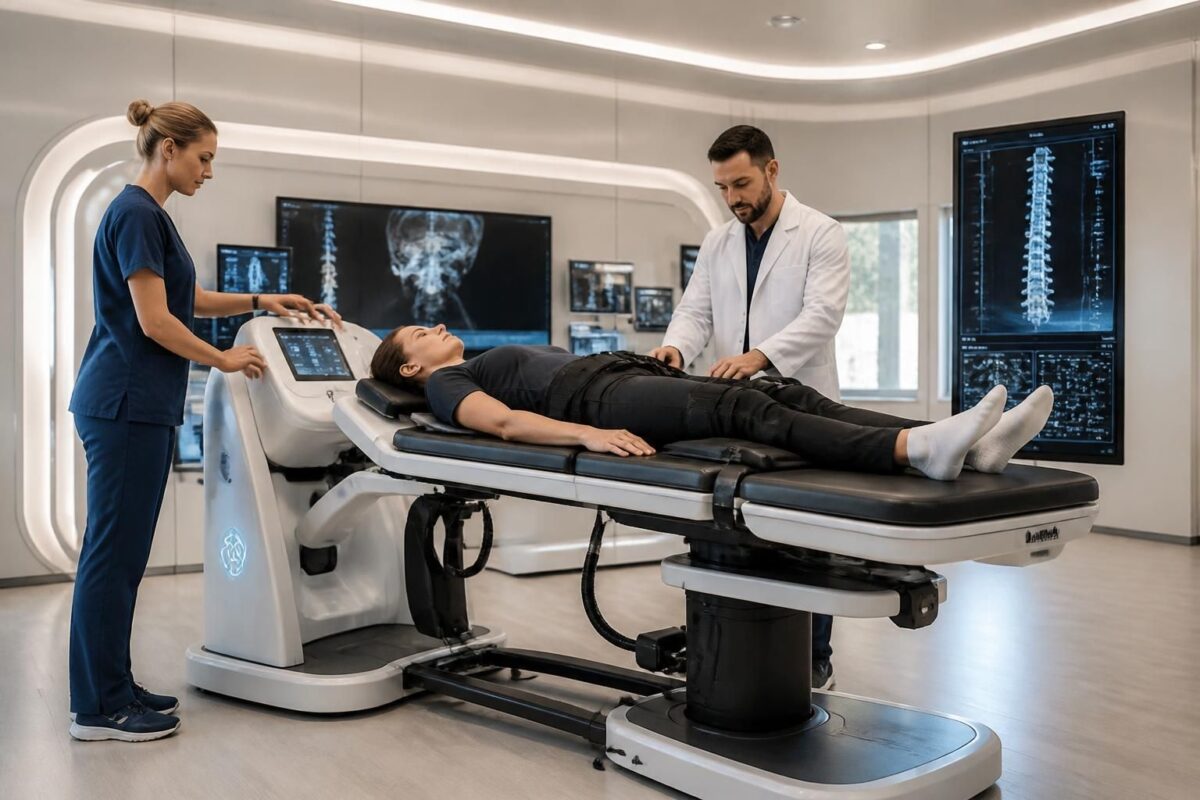
Recent innovations in neurovertebral decompression technologies
In short In short, the neurovertebral decompression is an approach non-invasive Aiming to reduce pressure on discs and nerves, and promote tissue regeneration. At Montreal, it is positioned as an effective option for lower back pain and herniated discs. The…
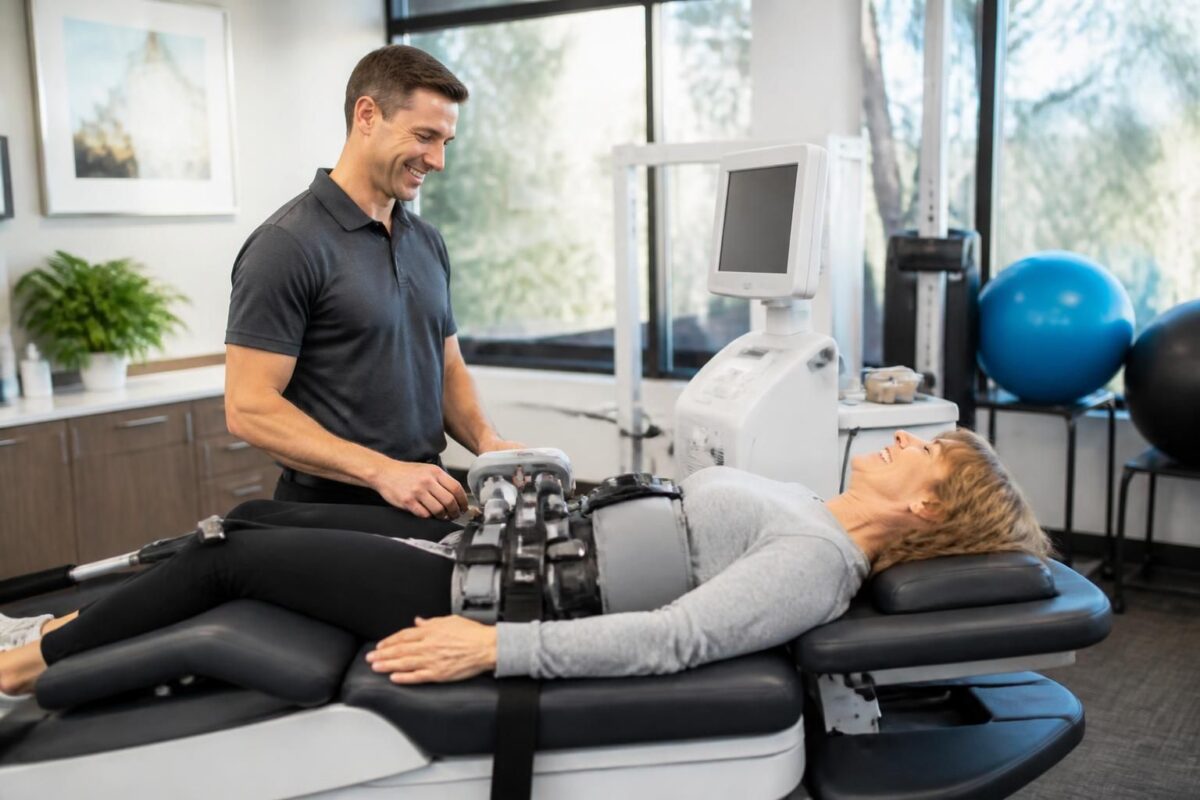
Neurovertebral decompression and diffuse pain: an appropriate solution
In short In short, the neurovertebral decompression is one Non-invasive solution For diffuse pain related to nerve irritation of the spine. She acts in Reducing pressure on intervertebral discs and nerves and improving the bloodstream, which promotes recovery and the…
Testimonials on innovations in neurovertebral decompression and their impact on quality of life
Since the arrival of innovations in neurovertebral decompression, many people have seen a significant improvement in their quality of life Thanks to personalized protocols, computerized traction systems and complementary therapies that act in synergy. These testimonies illustrate the concrete impact of these advances.
Émilie, 37, Montreal: “Innovations like the DRX9000 and the table computerized gave me lasting relief. I have regained mobility and I can enjoy my daily activities without pain again, which has changed my life. »
Marc, 45, Laval: “Thanks to the Controlled axial traction and at Custom Protocol, my cervical pains have clearly diminished and I was able to resume my sports sessions. I feel listened to and supported in a way that suits my body.”
Sophie, 29, Terrebonne: “The association of complementary therapies such as the laser and the shock waves With decompression allowed me to recover faster and without surgery. My energy comes back and I find a real serenity in my movements. »
Jean, 52, Montreal: “The Real-time tracking and the sensors which adjust the treatment continuously were decisive. After a few sessions, the pain decreased and my mobility improved tangibly. »
Céline, 41, Terrebonne: “The combination DRX9000 and the technique of negative pressure reduced my pain and improved my flexibility. I feel more active on a daily basis and I know that I can count on non-invasive solutions to stay healthy. »
In recent years, the neurovertebral decompression established itself as a major approach to treating chronic spinal pain. This non-invasive therapeutic pathway is based on precise mechanical principles and intelligent technologies that aim to reduce pressure on discs and nerves, while promoting natural healing. The rise of these innovations has made it possible to offer a Sustainable improvement in quality of life For thousands of patients who are looking for alternatives to surgery or symptomatic treatments.
At the heart of this development, the systems of Controlled axial traction and the Computerized tables have introduced unprecedented customization. Thanks to integrated sensors, the force and the duration of traction adjust in real time according to the patient’s response, guaranteeing an approach patient-centric and minimizing discomfort during sessions. This dynamic adjustment ability helps to optimize the results and establish a relationship of trust between the practitioner and the patient, the key to realistic and effective rehabilitation.
Among the iconic devices that today shape the practice, there are advanced systems such as the DRX9000™ and other decompression tables with sophisticated algorithms. These tools allow a Soft and targeted traction, associated with guided relaxation, favoring the rehydration and tensioning of intervertebral tissues. In addition, dynamic tracking technologies immediately adjust the parameters, which translates into a more comfortable treatment experience and tangible recognition of clinical improvements by the patient.
But the innovation doesn’t stop there. The integration of complementary therapies, such as laser advanced class and shock waves, strengthens the anti-inflammatory effect and accelerates tissue recovery. Neuromodulatory approaches such as Pulse Align bring an extra dimension by acting on the choppers to restore muscle balance and reduce tension, completing decompression and facilitating a faster return to normal activity.
Clinically, the focus is on a Full pre-assessment and on Custom protocols that take into account the lifestyle, daily activities and patient goals. This evidence-based approach ensures that each session is part of a coherent journey, with measurable objectives and continuous monitoring of progress. The objective is clear: sustainably relieve pain, improve the mobility and prevent recurrences, while reducing the risks associated with more invasive interventions.
The results observed result in often significant returns from activity: better posture, decrease in radicular pain, and a regained ability to practice sports or professional activities. This dynamic benefit is part of a logic of prevention and rehabilitation which calls for a wider adoption of non-invasive technologies in musculoskeletal care pathways. Innovations in neurovertebral decompression are founded on a lasting offer where the patient regains autonomy and quality of life, without systematically resorting to surgery.
In the future, research and development promises to broaden indications and refine protocols through even smarter systems and the integration of new complementary therapies. Neurovertebral decompression thus asserts itself as a preventive and curative way, restored to the heart of modern treatments dedicated to an active and painless life.
This conclusion summarizes the key points of innovations in neurovertebral decompression and their influence on the quality of life. It highlights an approach non-invasive based on a Controlled axial traction, systems computerized and complementary therapies to sustainably improve the daily lives of patients.
The Technological advances recent ones radically transform the practice by proposing Computerized decompression tables And some Advanced devices that adjust traction in real time. This progression allows personalization treatment and better security, while offering an alternative non-invasive to surgery, with a rapid resumption of activities. To explore these developments, refer to CE#ATFP_CLOSE_TRANSLATE_SPAN# Resource on major evolutions.
These innovations result in an earlier and lasting relief of pain, an improvement in the mobility and a significant reduction in the use of surgical procedures. The DRX9000™ device and axial traction systems facilitate tissue rehydration and recovery, contributing to Sustainable improvement in quality of life. To understand how decompression supports chronic pain prevention, see CE#ATFP_CLOSE_TRANSLATE_SPAN# Analysis.
The use of protocols custom and at Real-time tracking Allows you to adjust the sessions according to the patient’s response, optimizing effectiveness and minimizing discomfort. This integrated approach is reinforced by combining with complementary therapies, such as laser or shock waves, to maximize relief and accelerate healing. To learn more about reducing disc tensions and measurable benefits, see CET#ATFP_CLOSE_TRANSLATE_SPAN# Article.
Finally, future prospects and ongoing innovations promise increased accessibility and even better efficiency. Dedicated resources describe the Future innovations and the state-of-the-art which will still raise the decompression protocols. For a global view of future developments, click LES#ATFP_CLOSE_TRANSLATE_SPAN# Future Innovations And discover the options that will open tomorrow. Additional readings on treatment adaptation for athletes and advanced cases are available via CE#ATFP_CLOSE_TRANSLATE_SPAN# FAQ.
For those who want to go further, resources such as tagmed,#ATFP_CLOSE_TRANSLATE_SPAN# DR#ATFP_CLOSE_TRANSLATE_SPAN# DESFORGES — Equipment innovations, and Innovations#ATFP_CLOSE_TRANSLATE_SPAN# Techniques for disc pinching Offer valuable insights into protocols and results. For an overall panorama, see also les#atfp_close_translate_span# Major evolutions and A#ATFP_CLOSE_TRANSLATE_SPAN# Durable solution.

Dr Sylvain Desforges, B.Sc., D.O., N.D., osteopath, is the founding president of TAGMED and of the ACMA association. He dedicates his practice to chronic spinal pain, low back pain and symptoms compatible with sciatica, particularly when pain radiates toward the buttock, leg, calf, foot or toes.
Through SOS Sciatique, he publishes educational content on sciatica symptoms, possible causes such as disc herniation, disc narrowing, foraminal stenosis or irritation of a lumbar nerve root, as well as non-surgical approaches that may be considered according to the evaluation. At Clinique TAGMED, care may include, depending on the case, motorized neurovertebral decompression, specific osteopathic care or precision percussion.
For an evaluation related to sciatica treatment in Montreal / Mount Royal or sciatica treatment in Terrebonne, please consult the services available at Clinique TAGMED.
Medical disclaimer
The information published on SOS Sciatique is provided for educational purposes only and does not replace a consultation, diagnosis, opinion or treatment provided by a physician or another authorized healthcare professional. The author of this article is neither a medical doctor nor a specialist in a medical specialty recognized by the Collège des médecins du Québec. The osteopathic, manual medicine or functional support approaches described on this site do not constitute medical acts and are not intended to replace medical follow-up.
Consult a physician or emergency service in cases of loss of bladder or bowel control, anesthesia in the saddle area, significant or progressive weakness in the leg or foot, fever, recent trauma, severe pain or rapid worsening of symptoms. For more details, please read our Legal Notice.