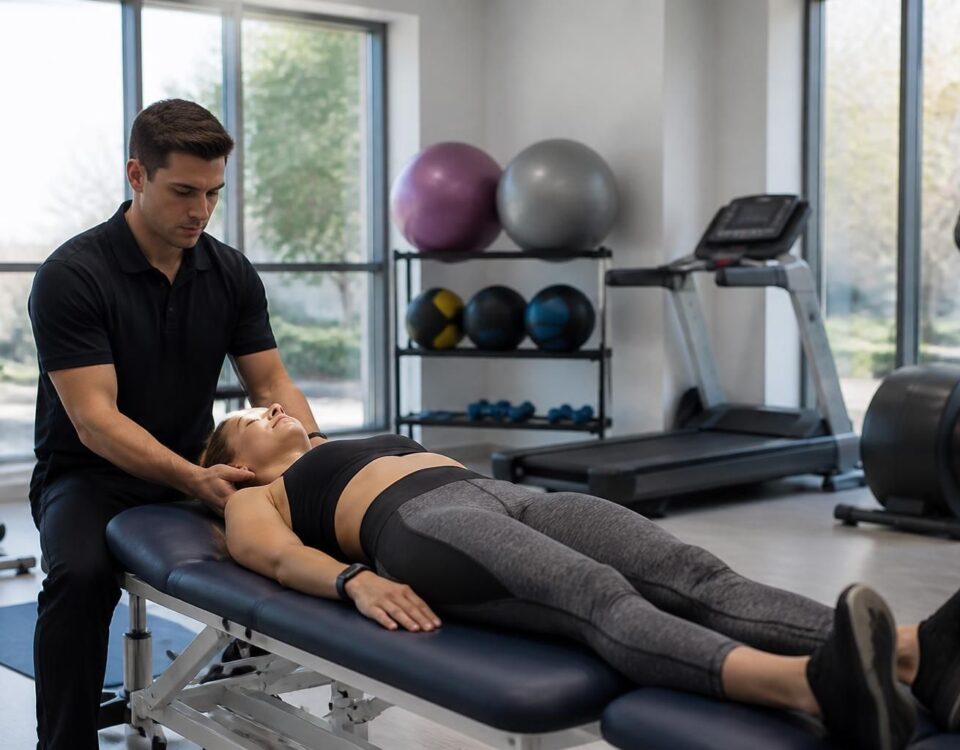


How neurovertebral decompression helps reduce inflammation
25/06/2026
Why neurovertebral decompression is essential after an accident
25/06/2026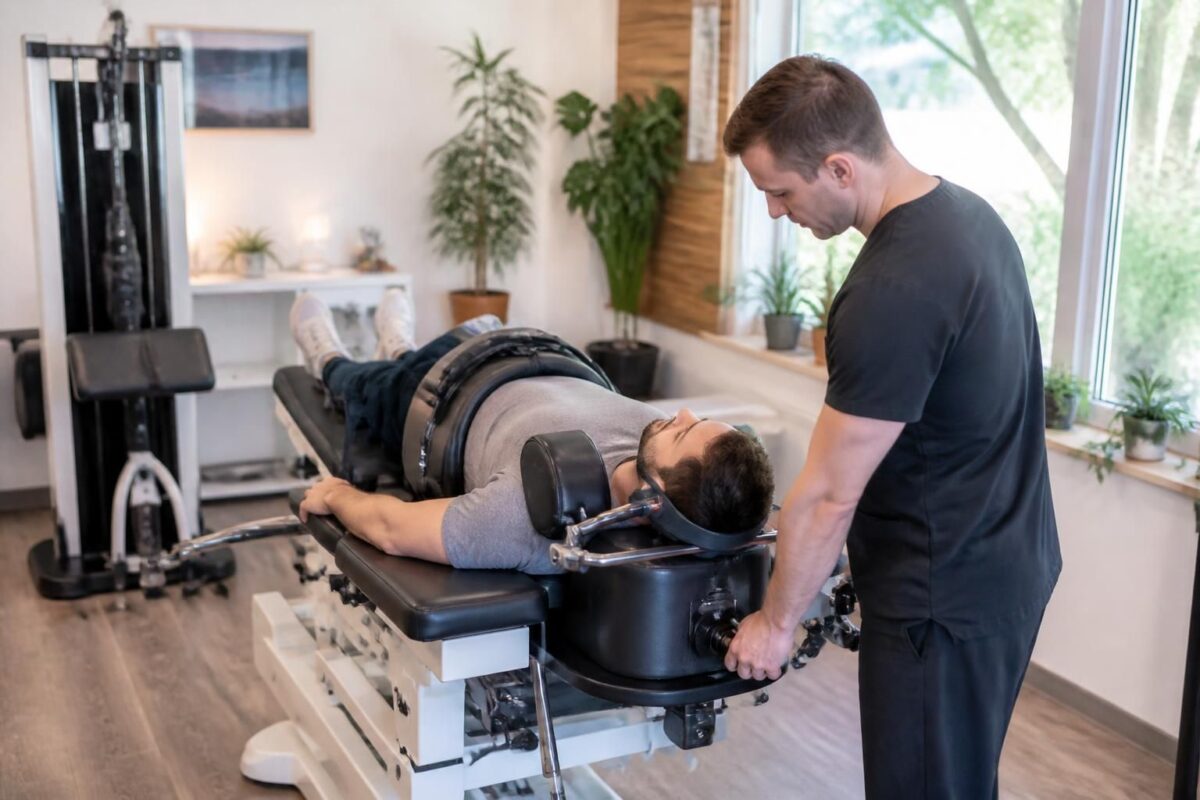
In short
| In short, the neurovertebral decompression is one Non-invasive approach who uses a Controlled traction To create a space between the vertebrae and reduce the nerve pressure and the Intervertebral discs, favoring a vertebral alignment and a better mobility. In Montreal, this service is particularly recommended for people with chronic pain related to misalignment and to improve posture and flexibility on a daily basis. Benefits includeImproved spinal alignment, the pain reduction, LImproved blood circulation and strengthening the stabilizing muscles, while remaining non-invasive and painless. |
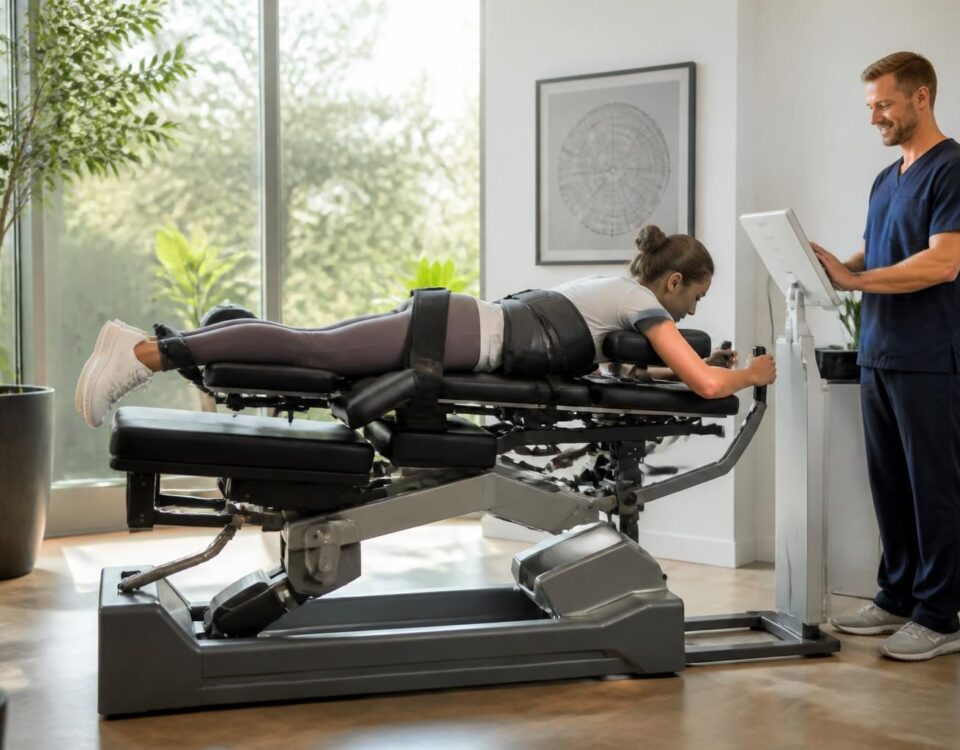
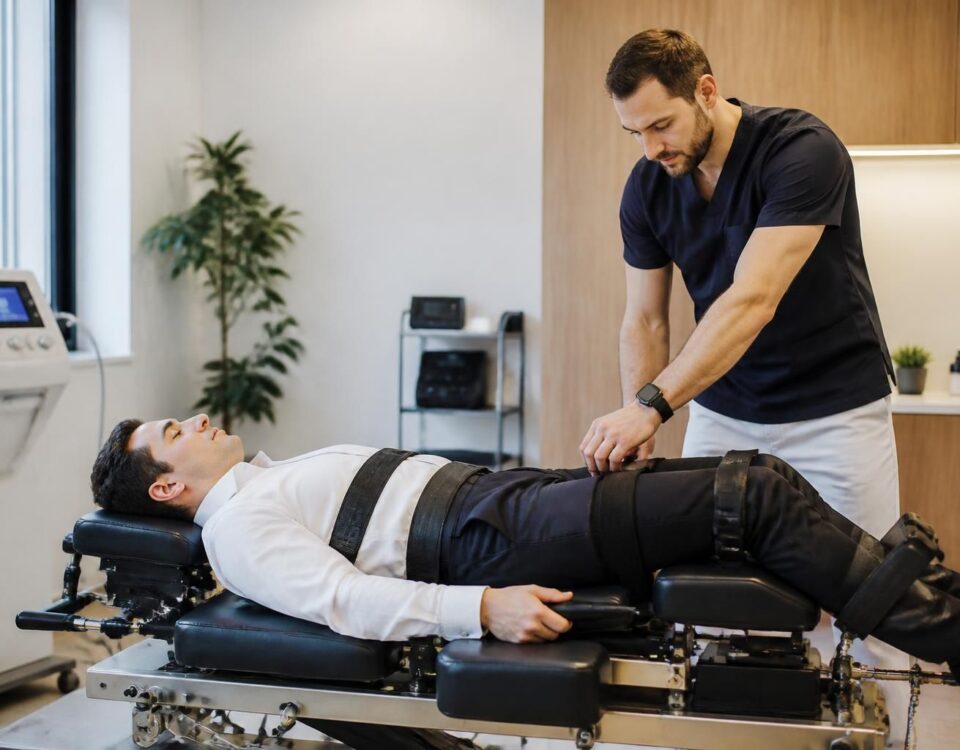
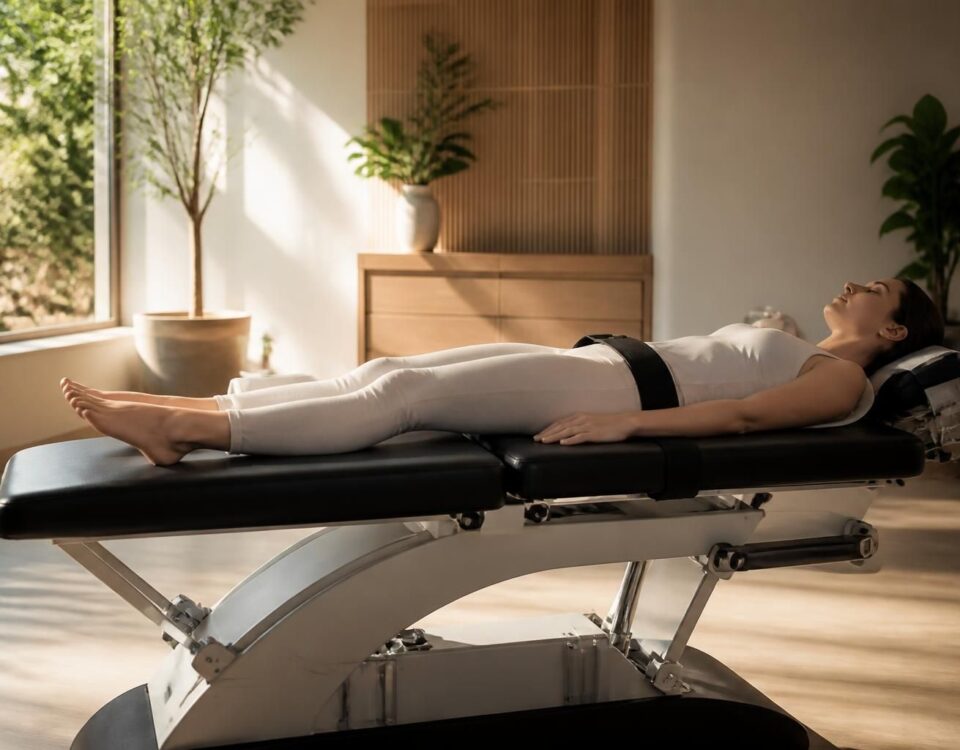
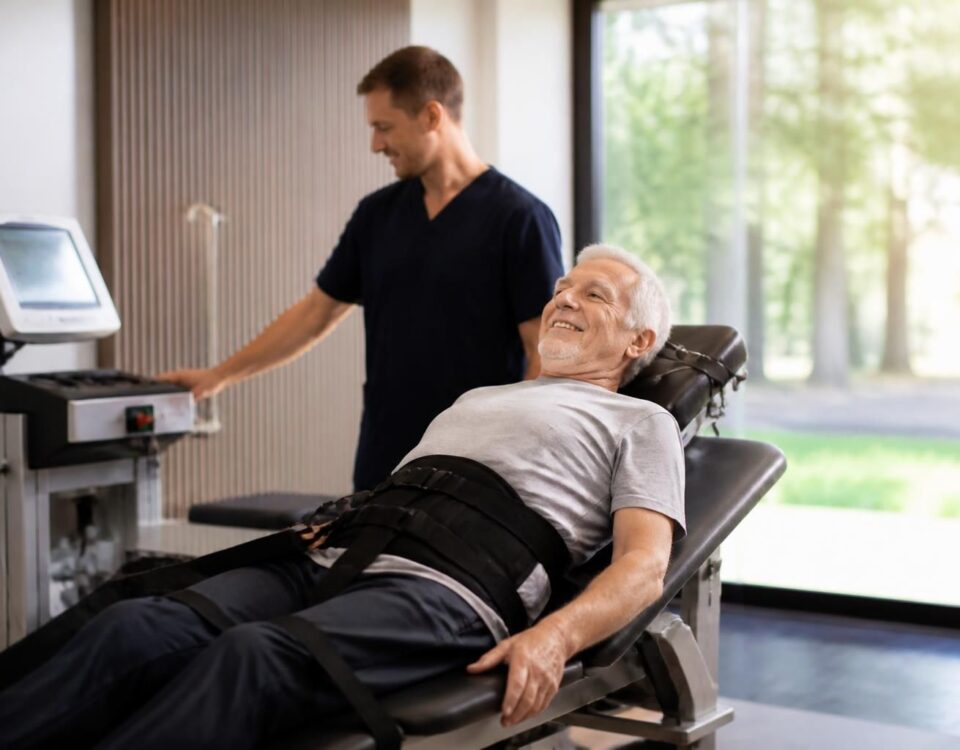
The neurovertebral decompression is an approach non-invasive which aims to optimize thevertebral alignment by controlled traction between the vertebrae.
By creating a intervertebral space, it decreases the nerve pressure and the Intervertebral discs, promoting natural repositioning.
This action improves blood circulation and the intake of nutrients, supporting the tissue regeneration and reducing muscle tension.
Typical results include better mobility, a refined posture and a reduction in the risk of Chronic pain, with long-term preventive effects.
integrated into an approach multidisciplinary, it can combine with other approaches to sustainably optimize spinal health.
Neurovertebral decompression is a non-invasive approach that aims to improve thevertebral alignment and the vertebral health by reducing the pressure on the nerves and intervertebral discs. This article presents the mechanisms, indications, benefits and integration of this therapy into a global care program, particularly in the TagMed clinics in Montreal and Terrebonne. It also emphasizes safety, expected outcomes and useful resources for patients.
Principle and mechanisms
The neurovertebral decompression Applies a Controlled traction on the spine. This action creates spaces between the vertebrae and decreases the pressure exerted on the intervertebral discs and spinal nerves. This pressure reduction allows a natural repositioning of the vertebrae and promotes thevertebral alignment global. The result is better blood circulation around the spinal tissues and a decrease in muscle tension associated with postural imbalances.
Indications and expected results
This approach is particularly useful for lumbar and cervical pain related to conditions such as herniated discs, protrusions and foraminal or spinal strictures. Patients may experience Improving mobility and an pain reduction After a few sessions, while benefiting from a preventive effect on the future wear of the column. The goal is to restore a more natural posture and a painless daily action ability.
Impact on alignment and mobility
By creating a space between the vertebrae, decompression promotes the realignment of discs and vertebral segments. This contributes to a better posture and to a mobility increased. A correctly aligned column distributes the loads better and reduces the risk of chronic pain associated with poor postural patterns.
Role of associated technologies
Complementary technologies can be used to optimize results, including neuromodulation systems that support muscle relaxation and circulation. These approaches are integrated into multidisciplinary management and aim to increase the overall effectiveness of the treatment.
Integration into a care program
Neurovertebral decompression is part of a global health approach. It can be associated with osteopathic, naturopathic and other manual methods for addressing spinal disorders as a whole. In Tagmed Clinic, this approach is integrated into an evidence-based framework, in order to optimize the vertebral health and general well-being. The option is particularly suitable when the goal is to avoid more invasive treatments and to support recovery after injury or painful worsening.
Security, tracking and delay
Neurovertebral decompression is a non-invasive and generally well-tolerated therapy. The use of a preliminary assessment makes it possible to determine the most appropriate treatment plan and to define a realistic schedule of sessions. Regular follow-up is important to adjust the protocol and ensure long-term profit maintenance.
Resources and useful links
To learn more, you can view the resources and information available on the following sites: SOS SCIATIC and SOS Herniated Disc, which address the mechanisms and indications related to neurovertebral decompression. To understand the clinical implications and results, specific references to decompression and spinal health are offered on the site neurovertebral decompression. You can also discover the services offered at Tagmed Clinic and associated educational content.
Professionals rely on recognized standards and training such as NUMSS, NAO, National University of Medical Sciences and National Academy of osteopathy to ensure a practice based on current evidence and repositories.
External resources and testimonials
Testimonials and additional information on advanced protocols and clinical indications can be found on the site dedicated to neurovertebral decompression and rehabilitation after injury, in particular via the resources associated with SOS SCIATIC and the corresponding thematic pages.
For any questions about spinal alignment and available solutions, you can focus on the following public and professional resources: Lumbar duct stenosis, Advanced Techniques and the pages containing explanations of the mechanisms and expected results.
Disclaimer
Medical Disclaimer: The information and advice provided on this site does not replace the health professional’s diagnosis or treatment. Please note that Dr. Sylvain Desforges osteopath is neither a doctor of medicine nor a doctor, and is not a specialist in a medical specialty as defined by the Collège des Médecins du Québec. Manual medicine, functional medicine and sports medicine as described on this site exclude any medical treatment or diagnosis made by a doctor or specialist doctor. Always consult your doctor for any medical questions. For more details, please read our full legal notice.
To deepen the topic and explore complementary resources, check out the guides and articles available on the sites mentioned above, including those dedicated to neurovertebral decompression and spinal health optimization.
Axis : Levers ofoptimization of the vertebral health over there neurovertebral decompression.
- Enlargement of theintervertebral space To reduce the nerve pressure.
- Improvement of thealignment and from the posture.
- Regeneration discs thanks to better nutrition Tissue.
- Circulation increased blood around the column for theoxygenation fabrics.
- Mobility found and amplitude of movement.
- Muscle tensions reduced and better balance musculoskeletal.
- Stability reinforced spinal and pain prevention.
- Prevention future imbalances and injuries.
- Comfort sustainable and pain reduction.
- Quick recovery activity through an approach non-invasive.
- Integration in one Global plan of care.
- Monitoring and maintaining profits long run.

This recommendation aims to present the neurovertebral decompression like a leverOptimizing spinal health. using a Controlled traction To create a space between the vertebrae, it reduces the nerve pressure and intervertebral discs, which can improve thealignment, the mobility and the posture, while preventing recurrent pain when this approach is integrated into a global program.
Understanding key mechanisms
The central principle is based on the application of a Soft and targeted traction which expands the intervertebral space. This increased space reduces the pressure exerted on the spinal nerves and intervertebral discs, facilitating the natural realignment of the spine and the circulation of essential nutrients to the tissues concerned.
The expected effects include a pain reduction, a Improving mobility and a decrease in muscle tension around the spine. This approach can also promote a Tissue regeneration and a better spinal stability, contributing to a more balanced posture during daily and sporting activities.
what it actually brings
The neurovertebral decompression Acts as non-invasive support for thevertebral alignment and disk integrity. By strengthening blood circulation around the treated segments, it improves nutrient intake and facilitates the evacuation of metabolic waste, which contributes to Column resilience and to a Injury prevention futures.
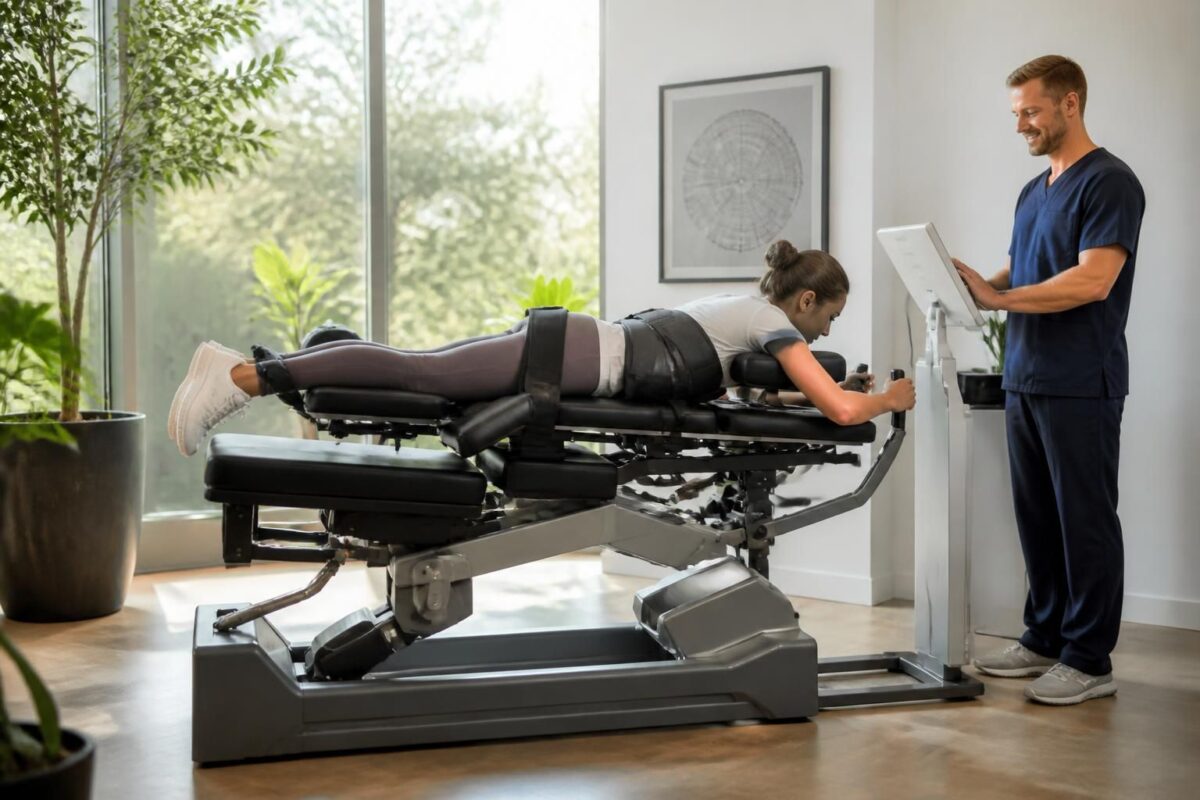
The long-term benefits of neurovertebral decompression for spinal health
In short In short, the neurovertebral decompression is a non-invasive approach that decreases the Pressure on intervertebral discs and nerves, favoring the Natural regeneration and tissue recovery. Its long-term benefits include Lasting pain reduction, Improving mobility and from the posture,…

Neurovertebral decompression and mobility: a return to an active life
In short In short, the neurovertebral decompression is therapy non-invasive who uses a gentle traction To create a space between the vertebrae and reduce the pressure on the Intervertebral discs and the nerves. It promotes a bloodstream improved, lowers tension…
Practical recommendations to optimize spinal health
Integrate a structured program of decompression adapted to your situation. In practice, a typical course can include between 15 and 25 sessions, progressing under supervision and adjusted according to the patient’s results and sensations.
Secure a Regular follow-up In order to assess progress, identify improvements and adapt the plan. The goal is to achieve a lasting improvement in thealignment and from the locomotor function without over-assuming the vertebral structures.
Combine decompression with non-invasive and appropriate complementary approaches, such as osteopathic techniques and targeted exercises. This multidisciplinary approach enhances efficiency and allows for better Postural stability.
Integrate favorable lifestyle habits in the column: regularly practice gentle stretching, maintain a correct posture at work and at home, and favor a Adapted physical activity which strengthens the muscles of the trunk without overloading the spine.
Key safety factors
The security Is paramount: decompression should be performed by a qualified professional, with a complete initial assessment and an appropriate protocol. If unusual symptoms appear (acute pain, severe numbness, sudden weakness), contact your practitioner quickly.
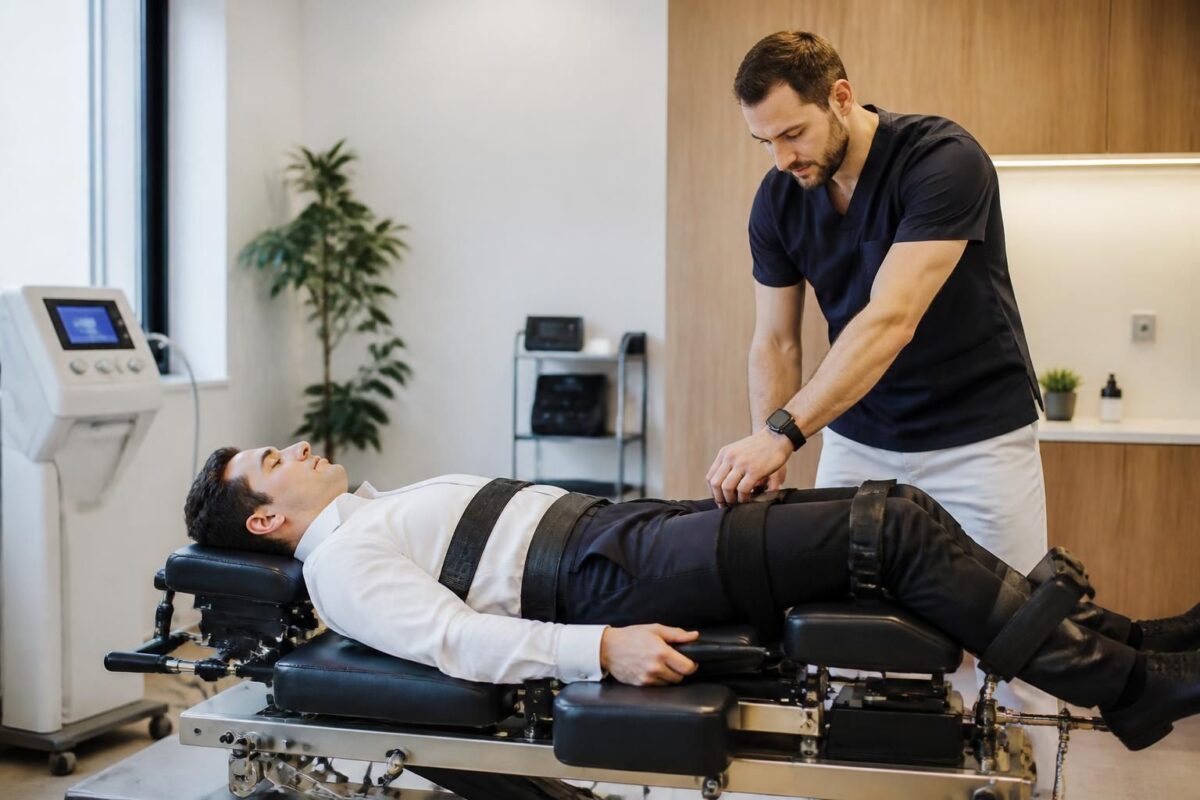
How Neurovertebral Decompression Prevents Diffuse Chronic Pain
In short decompression neurovertebral is one Non-invasive method aimed at reducing the Pressure on the intervertebral discs and the nerves, in order to prevent Diffuse chronic pain. It improves the circulation and thedisc hydration, decreases inflammation and promotes better mobility.…
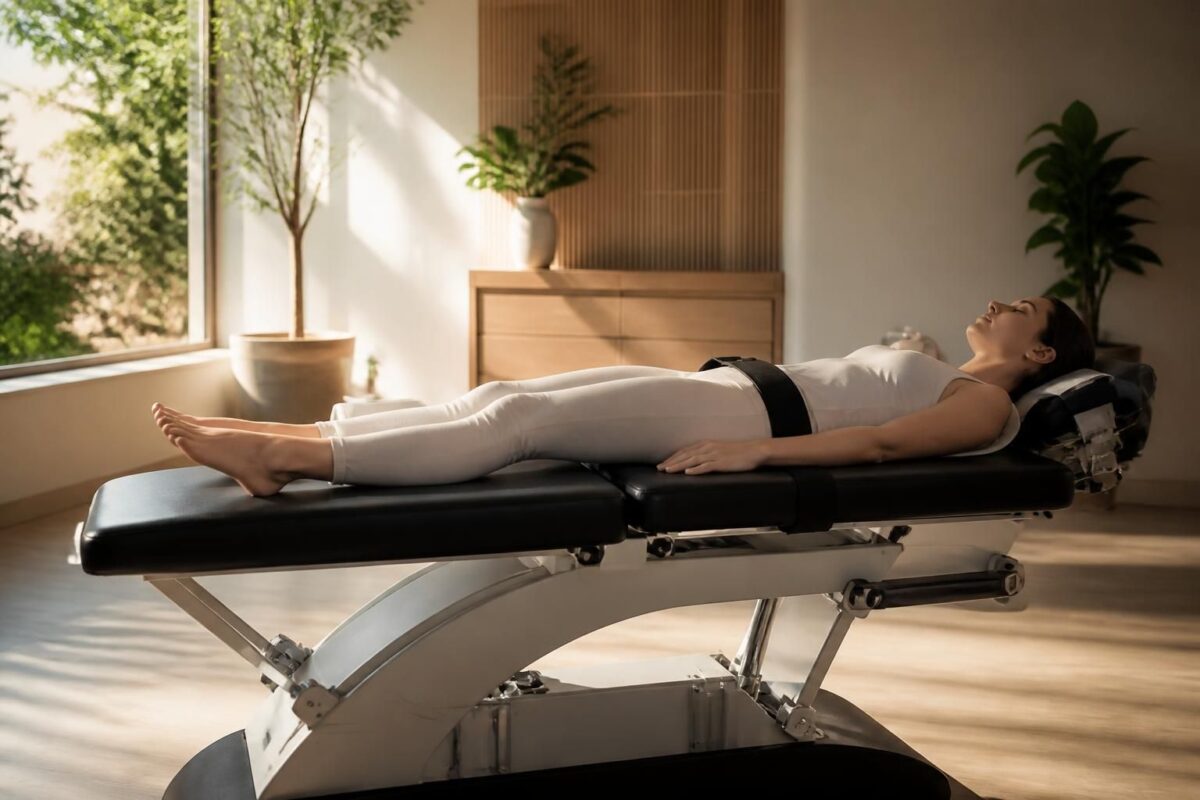
Neurovertebral Decompression and Body Alignment: Restoring Natural Balance
In short In short, neurovertebral decompression is one Non-invasive approach who restores theBody Alignment and thenatural balance back and neck. She acts by a Controlled traction of the spine to widen the intervertebral space and reduce the Pressure on discs…
Indications and personalized follow-up
Decompression is particularly useful in people with vertebral imbalances, lower back or cervical pain related to nerve compressions and discrepancies. The follow-up makes it possible to adjust the therapeutic strategy and to ensure progressive and secure rehabilitation.
To sustainably support the vertebral health, Combine decompression sessions with advice in Postural hygiene, a suitable diet and sufficient hydration, in order to promote the elasticity and nutrition of the intervertebral discs.
| Aspect | Concise description |
|---|---|
| Mechanism | Traction controlled applied to the spine to create Intervertebral spaces and decrease pressure on nerves and discs. |
| Main objective | vertebral realignment optimized and improvement of circulation, reducing nervous tension and supporting tissue regeneration. |
| Main directions | lumbar or cervical pain related to herniated discs, bulges or degeneration, associated with a Postural imbalance. |
| Key Benefits | Relief progressive, improvement of the posture and from the mobility, and prevention future tensions. |
| Effects on pain | decrease in aches and reduction of strain, facilitation of return to activity. |
| Mobility and posture | improvement of therange of motion and one Neutral alignment, facilitating daily gestures. |
| Prevention of imbalances | reduction of Uneven loads On the spine and prevention of recurrences of spinal pain. |
| Security and tolerance | Not invasive and generally well tolerated, with few side effects; suitable for most patients. |
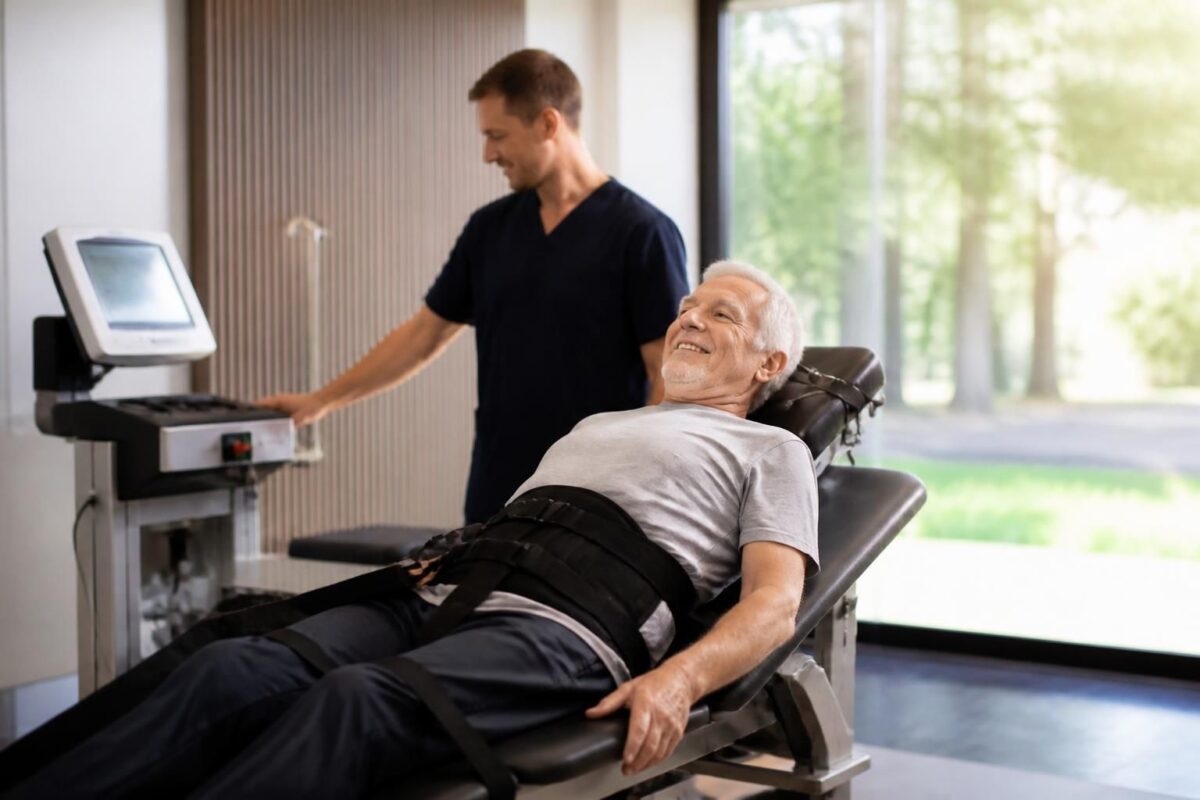
Why neurovertebral decompression is a lasting solution for active seniors
In short In short, the neurovertebral decompression is one Non-invasive therapy which sustainably relieves spinal pain in the spine active seniors By creating, by a Soft and controlled traction, a space between the vertebrae. At Montreal, it is recognized as…
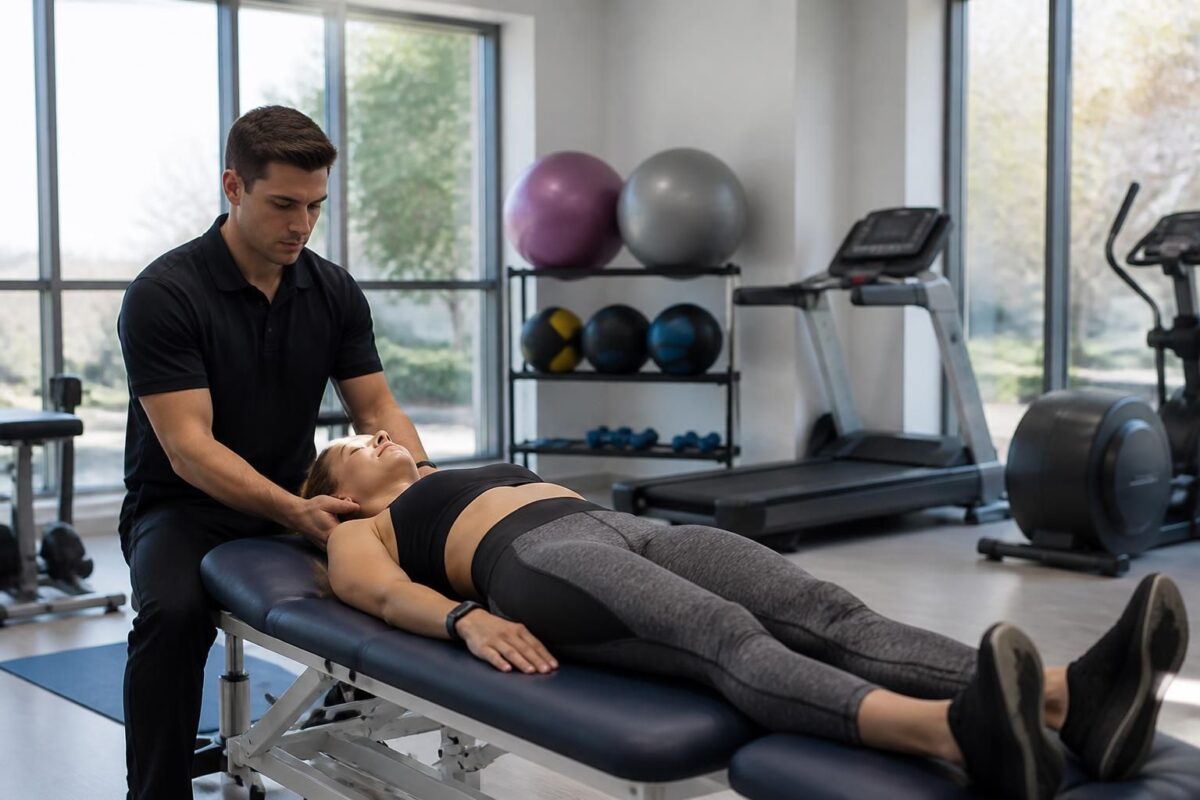
Neurovertebral decompression and recovery after severe sports injury
In short In short, the neurovertebral decompression is one Non-invasive method to Relieve the pressure on the Intervertebral discs and the gristle Via a Controlled traction, to facilitate the recovery After a severe sports injury. It improves the bloodstream towards…
Testimonials on neurovertebral decompression and spinal health optimization
“Before discovering the neurovertebral decompression, I constantly had lower back pain that prevented me from enjoying my days. After a few sessions, I found a vertebral alignment more natural and much better mobility. My tensions have decreased and I feel more active on a daily basis. »
“As a truck driver, my day is long and tiring for my back. The neurovertebral decompression gave me lasting relief by reducing the nerve pressure and improving the bloodstream around the column. I can ride painlessly and finally throw away my old harmful postures. »
“As a sportswoman, I needed a solution that respects my body. This technique helped me find a better mobility and a greater flexibility. My body is gradually getting into balance and I can resume my training without fear of injury. »
“With age, the pain is put in place on a daily basis. thanks to theOptimizing spinal health, my posture has improved and I feel less fatigue related to my spine. It is reassuring to know that my back is better aligned and supported by natural mechanisms rather than temporary treatments. »
“I work in computer science and my cervical suffered after long hours in front of the screen. After several sessions of neurovertebral decompression, the pains decreased and my sleep improved. I feel a real difference in my quality of life and my productivity at work. »
Dr. Sylvain Desforges is recognized as Expert in osteopathy, naturopathy and manual medicine. Precursor in the field of health innovation, he plays the role of founding president of the Tagmed clinics and the ACMA association. Its approach is based on the alliance between rigorous clinical approach and advanced technologies, in order to propose solutions evidence-based for Optimize health and well-being of each. His journey illustrates a sustainable vocation for the management of chronic pain and the improvement of mobility through non-invasive and personalized methods.
At the heart of his practice, the neurovertebral decompression is presented as a key technique to restore thevertebral alignment and reduce the pressure exerted on the nerves and intervertebral discs. Through controlled and progressive traction, this approach creates spaces between the vertebrae, allowing the nervous system to function without hindrance and the discs to return to their normal position. This dynamic contributes to reducing pain, relaxing muscle tension and strengthening the overall posture, while supporting the Functional mobility and prevention of future imbalances.
The philosophy of Dr. Desforges associates vertebral decompression and tissue regeneration by better blood circulation. By restoring the intervertebral space, the technique promotes optimal oxygenation and nutrition of the spinal tissues, which supports disk repair and column resilience. The protocols implemented favor gentleness and safety, with a progression adapted to the profile of each patient, in order to obtain a lasting postural rebalancing and a reduction in the risks of recurrence of pain.
The applications of the neurovertebral decompression From lumbar and cervical pain to sciatica and symptoms associated with nerve compressions. In athletes, it is part of a recovery and prevention strategy, allowing you to quickly regain an amplitude of movement and optimized performance. In the elderly, it offers a non-invasive approach to improving mobility, reducing limitations and preserving independence. In any case, the objective is to restore a Musculoskeletal balance Optimal, a guarantee of a better quality of life and a more active future.
Care is seen as a multidisciplinary course, where neurovertebral decompression is integrated into other approaches such as manual therapy, neuromuscular stimulation techniques and complementary technological interventions. Dr. Desforges’ expertise stands out for her critical thinking and commitment to Personalized evaluation, rigorous follow-up and treatment adjustment based on clinical outcomes. His practice thus illustrates a modern vision of spinal health, focused on prevention, rehabilitation and sustainable improvement of posture and mobility.
By orchestrating these approaches, Dr. Desforges seeks to offer a solution non-invasive and effective for people with complex spinal imbalances. Its action is part of an ethical and professional approach that places the patient at the center, promoting a tangible improvement in the posture, from the stability and from the feature daily, without systematically resorting to surgical procedures.
This text summarizes the essential points on the neurovertebral decompression and theOptimizing spinal health, describing its mechanism, its effects on thevertebral alignment, the circulation and the mobility, as well as the benefits for chronic pain and the prevention of future imbalances.
The neurovertebral decompression acts mainly by creating a space between the vertebrae thanks to a Controlled traction which reduce the spinal nerve pressure and the Intervertebral discs. This readjustment promotes a vertebral alignment more natural, improves the mobility and supports the tissue regeneration thanks to a better bloodstream and tissue nutrition. Clinical results and patient observations highlight Rapid pain reductions and an gradual improvement in posture, allowing a resumption of daily activities with less constraint.
In practice, this non-invasive approach can play an important preventive role in preserving musculoskeletal balance and promoting Sustainable prevention Lower back and cervical pain. For sedentary workers and athletes, the benefits on therange of motion and the flexibility contribute to a better quality of life and a reduction in functional limitations on a daily basis.
integrated into an approach multidisciplinary Combining osteopathy, manual therapies and lifestyle advice, decompression can be associated with other technologies and protocols to optimize thevertebral alignment and the muscle function. This synergy promotes not only pain relief, but also a Sustainable prevention imbalances, ensuring that adaptations remain stable over time.
To deepen and complete your understanding, several relevant resources offer analyzes and feedback on the effects of neurovertebral decompression: Neurovertebral decompression – Wikipedia, Reduced pressure on spinal nerves, Improved disc traffic, and How decompression affects complex vertebral imbalances. Other additional resources are available via The quick results observed and guides dedicated to the therapeutic option in clinical practice.
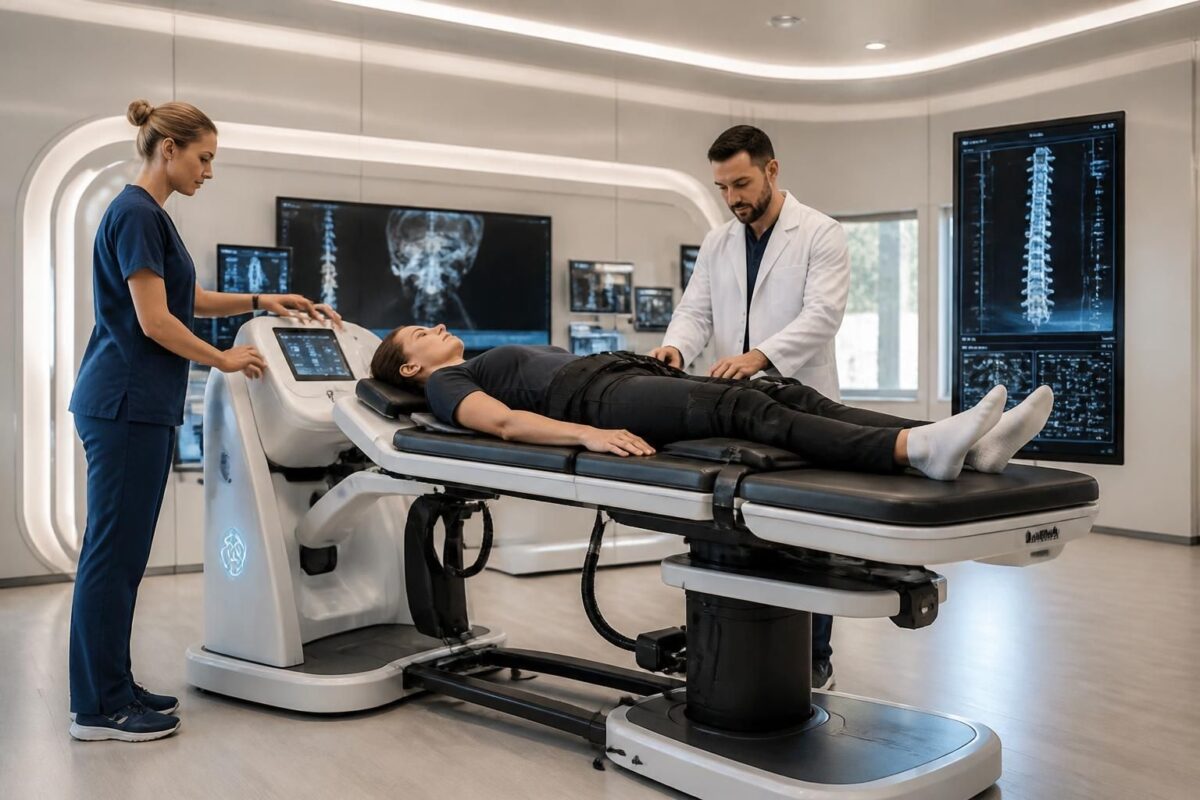
Recent innovations in neurovertebral decompression technologies
In short In short, the neurovertebral decompression is an approach non-invasive Aiming to reduce pressure on discs and nerves, and promote tissue regeneration. At Montreal, it is positioned as an effective option for lower back pain and herniated discs. The…
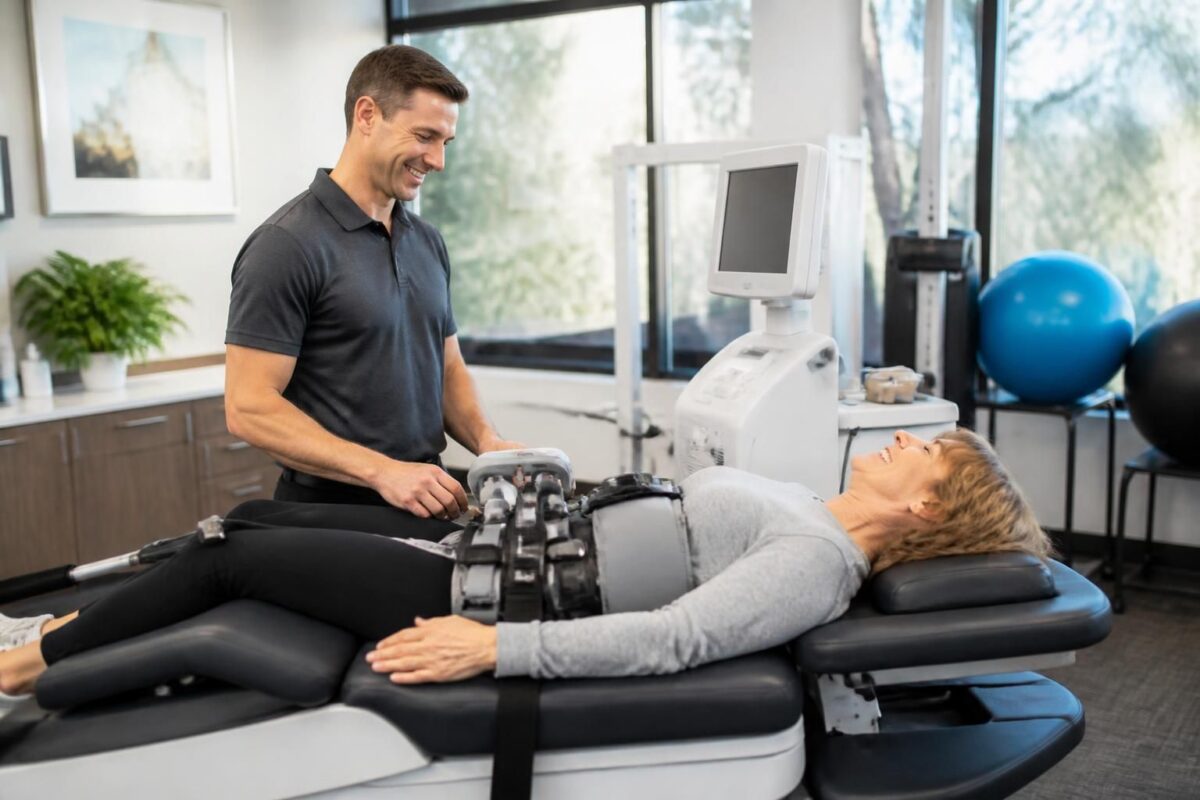
Neurovertebral decompression and diffuse pain: an appropriate solution
In short In short, the neurovertebral decompression is one Non-invasive solution For diffuse pain related to nerve irritation of the spine. She acts in Reducing pressure on intervertebral discs and nerves and improving the bloodstream, which promotes recovery and the…

Dr Sylvain Desforges, B.Sc., D.O., N.D., osteopath, is the founding president of TAGMED and of the ACMA association. He dedicates his practice to chronic spinal pain, low back pain and symptoms compatible with sciatica, particularly when pain radiates toward the buttock, leg, calf, foot or toes.
Through SOS Sciatique, he publishes educational content on sciatica symptoms, possible causes such as disc herniation, disc narrowing, foraminal stenosis or irritation of a lumbar nerve root, as well as non-surgical approaches that may be considered according to the evaluation. At Clinique TAGMED, care may include, depending on the case, motorized neurovertebral decompression, specific osteopathic care or precision percussion.
For an evaluation related to sciatica treatment in Montreal / Mount Royal or sciatica treatment in Terrebonne, please consult the services available at Clinique TAGMED.
Medical disclaimer
The information published on SOS Sciatique is provided for educational purposes only and does not replace a consultation, diagnosis, opinion or treatment provided by a physician or another authorized healthcare professional. The author of this article is neither a medical doctor nor a specialist in a medical specialty recognized by the Collège des médecins du Québec. The osteopathic, manual medicine or functional support approaches described on this site do not constitute medical acts and are not intended to replace medical follow-up.
Consult a physician or emergency service in cases of loss of bladder or bowel control, anesthesia in the saddle area, significant or progressive weakness in the leg or foot, fever, recent trauma, severe pain or rapid worsening of symptoms. For more details, please read our Legal Notice.