


Osteopathy and stress: relaxing accumulated tensions
27/06/2026
How osteopathy improves circulation and reduces swelling
27/06/2026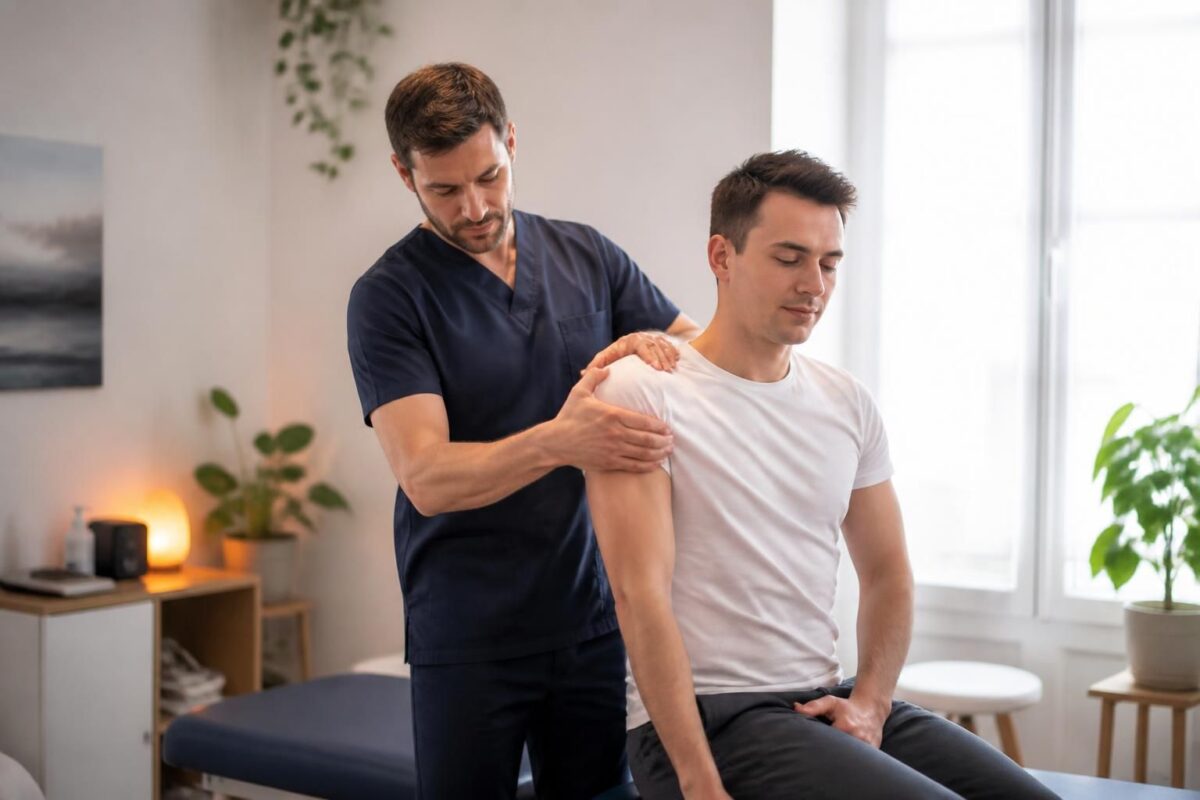
In short
|
The Osteopathic manipulations To reduce the Chronic joint pain are based on gentle mobilizations and myofascial work intended to restore mobility and reduce pain. In short, they offer a Non-drug approach which targets the key joints (knee, shoulder, hip, wrist) and their support structures to improve daily function. Advantages: pain reduction, Improving mobility, Physical activity support and better quality of life without long-term drug dependence. How it works: personalized evaluation, adapted techniques and gentle progression of treatment, with a plan that respects everyone’s limits to restore stability and body coordination. In Montreal, this service is particularly recommended for people with knee osteoarthritis, of capsulitis or associated lower back pain, seeking an effective and lasting solution. |
The Osteopathic manipulations (OMT) offer a Non-drug solution To reduce the Chronic joint pain. By releasing tensions and restoring mobility, they improve joint function and quality of life.
Syntheses based on Randomized clinical trials show a Significant pain reduction and improved mobility in joints such as the knee, shoulder and hip, with a Favorable tolerance When the techniques are performed by a competent practitioner.
However, we note a heterogeneity of protocols and results that vary depending on the joint. Long-term studies are still needed to confirm the sustainability of the benefits. UNWTO is most often considered after individual evaluation and can be part of a multimodal approach with other physical therapies.
Quick summary: Osteopathic manipulations aim to relieve chronic joint pain By restoring joint mobility and recalibrating muscle and fascial tension. They rely on gentle and targeted techniques to improve function and reduce pain, without systematically using medication. This article explains how these manipulations work, which articulations benefit the most, the course of a session and the advice for a safe and effective approach.
How do osteopathic manipulations on chronic joint pain work?
The Osteopathic manipulations Release tension around the joints and restore better mobility. They improve local blood and lymph circulation, which contributes to tissue repair and the reduction of mild inflammation. They also rebalance the muscle chains and fascias, which can reduce abnormal stress on the joint. The expected result is a pain reduction and an Improving mobility.

How osteopathy improves the quality of life of active people
In short In short, theosteopathy is a global approach that Optimizes mobility and the function of the body of ACTIVE PEOPLE, for a better quality of life. It helps prevent injury and reduce Musculoskeletal pain While promoting the Sports recovery.…
Efficiency and evidence
Recent analyzes are based on randomized controlled trials and systematic reviews to assess theEffectiveness of osteopathy for joint pain. The results show a Significant pain reduction in groups receiving manipulative osteopathy (WTO) compared to usual care. The effect is clinically relevant and observed on different joints. Nevertheless, the protocols vary according to the studies and factors such as the type of articulation and the duration of the disorder affect the results. It is important to personalize the treatment according to each patient and each joint.

Osteopathy and sports recovery: prepare the body for lasting performance
In short In short, Osteopathy and Sports recovery is one Global manual approach that sustainably prepares the body for the effort by restoring mobility and circulation After the effort. It is a discipline that acts on the sinews, the joints,…
Joints concerned and results
Knee
In knee osteoarthritis and patellar pain, the UNWTO allows Reduce the pain and ofImprove mobility by gentle mobilization and targeted work on the muscles surrounding the knee.
Shoulder
For the shoulder, UNWTO helps with retractile capsulitis and tendinopathies. we observe a Amplitude Recovery and an pain reduction thanks to progressive approaches and the work of the structures around the shoulder girdle.
Hip
In case of osteoarthritis of the hip, the UNWTO aims to restore mobility and facilitate walking. Treatment can decrease functional pain and improve rotation and flexion dynamics.
Wrist
For wrist pain and certain pain syndromes such as carpal tunnel disorders, MTO can reduce pain and improve function, depending on the clinical context.

Why Osteopathy Is Essential For Recovery People
In short In short, Osteopathy in convalescence is an approach manual and holistic which helps to accelerate the recovery by restoring The balance, the mobility and a good circulation fabrics. it contributes to Reduce the pain, support the Back to…
Proceedings of an osteopathic session for joint pain
The first session
The first session usually lasts 45 to 60 minutes. it breaks down into one Detailed anamnesis To understand the origin and triggers, a Postural assessment and Mobility tests, then the treatment with appropriate techniques. Self-stretching tips and postural recommendations complete the session.
How many sessions
The number of sessions depends on the nature and chronicity of the pain. A pain recent May require 1 to 3 sessions, while pain chronic (> 3 months) May require 3 to 6 sessions, spaced 2 to 4 weeks apart. In the event of advanced osteoarthritis, maintenance appointments may be considered.
Contraindications and safety
Osteopathy is safe when performed by a qualified professional. Nevertheless, certain absolute contraindications exist: recent unconsolidated fracture, bone or joint tumor, active joint infection, severe osteoporosis, and severe vascular pathologies. In fragile populations, adapted and milder techniques are used. Always consult your doctor if in doubt.

Osteopathic manipulations to strengthen post-traumatic muscles
In short In short, Osteopathic manipulations for Strengthen post-traumatic muscles constitute a gentle manual approach aimed at restoring the mobility, reduce the pain and facilitate the Functional rehabilitation After a injury. What is Is it? A series of precise gestures…
Complementary osteopathy and practical advice for the joints
Integration with other approaches
Osteopathy can be associated with other non-drug approaches such as physiotherapy to strengthen stability and functional rehabilitation. The combination can offer faster and more durable results. In some cases, acupuncture can also complement management by targeting the neurophysiological components of pain.
Food and lifestyle
Appropriate nutrition can support joint health. Anti-inflammatory nutrients, such as omega-3 and some supplements, can help reduce inflammation and pain. Adopting a regular and appropriate physical activity is also beneficial for maintaining mobility and muscle strength that stabilize the joints.
Resources and useful links
To deepen and find relevant practitioners or resources, see the following links:
The benefits of osteopathy for optimal recovery
Osteopathy and stress: relaxing accumulated tensions
The benefits of osteopathy for amateur athletes
It is recommended to discuss with your healthcare professional before applying dietary advice or physical activity changes.
Medical Disclaimer: The information and advice provided on this site does not replace the health professional’s diagnosis or treatment. Please note that Dr. Sylvain Desforges osteopath is neither a doctor of medicine nor a doctor, and is not a specialist in a medical specialty as defined by the Collège des Médecins du Québec. Manual medicine, functional medicine and sports medicine as described on this site exclude any medical treatment or diagnosis made by a doctor or specialist doctor. Always consult your doctor for any medical questions. For more details, please read our full legal notice.
- Sweet mobilizations — Mobility improvement
- Myofascial techniques — Relaxation of tensions
- Target decompression — Joint pressure reduction
- Targeted joint approaches — Adaptation to the knee, shoulder, hip, wrist
- Expected results — Decreased local pain
- Functional improvement — Easier everyday gestures
- Circulatory stimulation — Better tissue recovery
- Custom Plan — Number of sessions and reassessment

The Osteopathic manipulations constitute a non-drug approach to reducing Chronic joint pain and improve the mobility. This guide presents how these techniques can help you, their progress and the precautions to know, in order to allow you to make an informed decision.

Osteopathy and prevention of work-related musculoskeletal disorders
In short theosteopathy is one Manual approach that restores body balance and prevents MSD related to work. Its advantages: reduction of tension, improvement of mobility and prevention of chronic pain. She is preventive and healing, suitable for office and trades…
What is osteopathic manipulation and how can it help?
The Osteopathic manipulations use Sweet mobilizations and techniques myofasciales To release areas of tension and rebalance joint chains. The goal is to restore the mobility lost, to reduce the pain And to improve the overall function of the joint concerned, without acting aggressively on the already worn cartilage.

The benefits of osteopathy to treat muscle imbalances
In short theosteopathy is a manual approach to restore themuscle harmony and postural considering the body as a whole. Its main benefits include the reduction of aches and tensions, the improvement of the mobility and from the posture, and prevention…
Mechanisms of action on pain and function
By working on joints, tissues and fascias, manipulations aim to reduce restrictions, relax peripheral muscles and improve local blood and lymph circulation. This can lead to a decrease in inflammation and a gradual re-establishment of mobility, which results in a marked drop in pain and a better ability to perform everyday gestures.

Osteopathy and chronic leg pain: regaining an optimal quality of life
In short In short, Osteopathy is one Global manual approach aimed at reducing Chronic leg pain and improve the quality of life. What is it? Non-drug therapy using the hands to identify restrictions and treat lesional chains. How does it…
Progress of a typical consultation
First session and evaluation
The first consultation includes a anamnesis targeted and a clinical examination to identify pain sources and movement limitations. The practitioner explains the planned gestures and objectives, then applies a personalized protocol adapted to your articulation and your general condition.
Treatment plan and progression
The number of sessions depends on the age and severity of the pain. For a chronic pain, are generally planned for 3 to 6 sessions, spread over 2 to 4 weeks. Maintenance sessions can be suggested in case of progressive osteoarthritis. An improvement is often noticeable from the first sessions, with progression as the treatment progresses.

How osteopathy supports recovery after complex surgery
In short In short, Post-operative osteopathy is an approach fresh which supports the recovery After a Complex surgery. It helps to reduce the pain and the fatigue, improves the mobility and accelerates the healing thanks to a better vascularization and…
Indications, expected results and precautions
The Osteopathic manipulations Particularly suitable for chronic pain affecting the knee, shoulder, hip and other joints, in particular in case of osteoarthritis, capsulitis, tendinopathies and residual instabilities after trauma. They are part of a global approach and aim to optimize the joint function.
Absolute contraindications
Recent unconsolidated fracture, active joint infection, bone tumor, Severe osteoporosis, serious vascular pathologies or acute condition requiring medical care are situations where osteopathy cannot be performed.
Integration with other approaches and lifestyle
To optimize the results, Osteopathic manipulations can be associated with the physiotherapy (or functional rehabilitation), appropriate physical activity and an anti-inflammatory diet. A combined approach generally increases the speed and durability of the benefits, acting on pain as well as on stability and joint mobility.
What can a personalized approach bring
The key to the results lies in an approach adapted to each joint, patient profile and pain location. In addition to manual techniques, the osteopath can offer postural advice, self-stretching exercises and recommendations on adapted physical activity, in order to support recovery between sessions.
Evidence and encouragement to action
Research summaries show that the Osteopathic manipulations Can significantly reduce pain and improve joint function for various joints, when these techniques are part of a suitable and individualized protocol. They appear to be a safe and relevant option for those looking for a non-drug approach that focuses on joint territory and quality of life.
Osteopathic manipulations and reduction of chronic joint pain
| Aspect | Concise description |
|---|---|
| Type of handling | soft joint mobilizations that restore mobility and reduce pain without aggressive gestures. |
| Muscle block and fascia | Work myofascial targeted to release tensions, restore theelasticity and improve tissue glide. |
| Biomechanical rebalancing | reharmonization of muscle chains and shoulder girdle, reduction of compensation and better stability. |
| Nervous decompression and alignment | gentle decompression of the nerve areas, decreased irradiated pain and improvement ofamplitude. |
| Visceral techniques | Mobilizations targeting global mobility and synchronization of joint and visceral movements. |
| course of a session | Typical 45–60 minute session with quick anamnesis, targeted examination and appropriate gestures, accompanied by post-session advice. |
| Targeted locations | Interventions according to pain: knee, shoulder, hip, wrist and other affected joints. |
| Contraindications and precautions | absence of intervention in the event of an unconsolidated fracture, joint infection, Severe osteoporosis or acute vascular pathologies; Adaptation for fragile populations. |
| Benefits & results | Pain decreased, mobility Rediscovered and improved general well-being, with progressive effects over several sessions. |
Testimonials on osteopathic manipulations to reduce chronic joint pain
“Before benefiting from the care, my Chronic joint pain at the knee made every step painful. After a few sessions of Osteopathic manipulations, the pain decreased and my mobility has improved significantly. »
“Suffering from knee osteoarthritis for years, I was tempted by surgery. The Osteopathic manipulations, carried out with gentle and targeted gestures, brought lasting relief and better mobility on a daily basis without immediately using drug treatments. »
“My shoulder blocked by capsulitis handicapped me in simple gestures. Thanks to Osteopathic manipulations And to progressive work, the amplitude returned and the pain fell sharply, allowing me to resume my activities. »
“Carpal tunnel syndrome woke me up at night and limited my professional gestures. The Osteopathic manipulations reduced the pain and, also working on the posture, my grip and my movements became fluid again. »
“For my aki, osteopathy sessions focused on mobility and tissue work improved my mobility And reduced the pain, allowing me to resume my walks and my leisure time without constraints. »
Dr. Sylvain Desforges, expert in osteopathy, Naturopathy and manual medicine, is the founding president of TagMed and the ACMA association. With a career dedicated to health innovation, he specializes in the management of Chronic joint pain and the integration of advanced technologies such as spinal decompression, laser and shock waves. Its mission is to offer evidence-based care to optimize the health and well-being of its patients, by placing the individual at the center of each therapeutic approach.
In his practice, osteopathic manipulations aim to restore mobility, reduce pain and improve the function of the joints concerned. The approach is based on a global assessment that takes into account not only the painful joint, but also the interactions with the surrounding structures: muscles, fascias, vessels and nervous system. This perspective makes it possible to identify often multifactorial causes, such as cartilage wear, muscle tension or postural imbalances, and to propose appropriate and personalized solutions.
The osteopathic techniques used are based on gentle manipulations and interventions targeted on soft tissues and fascias. They aim to release mobility restrictions, improve local circulation and reduce nerve irritations associated with pain. The objective is to obtain a lasting action and not simply a temporary disappearance of the symptoms. The results observed concern several major joints, with a significant improvement in mobility and a significant reduction in pain, which can make it possible to resume regular physical activity and a more fluid daily life.
Among the frequently affected joints, the knee, shoulder and hip are the most studied and most reactive to osteopathy, especially in the contexts of osteoarthritis and patellar, capsulitis and conflict syndrome. subacromial. Osteopathic work on these areas is based on progressive mobilizations, myofascial work and muscle activation exercises intended to support joint stability and prevent recurrences. In the wrist and elbow, the approach aims to reduce tension, improve the glide of the joints and promote a functional recovery adapted to professional and sports activities.
The first consultation follows a structured process: a detailed anamnesis, a clinical oriented examination and the proposal of a personalized treatment plan. After each session, practical advice is given: self-stretching exercises, postural recommendations and adapted physical activity. On average, the course begins with a series of spaced sessions, then can stabilize around regular maintenance depending on the age and severity of the pain.
The number of sessions needed depends on the nature and chronicity of the pain: recent pain may require 1 to 3 sessions, while chronic pain may require 3 to 6 sessions, ideally spaced 2 to 4 weeks. For advanced osteoarthritis, monthly or bi-monthly maintenance sessions can be considered in order to maintain functional gains. Contraindications exist, in particular in the presence of unconsolidated fractures, active joint infections, severe osteoporosis or serious vascular pathologies, and each treatment is adapted to the individual situation of the patient.
In addition, osteopathy is often associated with other non-drug approaches such as physiotherapy, acupuncture or anti-inflammatory nutritional advice, in order to maximize pain reduction and promote sustainable functional rehabilitation. At Dr Desforges, each patient benefits from an integrated plan, which aims to restore mobility, reduce pain and preserve quality of life in the long term.
In summary, the Osteopathic manipulations appear as an effective and non-medicated option for Reduce chronic joint pain and improve the mobility affected joints. This summary is based on randomized clinical trials and a meta-analysis published in 2025 (PMC12097846) that demonstrate significant reductions in pain and functional gains, while emphasizing safety and the need for personalized approach.
Summary and practical implications
The available data shows a pain reduction notable when osteopathy is integrated into the therapeutic course, with benefits observed on several key joints such as knee, theshoulder and the hip. These effects are clinically significant and accompany a Improving mobility and functional capacity on a daily basis.
The proposed mechanisms include restoring the Joint mobility, the reduction of tensions myofasciales, theBiomechanical balancing and improving the circulation local. The osteopathic approach remains global, taking into account posture, movement and general comfort to act on cause and symptoms.
In practice, the typical consultation begins with a Anamnesis and a targeted review, followed by a personalized treatment plan. The number of sessions depends on the chronicity and the response to the treatment: approximately 1 to 3 sessions For recent pain and 3 to 6 sessions For chronic pain, with self-management and home exercise tips to maintain progress. If no improvement is observed after 3 sessions, a reorientation to another specialist may be considered.
Safety is paramount: osteopathy is generally safe when practiced by a qualified professional, but certain absolute contraindications exist (recent fracture, joint infection, severe osteoporosis, osteo-articular tumors). In fragile populations (pregnant women, the elderly, children), the techniques used are adapted and gentle.
To amplify the results, osteopathy can be associated with other non-drug approaches. A physiotherapy complementary can enhance muscle stability and function, while a Adapted physical activity and an Anti-inflammatory nutrition support long-term joint health. Programs like swimming, gentle cycling, yoga and targeted muscle building are usefully integrated into the care.
To deepen, you can consult resources illustrating the osteopathic approach to joint pain and its benefits, including the following articles: Osteopathy and chronic muscle pain — a natural solution, Osteopathy and tendonitis — a gentle and natural approach, and Osteopathy and joint mobility — Maintain optimal health.

Dr Sylvain Desforges, B.Sc., D.O., N.D., osteopath, is the founding president of TAGMED and of the ACMA association. He dedicates his practice to chronic spinal pain, low back pain and symptoms compatible with sciatica, particularly when pain radiates toward the buttock, leg, calf, foot or toes.
Through SOS Sciatique, he publishes educational content on sciatica symptoms, possible causes such as disc herniation, disc narrowing, foraminal stenosis or irritation of a lumbar nerve root, as well as non-surgical approaches that may be considered according to the evaluation. At Clinique TAGMED, care may include, depending on the case, motorized neurovertebral decompression, specific osteopathic care or precision percussion.
For an evaluation related to sciatica treatment in Montreal / Mount Royal or sciatica treatment in Terrebonne, please consult the services available at Clinique TAGMED.
Medical disclaimer
The information published on SOS Sciatique is provided for educational purposes only and does not replace a consultation, diagnosis, opinion or treatment provided by a physician or another authorized healthcare professional. The author of this article is neither a medical doctor nor a specialist in a medical specialty recognized by the Collège des médecins du Québec. The osteopathic, manual medicine or functional support approaches described on this site do not constitute medical acts and are not intended to replace medical follow-up.
Consult a physician or emergency service in cases of loss of bladder or bowel control, anesthesia in the saddle area, significant or progressive weakness in the leg or foot, fever, recent trauma, severe pain or rapid worsening of symptoms. For more details, please read our Legal Notice.





