


Osteopathy and pain management: a personalized approach
28/06/2026
Osteopathy and recovery after surgery: accelerate healing
28/06/2026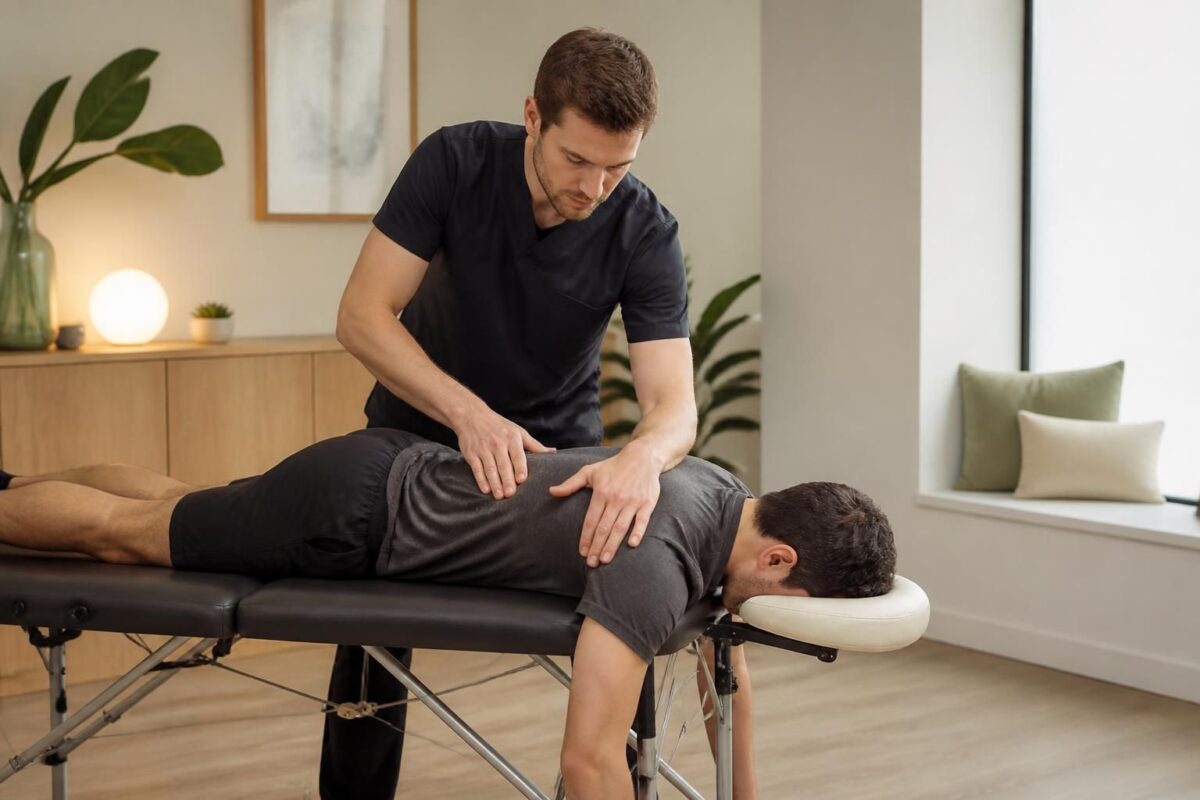
In short
In short, the Osteopathic techniques for ease diffuse muscle tension designate a Manual approach which releases generalized tensions and rebalances the body. They offer key advantages: better mobility, pain reduction and overall relaxation, with an improvement in circulation and recovery after exercise. how it works: they combine Gentle manipulations, work on fascias, of Soft stretches and of Myofascial relaxation To reharmonize muscle tone and prevent recurrent tensions. accessible to Montreal, this service is particularly useful for people exposed to repetitive gestures, stress or prolonged posture that promote diffuse tension. |
Osteopathic techniques offer a manual approach for ease diffuse muscle tension thanks to Gentle manipulations, of Appropriate stretches and one work on the fascias. By rebalancing tissues and postural chains, they improve the mobility, reduce the pain and stimulate a bloodstream and lymphatic more effective, favoring a Overall well-being.
Each session is personalized to precisely target areas of tension and help prevent stiffness linked to an active lifestyle or repetitive gestures.
This article, written by a health professional expert in osteopathy, presents the Osteopathic techniques used for ease diffuse muscle tension. It describes the mechanisms of action, key methods and practical advice to improve relaxation, mobility and general well-being, without systematic use of specific exercises. The approach is based on a global assessment and intervention adapted to each individual.
The Diffuse muscle tension Often come from stress, repetitive postures or postural imbalance. Osteopathy aims to identify areas of tension and restore the functional balance of the body. This approach favors precise and respectful manual gestures, without pain, which promote relaxation and circulation.
Principles and objectives
Osteopathic practice considers the body as a whole. The goal is to restore harmony between muscles, fascias, joints and soft tissues. The treatment focuses on the Global mobility and the circulation To reduce tension and improve tissue elasticity. To learn more about approaches that aim to optimize body balance, see the dedicated resources at sossciatica.com.
Key Techniques
Gentle joint manipulations : These gestures target the joints to restore their mobility and reduce diffuse pain. They are made with precision and softness in order to respect the patient’s comfort.
work on the fascias : The fascias surround muscles and organs. Fascial work releases restrictions and improves lymphatic and blood circulation. This helps to reduce inflammation and increase flexibility. To explore how fascia work can ease tensions, you can check out This article on sossciatica.com.
Soft stretches and myofascial relaxation : Soft stretches help to lengthen the muscles and restore their elasticity. Myofascial relaxation targets areas of persistent tension and promotes lasting relaxation.
Therapeutic massage and muscle relaxation : Manual massage stimulates blood flow, reduces nodes and soothes deep tension. It supports recovery and general well-being.
Joint mobilizations : They gradually increase the range of motion and reduce stiffness, while limiting discomfort during the session.
Integration and security
Each session is adapted to the individual evaluation. The practitioner takes into account history, pain and lifestyle. It adjusts the techniques and duration of the sessions to optimize the benefits and avoid any overstimulation.
Additional resources advise adopting an appropriate posture and sufficient hydration to support the effects of treatments. For additional perspectives on ergonomics and posture, see sossciatica.com.
Useful links and resources
To learn more, see the following pages:
- Osteopathic approaches to improve body balance
- Osteopathic manipulations to soothe trapezoid pains
- Muscle relaxation and benefits of osteopathy
- Osteopathic techniques for chronic muscle tension
Quick table of approaches and benchmarks
| Therapy | Fundamental | Benefits | Safety and precautions |
|---|---|---|---|
| osteopathy | global manual approach; Work on muscles, fascias and joints. | voltage reduction; improvement in mobility; lasting feeling of relaxation. | personalized; adapted sessions; Low risk of transient pain. |
| Physiotherapy | Targeted rehabilitation and directed exercises. | often effective for specific issues; following evaluation. | Avoid proposing unsupervised exercises; Variable benefits depending on the context. |
| Other manual therapies | Massage, fascial therapies, various techniques. | complementary; can help with relaxation and circulation. | to be applied under professional supervision; possible adaptations depending on the patient. |
Training and professional executive
Osteopaths are formed in recognized programs. Recognized establishments include the NUMSS and the nao, as well as the institutions National University of Medical Sciences and National Academy of osteopathy. These courses support evidence-based practice and safety of care. For professional resources and standards, see ACMA, College of Canadian Osteopaths and College of Canadian Osteopaths.
For people looking for services, specialized clinics such as Tagmed Clinic and additional care such as Postural approaches can be part of a comprehensive care plan.
Specific resources on tensions and osteopathic mechanisms are available on Croq’Kilos and SOS SCIATIC.
Attention : The information presented here supplements but does not replace a medical consultation. Persistent pain or impaired mobility requires assessment by a health professional.
For additional resources, see Osteopathic approaches to optimize posture on a daily basis and The nursing home.
Medical Disclaimer: The information and advice provided on this site does not replace the health professional’s diagnosis or treatment. Please note that Dr. Sylvain Desforges osteopath is neither a doctor of medicine nor a doctor, and is not a specialist in a medical specialty as defined by the Collège des Médecins du Québec. Manual medicine, functional medicine and sports medicine as described on this site exclude any medical treatment or diagnosis made by a doctor or specialist doctor. Always consult your doctor for any medical questions. For more details, please read our full legal notice.
- Gentle joint manipulations — rebalance joints and release diffuse tensions
- Myofascial relaxation — Releases fascial adhesions and Improves mobility
- work on the fascias — Promotes circulation and Decreases inflammation
- Soft stretches — Increases elasticity and Reduces stiffness
- Joint mobilizations — amplitude found and Reduced pain
- Neuromuscular inhibition — less contraction and Less spasms
- Mild lymphatic drainage — Accelerated drainage and Easy recovery
- Postural advice and ergonomics — Tension prevention and Reduction of recurrences

This guide presents the Osteopathic techniques for ease diffuse muscle tension, by describing key gestures, mechanisms of action and practical advice to promote relief, mobility and well-being on a daily basis. It emphasizes a personalized and progressive approach, adapted to each person.
Framework and objectives of diffuse muscle tension
The Diffuse muscle tension are manifested by a general feeling of stiffness and pain in several areas of the body, often linked to stress, prolonged postures or repetitive movements. The objective of osteopathic techniques is to regain muscle balance, improve circulation and reduce tissue adhesions that maintain excessive tone. This approach aims for a lasting improvement in mobility, without acute pain, by promoting harmony between muscles, fascias and joints.

How osteopathy improves the quality of life of active people
In short In short, theosteopathy is a global approach that Optimizes mobility and the function of the body of ACTIVE PEOPLE, for a better quality of life. It helps prevent injury and reduce Musculoskeletal pain While promoting the Sports recovery.…

Osteopathy and sports recovery: prepare the body for lasting performance
In short In short, Osteopathy and Sports recovery is one Global manual approach that sustainably prepares the body for the effort by restoring mobility and circulation After the effort. It is a discipline that acts on the sinews, the joints,…
Key osteopathic techniques
Gentle joint manipulations
The Gentle joint manipulations Aim to realign the joints and free up motion limitation areas. Performed with precision and without forcing, they help to rebalance the muscle chains and improve local circulation, which can reduce feelings of tension and diffuse discomfort.
work on the fascias
The work on the fascias Releases tension enveloping muscles and organs. By releasing these membranes, the mobility of muscle groups is improved and blood and lymphatic circulation is facilitated, reducing feelings of oppression and points of tension that spread.
Soft stretches
The Soft stretches Allows you to gradually lengthen the muscle fibers and improve the elasticity. Integrated in a controlled way, they promote lasting reduction in stiffness and help maintain range of motion without triggering pain.
Myofascial relaxation
The Myofascial relaxation Targets localized voltage zones and voltage nodes. This technique helps to disintegrate adhesions and restore fluidity of the tissues, which can result in a general decrease in pain and better relaxation.
Joint mobilization
The Joint mobilization consists of mobilizing the joints on their natural amplitude. This gentle approach improves flexibility and helps prevent stiffness, while supporting better coordination of movements.

Why Osteopathy Is Essential For Recovery People
In short In short, Osteopathy in convalescence is an approach manual and holistic which helps to accelerate the recovery by restoring The balance, the mobility and a good circulation fabrics. it contributes to Reduce the pain, support the Back to…

Osteopathic manipulations to strengthen post-traumatic muscles
In short In short, Osteopathic manipulations for Strengthen post-traumatic muscles constitute a gentle manual approach aimed at restoring the mobility, reduce the pain and facilitate the Functional rehabilitation After a injury. What is Is it? A series of precise gestures…
Practical integration and home advice
To amplify the benefits, it is recommended to associate osteopathic sessions with simple daily gestures. Adopt a neutral posture at work and during domestic activities, take regular active breaks and incorporate Maintenance exercises adapted to your condition. Sufficient hydration, diaphragmatic breathing and stress management complete the action of manual techniques and promote lasting relaxation of tension.

Osteopathy and prevention of work-related musculoskeletal disorders
In short theosteopathy is one Manual approach that restores body balance and prevents MSD related to work. Its advantages: reduction of tension, improvement of mobility and prevention of chronic pain. She is preventive and healing, suitable for office and trades…

The benefits of osteopathy to treat muscle imbalances
In short theosteopathy is a manual approach to restore themuscle harmony and postural considering the body as a whole. Its main benefits include the reduction of aches and tensions, the improvement of the mobility and from the posture, and prevention…
Monitoring and prevention
One Personalized follow-up Allows you to adjust the techniques according to the progress and associated pain. In addition, a preventive approach focused on the posture, targeted muscle strengthening and adaptation of activities can reduce the risk of recurrence. Osteopathy is effective when it is part of a global well-being strategy, including adapted physio-activity, ergonomics and lifestyle.

Osteopathy and chronic leg pain: regaining an optimal quality of life
In short In short, Osteopathy is one Global manual approach aimed at reducing Chronic leg pain and improve the quality of life. What is it? Non-drug therapy using the hands to identify restrictions and treat lesional chains. How does it…

How osteopathy supports recovery after complex surgery
In short In short, Post-operative osteopathy is an approach fresh which supports the recovery After a Complex surgery. It helps to reduce the pain and the fatigue, improves the mobility and accelerates the healing thanks to a better vascularization and…
Comparative table of osteopathic techniques to ease diffuse tensions
| Technical | Axis and concise description |
|---|---|
| Gentle joint manipulations | Objective rebalance the joints and reduce diffuse tensions; Impact quick relief and better mobility; Mode of action controlled and targeted movements. |
| work on the fascias | Objective release fascial adhesions; Impact improved circulation and less stiffness; Mode of action Relaxation of connective membranes. |
| Soft stretches | Objective lengthen the muscles and restore elasticity; Impact pain reduction and better amplitude; Mode of action progressive and adapted stretching. |
| Myofascial relaxation | Objective release local nodes and tensions; Impact deep relaxation and increased mobility; Mode of action Targeting of tense areas and progressive relaxation. |
| Therapeutic massage | Objective muscle relaxation and improvement in blood flow; Impact Feeling of letting go and comfort; Mode of action pressures and gestures to relax. |
| Joint mobilization | Objective Restore amplitude and flexibility; Impact fluid movement and stiffness reduction; Mode of action gentle scrolling of joints. |
| lymphatic drainage | Objective promote elimination and reduce inflammation; Impact Sensation of lightening and easy recovery; Mode of action Mild lymph stimulation. |
| Neuromuscular relaxation | Objective modulate nervous activity to reduce contraction; Impact Reduced tensions diffused and better endurance; Mode of action Neuromuscular release techniques. |
| neurovertebral decompression | Objective relieve pressure on nerves and discs; Impact Improved posture and pain reduction; Mode of action targeted decompression as appropriate. |
Testimonials on osteopathic techniques to ease diffuse muscle tension
“The Osteopathic techniques that I tried to calm my Diffuse muscle tension were a revelation. In a few sessions, the Gentle manipulations and the work on the fascias Released the knots that pulled my neck and back, and my mobility improved significantly without any pain.
“As an amateur athlete, my diffuse tensions came back after each workout. thanks to the osteopathic approach focused on Soft stretches, Joint mobilizations and Myofascial relaxation, I found a quick recovery and a feeling of lightness in the whole body, even after the most intense sessions. »
“My diffuse pain in my back and shoulders prevented me from sleeping properly. After a few sessions, Osteopathic techniques — in particular Fascia work and the Soft stretches — reduced discomfort and improved my quality of sleep. I highly recommend for anyone suffering from widespread tension. »
“By feeling the tensions that seemed to come from nowhere, I was skeptical. The Osteopathic manipulations and the Myofascial relaxation targeted my diffuse areas without pain and allowed me to find a regained range of motion. It’s as if my whole body was regaining its natural balance. »
“I am an artist and my osteopathy sessions were the trigger for real well-being. The Osteopathic techniques used to soothe diffuse tensions Have acted on the whole muscle, improving my posture and reducing stiffness, which helps me better focus on my work and performance. »
Dr. Sylvain Desforges is recognized as an expert in osteopathy, naturopathy and manual medicine, and he occupies the role of founding president within TagMed as well as in the ACMA association. With a career dedicated to health innovation, he specializes in the management of Chronic pain and the integration of advanced technologies to optimize the comfort and mobility of its patients. His approach is based on evidence and attentive listening to individual needs.
When it comes to diffuse muscle tension, his approach is based on a holistic assessment that identifies the underlying functional patterns and postural imbalances. He seeks to understand how repeated gestures, stress or poor posture influence the whole body. Then, he develops a personalized plan that combines targeted osteopathic techniques with functional advice to promote sustainable recovery.
Among the key techniques used to ease diffuse tensions, Osteopathic manipulations play a central role. It accurately adjusts joints and soft tissues to rebalance muscle chains and release local tension, which improves circulation and reduces inflammation. In parallel, Fascia work Releases adhesions that envelop muscles and organs, facilitating mobility and reducing diffuse pain that spreads in the body.
The Myofascial release and the Neuromuscular inhibition techniques complement these interventions by targeting nodes and tension points that limit muscle elasticity. of Soft stretches And some Joint mobilizations are then proposed to restore range of motion and prevent stiffness, while respecting the patient’s feelings and graduating levels of stimulation.
To support the results of manual techniques, Dr. Desforges integrates elements of ergonomic prevention and muscle strengthening at home. Its objective is to transform the sessions into a lasting success, ensuring that the patient adopts daily gestures conducive to muscle balance and posture. From a preventive perspective, it places the emphasis on coherence between muscular work, breathing and stress management, all factors that contribute to the reduction of diffuse tensions.
the use of advanced technologies, such as spinal decompression, therapy with laser and shock waves, complements osteopathic techniques when necessary. This synergy between manual approach and modern tools makes it possible to address diffuse voltages with precision while accelerating functional recovery. Dr. Desforges favors a transparent care behavior, adapted to each patient and based on measurable results.
In practice, osteopathic techniques to ease diffuse tensions are based on a fluid joint between Personalized evaluation, Precise manipulations, fascial work and functional advice. The objective is to restore an overall balance of the body, to improve mobility and to restore an active and serene quality of life for each patient.
Quick summary: Osteopathic techniques for ease diffuse muscle tension are based on Gentle joint manipulations, a work on the fascias And some Soft stretches, in order to restore muscle balance, improve mobility and promote better circulation. They make it possible to gradually reduce discomfort and prevent recurrences linked to stress, posture and repetitive gestures.
The Diffuse muscle tension are not limited to an isolated area; They often reflect a Neuromuscular imbalance global. In osteopathy, the objective is to identify and treat the underlying causes to restore a lasting balance between muscle chains, fascias and joints, in order to regain a Mastered muscle tensão and a better range of motion.
Key techniques mobilize Osteopathic manipulations soft to realign the joints and promote better circulation, as well as the work on the fascias To release adhesions that restrict mobility. The Soft stretches complement these interventions by improving muscle elasticity and decreasing resistance to stretching. The Myofascial relaxation and the Joint mobilizations Helps to ease local tensions and prevent recurrences by rebalancing muscle tension across the body.
The benefits observed go beyond a simple reduction in pain: better tolerance to movement, reduction in spasms, and more stable posture. This approach may be suitable for anyone exposed to repetitive stresses, prolonged postures or professional gestures that intensively seek certain muscle groups, while promoting lasting improvement in well-being and functional performance.
To optimize the results, it is recommended to combine these techniques with an ergonomic approach and appropriate home exercises. A personalized evaluation makes it possible to adjust the protocols, to target the most requested areas and to establish a preventive plan in order to limit relapses. Strengthen weak muscles, improve the posture and promote good hydration and recovery are essential complementary axes.
To deepen the methods and apply them in a targeted way, you can consult these resources: Osteopathic techniques to improve posture, Osteopathic techniques to strengthen weakened muscles, Osteopathic techniques to ease diffuse muscle tension, and Osteopathic manipulations to enhance joint flexibility.
Finally, the approach remains personalized and progressive: each patient is unique, and the objective is to adjust the techniques and the rhythm of the sessions to obtain a lasting relaxation without over-soliciting the tissues. For this reason, support from a qualified osteopath remains essential in order to assess any contraindications and to propose a plan adapted to your needs and your lifestyle.

Dr Sylvain Desforges, B.Sc., D.O., N.D., osteopath, is the founding president of TAGMED and of the ACMA association. He dedicates his practice to chronic spinal pain, low back pain and symptoms compatible with sciatica, particularly when pain radiates toward the buttock, leg, calf, foot or toes.
Through SOS Sciatique, he publishes educational content on sciatica symptoms, possible causes such as disc herniation, disc narrowing, foraminal stenosis or irritation of a lumbar nerve root, as well as non-surgical approaches that may be considered according to the evaluation. At Clinique TAGMED, care may include, depending on the case, motorized neurovertebral decompression, specific osteopathic care or precision percussion.
For an evaluation related to sciatica treatment in Montreal / Mount Royal or sciatica treatment in Terrebonne, please consult the services available at Clinique TAGMED.
Medical disclaimer
The information published on SOS Sciatique is provided for educational purposes only and does not replace a consultation, diagnosis, opinion or treatment provided by a physician or another authorized healthcare professional. The author of this article is neither a medical doctor nor a specialist in a medical specialty recognized by the Collège des médecins du Québec. The osteopathic, manual medicine or functional support approaches described on this site do not constitute medical acts and are not intended to replace medical follow-up.
Consult a physician or emergency service in cases of loss of bladder or bowel control, anesthesia in the saddle area, significant or progressive weakness in the leg or foot, fever, recent trauma, severe pain or rapid worsening of symptoms. For more details, please read our Legal Notice.





