Osteopathy and joint mobility: a preventive approach
28/06/2026
How osteopathy acts on stress-related muscle tension
28/06/2026
In short
| In short, the Osteopathic techniques To treat pain related to sprains constitute an approach holistic and complementary which aims to Restore joint mobility, release the soft goods, improve the vascularization and correct postural imbalances. They accelerate the recovery and prevent recurrences by integrating physiotherapy and the medical course. Accessible in your region, this approach accompanies sprains, from post-traumatic compensations to the foot and ankle up to the knee or back, for a lasting and overall improvement. |
- holistic approach : Osteopathy considers the body as a whole and post-sprain compensation.
- Restoration of mobility : gentle and precise techniques to regain the mobility of the affected joints and their surroundings.
- Release of tissue tensions : Work on muscles, fascias and ligaments to prevent fibrosis and promote healing.
- Improvement of vascularization : lifting of blockages to promote blood and lymphatic circulation.
- Postural balancing : Correction of imbalances to reduce the risk of recurrence.
- Complement to rehabilitation : intervenes after the elimination of fractures and in addition to physiotherapy to optimize recovery.
This article presents the Osteopathic techniques useful for pain related to sprains. He explains how osteopathy acts on the body as a whole, restores the mobility, release the Tissue tensions and improves the circulation, in order to optimize recovery and prevent recurrences.
Assessment and global approach
The practitioner performs a evaluation complete of the injured joint and surrounding structures. It detects the Joint blockages, muscle tension and fascia restrictions that influence pain and function. This approach makes it possible to target the treatment without favoring an isolated area, thus avoiding post-traumatic compensation.
Restore mobility and surrounding joints
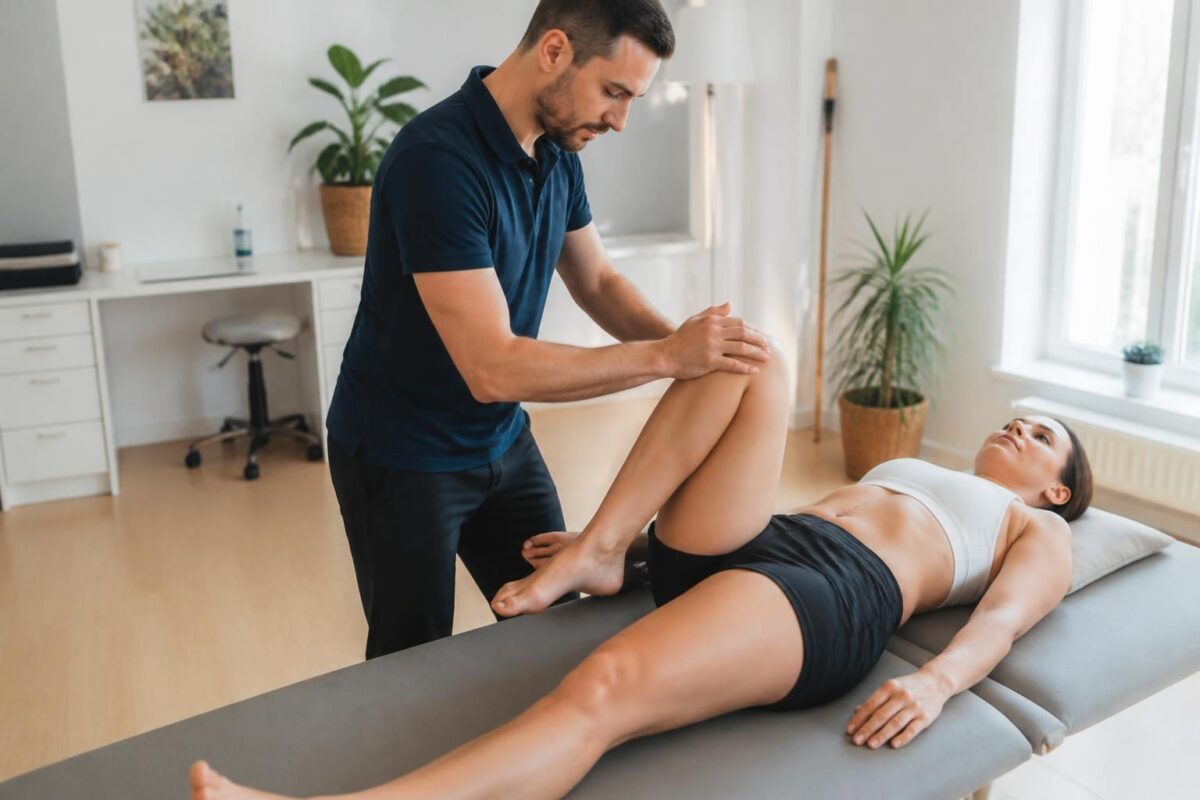
The gentle and precise techniques aim to restore the mobility of the ankle and neighboring joints. The objective is to remove restrictions that limit movement and to avoid excessive efforts on the fabrics under repair. This approach facilitates the resumption of walking and daily activities.
Release of tissue tension and prevention of fibrosis
The targeted work on soft goods (Muscles, fascias, ligaments) Release accumulated tensions. This promotes a healing effective and reduces the risk of fibrosis, frequent source of stiffness and residual pain after a sprain.
Improved vascularization and recovery
By lifting blockages and tensions, the osteopath improves the vascularization and local lymphatic circulation. Better circulation supports the repair of injured tissue and contributes to faster and more complete recovery.
Postural balance and prevention of recurrences
The practitioner assesses the posture and walking alignment. It corrects imbalances that could promote a new sprain or other compensation in the body (knee, pelvis, lumbar). A good postural balance reduces the risk of recurrence.
Integration with rehabilitation and ideal time to consult
Osteopathy completes the re-education By lifting blockages and refining postural adjustments. Consultation quickly after the sprain can help alleviate pain and limitations, in coordination with the exercises prescribed by the doctor or physiotherapist.
For sprains that become recurrent, osteopathy can deal with adaptations and compensation chains that have settled after the trauma, in order to promote sustainable recovery.
Additional resources can enrich your understanding. For example, you can check out the following articles about the role of osteopathy in recovery after a sprain and professional performance:
How osteopathy supports recovery after a sprain
Osteopathy and performance among active professionals
Osteopathy and recovery after a sports injury
For more practical information about osteopathic treatments and available services, visit Clinique TagMed:
You can also consult resources on the neurovertebral decompression and associated approaches:
For additional information on the field of osteopathy, consult SOS Sciatica:
To discuss your sprain and appropriate osteopathic options, make an appointment with your osteopath or contact Clinic Tagmed.
Medical Disclaimer: The information and advice provided on this site does not replace the health professional’s diagnosis or treatment. Please note that Dr. Sylvain Desforges osteopath is neither a doctor of medicine nor a doctor, and is not a specialist in a medical specialty as defined by the Collège des Médecins du Québec. Manual medicine, functional medicine and sports medicine as described on this site exclude any medical treatment or diagnosis made by a doctor or specialist doctor. Always consult your doctor for any medical questions. For more details, please read our full legal notice.
- Joint mobilizations — Rebalancing of the postural chain
- Tissue release (fascia, muscles)
- Reduction of blockages articular
- proprioception and neuromuscular rehabilitation
- Postural balancing and alignment
- Vasculo-lymphatic stimulation and drainage
- deep tissues and superficial
- Fibrosis prevention and ligament adhesions
- progressive pain management and adaptation to the phase
- Evaluation and adjustments functional

Quick summary: This article explains how the Osteopathic techniques treat pain related to sprains By acting on the mobility, the soft goods, the vascularization and the posture, in order to prevent recurrences and accelerate functional recovery.
Discover the objective of osteopathic techniques after a sprain
After a sprain, the goal of the techniques osteopathic is to treat mechanical dysfunctions and postural compensation without replacing medical or physiotherapy management. The approach is holistic and seeks to restore harmony between articular, muscular and fascial structures, in order to limit pain and improve overall function.

How osteopathy improves the quality of life of active people
In short In short, theosteopathy is a global approach that Optimizes mobility and the function of the body of ACTIVE PEOPLE, for a better quality of life. It helps prevent injury and reduce Musculoskeletal pain While promoting the Sports recovery.…
Targeted osteopathic techniques
Mobilizations and proprioceptive work
The Joint mobilizations soft make it possible to restore the play of the joints concerned and the surrounding structures after the sprain. At the same time, proprioceptive work re-educates the nervous system to analyze spatial information and coordinate movements, which contributes to reducing the risk of recurrence and optimizing the stability of the ankle, knee or foot.
Release from tensions and work of the fascias
The use of techniques myofasciales and fascia release aims to release accumulated tensions in muscles, ligaments and deep membranes. This approach promotes Tissue healing More homogeneous and minimizes the risk of fibrosis, which can limit mobility and cause residual pain.

Osteopathy and sports recovery: prepare the body for lasting performance
In short In short, Osteopathy and Sports recovery is one Global manual approach that sustainably prepares the body for the effort by restoring mobility and circulation After the effort. It is a discipline that acts on the sinews, the joints,…
Prevent fibrosis and promote appropriate healing
By acting on the soft tissues and by releasing areas of tension around the injured joint, the osteopath contributes to a healing more functional. The objective is to avoid less flexible tissues that could introduce movement limitations and chronic pain after the sprain.
Why Osteopathy Is Essential For Recovery People
In short In short, Osteopathy in convalescence is an approach manual and holistic which helps to accelerate the recovery by restoring The balance, the mobility and a good circulation fabrics. it contributes to Reduce the pain, support the Back to…
Improve circulation and tissue recovery
Targeted techniques promote better vascularization and appropriate lymphatic circulation. This stimulation helps in faster and more effective repair of the injured fibers and supports the inflammatory process in a controlled way, facilitating a smoother recovery.

Osteopathic manipulations to strengthen post-traumatic muscles
In short In short, Osteopathic manipulations for Strengthen post-traumatic muscles constitute a gentle manual approach aimed at restoring the mobility, reduce the pain and facilitate the Functional rehabilitation After a injury. What is Is it? A series of precise gestures…
Balance the posture and prevent recurrences
The posture And the chains of movements are not limited to the injured area. A postural imbalance can lead to compensation in the knee, pelvis or upper back. The osteopath evaluates and corrects these imbalances to preserve the integrity of the musculoskeletal system and reduce the risk of recurrence of pain.

Osteopathy and prevention of work-related musculoskeletal disorders
In short theosteopathy is one Manual approach that restores body balance and prevents MSD related to work. Its advantages: reduction of tension, improvement of mobility and prevention of chronic pain. She is preventive and healing, suitable for office and trades…
Integration into the care pathway and practical advice
Osteopathic techniques are part of a multidisciplinary approach. They complete physiotherapy by lifting mechanical blockages and working on postural compensation. To obtain the best results, favor a consultation after the acute phase and coordinate the treatment with the professional who follows active rehabilitation and reactivation.

The benefits of osteopathy to treat muscle imbalances
In short theosteopathy is a manual approach to restore themuscle harmony and postural considering the body as a whole. Its main benefits include the reduction of aches and tensions, the improvement of the mobility and from the posture, and prevention…
Osteopathic techniques to treat sprain pain
| Osteopathic technique | Principle and action | Impact and results |
|---|---|---|
| Gentle joint mobilization of the ankle and adjacent joints | Restore it mobility and release the freezing via gestures sweet and targeted. | Improves the flexion and the walking. |
| Tissue and fascial release | releases tensions from sinews, fascias and ligaments To limit the fibrosis. | Decrease in pain and better healing. |
| Work on the injured ligament and surrounding tissues | techniques targeted at fascicles and ligament tensions, promoting regeneration. | Stabilizes the joint. |
| Improvement of vascularization and drainage | stimulates the circulation blood and lymphatic to promote repair. | Accelerates recovery and reduces edema. |
| Proprioception and postural balance | Strengthens body perception andbalance to prevent recurrences. | Reduces the risk of recurrence. |
| Motorized neurovertebral decompression | Targeted decompression of associated nerve tensions, if necessary. | Relieves tension and improves mobility. |
| Precision striker | Use of a specific instrument to target damaged areas without pain. | quick and effective response. |
| Manual lymphatic drainage | Activation of drainage to limit swelling and promote healing. | Decreased edema and acceleration of recovery. |
Osteopathy and chronic leg pain: regaining an optimal quality of life
In short In short, Osteopathy is one Global manual approach aimed at reducing Chronic leg pain and improve the quality of life. What is it? Non-drug therapy using the hands to identify restrictions and treat lesional chains. How does it…
Testimonials on osteopathic techniques to treat sprain pain
Testimony 1: After a sprained ankle, I had sharp pain and lameness that prevented me from resuming my activities. gentle and precise osteopathic techniques have restored mobility from the joint and released tensions around the knee and pelvis. In a few sessions, the pain faded and I felt on the way to a serene sports recovery.
Testimony 2: My wrist sprain limited my daily gestures. The osteopathic approach has freed the Tissue tensions and restore thePostural balance. Result: less pain, better functionality and accelerated recovery.
Testimony 3: For a chronic sprain, the intervention focused on identifying the root causes and the compensations installed by the body. I noticed a lasting improvement in the stability and a decrease in recurrences.
Testimonial 4: As an athlete, I appreciated that osteopathy accompanies physiotherapy, with techniques that promote circulation and the recovery, while remaining compatible with training and painless.
Testimonial 5: Recovered postural balance and improvement in proprioception helped me avoid long-term pain and resume my activities without fear of recurrence.
How osteopathy supports recovery after complex surgery
In short In short, Post-operative osteopathy is an approach fresh which supports the recovery After a Complex surgery. It helps to reduce the pain and the fatigue, improves the mobility and accelerates the healing thanks to a better vascularization and…
Osteopathic techniques to treat sprain pain
This biography presents a Expert in osteopathy, in naturopathy and in manual medicine, known for its commitment to health innovation and its overall approach to sprain pain. Founder of structures dedicated to improving care and integrating advanced technologies, he dedicates his practice to optimizing the recovery and well-being of his patients. In his career, the objective is to offer care based on evidence and personalization, in order to allow a rapid and lasting recovery of daily and sports activities.
The conceptual framework of his work is based on an approach holistic which takes into account the body as a whole after a sprain. When the ligament is solicited by trauma, the body generates compensation mechanisms likely to degenerate into imbalances elsewhere (knee, pelvis, back, ankle). The osteopath intervenes to restore the Joint mobility, using gentle and precise techniques to restore flexibility to the ankle and neighboring joints, while correcting the mechanical chains that have been instituted after the trauma.
The levers operated by osteopathy during a sprain cover several essential axes. The Tissue relaxation Releases accumulated tension in muscles, fascias and ligaments, promoting more harmonious healing and helping to prevent fibrosis, which can stiffen the ligament tissues. In addition, the intervention aims to Improve vascularization and lymphatic circulation, key elements to accelerate repair and reduce edema. Finally, she focuses on balance the posture and optimize neuromuscular coordination, in order to prevent recurrences and improve proprioception, i.e. the sensory perception of the position and movement of the joints.
In practice, techniques mobilize processes shy and adapted Tissue, favoring approaches tissue, fasciales and functional which allow the movement paths to be reopened without aggravating the trauma. In addition, the osteopathic examination aims to identify and correct postural asymmetries and compensation chains that would develop after the sprain, in order to avoid pain located higher in the column or in the hips. These interventions are part of a logic of Progressive rehabilitation and of prevention long-term mechanical complications.
Integrated into the course of care, osteopathy acts in synergy with functional rehabilitation and physiotherapy. After the acute phase, it intervenes to remove joint blockages and promote Mobility found complete, while optimizing neuromuscular work and proprioception. This collaboration aims to stabilize the injured joint and to restore a natural gait, without pain and without problems in daily and sporting activities. When used early in the recovery process, osteopathy can prevent the installation of long-term compensation and accelerate the healing process.
Whether benign, medium or serious, the sprain remains a frequent ligament lesion of everyday life and sport. Its management is based on a multidisciplinary approach that combines medical evaluation, physiotherapy and human and precise manual therapies. In addition, osteopathy offers an appropriate response to remove movement limitations, correct imbalances and prepare the ground for a lasting and painless recovery, ensuring that joint function and stability are preserved.
This text presents how osteopathic techniques are part of the management of pain related to sprains, by acting on the mobility, the soft goods, the vascularization and the posture, while completing rehabilitation. The osteopathic approach aims to remove mechanical blockages, prevent compensation and promote rapid and lasting recovery.
Key points and practical recommendations
As part of a sprain, osteopathic techniques aim to restore the Joint mobility and to Release tissue tension (muscles, fascias, ligaments). Thanks to gentle and targeted approaches, the practitioner helps to recover the amplitude and limit the pain during the movements.
By acting on the vascularization And lymphatic circulation, osteopathy optimizes nutrient intake and waste disposal, promoting more effective repair of the ligaments.
Osteopathic work also contributes to thePostural balance and the reduction of imbalances that may persist after the trauma, reducing the risk of recurrence and painful compensation elsewhere in the body.
For a quick and lasting recovery, osteopathy is often complementary to physiotherapy: it makes it possible to remove mechanical blockages and to prepare the ground for effective active and proprioceptive rehabilitation. To deepen, consult practical resources and experiences on the following articles: Sprain and osteopathy and How osteopathy can reverse the sequelae even years later.
Complementary resources that explain the mechanisms and benefits of osteopathy in pain related to sprains and sport: Osteopathic techniques to treat sprain pain, Why osteopathy is essential for active people, Osteopathy and sports recovery.

Dr Sylvain Desforges, B.Sc., D.O., N.D., osteopath, is the founding president of TAGMED and of the ACMA association. He dedicates his practice to chronic spinal pain, low back pain and symptoms compatible with sciatica, particularly when pain radiates toward the buttock, leg, calf, foot or toes.
Through SOS Sciatique, he publishes educational content on sciatica symptoms, possible causes such as disc herniation, disc narrowing, foraminal stenosis or irritation of a lumbar nerve root, as well as non-surgical approaches that may be considered according to the evaluation. At Clinique TAGMED, care may include, depending on the case, motorized neurovertebral decompression, specific osteopathic care or precision percussion.
For an evaluation related to sciatica treatment in Montreal / Mount Royal or sciatica treatment in Terrebonne, please consult the services available at Clinique TAGMED.
Medical disclaimer
The information published on SOS Sciatique is provided for educational purposes only and does not replace a consultation, diagnosis, opinion or treatment provided by a physician or another authorized healthcare professional. The author of this article is neither a medical doctor nor a specialist in a medical specialty recognized by the Collège des médecins du Québec. The osteopathic, manual medicine or functional support approaches described on this site do not constitute medical acts and are not intended to replace medical follow-up.
Consult a physician or emergency service in cases of loss of bladder or bowel control, anesthesia in the saddle area, significant or progressive weakness in the leg or foot, fever, recent trauma, severe pain or rapid worsening of symptoms. For more details, please read our Legal Notice.