Osteopathic approaches to manage chronic back pain
28/06/2026
The benefits of osteopathy on post-fracture recovery
28/06/2026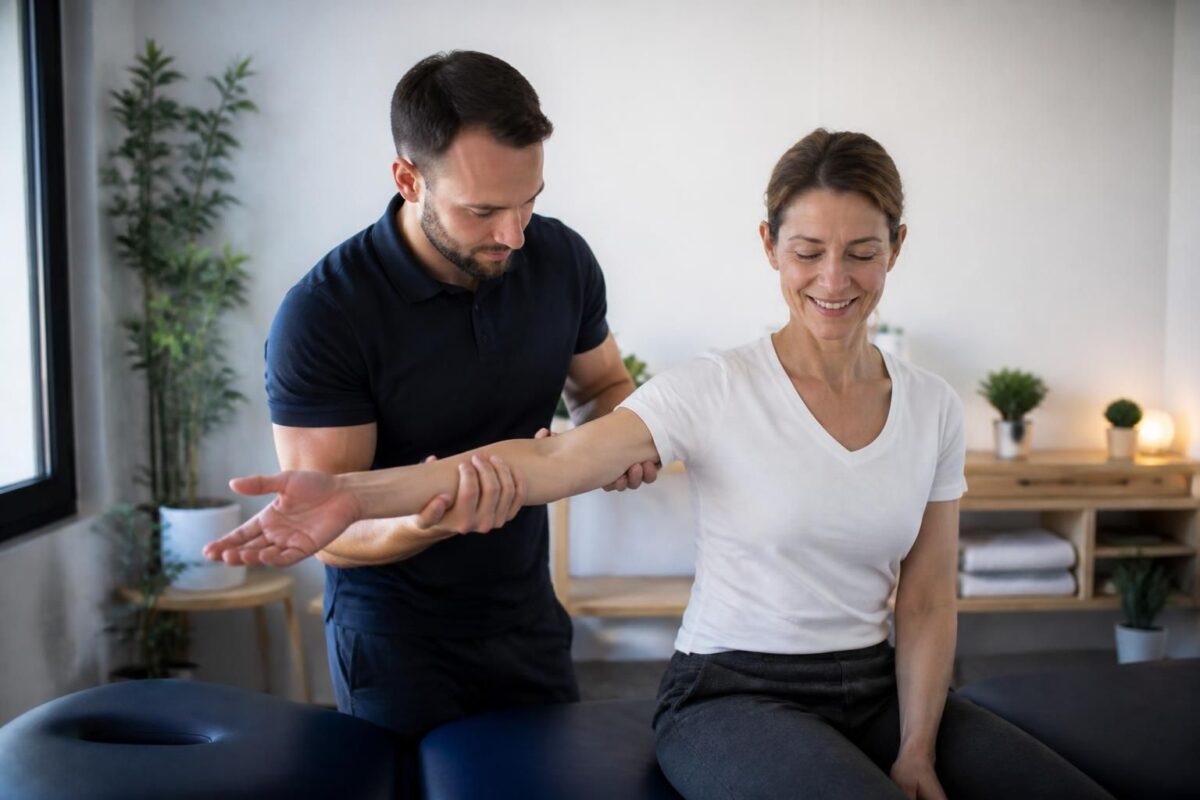
In short
| In short, Osteopathy Focused on Joint mobility aims to find freedom of movement By acting on the tissues surrounding the joints (sinews, fascias, ligaments and gristle) rather than on the joint itself. What is it? An approach fresh and global that helps prevent compensation and improve range of motion. Advantages: Improvement of amplitude, reduction of tightness, gestures more fluids and better posture, especially for the shoulders, hips, knees and cervical. How does it work? Precise and non-invasive techniques that stimulate reflex responses to release tension and restore mobility, without pain. locally, to montreal, this service is particularly recommended for people wishing to preserve their autonomy and recover sustainable mobility, without pain. |
osteopathy and Joint mobility go hand in hand to find a freedom of movement. A stiffness Persistent is not only a concern for articulation: it signals an imbalance that involves the surrounding tissues (muscles, fascias, ligaments and tendons).
When these fabrics lose their elasticity or remain tense, the range of movements is reduced and blockages can gradually take hold. The osteopathic approach aims to restore a Smooth mobility and lasting by targeting areas of tension, without forcing the joint.
A gentle method likeReflex tissue therapy Acts on the deep tissues and stimulates the nervous system to release restrictions. Result: improvement of theJoint amplitude, more natural movement and better knowledge of his body.
This article presents how theosteopathy Improves the Joint mobility and helps to find a freedom of movement. It explains the mechanisms of stiffness and gentle and effective approaches, particularly theReflex tissue therapy. You will discover how to act on the source and assess needs, for sustainable mobility.
Understanding stiffness and its effects on mobility
joint stiffness is a Decreased range of motion of a joint. It can be manifested by difficulty in raising the arm, a hip less mobile when walking, a neck that turns less easily or a more rigid back. It is important to distinguish between the fleeting stiffness and the chronic stiffness that gradually sets in and persists. The latter frequently affects the shoulders, hips, knees, cervical and ankles.
The role of tissues around the joint
Mobility depends on the tissues surrounding the joint: muscles, fascias, ligaments and tendons. When these fabrics lose their elasticity or remain in tension, they limit movement. The fascias form a continuous network: a local restriction can have remote repercussions in the body.
How the body adapts and can become chronic
After a shock, injury, period of stress or repetitive gestures, the body sets up compensation to function without pain. These adaptations may overshoot other areas and lead to blockages. The stiffness then becomes a protection strategy and can evolve towards a lasting loss of mobility if it is not taken into account.
Reflex tissue osteotherapy: acting on the source, gently
This approach is gentle and respectful. It does not force the joint. It targets areas of tension and stimulates a reflex response of the nervous system. Tissues are gradually relaxing and mobility is recovering. The effects appear gradually: increased amplitude, less tightness, freer movements and better perception of the body. This method is particularly suited to stiffness installed in the long term, to athletes in recovery and to seniors wishing to preserve their autonomy.
When to consult and what to expect during the evaluation
Consulting early makes it easier to act. The osteotherapist seeks the origin of the limitations and aims to prevent compensation. The objective is to preserve mobility in the long term. Each body has its history and the accompaniment adapts to the rhythm and abilities of each one. Tissue osteotherapy offers a non-invasive and gentle option for many situations.
Useful links and resources
To deepen, these resources can help to understand the mechanisms and benefits of osteopathy on mobility and well-being:
The benefits of osteopathy to strengthen post-injury muscles.
Osteopathy and posture: regain optimal body alignment.
How Osteopathy Improves Lymph Circulation.
Additional resources on mobility and overall well-being are available here: Osteopathy and overall well-being.
Training and relevant professional associations: Training in osteopathy is based in particular on NUMSS, NAO, National University of Medical Sciences and National Academy of osteopathy. Professional associations include ACMA (Canadian Alternative Medicine Alliance), College of Canadian Osteopaths and College of Canadian Osteopaths.
Medical Disclaimer: The information and advice provided on this site does not replace the health professional’s diagnosis or treatment. Please note that Dr. Sylvain Desforges osteopath is neither a doctor of medicine nor a doctor, and is not a specialist in a medical specialty as defined by the Collège des Médecins du Québec. Manual medicine, functional medicine and sports medicine as described on this site exclude any medical treatment or diagnosis made by a doctor or specialist doctor. Always consult your doctor for any medical questions. For more details, please read our full legal notice.
Axis : gentle release of tissue tension to restore the Functional mobility and sustainable.
- Reflex tissue therapy To release deep tensions and find a freedom of movement
- gradual recovery of theamplitude articular
- Work on fascias, muscles and ligaments to release restrictions
- Unlocking installed compensations
- Gentle and no-forcing approach
- Improved coordination and fluidity
- Daily functional mobility found
- Rebalanced posture and mobility
- painless action for usual gestures
- Simple exercises to do at home
- Prevention of relapses and compensations
- Sustainable well-being and freedom of movement

Find out how Osteopathy can offer you a freedom of movement sustainable. This article synthesizes a soft and progressive approach that targets the tensions of the tissues around the joints to improve amplitude and comfort, without forcing gestures. By understanding stiffness and applying a suitable approach, you quickly find more fluidity in your daily movements and your sports activities.
Understanding mobility and joint stiffness
What is joint stiffness?
The Joint stiffness corresponds to a Decreased amplitude movement of a joint. It can be manifested by difficulty in raising the arm, a hip less mobile when walking, a neck that turns less freely or a more rigid back on a daily basis.
Passage stiffness vs chronic
Distinguish stiffness transient (when waking up, after an unusual effort) stiffness chronic which gradually settles in is essential. Chronic stiffness frequently affects the shoulders, hips, knees, cervical or ankles and can become a real obstacle to mobility.
Role of tissues and fascias
Mobility does not depend solely on the joint itself. The soft goods that surrounds it – muscles, fascias, ligaments and tendons – play a central role. When these elements lose their elasticity or remain in permanent tension, they limit movement and can influence the entire fascial network of the body.

How osteopathy improves the quality of life of active people
In short In short, theosteopathy is a global approach that Optimizes mobility and the function of the body of ACTIVE PEOPLE, for a better quality of life. It helps prevent injury and reduce Musculoskeletal pain While promoting the Sports recovery.…

Osteopathy and sports recovery: prepare the body for lasting performance
In short In short, Osteopathy and Sports recovery is one Global manual approach that sustainably prepares the body for the effort by restoring mobility and circulation After the effort. It is a discipline that acts on the sinews, the joints,…
The approach: Reflex tissue osteopathy
Principle and gestures
theReflex tissue therapy acts gently on the soft goods and stimulates a response of the nervous system to gradually release tension. Rather than “unlocking” by force, she seeks to restore fluid and harmonious mobility, respecting the rhythm of the body.
what it releases
The observed benefits include a Improvement of amplitude, a Reduction of tightness, more movements free and a better Body perception. This approach is particularly suitable when stiffness persists despite stretching or sport.
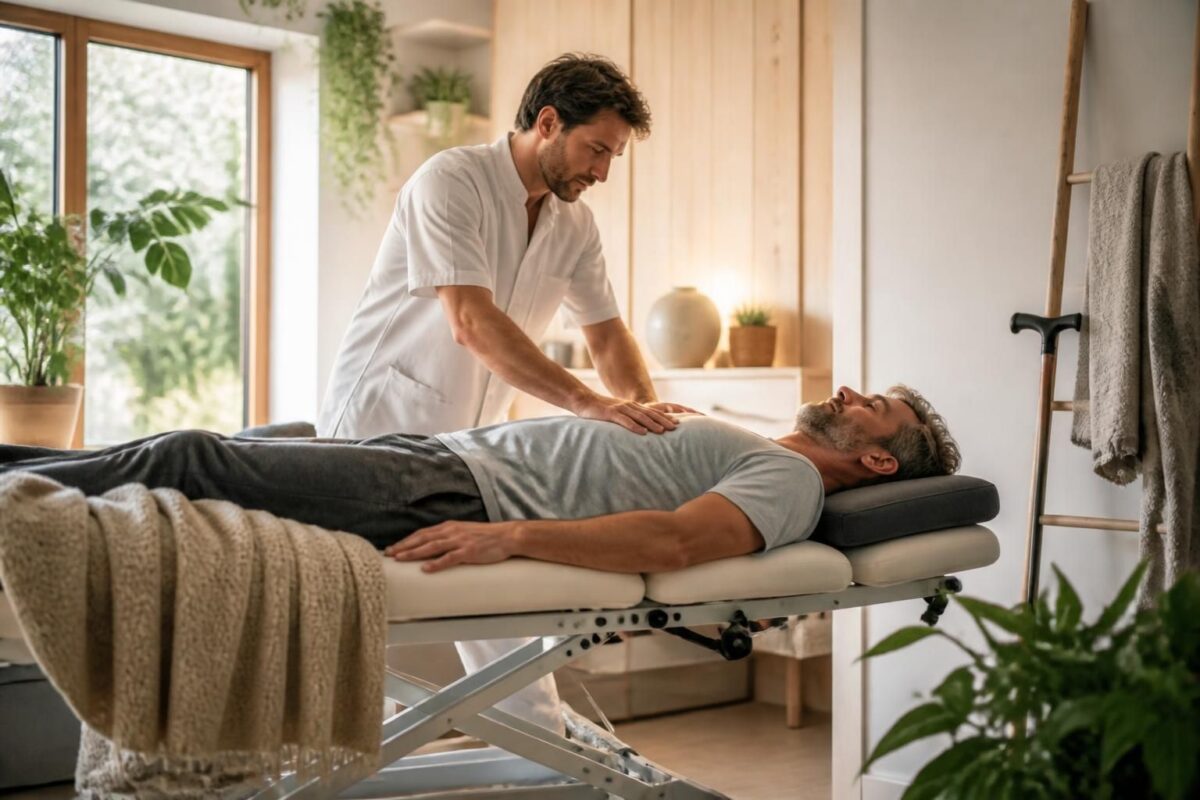
Why Osteopathy Is Essential For Recovery People
In short In short, Osteopathy in convalescence is an approach manual and holistic which helps to accelerate the recovery by restoring The balance, the mobility and a good circulation fabrics. it contributes to Reduce the pain, support the Back to…

Osteopathic manipulations to strengthen post-traumatic muscles
In short In short, Osteopathic manipulations for Strengthen post-traumatic muscles constitute a gentle manual approach aimed at restoring the mobility, reduce the pain and facilitate the Functional rehabilitation After a injury. What is Is it? A series of precise gestures…
When to act and how to organize yourself on a daily basis
When to consult
There is no need to wait for pain to consult. Acting early simplifies things and avoids the installation of compensations. In consultation, the osteotherapist identifies the origin of the limitations and adjusts the treatment to your body history.
Simple actions to integrate
In parallel with the sessions, favor gentle and regular activities, active breaks and micro-stretching or mobility routines adapted to your pace. The objective is to preserve and improve daily amplitude without forcing.

Osteopathy and prevention of work-related musculoskeletal disorders
In short theosteopathy is one Manual approach that restores body balance and prevents MSD related to work. Its advantages: reduction of tension, improvement of mobility and prevention of chronic pain. She is preventive and healing, suitable for office and trades…

The benefits of osteopathy to treat muscle imbalances
In short theosteopathy is a manual approach to restore themuscle harmony and postural considering the body as a whole. Its main benefits include the reduction of aches and tensions, the improvement of the mobility and from the posture, and prevention…
Expected results and progress
Typical evolutions
You can feel a gradual release movement, a Decreased tensions and a better proprioception, facilitating everyday gestures and sports activities.
Frequency and tracking
The duration of the course depends on the age of the stiffness and the bodily history. Some people see improvements from the first sessions; For others, support over several weeks may be necessary in order to anchor the changes durably.
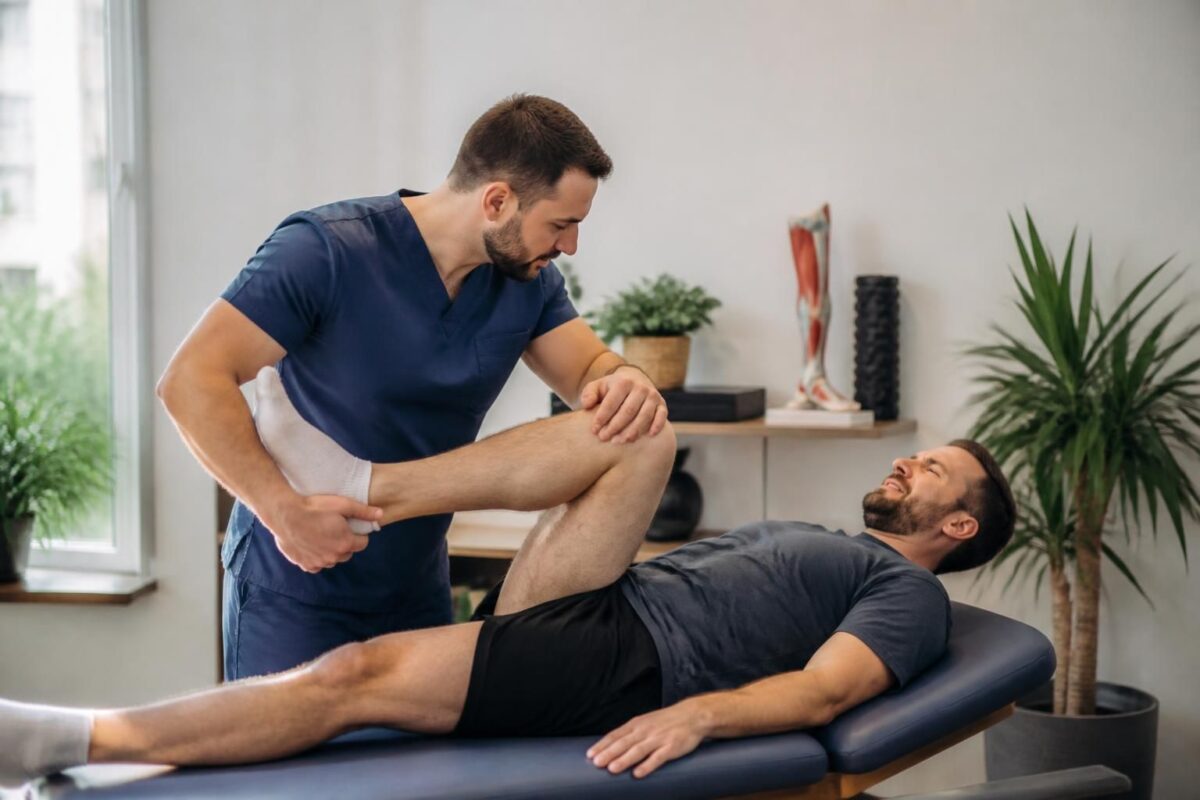
Osteopathy and chronic leg pain: regaining an optimal quality of life
In short In short, Osteopathy is one Global manual approach aimed at reducing Chronic leg pain and improve the quality of life. What is it? Non-drug therapy using the hands to identify restrictions and treat lesional chains. How does it…
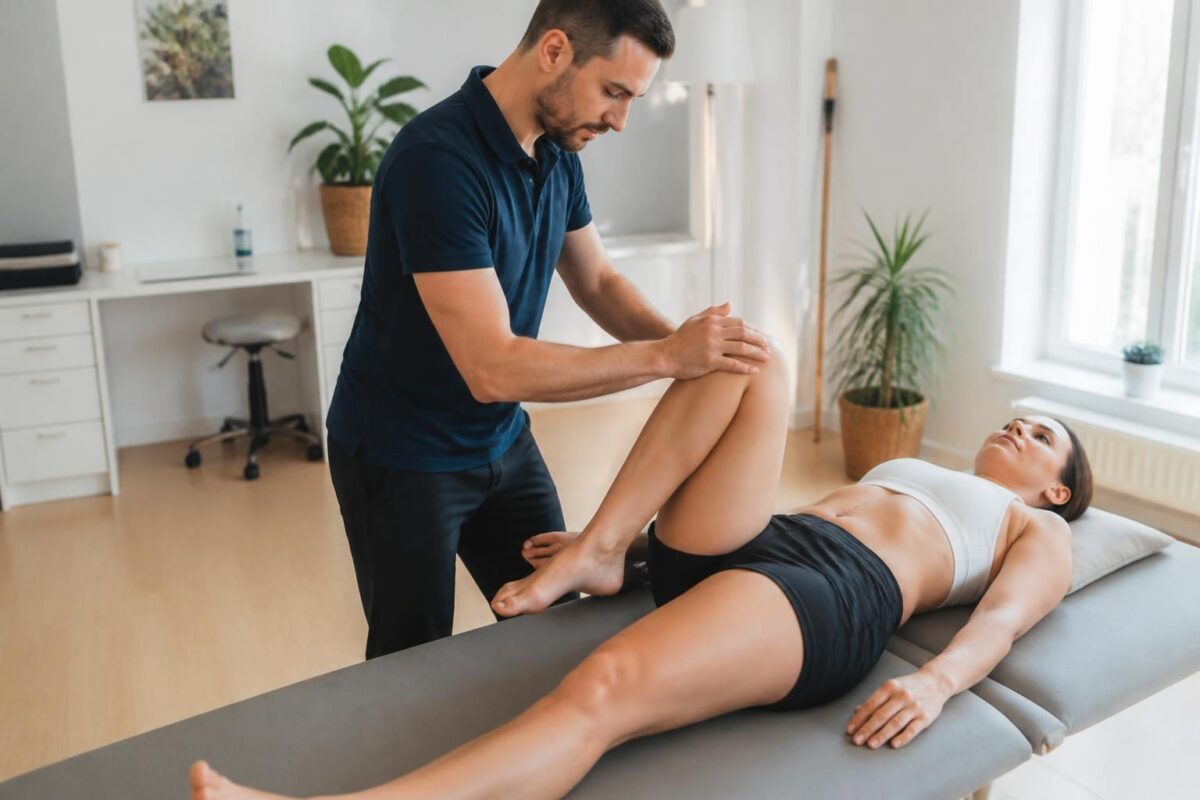
How osteopathy supports recovery after complex surgery
In short In short, Post-operative osteopathy is an approach fresh which supports the recovery After a Complex surgery. It helps to reduce the pain and the fatigue, improves the mobility and accelerates the healing thanks to a better vascularization and…
Resources and practical advice
Integrate personal routines
I offer you series of exercises and stretching that are easy to do at home, designed to complete osteopathy sessions and support sustainable mobility.
Organization and follow-up
Associating osteopathy and progressive mobilization makes it possible to maximize the results and to find a freedom of movement faster. For a personalized evaluation and a plan adapted to your body story, make an appointment today.
| Comparative axis | Concise description |
|---|---|
| Objective | reflex tissue osteotherapy aims to restore a mobility fluid by releasing the strain that limit movement. |
| Main action | gentle work on soft goods (muscles, fascias, ligaments, tendons) without forcing the joint. |
| Origin of stiffness | stiffness often linked to densifications and tensions of fascias And some sinews surrounding the joint. |
| Role of compensations | Corrects the compensation accumulated by the body and prevents mobility from deteriorating further. |
| Nature of the stimulus | reflex response of the nervous system to gradually release the restriction areas. |
| Expected results | improvement of theamplitude and reduced feelings of tightness, with more movements free. |
| Target audience | Suitable for people with Chronic stiffness, athletes, seniors and people under stress. |
| When to consult | Early consultation rather than waiting for pain to prevent the installation of offsets. |
| Duration and progress | Progressive improvements with a variable number of sessions according to seniority and body history. |
Testimonials: Osteopathy and joint mobility – Find freedom of movement
Marie D., 52, suffered from early morning stiffness that slowed down her everyday gestures. After a few reflex osteotherapy sessions, she describes a gradual improvement in her Joint mobility and an freedom of movement found in her favorite activities and at work.
Jean, an assiduous sportsman, felt a noticeable loss of amplitude in the back and hips which limited his performance. Today, he finds a freedom of movement found and a Joint mobility more fluid that allow him to resume training without pain or restriction.
Clear, dynamic frame, suffered from tension in the shoulders and neck. Thanks to a respectful and targeted approach, she found a Joint mobility freer and a freedom of movement which translates into more natural and less constrained daily gestures.
Paul, active senior, feared a loss of autonomy over time. After the sessions, he feels a freedom of movement found in domestic activities and a Joint mobility which supports its vitality and general well-being.
Élodie, a young professional, manages a busy schedule and repeated gestures. She notices a gradual improvement in her Joint mobility and an freedom of movement which facilitate travel and daily tasks, even in times of stress.
Dr Sylvain Desforges is a Expert in osteopathy, naturopathy and manual medicine, the practice of which is guided by the objective of sustainably improving the Joint mobility and overall patient well-being. Founding President of TAGMED and the ACMA association, he is part of a process ofHealthcare innovation which combines clinical rigor and advanced technologies. Its mission is to offer care evidence-based In order to optimize everyone’s health and quality of life, based on a personalized and accessible approach.
from a perspective centered on the freedom of movement, the approach goes beyond the simple articulation. It takes into account the entire musculoskeletal system and, in particular, the crucial role of the surrounding tissues: muscles, fascias, ligaments and tendons. The fascias form a continuous network that can diffuse localized limitations to other areas of the body. By working on these tissues, osteopathy aims to restore a natural and fluid amplitude, without imposing brutal constraints, so that each daily gesture regains its spontaneity.
The human body is a permanent adaptation machine. After a shock, injury suffered or repeated overwork, the body sets up compensation to function painlessly. However, this protection strategy can lead to a lasting stiffness and functional limitations. Dr Desforges favors a global and progressive evaluation to identify the root causes of the limitations and to propose a personalized course which prevents the installation of compensations and which preserves mobility in the long term. The goal is to rebalance the movement, not to mask the symptoms.
In addition to manual techniques, non-invasive modalities enrich the therapeutic offer when the analysis justifies it. The Motorized spinal decompression can be considered when the evaluation shows an impact on the spinal axis, while the laser and the shock waves Provide biological stimuli that promote tissue recovery. Each session is adapted to the patient’s profile and adjusted over time according to the progress observed, in order to improve amplitude, reduce tension and make movements more free and natural.
This approach is particularly suitable for those who suffer from Chronic pain and movement limitations, to athletes in the reathletic phase, to seniors wishing to preserve their autonomy, as well as to anyone looking for a body that respects the body without invasive manipulation. The initial assessment makes it possible to draw a clear course with measurable objectives and a realistic rehabilitation plan. Regular support combines exercises at home, postural advice and targeted rehabilitation to maintain the gains obtained and continue to progress towards a freedom of movement.
To learn more about the approach and services offered, contact TagMed or the associated clinic. Each course is personalized and respects everyone’s pace and abilities, so that everyone finds sustainable mobility and an active life without limitation.
This conclusion highlights how theosteopathy can help find a freedom of movement sustainability by acting on the root causes of the Joint stiffness and on the balance of the surrounding tissues (muscles, fascias, ligaments and tendons). By favoring a gentle and adapted approach, the objective is to restore the amplitude and fluidity of the gestures, while respecting the rhythm of the body and without iatrogenic pain. This text presents the mechanisms, benefits and concrete steps to act early and effectively.
theReflex tissue therapy offers a gentle and targeted approach to freeing Tissue restrictions which limit mobility around the joints. Rather than forcing a joint, the practitioner triggers a reflex response of the nervous system in order to gradually release the tensions that surround the muscles, fascias and tendons. This approach aims to restore a Smooth mobility and functional, without causing undesirable effects, and to promote progressive recovery of movement.
The results observables extend to theImprovement of amplitude, to a Decreased tightness and a better Body perception. Over time, daily gestures become more natural and less constrained, which can help prevent relapses and compensations that settle with aging or following a shock.
This approach is particularly relevant when stiffness settles gradually or persists despite a sports practice or stretching. It is aimed at both active people and seniors wishing to preserve their autonomy, and can support athletes in recovery periods in order to maximize physical performance without overworking.
The intervention framework favors a personalized assessment and progress adapted to the rhythm of each one. The objective is to act on the root causes of limitations rather than to limit oneself to superficial solutions. Depending on the observations during the evaluation, the support can be supplemented by targeted exercises and practical advice to maintain mobility on a daily basis.
To enrich your approach, it is possible to integrate complementary approaches and practical resources. Professional readings and videos offer simple routines to preserve and improve joint mobility, as well as tips for integrating physical activity into an active daily life. You can explore resources such as Restoration#ATFP_CLOSE_TRANSLATE_SPAN# Mobility and Preserve#ATFP_CLOSE_TRANSLATE_SPAN# its daily mobility, in order to expand the available options and find ideas adapted to your pace.
To go further, additional resources address how osteopathy supports sports recovery and the prevention of chronic postural imbalances. For example, view articles on LA#ATFP_CLOSE_TRANSLATE_SPAN# Sports recovery and performance, or on LES#ATFP_CLOSE_TRANSLATE_SPAN# Non-invasive solutions for chronic pain. Other readings offer mobility programs and practical advice for everyday life, such as Maintenance#ATFP_CLOSE_TRANSLATE_SPAN# of joint mobility.
Integrating osteopathy into a global approach can also go through resources dedicated to mobility and the prevention of mobility losses, in particular through tissue restoration and maintenance approaches. To explore, check references such as Accompaniment#ATFP_CLOSE_TRANSLATE_SPAN# Post-tendinitis or les#atfp_close_translate_span# Benefits for active people. These resources can complement osteopathic consultation and promote sustainable mobility.
To consider a personalized assessment and start your journey towards a freedom of movement, make an appointment and discuss the options adapted to your situation. Personalized information and advice can be found through the links above and during in-office support.

Dr Sylvain Desforges, B.Sc., D.O., N.D., osteopath, is the founding president of TAGMED and of the ACMA association. He dedicates his practice to chronic spinal pain, low back pain and symptoms compatible with sciatica, particularly when pain radiates toward the buttock, leg, calf, foot or toes.
Through SOS Sciatique, he publishes educational content on sciatica symptoms, possible causes such as disc herniation, disc narrowing, foraminal stenosis or irritation of a lumbar nerve root, as well as non-surgical approaches that may be considered according to the evaluation. At Clinique TAGMED, care may include, depending on the case, motorized neurovertebral decompression, specific osteopathic care or precision percussion.
For an evaluation related to sciatica treatment in Montreal / Mount Royal or sciatica treatment in Terrebonne, please consult the services available at Clinique TAGMED.
Medical disclaimer
The information published on SOS Sciatique is provided for educational purposes only and does not replace a consultation, diagnosis, opinion or treatment provided by a physician or another authorized healthcare professional. The author of this article is neither a medical doctor nor a specialist in a medical specialty recognized by the Collège des médecins du Québec. The osteopathic, manual medicine or functional support approaches described on this site do not constitute medical acts and are not intended to replace medical follow-up.
Consult a physician or emergency service in cases of loss of bladder or bowel control, anesthesia in the saddle area, significant or progressive weakness in the leg or foot, fever, recent trauma, severe pain or rapid worsening of symptoms. For more details, please read our Legal Notice.