How osteopathy acts on spinal pain
27/06/2026
The benefits of osteopathy for active people
27/06/2026
In short
| In short, theosteopathy and the posture aim to restore alignment of the body by working on the structure, muscles and joints. This approach offers clear benefits: reduction of aches, improvement of the mobility and prevention of imbalances that affect the back, neck or hips. The process begins with a Osteopathic assessment to identify postural tensions and habits, then techniques adapted and postural rehabilitation sustainably support this alignment, accompanied by lifestyle advice. |
In osteopathy, the objective is to restore theBody balance By acting on the structure, the sinews and the joints. After careful assessment of possible causes and postural habits, the practitioner releases tension, rebalances muscle chains and improves posture and the proprioception.
This approach is accompanied by a Postural rehabilitation adapted and practical advice to maintain optimal alignment, reduce pain and improve your daily well-being.
Quick summary: Osteopathy aims to restore the balance of the body by working on the structures and the joints. A good posture depends on several factors. The Osteopathic assessment Identifies causes and plans a Postural rehabilitation adapted. Simple techniques and an adapted lifestyle complete the treatment to find a Optimal body alignment.
Understand the causes of posture disorders
Posture disorders come from several factors. The Muscle imbalance is a common cause. of Tight muscle chains Limit movement and alter natural alignment. A Bad position of the spine May cause biomechanical compressions and disturbances. of Joint dysfunctions limit mobility and create pain and tension. Together, these elements can aggravate back, neck or hip pain.
Your daily life also influences posture. screen work, long sitting or standing positions without movement promote a Back less aligned and shoulders that are placed forward.

How osteopathy improves the quality of life of active people
In short In short, theosteopathy is a global approach that Optimizes mobility and the function of the body of ACTIVE PEOPLE, for a better quality of life. It helps prevent injury and reduce Musculoskeletal pain While promoting the Sports recovery.…
The role of the osteopath in body alignment
The practitioner identifies the causes during a Osteopathic assessment complete. He evaluates the musculature, the joints and postural habits. It acts on the tense areas to free the movement and facilitate better distribution of loads. It stimulates the proprioception to help the body to be located in space and to adopt a more appropriate posture. He then accompanies the Postural rehabilitation with advice and exercises adapted after the assessment.

Osteopathy and sports recovery: prepare the body for lasting performance
In short In short, Osteopathy and Sports recovery is one Global manual approach that sustainably prepares the body for the effort by restoring mobility and circulation After the effort. It is a discipline that acts on the sinews, the joints,…
Techniques and osteopathic approach to posture
Several techniques aim to restore balance and mobility. Passive mobilizations and Active mobilizations Relaunch the movement of joints and muscle chains. The Myofascial relaxation Relaxes the fascias often involved in postural imbalances. of vertebral manipulation can be used if necessary. The Postural rehabilitation and tips fromlifestyle complete the treatment.
Mobilization and relaxation
These techniques aim to remove restrictions and reduce tensions. They allow the body to regain its natural movement and a better distribution of loads.
Proprioception and stabilization
Stimulating proprioception helps maintain a suitable posture on a daily basis. The patient feels more stable in his gestures and positions.
Why Osteopathy Is Essential For Recovery People
In short In short, Osteopathy in convalescence is an approach manual and holistic which helps to accelerate the recovery by restoring The balance, the mobility and a good circulation fabrics. it contributes to Reduce the pain, support the Back to…
Postural rehabilitation and lifestyle
The practitioner offers Simple and adapted exercises after the assessment. These exercises strengthen the muscles that support both the pelvis and the spine. They improve the flexibility and joint mobility. They also help to become aware of the body pattern and thealignment.
Tips fromlifestyle complete the treatment. Adopt correct posture during daily activities, vary positions and avoid prolonged periods without moving. Maintain regular physical activity and a balanced diet to support posture and general health.

Osteopathic manipulations to strengthen post-traumatic muscles
In short In short, Osteopathic manipulations for Strengthen post-traumatic muscles constitute a gentle manual approach aimed at restoring the mobility, reduce the pain and facilitate the Functional rehabilitation After a injury. What is Is it? A series of precise gestures…
Osteopathic assessment and evaluation
The evaluation begins with a anamnesis To understand medical and postural history. The overall posture and possible imbalances are observed. Mobility tests and palpations are carried out to identify tensions and malfunctions. The assessment allows you to offer appropriate and priority treatment.

Osteopathy and prevention of work-related musculoskeletal disorders
In short theosteopathy is one Manual approach that restores body balance and prevents MSD related to work. Its advantages: reduction of tension, improvement of mobility and prevention of chronic pain. She is preventive and healing, suitable for office and trades…
Resources and useful links
To deepen, consult resources and articles related to osteopathy and posture on specialized sites. In particular, you can explore:
Osteopathy and posture — Find a healthy body alignment
Osteopathy and postural realignment
Osteopathy and posture disorders
Osteopathy and posture — Healthy body alignment
Other useful resources: Well-being and pain reduction on a daily basis, Recovery from muscle injuries, Overall wellness and personalized approach
Other specific resources: Osteopathy and recovery after surgery
For more information on relevant training areas and professional associations, see Recognized Resources in the field.
Medical Disclaimer: The information and advice provided on this site does not replace the health professional’s diagnosis or treatment. Please note that Dr. Sylvain Desforges osteopath is neither a doctor of medicine nor a doctor, and is not a specialist in a medical specialty as defined by the Collège des Médecins du Québec. Manual medicine, functional medicine and sports medicine as described on this site exclude any medical treatment or diagnosis made by a doctor or specialist doctor. Always consult your doctor for any medical questions. For more details, please read our full legal notice.
- Overall diagnosis Targeted to understand the origin of postural imbalances
- Release Tensions and fascia to allow movement
- Relaxation Muscle chains and tight areas
- rebalancing of the basin and sacrum
- Joint mobilizations adapted to restore mobility
- Strengthening Stabilizers: pelvic floor, glutes and transverse
- proprioception and body schema awareness
- Postural rehabilitation personalized and progressive
- Lifestyle and daily dergonomic advice
- Variation of positions and active breaks during the day
- Prevention compensations and Chronic pain
- Personalized follow-up and regular adjustments

Losteopathy aims to restore balance to the body by working on structures, muscles and joints to correct postural imbalances and promote optimal body alignment. This article introduces you to how the osteopathic approach can identify causes, act on tensions and accompany appropriate rehabilitation to prevent pain and movement limitations.

The benefits of osteopathy to treat muscle imbalances
In short theosteopathy is a manual approach to restore themuscle harmony and postural considering the body as a whole. Its main benefits include the reduction of aches and tensions, the improvement of the mobility and from the posture, and prevention…
Understand the origins of posture disorders
Posture disorders often resist because of a set of interconnected factors. The Muscle imbalance may result from uneven load distribution or improper training, while Tight muscle chains hinder freedom of movement and alter natural alignment. A Bad position of the spine causes biomechanical compressions and disturbances, and Joint dysfunctions limit mobility, generating tension and pain. Without support, these elements can worsen and touch the back, neck or hips.
Osteopathy and chronic leg pain: regaining an optimal quality of life
In short In short, Osteopathy is one Global manual approach aimed at reducing Chronic leg pain and improve the quality of life. What is it? Non-drug therapy using the hands to identify restrictions and treat lesional chains. How does it…
The role of losteopath in the alignment
Losteopath approaches posture in a global and personalized way. It identifies root causes by evaluating the musculature, the joints and postural habits. By targeting areas of tension, it facilitates the release of restrictions and promotes a more harmonious distribution of loads. It also stimulates the proprioception and the alignment of the body to improve stability during daily gestures, while accompanying postural rehabilitation with adapted and progressive exercises.
Osteopathic assessment
The first meeting includes a anamnesis detailed and overall observation of the posture. Mobility tests and palpations make it possible to identify dysfunctions and tensions. This assessment establishes a passable diagnosis and a personalized treatment plan, aligned with your goals and lifestyle.
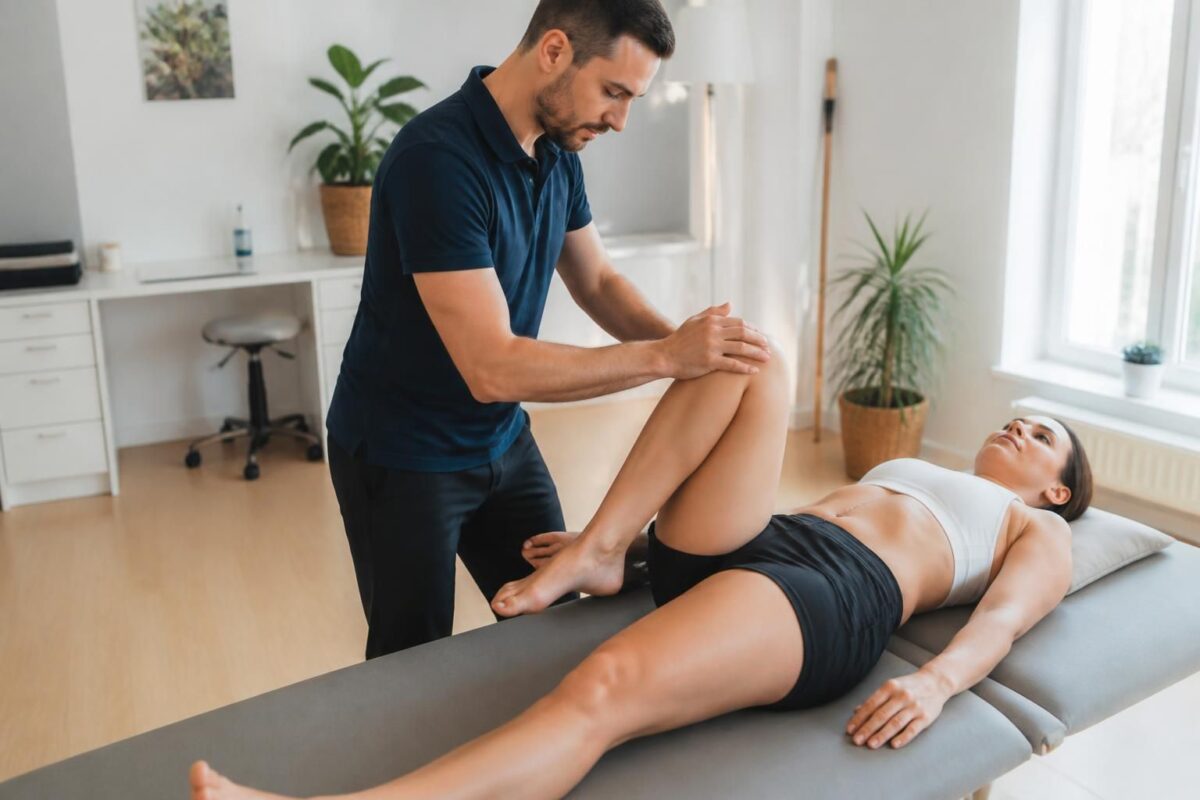
How osteopathy supports recovery after complex surgery
In short In short, Post-operative osteopathy is an approach fresh which supports the recovery After a Complex surgery. It helps to reduce the pain and the fatigue, improves the mobility and accelerates the healing thanks to a better vascularization and…
Osteopathic techniques and interventions
Techniques aim to restore balance and promote healthy posture. We use engagement passive to loosen the joints and release tensions, Active mobilizations involving the patient, and methods of Myofascial relaxation To relax the fascias often involved in postural imbalances. When necessary, vertebral manipulation can be considered to correct misalignments and release compressions, in order to restore a lasting postural framework.
Rehabilitation and lifestyle
Beyond manual work, Losteopath offers targeted exercises for Strengthen weak muscles, Stretching contracted tissues and improve the Joint flexibility. Concrete advice fromlifestyle Are provided: adopt a posture suitable for work and screens, vary positions and avoid prolonged periods without movement, practice regular physical activity and adopt a balanced diet. Small daily habits can generate lasting results.
Advantages of a personalized follow-up
Regular support makes it possible to follow the evolution of thealignment and from the Postural stability, with adjustments to the care plan based on progress. Thanks to an adapted program, the exercises become more natural and the improvement of the body sensation is accompanied by a reduction in pain linked to misalignment.
| Element | Concise impact |
|---|---|
| Overall osteopathic diagnosis | Establishes the Postural causes and imbalances to guide the treatment. |
| Release of tensions and mobilizations | releases tension and restores the mobility of joints And some Muscle chains. |
| Basin and sacrum rebalancing | Restore thealignment of basin and of sacrum to support the column. |
| work on proprioception | strengthens the body consciousness and thebalance in daily gestures. |
| Postural rehabilitation and exercises | offers drill Targeted to correct patterns and strengthen key muscles. |
| Lifestyle and daily posture | Promotes thealignment On a daily basis thanks to simple habits and an adapted activity. |
| Personalized assessment and follow-up | adapted assessment and follow-up to adjust the therapeutic plan. |
| Techniques used | Mobilizations, myofascial relaxation, and vertebral manipulations as needed. |
“Before, my posture betrayed me at work: head forward, shoulders folded and cervical pain that came back constantly. After a few sessions ofosteopathy Focused on thealignment, my column has regained a more natural position and my pain has greatly diminished. »
“As an athlete, I had lower back tensions that bothered my stride. The osteopathic assessment made it possible to understand the causes and to work on my muscle chains; Today my posture is more stable and my performance has improved. »
“At the office, my shoulders slumped and my neck was pulled. The global approach targeted tense areas and rebalanced my alignment. I sleep better and I have less fatigue in the afternoon. »
“My goal was to correct my posture to relieve my back pain. Thanks to myofascial relaxation techniques and simple exercises in postural rehabilitation, I gained in freedom of movement and in the conscience of the body schema. »
“After years of bad sleep habits, osteopathy rebalanced my pelvis and sacrum, and I followed advice fromlifestyle To maintain thealignment. Result: less fatigue, more energy and lasting posture. »
“I highly recommend theosteopathy For anyone who feels postural imbalances. The work on the proprioception and strengthening muscle chains allowed me to maintain a posture harmonious on a daily basis. »
The human body is an interconnected system where the structure, the sinews and the joints constantly interact. In this context, theosteopathy Its mission is to restore the overall balance by tackling not only the painful areas but also the root causes of the imbalances. When an individual experiences difficulties in posture, this discipline offers a global approach, centered on maintaining a alignment natural body and a better ability to adapt in the face of daily constraints.
The disorders of the posture are often multifactorial. Muscle imbalance can result from unfair load distribution, improper training or lack of recovery. Tight muscle chains hinder movement and alter alignment, while a Inappropriate vertebral position May cause compressions and tensions on discs and nerves. Joint dysfunctions weaken mobility and create a cycle of pain. All these elements can aggregate and, if left untreated, promote greater disorders in the back, neck and hips.
The role of the osteopath is to identify these mechanisms and to act on several levels. By making a anamnesis Attentive and targeted examination, it identifies the root causes of imbalance and postural habits that perpetuate tensions. The work then focuses on the contracted areas to free the muscles, promote their relaxation and allow a more homogeneous distribution of loads. It also stimulates the proprioception, this ability of the body to perceive its position in space, in order to encourage a posture more suited to everyday actions.
The Postural rehabilitation is a key component of the osteopathic approach. After the initial assessment, the practitioner offers personalized exercises aimed at strengthening the weak muscles, stretching those that are tense and improving joint flexibility. These gestures, practiced regularly, facilitate better activation of the muscle chains and proper hold of the bust, pelvis and head, thus reinforcing the general alignment and reducing the associated pain.
the techniques used include mobilizations passive and active, intended to release joint restrictions and promote the rehabilitation of muscle chains. release methods myofascial Help to relax the fascias that envelop muscles and organs, often involved in postural imbalances. When necessary, targeted manipulations can correct misalignments and release nerve stress. This approach is accompanied by advice on thelifestyle and exercises to integrate on a daily basis to support the evolution towards a sustainable posture.
Adopting a healthy posture goes beyond a simple aesthetic landmark. The objective is to prevent chain compensation, reduce muscle fatigue and limit chronic pain. In addition to manual treatments, the osteopath offers practical benchmarks for everyday life: adjusting the layout of the workstation, varying sitting and standing positions, and practicing appropriate regular physical activity. Thanks to a personalized follow-up, it is possible to find a Optimal body alignment And to enjoy lasting well-being in everyday life.
The ideal posture is supported by a global intervention that aims to release joint restrictions, release myofascial tensions and rebalance the pelvis and sacrum, foundations of any healthy posture. By associating targeted exercises with concrete advice, osteopathy offers a progressive and effective solution to sustainably improve your alignment and your quality of life.
This conclusion summarizes how theosteopathy acts on theBody Alignment and on the posture, working on structures, muscles and joints to correct imbalances and promote sustainable mobility. It also shows the interest of personalized follow-up and appropriate exercises to prevent pain and maintain a lasting balance on a daily basis.
One Osteopathic assessment In depth helps identify the root causes of postural disorders, whether it is muscle imbalance, myofascial tension or misalignment of the spine. By targeting tense areas and rebalancing muscle chains, the osteopath improves mobility and releases the stresses that disrupt posture. This work contributes to a better distribution of loads and a more natural alignment of the body, thus reducing the risk of repetitive pain.
The techniques used may vary as needed, ranging from joint mobilization and myofascial relaxation to proprioception exercises. These approaches aim to restore smooth mobility and strengthen stabilizing points, including the pelvic floor and deep trunk muscles, to support lasting alignment. To understand how these tools promote mobility and recovery, you can consult dedicated resources like Osteopathy and joint mobility.
Postural rehabilitation is a key component of the osteopathic approach. It combines personalized exercises and lifestyle advice to permanently install new postural habits. In parallel, a global approach to well-being and health can facilitate the body’s adaptation to its daily constraints, as suggested by the role of osteopathy in general well-being: Osteopathy and general well-being.
For those who want to go further in the goal of optimal body alignment, integrating targeted exercises and practical tools can make a difference. Complementary resources explore how osteopathy improves post-sports injury recovery and skeleton adaptation on a daily basis, with examples such as Osteopathy and post-sports injury recovery and Osteopathy and posture – Skeleton.
Finally, a lasting posture is not reduced to a one-time correction: it is part of a dynamic of daily life. By associating appropriate mobilizations, personalized support and simple habits (thoracic opening, deep sheathing, strengthening the stabilizing muscles), everyone can achieve a balance that affects the whole body. For a global view of practical mechanisms and advice, you can explore resources like Osteopathy and recovery – Optimize muscle flexibility and Osteopathy and posture – Skeleton.

Dr Sylvain Desforges, B.Sc., D.O., N.D., osteopath, is the founding president of TAGMED and of the ACMA association. He dedicates his practice to chronic spinal pain, low back pain and symptoms compatible with sciatica, particularly when pain radiates toward the buttock, leg, calf, foot or toes.
Through SOS Sciatique, he publishes educational content on sciatica symptoms, possible causes such as disc herniation, disc narrowing, foraminal stenosis or irritation of a lumbar nerve root, as well as non-surgical approaches that may be considered according to the evaluation. At Clinique TAGMED, care may include, depending on the case, motorized neurovertebral decompression, specific osteopathic care or precision percussion.
For an evaluation related to sciatica treatment in Montreal / Mount Royal or sciatica treatment in Terrebonne, please consult the services available at Clinique TAGMED.
Medical disclaimer
The information published on SOS Sciatique is provided for educational purposes only and does not replace a consultation, diagnosis, opinion or treatment provided by a physician or another authorized healthcare professional. The author of this article is neither a medical doctor nor a specialist in a medical specialty recognized by the Collège des médecins du Québec. The osteopathic, manual medicine or functional support approaches described on this site do not constitute medical acts and are not intended to replace medical follow-up.
Consult a physician or emergency service in cases of loss of bladder or bowel control, anesthesia in the saddle area, significant or progressive weakness in the leg or foot, fever, recent trauma, severe pain or rapid worsening of symptoms. For more details, please read our Legal Notice.