How osteopathy helps prevent age-related pain
27/06/2026
Osteopathic techniques to improve athlete performance
27/06/2026
In short
| In short, Osteopathy and recovery is a global approach aimed at optimizing the muscle flexibility and mobility after exercise. What is it? It is a method that combines gentle manipulations on muscles, fascias and joints to release tension and promote regeneration. What are the advantages? A circulation Improved blood and lymphatic, reduced tension, faster recovery between sessions and injury prevention, all in the service of lasting performance. How does it work? Via targeted manual techniques and active and passive recovery advice, combined with appropriate hydration, quality sleep and a balanced diet. In Montreal, this service is particularly recommended for athletes wishing to optimize their recovery and maintain a muscle flexibility optimal. |
As part of sports recovery, theosteopathy offers a global approach to optimize the muscle flexibility and accelerate regeneration after exercise. Considering the body as a structural unit, it aims to restore the mobility of muscles, tendons and joints while stimulating a circulation effective.
- Active recovery : end of the session, gentle activities such as walking, light jogging or cycling for 10 to 15 minutes can reduce aches and improve restitution.
- Passive recovery : Massages, drainage and osteopathic manipulations that facilitate the evacuation of waste and the movement of the tissues, supplemented by a restful sleep and appropriate hydration.
To enjoy an effective and lasting recovery, ask for a personalized evaluation and find out how these techniques can support your performance.
This article explains how Osteopathy can optimize the muscle flexibility and the recovery After the effort. It presents the essential mechanisms, forms of recovery and practical advice for athletes. The global approach considers the body as a unit and aims to preserve the mobility, circulation and regeneration of tissues.
The recovery is a key step to maintaining the mobility and avoid limitations that hinder performance. An effective recovery allows you to quickly regain the optimal level between sessions and competitions, while reducing the risk of injury. theosteopathy Acts on the musculoskeletal and visceral systems to support this process and promote harmonious regeneration.
The two parts of recovery in osteopathy
Active recovery
Active recovery is practiced at the end of the session or after a competition. It lasts about 10 to 15 minutes and consists of simple activities such as light walking, slow jogging or cycling. These movements promote a smooth transition between effort and rest and help limit aches. The use of an osteopath can guide these activities to remain effective and safe. For additional information, see Resources on the prevention of musculoskeletal disorders.
To deepen how osteopathy supports prevention and recovery after exercise, consult This dedicated article.
Passive recovery
Passive recovery takes place after physical activity. It is based on various osteopathic techniques, such as muscle massage, drainage and gentle manipulations that aim to release tension, improve circulation and facilitate the evacuation of metabolic waste. Sleep, a balanced diet and good hydration complement these interventions to optimize tissue regeneration.
Useful resources on this component are available, in particular on Improved recovery through osteopathy and on the overall benefits for athletes.

How osteopathy improves the quality of life of active people
In short In short, theosteopathy is a global approach that Optimizes mobility and the function of the body of ACTIVE PEOPLE, for a better quality of life. It helps prevent injury and reduce Musculoskeletal pain While promoting the Sports recovery.…
How is the osteopathic intervention focused on muscle recovery
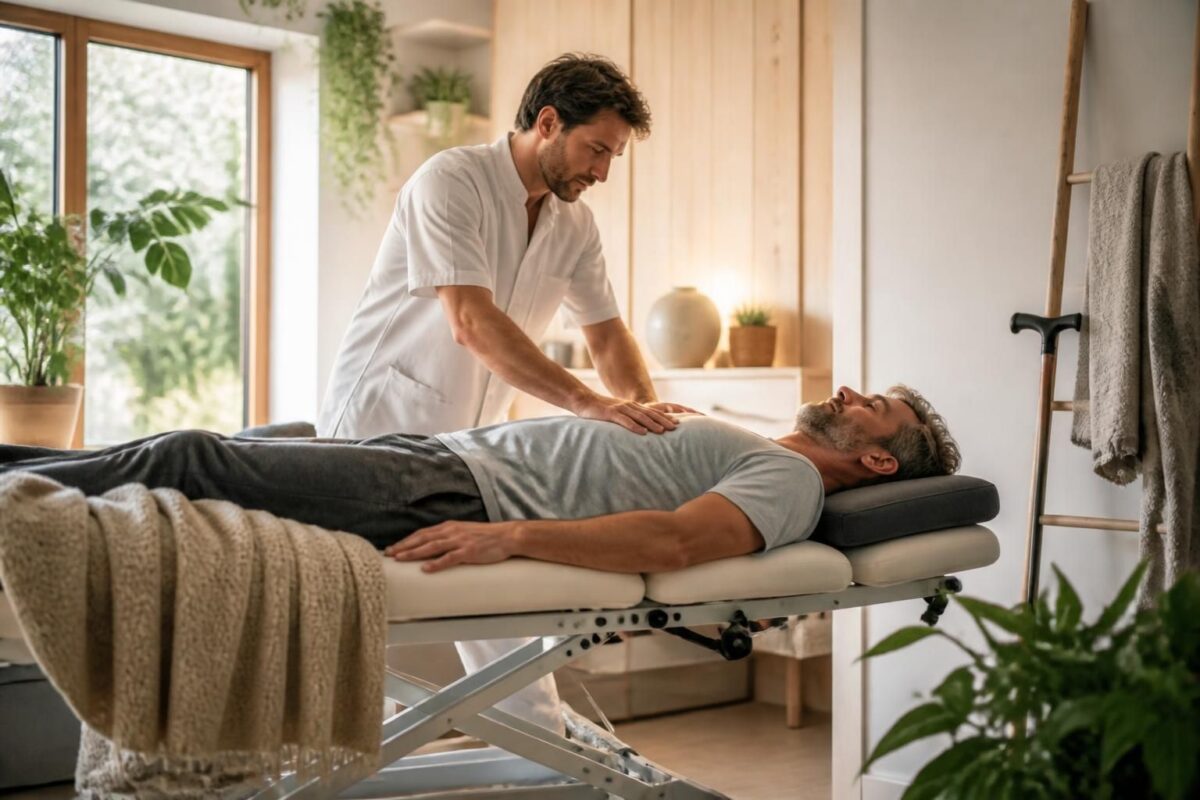
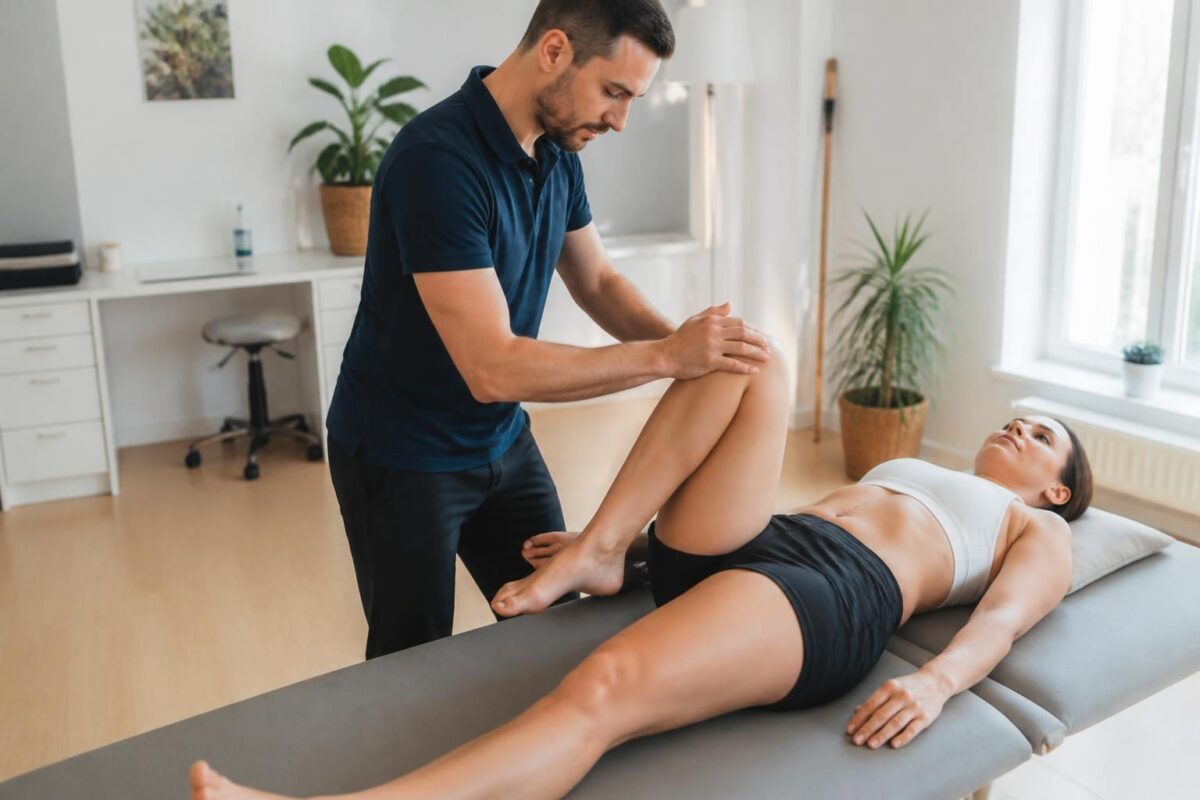
The osteopathic intervention favors passive recovery and responds to the athlete’s request. The osteopath will start with a global examination of the body to spot the areas submitted during the effort and target the areas requiring action to maintain their mobility.
The techniques used include indirect and functional approaches that correct mobility restrictions and improve fluid circulation. The intervention can also use visceral techniques to support the venous system, the diaphragm and the physiology of the organs. The goal is to promote the evacuation of toxins and to support muscle and tissue recovery.
In some cases, osteopathy may accompany additional options, especially after surgery. For specific information, see Resources on post-operative recovery.

Osteopathy and sports recovery: prepare the body for lasting performance
In short In short, Osteopathy and Sports recovery is one Global manual approach that sustainably prepares the body for the effort by restoring mobility and circulation After the effort. It is a discipline that acts on the sinews, the joints,…
Integrate Losteopathy into the sports routine to preserve flexibility
To optimize the muscle flexibility, plan regular osteopathic follow-ups adapted to your sports season. The objective is to maintain effective mobility of muscles, tendons and joints, while supporting circulation and tissue recovery.
Various resources show that osteopathy contributes to reducing tension, improving blood and lymphatic circulation, and joint comfort after exercise. To better understand these benefits, consult resources like This article on pain related to poor posture, or Support for rehabilitation after an accident.
For athletes returning from surgery or following a rehabilitation program, it may be useful to inform the medical team and coordinate approaches. Additional information is available on neurovertebral decompression and associated approaches.
In addition, osteopathy meets the needs of athletes seeking sustainable performance and Prevention of musculoskeletal disorders. For more information, see Dedicated resources.
Medical Disclaimer: The information and advice provided on this site does not replace the health professional’s diagnosis or treatment. Please note that Dr. Sylvain Desforges osteopath is neither a doctor of medicine nor a doctor, and is not a specialist in a medical specialty as defined by the Collège des Médecins du Québec. Manual medicine, functional medicine and sports medicine as described on this site exclude any medical treatment or diagnosis made by a doctor or specialist doctor. Always consult your doctor for any medical questions. For more details, please read our full legal notice.
“Medical disclaimer: The information and advice provided on this site does not replace the health professional’s benefit, diagnosis or treatment. Please note that Dr. Sylvain Desforges osteopath is neither a doctor of medicine nor a doctor, and is not a specialist in a medical specialty as defined by the Collège des Médecins du Québec. Manual medicine, functional medicine and sports medicine as described on this site exclude any medical treatment or diagnosis made by a doctor or specialist doctor. Always consult your doctor for any medical questions. For more details, please read our full legal notice. »
- Targeted diagnostics of mobility overall
- Sweet mobilizations for amplitude articular
- Myofascial release targeted
- Mobilization of muscle chains To streamline the gestures
- Breathing and relaxation foroxygenation and Lelasticity
- Drainage and disposal of metabolic waste
- Active recovery Guided post-effort
- Passive recovery and circulation optimized
- Custom Plan and Optimal rest

This article presents how Losteopathy can optimize the recovery and the muscle flexibility. By acting on the body as a unit, it facilitates renewed mobility, reduces tension and improves post-effort relaxation. You will discover practical approaches and clear principles to integrate these tips into your training program.
Why Osteopathy Is Essential For Recovery People
In short In short, Osteopathy in convalescence is an approach manual and holistic which helps to accelerate the recovery by restoring The balance, the mobility and a good circulation fabrics. it contributes to Reduce the pain, support the Back to…
Understanding recovery and flexibility
The recovery is not a fleeting step but an active process that allows muscle and tissue to regain their optimal state. The flexibility Depends on joint mobility, muscle tone and fascia elasticity. Effective recovery acts on the nervous system and on the musculo-articular structures to prevent stiffness and promote repeated training loads without loss of performance.
In osteopathic optics, prevention involves maintaining tissue elasticity, reducing mobility restrictions and improving fluid circulation. This makes it possible to optimize the function, reduce post-effort pain and accelerate the regeneration of muscle fibers.

Osteopathic manipulations to strengthen post-traumatic muscles
In short In short, Osteopathic manipulations for Strengthen post-traumatic muscles constitute a gentle manual approach aimed at restoring the mobility, reduce the pain and facilitate the Functional rehabilitation After a injury. What is Is it? A series of precise gestures…
Osteopathy and recovery: a global approach
A structural unit for flexibility
Osteopathy considers the body as a dynamic whole. By targeting the bonds between muscles, fascias, joints and organs, it allows to release restrictions that limit mobility. This global perspective is particularly effective in restoring a Functional mobility and prevent recurrent pain that restricts the flexibility.
Effects on performance and prevention
By promoting a harmonious recovery, osteopathy sessions contribute to better muscle efficiency and a reduction in tension. This results in a more fluid range of motion, better coordination and less risk of tearing during successive training.

Osteopathy and prevention of work-related musculoskeletal disorders
In short theosteopathy is one Manual approach that restores body balance and prevents MSD related to work. Its advantages: reduction of tension, improvement of mobility and prevention of chronic pain. She is preventive and healing, suitable for office and trades…
Key Techniques to Optimize Flexibility
gentle mobilizations and myofascial work
Soft mobilizations release joint restrictions without causing excessive tension. Myofascial work releases tension in the fascias, promoting better extension and sustainable mobility. These approaches improve almost all motion planes and accompany recovery.
Drainage and circulation
Lymphatic and venous drainage supports the evacuation of metabolic waste and accelerates tissue restoration. Better circulation quickly brings oxygen and essential nutrients, accelerating fiber repair and recovery.
Diaphragmatic and visceral mobility
Work on the diaphragm and organs irrigates the body in depth and influences breathing and digestion. This promotes general relaxation and better integration of efforts, which is beneficial for flexibility and postural stability.

The benefits of osteopathy to treat muscle imbalances
In short theosteopathy is a manual approach to restore themuscle harmony and postural considering the body as a whole. Its main benefits include the reduction of aches and tensions, the improvement of the mobility and from the posture, and prevention…
Practical recommendations to optimize flexibility
Integrate simple routines at the end and after the effort: slow walks, light self-massage and active stretching. These gestures, performed regularly, preserve muscle elasticity and avoid painful contractions.
Post-workout routines and active recovery
Extend or complete the effort with an active recovery of 10 to 15 minutes: walking, light jogging or cycling. These activities stimulate circulation and reduce body aches, while preserving joint mobility.
Frequency and progress
Plan osteopathy sessions tailored to your level and training volume, gradually increasing the dose over the weeks. sustained progression avoids overloads and sustainably supports the muscle flexibility.
To benefit from a personalized plan and optimize your recovery, make an appointment today.
| Aspect | Impact on flexibility |
|---|---|
| Action axis | Global approach Combining manipulations and mobilization to restore the mobility and the flexibility. |
| Main objective | reduce the strain and promote the mobility general to prevent injuries. |
| Techniques used | manipulation sweet, Myofascial relaxation and approach visceral for improve the circulation and Lelimination metabolic waste. |
| Circulatory impact | promotes a bloodstream and lymphatic Optimized to oxygenate muscles and accelerate repair. |
| Preferred recovery type | Recovery passive Mainly (drainage, massages) adapted to the load and evaluation. |
| moment of intervention | Often After the effort and on request, targeting the most requested areas. |
| Effect on flexibility | gradually strengthens the flexibility through mobilizations and the rebalancing of tensions. |
| Practical advice | Associate rest, hydration and sleep to maximize the benefits. |
| Recommended frequency | According to Levaluation and the sports calendar, individually adjusted. |
Osteopathy and chronic leg pain: regaining an optimal quality of life
In short In short, Osteopathy is one Global manual approach aimed at reducing Chronic leg pain and improve the quality of life. What is it? Non-drug therapy using the hands to identify restrictions and treat lesional chains. How does it…
Testimonials: Osteopathy and recovery to optimize muscle flexibility
“Before the sessions, my muscle flexibility was limited and fatigue set in quickly after exercise. Thanks to an osteopathic approach centered on recovery, I found a Global mobility and an Durable flexibility that allow me to approach each workout with confidence. »
“As a top athlete, the key is to manage the recovery between competitions. Osteopathy helped me release tension, improve circulation and optimize my muscle flexibility, to chain efforts without compromise on my form. »
“After each session, I feel a clear improvement in my mobility and my flexibility. The osteopathic procedure acts on the whole body, which facilitates faster recovery and better responsiveness during subsequent training. »
“My coach was convinced that the key to performance was in the active and passive recovery guided by an expert. Since I benefited from an osteopathic follow-up, my muscle flexibility has amplified, my post-effort pains are rarer and my gestures become more fluid. »
“I recommend this approach to all athletes who want to preserve their mobility and optimize their recovery. Osteopathy helps me maintain a flexibility Effective, to prevent tension and start again after each session. »
This biography presents a Expert in osteopathy, in naturopathy and in manual medicine, recognized for its integrated vision of care. Founding President of tagmed and from theacma, he works in innovation in health and in the management of chronic pain. Its approach is based on the integration of advanced technologies, including spinal decompression, laser and shockwave therapy, in order to shed light on clinical outcomes and improve patient well-being. Its objective is to offer care evidence-based to optimize the health and well-being of people being treated.
Adopt an approach overall is at the heart of this practice. The body is considered as a Functional Unit where systems cooperate continuously. This perspective is particularly effective in promoting the recovery and the muscle flexibility. By favoring a personalized evaluation, osteopathy aims to prevent imbalances and optimize the mobility Tissues, joints and fascias, in order to unleash the potential for movement and performance in athletes and active people.
As part of the Post-effort recovery, the osteopathic approach acts as a sustainable performance lever. It aims to restore energy resources, repair micro-lesions and support the optimal functioning of the body between training sessions and competitions. Intelligent management of rest and manual care helps prevent overload injuries and maintains steady progress, while preserving the Muscle fragility and the resilience structures.
There are generally two forms of recovery in osteopathy: recovery active and recovery passive. Active recovery is practiced at the end of a session or a competition, through gentle activities such as walking, light jogging or cycling, and aims to promote circulation and reduce body aches. Passive recovery continues after exercise and combines techniques such as gentle manual processing, drainage and manipulations that facilitate the evacuation of metabolic waste and re-motion of tissues. These approaches also support advice in sleep, nutrition and hydration to optimize effects.
During a recovery-oriented intervention, the osteopath begins with a umbrella and identifies areas called for by physical activity. techniques of Indirect recovery Aim to restore the mobility of joints, ligaments and muscles, while visceral manipulations and neurodynamic approaches stimulate the circulation of fluids and support the organs involved in metabolism and waste disposal. The whole is accompanied by practical advice to maximize the effects of the session.
The benefits associated with osteopathy in the Sports recovery include a reduction in tensions and improved mobility, better circulation blood and lymphatic, and increased muscle and joint comfort. By rebalancing the fascias, muscles and joints, the osteopathic approach prepares the body to support future loads and progress with more consistency.
For athletes and people wishing to optimize their muscle flexibility and their recovery, the TagMed firm offers personalized support, adapted to each discipline and each phase of the training. Make an appointment to assess your mobility, recovery and performance potential.
This summary presents how Osteopathy can optimize the muscle flexibility and accelerate the recovery, favoring a global approach that considers the body as a unit. distinguishing Active recovery and Passive recovery, it highlights simple and effective techniques to reduce tension, improve the mobility of muscles, tendons and joints, and prepare the body for sustained performance.
How osteopathy supports recovery after complex surgery
In short In short, Post-operative osteopathy is an approach fresh which supports the recovery After a Complex surgery. It helps to reduce the pain and the fatigue, improves the mobility and accelerates the healing thanks to a better vascularization and…
The principles of losteopathy applied to recovery
from a perspective overall, Losteopathy aims to restore theStructural balance of the body by working on myofascial chains, joints and viscera. This approach aims to improve the mobility and the bloodstream as well as lymphatic to promote the oxygenation of tissues and the evacuation of metabolic waste. By optimizing these parameters, energy resources are renewed more quickly and the recovery post-effort becomes more effective, which contributes to a better muscle flexibility and lasting performance.
Active recovery and passive recovery
The Active recovery is carried out at the end of the session by gentle activities (walking, light jogging, cycling) which facilitate venous return and reduce body aches. She prepares the body to chain efforts without overload. The Passive recovery Includes osteopathic sessions focused on muscle relaxation, drainage and the gentle mobilization, combined with restful sleep, a balanced diet and good hydration. Together, these mechanisms promote faster performance restitution and residual pain reduction.
osteopathic techniques promoting flexibility
To restore the mobility and the flexibility, the osteopath can intervene on the sinews, the gristle and the ligaments, using Indirect handling techniques and delicate gestures on the organs to optimize the circulation of fluids and nutritional intake. The Myofascial relaxation and the drainage Help release tension and reduce joint restrictions. All is based on advice from rest, of nutrition and ofhydration suitable for each athlete.
Integration into the training program
For athletes, the objective is to integrate osteopathy as a lever performance and of prevention imbalances. The initial assessment identifies areas of tension and restrictions that limit the mobility and the muscle flexibility. Regular appointments, coordinated with training schedule and rest periods, optimize recovery and prepare muscles and joints for repeated loads without compromising performance. A global approach combining osteopathic techniques, restful sleep and nutrition promotes a lasting balance of the body and supports long-term sports goals.

Dr Sylvain Desforges, B.Sc., D.O., N.D., osteopath, is the founding president of TAGMED and of the ACMA association. He dedicates his practice to chronic spinal pain, low back pain and symptoms compatible with sciatica, particularly when pain radiates toward the buttock, leg, calf, foot or toes.
Through SOS Sciatique, he publishes educational content on sciatica symptoms, possible causes such as disc herniation, disc narrowing, foraminal stenosis or irritation of a lumbar nerve root, as well as non-surgical approaches that may be considered according to the evaluation. At Clinique TAGMED, care may include, depending on the case, motorized neurovertebral decompression, specific osteopathic care or precision percussion.
For an evaluation related to sciatica treatment in Montreal / Mount Royal or sciatica treatment in Terrebonne, please consult the services available at Clinique TAGMED.
Medical disclaimer
The information published on SOS Sciatique is provided for educational purposes only and does not replace a consultation, diagnosis, opinion or treatment provided by a physician or another authorized healthcare professional. The author of this article is neither a medical doctor nor a specialist in a medical specialty recognized by the Collège des médecins du Québec. The osteopathic, manual medicine or functional support approaches described on this site do not constitute medical acts and are not intended to replace medical follow-up.
Consult a physician or emergency service in cases of loss of bladder or bowel control, anesthesia in the saddle area, significant or progressive weakness in the leg or foot, fever, recent trauma, severe pain or rapid worsening of symptoms. For more details, please read our Legal Notice.