Osteopathy and blood circulation: naturally stimulate the body
27/06/2026
Osteopathy and recovery: optimize muscle flexibility
27/06/2026
In short
Preventive osteopathy is a global approach that acts upstream to maintain thebalance and the mobility of the body in order to prevent Age-related pain. Its key advantages include the prevention of chutes, improving thebalance and from the posture, as well as the reduction of joint and muscle pain, to support autonomy. Its operation is based on a holistic approach, of Gentle techniques, and personalized exercises that strengthen the Musculoskeletal system, improve circulation and promote faster recovery. |
Preventive osteopathy Can reduce age-related pain by acting on root causes rather than symptoms, and helping to maintain mobility, balance and general vitality.
- Balance and posture : Gentle techniques help release tension and correct imbalances, reducing the risk of pain and falls.
- Joint mobility : Increased range of movements and reduction of stiffness to preserve autonomy in everyday actions.
- muscle support : Adapted exercises and muscle strengthening to protect the joints and improve stability.
- Overall well-being : Better circulation and nervous function, promoting long-lasting comfort and easier recovery after exercise.
Summary: Theosteopathy Prevents age-related pain by acting on thebalance, the mobility and the support of the body. This approach protects autonomy, reduces the risk of falls and improves overall well-being. The article details the key mechanisms and simple actions to consider to integrate this prevention into daily life.
With age advancement, pain and functional disorders become more frequent. Osteopathy proposes an approach preventive which aims to keep the body in harmony. It assesses the body as a whole and acts on the potential causes of imbalances, not just on symptoms. This approach helps to preserve the mobility and theautonomy on a daily basis.
Prevent falls and improve balance
Falls are a major concern for seniors. Osteopathy can help by releasing muscle tension and optimizingPostural alignment. Gentle handling promotes better stability and more secure support when moving. A balanced posture reduces the risk of loss of balance and injury.
To deepen, specialized resources describe how osteopathy can be a natural solution for leg pain and mobility. Osteopathy and chronic leg pain offers useful insights on this aspect.
Maintain joint mobility
Stiffness and joint pain increase with age. Osteopathy helps Increase range of motion and reduce the tensions surrounding the joints. Gentle techniques improve joint flexibility and fascia flexibility, making daily gestures and moderate physical activities easier.
Additional resources address the impact of osteopathy on pain prevention and overall well-being. for example, Osteopathy and overall well-being Explores a personalized approach that supports painless mobility.
Muscle building and structural support
Osteopathy is not limited to treating symptoms. It supports the musculoskeletal system as a whole. A global program may include advice on simple and appropriate exercises to strengthen muscles and support joints, to prevent future injuries. This approach aims to Structural support sustainable and better tolerance to daily efforts.
Public and professional resources show that prevention requires a global approach, which can be reinforced by information dedicated to injury prevention in seniors. for example, Osteopathy for injury prevention in seniors illustrates this principle.
Integrate osteopathy into a prevention approach
For effective prevention, osteopathy can be part of a suitable routine. The therapist assesses postures, lifestyles and recurring tensions. It offers simple adjustments and personalized advice to limit the appearance of age-related pain and promote an active and independent life.
Additional resources invite us to consider osteopathy as a major preventive pathway. See for example the resources describing the benefits of osteopathy in the context of prevention and maintenance of overall well-being. Osteopathy and sciatic pain – Full management, and Natural solution.
Frequency and practical approach
Preventive osteopathy visits can be spaced out according to individual needs. Some people benefit from a regular appointment, others prefer a consultation when tensions appear. The goal remains the same: support thebalance, the mobility and the support body to preserve autonomy in the long term.
To deepen the preventive aspects in the context of daily life, you can consult resources and reference articles on the subject, in particular via Osteopathy and prevention of aging.
Additional resources highlight the preventive approach as an essential part of overall health and well-being. For a general perspective and practical advice, see Overall wellness and personalized approach and Posture and pain prevention.
For those who want an institutional perspective on training and expert profiles, note that training in osteopathy are done through institutions such as Numss, NAO, National University of Medical Sciences and National Academy of Osteopathy.
Medical Disclaimer: The information and advice provided on this site does not replace the health professional’s diagnosis or treatment. Please note that Dr. Sylvain Desforges osteopath is neither a doctor of medicine nor a doctor, and is not a specialist in a medical specialty as defined by the Collège des Médecins du Québec. Manual medicine, functional medicine and sports medicine as described on this site exclude any medical treatment or diagnosis made by a doctor or specialist doctor. Always consult your doctor for any medical questions. For more details, please read our full legal notice.
Axis : Proactive prevention through movement and balance.
- Balance and posture — Detection and correction of imbalances
- Alignment — Improved body alignment
- Risk of falling — Reduction thanks to increased stability
- Tensions around the column — Decreased tensions
- Joint mobility — Increased range of motion
- Muscle stability — Strengthening of supporting muscles
- Traffic and recovery — General improvement
- Prevention of future pain — Proactive and sustainable approach

This article presents how osteopathy can help prevent age-related pain by acting on balance, mobility and body stability. Thanks to a global approach and gentle techniques, it strengthens the musculoskeletal system and anticipates the appearance of Chronic pain, while preserving autonomy and quality of life.
Balance and fall prevention
With age, the risk of falling often increases due to balance and locomotion disorders. Osteopathy intervenes by acting on the Muscle tensions, postural alignment and neuromuscular coordination to restore general stability. Each session aims to release areas of tension, improve proprioception and correct imbalances that can cause loss of support and fall.
gentle and appropriate techniques
osteopathic gestures, carried out in a way fresh And respectful, allow you to rebalance the muscle chains and the fascias without rushing the body. By working on the key areas of the body, stability of the trunk and hips is reinforced, thus preventing balance losses and recurrent falls in seniors.

How osteopathy improves the quality of life of active people
In short In short, theosteopathy is a global approach that Optimizes mobility and the function of the body of ACTIVE PEOPLE, for a better quality of life. It helps prevent injury and reduce Musculoskeletal pain While promoting the Sports recovery.…

Osteopathy and sports recovery: prepare the body for lasting performance
In short In short, Osteopathy and Sports recovery is one Global manual approach that sustainably prepares the body for the effort by restoring mobility and circulation After the effort. It is a discipline that acts on the sinews, the joints,…
Joint mobility and flexibility
With age, the joints can become more rigid. Osteopathy acts on mobility by releasing joint restrictions and lengthening soft tissues (fascias, muscles, ligaments). This makes it possible to increase the range of motion, to facilitate daily gestures and to reduce pain linked to conditions such as osteoarthritis or benign inflammation.
Targeted techniques for key joints
Specific techniques support the knees, hips and spine, while stimulating local vascularization and oxygen supply of the tissues. This approach helps to delay stiffness and promote dynamic posture throughout the day.
Why Osteopathy Is Essential For Recovery People
In short In short, Osteopathy in convalescence is an approach manual and holistic which helps to accelerate the recovery by restoring The balance, the mobility and a good circulation fabrics. it contributes to Reduce the pain, support the Back to…

Osteopathic manipulations to strengthen post-traumatic muscles
In short In short, Osteopathic manipulations for Strengthen post-traumatic muscles constitute a gentle manual approach aimed at restoring the mobility, reduce the pain and facilitate the Functional rehabilitation After a injury. What is Is it? A series of precise gestures…
Structural support and reinforcement
Beyond punctual relief, osteopathy offers support focused on the muscle building and maintaining the Musculoskeletal system. By considering the body as a whole, areas of weakness are identified and personalized exercises are proposed to stabilize the joints and support the spine.
Custom programs
Simple and progressive routines are recommended for Strengthen the muscles, improve posture and support bearing joints such as hips, knees and back. The objective is increased autonomy and better prevention of future pain, while facilitating daily activities.

Osteopathy and prevention of work-related musculoskeletal disorders
In short theosteopathy is one Manual approach that restores body balance and prevents MSD related to work. Its advantages: reduction of tension, improvement of mobility and prevention of chronic pain. She is preventive and healing, suitable for office and trades…

The benefits of osteopathy to treat muscle imbalances
In short theosteopathy is a manual approach to restore themuscle harmony and postural considering the body as a whole. Its main benefits include the reduction of aches and tensions, the improvement of the mobility and from the posture, and prevention…
Preventive and global approach
Preventive osteopathy acts on all the systems of the body: musculoskeletal, nervous and circulatory. By improving mobility, circulation and nervous regulation, it strengthens endurance and reduces stressors that contribute to chronic pain, while promoting better overall well-being.
When to consult
It is recommended to consider regular visits even in the absence of pain, in order to detect and correct tensions and imbalances early. This proactive approach can preserve theautonomy, improve the welfare and promote a better quality of life in the long term.
| Osteopathic axis | Preventive effect (summary) |
|---|---|
| Balance and posture | Improved alignment and Reduced risk of falling. |
| Joint mobility | Increases amplitude and Decreases stiffness. |
| Muscle tensions | Release the tensions and Prevents repetitive pain. |
| Targeted muscle strengthening | Adapted exercises for Support the joints and prevent injuries. |
| Traffic and recovery | Better circulation and recovery, reducing diffuse pain. |
| Flexibility of the fascias | Improved flexibility For daily gestures. |
| Posture in activity | Reduction of back pain related to the sedentary lifestyle. |
| Preparation for aging | Support for body transitions to limit Future pains. |
Osteopathy and chronic leg pain: regaining an optimal quality of life
In short In short, Osteopathy is one Global manual approach aimed at reducing Chronic leg pain and improve the quality of life. What is it? Non-drug therapy using the hands to identify restrictions and treat lesional chains. How does it…
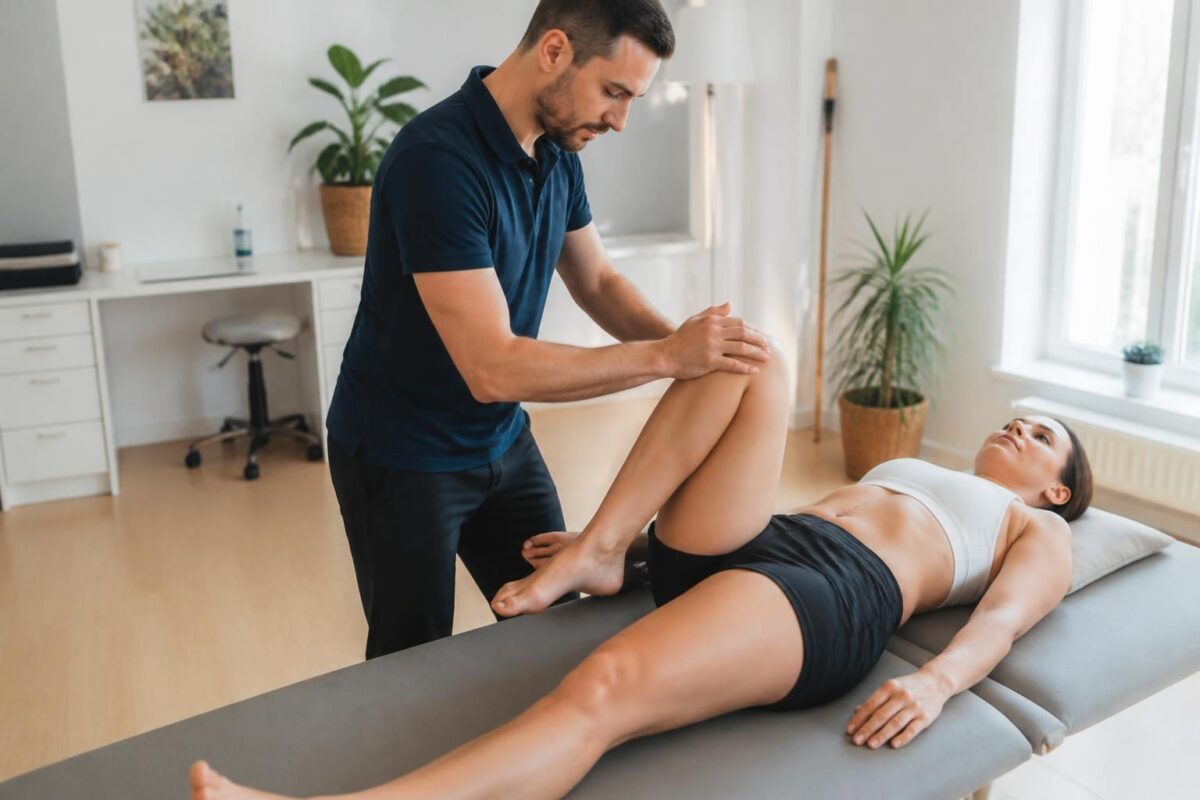
How osteopathy supports recovery after complex surgery
In short In short, Post-operative osteopathy is an approach fresh which supports the recovery After a Complex surgery. It helps to reduce the pain and the fatigue, improves the mobility and accelerates the healing thanks to a better vascularization and…
Testimonials on the prevention of age-related pain thanks to osteopathy
I am Claire, 72 years old. Since my first consultations, my balance and my posture improved through gentle and targeted handling. This approach acts in Fall Prevention By correcting tensions and strengthening stability, which allows me to remain active on a daily basis without fear of falling.
Me, Léon, 68, I testify that my walking port and my mobility have gained in amplitude. My Joint pain Related to osteoarthritis have subsided and I can resume my daily activities without limitation, thanks to simple and adapted gestures that alleviate the tensions around the joints.
Marie, 75, says she won in autonomy and reduces drug dependence. With personalized exercises and osteopathic adjustments, she rediscovers the pleasure of outings and family moments without the pain taking precedence over her life.
Jean, 70, says thatanticipate Pain allows you to live better on a daily basis. Osteopathy stimulates a balance of the nervous system and promotes a welfare general reinforced, which contributes to better quality sleep and a reduction in stress which can lead to physical tension.
Isabelle, 66, notes a Sustainable mobility and an posture better aligned. Her daily gestures and her outings are more fluid, and she feels less pain likely to limit her activities, proof that osteopathy can act in prevention from a young senior age.
With advancing age, joint pain, rigidity and postural imbalances can accumulate. Preventive osteopathy is based on a global and personalized approach to act before the emergence of pain, in order to preserve the autonomy, mobility and quality of life of elderly patients. This approach aims not only to relieve the symptoms, but also to strengthen the body’s resilience in the face of daily constraints.
Preventing falls and improving balance is a priority for seniors. Gentle osteopathic techniques help release muscle tension that disrupt proprioception and stability. By working on body alignment and releasing areas of tension, osteopathy contributes to better postural control and reduced risk of falling, a major factor influencing long-term independence.
Joint mobility is often affected by time. Osteopathy can increase the range of movements by improving joint flexibility and releasing the fascias. This translates into a better ability to perform daily gestures — getting up, sitting, walking, reaching objects — and decreasing pain related to osteoarthritis or other age-related conditions.
Strengthening structural support for the body is at the heart of effective prevention. Rather than treating the symptoms only, the osteopath offers personalized exercises intended to strengthen the muscles that surround the joints and stabilize the spine. This proactive approach helps maintain a more balanced posture, preserve spinal stability and reduce stress on sensitive areas.
Beyond the musculoskeletal system, preventive osteopathy acts on the overall harmony of the body. By promoting better blood circulation, free breathing and relaxation of the nervous system, it contributes to a general feeling of well-being. Better mobility and stress reduction can also improve sleep, which is a key element in maintaining health in the elderly.
Each course is unique. The osteopath carries out a global assessment to identify functional tensions and imbalances which, if left untreated, could progress to later pain. Based on gentle approaches and practical advice — everyday posture, ergonomic choices, adapted exercise routine — he develops a tailor-made preventive plan, designed to support autonomy and promote an active and fulfilling life.
This summary shows how theosteopathy can prevent age-related pain by acting on thebalance, the mobility and the Structural support, in order to preserve theautonomy and the quality of life of seniors.
First, thePreventive osteopathy Aims to detect and correct imbalances before the onset of pain. By releasing tensions, restoring thePostural alignment and favoring a better Joint mobility, it can reduce lower back, joint and wear-related pain, while offering personalized functional advice adapted to the patient’s lifestyle.
Second, maintaining thebalance and from the posture is central to preventing falls. Gentle techniques and specific exercises help to improve stability, strengthen body anchorage and reduce the risk of loss of balance in daily gestures, such as getting up, turning or walking on various surfaces.
Third, theImproved joint mobility results in greater range of motion and a reduction in stiffness. This progression facilitates the usual activities (being down, going out, dressing) and can alleviate the pain associated with osteoarthritis or other degenerative conditions, while preserving independence.
Fourth, the muscle support and the Musculoskeletal system will benefit from coordinated work. Personalized exercises and practical advice help strengthen support muscles, improve joint stability and create a robust base for daily activities and leisure activities.
Fifth, the global approach promotes better circulation, optimized recovery and reduced body stress. By planning regular visits, tensions can be identified early and put in place an appropriate action plan to remain active and less vulnerable to age-related pathologies.
Sixth, theautonomy Can be preserved longer thanks to a proactive approach combining global assessments, ergonomic advice and simple exercises to practice on a daily basis. This active prevention contributes to limiting pain and maintaining functional mobility for everyday activities and leisure activities.

Dr Sylvain Desforges, B.Sc., D.O., N.D., osteopath, is the founding president of TAGMED and of the ACMA association. He dedicates his practice to chronic spinal pain, low back pain and symptoms compatible with sciatica, particularly when pain radiates toward the buttock, leg, calf, foot or toes.
Through SOS Sciatique, he publishes educational content on sciatica symptoms, possible causes such as disc herniation, disc narrowing, foraminal stenosis or irritation of a lumbar nerve root, as well as non-surgical approaches that may be considered according to the evaluation. At Clinique TAGMED, care may include, depending on the case, motorized neurovertebral decompression, specific osteopathic care or precision percussion.
For an evaluation related to sciatica treatment in Montreal / Mount Royal or sciatica treatment in Terrebonne, please consult the services available at Clinique TAGMED.
Medical disclaimer
The information published on SOS Sciatique is provided for educational purposes only and does not replace a consultation, diagnosis, opinion or treatment provided by a physician or another authorized healthcare professional. The author of this article is neither a medical doctor nor a specialist in a medical specialty recognized by the Collège des médecins du Québec. The osteopathic, manual medicine or functional support approaches described on this site do not constitute medical acts and are not intended to replace medical follow-up.
Consult a physician or emergency service in cases of loss of bladder or bowel control, anesthesia in the saddle area, significant or progressive weakness in the leg or foot, fever, recent trauma, severe pain or rapid worsening of symptoms. For more details, please read our Legal Notice.