

Osteopathy and recovery after muscle injuries
27/06/2026
The benefits of osteopathy for amateur athletes
27/06/2026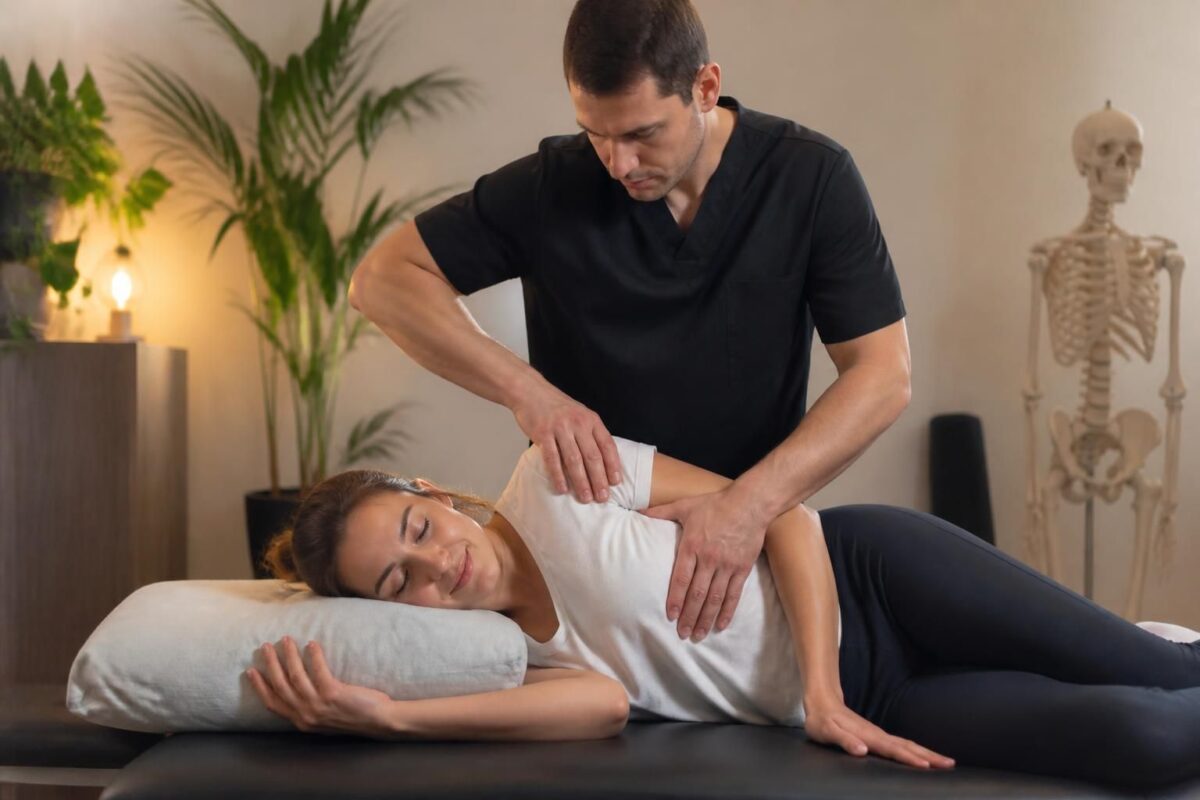
In short
| In short, Osteopathy is a global approach that identifies and corrects Postural imbalances To reduce the Pain related to poor posture. Key Benefits: Reduction of Lower back pain and cervical, improvement of the mobility, better sleep and prevention of recurrences. how it works: a Overall diagnosis, a Personalized approach, of Gentle techniques, work on the basin and the column, then Practical advice for everyday life. Accessible in Belgium, especially around Cork and Esneux. |
How osteopathy reduces pain related to poor posture : it acts on the Postural imbalances, rebalances tensions and fascias, and refits the joints to restore theNatural Alignment.
The practitioner performs a Overall diagnosis In order to understand how a seemingly banal posture can cause distant pain, then suggests techniques soft and personalized.
Result: a pain reduction and an Improving mobility, accompanied by practical advice to prevent recurrences.
Quick summary: Osteopathy Treats postural imbalances and their impact on pain. By working on thealignment from the body, it releases tension, improves mobility and helps to reduce the pain associated with a lasting bad posture. This global approach is based on precise assessment, appropriate techniques and practical advice to change daily habits.
Understand the link between posture and pain
Posture is not just a matter of appearance. The whole body acts as a team: muscles, tendons, ligaments and joints adapt to each other. A deteriorating posture creates compensations, tensions and blockages that result in local or referred pain. Often affected areas include lower back, neck, shoulders, hips, and sometimes feet. Osteopathy considers this global dynamic to understand where the pain starts and how it spreads.
How osteopathy acts concretely
The osteopathic approach is based on a global diagnosis and careful observation of your movement. The practitioner identifies areas of excessive tension or imbalances that alter the balance of the whole body. It can then mobilize the joints and fascias, adjust the tensions and restore better harmony between the segments, in order to restore a more natural postural function. The objective is to question the muscle chains and the relationships between the pelvis, the spine and the neck, so that the body regains its ability to self-regulate. This approach adapts to each person and may require several sessions to consolidate stability and comfort gains.
Patient role and daily habits
The success of osteopathy is also based on your involvement. The professional gives you practical advice to improve your posture at work, at home and during your activities. Simple adjustments can include better management of your workstation, positions to be preferred during sleep and daily gestures that reduce stress on the joints and muscles. A suitable and progressive progression makes it possible to re-encode new postural automatisms and reduce long-term tensions.
Typical cases and expected results
After one or more sessions, many patients find a decrease in tension, better mobility and a reduction in the intensity of pain associated with posture. Postural rebalancing can also improve breathing, digestion and sleep, in connection with diaphragmatic breathing and the circulation of tension around the spine. Each course is unique, but the common objective remains: to allow the body to regain its balance and to avoid relapses linked to bad habits.
Useful tools and resources
To learn more, you can consult specialized resources at the following links: Why osteopathy is essential to maintain good posture, The benefits of osteopathy to relieve chest pain, How Osteopathy Improves Musculoskeletal Health, and How osteopathy acts on chronic postural imbalances. Other relevant resources can be viewed via the reference sites mentioned below.
Training and professional executive
Osteopaths rely on recognized training, including NUMSS and NAO, in order to guarantee a practice based on solid foundations and patient safety. These executives contribute to a rigorous approach adapted to each course of postural pain.
To learn more about the links between posture and pain and osteopathic approaches, you can also consult the following resources: neurovertebral decompression, Carpal tunnel syndrome, and Tagmed Clinic.
osteopathy and posture interlock when the practitioner assesses the overall origin of the tensions and guides the patient towards a better mobility and an stability sustainable. The path is progressive, but the effects can be felt from the first sessions, with a reduction in pain and an improvement in the quality of life.
Medical Disclaimer: The information and advice provided on this site does not replace the health professional’s diagnosis or treatment. Please note that Dr. Sylvain Desforges osteopath is neither a doctor of medicine nor a doctor, and is not a specialist in a medical specialty as defined by the Collège des Médecins du Québec. Manual medicine, functional medicine and sports medicine as described on this site exclude any medical treatment or diagnosis made by a doctor or specialist doctor. Always consult your doctor for any medical questions. For more details, please read our full legal notice.
- Overall diagnosis : identifies postural imbalances and their causes.
- Spotting Compensation: Identifies the areas of tension and drift.
- rebalancing Targeted: Adjusts muscle and joint chains.
- Mobility found : Release of tensions and improvement of movement.
- Lasting pain reduction : decrease in stress on nerves and muscles.
- Restoration of engine diagrams : more fluid gait and daily gestures.
- Postural education : Practical advice and simple exercises.
- Prevention : Ergonomics and habits to avoid relapses.

Quick summary: Osteopathy acts on the whole body to correct the imbalances caused by a bad posture, reduce tensions and promote a better distribution of constraints. By working on the overall diagnosis, the appropriate techniques and the patient’s autonomy, it reduces the lower back, cervical and joint pain related to the daily position, while improving daily mobility and comfort.
Understand the link between posture and pain
The posture It is not just a concern for aesthetics: it conditions the way in which the muscles, the ligaments and the joints manage the stresses during each movement. An imbalance maintained on a working day in front of a screen, car journeys or repetitive gestures can cause tensions that radiate up or down the body. In the long term, these tensions turn into local pain or diffuse projected pain, from the neck to the lower back, through the shoulders and hips.
Why does posture affect pain?
When a zone folds or compensates, other areas take over and wear out prematurely. This phenomenon affects both the deep muscles and the joints. thePostural balance Little by little gets lost, which can lead to tensions, stiffness and pain that evolves with the day. Osteopathy sees the body as an interconnected system where each segment can influence the others, even remotely.

How osteopathy improves the quality of life of active people
In short In short, theosteopathy is a global approach that Optimizes mobility and the function of the body of ACTIVE PEOPLE, for a better quality of life. It helps prevent injury and reduce Musculoskeletal pain While promoting the Sports recovery.…

Osteopathy and sports recovery: prepare the body for lasting performance
In short In short, Osteopathy and Sports recovery is one Global manual approach that sustainably prepares the body for the effort by restoring mobility and circulation After the effort. It is a discipline that acts on the sinews, the joints,…
How osteopathy acts concretely
Global diagnosis and personalized adaptation
During a first consultation, the osteopath assesses your posture, your mobility and your history. He looks for the “pivot points” that maintain the imbalance and adapts his approach to your morphology, age and activities. The goal is not to treat a single symptom, but to understand the complete history of your body to avoid recurrences.
Techniques used and rebalancing principles
the preferred techniques aim to restore a Distribution of voltages And to free up areas that pull too hard or tense up. This can involve gentle manipulations, joint mobilizations, fascia work and actions on the deep muscles. The desired result is a better flexibility, a decrease in pain and more free breathing, which contribute to a more stable posture on a daily basis.
Patient role and practical advice
The patient becomes an actor: simple advice makes it possible to prolong the effects outside the sessions, such as adjusting the ergonomics of the workstation, adopting effective breathing and integrating micro-mauses of movement during the day. Guided exercises and benchmarks to correct the resting position help anchor new postural habits and strengthen overall stability.
Why Osteopathy Is Essential For Recovery People
In short In short, Osteopathy in convalescence is an approach manual and holistic which helps to accelerate the recovery by restoring The balance, the mobility and a good circulation fabrics. it contributes to Reduce the pain, support the Back to…

Osteopathic manipulations to strengthen post-traumatic muscles
In short In short, Osteopathic manipulations for Strengthen post-traumatic muscles constitute a gentle manual approach aimed at restoring the mobility, reduce the pain and facilitate the Functional rehabilitation After a injury. What is Is it? A series of precise gestures…
What you can expect during the sessions
the osteopathic approach does not promise instant disappearance but a gradual improvement in the posture and associated pain. Many feel a difference from the first sessions, and lasting results often appear after one to three visits when postural automatisms begin to re-educate.
Frequency and progress
The frequency of consultations is adapted to your situation: it can be weekly or spaced out depending on the evolution. Monitoring makes it possible to adjust exercises, daily gestures and working positions, in order to prevent a resumption of tensions.
Prevention and daily habits
To limit relapses, favor active breaks, adjust the height of your screen, choose a suitable seat and incorporate relaxation movements into your routine. Posture is continuous learning: with theosteopathy And healthy habits, you sustainably improve your comfort and energy.
| Aspect | concise effect |
|---|---|
| Overall diagnosis | Evaluates the body as a whole to target the postural imbalances responsible for pain. |
| Searching for voltage chains | Identifies the tensions that cross the painful areas and rebalances the pivot areas. |
| Techniques used | Gentle manipulations, mobilizations, work of the fascias and practical advice adapted to your daily life. |
| Role of the patient | The patient actively participates through exercises and posture adjustments. |
| Impact on mobility | Improved overall flexibility and reduction of tensions that limit movement. |
| Prevention and advice | Ergonomics, working position and breathing to maintain post-treatment gains. |
| Expected short-term results | Diminished pain and mobility found after 1 to 3 sessions, as the case may be. |
| vigilance points | Personalized follow-up and security; Avoid sudden gestures and consult in case of acute pain or emergency sign. |

Osteopathy and prevention of work-related musculoskeletal disorders
In short theosteopathy is one Manual approach that restores body balance and prevents MSD related to work. Its advantages: reduction of tension, improvement of mobility and prevention of chronic pain. She is preventive and healing, suitable for office and trades…

The benefits of osteopathy to treat muscle imbalances
In short theosteopathy is a manual approach to restore themuscle harmony and postural considering the body as a whole. Its main benefits include the reduction of aches and tensions, the improvement of the mobility and from the posture, and prevention…
Testimonials: how osteopathy reduces pain related to poor posture
“Before consulting, my lower back pain would return every morning after a long day in front of the computer. thanks to theosteopathy, my alignment improved and my posture became natural again. I can finally work without pain and find my activities. »
“My neck and shoulders were constantly stretched, which gave me a stiffness as soon as I hit the road. After a few sessions, my posture improved and my neck pain decreased sharply; My breathing is also freer. theosteopathy really changed my way of moving. »
“As an office worker, I woke up with a strange stiffness that ruined my mornings. The global approach and personalized advice helped me to correct my posture, and my pains have become rare and less intense. »
“By carrying my children and standing for a long time, I had pain in my back. After the sessions, my posture and my pain resistance have improved, and I can play outside without pain. »
“I consulted for a sciatica related to poor posture. The osteopathic approach rebalanced my figure and my walking has become fluid again, my lower back pain is attenuated and I find energy on a daily basis. »
“As a senior, the mobility And balance are essential. After the sessions, I found an autonomy that I lacked and my pain decreased. »
In the field of muscular and skeletal health, osteopathy is distinguished by a global approach that aims to understand the central role of posture in daily pain. This discipline is not content to eliminate the symptom, it seeks to restore the harmony of the mechanisms of the body so that everyone regains their natural ability to self-repair. The objective is not only to reduce pain, but to restore a functional sophistication that allows you to evolve serenely in working and daily life.
The heart of the osteopathic intervention is based on a global and personalized diagnosis. The osteopath observes the way you move, spots asymmetries and listens to your body’s history, your professional, sports habits and your daily movements. This overall vision makes it possible to identify the “strings” that pull too hard and the areas that lack relays. By scrutinizing the link between prolonged sitting, repetitive gestures and tensions in the neck, back or hips, it becomes possible to detect a postural origin often hidden behind pains that seem isolated.
Concretely, the osteopathic approach acts as a progressive rebalancing of the body. We do not treat a single muscle, but we reharmonize all the musculoskeletal chains: the joints, the fascias, the deep muscles and the systems that surround them. This dynamic aims to reduce tensions, free up blockages and restore flexibility where everything froze. The results are felt not only in the back, but also in breathing, sleep and even digestion, testifying to the interconnection of body systems.
Each session is thought of as a step towards better postural stability. The intervention can combine gentle manipulations, joint mobilizations and targeted work on the fascias. The patient becomes an actor in his rebalancing through practical advice and simple exercises to do at home or at work. The goal is to permanently install a posture that reduces excessive demands and compensations that, in the long term, fuel the Chronic pain.
At the same time, the modern osteopath relies on complementary tools to accelerate recovery and optimize results. advanced technologies such as spinal decompression, approaches laser And shockwave therapies can be integrated when the clinical setting justifies it, in order to improve mobility, reduce inflammation and promote faster resumption of activities. This alliance between manual know-how and technological innovations is part of an approach proven and data-based, oriented towards efficiency and safety.
The effects of postural correction go beyond temporary relief. Many note, after one to three sessions, a reset of body automation and a better ability to adopt healthy postures on a daily basis. The posture becomes a lever of vitality again, allowing you to practice your favorite activities without fear of pain and to go through stressful periods with renewed energy. For those who seek to prevent recurrences, osteopathic support offers not only care, but also attentive listening and concrete strategies to preserve the bodily balance.
This text summarizes how Osteopathy may decrease the Pain related to poor posture By acting on the whole body: overall diagnosis, rebalancing of tensions, improvement of the mobility, and practical advice for adopting a healthier posture on a daily basis.
First, Osteopathy does not only intervene where the pain is local; It seeks to restore the overall balance of the musculoskeletal system. From a Overall diagnosis, the practitioner identifies the tension chains, rebalances the segments of the body and acts on the compensation mechanisms that fuel postural pain.
the effects often result in a decrease in Lower back pain, cervical and peripheral elements (hips, knees, feet), as well as an improvement in the posture and from the quality of life. There is also a reduction in fatigue linked to inadequate posture and sometimes a better quality of sleep.
The treatment is personalized and progressive: sessions that favor Gentle techniques and adapted mobilizations, associated with exercises and practical advice to correct daily habits (workplace, rest position, daily gestures). This approach aims to create a Body memory which allows the body toSelf-recalling sustainably.
Beyond mechanical care, theosteopathy Can improve integration of respiratory and digestive systems, comfort of movement andenergy general, reinforcing the individual’s ability to prevent relapses. Efficiency is often seen after a few sessions and is part of a prevention dynamic.
To take full advantage of these benefits, it is recommended to maintain regular visits and adopt simple habits at home and at work: active breaks, ergonomic adjustment, conscious breathing and appropriate physical activity. A collaboration with your osteopath makes it possible to develop a personalized and readable plan over the long term.
If you want to explore a solution lasting For your postural pain, think about the appointment online or in the office in order to benefit from support adapted to your rhythm and your daily life.
Osteopathy and chronic leg pain: regaining an optimal quality of life
In short In short, Osteopathy is one Global manual approach aimed at reducing Chronic leg pain and improve the quality of life. What is it? Non-drug therapy using the hands to identify restrictions and treat lesional chains. How does it…
How osteopathy supports recovery after complex surgery
In short In short, Post-operative osteopathy is an approach fresh which supports the recovery After a Complex surgery. It helps to reduce the pain and the fatigue, improves the mobility and accelerates the healing thanks to a better vascularization and…

Dr Sylvain Desforges, B.Sc., D.O., N.D., osteopath, is the founding president of TAGMED and of the ACMA association. He dedicates his practice to chronic spinal pain, low back pain and symptoms compatible with sciatica, particularly when pain radiates toward the buttock, leg, calf, foot or toes.
Through SOS Sciatique, he publishes educational content on sciatica symptoms, possible causes such as disc herniation, disc narrowing, foraminal stenosis or irritation of a lumbar nerve root, as well as non-surgical approaches that may be considered according to the evaluation. At Clinique TAGMED, care may include, depending on the case, motorized neurovertebral decompression, specific osteopathic care or precision percussion.
For an evaluation related to sciatica treatment in Montreal / Mount Royal or sciatica treatment in Terrebonne, please consult the services available at Clinique TAGMED.
Medical disclaimer
The information published on SOS Sciatique is provided for educational purposes only and does not replace a consultation, diagnosis, opinion or treatment provided by a physician or another authorized healthcare professional. The author of this article is neither a medical doctor nor a specialist in a medical specialty recognized by the Collège des médecins du Québec. The osteopathic, manual medicine or functional support approaches described on this site do not constitute medical acts and are not intended to replace medical follow-up.
Consult a physician or emergency service in cases of loss of bladder or bowel control, anesthesia in the saddle area, significant or progressive weakness in the leg or foot, fever, recent trauma, severe pain or rapid worsening of symptoms. For more details, please read our Legal Notice.