How Osteopathy Improves Musculoskeletal Health
28/06/2026
Osteopathic manipulations to enhance joint flexibility
28/06/2026
In short
| In short, theosteopathy and the stress constitute a manual approach aimed at Release physical tension related to stress by Gentle techniques and targeted. It acts on the autonomic nervous system To promote the passage of the Fight or leak response to the relaxation, improves the mobility and the circulation, and reduces stress related to stress (neck, back, migraines). Profits include a sleep improved, better mood and one General well-being. Accessible and painless, this treatment can be particularly useful in Montreal for active people facing chronic stress and looking for a non-drug solution for their welfare global. |
osteopathy and stress — A gentle manual approach that helps to release the physical tensions accumulated by stress and restore the nervous and muscular balance.
- Gentle manipulations and Myofascial release To relax the muscles and dispel stress-related adhesions.
- Targeted stretches and work of Joint mobility In order to reduce stiffness and improve circulation.
- Focus on diaphragm and breathing To stimulate the parasympathetic system and promote deep relaxation.
- Improved blood circulation and muscle tone to accelerate recovery and reduce stress-related pain.
In practice, one or two sessions may be enough to feel a lasting relaxation, often followed by simple exercises and conscious breathing to practice between sessions.
This article explains how osteopathy helps manage stress and release physical tension through simple and effective manual techniques. It describes the mechanisms, key methods and practical advice for integrating these approaches into everyday life, without resorting to invasive treatments.
Understand the link between stress and physical tensions
Stress activates the nervous system. The body prepares to move or flee. The muscles are stretched, especially in the neck, shoulders and back. These tensions cause pain and a feeling of stiffness.
Proper stress management can help prevent these tensions. Osteopathy acts on the body as a whole and promotes the balance between the nervous and hormonal systems. This return of harmony can reduce the intensity of stress-related pain and improve overall comfort.
Effective osteopathic techniques
Myofascial release
The myofascial release targets the fascia, the tissue that envelops the muscles. It helps to release adhesions and restore mobility to sensitive areas. The result is a decrease in tension and a feeling of fluidity in the movement.
Gentle manipulations and diaphragmatic work
Gentle manipulations are aimed at areas where stress has set in. Work on the diaphragm improves breathing and activates the parasympathetic system. This leads to muscle relaxation and reduction in anxiety.
Nervous system stimulation and circulation improvement
Osteopathic techniques contribute to better blood circulation and balance of the autonomic nervous system. The body regains better harmony and increased recovery capacity after periods of tension.
Integration into daily life
Respiration et cohérence cardiaque
Diaphragmatic breathing and cardiac coherence exercises activate the parasympathetic nervous system. This helps to release tension and promote rest and recovery.
Hydration and light physical activity
Hydration supports fascia elasticity and muscle function. A light activity, such as walking, helps to release tension and improves mobility.
Habits and sleep
Regular sleep reinforces the effects of osteopathic care. Avoiding screens before bedtime makes it easier to fall asleep and night recovery.

How osteopathy improves the quality of life of active people
In short In short, theosteopathy is a global approach that Optimizes mobility and the function of the body of ACTIVE PEOPLE, for a better quality of life. It helps prevent injury and reduce Musculoskeletal pain While promoting the Sports recovery.…
Resources and useful links
To learn more, here are some relevant resources:
Osteopathy and muscle pain – pain management
Osteopathy and stress – soothe the body and mind
Recovery after intense physical exertion
Medical Disclaimer: The information and advice provided on this site does not replace the health professional’s diagnosis or treatment. Please note that Dr. Sylvain Desforges osteopath is neither a doctor of medicine nor a doctor, and is not a specialist in a medical specialty as defined by the Collège des Médecins du Québec. Manual medicine, functional medicine and sports medicine as described on this site exclude any medical treatment or diagnosis made by a doctor or specialist doctor. Always consult your doctor for any medical questions. For more details, please read our full legal notice.
“Medical disclaimer: The information and advice provided on this site does not replace the health professional’s benefit, diagnosis or treatment. Please note that Dr. Sylvain Desforges osteopath is neither a doctor of medicine nor a doctor, and is not a specialist in a medical specialty as defined by the Collège des Médecins du Québec. Manual medicine, functional medicine and sports medicine as described on this site exclude any medical treatment or diagnosis made by a doctor or specialist doctor. Always consult your doctor for any medical questions. For more details, please read our full legal notice. »
Axis of action : Targeted manual techniques and daily support strategies to release stress-related tensions.
- Gentle techniques To relax the muscles and calm the nervous system
- Myofascial release To release grips and improve mobility
- Diaphragmatic release For deeper and effective breathing
- Targeted joint adjustments To restore fluidity and reduce tensions
- Postural management and alignment of the whole body
- Regular session rhythms For a lasting effect
- Conscious breathing and cardiac coherence to balance the nervous systems
- Simple stretches and joint mobility
- Hydration and anti-inflammatory diet To support fabrics
- Mild physical activity (walking, yoga) to release tension
- Personalized follow-up plan Adapted to your rhythm
- body consciousness Increased during the sessions to optimize the results

This article offers you practical recommendations on theosteopathy and the stress, with techniques effective to release physical tension. You will discover simple gestures and targeted manual approaches that act on the nervous system, breathing and mobility, in order to improve daily comfort.

Osteopathy and sports recovery: prepare the body for lasting performance
In short In short, Osteopathy and Sports recovery is one Global manual approach that sustainably prepares the body for the effort by restoring mobility and circulation After the effort. It is a discipline that acts on the sinews, the joints,…
Understanding stress and the role of osteopathy
The stress is a complex reaction of the body that mobilizes many structures. For osteopathy, the main objective is to restore space and mobility, in order to reduce the strain which settle permanently in the neck, shoulders and back. By rebalancing the autonomic nervous system, osteopathy contributes to better management of physiological responses related to stress.
Osteopathic work is not limited to “unblocking” an area: it is a question of approaching the body as a whole, in connection with the diaphragm, breathing and fascias, to promote sustainable relaxation and improved circulation. This approach fresh is suitable for working life and can accelerate recovery after periods of tension.
Why Osteopathy Is Essential For Recovery People
In short In short, Osteopathy in convalescence is an approach manual and holistic which helps to accelerate the recovery by restoring The balance, the mobility and a good circulation fabrics. it contributes to Reduce the pain, support the Back to…
Effective osteopathic techniques to release tension
Myofascial release and gentle manipulation
The Myofascial release Acts on the connective tissues that surround the muscles and organs. Smoothly, it releases tension and restores normal glide between tissue layers, which reduces pain and stress-related discomfort.
Diaphragmatic breathing and relaxation
osteopathic work on the diaphragm Improves the Diaphragmatic breathing and chest circulation. By promoting slower and deeper breathing, the parasympathetic system is activated and postural tensions are reduced.
Postural adjustments and mobility
of Postural adjustments Targeted and mobilization of the spinal segments restore healthy alignment, decrease muscle compensation and prevent recurrent tensions.
Cranial techniques and nervous system balance
Light techniques on the skull and face can influence the state of the nervous system, reducing the activation of the sympathetic system and promoting better stress management.

Osteopathic manipulations to strengthen post-traumatic muscles
In short In short, Osteopathic manipulations for Strengthen post-traumatic muscles constitute a gentle manual approach aimed at restoring the mobility, reduce the pain and facilitate the Functional rehabilitation After a injury. What is Is it? A series of precise gestures…
Practical advice and daily integration
Between sessions, favor simple habits that support the action of osteopathy: regular practice of cohérence cardiaque To rebalance the nervous system, sufficient hydration and gentle physical activity, which promote relaxation and mobility.
Integrate simple exercises breathing and stretching to prolong the effects of treatments and prevent tension. Adopt a regular sleep routine and maintain a aligned posture on a daily basis. Finally, work with your osteopath to build a personalized plan that takes into account your professional and personal constraints in order to obtain lasting results.
| Osteopathic technique | concise effect |
|---|---|
| Myofascial release | Releases fascia and decreases adhesions, soothing muscle and nerve tension. |
| Gentle joint manipulations | Improve mobility and rebalance the autonomic nervous system for general relaxation. |
| Diaphragm and breathing | Release the diaphragm and activate the parasympathetic, reducing stress and superficial breathing. |
| Mild cranial therapy | Calms the nervous system and promotes the integration of body tension. |
| Targeted stretches | Increase mobility and release accumulated stress related to stress. |
| Postural realignment | Corrects imbalances and reduces tension-generating muscle recruits. |
| Breathing techniques and cardiac coherence | Stimulate the parasympathetic system and reduce post-session anxiety. |
| Diaphragmatic and thoracic release | Opens the breath then stabilizes the torso, promoting rapid relaxation. |
| Postural education and advice | Simple habits between sessions to maintain relaxation and prevent tensions. |

Osteopathy and prevention of work-related musculoskeletal disorders
In short theosteopathy is one Manual approach that restores body balance and prevents MSD related to work. Its advantages: reduction of tension, improvement of mobility and prevention of chronic pain. She is preventive and healing, suitable for office and trades…
Testimonials on osteopathy and stress: effective techniques to release physical tension
“Since my first osteopathy session, the stress Don’t squeeze my neck like before. The Gentle manipulations and the Myofascial release targeted allowed me to release the Muscle tensions and find more breathing quiet. »
“As an athlete, stress before competitions is felt throughout my body. The osteopath acts on the diaphragm, the fascias and the posture, which brings me a deep breath and a better Articulatory mobility, with a regained energy for performance. »
“For me who spends hours in front of the computer, the lower back pain was linked to stress. Thanks to Osteopathic techniques And at work on the fascias, I feel less tension and a more restful sleep. »
“I noticed, after several sessions, a lasting feeling of relaxation and an improvement in my concentration. my mind is clearer and my nights are calmer, which directly contributes to a better Resilience to stress. »
“As a caregiver, stress is omnipresent. Osteopathy releases tension through Myofascial release and Targeted stretches, which improves my recovery and my sleep. I leave with a different energy and a better mood. »
“A student shared with me that the sessions help her better manage exam periods. Osteopathy techniques act on the whole body and promote quiet breathing, a aligned posture and an reduction of tensions that disrupt concentration. »
“My grandparent has found a mobility More fluid and sleeps better since I come regularly. The Gentle techniques, work on fascias and deep breathing release tension accumulated by stress, and I feel a better quality of life on a daily basis. »
Dr. Sylvain Desforges, osteopath, naturopath and manual medicine, is distinguished by a systemic approach that connects the Physical well-being to the management of stress. Founding president of the Tagmed clinics and the ACMA association, he places innovation at the service of health, favoring methods based on evidence and concrete results. His practice is based on a solid experience in the management of chronic pain and in the integration of advanced technologies — spinal decompression, laser and shockwave therapy — to offer complete solutions to release tension and restore body balance.
For him, stress is not just a psychological experience; It is manifested in the body by muscular tension, superficial breathing and less effective circulation. In osteopathy, the objective is to restore thebalance between the sympathetic nervous system and the parasympathetic system in order to promote the muscle relaxation, to improve the Joint mobility and support a global recovery. This vision makes it possible to act on the root causes rather than to chain symptomatic treatments.
The techniques he favors to release stress-related tensions are based on a precise manual approach and fresh. The Myofascial release Works the fascias to dissolve the adhesions and release the tension chains, while the Gentle manipulations aim to reharmonize the joints and promote better circulation. of Targeted stretches complete this work to restore its flexibility, and the Diaphragmatic work Improves the breathing, source of calming and stability of the nervous system. By combining these techniques, the practitioner helps the patient to move from a state of permanent vigilance to a dynamic of recovery and relaxation.
Beyond manual contact, Dr. Desforges incorporates complementary approaches that enhance treatment efficacy. The intervention can be associated with controlled technological modalities, such as spinal decompression protocols and physical therapies that support tissue regeneration, while respecting the holistic framework of osteopathy. This combination not only alleviates pain and tension, but also sustainably improving the Resilience to stress and the quality of life.
Its approach is based on a comprehensive evaluation, a personalized care plan and rigorous monitoring to ensure measurable and lasting results. It encourages patients to adopt habits that support osteopathic work, such as simple exercises, conscious breathing and aligned posture, to prolong the benefits between sessions. The goal is to allow everyone to regain control of their body and their energy in the face of daily stress.
To discover his approach and the services available, contact Clinique TagMed and his team to benefit from support Evidence-based Focused on the Release of tensions and the Overall well-being.
This summary highlights how theosteopathy can help manage the stress by releasing physical tension and rebalancing the nervous system. It describes the key mechanisms and presents effective techniques to release tension, while highlighting the short and long-term benefits and complementary habits that support the treatment.

The benefits of osteopathy to treat muscle imbalances
In short theosteopathy is a manual approach to restore themuscle harmony and postural considering the body as a whole. Its main benefits include the reduction of aches and tensions, the improvement of the mobility and from the posture, and prevention…
Role and mechanisms of osteopathy in the face of stress
theosteopathy acts on the body as a whole, targeting the autonomic nervous system To restore thebalance between sympathetic system and parasympathetic system. By working on joint mobility, fascias and diaphragm, it promotes deep relaxation that reduces stress-related muscle tension and improves circulation. This holistic approach can also help to improve the breathing and the posture, two essential levers to reduce the activation of stress on a daily basis.
The osteopathic techniques used aim to release the tension zones, promote better nerve coordination and restore an optimal morphological function. By decreasing fasciostatic adhesions and restoring a more fluid range of motion, they contribute to the reduction of stress and physical irritation caused by stress.
Osteopathy and chronic leg pain: regaining an optimal quality of life
In short In short, Osteopathy is one Global manual approach aimed at reducing Chronic leg pain and improve the quality of life. What is it? Non-drug therapy using the hands to identify restrictions and treat lesional chains. How does it…
Effective techniques for releasing physical tension
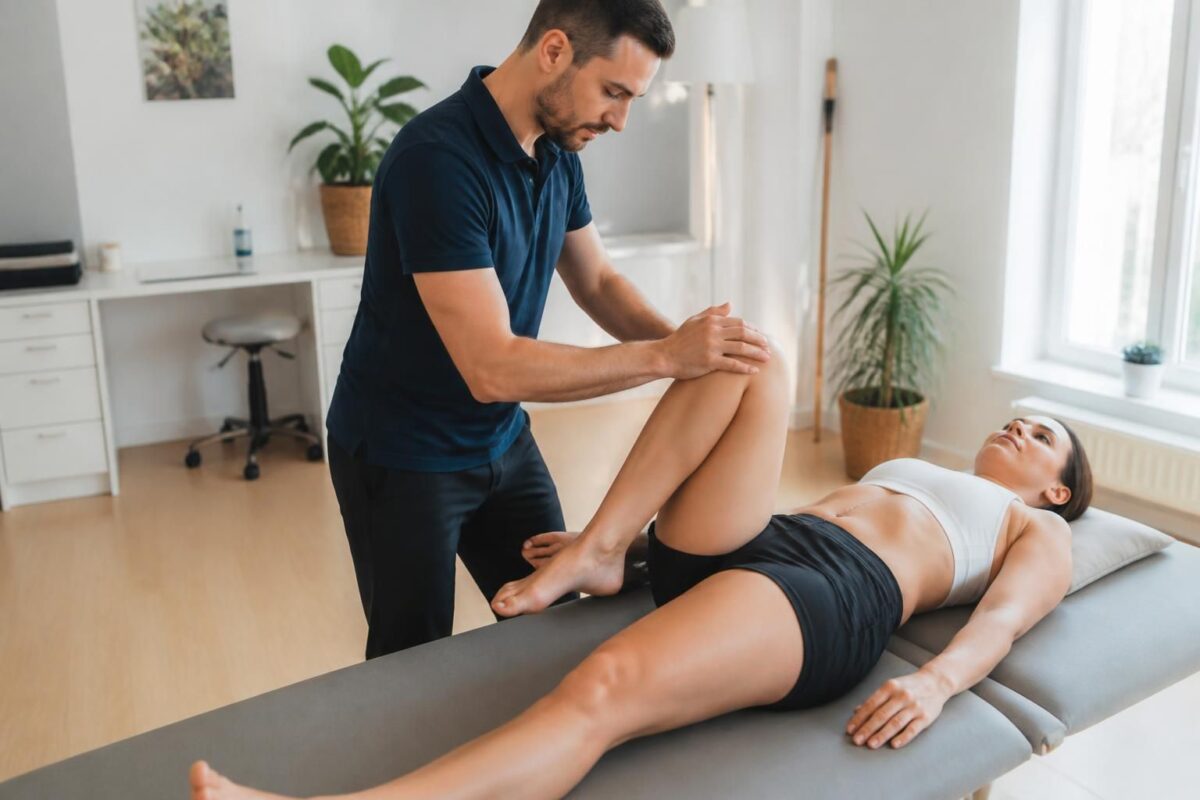
The Gentle techniques and targeted are the heart of the osteopathic action against stress. The Gentle manipulations Allows you to release muscle tension while stimulating better local circulation. The Myofascial release Attacks the fascia to dissolve deep tension and restore tissue mobility.
The work on the diaphragm and breathing is another major lever: by releasing the diaphragmatic and thoracic areas, the osteopath facilitates more complete and calm breathing, which activates the “slackening” of the nervous system. Targeted stretching and joint micro-mobilization complete these techniques to restore balance and fluidity of movement.
Beyond manipulations, practical advice and simple gestures can be integrated between sessions to support therapeutic action, including breathing exercises, postural routines and moderate physical activities that strengthen body resilience.
How osteopathy supports recovery after complex surgery
In short In short, Post-operative osteopathy is an approach fresh which supports the recovery After a Complex surgery. It helps to reduce the pain and the fatigue, improves the mobility and accelerates the healing thanks to a better vascularization and…
Benefits and feedback observed
Expected effects include a decrease in muscle tension, an improvement in the posture and a better sleep quality, which contributes to an overall reduction in the level of stress. Patients often note a feeling of lightness And a fluidity found in the movements, with less sensitivity to pain and a better ability to manage stressful situations.
In the long term, osteopathy can support better resilience Faced with stress by maintaining the balance between the nervous systems and preserving the mobility of tissues and joints. This approach can also reduce tensions linked to postural habits and repetitive daily gestures, thus reducing the risk of recurrence.
Daily integration and practical recommendations
To optimize the results, it is recommended to integrate simple habits between sessions, such as regular practice of cohérence cardiaque, adapted hydration and gentle physical activity (walking, yoga, swimming). Maintaining regular sleep and an anti-inflammatory diet supports osteopathic work by reducing stressful factors.
Complementary resources allow you to deepen these approaches and establish a plan of action consistent with your lifestyle. To learn more about the interaction between osteopathy and emotional well-being and get practical advice, see the information available from the following links:
Osteopathy#ATFP_CLOSE_TRANSLATE_SPAN# and emotional well-being — integrative approach
Prevention#ATFP_CLOSE_TRANSLATE_SPAN# and maintenance of daily health
Techniques#ATFP_CLOSE_TRANSLATE_SPAN# Effective to release physical tensions
Additional resources and associated practices
To deepen, you can explore resources dedicated to the interaction between osteopathy and stress and discover complementary approaches that promote overall well-being and the prevention of musculoskeletal imbalances.

Dr Sylvain Desforges, B.Sc., D.O., N.D., osteopath, is the founding president of TAGMED and of the ACMA association. He dedicates his practice to chronic spinal pain, low back pain and symptoms compatible with sciatica, particularly when pain radiates toward the buttock, leg, calf, foot or toes.
Through SOS Sciatique, he publishes educational content on sciatica symptoms, possible causes such as disc herniation, disc narrowing, foraminal stenosis or irritation of a lumbar nerve root, as well as non-surgical approaches that may be considered according to the evaluation. At Clinique TAGMED, care may include, depending on the case, motorized neurovertebral decompression, specific osteopathic care or precision percussion.
For an evaluation related to sciatica treatment in Montreal / Mount Royal or sciatica treatment in Terrebonne, please consult the services available at Clinique TAGMED.
Medical disclaimer
The information published on SOS Sciatique is provided for educational purposes only and does not replace a consultation, diagnosis, opinion or treatment provided by a physician or another authorized healthcare professional. The author of this article is neither a medical doctor nor a specialist in a medical specialty recognized by the Collège des médecins du Québec. The osteopathic, manual medicine or functional support approaches described on this site do not constitute medical acts and are not intended to replace medical follow-up.
Consult a physician or emergency service in cases of loss of bladder or bowel control, anesthesia in the saddle area, significant or progressive weakness in the leg or foot, fever, recent trauma, severe pain or rapid worsening of symptoms. For more details, please read our Legal Notice.