Osteopathic techniques to treat lower limb pain
28/06/2026
Why osteopathy is a wise choice to treat chronic pain
28/06/2026
In short
| In short, theosteopathy for the Post-effort recovery is a manual approach that promotes body regeneration after intense effort. It releases tensions, restores the balance of structures and stimulates circulation and drainage. She improves the Restful sleep and reduces associated pain. Profits include a Improved mobility, a quick recovery, a better Injury prevention and support for Sporting progress. In Montreal, this service is particularly useful for athletes looking to optimize their performance while remaining painless and invasive. |
After intense physical exertion, Osteopathy offers an approach overall To optimize the recovery and reduce the tensions accumulated in the muscles, fascias and joints.
It acts to help you:
- release tensions and restore a Smooth mobility.
- IMPROVE THE bloodstream and the lymphatic drainage In order to evacuate the toxins and provide the necessary nutrients.
- promote a Restful sleep For better nighttime regeneration.
- prevent the injuries related to overwork by rebalancing the body and posture.
- accompany the Sporting progress, whether you are an athlete or an occasional practitioner.
This text, written by a health professional, clearly presents how theosteopathy supports the Recovery after intense physical exertion. It describes the simple mechanisms that allow tensions to be evacuated, to improve circulation, to promote sleep and to prevent injuries. It offers practical advice, based on osteopathic evaluations, to optimize recovery.
After the effort, the body needs time to regenerate. theosteopathy aims to support this process by taking into account the body as a whole. This approach can help reduce feelings of aches, restore mobility and promote painless return to training.
Release muscle and joint tension
During intense exercise, some muscles and joints undergo increased stress. This can generate imbalances and compensations. The osteopath identifies these areas and helps to release them using gentle techniques. Result: a Mobility found and an Deep relaxation fabrics.
Boost circulation and drainage
Effective blood and lymphatic circulation is essential for nourishing the muscles and evacuating metabolic waste. Osteopathic manipulations improve venous and lymphatic return, which can help to reduce body aches and accelerate muscle regeneration.
Promote restful sleep
After sustained effort, the body can remain in a state of tension. Osteopathy acts on the autonomic nervous system to restore the balance between activity and rest. Sleep becomes deeper and restorative, which is crucial for effective recovery.
Prevent injuries and accompany sports progress
By rebalancing the body’s structures, osteopathy improves posture, coordination and flexibility. This global approach reduces the risk of over-soliciting a muscle or joint. It thus contributes to preventing injuries linked to fatigue and overwork, while supporting a regular progression of sports practice.
Practical integration and advice
Whether you are a Sunday runner, yoga practitioner or regular athlete, a few osteopathy sessions can help to better know your body, listen to your limits and optimize your recovery. The approach is based on a personalized assessment and can be associated with simple recovery habits, such as hydration, appropriate feeding and planned rest periods.
Recommended resources and readings
- Osteopathy#ATFP_CLOSE_TRANSLATE_SPAN# and sports recovery – maximize physical performance
- Why#ATFP_CLOSE_TRANSLATE_SPAN# Osteopathy is a lasting solution for chronic pain
- Osteopathy#ATFP_CLOSE_TRANSLATE_SPAN# and sports pain – Effectively treat injuries
- Clinic#ATFP_CLOSE_TRANSLATE_SPAN# TAGMED
- Decompression#ATFP_CLOSE_TRANSLATE_SPAN# Neurovertebral
- Osteopathy#ATFP_CLOSE_TRANSLATE_SPAN# and disc pains
- Hernia#ATFP_CLOSE_TRANSLATE_SPAN# Discal and osteopathic approach
- Syndrome#ATFP_CLOSE_TRANSLATE_SPAN# of the carpal tunnel and osteopathy
- SOS#ATFP_CLOSE_TRANSLATE_SPAN# Sciatica – Information and Resources
Relevant educational and training resources are available from recognized institutions in osteopathy, including NUMSS and NAO, as well as National University of Medical Sciences and National Academy of osteopathy.
“Medical disclaimer: The information and advice provided on this site does not replace the health professional’s benefit, diagnosis or treatment. Please note that Dr. Sylvain Desforges osteopath is neither a doctor of medicine nor a doctor, and is not a specialist in a medical specialty as defined by the Collège des Médecins du Québec. Manual medicine, functional medicine and sports medicine as described on this site exclude any medical treatment or diagnosis made by a doctor or specialist doctor. Always consult your doctor for any medical questions. For more details, please read our full legal notice. »
Osteopathy and recovery after intense physical exertion

This article shows you how Osteopathy can facilitate the recovery after intense physical exertion. By acting on the body as a whole, it aims to reduce tension, improve circulation, promote restful sleep and prevent injuries, in order to support your progress without pain.
Why recovery is essential after exercise
After a demanding session, the muscle tissues repair themselves and the energy is restored. A good recovery allows the body to regain its balance, avoid chronic fatigue and reduce the risk of injury. Conversely, ineffective recovery can lead to persistent pain, reduced mobility and disturbed sleep. losteopathy comes here as an approach holistic To promote the natural regeneration of tissues and optimize your overall condition.

How osteopathy improves the quality of life of active people
In short In short, theosteopathy is a global approach that Optimizes mobility and the function of the body of ACTIVE PEOPLE, for a better quality of life. It helps prevent injury and reduce Musculoskeletal pain While promoting the Sports recovery.…

Osteopathy and sports recovery: prepare the body for lasting performance
In short In short, Osteopathy and Sports recovery is one Global manual approach that sustainably prepares the body for the effort by restoring mobility and circulation After the effort. It is a discipline that acts on the sinews, the joints,…
How Losteopathy Supports Recovery After Exercise
Release of muscle and joint tension
During a major effort, some muscles or joints work more and can become unbalanced. theosteopath Identifies these tension zones and releases them through gentle techniques, which improves mobility and induces deep tissue relaxation. This release facilitates the return to a normal range of motion and prepares the ground for effective recovery.
Boost circulation and drainage
A fluid blood and lymphatic circulation is crucial for nutrient intake and evacuation of toxins generated by exertion. Osteopathic manipulations improve venous and lymphatic return, reduce body aches and accelerate the process of muscle regeneration, allowing you to start again more serenely on your next workouts.
Promote restful sleep
Sleep is the time your body repairs and rebuilds. Osteopathy acts on the autonomic nervous system to promote a state between activity and rest, helping to regain a deeper and restorative sleep. Quality sleep maximizes recovery and improves future performance.
Prevent long-term injuries
By rebalancing the structures of the body, osteopathy improves posture, coordination and flexibility. This balance reduces the risk of over-stress and muscle fatigue, helping to prevent recurring injuries and support sustainable sports.
Support sports progress
Whether you are an amateur athlete or an active athlete, a few osteopathy sessions can help you get to know your body better, identify your limits and optimize your performance without pain. The goal is faster recovery and better preparation for your next workouts.
Why Osteopathy Is Essential For Recovery People
In short In short, Osteopathy in convalescence is an approach manual and holistic which helps to accelerate the recovery by restoring The balance, the mobility and a good circulation fabrics. it contributes to Reduce the pain, support the Back to…

Osteopathic manipulations to strengthen post-traumatic muscles
In short In short, Osteopathic manipulations for Strengthen post-traumatic muscles constitute a gentle manual approach aimed at restoring the mobility, reduce the pain and facilitate the Functional rehabilitation After a injury. What is Is it? A series of precise gestures…
Practical tips for integrating osteopathy into your recovery
Plan regular osteopathic assessments based on your training volume and goals. Alternate between charging periods and appropriate recovery periods, and adapt the techniques to your activity (race, cycling, team sports, etc.). Hydrate yourself properly and favor meals rich in protein and micronutrients essential to support muscle repair. Integrate gentle stretching or post-workout mobility sessions, and favor regular sleep routines that allow your body to repair itself effectively. Finally, listen to your body and do not hesitate to adjust your training if recurring tensions appear; A preventive approach is often more effective than an after-the-spot treatment.
Looking to improve your recovery and performance painlessly? Consider a personalized osteopathic assessment to target your areas of tension, adjust your post-effort recovery and sustainably support your progress.
| Aspect | Impact on recovery |
|---|---|
| Release of muscle and joint tension | Reduces tension and improves mobility Tissue. |
| Blood circulation and drainage | Improve it Venous return and lymph for faster recovery. |
| Sleep and nervous system | balance of autonomic nervous system and more restful sleep. |
| Injury prevention and postural rebalancing | Improved posture and coordination, lower risk of over-solicitation. |
| Inflammation and post-exercise pain | Decreased inflammation and post-exercise pain. |
| Mobility and neuromuscular performance | mobility and neuromuscular function optimized, better responsiveness. |
| Sports progression without pain | Comfort during workouts and quick recovery. |
| Frequency and duration of sessions | Planning adapted according to the need (ex: 1 to 2 sessions/month). |

Osteopathy and prevention of work-related musculoskeletal disorders
In short theosteopathy is one Manual approach that restores body balance and prevents MSD related to work. Its advantages: reduction of tension, improvement of mobility and prevention of chronic pain. She is preventive and healing, suitable for office and trades…

The benefits of osteopathy to treat muscle imbalances
In short theosteopathy is a manual approach to restore themuscle harmony and postural considering the body as a whole. Its main benefits include the reduction of aches and tensions, the improvement of the mobility and from the posture, and prevention…
Testimonials: Osteopathy and recovery after intense physical exertion
“After a long distance workout, my muscles were heavy and sleep was lacking. »
Since I startedosteopathy, my tensions are loosening, my circulation improves and my recovery is faster, allowing me to resume the effort without pain and with more serenity.
“Following a difficult field race outing, I had knee pain and stiffness that persisted for several days. »
thanks to a few sessions ofosteopathy, I found a better mobility, reduce theinflammation And regained a more restful sleep, which accelerates my resumption of training.
“I am an occasional sportsman and, after each bodybuilding session, tensions accumulated and I felt general fatigue. »
theosteopathy rebalanced my body, improved my mobility and my sleep. My recovery Post-effort is more effective and my performance is reinforced.
“Before a triathlon, I had trouble coordinating my movements and my hips tugged after the effort. »
After a few sessions, Osteopathy improved my posture and my breathing, and my recovery became faster, with fewer rest days needed between training phases.
“I am an amateur runner and, after endurance sessions, my soreness took a long time to disappear. »
Since the use ofosteopathy, my circulation is better and my Muscle tensions dissipate faster, which allows me to chain workouts with a recovery effective and sustainable.
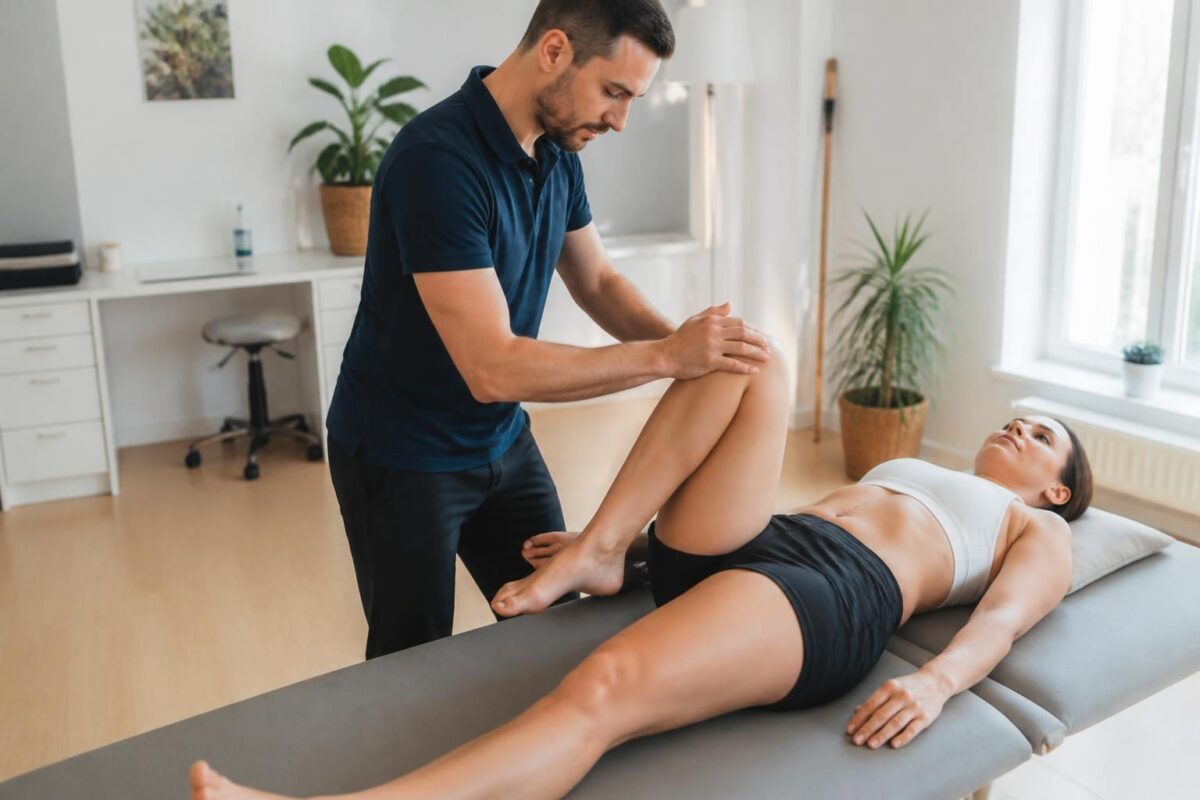
Osteopathy and chronic leg pain: regaining an optimal quality of life
In short In short, Osteopathy is one Global manual approach aimed at reducing Chronic leg pain and improve the quality of life. What is it? Non-drug therapy using the hands to identify restrictions and treat lesional chains. How does it…
How osteopathy supports recovery after complex surgery
In short In short, Post-operative osteopathy is an approach fresh which supports the recovery After a Complex surgery. It helps to reduce the pain and the fatigue, improves the mobility and accelerates the healing thanks to a better vascularization and…
Osteopathy and recovery after intense physical exertion
Dr. Sylvain Desforges is a practitioner whose expertise combines osteopathy, naturopathy and manual medicine. As founding president of the TagMed clinics and the ACMA association, he places recovery after the effort at the heart of his approach, in order to support athletes and active people in their return to performance while respecting their bodies. His vision is guided by the passion to combine traditional knowledge and medical innovations to optimize health and long-term well-being.
With a career centered on health innovation, he specializes in the management of Chronic pain and in the integration of advanced technologies for post-intensive recovery. His practice favors a global approach that considers the body as an interconnected system, where tissues, organs and the nervous system dialogue to allow effective regeneration. sometimes described as complementary, Motorized vertebral decompression, laser and Shockwave therapy are among the tools that can be mobilized to support tissue regeneration and accelerate the return to training, in a logic Evidence-based.
On a concrete level, the osteopathic recovery approach revolves around several key axes. First, the Release of muscle and joint tension Generated by effort, in order to restore harmonious mobility and limit the imbalances that hinder progress. Second, the circulation and drainage venous and lymphatic, which facilitate the elimination of metabolic waste and the supply of nutrients necessary for muscle repair. Third, sleep optimization, by acting on the autonomic nervous system to promote deep rest and restorative essential for recovery. Finally, the goal is also injury prevention and supporting sports progression, helping the body to adapt sustainably to training loads and improving posture, coordination and flexibility.
This approach is not reserved for elite athletes. It is also aimed at the Sunday runner, the yoga practitioner or anyone who seeks to optimize their recovery and reduce stress-related pain. By rebalancing the structures of the body as a whole, osteopathy promotes better neuromuscular function, a Improving mobility and an Increased traffic, so many factors that contribute to a faster and more serene recovery of physical activities.
Through his work and his associative commitment, he promotes a practice based on evidence and a relationship of trust with his patients. Its objective is to make each session useful and measurable, so that everyone can apprehend their recovery as a mastered and lasting skill. Patients at TagMed clinics benefit from a personalized approach that combines osteopathy and functional support, as part of a health course focused on sustainable performance and overall well-being.
This summary highlights how Osteopathy can support the Recovery after intense physical exertion by acting on muscle and joint tension, by improving the circulation and drainage, promoting a Restful sleep and preventing future injuries. It is aimed at all active practitioners who wish to resume their training more quickly and without pain.
In the context of post-effort recovery, theosteopathy Proposes a comprehensive and personalized approach aimed at restoring the functional balance of the body. By working on the Muscle chains And the joints mobilized in a synchronized way, it reduces accumulated tension and improves mobility, which promotes more effective tissue regeneration after intense training.
Key mechanisms include a release of tensions targeted, an improvement in the Blood and lymphatic circulation To optimize nutrient intake and the elimination of metabolic waste, as well as a positive effect on the the nervous system autonomous which can facilitate a Restful sleep. Result: accelerated recovery, less aches and a decrease in feelings of fatigue that slow down progression.
injury prevention and optimization of posture and from the coordination are also an integral part of the osteopathic approach. by rebalancing the levers of the body and strengthening the flexibility and the stability, it contributes to limiting the risks of overwork and preparing the body for more sustained training loads in the long term.
For athletes and active people, a few targeted sessions can help better understand body signals, listen to its limits and adapt the training program to improve performance while preserving overall health. This approach is not limited to elite athletes: it is accessible to all those who wish to resume a sporting activity in a sustainable and painless way.
To deepen, you can consult resources like How osteopathy acts on spinal pain, Osteopathy and sports recovery: optimize performance, and Benefits to reduce joint stiffness. Other useful resources address the link between osteopathy and muscle recovery, the alternative to drugs and the practical aspects of post-exercise recovery.
To learn more about the mechanisms and effects of osteopathy in sports recovery, here are some additional resources: Diffuse muscle pain, Effective alternative to drugs, Sports recovery and osteopathy, and Effects on post-workout performance.

Dr Sylvain Desforges, B.Sc., D.O., N.D., osteopath, is the founding president of TAGMED and of the ACMA association. He dedicates his practice to chronic spinal pain, low back pain and symptoms compatible with sciatica, particularly when pain radiates toward the buttock, leg, calf, foot or toes.
Through SOS Sciatique, he publishes educational content on sciatica symptoms, possible causes such as disc herniation, disc narrowing, foraminal stenosis or irritation of a lumbar nerve root, as well as non-surgical approaches that may be considered according to the evaluation. At Clinique TAGMED, care may include, depending on the case, motorized neurovertebral decompression, specific osteopathic care or precision percussion.
For an evaluation related to sciatica treatment in Montreal / Mount Royal or sciatica treatment in Terrebonne, please consult the services available at Clinique TAGMED.
Medical disclaimer
The information published on SOS Sciatique is provided for educational purposes only and does not replace a consultation, diagnosis, opinion or treatment provided by a physician or another authorized healthcare professional. The author of this article is neither a medical doctor nor a specialist in a medical specialty recognized by the Collège des médecins du Québec. The osteopathic, manual medicine or functional support approaches described on this site do not constitute medical acts and are not intended to replace medical follow-up.
Consult a physician or emergency service in cases of loss of bladder or bowel control, anesthesia in the saddle area, significant or progressive weakness in the leg or foot, fever, recent trauma, severe pain or rapid worsening of symptoms. For more details, please read our Legal Notice.