Osteopathic manipulations to relieve hip pain
27/06/2026
Osteopathy and prevention of musculoskeletal disorders
27/06/2026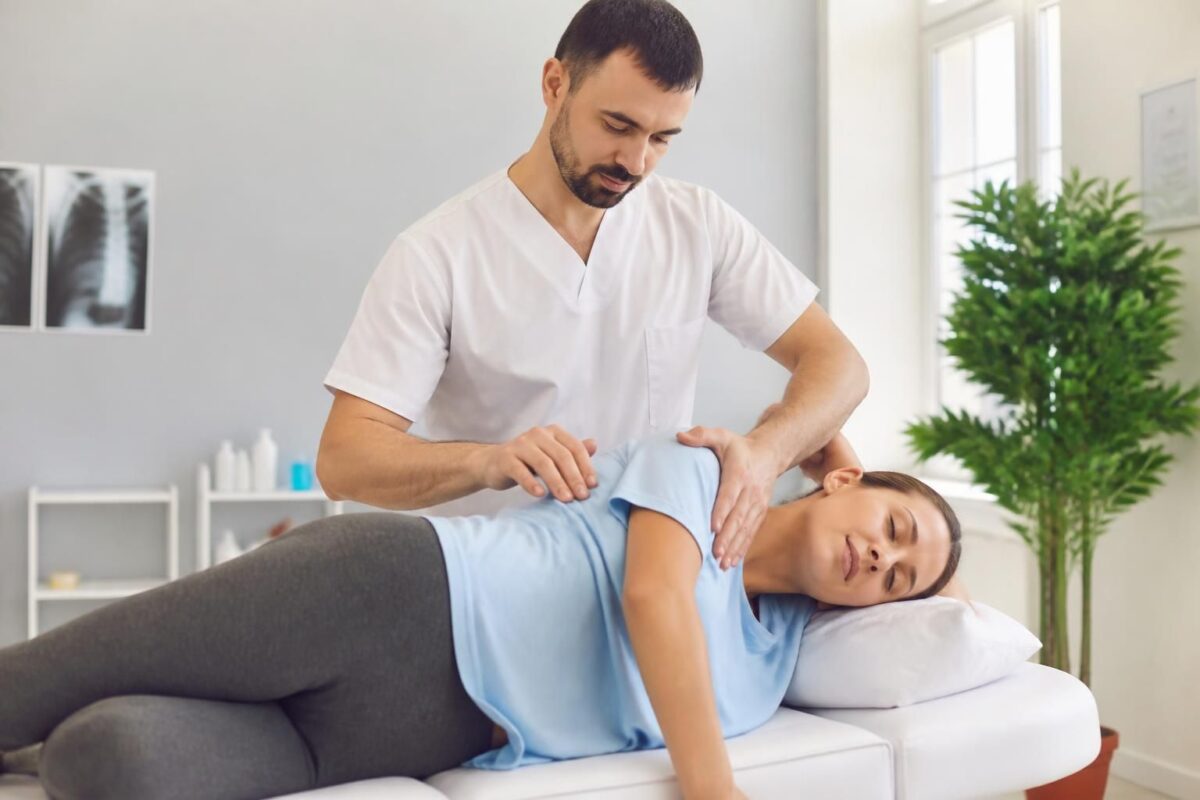
In short
| In short, theosteopathy It front of Diffuse muscle pain is a manual approach that considers the body as a whole and aims to restore the mobility and balance by Structural techniques and myofasciales simple and suitable. It acts above all by releasing tensions, improving circulation and regulating pain, without medication. The main advantages include a pain reduction, a Better mobility and prevention of recurrences, with high safety and tolerance when practiced by a qualified professional. The operation is based on gentle mobilizations, targeted manipulations and work on the fascias and muscle chains to restore biomechanical balance and activate self-healing. At the reole, in Gironde, this service is accessible and can be adapted to all, including sensitive people. If you suffer from Diffused pain, theosteopathy Offers a global, non-drug and cause-focused approach, to regain speed and durability of comfort. |
In short, theosteopathy acts on the Diffuse muscle pain By rebalancing the musculoskeletal system and acting on the tissues globally, without drugs.
- Restoration of the mobility and themuscle balance via targeted manipulations and myofascial techniques.
- Liberation of fascias and relaxing tensions to reduce pain and compensation.
- Improvement of the vascularization and tissue nutrition, promoting recovery.
- Modulation neurological pain to decrease painful perception and spasms.
- Approach personalized and progressive, adapted to each patient and at their own pace, with a clear plan.
This article clearly presents how osteopathy can help diffuse muscle pain. It explains the mechanisms of action, the course of a consultation and the expected results. You will find out why osteopathy is an effective non-drug option to improve mobility, reduce pain and promote overall well-being, while embedded in an approach to prevention and understanding of musculoskeletal tensions.
Understand diffuse muscle pain
Diffuse muscle pain affects several muscle groups and can emerge from chronic tension, overuse or deterioration of tissues. They are manifested by a feeling of dull pain, stiffness and general muscle fatigue that can limit daily activities. Stress, poor postures and lack of recovery play an important role in maintaining these pains. Osteopathic work aims to rebalance the muscle chains and restore overall mobility to limit painful compensations. To learn more about global approaches, see the dedicated resources at Osteopathy and musculoskeletal disorders.
Mechanisms of action of osteopathy
Restoration of joint mobility : gentle manipulations and mobilizations aim to remove mechanical blockages and restore the normal range of movements, which reduces stress on the muscles and fascias.
Reduction of muscle and fascial tension : Soft tissue work releases tension and improves local circulation, reducing pain related to overactivity or prolonged sedentary lifestyle.
Improved local vascularization : Osteopathic techniques promote blood and lymphatic delivery to painful regions, accelerating recovery processes.
Neurological modulation of pain : Manipulations can activate pain inhibition mechanisms in the spinal cord and central nervous system, contributing to a decreased perception of pain.
Rebalancing of biomechanical chains : By working on the distal areas and the joint chains, the osteopath reduces the abnormal stresses that are transmitted to the painful muscles.
In practice, osteopathy combines structural, myofascial techniques and, when necessary, cranio-sacral or muscular approaches to energy (MET), adapted to each patient and to the stage of his pain.
Typical course of an osteopathic consultation
The first session follows a structured process. theDetailed anamnesis Allows you to understand the influence of pain, its evolution and the aggravating elements. theclinical examination Evaluates overall posture, mobility and tensions. The treatment Combine techniques adapted to your situation and the professional explains each gesture. Finally, Post-session advice Include light self-stretching exercises and posture tips to optimize results between sessions. A first improvement can be felt from the first consultations, and the protocol is adjusted according to your response.
Efficiency and safety
Clinical data suggests that a suitable osteopathic approach can reduce pain and improve mobility in people with diffuse muscle pain. This approach is a non-drug option and can contribute to a reduction in the use of certain pharmacological treatments. Osteopathy is generally safe when practiced by a qualified professional, with known contraindications and individualized assessment.
Integration and prevention
Osteopathy is part of a prevention and well-being approach. In addition, resources like Osteopathy is a lasting solution for chronic pain and information on Prevention of musculoskeletal disorders can complete the follow-up. Nutrition and appropriate physical activity advice can also support the results, including regular exercise of low impact exercise and an anti-inflammatory diet. For practical resources, also see the articles and guides on Osteopathy and chronic pain and The latest scientific data.
Quick comparative table with physiotherapy
| Therapy | highlights | Limitations |
|---|---|---|
| osteopathy | Global approach, mobility, pain reduction, prevention | responses may vary depending on the patient; Requires multiple sessions |
| Physiotherapy | Targeted functional rehabilitation, specific reinforcements | demonstrated effectiveness but sometimes less sustainable than global approaches |
| Other manual therapies | Complementary solutions | Variable results depending on the techniques and practitioners |
For those who wish to deepen, additional resources are available on The advantages of osteopathy for amateur athletes and on Osteopathy and well-being. Training and practice content is based on recognized institutions such as NUMSS, NAO, National University of Medical Sciences and National Academy of osteopathy, and are part of the practices of the ACMA, College of Canadian Osteopaths and College of Canadian Osteopaths.
For information on specific approaches and mechanisms of action, you can consult the following resources: Chronic postural imbalances, Prevent musculoskeletal disorders, and Osteopathy and sports recovery.
Medical Disclaimer: The information and advice provided on this site does not replace the health professional’s diagnosis or treatment. Please note that Dr. Sylvain Desforges osteopath is neither a doctor of medicine nor a doctor, and is not a specialist in a medical specialty as defined by the Collège des Médecins du Québec. Manual medicine, functional medicine and sports medicine as described on this site exclude any medical treatment or diagnosis made by a doctor or specialist doctor. Always consult your doctor for any medical questions. For more details, please read our full legal notice.
Reference and additional resources: Tagmed Clinic, SOS SCIATIC, Lasting osteopathy for chronic pain, Latest scientific data.
- release of tensions and reduction of nodes myofasciales.
- traffic improvement local and tissue oxygenation.
- Rebalancing of muscle chains and adjustment of the posture.
- Pain modulation by stimulation of the nerve circuits.
- Sweet mobilizations and work myofascial To return to theamplitude.
- Activate self-healing and release of repair potential.
- Home exercise plan and practical tips for maintaining gains.
- Personalized approach and security adapted to your feelings.

This approach explains how theosteopathy can act on Diffuse muscle pain By lifting tensions, restoring the mobility of muscles and fascias, and strengthening the self-regulation mechanisms of the body. It is based on a global and personalized vision, aimed at improving the quality of life without systematically relying on drugs.
Understand diffuse muscle pain
Diffuse muscle pain is manifested by a general feeling of pain, stiffness and fatigue in several areas of the body. They often result from a mixture of overuse, stress-related tensions, poor postures and repeated microtraumas. Some origins may be benign (point overload, fatigue) while others involve deeper musculoskeletal imbalances. In any case, they can lead to a decrease in mobility, disturbed sleep and a feeling of demotivation on daily effort.

How osteopathy improves the quality of life of active people
In short In short, theosteopathy is a global approach that Optimizes mobility and the function of the body of ACTIVE PEOPLE, for a better quality of life. It helps prevent injury and reduce Musculoskeletal pain While promoting the Sports recovery.…

Osteopathy and sports recovery: prepare the body for lasting performance
In short In short, Osteopathy and Sports recovery is one Global manual approach that sustainably prepares the body for the effort by restoring mobility and circulation After the effort. It is a discipline that acts on the sinews, the joints,…
Osteopathy as a lever for diffuse pain
theosteopathy considers the body as a whole and acts on all the muscular and fascial chains in order to restore mobility and balance. By targeting local dysfunctions and remote imbalances, the osteopath seeks to promote Self-healing and better blood and lymph circulation, which helps to reduce pain and improve overall function.
The founding principles and their relevance
The foundations of osteopathy are based on the unity of the body, the interdependence between structure and function, and the importance of an appropriate circulation. These notions explain why tensions in one area can impact other regions and how freedom of movement can recover when restrictions are released.
Why Osteopathy Is Essential For Recovery People
In short In short, Osteopathy in convalescence is an approach manual and holistic which helps to accelerate the recovery by restoring The balance, the mobility and a good circulation fabrics. it contributes to Reduce the pain, support the Back to…

Osteopathic manipulations to strengthen post-traumatic muscles
In short In short, Osteopathic manipulations for Strengthen post-traumatic muscles constitute a gentle manual approach aimed at restoring the mobility, reduce the pain and facilitate the Functional rehabilitation After a injury. What is Is it? A series of precise gestures…
Relevant osteopathic techniques
Soft mobilizations and HVBA
The Sweet mobilizations And HVBA techniques (high velocity, low amplitude) make it possible to gradually restore the range of motion and to free up mechanical blockages without attacking sensitive tissues.
Work of fascias and myofascial tensions
The use of techniques myofasciales Aims to release tensions from membranes enveloping muscles and tissues, in order to improve flexibility, reduce painful compensation and promote better fluid circulation.
Energy and relaxation muscular techniques
the techniques energy-giving And the relaxation exercises guided by the osteopath allow the patient to activate his muscles differently, facilitating the lengthening of the muscle chains and the rebalancing of tensions.
Cranio-sacral approaches
the techniques craniosacral Complement the work smoothly, influencing fascia dynamics and nervous comfort, which can be beneficial when pain is generalized and/or associated with chronic discomfort.

Osteopathy and prevention of work-related musculoskeletal disorders
In short theosteopathy is one Manual approach that restores body balance and prevents MSD related to work. Its advantages: reduction of tension, improvement of mobility and prevention of chronic pain. She is preventive and healing, suitable for office and trades…

The benefits of osteopathy to treat muscle imbalances
In short theosteopathy is a manual approach to restore themuscle harmony and postural considering the body as a whole. Its main benefits include the reduction of aches and tensions, the improvement of the mobility and from the posture, and prevention…
Conduct of a session focused on diffuse pain
The first consultation associates a anamnesis detailed and a examination Targeted to identify areas of tension and muscle chains involved. The treatment, often progressive, combines several adapted techniques, and ends with practical advice (self-stretching, posture, adapted activity). A first improvement can be felt after a few sessions, with an adjustment of the protocol according to the patient’s response.
Key elements and frequency
The number of sessions depends on the age and severity of the pain. On average, several sessions spaced 1 to 4 weeks apart allow you to observe a gradual reduction in pain and an improvement in mobility. In the event of non-reaction after a few sessions, a reorientation towards another approach may be considered.
Osteopathy and chronic leg pain: regaining an optimal quality of life
In short In short, Osteopathy is one Global manual approach aimed at reducing Chronic leg pain and improve the quality of life. What is it? Non-drug therapy using the hands to identify restrictions and treat lesional chains. How does it…
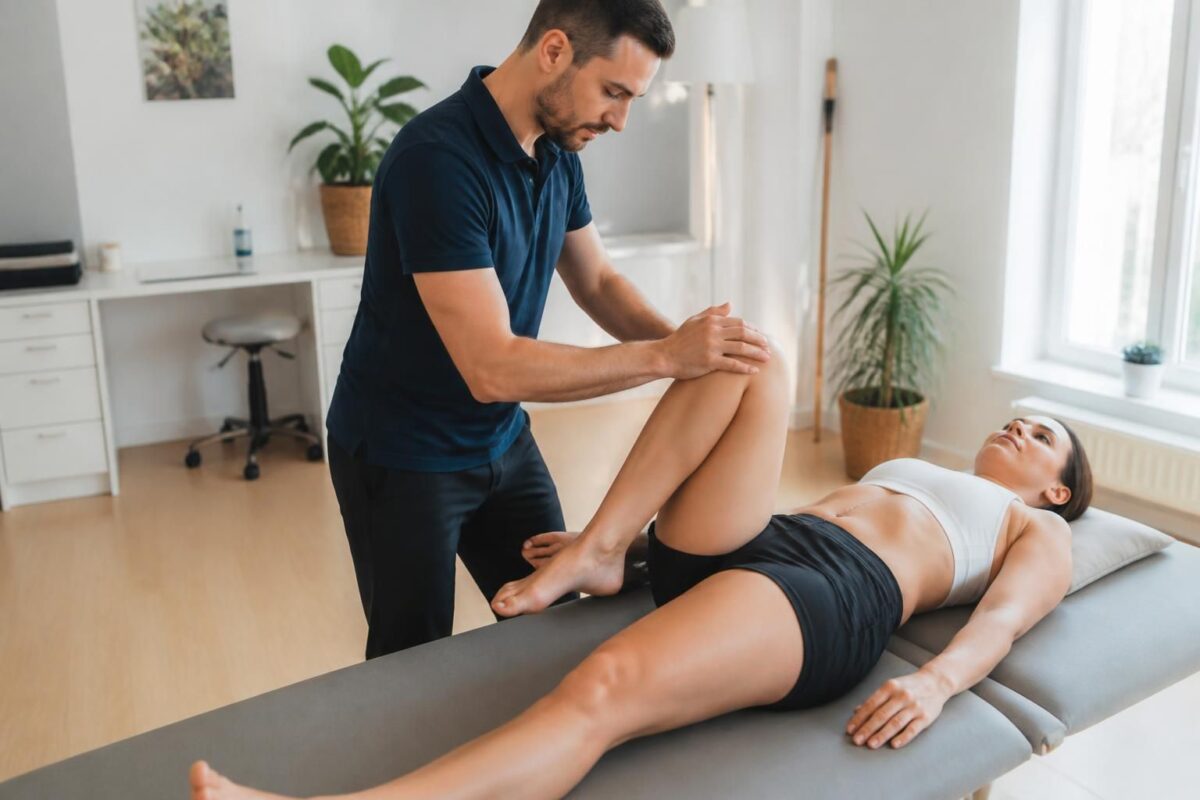
How osteopathy supports recovery after complex surgery
In short In short, Post-operative osteopathy is an approach fresh which supports the recovery After a Complex surgery. It helps to reduce the pain and the fatigue, improves the mobility and accelerates the healing thanks to a better vascularization and…
Integrate osteopathy into a global approach
To optimize the results, osteopathy can be associated with suitable gymnastics, an anti-inflammatory diet and stress management techniques. Nutrients such as omega-3, turmeric and collagen can support joint and muscle health, while a personalized exercise program promotes the stability and flexibility of muscle chains.
| Aspect | Impact and explanation |
|---|---|
| Mobilization of fascias | release from fascia tensions surrounding the muscles, which Improves mobility and reduces the Diffuse muscle pain. |
| Reduction of muscle tension | Relaxes tension areas and nodes to decrease pain and sensitivity. |
| traffic improvement | stimulates the circulation and drainage, nourishing the tissues and accelerating the repair. |
| Postural rebalancing | Corrects imbalances and releases tense muscle chains to limit triggers. |
| Action on the nervous system | modulation of pain by mechanisms ofinhibition and reduced central sensitivity. |
| Self-healing and self-regulation | Promotes the capacities ofself-healing of the body and the local nervous balance. |
| Adapted activity | Support with exercises low impact and gentle progression for durability. |
| Safety and precautions | prior assessment and adapted techniques to limit the risks and respect the contraindications. |
| Monitoring and results | Effects often noticeable after a few sessions, with a personalized protocol. |
Testimonials: how osteopathy acts on diffuse muscle pain
“Before I start, my Diffuse muscle pain In my back and shoulders blocked my daily life and even disturbed my sleep. After a few sessions, thanks to techniques of gentle mobilization and of Myofascial work, the pain decreased markedly and my mobility improved.”
“I often work standing up and I still feel general tensions. theosteopathy Targeted key areas and released stress and posture tensions. My muscles relax, my posture Improves and I sleep better since the start of treatment. »
“My diffuse pain came back after each intensive workout. The sessions favored Myofascial techniques And some Sweet mobilizations to rebalance my muscle chains. Result: less cramps, faster recovery and a Improving mobility general.”
“After several months of diffuse pain, I noticed a real difference from the first sessions. theosteopath Worked on the tensions of the whole body and on the compensation mechanisms. My pace of life has accelerated because I can move freely and without pain again. »
“The pain associated with stress and long-term sitting had resulted in general stiffness. By Structural techniques and myofasciales, the team restored better circulation and lasting muscle relaxation, which profoundly changed my recovery and serenity on a daily basis. »
“I was looking for a natural approach for diffuse and chronic pain. theosteopathy offered me a complete way: pain reduction, improvement of the mobility, and simple postural advice to apply. I feel freer and more confident in my movements.”
The Diffuse muscle pain represent a complex clinical challenge, often affecting multiple muscle groups and daily comfort. in an approach osteopathic Modern, the practitioner considers the body as an indivisible whole, where tensions, postures and circulation interact to produce or aggravate pain. Osteopathy aims not only to relieve painful intensity, but also to restore mobility, balance and functional capacity from a sustainable perspective.
The first step is based on a Detailed anamnesis and an Overall postural evaluation. The practitioner seeks structural imbalances, tension musculoskeletal chains and restriction areas that can maintain or diffuse pain. This approach makes it possible to identify the primary and secondary sources, even when the pain manifests itself diffusely. Dialogue and observation are used to adjust the treatment plan based on the lifestyle, activities and goals of each patient.
The techniques used are based on a range of gestures adapted to each situation. Among them, the Structural techniques (including high velocity low-amplitude mobilizations when appropriate and soft mobilization) and Myofascial techniques play a major role. the use of approaches such as energy muscular techniques (MET) and cranio-sacral techniques may be necessary to release fascias, restore tissue elasticity and reduce painful compensation around muscles and joints.
In terms of mechanisms of action, osteopathy contributes to Restoration of mobility articular and Reduction of muscle and fascial tension. By improving the local vascularization and modulating pain at the neurological level, it promotes more fluid recovery and a decrease in the sensation of diffuse pain. Moreover, by acting on the biomechanical chains, it helps to rebalance the tensions that extend beyond a painful area, which can prevent chronicity and recurrent episodes.
Clinical data and recent summaries point out that theosteopathy May offer significant pain reduction and improved mobility, even when pain is diffused. These results are part of an evidence-based approach intended to complement other non-drug therapeutic components, without replacing medical advice when an underlying pathology requires it.
Beyond manual techniques, the approach is part of a global strategy: Adapted physical activity, targeted strengthening exercises, and lifestyle advice. Collaboration with professionals such as physiotherapists and naturopaths can amplify the results and offer active prevention of recurrences. In cases of diffuse pain, the objective is clear: to improve function, restore mobility and restore the patient to a new quality of life, thanks to a personalized and progressive approach.
In practice, a typical consultation begins with an evaluation, followed by an individualized treatment plan and a set of practical advice to be carried out between the sessions. The number of sessions depends on the seniority and responsiveness of pain, with an adapted and measurable progression at each stage.
Quick summary: theosteopathy acts on the Diffuse muscle pain By restoring the mobility, by releasing tension and modulating pain through Manual techniques targeted and global. This approach, based on the structure/function unit and self-healing, favors support personalized and progressive, including postural advice and appropriate exercises. By combining structural, myofascial and energy techniques, osteopathy can provide lasting relief and improve the quality of life on a daily basis.
In practice, theosteopathy acts on the Diffuse muscle pain through a global approach that associates a Overall assessment, techniques structural, work myofascial and postural advice. This mixture aims to restore the mobility, to reduce tension and promote self-healing of the body, while remaining suitable for your daily life and activities.
Mechanisms of action include the Restoration of joint mobility, the relaxation of tensions muscular and fascials, and a Improvement of vascularization local. Moreover, the Neurological modulation Pain, through mechanisms such as inhibiting spinal cord pain, can contribute to a noticeable reduction in symptoms and body compensation.
In terms of evidence, reviews and trials suggest a pain reduction and an function improvement When the UNWTO is adapted to the patient and integrated into a lifestyle and regular exercises. To deepen the mechanisms and results observed, you can consult resources such as Benefits of osteopathy on pain related to repetitive work or How osteopathy acts on musculoskeletal imbalances.
For effective support, favor a personalized protocol with regular sessions and self-care advice (posture, stretching, strengthening exercises). Osteopathy can be associated with other complementary approaches and anti-inflammatory lifestyle choices (adapted diet, adapted physical activity). To expand your understanding of mechanisms and applications, find out the following resources: The effectiveness of osteopathy against joint pain, Benefits on localized muscle tension, and Reduction of pain related to poor posture.
Finally, remember that each person is unique and that the program adapted by your osteopath can include a combination of structural, myofascial techniques and postural advice, while remaining safe and respectful of contraindications.

Dr Sylvain Desforges, B.Sc., D.O., N.D., osteopath, is the founding president of TAGMED and of the ACMA association. He dedicates his practice to chronic spinal pain, low back pain and symptoms compatible with sciatica, particularly when pain radiates toward the buttock, leg, calf, foot or toes.
Through SOS Sciatique, he publishes educational content on sciatica symptoms, possible causes such as disc herniation, disc narrowing, foraminal stenosis or irritation of a lumbar nerve root, as well as non-surgical approaches that may be considered according to the evaluation. At Clinique TAGMED, care may include, depending on the case, motorized neurovertebral decompression, specific osteopathic care or precision percussion.
For an evaluation related to sciatica treatment in Montreal / Mount Royal or sciatica treatment in Terrebonne, please consult the services available at Clinique TAGMED.
Medical disclaimer
The information published on SOS Sciatique is provided for educational purposes only and does not replace a consultation, diagnosis, opinion or treatment provided by a physician or another authorized healthcare professional. The author of this article is neither a medical doctor nor a specialist in a medical specialty recognized by the Collège des médecins du Québec. The osteopathic, manual medicine or functional support approaches described on this site do not constitute medical acts and are not intended to replace medical follow-up.
Consult a physician or emergency service in cases of loss of bladder or bowel control, anesthesia in the saddle area, significant or progressive weakness in the leg or foot, fever, recent trauma, severe pain or rapid worsening of symptoms. For more details, please read our Legal Notice.