


Osteopathy and chronic leg pain: a natural solution
27/06/2026
Why osteopathy is essential in a preventive approach
27/06/2026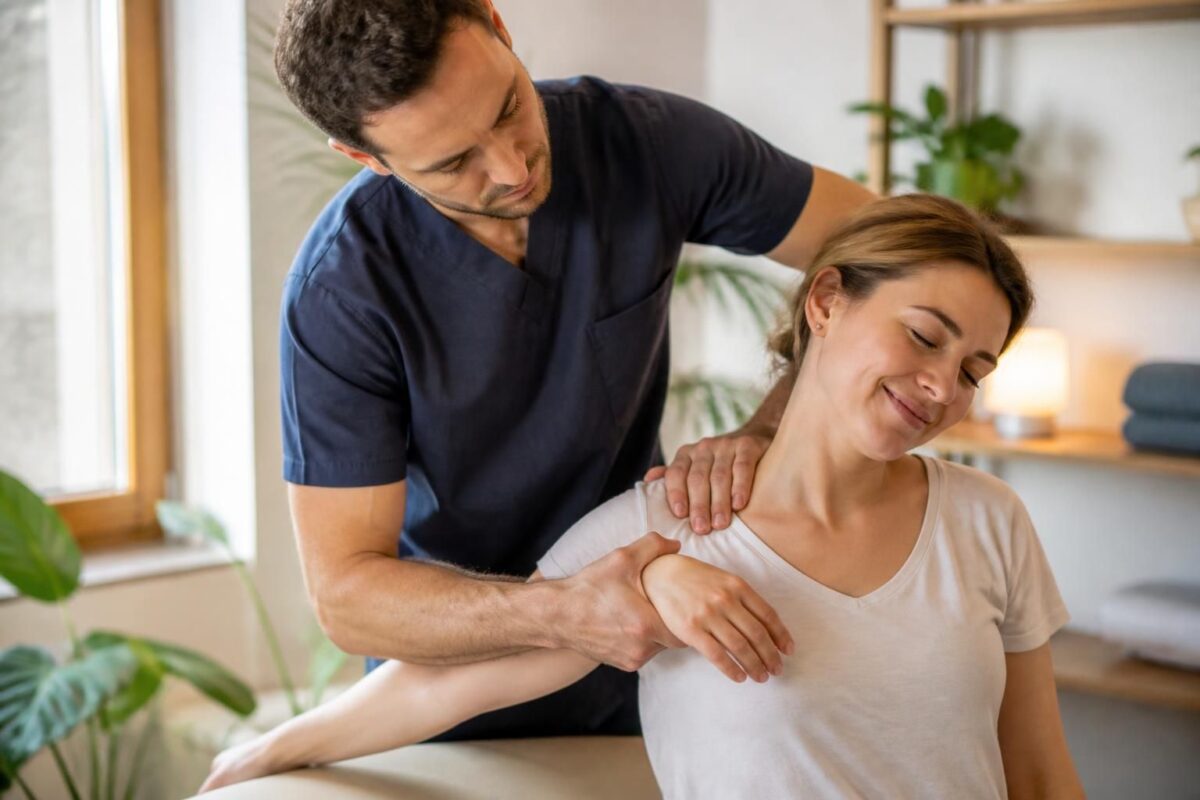
In short |
In short, theosteopathy To soothe the Localized muscle tension is a manual approach that acts on muscles and tissues to restore harmony to the body. It offers clear advantages: pain reduction, Improving mobility and prevention of recurrences, without drugs. Its operation is based on a Overall assessment and an Targeted mobilization which rebalances muscle chains and improves circulation. She can Relieve contractures and the Postural tensions thanks to Gentle techniques adapted. For lasting results, adapted sessions and simple actions to perform between consultations are recommended. |
The Benefits of Osteopathy To soothe the Localized muscle tension are based on an approach overall and non-invasive. By seeking root causes rather than limiting itself to relieving symptoms, the osteopath uses techniques such as muscle relaxation, the stretches and the Soft tissue massage To release contractures and restore the mobility. The improvement of the circulation and theinnervation Leads to a reduction in pain and stiffness, better posture, and prevention of recurrences, with positive effects on sleep and general well-being – all without medication and in a personalized way according to your profile and the evolution of pain.
This article presents the benefits of osteopathy to ease localized muscle tension. He explains why this approach is adapted, what techniques it uses, what results can be expected, and how to optimize the effect between sessions. The content aims to be clear and accessible while remaining professionally rigorous.
Localized muscle tension is manifested by contractures, pain and a feeling of stiffness. They can result from poor posture, repetitive movements or intense effort without sufficient recovery. Osteopathy approaches these symptoms with a global vision of the body, targeting the causes rather than just the symptom.
This discipline favors non-invasive care. It acts on muscles, fascias, joints and nerve circuits to restore mobility and reduce tension. The objective is to improve the circulation, innervation and coordination of the structures involved. This approach can be supplemented by lifestyle advice and, if necessary, by appropriate recovery exercises after evaluation.
How osteopathy acts on localized tensions
Professionals use techniques such as contracted-relaxed relaxation, targeted stretching and soft tissue massage. These methods aim to relax the muscles in tension and to release adhesions in the fascias. They make it possible to restore better blood circulation and more effective innervation of the areas concerned. Gentle and precise handling also helps to rebalance the tensions around the associated joints.
In some cases, the osteopath can intervene on the musculoskeletal system, but also examine the influences of the digestive system and the cardio-respiratory system, in order to identify aggravating or compensatory factors. This systemic approach helps to reduce stress recurrence factors and promotes better adaptation of posture on a daily basis. To enrich this conceptual framework, you can consult resources such as pages dedicated to osteopathy and muscle tension on specialized sites.
The results appear quickly for certain tensions, with a decrease in painful sensations and an improvement in mobility. In the medium term, better posture and a reduction in recurrent tensions can be observed after several sessions. Examples and feedbacks provide a better understanding of the mechanisms and possible outcomes.
To deepen, reliable resources discuss the mechanisms and benefits of osteopathy in the context of chronic muscle pain and tensions related to repetitive activities.
Useful links to deepen the subject, without replacing a personal medical opinion:
A natural solution,
Osteopathy under the magnifying glass,
Osteopathy and muscle pain.
Practical advice between sessions and prevention
Between appointments, a few simple gestures can optimize the results. A light self-massage and smooth stretching, performed regularly, can help maintain flexibility and prevent tensions. Adopting a posture suitable for work and alternating pauses can reduce tensions linked to a prolonged static position. Hydration and appropriate physical activity support muscle condition and overall recovery.
To go further, independent and professional resources evoke the lasting effects of osteopathy on physical well-being and mechanisms for the prevention of tensions linked to repetition of effort.

How osteopathy improves the quality of life of active people
In short In short, theosteopathy is a global approach that Optimizes mobility and the function of the body of ACTIVE PEOPLE, for a better quality of life. It helps prevent injury and reduce Musculoskeletal pain While promoting the Sports recovery.…
Comparative table with other approaches
| Approach | Efficiency on localized voltages | Benefits | Limitations |
|---|---|---|---|
| osteopathy | High in the short and medium term | Treats causes and mechanisms, non-invasive approach | Depends on individual assessment and response |
| Physiotherapy | moderate in this context | Targeted rehabilitation and reinforcement | sometimes less focused on global local and functional mechanisms |
To find out more, additional resources discuss the overall benefits of osteopathy and its role in the prevention of pain linked to repetitive tensions.
Additional links:
Prevention of injuries related to repetitive activities,
Benefits of Tissue Osteopathy,
Lasting effects on physical well-being.
Disclaimer: This information does not replace a personalized medical consultation. For specific questions, consult a qualified and licensed osteopath.
Medical Disclaimer: The information and advice provided on this site does not replace the health professional’s diagnosis or treatment. Please note that Dr. Sylvain Desforges osteopath is neither a doctor of medicine nor a doctor, and is not a specialist in a medical specialty as defined by the Collège des Médecins du Québec. Manual medicine, functional medicine and sports medicine as described on this site exclude any medical treatment or diagnosis made by a doctor or specialist doctor. Always consult your doctor for any medical questions. For more details, please read our full legal notice.
Benefits of osteopathy to ease localized muscle tension
- Reduction Local muscular tension and improvement of mobility.
- Relaxation Contractures by gentle and targeted techniques.
- Improvement local traffic to accelerate recovery.
- Restoration muscle mobility around the area concerned.
- Prevention Recurrences thanks to the adjustment of postures and gestures.
- Relief rapid pain related to overwork or posture.
- Improvement sleep through muscle relaxation and stress reduction.
- Approach Non-invasive and suitable, without lasting medication.

This article presents how Osteopathy can soothe Localized muscle tension, by acting on the causes rather than on the symptoms alone. favoring a global approach and Manual techniques Soft, the worker restores mobility, improves circulation and reduces pain without systematically using drugs. You will discover the types of tensions, the mechanisms in play, the techniques used and practical advice to optimize the results between the sessions.

Osteopathy and sports recovery: prepare the body for lasting performance
In short In short, Osteopathy and Sports recovery is one Global manual approach that sustainably prepares the body for the effort by restoring mobility and circulation After the effort. It is a discipline that acts on the sinews, the joints,…
Why choose osteopathy to ease muscle tension?
The use of Osteopathy is based on listening to the body as a whole. This approach aims to identify the root causes that fuel the Muscle tensions – Poor postures, joint imbalances, stress, overuse – and to act on the structures concerned rather than masking the symptom. the techniques used promote the relaxation, restore mobility and support natural healing mechanisms, with little or no adverse effects.

Why Osteopathy Is Essential For Recovery People
In short In short, Osteopathy in convalescence is an approach manual and holistic which helps to accelerate the recovery by restoring The balance, the mobility and a good circulation fabrics. it contributes to Reduce the pain, support the Back to…
Localized muscle tension: types and origins
Contractures and tensions
The contracture is a prolonged tension of a muscle that is maintained in contraction and becomes painful to the touch. It may result from a Inadequate posture, repetitive gestures or unusual effort. Without appropriate support, tension can persist and limit movement, especially in the back, neck or shoulders.
aches and stress related to stress
The aches Appear after exercise and are manifested by diffuse pain, sometimes described as a “muscle blue”. Chronic stress can also trigger or aggravate local tension, especially in the neck, trapezoid and back regions, with a feeling of stiffness and repeated fatigue.

Osteopathic manipulations to strengthen post-traumatic muscles
In short In short, Osteopathic manipulations for Strengthen post-traumatic muscles constitute a gentle manual approach aimed at restoring the mobility, reduce the pain and facilitate the Functional rehabilitation After a injury. What is Is it? A series of precise gestures…
The key techniques of osteopathy for these tensions
Relaxation and contracted-release
These techniques target tense areas to bring the muscle back to a state of relaxation and regain normal amplitude of movement. They often allow a rapid reduction in pain and stiffness, while improving local vascularization.
Guided stretching and mobility work
Assisted stretching and gentle manipulations restore flexibility and avoid compensation that can lead to other tensions. The objective is to rebalance the muscle chains and prevent recurrences.
Global approach and system coordination
In addition to the muscles, the osteopath considers the links with the nervous, circulatory and postural systems. By restoring a harmony between these elements, the body finds better muscle synchronization and a lasting reduction in tension.

Osteopathy and prevention of work-related musculoskeletal disorders
In short theosteopathy is one Manual approach that restores body balance and prevents MSD related to work. Its advantages: reduction of tension, improvement of mobility and prevention of chronic pain. She is preventive and healing, suitable for office and trades…
Reconciling therapy and self-care between sessions
To optimize the effects between sessions, practice gentle self-massage and targeted stretching, in accordance with your osteopath’s advice. Adopt a lifestyle Adapted: Active breaks at work, correct posture, sufficient hydration and appropriate regular physical activity. Sleep and stress management also play a crucial role in preventing recurrent tensions.

The benefits of osteopathy to treat muscle imbalances
In short theosteopathy is a manual approach to restore themuscle harmony and postural considering the body as a whole. Its main benefits include the reduction of aches and tensions, the improvement of the mobility and from the posture, and prevention…
When to consult and what to expect
If the tensions persist beyond 48 to 72 hours, or if they are accompanied by a significant limitation of gestures, it is relevant to consult an osteopath. On average, a first session helps to relieve some of the symptoms and to evaluate an appropriate intervention plan. Depending on the chronicity, several sessions may be necessary to sustainably rebalance muscle function and prevent relapses.
| Axis | Concise impact |
|---|---|
| Targeted detection | quickly identifies the tense areas and frees them by sweetness. |
| muscle relaxation | stretching and massage of soft tissues to reduce the voltage. |
| Mobility improvement | Gainamplitude and of flexibility local. |
| pain reduction | rapid reduction in pain at the session. |
| lasting effect | results that last over a few days at weeks. |
| No drug | Approach natural without pharmaceuticals. |
| Custom process | technique adapted to the location and the chronic. |
| complementarity | can be combined with physiotherapy or physical activity. |
| Prevention | posture advice, hydration and exercises to prevent tension. |
| Accessibility | accessible to all ages and pain levels, guaranteed security. |

Osteopathy and chronic leg pain: regaining an optimal quality of life
In short In short, Osteopathy is one Global manual approach aimed at reducing Chronic leg pain and improve the quality of life. What is it? Non-drug therapy using the hands to identify restrictions and treat lesional chains. How does it…
Testimonials on the benefits of osteopathy to ease localized muscle tension
“Before, I had a Localized muscle tension At the level of the neck that came back every day in front of the computer. After several sessions ofosteopathy, the pain decreased and my mobility has improved. The Manual techniques Used, soft and precise, allowed me to relax the muscles without drugs. »
“As a sportswoman, a Muscle contracture in the shoulder prevented me from training properly. In a few sessions, the relaxation came back and I was able to resume my training with a regained amplitude. »
“I had a Localized lumbar pain who woke me up at night. After a few appointments, the pain decreased sharply and my posture improved, with better stability during everyday gestures. »
“Carrying my children created persistent backbone tensions. theosteopathy Helped me to release these tensions and regain a natural posture, which improved my daily comfort and sleep. »
“At work, the cervical tension Related to sitting were piling up. After a few sessions, my neck mobility improved and the evening tensions disappeared, which changed my days. »
“Beyond physical relief, theosteopathy Acts on stress and improves sleep by releasing localized muscle tension. A natural approach that allowed me to find a more fluid and comfortable life. »
The journey of an expert in osteopathy, naturopathy and manual medicine highlights how Osteopathy Can transform localized muscle tension management. These tensions, whether linked to contracture, postural overload or repeated stress, often find their origin in a multifactorial imbalance. Thanks to an approach centered on the whole body, the osteopath seeks not only to relieve the symptoms, but also to identify the root causes that fuel these tensions and to prevent their reappearance.
This discipline is based on an integrative vision of the human body: each system interacts with others, and a blockage in one area can generate repercussions elsewhere. In practice, this translates into targeted techniques that release local tensions while restoring normal circulation and optimal innervation. The Myotensive techniques, work on soft tissues And gentle joint manipulations are all tools that allow you to gradually bring the mobility and the flexibility of the muscles concerned.
For localized tensions, the objective is twofold: to obtain rapid relief and to establish sustainable prevention mechanisms. The osteopathic intervention acts directly on the contractures by promoting muscle relaxation, while improving the circulation blood and lymphatic around the affected muscle. Result: less pain, less stiffness and smoother recovery after exercise. This approach does not require systematic use of drug treatments and favors natural solutions adapted to each individual.
Beyond the immediate reduction of symptoms, osteopathy acts on the posture and biomechanical balance. By rebalancing the muscle chains and releasing accumulated tensions, it contributes to a reduction in joint stress and better efficiency of daily and sporting movements. Better aligned posture and less tense muscles also result in better quality sleep and stress reduction, two axes that nourish the process of healing and long-term prevention.
The use of osteopathy is often part of a personalized strategy, which can be supplemented by lifestyle advice, targeted stretching exercises and, when necessary, complementary techniques. In cases where the tensions remain tenacious, the approach may be based on advanced tools, such as lumbar decompression processes, therapies by laser or by shock waves, used with discernment to optimize the results without attacking the tissues.
In summary, osteopathy offers a natural and effective way to sustainably ease localized muscle tension: it combines rapid relief, improvement of mobility and prevention of relapses, while respecting the healing mechanisms of the body and adapting to each profile, whether a sportsman, a sedentary worker or a person in search of a global well-being.
Here is a quick summary: Osteopathy offers a natural approach and non-invasive for Relieve localized muscle tension, by tackling root causes rather than symptoms alone. By combining targeted techniques and practical advice between sessions, it improves the mobility, reduces pain and helps prevent recurrences. This article details the mechanisms of action, the types of tensions and the gestures that optimize the results.

How osteopathy supports recovery after complex surgery
In short In short, Post-operative osteopathy is an approach fresh which supports the recovery After a Complex surgery. It helps to reduce the pain and the fatigue, improves the mobility and accelerates the healing thanks to a better vascularization and…
Essential Benefits for Localized Muscle Tensions
The Localized muscle tension Often arise from overload, poor posture or repeated stress. theosteopathy offers an approach overall and body respectful, aimed at reducing tension and restoring the mobility of muscles and fascias.
By working on muscle chains and joint restrictions, the osteopath can release areas that pull a specific area (neck, shoulders, back, pelvis), favoring a Sustainable relaxation and an posture improvement.
The reduction of tension is accompanied by a reduction in pain and a better sleep, because bodily tensions affect the nervous system and the sleep-wake-sleep rhythm. techniques such as Myotensive relaxation or the work of the fascias makes it possible to act in depth without the use of drugs.
How osteopathy acts on local tensions
During a consultation, the osteopath performs an assessment overall of the body to detect the factors causing the tension. He uses techniques myotensive, manipulations sweet and targeted releases to restore Innervation and the vascularization local. This approach aims to restore the balance of musculoskeletal, digestive, cardio-respiratory and even postural components that can influence pain.
the techniques used include approaches to relaxation Tensions, stretching Passives and assets, and soft tissue massages. This diversity allows personalized care that can quickly relieve and ensure a lasting effect on the Localized muscle tension.
Between sessions, the practitioner can recommend simple exercises, postural adjustments and appropriate lifestyle habits. To deepen, you can consult resources like This article on postures or This dedicated guide.
Practical advice between sessions
To optimize the results, practiceself-massage And some stretches targeted according to the recommendations of your osteopath. Hold a hydration sufficient and adapt your posture at work and in your daily activities. Regular breaks and a gradual resumption of appropriate physical activity contribute to maintaining profits and reducing the risk of recurrence.
Useful external resources to deepen these tips include articles from Health Magazine and the summary of Osteopathy and arthritis.
In summary, Osteopathy Offers a solution natural and personalized To ease localized muscle tension, acting on causes and facilitating recovery. To learn more about mechanisms and benefits, complementary resources such as This type of apps can be viewed.

Dr Sylvain Desforges, B.Sc., D.O., N.D., osteopath, is the founding president of TAGMED and of the ACMA association. He dedicates his practice to chronic spinal pain, low back pain and symptoms compatible with sciatica, particularly when pain radiates toward the buttock, leg, calf, foot or toes.
Through SOS Sciatique, he publishes educational content on sciatica symptoms, possible causes such as disc herniation, disc narrowing, foraminal stenosis or irritation of a lumbar nerve root, as well as non-surgical approaches that may be considered according to the evaluation. At Clinique TAGMED, care may include, depending on the case, motorized neurovertebral decompression, specific osteopathic care or precision percussion.
For an evaluation related to sciatica treatment in Montreal / Mount Royal or sciatica treatment in Terrebonne, please consult the services available at Clinique TAGMED.
Medical disclaimer
The information published on SOS Sciatique is provided for educational purposes only and does not replace a consultation, diagnosis, opinion or treatment provided by a physician or another authorized healthcare professional. The author of this article is neither a medical doctor nor a specialist in a medical specialty recognized by the Collège des médecins du Québec. The osteopathic, manual medicine or functional support approaches described on this site do not constitute medical acts and are not intended to replace medical follow-up.
Consult a physician or emergency service in cases of loss of bladder or bowel control, anesthesia in the saddle area, significant or progressive weakness in the leg or foot, fever, recent trauma, severe pain or rapid worsening of symptoms. For more details, please read our Legal Notice.





