Osteopathy and shoulder blade pain: a targeted approach
27/06/2026
Osteopathic techniques to improve physical performance
27/06/2026In short
| In short, Osteopathy is one Manual approach which acts on the Musculoskeletal imbalances by a Overall assessment body and techniques targeted. This method contributes to Reduce the pain, to Improve mobility and restore the Physical function, while preventing recurrences. Its operation is based on a evaluation Followed by personalized treatments, postural advice and exercises to be carried out at home, with a series of regular sessions. In Montreal, this service is particularly recommended for low back pain and postural imbalances that disrupt everyday life. |
- Individual assessment : a global and personalized clinical examination to identify the imbalances specific to each patient.
- Targeted manual techniques : Manipulations and relaxation of tissues that dissipate tension and rebalance muscles and joints.
- pain reduction and Improving mobility : Action on pain and on the ability to move normally.
- preventive approach : Postural advice and lifestyle habits to prevent recurrences.
- Adaptability : Suitable for all ages and without sophisticated equipment necessary to consult.
Musculoskeletal imbalances affect muscles, joints and bones. Osteopathy offers a global approach centered on the whole body to restore the harmony of muscle and joint chains. This article explains how this practice acts and what benefits it can bring on a daily basis.
Overall assessment and individual care
Osteopathic evaluation is global and personalized. The practitioner spots restricted areas and the muscle chains involved. This approach identifies the links between pain, posture and movement.
Manual techniques and voltage rebalancing
The therapist uses techniques soft and targeted manuals. It acts on joints, soft tissues and fascias to restore mobility and alignment. The objective is to reduce the tensions that fuel the imbalance.
Impact on pain and function
The decrease in pain is a frequent effect. Improving mobility facilitates daily and professional activities. The results vary according to the patient’s profile and the severity of the imbalance.
Prevention and posture on a daily basis
Beyond care, osteopathy guides towards movement habits and better posture. This helps prevent further imbalances and support long-term recovery. To explore the postural aspects, consult the resources on Osteopathy and posture.
Practical integration and results
In practice, osteopathy can be integrated into a global well-being strategy. Patients often report a better ability to perform daily actions and decreased pain. The intervention is adapted to each person and can be associated with ergonomic advice and workstation adjustments.
To learn more about the benefits, see the following resources: The benefits of osteopathy to ease localized muscle tension, Benefits to treat recurring athletic pain and Tagmed Clinic to access additional resources.
To enrich your understanding of imbalances and osteopathic approaches, you can also consult specialized resources on the sites below, osteo-friendly information partners: Osteopathy and posture and Benefits of localized muscle tension.
In order to ensure complete and secure information, access to specialized resources remains recommended for specific questions on the given conditions.
Medical Disclaimer: The information and advice provided on this site does not replace the health professional’s diagnosis or treatment. Please note that Dr. Sylvain Desforges osteopath is neither a doctor of medicine nor a doctor, and is not a specialist in a medical specialty as defined by the Collège des Médecins du Québec. Manual medicine, functional medicine and sports medicine as described on this site exclude any medical treatment or diagnosis made by a doctor or specialist doctor. Always consult your doctor for any medical questions. For more details, please read our full legal notice.
- Overall diagnosis and identifying imbalances
- muscle relaxation and tissue release
- Joint mobilization targeted
- Muscle chain balancing and posture improvement
- Improved mobility and pain reduction
- Circulation and Tissue metabolism favored
- Postural education and prevention of recurrences
- Personalized approach and adapted follow-up
This article clarifies how theosteopathy acts on the Musculoskeletal imbalances and offers practical recommendations for acting on a daily basis. Starting from a Personalized evaluation, she uses Gentle techniques and an approach preventive To restore balance between muscles, joints and posture, reduce pain and improve mobility. Follow these tips to limit tensions and prevent recurrences, in order to regain a better quality of life.

How osteopathy improves the quality of life of active people
In short In short, theosteopathy is a global approach that Optimizes mobility and the function of the body of ACTIVE PEOPLE, for a better quality of life. It helps prevent injury and reduce Musculoskeletal pain While promoting the Sports recovery.…
Understanding musculoskeletal imbalances
The musculoskeletal disorders include pain and dysfunction affecting the muscles, bones and joints. They are frequently manifested by low back pain, cervical pain or tendonitis. Imbalances often result from inadequate posture, repetitive gestures, shock, or prolonged stress. Osteopathy offers a global approach that observes the body as a whole, rather than being limited to the painful area. This perspective makes it possible to identify the chains of compensation and the tensions that maintain instability.

Osteopathy and sports recovery: prepare the body for lasting performance
In short In short, Osteopathy and Sports recovery is one Global manual approach that sustainably prepares the body for the effort by restoring mobility and circulation After the effort. It is a discipline that acts on the sinews, the joints,…
How osteopathy acts on these imbalances
Global and personalized evaluation
During treatment, the osteopath performs a Overall assessment Movement, postures and areas of tension. This research makes it possible to identify the root causes and the compensation schemes, in order to propose a tailor-made treatment plan and financed on your specific needs.
Manual techniques and mobilization
of Manual techniques targeted act on blocked joints, fascias and muscles in tension. progressive and adapted, these manipulations aim to restore the mobility, decrease pain points and improve coordination between body structures. The goal is to release the movement mechanisms without attacking the tissues.
pain reduction and function improvement
By tackling the functional and mechanical causes of the imbalance, osteopathy can reduce pain and promote a better ability to perform everyday gestures, professional activities and leisure. Reducing pain facilitates the acceptance and integration of recommended prevention exercises.
Prevention and lifestyle
Postural, ergonomic advice and simple exercises at home complete the osteopathic work. This preventive dimension aims to reduce risk factors and sustain results, adopting habits that support alignment and stability of the body.
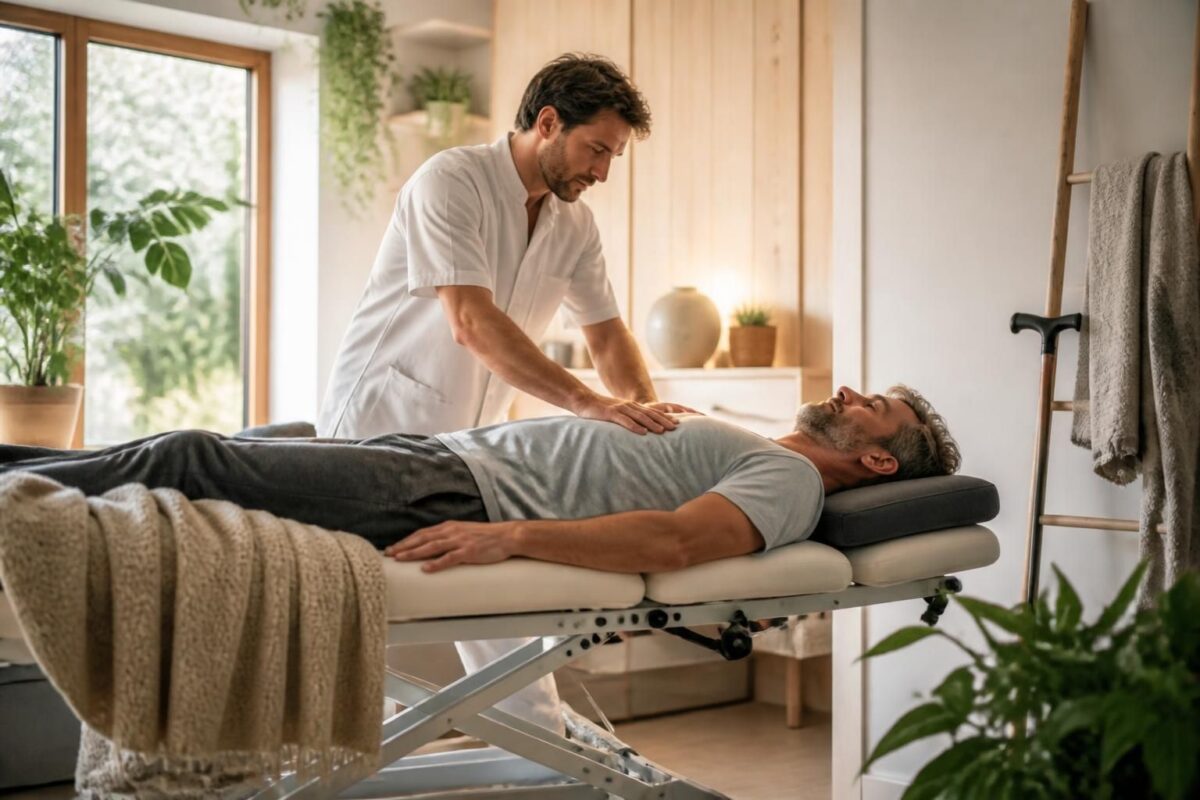
Why Osteopathy Is Essential For Recovery People
In short In short, Osteopathy in convalescence is an approach manual and holistic which helps to accelerate the recovery by restoring The balance, the mobility and a good circulation fabrics. it contributes to Reduce the pain, support the Back to…
Integration into daily life and expected results
To optimize the benefits, plan a series of sessions adapted to your situation and follow the exercises and recommendations provided. Adopt simple gestures at work and at home: active breaks, gentle stretching, and posture work. After a few weeks, you should observe a pain reduction, a Better mobility and an improvement in your ability to carry out your activities without discomfort.

Osteopathic manipulations to strengthen post-traumatic muscles
In short In short, Osteopathic manipulations for Strengthen post-traumatic muscles constitute a gentle manual approach aimed at restoring the mobility, reduce the pain and facilitate the Functional rehabilitation After a injury. What is Is it? A series of precise gestures…
How osteopathy acts on musculoskeletal imbalances
| Aspect | Description |
|---|---|
| Overall assessment | Examine the body in its totality To spot the imbalances and guide the treatment personalized. |
| Targeted manual techniques | manipulation precise On areas of tension and pain to restore movement. |
| pain reduction and mobility | Reduces pain and improves mobility articular. |
| Posture and loads | Correct them Postural imbalances and reduces loads on structures. |
| muscle relaxation | relaxes them soft tissues and frees restrictions. |
| Coordination and balance | Improves the coordination and thebalance engine. |
| Prevention and recurrence | Prepare for drill and habits to prevent reappearances. |
| Adaptability | accessible to all ages, infants to senior. |
| holistic approach | Blueprint overall and personalized, taking into account lifestyle and background. |

Osteopathy and prevention of work-related musculoskeletal disorders
In short theosteopathy is one Manual approach that restores body balance and prevents MSD related to work. Its advantages: reduction of tension, improvement of mobility and prevention of chronic pain. She is preventive and healing, suitable for office and trades…
How osteopathy acts on musculoskeletal imbalances — Testimonials
“Before, my Musculoskeletal imbalances pulled my back and limited my movements. After a Individual assessment And some Manual techniques targeted, tensions cleared up and my mobility has improved. »
“As an athlete, I suffered from pain and slow recovery. Osteopathy acted on the whole body with a Global approach, reducing the pain and improving my Physical function and my posture. »
“For my growing child, imbalances had repercussions on walking and equilibrium. A series of sessions helped harmonize tensions through a prevention and simple tips tostretches and posture, which facilitated its growth. »
“After a day of work, my shoulders and my neck were stuck. Osteopathy, combined with advice from posture and daily gestures, reduced the pain and restored my mobility without painful effort. »
“As a senior, I saw an improvement in thebalance and a reduction in Joint pain. the whole body-centric approach and the prevention Helps me stay active and independent. »
Dr. Sylvain Desforges is a recognized practitioner in the fields ofosteopathy, from the manual medicine and naturopathy. He is the founding president of TagMed and ACMA. Throughout a career dedicated toHealthcare innovation, he specialized in managing the chronic pain and the integration of advanced technologies such as Spinal decompression, the laser and shockwave therapy. Its mission is to offer support evidence-based to optimize the health and well-being of its patients. His approach aims at a precise understanding of imbalances and a lasting re-in motion.
How theosteopathy acts on the Musculoskeletal imbalances ? From the first consultation, the examination is global and personalized, aimed at detecting the links between posture, mobility and pain. The osteopath seeks tension patterns, joint blockages and fascial dysfunctions that disrupt the musculoskeletal system. through Manual techniques Targeted, it rebalances the muscle chains and re-harmonizes the joints, while promoting better circulation and reflex activation of the nervous system.
Beyond manipulations, the approach incorporates elements of prevention and of Functional rehabilitation. The objective is not only to relieve pain, but also to restore a mobility fluid and a function normal on a daily basis. Complementary technologies, when they are relevant, reinforce the effectiveness of the sessions: they facilitate the reduction of inflammation, improve target decompression and promote faster recovery during chronic disorders.
The patient journey with this discipline is personalized and progressive. After a Individual assessment, the practitioner proposes a treatment plan that can include exercises to be done at home, posture advice and ergonomic adjustments. Regular sessions allow measurable progression; the results are measured by decreased pain, improvement in mobility and regained ability to perform daily activities without repercussions. The approach is adaptable to all ages, from infants to seniors, and aims to establish lasting stability of the body as a whole.
For patients suffering from musculoskeletal imbalances, osteopathy offers a promising way, by reconciling fine clinical observation, precise therapeutic gestures and practical advice for everyday life. Dr. Desforges’ work, combining manual know-how and modern technologies, illustrates how a global approach can transform the way everyone feels and uses their body. Find out how its methodology and services can meet your needs within its establishment.
quick summary : theosteopathy acts on the Musculoskeletal imbalances by evaluating the body as a whole and by using Soft manual techniques to restore mobility and prevent recurrences. This article details the mechanisms of action, the impact on posture and function, and offers practical advice to integrate this approach into your daily life.

The benefits of osteopathy to treat muscle imbalances
In short theosteopathy is a manual approach to restore themuscle harmony and postural considering the body as a whole. Its main benefits include the reduction of aches and tensions, the improvement of the mobility and from the posture, and prevention…
Overall assessment and patient-centric approach
In osteopathy, it all starts with a Individual assessment which considers the body as a whole. theclinical examination Identifies the imbalances of the muscle chains and joints concerned, rather than being limited to a single painful area. This approach makes it possible to design a personalized and progressive plan adapted to each person.
The practitioner looks for the root causes of the disorders and takes into account lifestyle habits, sleep and stress, in order to offer appropriate and lasting adjustments in daily life.
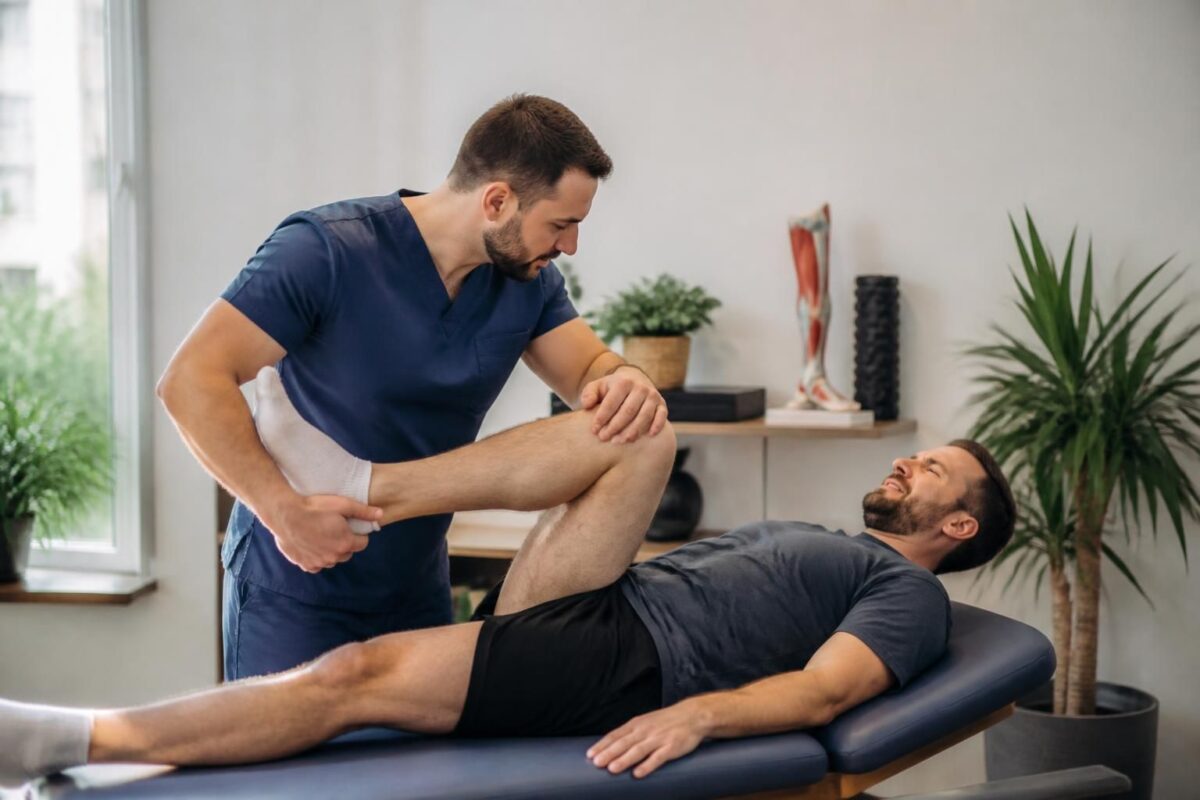
Osteopathy and chronic leg pain: regaining an optimal quality of life
In short In short, Osteopathy is one Global manual approach aimed at reducing Chronic leg pain and improve the quality of life. What is it? Non-drug therapy using the hands to identify restrictions and treat lesional chains. How does it…
The mechanisms of action of osteopathy on imbalances
The Manual techniques Target blocked joints, muscle tension and fascial tension to promote mobility and the Tissue relaxation. By working on the muscle chains and connective tissues, osteopathy seeks to restore the functional balance of the body and to restore a synergy between the different structures.
Beyond the local effects, osteopathy acts on the neuromuscular system and the sensory and motor control mechanisms. This approach can decrease pain sensitivity, improve movement coordination and promote better recovery after exercise or injury. Its holistic spirit also takes into account the stressors, sleep and lifestyle habits that affect recovery.
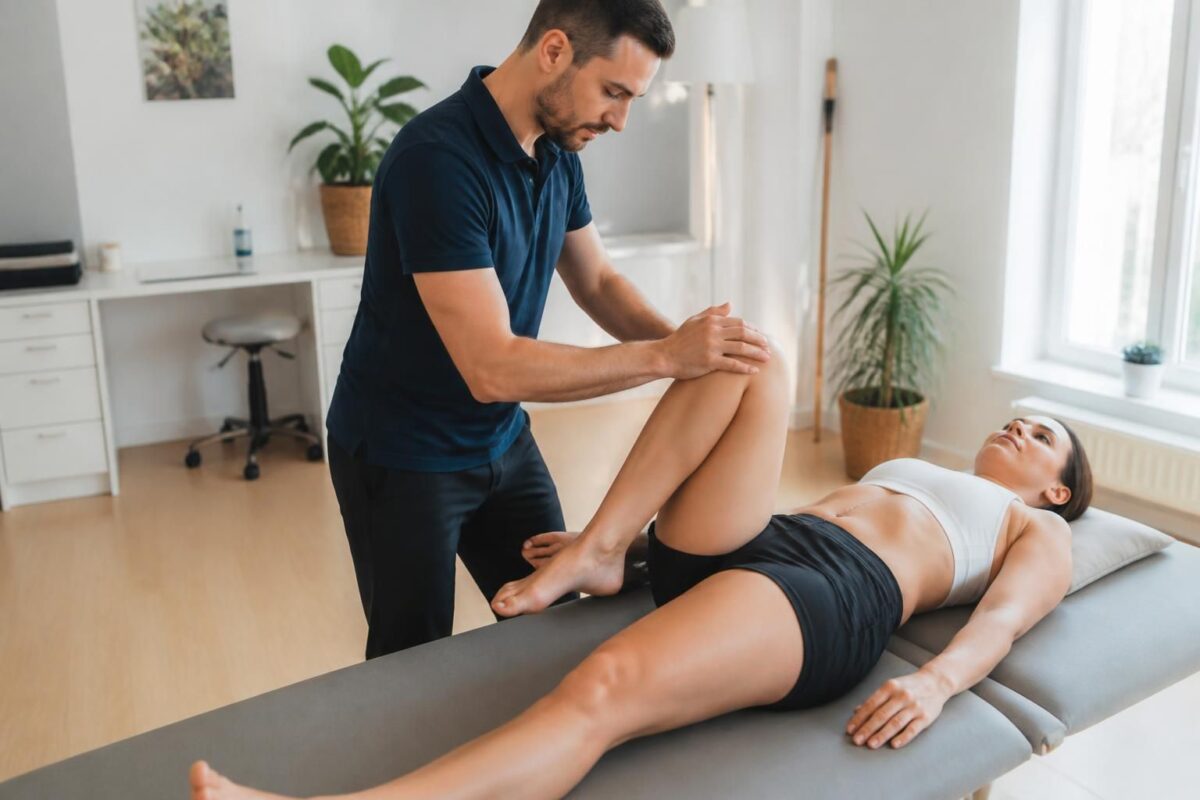
How osteopathy supports recovery after complex surgery
In short In short, Post-operative osteopathy is an approach fresh which supports the recovery After a Complex surgery. It helps to reduce the pain and the fatigue, improves the mobility and accelerates the healing thanks to a better vascularization and…
Impact on mobility and function
By restoring the Joint mobility And by reducing stiffness, osteopathy helps to find a Physical function More fluid, whether in everyday gestures, at work or during sports activities. Correction of postural imbalances contributes to a better alignment of the skeleton, which reduces chronic muscle tension and improves the efficiency of movements.
The practice also aims to preserve or improve functional endurance and prevent aggravation, by promoting a more balanced use of muscle chains and supporting more free breathing, often affected by thoracic and diaphragmatic tensions.
Prevention and long-term management
Beyond the one-off treatment, the osteopathy offers advice and exercises to do at home to maintain the benefits. Simple stretching routines, posture tips and ergonomic gestures can prevent relapses and support a better quality of life in the long term.
Clinical data and specialized reviews suggest that osteopathy can reduce pain and improve function, which results in less reliance on repeated treatments and better persistence of worker and sports results.
Daily integration and practical resources
To maximize the effects, adopt simple gestures and follow the recommendations of your osteopath. Dedicated resources and programs can complement your approach and promote sustainable improvement.
To deepen the links between osteopathy and specific conditions, refer to the following resources:
Osteopathy and arthritis,
Global well-being and holistic approach,
Joint function after injury,
TMS and osteopathy – Review.

Dr Sylvain Desforges, B.Sc., D.O., N.D., osteopath, is the founding president of TAGMED and of the ACMA association. He dedicates his practice to chronic spinal pain, low back pain and symptoms compatible with sciatica, particularly when pain radiates toward the buttock, leg, calf, foot or toes.
Through SOS Sciatique, he publishes educational content on sciatica symptoms, possible causes such as disc herniation, disc narrowing, foraminal stenosis or irritation of a lumbar nerve root, as well as non-surgical approaches that may be considered according to the evaluation. At Clinique TAGMED, care may include, depending on the case, motorized neurovertebral decompression, specific osteopathic care or precision percussion.
For an evaluation related to sciatica treatment in Montreal / Mount Royal or sciatica treatment in Terrebonne, please consult the services available at Clinique TAGMED.
Medical disclaimer
The information published on SOS Sciatique is provided for educational purposes only and does not replace a consultation, diagnosis, opinion or treatment provided by a physician or another authorized healthcare professional. The author of this article is neither a medical doctor nor a specialist in a medical specialty recognized by the Collège des médecins du Québec. The osteopathic, manual medicine or functional support approaches described on this site do not constitute medical acts and are not intended to replace medical follow-up.
Consult a physician or emergency service in cases of loss of bladder or bowel control, anesthesia in the saddle area, significant or progressive weakness in the leg or foot, fever, recent trauma, severe pain or rapid worsening of symptoms. For more details, please read our Legal Notice.