Why osteopathy is essential in a preventive approach
27/06/2026How osteopathy acts on musculoskeletal imbalances
27/06/2026In short
| In short, theosteopathy and the shoulder blade pain form a Targeted approach which aims to restore theBiomechanical balance of the body thanks to Gentle manipulations. For pain in the scapular region, it acts on the Muscle and joint dysfunctions and the Postural tensions, by improving the mobility and the realignment of structures, without the need for surgery. At Montreal, this treatment is particularly suitable for active people suffering from stress related to stress or poor posture. Benefits include a pain reduction, a Improving mobility and a better posture, with an approach holistic and not invasive. How does it work? A Postural evaluation and simple movements guide manipulations sweet and practical advice, followed by targeted exercises to prevent recurrences and preserve mobility. |
As part of the pain around the shoulder blades, Losteopathy offers a Targeted approach Based on Gentle manipulations and an Overall assessment of the body. By analyzing the posture and the movements of the shoulder, it aims to release muscle tension, restore the balance of structures and restore the mobility of the scapular region.
This treatment non-invasive Can contribute to a lasting reduction in pain and prevention of recurrences, by combining postural advice and simple exercises. consult a Qualified osteopath can thus improve daily comfort and quality of life.
This article presents a Targeted approach Osteopathy for pain located in the shoulder blades region. It explains how a global body assessment can identify tensions and dysfunctions, then offers gentle manipulations and postural education to improve mobility and reduce pain. The objective is to improve the function of the scapula while preventing recurrences, without resorting to invasive acts.
Frequent causes of shoulder blade pain
Pain around the shoulder blades often comes from muscle tension, postural imbalance or repetitive gestures. Stress and poor posture frequently contribute to rigidity and pain in the scapular region. A precise osteopathic evaluation makes it possible to identify the areas of tension and the structures to be rebalanced to restore natural shoulder and back mobility. Specialized resources show how osteopathy can intervene without aggravating the condition and respecting the physiology of the patient.
How osteopathy affects shoulder blade pain
Osteopathy targets Mechanical malfunctions which underlie the pain. We favor techniques sweet and targeted mobilizations to restore joint alignment and release muscle tension around the shoulder blade. This approach considers the patient as a whole, which improves the circulation and the mobility of the scapular region without major risk. Postural education is integrated into treatment to prevent actions that promote recurrences. Appropriate approaches and studies support the effectiveness of osteopathic management in this context. To deepen, you can consult specialized resources on osteopathic mechanisms and mobility after various clinical situations.
The key tool is Soft tissue manipulation and the mobilization joints, which aim to relax the tense muscles and restore fluid biomechanics in the shoulder and scapula. An appropriate education can include posture tips and simple actions to take on a daily basis to limit tensions in the trapezoids and muscles surrounding the rotator cuff.
Postural education and prevention
Prevention requires a posture adapted to work and daily activities. Regular breaks and ergonomic adjustments reduce stress on the shoulder blades. Simple exercises can be offered as part of a personalized program, while remaining focused on maintaining mobility and muscle tone. Ostracism of unsuitable approaches is avoided, and patients receive advice on how to integrate healthy long-term habits.
Training and professional supervision
Osteopaths exercising in accordance with recognized standards are formed in structures dedicated to osteopathy and manual medicine, such as Numss, NAO, National University of Medical Sciences and National Academy of osteopathy. Practitioners follow repositories that promote evidence-based practice and patient safety. For patients, this means support provided by authorized professionals and enrolled in recognized professional executives..
Integration and useful resources
Osteopathy can be integrated into other non-invasive approaches to promote sustainable functional recovery. To expand your understanding, read articles and guides accessible on specialized sites that describe how osteopathy improves mobility and musculoskeletal health, without resorting to invasive treatments. Other resources help deepen the relationship between posture, scapular tension and long-term pain management.
To enrich your knowledge, you can consult content such as the pages dealing with the impact of osteopathy on mobility after surgery, or analyzes on the virtues of osteopathy in the face of tenacious pain in the shoulder blade, available at the following sites:
sossciatica.com,
the newspaper of the senior,
drdesforges.com.
Other useful resources mention the importance of prevention and holistic approaches to the scapular region:
LOSTeopathy and prevention,
and references on improving musculoskeletal health by osteopathy.
Medical disclaimer :
“Medical disclaimer: The information and advice provided on this site does not replace the health professional’s benefit, diagnosis or treatment. Please note that Dr. Sylvain Desforges osteopath is neither a doctor of medicine nor a doctor, and is not a specialist in a medical specialty as defined by the Collège des Médecins du Québec. Manual medicine, functional medicine and sports medicine as described on this site exclude any medical treatment or diagnosis made by a doctor or specialist doctor. Always consult your doctor for any medical questions. For more details, please read our full legal notice. »
References and additional resources to deepen the subject, while remaining in the recognized fields and associations, can be consulted via professional resources and guides in osteopathy and musculoskeletal prevention, while favoring sources centered on safety and Professional ethics.
- Muscle dysfunction Around the scapula
- Posture and tensions related to stress and repetition of gestures
- Restricted mobility of the scapula and the shoulder
- Localized pain with possible cervical/arm irradiation
- Overall assessment of the body to identify the causes
- Gentle manipulations To restore thealignment joints
- Tissue relaxation and Muscle release
- Targeted mobilizations Around the shoulder blade and the cap
- Postural education and personalized ergonomic advice
- Custom program exercises and prevention
- goals: pain reduction and Functional improvement
This article presents a targeted approach toosteopathy for the shoulder blade pain. By understanding the mechanisms behind the scapular pain, the osteopath acts Locally on muscle tension and globally on the body to restore mobility, comfort and performance on a daily basis, without resorting to invasive methods.
Understanding the Targeted Approach
theosteopathy Considers the shoulder and the scapular region as the product of a set of interconnected muscle and joint chains. Tensions in the muscles around the scapula (such as the trapezoid and rotator cuff muscles), postural imbalances and repetitive movements can nourish lasting pain. The osteopathic evaluation aims to identify the underlying causes in the whole body, not only at the local level, in order to offer appropriate care that durably improves function and reduces the risk of recurrence.

How osteopathy improves the quality of life of active people
In short In short, theosteopathy is a global approach that Optimizes mobility and the function of the body of ACTIVE PEOPLE, for a better quality of life. It helps prevent injury and reduce Musculoskeletal pain While promoting the Sports recovery.…

Osteopathy and sports recovery: prepare the body for lasting performance
In short In short, Osteopathy and Sports recovery is one Global manual approach that sustainably prepares the body for the effort by restoring mobility and circulation After the effort. It is a discipline that acts on the sinews, the joints,…
Techniques and key gestures
Soft tissue manipulation
The Manual techniques Target the muscles surrounding the shoulder blade to promote relaxation and improve microcirculation. By exerting precise pressures and work to unwind the tensions, the osteopath can reduce the pain and release joint amplitudes which were limited by reflex contractions or fascial adhesions.
Joint mobilization and postural control
of Joint mobilizations Soft and progressive realigns the shoulder and scapula joints, restoring normal biomechanics. At the same time, the osteopath accompanies the patient in a Postural rebalancing and offers simple tips to correct positioning habits during daily activities, work and leisure.
Postural education and exercises
An essential part of the treatment is to train the patient in a Postural education and simple exercises to do in the office or at home. Strengthening of back and shoulder stabilizing muscles, targeted stretching and active micro-breaks help maintain results between sessions and preserve mobility in the scapular region.
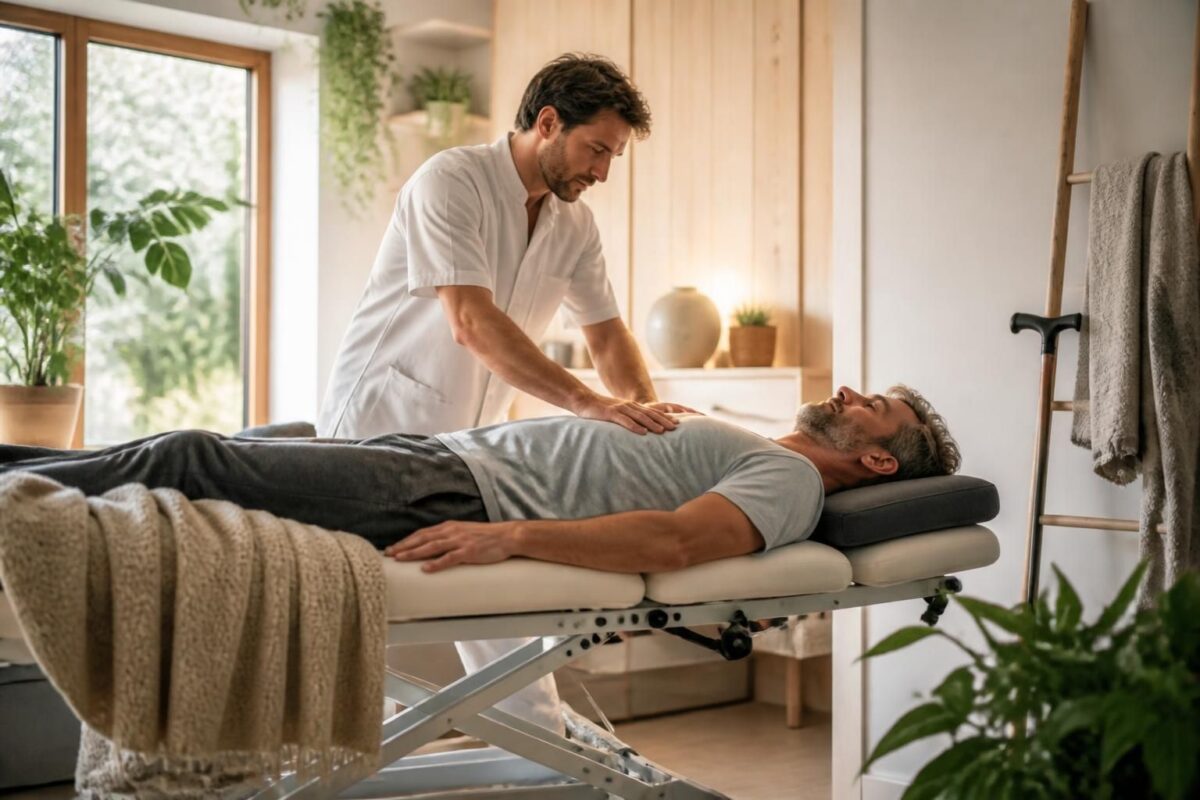
Why Osteopathy Is Essential For Recovery People
In short In short, Osteopathy in convalescence is an approach manual and holistic which helps to accelerate the recovery by restoring The balance, the mobility and a good circulation fabrics. it contributes to Reduce the pain, support the Back to…

Osteopathic manipulations to strengthen post-traumatic muscles
In short In short, Osteopathic manipulations for Strengthen post-traumatic muscles constitute a gentle manual approach aimed at restoring the mobility, reduce the pain and facilitate the Functional rehabilitation After a injury. What is Is it? A series of precise gestures…
Objectives and benefits
The main objective is to Reduce pain quickly and ofImprove mobility of the scapular region. In the long term, the targeted approach aims to promote better Daily function, to prevent recurrent tension and to support more free breathing when the chest is no longer blocked by muscle tension.

Osteopathy and prevention of work-related musculoskeletal disorders
In short theosteopathy is one Manual approach that restores body balance and prevents MSD related to work. Its advantages: reduction of tension, improvement of mobility and prevention of chronic pain. She is preventive and healing, suitable for office and trades…

The benefits of osteopathy to treat muscle imbalances
In short theosteopathy is a manual approach to restore themuscle harmony and postural considering the body as a whole. Its main benefits include the reduction of aches and tensions, the improvement of the mobility and from the posture, and prevention…
Prevention and lifestyle
To support the profits, adopt a Adapted posture Throughout the day, favor Active breaks and incorporate upper body strengthening and stretching exercises. A balanced diet and sufficient hydration contribute to muscle health and facilitate recovery after osteopathy sessions. The osteopath can also offer personalized advice concerning the ergonomics of the workstation and daily gestures.
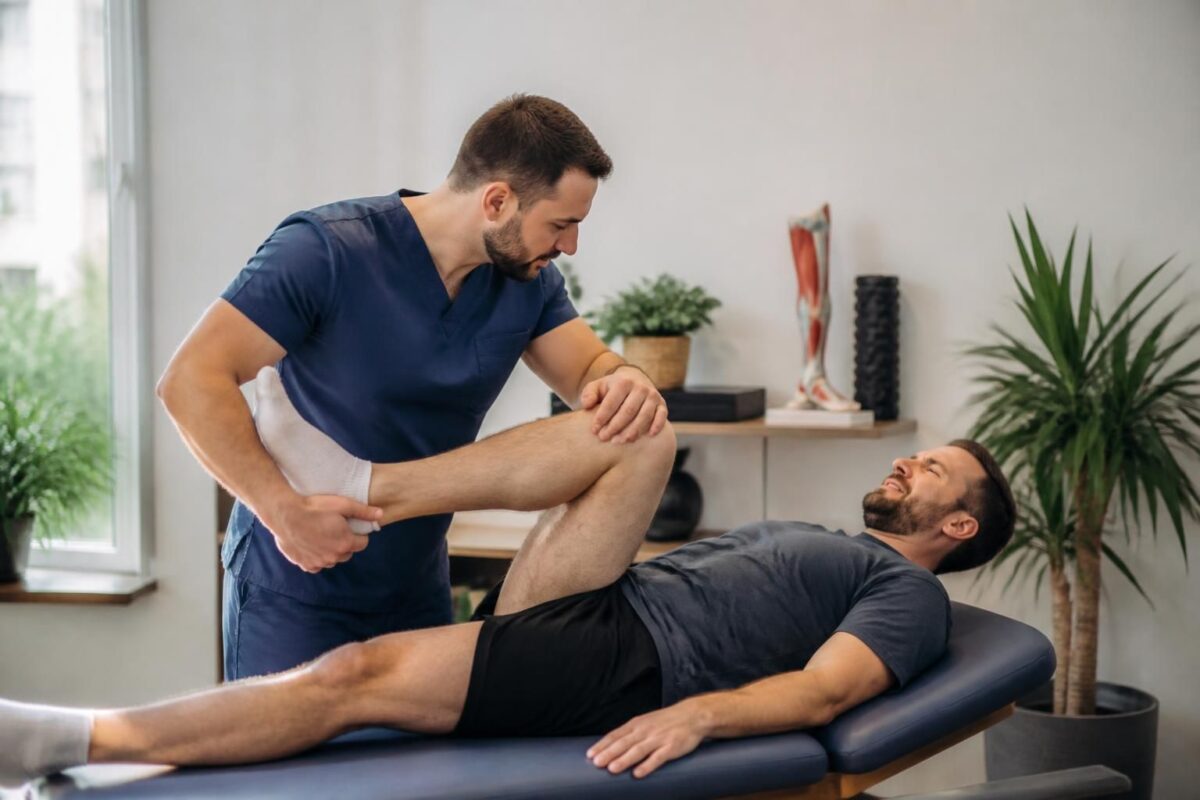
Osteopathy and chronic leg pain: regaining an optimal quality of life
In short In short, Osteopathy is one Global manual approach aimed at reducing Chronic leg pain and improve the quality of life. What is it? Non-drug therapy using the hands to identify restrictions and treat lesional chains. How does it…
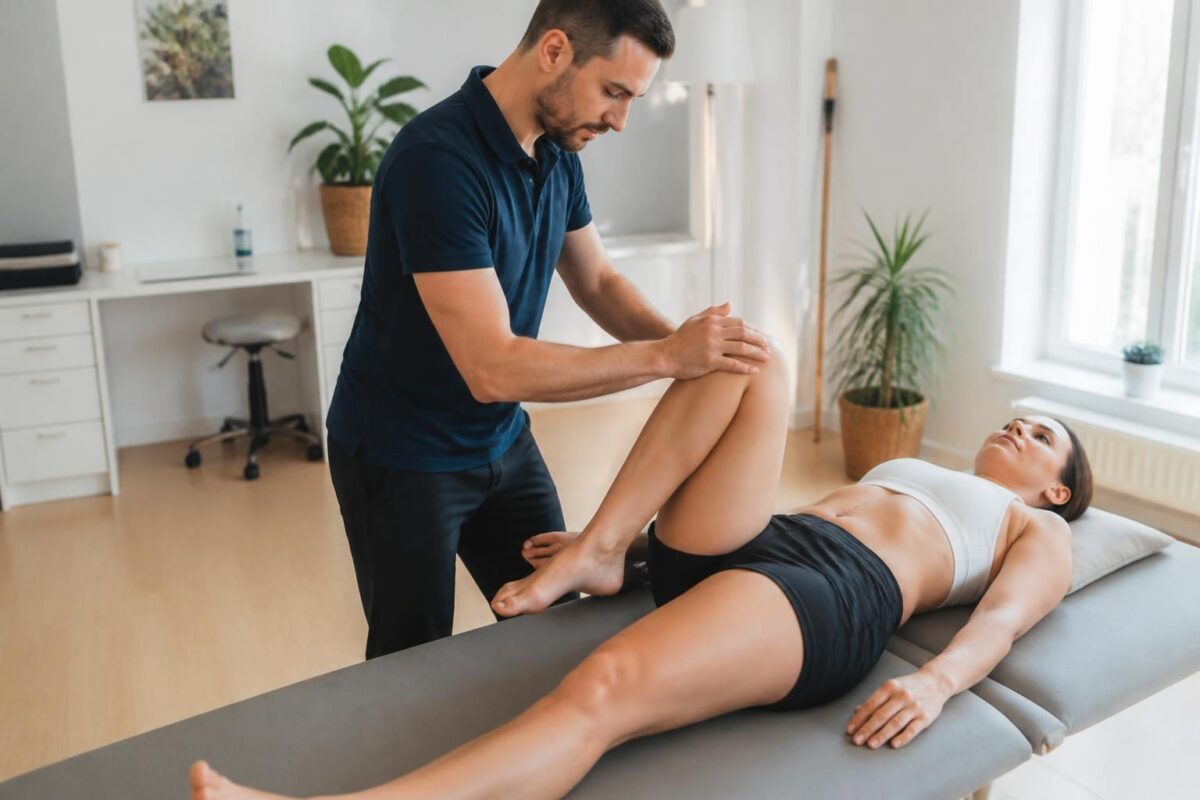
How osteopathy supports recovery after complex surgery
In short In short, Post-operative osteopathy is an approach fresh which supports the recovery After a Complex surgery. It helps to reduce the pain and the fatigue, improves the mobility and accelerates the healing thanks to a better vascularization and…
When to consult and what to expect
Check when the pain persists after a few weeks or is accompanied by signs such as weakness, numbness, or pain that worsens on exertion. On the first visit, wait for a full assessment, a personalized treatment plan and practical advice to continue the benefits between appointments. The sessions are based on non-invasive gestures, respecting the integrity of the body and aiming for a lasting movement.
| Element | Concise description |
|---|---|
| Field and frame | osteopathy is a non-invasive manual approach that evaluates the body as a whole and acts around the scapula and associated structures. |
| Objective | Reduce tension and restore mobility in the scapular region through precise and appropriate gestures. |
| techniques keys | soft tissue manipulation, joint mobilization and muscle relaxation; Focus on posture and movement. |
| Targeted areas | Shoulder blade, trapeze and rotator cuff in people exposed to stress, poor posture or repetitive gestures. |
| Benefits | Non-invasive relief, improvement of mobility and reduction of postural tensions with a lasting effect. |
| Security and limits | personalized and generally safe approach; May require a medical assessment if worrying symptoms appear. |
| Duration and follow-up | regular sessions according to the evaluation; Progress measured over several weeks with adjustments. |
| Prevention and advice | Adapted posture, active breaks and scapular exercises to reduce recurrences and optimize results. |
| Expected results | Improvement of mobility and lasting reduction in pain; Effectiveness dependent on cause and adherence to treatment. |
Testimonials: Osteopathy and shoulder blade pain — a targeted approach
“Losteopathy offered me a Targeted approach To relieve my shoulder blade pain, without medication. The Gentle manipulations and work on my posture have restored the mobility of my scapular region and ended tensions that had been going on for weeks. »
— Marie, 38, administrative secretary, Montreal.
“After long days in front of the computer and a few sessions, I found a mobility sufficient in my shoulder blades. losteopathy was a Non-invasive solution and a real Targeted approach To release tension and correct my posture. »
— Julien, 44, commercial, Montreal.
“As an athlete, my shoulder blade pain came back after each heavy workout. thanks to theosteopathy and to a Targeted approach, my scapular muscles relax and my mobility recovers, which allows me to resume my performance without pain. »
— Sophie, 29, sportswoman, Montreal.
“I work standing all day and my shoulders pull; losteopathy targeted the areas of tension in my shoulder blades with some Precise manipulations. Result: less pain, better posture And more comfort over my working time. »
— Claire, 52, secretary, Terrebonne.
“After years of tension and fatigue, the osteopathic intervention offered me a holistic approach and fresh which reduced my Scapular pain and improved my quality of life. I highly recommend for a prevention recurrences. »
— Antoine, 60, retired, Montreal.
“After years of tension, I discovered that small osteopathic sessions were enough to relieve my shoulder blades. the sessions learned to adopt a good posture And to listen to my body on a daily basis, which has transformed my daily life and my focus on my activities. »
— Lucas, 23, student, Laval.
Dr Sylvain Desforges is recognized as Expert in osteopathy, naturopathy and manual medicine. Founder and president of the TagMed Clinics and the ACMA Association, he devotes his career to innovation in health care and to the management of Chronic pain, especially around the spine and the scapular region. Its approach is based on an alliance between technical rigor and global vision of the body, in order to provide solutions non-invasive and adapted to each patient.
When we talk about the shoulder blade pain, his work highlights complex mechanisms involving muscle tension, postural imbalances and repetitive movements. He first carries out a Detailed evaluation posture, patterns of movement and muscle chains around the scapula, in order to identify areas of tension or dysfunction. Through targeted manipulation and soft tissue work, it aims to release tension in the trapezoid, rhomboid muscles and shoulder stabilizer muscles, while restoring a biomechanical harmony that promotes better mobility scapular region.
Its practice is based on a holistic approach which considers the body as an interdependent whole. In addition to manual techniques, it incorporates practical advice on posture at work, daily gestures and lifestyle habits that influence scapular comfort. This approach aims not only to reduce pain, but also to prevent recurrences and to restore an effective function of the shoulder and chest, so that each movement regains fluidity and stability.
To amplify the effectiveness of the treatment, Dr. Desforges favors a synergy between the techniques manuals and the reasoned use of advanced technologies. The Motorized vertebral decompression may be proposed when the evaluations justify it, in addition to the Osteopathic techniques Classics. The use of laser therapeutic and at the Shockwave therapy is considered when these tools help to improve circulation, reduce inflammation and accelerate the recovery of tissues around the shoulder blade. This integration aims to offer more lasting results and a better quality of life, while remaining fully focused on the individual needs of the patient.
The osteopath makes a point of honor to the patient’s education. Specific strengthening exercises and targeted stretching, combined with postural recommendations, are an essential component of the therapeutic program. The objective is to preserve the mobility of the shoulder girdle, to optimize movements and to promote a posture that minimizes tensions over the long term. By associating technical know-how and adapted advice, he thus transforms the sessions into an active approach to rehabilitation and prevention.
Its mission is clear: to provide evidence-based care adapted to each personal journey, in order to optimize the health and well-being of patients. As a pioneer in his field, he continues to evolve alongside technological advances and best clinical practices, while placing the individual and his quality of life at the center of his approach.
This summary highlights losteopathy and Pain in the shoulder blades, by presenting a Targeted approach which acts on the mechanical and postural causes to improve mobility and quality of life. Through a global assessment and gentle manual techniques, it offers a non-invasive path to sustainable relief and recurrence prevention.
Targeted approach and mechanisms of action
The pain in the shoulder blades often comes from Muscle tensions, of one Postural imbalance and a lack of joint mobility. Osteopathy addresses these elements as a whole, looking for root causes rather than treating only symptoms. This approach aims to Realign structures, improve circulation and release nervous tensions that can radiate to the neck, shoulder or arm.
Techniques and know-how
Among the methods used, there are Soft tissue manipulation And some Joint mobilizations targeted, accompanied by postural advice and exercises. The work on the Rotator cuff and on the muscle chains around the shoulder blade helps to restore a Balanced biomechanics.
Prevention and lifestyle
To avoid recurrences, osteopathy is part of a preventive approach combining Adapted posture, active breaks, and strengthening exercises. A diet rich in magnesium and zinc, sufficient hydration and stress management complement care and support recovery.
Expected benefits and results
Patients can observe a pain reduction, a Improving mobility of the scapular region and a Increased functionality shoulders. This approach non-invasive Promotes a gradual return to daily and sporting activity, while minimizing the risk of recurrence.

Dr Sylvain Desforges, B.Sc., D.O., N.D., osteopath, is the founding president of TAGMED and of the ACMA association. He dedicates his practice to chronic spinal pain, low back pain and symptoms compatible with sciatica, particularly when pain radiates toward the buttock, leg, calf, foot or toes.
Through SOS Sciatique, he publishes educational content on sciatica symptoms, possible causes such as disc herniation, disc narrowing, foraminal stenosis or irritation of a lumbar nerve root, as well as non-surgical approaches that may be considered according to the evaluation. At Clinique TAGMED, care may include, depending on the case, motorized neurovertebral decompression, specific osteopathic care or precision percussion.
For an evaluation related to sciatica treatment in Montreal / Mount Royal or sciatica treatment in Terrebonne, please consult the services available at Clinique TAGMED.
Medical disclaimer
The information published on SOS Sciatique is provided for educational purposes only and does not replace a consultation, diagnosis, opinion or treatment provided by a physician or another authorized healthcare professional. The author of this article is neither a medical doctor nor a specialist in a medical specialty recognized by the Collège des médecins du Québec. The osteopathic, manual medicine or functional support approaches described on this site do not constitute medical acts and are not intended to replace medical follow-up.
Consult a physician or emergency service in cases of loss of bladder or bowel control, anesthesia in the saddle area, significant or progressive weakness in the leg or foot, fever, recent trauma, severe pain or rapid worsening of symptoms. For more details, please read our Legal Notice.