Osteopathic manipulations to treat recurrent back pain
27/06/2026
Osteopathy and osteoarthritis: relieve without medication
27/06/2026
In short
| In short, theosteopathy is a manual approach focused onBody balance and the prevention of MSD. She offers a Overall assessment posture and mobility, then uses Manual techniques and exercise tips to correct imbalances and reduce pain. Its advantages include reducing the risk of musculoskeletal disorders at work, better posture, reduced tension and improved functioning and well-being. In prevention, osteopathy acts by anticipating requests and coordinating advice with health professionals, while adapting recommendations to the professional environment. In Montreal, this service is particularly recommended for employees exposed to repetitive gestures and sedentary lifestyle. |
Osteopathy helps prevent Musculoskeletal disorders (MSD) By adopting an approach holistic centered on the body as a whole. She evaluates the posture, the mobility and the Structural imbalances to act on their causes rather than on the symptoms alone. Through precise manual techniques and appropriate advice, it helps to restore thebalance musculoskeletal systems, reduce tension and improve flexibility. In the professional context, it offers Ergonomic adjustments and programs ofPreventive exercises To reduce repetitive gestures and restrictive postures. Finally, she educates the patient on daily gestures and ensures a collaboration with other health professionals for a personalized and effective plan to preserve the Physical function and prevent recurrences.
musculoskeletal disorders (MSD) affect muscles, bones, joints and connective structures. They generate pain and can limit daily activities. theosteopathy Offers a comprehensive approach to preventing these conditions by restoring body balance. This article presents how osteopathy can play a key role in the prevention of MSD, explaining the general pathophysiology, risk factors, warning signs and practical axes, with benchmarks on research progress and elements if available.
A global and preventive approach
theosteopathy consider the body as a whole. She seeks to restore thebalance and to optimize the mobility of tissues, joints and the nervous system. This approach aims to reduce mechanical stress and support the body’s ability to heal itself. In prevention, it acts on factors that promote imbalances, such as muscle tension, mobility limitations and poor postures.
Identification of risk factors
The practitioner assesses posture, repetitive movements and professional constraints. It identifies areas of stiffness or overload and identifies imbalances that may predispose to future pain. This assessment makes it possible to target corrections useful for prevention, without waiting for the onset of a symptom.
Techniques and safety
the techniques used in osteopathy Include joint mobilization and soft tissue release techniques. They aim to improve circulation, release tension and restore better coordination of the body regions. The osteopathic framework favors the safety of the patient and the adaptation of gestures to each situation.
Role of education and self-management
The professional informs the patient about the daily gestures that preserve the spine and the large joints. It offers simple tips to correct postural habits and promote better coordination of movement. This education allows the patient to actively become involved in prevention and reduce the risk of recurrence.
Integration in a professional environment
At work, osteopathy can complete preventive actions with an analysis of the gestures and postures specific to each activity. The objective is to limit repeated loads and binding positions. Osteopathic intervention does not replace ergonomic measures, but it complements them with individual evaluation and appropriate advice.
Recommended resources and readings
To learn more, you can check out these resources:
Osteopathy and spine pain,
Osteopathy and MSD Prevention,
Osteopathy at work,
Rehabilitation after surgery,
Practical advice.
Additional resources and training can strengthen osteopathy skills. As part of the training, recognized institutions include NUMSS, NAO, National University of Medical Sciences and National Academy of osteopathy. Relevant professional associations include ACMA and the College of Canadian Osteopaths.
Additional articles and tracks are available on sites dedicated to MSD management and compliance with professional recommendations. For example, content discusses the links between osteopathy and various musculoskeletal symptoms, including shoulder, spine, or tendinopathy pain. You can also view resources on MSD support at work and integrated approaches.
For more information, see also the following resources:
Osteopathy and spine pain,
Osteopathy and shoulder pain,
Osteopathy and tendonitis,
Osteopathy and fibromyalgia,
neurovertebral decompression.
Medical Disclaimer: The information and advice provided on this site does not replace the health professional’s diagnosis or treatment. Please note that Dr. Sylvain Desforges osteopath is neither a doctor of medicine nor a doctor, and is not a specialist in a medical specialty as defined by the Collège des Médecins du Québec. Manual medicine, functional medicine and sports medicine as described on this site exclude any medical treatment or diagnosis made by a doctor or specialist doctor. Always consult your doctor for any medical questions. For more details, please read our full legal notice.
Preventive osteopathy axis
- Posture and alignment: Correct the gestures and the seat to reduce repetitive loads.
- Mobility and flexibility: Release tension and preserve the range of motion.
- Musculoskeletal balance: Harmonize the strength and endurance of muscle groups.
- Personalized evaluation: preventive diagnosis and targeted program.
- microtrauma prevention: Limit loads and optimize technical gestures.
- Ergonomics and workstation: practical adjustments and advice.
- Exercise routines: Simple exercises to integrate on a daily basis.
- Self-support: education and self-monitoring of pain.
- Multidisciplinary collaboration: Coordination with physiotherapists and doctors.
- Prevention of recurrences: Active strategy and maintenance plan.

This article presents how Osteopathy can help prevent MSD By treating root causes rather than limiting yourself to pain relief. By working on The balance of the body, the posture, the mobility and neuromuscular coordination, osteopathy aims to reduce the risk factors related to repetitive gestures, sedentary lifestyle and mechanical stress, while proposing concrete measures for companies and individuals to preserve musculoskeletal health on the long term.
Understanding the mechanisms and preventive role of osteopathy
The MSD Often arise from combinations of factors: holding postures, repetitive gestures, joint tensions and muscle imbalances. The approach osteopathic favor a Biomechanical analysis global and individual to identify compensation chains and risk areas. By restoring the mobility joints and by reducing tension, the osteopath acts on the potential causes of pain and functional limitations, in order to prevent the appearance or aggravation of MSDs. This prevention aims to improve the coordination segments of the body and to promote a resilience in the face of daily constraints.

How osteopathy improves the quality of life of active people
In short In short, theosteopathy is a global approach that Optimizes mobility and the function of the body of ACTIVE PEOPLE, for a better quality of life. It helps prevent injury and reduce Musculoskeletal pain While promoting the Sports recovery.…
preventive approach in the workplace and on a daily basis
In business and at home, osteopathy is deployed as an active prevention tool. She is primarily interested in the posture and the ergonomics of the workstations, then it offers simple and personalized adjustments to limit mechanical constraints. Regular sessions make it possible to identify the areas of over-solicitation and to provide targeted solutions: postural corrections, release of tensions and appropriate exercise programs. This preventive approach contributes to reducing absenteeism and maintaining a performance sustainable, while improving the overall well-being of employees and individuals.

Osteopathy and sports recovery: prepare the body for lasting performance
In short In short, Osteopathy and Sports recovery is one Global manual approach that sustainably prepares the body for the effort by restoring mobility and circulation After the effort. It is a discipline that acts on the sinews, the joints,…
Osteopathic techniques and preventive benefits
Personalized evaluation
Each consultation begins with a evaluation global and specific to musculoskeletal chains, in order to identify the imbalances and the gestures that predict MSDs. This Biomechanical analysis Allows you to target the interventions and establish a tailor-made prevention plan.
Adapted techniques
The Manual techniques used, including targeted manipulations, appropriate stretching and joint mobility work, aim to restore thebalance and reduce tensions. The goal is a prevention Active: less pain, more fluidity of movement and better resilience in the face of professional gestures.
Multidisciplinary cooperation
Preventive osteopathy is willing to integrate with doctors, physiotherapists and occupational therapists. This cooperation makes it possible to develop comprehensive prevention plans, to adjust activities and to ensure continuity of care adapted to changing needs.
Why Osteopathy Is Essential For Recovery People
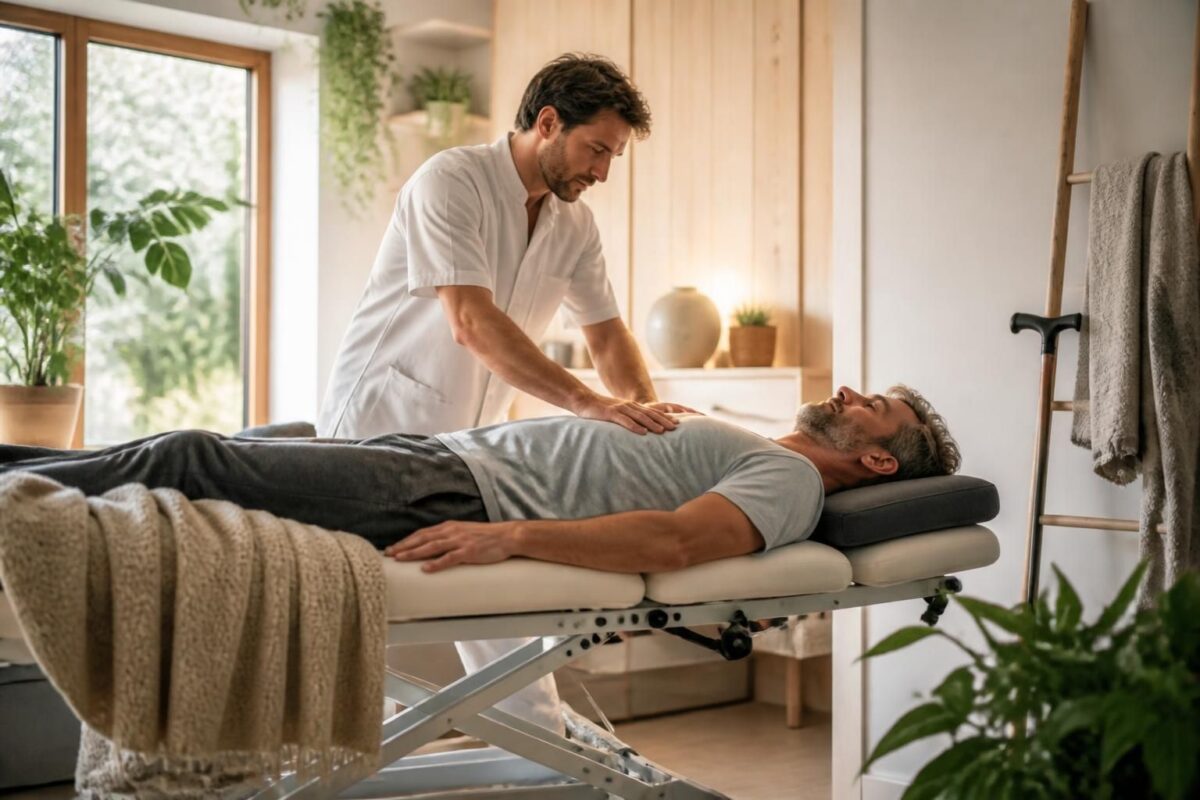
In short In short, Osteopathy in convalescence is an approach manual and holistic which helps to accelerate the recovery by restoring The balance, the mobility and a good circulation fabrics. it contributes to Reduce the pain, support the Back to…
Concrete action plan to prevent MSDs
Step 1: Perform an initial osteopathic assessment to identify risk factors and gestures that influence posture and mobility. Step 2: Set up a personalized program of exercises and self-correction techniques to practice regularly. Step 3: Propose ergonomic adjustments and periodic micro-interventions to prevent the appearance of recurring tensions. Step 4: Monitor and reassess in order to adapt the plan according to progress and new needs.

Osteopathic manipulations to strengthen post-traumatic muscles
In short In short, Osteopathic manipulations for Strengthen post-traumatic muscles constitute a gentle manual approach aimed at restoring the mobility, reduce the pain and facilitate the Functional rehabilitation After a injury. What is Is it? A series of precise gestures…
Sustainable prevention and key messages
By integrating theosteopathy In a proactive approach, we favor a prevention targeted that acts on the foundations of the movement: posture, mobility, balance and coordination. The objective is to transform each gesture, each posture and each movement into an opportunity to preserve physical capital and sustainably improve the quality of life at work and on a daily basis.

Osteopathy and prevention of work-related musculoskeletal disorders
In short theosteopathy is one Manual approach that restores body balance and prevents MSD related to work. Its advantages: reduction of tension, improvement of mobility and prevention of chronic pain. She is preventive and healing, suitable for office and trades…
Osteopathy and MSD Prevention: Axes of Action
| prevention axis | Concise impact |
|---|---|
| Postural Evaluation and Alignment Correction | Overall assessment and alignment correction to reduce tension and prevent loads on the back and shoulders. |
| Joint mobility and flexibility | Improved mobility through gentle techniques and simple exercises to avoid blockages. |
| Management of muscle imbalances | Strengthening and rebalancing of muscle chains to prevent overload and pain. |
| Ergonomics and substation layout | Advice ergonomic and custom adjustments to reduce repetitive gestures and fatigue. |
| microtrauma prevention | Prevention of microtraumas through active breaks and better movement technique. |
| Education and self-care | Training to recognize the signs and practice daily exercises in order to remain autonomous. |
| Adapted physical activity | Personalized exercise program to strengthen and stretch without overloading the joints. |
| Coordination with professionals | Collaboration with doctors and physiotherapists for an integrated and coherent prevention plan. |
| Preventive monitoring and relapse prevention | Regular sessions and follow-up to adjust the exercises and prevent relapses. |

The benefits of osteopathy to treat muscle imbalances
In short theosteopathy is a manual approach to restore themuscle harmony and postural considering the body as a whole. Its main benefits include the reduction of aches and tensions, the improvement of the mobility and from the posture, and prevention…
Testimonials: How Osteopathy Helps Prevent Musculoskeletal Disorders
“Before, a day at the office left me with a pain in the neck and tensions that stretched in the shoulders. thanks to theosteopathy, I learned to correct my posture and integrate simple exercises that help me to prevent musculoskeletal disorders on a daily basis. — Administrative Secretary
“In my workshop, repetitive gestures and microtraumas weakened my joints. My osteopath identified the overload areas and showed me suitable techniques and stretches to maintain the mobility and reduce risks. Since then, the MSD are better controlled and my performance remains stable. — workshop worker
“On the roads, the prolonged sitting position creates lumbar tensions that I thought were irreversible. The sessions ofosteopathy helped me re-educate my posture and adopt driving habits that preserve The back. My journeys are more comfortable and my days less tiring. — truck driver
“As a consultant, I spend long hours in front of the computer. Osteopathy corrected imbalances and guided me to stretching routines and Micro breaks effective. Result: less stiffness and better mobility, which reduces the risk of MSD. » — IT consultant
“Practicing sport with caution, I was trying to prevent pain related to training. The osteopathic approach helped me to to balance my movements, to strengthen the weak areas and to maintain a good mobility. I can continue to progress without fearing the prevention TMS. » — Amateur sportsman
Osteopathy and prevention of musculoskeletal disorders: a proactive approach
Dr Sylvain Desforges, Expert in osteopathy, naturopathy and manual medicine, occupies a central place in the field of the prevention of musculoskeletal disorders (MSD). At the head of TagMed and the ACMA association, he implements an innovative and evidence-based approach to preserve the health and functionality of the body. Her approach goes beyond treatment of symptoms: she aims to anticipate imbalances, optimize self-regulation mechanisms and strengthen the patient’s ability to remain active and painless. This biography highlights how her professional practice turns MSD prevention into a true long-term wellness strategy.
prevention of MSD Begins with a comprehensive and individualized risk factor assessment. Dr Desforges analyzes the posture, the mobility and the Muscle balances as a whole, rather than limiting oneself to a painful area. He pays particular attention to repetitive gestures, professional constraints and lifestyle habits that predispose to microtraumas. By identifying potential sources of pain and restriction early, the osteopath can intervene before the onset of marked symptoms, thus preserving function and quality of life.
The techniques employed in a preventive perspective aim to restore the natural movement and reduce the mechanical loads responsible for MSDs. The Joint manipulations, the work of fascias and the Targeted muscle strengthening are used to restore theStructural balance, release tensions and improve the coordination areas of the body. The objective is not only to soothe existing pain, but to prevent their reappearance by respecting the healing mechanisms of the body and promoting Harmonious mobility in the long term.
The role of osteopathy in MSD prevention is naturally part of a logic interprofessional. Dr. Desforges collaborates with physiotherapists, doctors and ergonomists to design personalized plans incorporating exercises, postural advice and work environment adaptations. This collaboration makes it possible to reduce risky gestures, optimize workstations and set up preventive routines adapted to each professional activity, whether you are in the office, in the factory or in the field.
Patient education occupies a major place in this preventive approach. The practitioner transmits concrete tools to maintain the benefits between visits: Regular exercises adapted, Active breaks, and better listening to body signals. By associating these elements with a thoughtful use of modern technologies when necessary, the objective is to reduce the incidence of MSDs and to sustainably improve the musculoskeletal function. Dr. Desforges is committed to offering treatments evidence-based and adapted to the way of life and the professional environment of each one.
Thanks to this approach centered on prevention, Dr Desforges demonstrates that osteopathy can favorably modify the trajectories of individuals exposed to MSDs: less pain, better ability to move and decrease in periods of work stoppage. By placing prevention at the heart of the practice, it contributes to changing the perception of MSDs, considering them as modifiable imbalances rather than as inevitable fatalities. His commitment reflects a vision where each patient becomes an actor of his health, guided by simple gestures, personalized advice and attentive listening to the body.
This quick summary shows how Osteopathy can contribute to Prevent musculoskeletal disorders (TMS) by restoring The balance of the body, by optimizing posture and the mobility, and correcting imbalances that predict pain and functional limitations. After a global assessment, the osteopathic approach favors personalized actions and practical advice to act upstream of symptoms and support a lasting physical condition.
Osteopathy and chronic leg pain: regaining an optimal quality of life
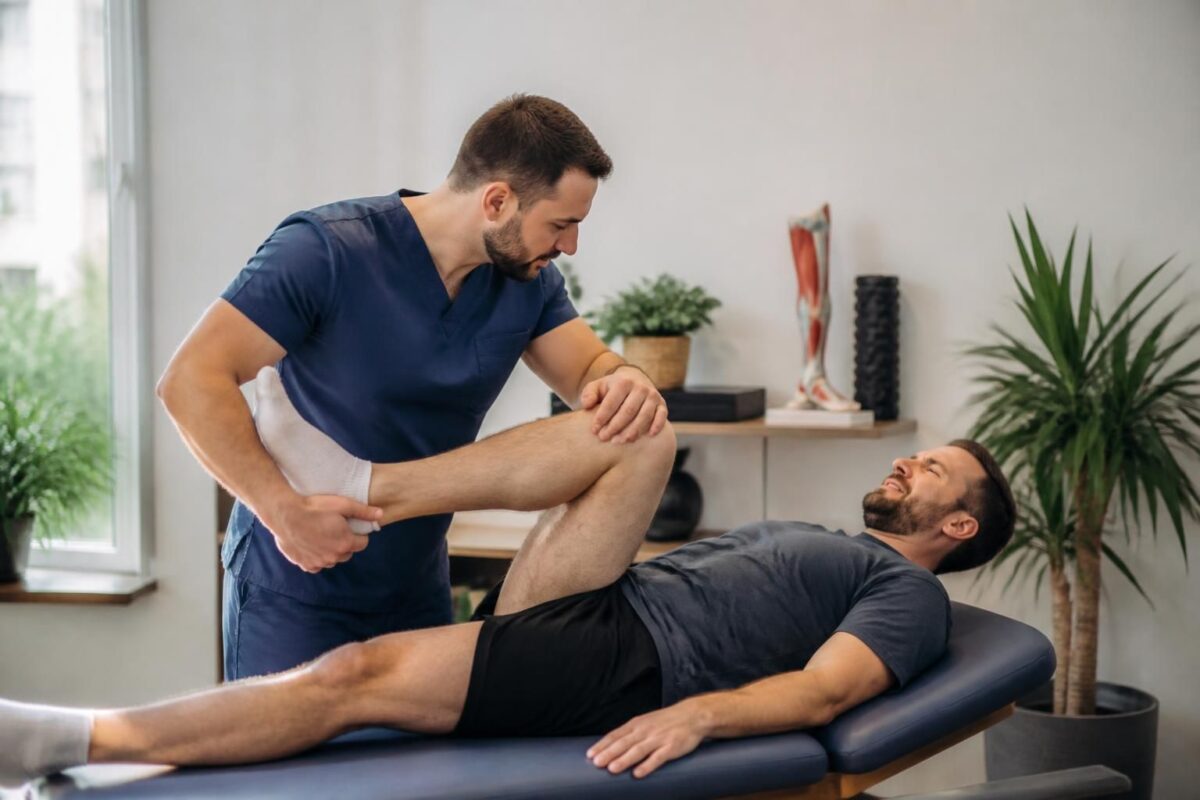
In short In short, Osteopathy is one Global manual approach aimed at reducing Chronic leg pain and improve the quality of life. What is it? Non-drug therapy using the hands to identify restrictions and treat lesional chains. How does it…
Prevent MSDs with Osteopathy
Prevention requires an analysis of the interactions between sinews, joints, fascias and connective tissues to identify areas of tension and compensatory mechanisms that settle over time. By working on mobility Articulatory and movement restrictions, the osteopath seeks to reduce mechanical loads which, in the long term, favor MSDs.
On a daily basis and at work, the objective is to adopt a correct posture And some Adapted gestures to limit repeated microtraumas. In practice, this can go through practical advice, simple exercises strengthening and ofstretch, and better coordination of musculoskeletal chains to prevent chronic tension.
Prevention is also based on education and self-management. By learning to recognize early tension and pain signals, patients can correct their habits, modify certain movements and integrate active breaks in their day. This proactive approach helps to reduce the risk of progression towards Chronic pain and functional limitations.
For professional environments, osteopathy integrates with prevention systems in business. The analysis of workstations, technical gestures and repetitive loads makes it possible to adapt tasks and propose targeted preventive exercises. This approach aims to preserve the physical capital of employees and to promote a better quality of life at work.
Additional resources make it possible to deepen these notions and to explore the benefits of osteopathy on MSD prevention. For example, you can check out explanations of how osteopathy improves musculoskeletal health, supports active aging and helps prevent joint pain and work-related MSDs by reading the content available on the recommended sites. To access this information, follow these relevant links: Comment#ATFP_CLOSE_TRANSLATE_SPAN# Osteopathy improves musculoskeletal health, Comment#ATFP_CLOSE_TRANSLATE_SPAN# Osteopathy supports active aging, Osteopathy#ATFP_CLOSE_TRANSLATE_SPAN# in prevention of work-related MSDs, and Comment#ATFP_CLOSE_TRANSLATE_SPAN# Osteopathy helps prevent MSDs.
In addition, specialized resources highlight how osteopathy can support MSD prevention and maintain body balance, emphasizing the need for a multidisciplinary approach and an appropriate exercise program. To access these perspectives, consult in particular the pages dedicated to body balance and MSD prevention on the reference sites mentioned.
Finally, prevention is reinforced by practical advice accessible to all: Adapted physical activity, Postural education, and gradual resumption of activities after a period of inactivity. The goal is to maintain a Balanced muscle function And to offer the body the tools necessary to sustainably resist professional and daily constraints.
To deepen the exchanges and concrete approaches, also discover the resources that highlight the benefits of osteopathy to treat and prevent MSD-related pain, and the importance of a restored body balance by personalized techniques and active listening to the patient. You will find practical examples, exercises and recommendations adapted to different professional and personal environments.
How osteopathy supports recovery after complex surgery
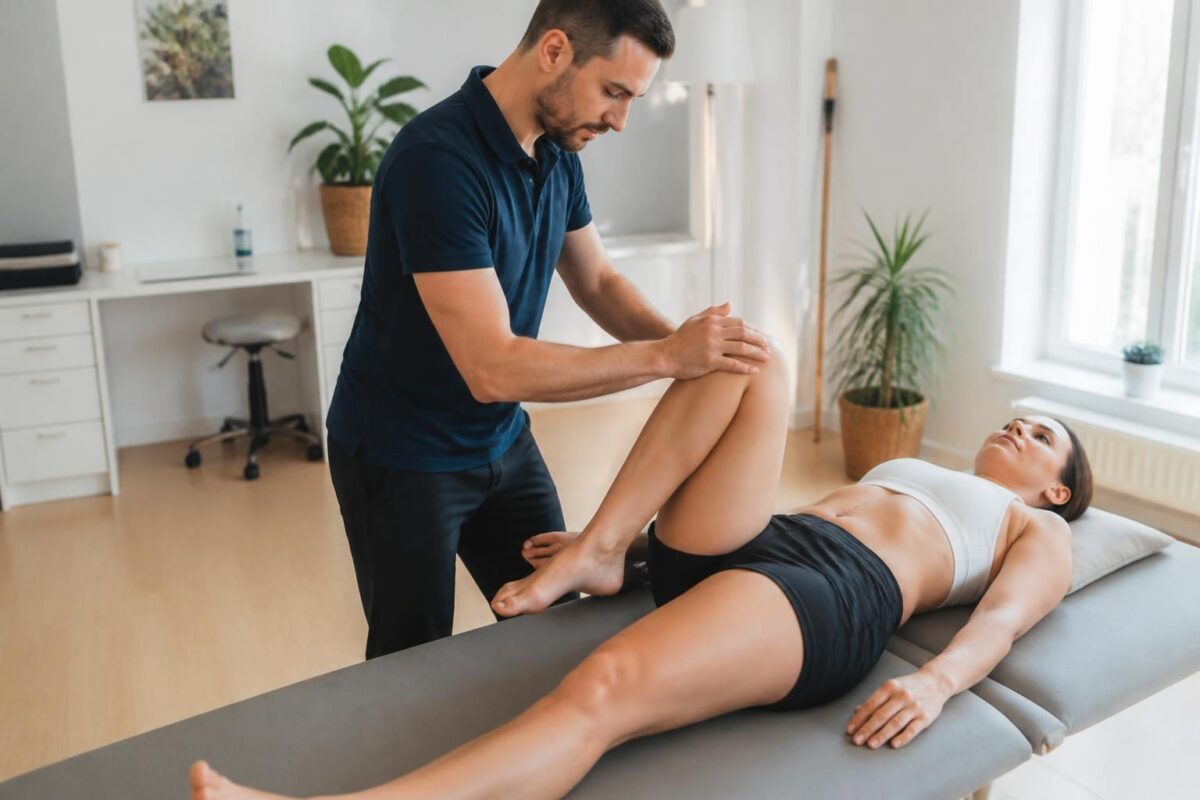
In short In short, Post-operative osteopathy is an approach fresh which supports the recovery After a Complex surgery. It helps to reduce the pain and the fatigue, improves the mobility and accelerates the healing thanks to a better vascularization and…

Dr Sylvain Desforges, B.Sc., D.O., N.D., osteopath, is the founding president of TAGMED and of the ACMA association. He dedicates his practice to chronic spinal pain, low back pain and symptoms compatible with sciatica, particularly when pain radiates toward the buttock, leg, calf, foot or toes.
Through SOS Sciatique, he publishes educational content on sciatica symptoms, possible causes such as disc herniation, disc narrowing, foraminal stenosis or irritation of a lumbar nerve root, as well as non-surgical approaches that may be considered according to the evaluation. At Clinique TAGMED, care may include, depending on the case, motorized neurovertebral decompression, specific osteopathic care or precision percussion.
For an evaluation related to sciatica treatment in Montreal / Mount Royal or sciatica treatment in Terrebonne, please consult the services available at Clinique TAGMED.
Medical disclaimer
The information published on SOS Sciatique is provided for educational purposes only and does not replace a consultation, diagnosis, opinion or treatment provided by a physician or another authorized healthcare professional. The author of this article is neither a medical doctor nor a specialist in a medical specialty recognized by the Collège des médecins du Québec. The osteopathic, manual medicine or functional support approaches described on this site do not constitute medical acts and are not intended to replace medical follow-up.
Consult a physician or emergency service in cases of loss of bladder or bowel control, anesthesia in the saddle area, significant or progressive weakness in the leg or foot, fever, recent trauma, severe pain or rapid worsening of symptoms. For more details, please read our Legal Notice.