How Osteopathy Helps Prevent Chronic Disorders
27/06/2026
Osteopathy and joint mobility: maintain optimal health
27/06/2026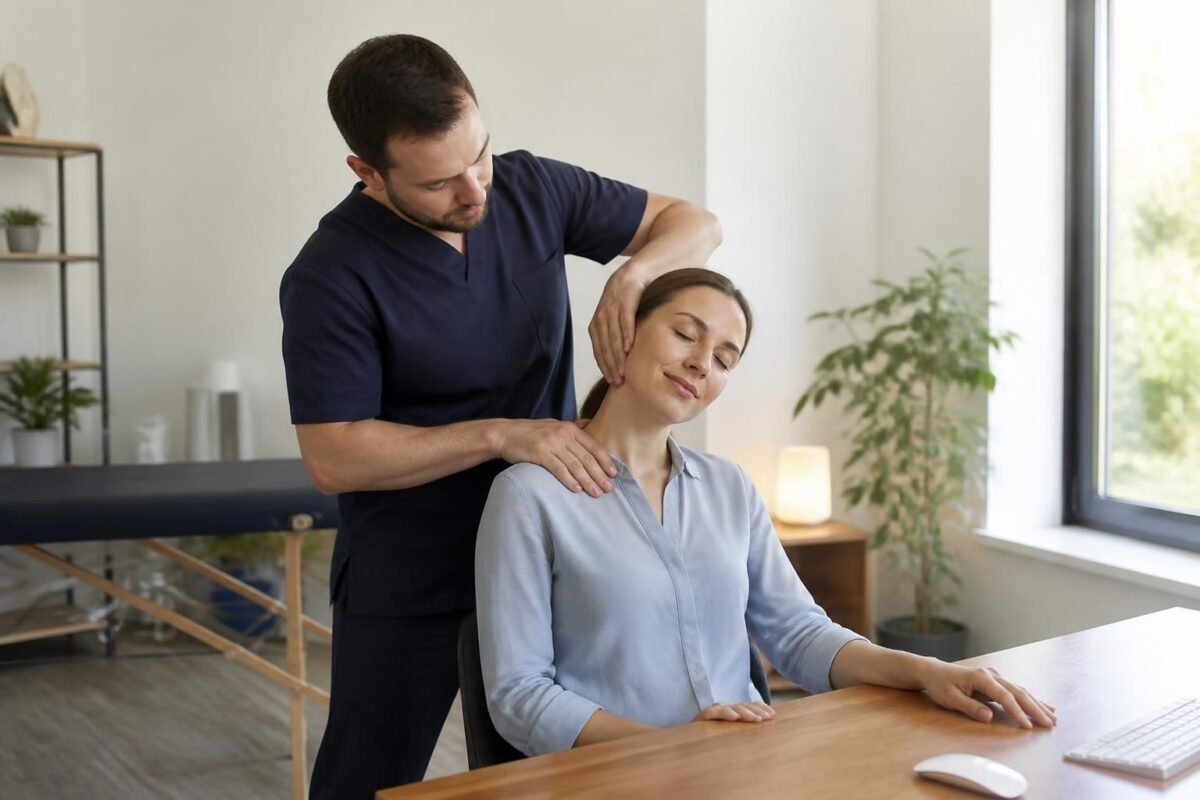
In short
| In short, theosteopathy for the Pain related to repetitive work is an approach natural and global which prevents and treats MSD by actions adapted to the position. What is it? A manual therapy that analyzes the body as a whole to restore functional balance. What are the advantages? Reduction of lower back and cervical pain, better mobility, prevention of relapses and improvement of well-being and concentration at work, which supports productivity. How does it work? Quick diagnosis, on-site or in-office sessions, muscle awakening and postural advice, and training gestures and postures for the teams. Accessible in business, this approach promotes the good health of employees and can reduce absenteeism. |
For companies facing the repetitive work, osteopathy offers a solution preventive and healing Effective in reducing pain and improving employee well-being.
- MSD prevention Thanks to postural evaluations and appropriate gesture/posture advice, in order to avoid the appearance of pain related to repeated gestures.
- release of tensions and re-harmonization of the fascias by targeted techniques to reduce cervical, back and upper limb pain.
- Improving mobility and joint amplitude, reducing stiffness and restrictions related to the repetitiveness of tasks.
- stress reduction and better breathing, participating in faster recovery and better concentration at the post.
- slightest absenteeism and better productivity thanks to lasting comfort and proactive pain management.
To assess the specific needs of your teams, contact our on-site osteopathic intervention service.
Quick summary: Osteopathy is a manual approach that helps prevent and relieve Pain related to repetitive work. It acts on overload areas, muscles and joints, and on the nervous system to reduce tension and improve mobility. This article presents the mechanisms of action, the indications and the methods of implementation in the company.
Global action and mechanisms
theosteopathy offers an approach overall. It evaluates the body’s systems as a whole and identifies the underlying causes of pain. It acts on the muscle chains, joints and the nervous system to reduce pain and improve mobility. This intervention can prevent the onset of future pain and support the recovery process after repetitive over- solicitation.
Osteopathic diagnosis makes it possible to identify warning signals and prioritize needs. The treatment focuses on soft tissues, fascias and joint mobility in order to promote better circulation and recovery adapted to the pace of work.
Prevention of musculoskeletal disorders (MSDs)
Prevention is at the heart of the intervention. The osteopath offers targeted on-site sessions, morning muscle awakenings and ergonomic advice. Gestures and postures training strengthen good practices from the workstation. This can reduce the incidence of MSD and improve the quality of life at work.
For more information, see this article.
Pain management and curative approach
In case of pain, osteopathy offers appropriate care that aims to reduce tensions, restore mobility and support recovery. The work is done at the level of the fabrics and the circulation, with a personalized approach according to each employee and his professional situation.
Resources on the link between osteopathy, stress and pain: Osteopathy and stress.
Integration and implementation in business
Modalités pratiques
Osteopathic benefits in business can include on-site consultations, prevention programs and training. They adapt to the workforce and pace of the company and aim to improve the QVT and reduce absenteeism related to MSD.
Examples of interventions and useful links
Interventions may include muscle awakenings, targeted treatments during site visits, and personalized posture advice. To complete this information, see This article on the tensions linked to repetitive activities and Trapeze pain. You can also explore the services of the TagMed Clinic through this space.
For ergonomic aspects and recommended practices in business, some resources exist in the areas of osteopathy and ergonomics, in accordance with regulations and professional practice.
Medical Disclaimer: The information and advice provided on this site does not replace the health professional’s diagnosis or treatment. Please note that Dr. Sylvain Desforges osteopath is neither a doctor of medicine nor a doctor, and is not a specialist in a medical specialty as defined by the Collège des Médecins du Québec. Manual medicine, functional medicine and sports medicine as described on this site exclude any medical treatment or diagnosis made by a doctor or specialist doctor. Always consult your doctor for any medical questions. For more details, please read our full legal notice.
- Prevention of MSD Related to repetitive gestures
- Diagnosis targeted pain factors
- Correction of Repetitive postures and alignment
- training on gestures and adapted postures
- Sustainable pain prevention
- Relief rapid tension and pain
- reduction of the pain at the post
- Improvement of the mobility and from the posture
- moreenergy and of concentration
- reduction of theabsenteeism and better performance

This article explains how Osteopathy can treat and prevent Pain related to repetitive work, by acting on the root causes rather than on the symptoms alone. You will discover the mechanisms of action, the benefits for the employees and the practical recommendations to integrate this approach into your organization and sustainably improve the performance.

How osteopathy improves the quality of life of active people
In short In short, theosteopathy is a global approach that Optimizes mobility and the function of the body of ACTIVE PEOPLE, for a better quality of life. It helps prevent injury and reduce Musculoskeletal pain While promoting the Sports recovery.…
Understanding pain related to repetitive work and the role of osteopathy
An approach that goes beyond the symptom
In trades where gestures are repeated or postures are maintained for a long time, tensions accumulate in the muscles, joints and fascias. Osteopathy offers a global analysis of the body and targets dysfunctions that fuel pain, fatigue and loss of mobility, in order to prevent the appearance of greater disorders.
the mechanisms concerned
Pain related to repetitive work frequently arises from postural stresses, muscle overload and recurrent stress. The osteopathic intervention acts on the musculoskeletal chain, improves circulation and harmonizes fascia-joint ligament tensions. By working on breathing and the nervous system, it also helps to reduce stress and promote faster recovery after exercise.

Osteopathy and sports recovery: prepare the body for lasting performance
In short In short, Osteopathy and Sports recovery is one Global manual approach that sustainably prepares the body for the effort by restoring mobility and circulation After the effort. It is a discipline that acts on the sinews, the joints,…
Concrete benefits for employees and the company
MSD prevention and reduction
The prevention of musculoskeletal disorders involves targeted interventions and practical advice. Osteopathy Identifies the triggering factors (repetitive postures, poorly distributed loads, repetitive movements) and to make corrections, thus reducing the risk of absenteeism and occupational disease.
Improved mobility and comfort
By releasing tension and restoring the amplitude of the joints, osteopathy improves posture, reduces lower back, cervical and shoulder pain, and facilitates daily gestures. Employees gain in comfort, concentration and energy to accomplish their tasks without pain or excessive fatigue.
Why Osteopathy Is Essential For Recovery People
In short In short, Osteopathy in convalescence is an approach manual and holistic which helps to accelerate the recovery by restoring The balance, the mobility and a good circulation fabrics. it contributes to Reduce the pain, support the Back to…
How to integrate osteopathy in your organization
Business interventions
Services can be done on site, at times adapted to the company’s schedule, with individual consultations and short muscular awakenings. This accessibility promotes employee adherence and makes it possible to set up continuous and proactive prevention.
Training and postural support
Gestures and posture training sessions, associated with warm-up and reinforcement programs, complete the consultations. They make it possible to durably anchor good practices and reduce the tensions linked to repetitive gestures at the workstation.

Osteopathic manipulations to strengthen post-traumatic muscles
In short In short, Osteopathic manipulations for Strengthen post-traumatic muscles constitute a gentle manual approach aimed at restoring the mobility, reduce the pain and facilitate the Functional rehabilitation After a injury. What is Is it? A series of precise gestures…
Practical tips to maximize results
Action plan in 90 days
Gold medal for success: start with a quick diagnosis of the most exposed positions, schedule regular osteopathic visits, and support the teams with simple exercises to do in the office or at the workshop. Adjust the plan based on returns and activity spikes.
Monitoring and evaluation
Measure progress using simple indicators: decreased reported pain, reduced MSD-related stops and improved mobility. A quarterly balance sheet makes it possible to refine the actions, to extend the programs and to optimize the cost-benefit for the company.
| Aspect | Concise impact |
|---|---|
| pain reduction Related to repetitive work | Reduces pain intensity and frequency by improving mobility and reducing tension. |
| posture improvement and alignment | Reduces pain and prevents lumbar and cervical imbalances related to the desk. |
| MSD prevention and musculoskeletal disorders | Strengthens prevention mechanisms and promotes safer gestures and postures. |
| Flexibility and range of motion | Releases tension and improves the mobility of joints solicited by repetitive tasks. |
| Recovery and fatigue on stress | Promotes recovery, reduces fatigue and supports endurance at the position. |
| Stress management and breathing | Soothes the nervous system, improves breathing and helps manage stress. |
| Improved sleep and night recovery | Contributes to deeper sleep by reducing body tension. |
| Absenteeism and commitment at work | Reduces absenteeism and enhances team engagement and productivity. |
| Tracking customization and early diagnosis | Evaluates warning signals and defines an appropriate action plan for the job and the employee. |

Osteopathy and prevention of work-related musculoskeletal disorders
In short theosteopathy is one Manual approach that restores body balance and prevents MSD related to work. Its advantages: reduction of tension, improvement of mobility and prevention of chronic pain. She is preventive and healing, suitable for office and trades…
Testimonials on the benefits of osteopathy in the face of pain related to repetitive work
“After several months of repetitive gestures in the workshop, my Pain related to repetitive work took over and the quality of my sleep suffered. Since the sessions ofosteopathy, I found a posture More natural, less tension and better endurance at the end of my shifts. »
“Working on the keyboard all day, my wrists and neck made me suffer. theosteopathy Reliefed the tensions, improved my mobility and reduced my pain, which allowed me to stay focused all morning without this feeling of exhaustion that was accumulating. »
“In the production unit, repetitive gestures caused me migraines and dorsal stiffness. thanks to theosteopathy, my pain subsided, my breathing improved and my concentration returned to the best level. »
“As a manager, I observed a reduction in sick leave and a better atmosphere after the introduction of on-site osteopathic visits. the employees feel listened to and protected, and this is reflected directly on the prevention and the welfare global that gain in productivity. »
“A traveling salesman suffered from chest pain related to repeated journeys. theosteopathy allowed to release tension, improve sleep and regain sufficient mobility to keep pace with movement. »
Dr. Sylvain Desforges is a recognized expert in osteopathy, Naturopathy and manual medicine, founding president of TagMed and active within the ACMA association. His professional approach is part of a logic ofInnovation in care and integrated pain management, with a marked specialization in the accompaniment of chronic pain and the integration of advanced technologies, such as spinal decompression, treatments with laser and shock waves. Its mission is to provide support evidence-based In order to optimize the health and well-being of its patients, including employees exposed to repetitive motor and postural repetitions.
In the context of professional environments, theosteopathy is based on a systemic approach that analyzes the body as a whole to understand the origins of symptoms. This discipline mobilizes and adapts various techniques to intervene on functional dysfunctions and prevent their appearance. The objective is to maintain a biological balance conducive to sustainable performance, without systematically resorting to invasive or medicinal acts. Before any treatment, an accurate diagnosis is established, in order to identify warning signals and prioritize intervention needs, with the aim of sustainably improving the quality of life of employees affected by repetitive tasks.
For pain related to repetitive work, the benefits of osteopathy materialize on several levels. It helps to reduce muscle tension and restore the amplitude of the joints, which improves posture and blood circulation. By acting on fascias and breathing mechanisms, it helps to reduce physical and emotional stress, thus improving the breathing and sleep. In practice, this results in less lower back and cervical pain, better tolerance to repetitive gestures and faster recovery after intense work.
In companies, the osteopathic intervention can take the form of regular on-site sessions, prevention actions and training targeted on gestures and postures at the workstation. This approach aims to prevent musculoskeletal disorders (MSD) to support employees exposed to repeated movements and to preserve their welfare General. The objective is to promote a balance between work performance and physical health, in order to reduce absenteeism and improve daily motivation and effectiveness.
By integrating osteopathy into an HR strategy focused on prevention and performance, organizations benefit from concrete leverage to preserve their human capital and optimize productivity. Dr. Desforges’ approach is thus a proactive and personalized response to the challenges posed by repetitive work, offering a path to a more dynamic, less painful and better aware of its functional silhouette. For companies concerned about the health and performance of their employees, osteopathic intervention remains an effective and sustainable solution to improve the social climate and operational efficiency.
This summary highlights the advantages of Osteopathy Faced with pain related to repetitive work, by showing how a global approach can prevent musculoskeletal disorders and sustainably improve well-being and performance within the company.

The benefits of osteopathy to treat muscle imbalances
In short theosteopathy is a manual approach to restore themuscle harmony and postural considering the body as a whole. Its main benefits include the reduction of aches and tensions, the improvement of the mobility and from the posture, and prevention…
Contributions of osteopathy in the face of pain related to repetitive work
Repetitive work and prolonged postures promote functional disorders, often in the form of lumbar, cervical or joint pain. Osteopathy Offers a comprehensive understanding of the causes and mechanisms that underlie these symptoms, starting from the body’s systems as a whole. This approach makes it possible to identify warning signals and prioritize interventions to target tensions and dysfunctions before they get worse.
Thanks to specifically adapted techniques, the osteopath can mobilize and release tension in the fascias, muscles and joints, while promoting better circulation and more effective breathing. This helps to restore joint amplitudes, reduce pain and prevent the onset of Chronic pain related to repetitive work. To deepen the mechanisms and benefits, you can consult specialized resources on this subject.
Prevention is at the heart of osteopathic action in the professional environment: it involves an initial diagnostic evaluation, then personalized measures aimed at correcting postures, optimizing professional gestures and offering practical advice to limit repetitive constraints. By relying on a proactive approach, osteopathy can become a lasting lever for reducing discomfort and absenteeism linked to MSDs.
Osteopathy and chronic leg pain: regaining an optimal quality of life
In short In short, Osteopathy is one Global manual approach aimed at reducing Chronic leg pain and improve the quality of life. What is it? Non-drug therapy using the hands to identify restrictions and treat lesional chains. How does it…
Business integration and concrete actions
Implementing osteopathy in the company is divided into several levers: On-site consultations regular, programs of muscle awakening before risk positions, and Gestures and posture training intended to raise awareness among employees as soon as they arrive at their position. These approaches make it possible to act upstream of pain and to strengthen the quality of life at work.
Adapted services can be offered on an ad hoc basis during well-being events or safety days, or in the form of regular planning according to needs and staff. The objective is to reduce accumulated tensions, promote mobility and improve concentration and productivity on a daily basis. To learn more about experiences and benefits in the professional setting, see the resources below.
Additional resources and feedback: Osteopathy in business, Benefits on repetitive work pain, How osteopathy acts on chronic postural imbalances, Osteopathy in business and TMS
At the same time, resources explain how Osteopathy can promote better muscle flexibility, help manage stress and support breathing, key elements to prevent the effects of repetitive work on the body.
How osteopathy supports recovery after complex surgery
In short In short, Post-operative osteopathy is an approach fresh which supports the recovery After a Complex surgery. It helps to reduce the pain and the fatigue, improves the mobility and accelerates the healing thanks to a better vascularization and…
Impact on performance and social climate
Investing in osteopathy in the company makes it possible to reduce the incidence of repetitive work pain and to improve the social climate by demonstrating the attention paid to the health of employees. Less painful and better posture employees have better concentration, stress reduction and increased ability to maintain energy throughout the day. This approach can also enhance the attractiveness and loyalty of talent, while contributing to operational stability and reduction of absenteeism.
The implementation of an integrated osteopathic system can be personalized according to trades and positions, with interventions that evolve over the seasons and workloads. For employers, it is a concrete approach to prevention and well-being, which is fully in line with a strategy of quality of life at work and corporate social responsibility.
To open the discussion on a solution adapted to your structure, discover the testimonies and analyzes available in the resources mentioned above and consider osteopathic care adapted to your employees and your most exposed positions.

Dr Sylvain Desforges, B.Sc., D.O., N.D., osteopath, is the founding president of TAGMED and of the ACMA association. He dedicates his practice to chronic spinal pain, low back pain and symptoms compatible with sciatica, particularly when pain radiates toward the buttock, leg, calf, foot or toes.
Through SOS Sciatique, he publishes educational content on sciatica symptoms, possible causes such as disc herniation, disc narrowing, foraminal stenosis or irritation of a lumbar nerve root, as well as non-surgical approaches that may be considered according to the evaluation. At Clinique TAGMED, care may include, depending on the case, motorized neurovertebral decompression, specific osteopathic care or precision percussion.
For an evaluation related to sciatica treatment in Montreal / Mount Royal or sciatica treatment in Terrebonne, please consult the services available at Clinique TAGMED.
Medical disclaimer
The information published on SOS Sciatique is provided for educational purposes only and does not replace a consultation, diagnosis, opinion or treatment provided by a physician or another authorized healthcare professional. The author of this article is neither a medical doctor nor a specialist in a medical specialty recognized by the Collège des médecins du Québec. The osteopathic, manual medicine or functional support approaches described on this site do not constitute medical acts and are not intended to replace medical follow-up.
Consult a physician or emergency service in cases of loss of bladder or bowel control, anesthesia in the saddle area, significant or progressive weakness in the leg or foot, fever, recent trauma, severe pain or rapid worsening of symptoms. For more details, please read our Legal Notice.