
Osteopathic techniques to improve athlete performance
27/06/2026
Osteopathy and inflammation: soothe the painful joints
27/06/2026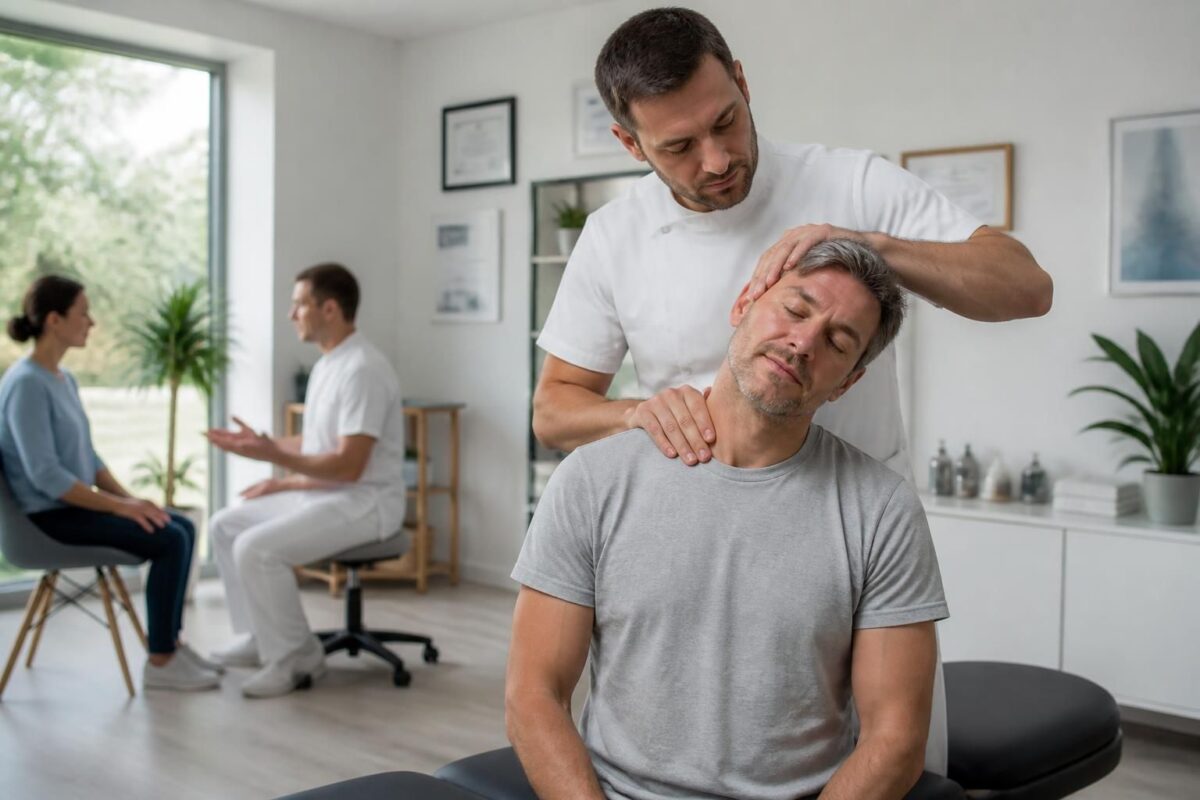
In short
| In short, theosteopathy is one Global manual approach for the Chronic pain which aims to release tension, Restore mobility and modulate the pain. Its benefits main include a Sustainable reduction painful intensity, posture improvement and an decrease in drug consumption, all without surgery. How does it work? The practitioner performs a Overall assessment, use Gentle techniques and adjusts the treatment to the evolution of symptoms to promoteself-regulation of the body. This Complementary therapy to the conventional medicine can be practiced in the office or in consultation at home, offering a Durable solution for the back pain, the neck pain and the Migaines related to stress. |
Here’s why theosteopathy Maybe a Durable solution for the Chronic pain :
- Global approach and personalized that identifies root causes rather than just treating local pain.
- of Manual techniques gentle targeting fascias, muscles and nervous system to reducehypertonia and restore the mobility.
- Results often durable With a functional improvement and a decrease in pain over the long term, especially with regular sessions.
- An approach non-drug and preventive who can join a Adapted physical activity and a better ergonomy.
- Accessibility in office or at home, with personalized follow-up and possible coordination with other health professionals.
This article, written by an expert in osteopathy, explains why osteopathy can offer a lasting solution for chronic pain. The approach focuses on the causes, not just the symptoms. It relies on simple manual techniques and personalized follow-up to improve mobility and quality of life.
Mechanisms of action of osteopathy
Osteopathy acts on several levels. Manual work aims at the Fascia relaxation and the reduction ofMuscle hypertonia. It also helps to modulate the pain via the nervous system. the techniques remain sweet and rely on a Global approach to the body.
Mechanisms explain why painful symptoms are decreasing in many people sustainably. Work on tissues and joints improves mobility and can promote better postural comfort. These effects are observed especially when the sessions are regular and adapted to the evolution of pain.
Efficacy and clinical evidence
Current research shows encouraging results, especially for chronic >chronic lumbar pain< and neck pain. Osteopathy contributes to pain reduction and to a Functional improvement measurable. Some studies point out that the benefits persist several weeks after the sessions.
The results vary according to the individual and the exact nature of the pain. A global approach, with regular sessions, increases the chances of a lasting result. The available data supports the idea that osteopathy can be useful in chronic pain when patients remain active and follow the advice of the practitioner.
Overall approach and chronic pain prevention
Osteopathy is not intended to replace medical treatments. It is part of a comprehensive pain management strategy. The practitioner evaluates the body as a whole and can offer advice on posture, breathing and movement habits. This holistic vision helps prevent recurrences and improve overall well-being.
Most patients report better pain control after several sessions. The goal is to establish a positive dynamic that contributes to better functional capacity and a gradual reduction in the intensity of symptoms.
Accessibility and consultation methods
Patients can access osteopathy in office, at home or via hybrid consultations. This flexibility facilitates access to care, especially for people with severe chronic pain or limited mobility. The availability of various options allows you to maintain regular and personalized follow-up.
Modern approaches take into account everyone’s reality. The choice of the mode of consultation depends on the patient’s preferences and their practical situation. Personalized support remains the central objective.
Quality of training and choice of practitioner
The quality of theeducation and training is essential. In the context of osteopathy, professionals can come from recognized establishments such as NUMSS, nao, the National University of Medical Sciences and the National Academy of osteopathy. The practitioner must be registered in the appropriate register and have solid clinical experience.
When choosing an osteopath, check theProfessional ethics and the transparency of the evaluation. A good osteopathy begins with a clear interrogation, an explanation of the gestures performed and the patient’s consent. If you feel an aggravation after a session, contact your practitioner and your attending physician.
Safety and collaboration with the healthcare system
Handling safety is high when performed by a trained practitioner. Osteopathy does not replace medical treatment. It can be integrated into a multimodal approach, alongside other therapies when relevant. In case of warning signs, a doctor should be consulted quickly.
For pain associated with specific conditions such as joint pain or functional disorders, osteopathy may be associated with other approaches depending on the indications. The practitioner works in collaboration with the patient to optimize comfort and mobility.
To deepen the benefits and mechanisms of osteopathy, you can consult dedicated resources at the following sites: Osteopathy#ATFP_CLOSE_TRANSLATE_SPAN# and chronic shoulder pain – natural approach, Comment#ATFP_CLOSE_TRANSLATE_SPAN# Osteopathy reduces pain related to poor posture, Last#ATFP_CLOSE_TRANSLATE_SPAN# Scientific data on chronic pain, Osteopathy#ATFP_CLOSE_TRANSLATE_SPAN# and chronic pain management, Osteopathy#ATFP_CLOSE_TRANSLATE_SPAN# and overall well-being – personalized approach.
For the treatment of pain related to sciatica and other specific conditions, it is advisable not to recommend exercises or stretching without personalized medical advice. Relevant references on the areas of osteopathy and associated conditions can be viewed through the following resources: Pain#ATFP_CLOSE_TRANSLATE_SPAN# Cervical – Natural Solution, Shoulders#ATFP_CLOSE_TRANSLATE_SPAN# – Natural approach, Well‑Being#ATFP_CLOSE_TRANSLATE_SPAN# Global – Custom Approach.
To go further, additional resources on the mechanisms and results of osteopathy are available in the reference articles of the domains cited below: UNDERSTAND#ATFP_CLOSE_TRANSLATE_SPAN# Pain and Osteopathy, Osteopathy#ATFP_CLOSE_TRANSLATE_SPAN# and OA – Functional mobility, Pain#ATFP_CLOSE_TRANSLATE_SPAN# Cervical and Upper Body – Natural Approach.
Medical Disclaimer: The information and advice provided on this site does not replace the health professional’s diagnosis or treatment. Please note that Dr. Sylvain Desforges osteopath is neither a doctor of medicine nor a doctor, and is not a specialist in a medical specialty as defined by the Collège des Médecins du Québec. Manual medicine, functional medicine and sports medicine as described on this site exclude any medical treatment or diagnosis made by a doctor or specialist doctor. Always consult your doctor for any medical questions. For more details, please read our full legal notice.
Medical Disclaimer: The information and advice provided on this site does not replace the health professional’s diagnosis or treatment. Please note that Dr. Sylvain Desforges osteopath is neither a doctor of medicine nor a doctor, and is not a specialist in a medical specialty as defined by the Collège des Médecins du Québec. Manual medicine, functional medicine and sports medicine as described on this site exclude any medical treatment or diagnosis made by a doctor or specialist doctor. Always consult your doctor for any medical questions. For more details, please read our full legal notice.
- Global approach : Treats mechanical causes and tension chains, not just local pain.
- Gentle techniques : non-invasive manual gestures that restore mobility.
- Sustainable mobility : Continuous improvement in mobility and posture.
- liberation of the fascias : Improved circulation and tissue flexibility.
- Nervous system modulation : Reduced awareness and pain.
- Personalized follow-up : Adapted protocols and regular reassessments.
- Lifestyle : Advice posture, breathing and adapted physical activity.
- less drug addiction : progressive reduction of analgesics when possible.
- Multimodal approach : Complementarity with physiotherapy and other professionals.
- Prevention of recurrences : Regular maintenance and ergonomic advice.

This article explains why theosteopathy can represent a solution lasting For the pains chronicles Based on an approach overall, demonstrated physiological mechanisms and personalized follow-up. It highlights how regular and adapted sessions help to reduce pain sustainably, improve the mobility And to support an active resumption of daily life without drug dependence.
A global and sustainable approach
theosteopathy Considers the body as a functional unit where each region can influence another. This perspective overall Identifies root causes rather than treating the painful area only. A first in-depth consultation combines a anamnesis complete and palpatory assessments to adapt the techniques to each patient. The goal is to establish a progressive, safe and person-centric care plan to prevent relapses and sustainably improve daily comfort.
Personalized evaluation and security
The practitioner favors an approach fresh and respectful, focused on precise palpatory gestures and measurable results. This approach makes it possible to anticipate the effects and adjust the treatment according to the evolution of the symptoms, while remaining within the limits of each individual. The objective is to restore the possibilities of movement and to rebalance the muscle and tissue chains without unnecessary risks.

How osteopathy improves the quality of life of active people
In short In short, theosteopathy is a global approach that Optimizes mobility and the function of the body of ACTIVE PEOPLE, for a better quality of life. It helps prevent injury and reduce Musculoskeletal pain While promoting the Sports recovery.…

Osteopathy and sports recovery: prepare the body for lasting performance
In short In short, Osteopathy and Sports recovery is one Global manual approach that sustainably prepares the body for the effort by restoring mobility and circulation After the effort. It is a discipline that acts on the sinews, the joints,…
Mechanisms of action that support effectiveness
Action on tissues and the nervous system
Osteopathic techniques target fascias, muscles and joints to reduce tension and promote tissue rebalancing. This work manual Influences the nervous system, moderates painful signals and can reduce local inflammation. Result: a Improving mobility and a lasting decrease in painful intensity.
Impact on mobility and posture
By restoring amplitude of movement and correcting postural imbalances, osteopathy can correct strata of pain that extends over several areas of the body. This approach notably helps low back pain and neck pain as well as migraines linked to muscle tension, by promoting better harmony between the different physical structures.
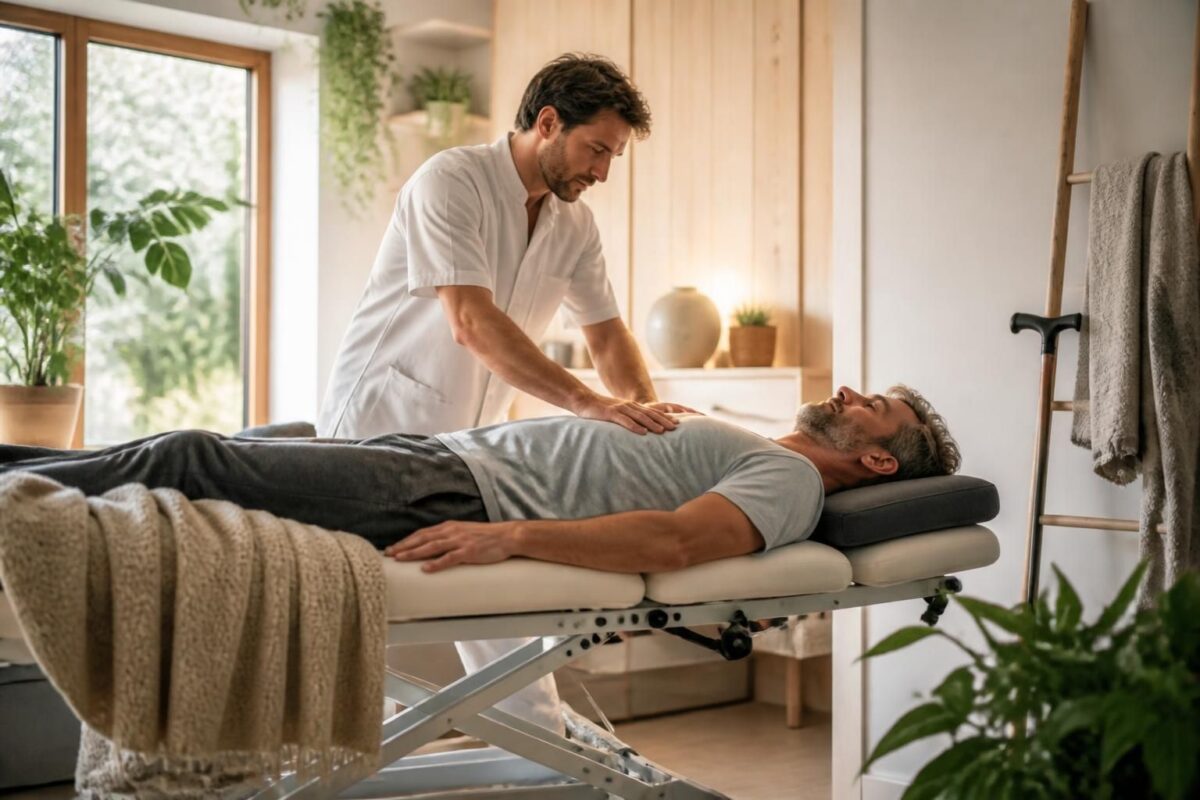
Why Osteopathy Is Essential For Recovery People
In short In short, Osteopathy in convalescence is an approach manual and holistic which helps to accelerate the recovery by restoring The balance, the mobility and a good circulation fabrics. it contributes to Reduce the pain, support the Back to…

Osteopathic manipulations to strengthen post-traumatic muscles
In short In short, Osteopathic manipulations for Strengthen post-traumatic muscles constitute a gentle manual approach aimed at restoring the mobility, reduce the pain and facilitate the Functional rehabilitation After a injury. What is Is it? A series of precise gestures…
Rhythm of care and personalized follow-up
Optimal results are generally obtained with a progressive plan of sessions adapted, often 3 to 6 in the initial phase. Each appointment allows you to evaluate the response, adjust the techniques and plan interview sessions. The duration and frequency depend on the age of the pain, lifestyle and recovery abilities of each. The objective is to accompany sustainably, not to promise instant healing.

Osteopathy and prevention of work-related musculoskeletal disorders
In short theosteopathy is one Manual approach that restores body balance and prevents MSD related to work. Its advantages: reduction of tension, improvement of mobility and prevention of chronic pain. She is preventive and healing, suitable for office and trades…

The benefits of osteopathy to treat muscle imbalances
In short theosteopathy is a manual approach to restore themuscle harmony and postural considering the body as a whole. Its main benefits include the reduction of aches and tensions, the improvement of the mobility and from the posture, and prevention…
Osteopathy in addition and way of life
Osteopathy is a Non-medicated option which fits perfectly into a multimodal strategy. Combined with physiotherapy, posture advice and exercisesAdapted physical activity, it helps to reduce symptoms while strengthening body resilience. The psychocorporal approach, including breathing and stress management techniques, also improves the experience of pain and promotes lasting well-being.
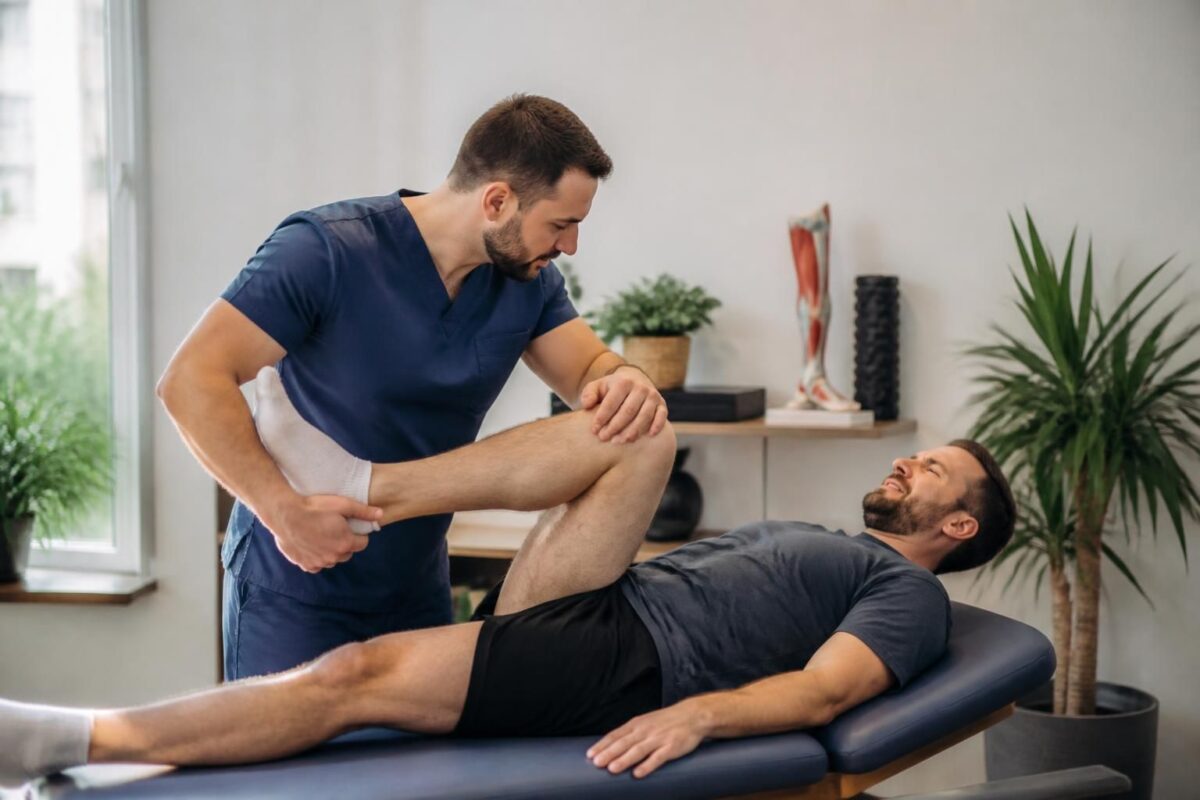
Osteopathy and chronic leg pain: regaining an optimal quality of life
In short In short, Osteopathy is one Global manual approach aimed at reducing Chronic leg pain and improve the quality of life. What is it? Non-drug therapy using the hands to identify restrictions and treat lesional chains. How does it…
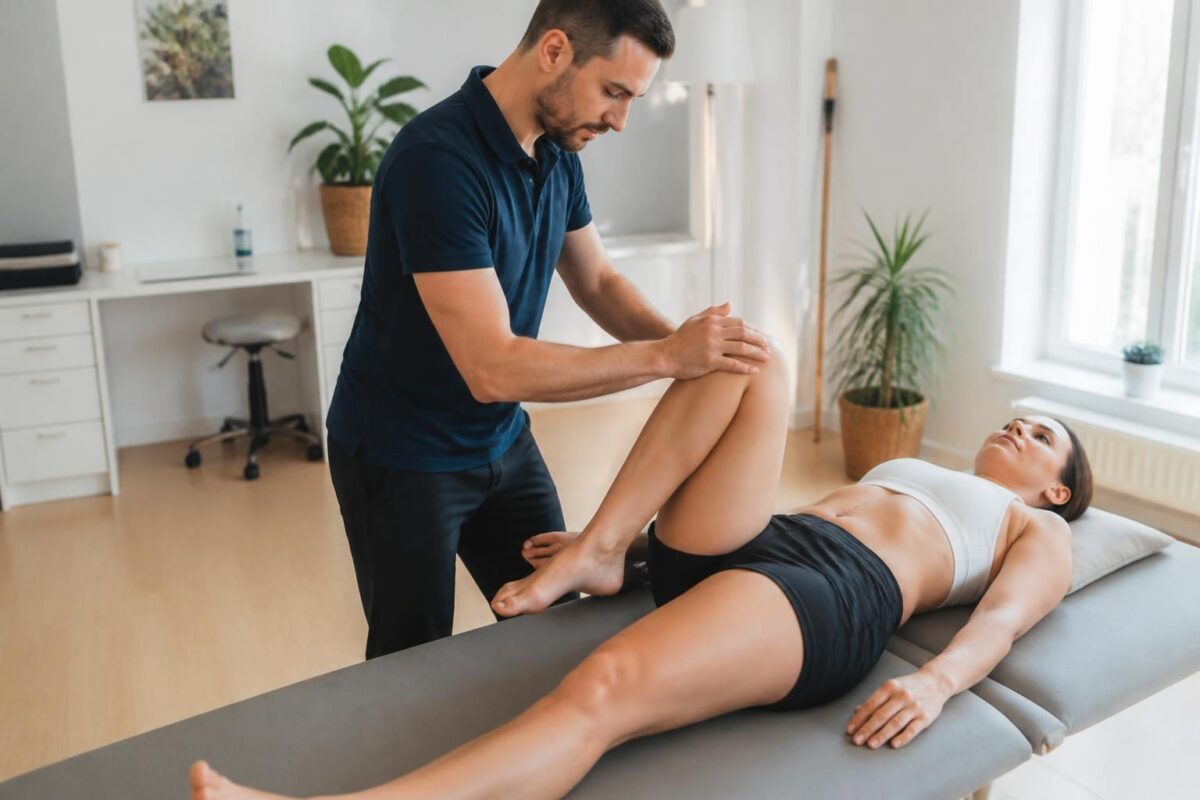
How osteopathy supports recovery after complex surgery
In short In short, Post-operative osteopathy is an approach fresh which supports the recovery After a Complex surgery. It helps to reduce the pain and the fatigue, improves the mobility and accelerates the healing thanks to a better vascularization and…
Practical settings for choosing a practitioner
To maximize the chances of a lasting result, favor an osteopath qualified and experimented, registered in the register and transparent on its protocol. Avoid unrealistic promises and favor progressive care, adapted to your context. Cost and reimbursement methods vary, but personalized support and continuity of care remain the pillars of an effective and sustainable journey.
| Aspect | demonstrative elements |
|---|---|
| Global approach and prevention of recurrences | treat the Musculoskeletal chain and correct the postures, reducing triggers and recurrences. |
| Mobility and comfort | Restore it mobility, improves the Postural comfort and decreases tension. |
| pain reduction and Less medication | Decreases thepainful intensity and can reduce drug dependence as appropriate. |
| The nervous system and mechanoreceptors | stimulation of mechanoreceptors, Pain modulation and relaxation of autonomic nervous system. |
| Multimodal approach | Encourage theAdapted physical activity and collaboration with the physiotherapist and the doctor. |
| Processing progress | Progressive protocol with 3 to 4 initial sessions, then maintenance. |
| Security and tolerance | manipulation safe When done by a professional, with few side effects. |
| Personalization | Overall assessment and Adaptation of techniques to each patient. |
| Accessibility and cost | Cost per session and Mutual options, consultation in office or at home. |
“After years of lower back pain, osteopathy brought me a Sustainable reduction symptoms thanks to a Global approach of the body and Adapted techniques, without drug addiction. »
“What makes the difference is the regularity : regular sessions make it possible to restore the mobility and improve the posture, which gradually decreases the migraines related to stress. »
“TheFull assessment From the first consultation andAdaptation of techniques made my pain not come back suddenly. It is an approach that acts on the causes And not just about the pain, which makes it lasting. »
“For me, osteopathy is a Durable solution Because it is part of a Multimodal strategy : it corrects mobility and is accompanied by exercises andAdapted physical activity to maintain results. »
“patient testimony and measurable progress demonstrate that results are maintained When following a Personalized follow-up And let’s stay committed. Osteopathy does not cure everything, but it offers a solid foundation for longevity benefits. »
“I was able to resume my Daily activities — Walking, gardening, sport — painless after a few weeks. This proves that the effects are durable and functional. »
“Even when the pain persists, osteopathy offers a framework for Progressive follow-up which evolves with the symptoms, leading to a Sustainable reduction intensity and limitations. »
“In a responsible approach, osteopathy, practiced by a Experienced professional, integrates with a Multimodal strategy and offers a Sustainable alternative to medication for chronic pain. »
Established as an expert in osteopathy, naturopathy and manual medicine, this health care approacher works for solutions that are anchored in the long term. Founding president of TagMed and the ACMA association, he has a vision centered on the coordination of knowledge and continuity of care. His practice focuses on chronic pain management and integrating modern tools to optimize the health and well-being of patients. The common thread of his work is to offer evidence-based support, adapted to each individual and scalable over time.
Osteopathy is based on a Global vision of the body, where localized pain may reflect distant imbalances. The in-depth evaluation makes it possible to identify the primary dysfunctions and not only to treat the symptom. This approach, articulated around an active dialogue with the patient, favors an understanding of postural habits, muscle tension, joint limitations and psychological factors that maintain pain. This personalized approach is part of a sustainable strategy rather than an ephemeral solution.
In terms of mechanisms of action, osteopathy acts by Soft manual techniques that target fascias, muscles and joints to promote relaxation, reharmonization of tension and mobility. By modulating the nervous system and improving tissue circulation, it helps to reduce hypertonia and reduce painful signals. The objective is not only to relieve, but to improve the body’s self-regulation mechanisms, so that the body can self-repair and maintain the gains obtained between sessions.
Recent clinical data highlight encouraging results for lower back and cervical pain, as well as for certain functional and headache disorders related to muscle stress. The strength of osteopathy lies in its ability to obtain Sustainable improvements When the sessions are regular and adapted to the evolution of the symptoms. This dynamic, combined with patient education on posture, daily activities and beneficial movements, contributes to preventing recurrences and prolonging well-being.
In addition to conventional medical treatments, osteopathy offers an approach multimodal and progressive. Each session is part of a personalized follow-up framework, which can include breathing tips, mobility exercises and ergonomic recommendations. The therapeutic relationship favors listening, safety and respect for individual limits, which reinforces adherence to the protocol and the chances of lasting results.
Complementary technologies can enrich the support when necessary. Advanced approaches, such as decompression protocols or complementary therapies, support when the context justifies it, while remaining complementary to the manual intervention. The objective remains clear: to offer a sustainable strategy to reduce pain, improve function and restore quality of life, while remaining attentive to accessibility and patient safety.
For those looking for appropriate care, a first consultation allows you to draw up a personalized and realistic plan, with clear objectives in the long term. With the orientation towards TagMed and its services, the objective is to build a trajectory of care that sustainably supports mobility, posture and general well-being, without excessive drug dependence.
In short, theosteopathy appears as a lasting solution for Chronic pain By acting on the whole body thanks to a Overall assessment and adapted manual techniques. It aims to reduce pain and improve mobility Without systematic use of drugs, with observable benefits in low back pain and neck pain, stress-related migraines and other functional disorders when the sessions are regular and adjusted to the evolution of symptoms.
Synthesis
The mechanisms of action of osteopathy are based on the Fascia relaxation, the decrease inMuscle hypertonia and the Pain modulation via the nervous system. In practice, osteopaths use various manual techniques that favor an approach overall body, rather than treating the painful area isolately. This integrated vision makes it possible to individualize the therapeutic gestures according to the chains of tension and the tissue imbalances found on the examination.
Clinical data show significant progress for Chronic low back pain, the neck pain and the headaches linked to muscle tension, with improvements that are often observable from the first sessions and which are maintained when the treatment is continued over time. Recent analyzes indicate that, in a majority of patients with persistent low back pain, osteopathy can provide moderate to significant, lasting relief over 3 to 6 months after treatment, in a personalized and progressive management framework.
This approach is also associated with a measurable improvement in the Joint mobility, better posture and reduction of local inflammation thanks to gentle and appropriate techniques. Patient testimonials often underscore a lasting pain reduction, complemented by a better quality of life and greater confidence in their physical and daily abilities.
Osteopathy is not a panacea or a replacement for conventional medicine, but a therapy complementary and non-drug which is part of a multimodal strategy. Each consultation includes an in-depth assessment, tissue work and, where appropriate, posture, breathing and daily mobility advice. This complementarity is particularly useful when the pain becomes chronic and requires progressive monitoring over several weeks or months.
People often choose between in-office consultation, home care or hybrid support, which facilitates access to care and makes it possible to adapt the therapeutic path to lifestyle and patient mobility. The effectiveness and safety of handling is associated with the training and experience of the practitioner; It is essential to opt for a qualified and recognized osteopath, in order to optimize the benefits and limit the risks.
To enrich your understanding and access additional resources, you can consult these links: Why osteopathy is a lasting solution for chronic pain, Osteopathy and chronic pain — a lasting solution, Osteopathy — Sustainable solution for chronic pain, Essential osteopathy for an active and painless life, Osteopathy and overall health, Osteopathy and posture — Active patients, Osteopathy and recovery after a fracture, Osteopathy and neuropathic pain, Osteopathy and sports recovery — Performance, Osteopathy — Effectiveness for chronic pain.

Dr Sylvain Desforges, B.Sc., D.O., N.D., osteopath, is the founding president of TAGMED and of the ACMA association. He dedicates his practice to chronic spinal pain, low back pain and symptoms compatible with sciatica, particularly when pain radiates toward the buttock, leg, calf, foot or toes.
Through SOS Sciatique, he publishes educational content on sciatica symptoms, possible causes such as disc herniation, disc narrowing, foraminal stenosis or irritation of a lumbar nerve root, as well as non-surgical approaches that may be considered according to the evaluation. At Clinique TAGMED, care may include, depending on the case, motorized neurovertebral decompression, specific osteopathic care or precision percussion.
For an evaluation related to sciatica treatment in Montreal / Mount Royal or sciatica treatment in Terrebonne, please consult the services available at Clinique TAGMED.
Medical disclaimer
The information published on SOS Sciatique is provided for educational purposes only and does not replace a consultation, diagnosis, opinion or treatment provided by a physician or another authorized healthcare professional. The author of this article is neither a medical doctor nor a specialist in a medical specialty recognized by the Collège des médecins du Québec. The osteopathic, manual medicine or functional support approaches described on this site do not constitute medical acts and are not intended to replace medical follow-up.
Consult a physician or emergency service in cases of loss of bladder or bowel control, anesthesia in the saddle area, significant or progressive weakness in the leg or foot, fever, recent trauma, severe pain or rapid worsening of symptoms. For more details, please read our Legal Notice.