Osteopathy and joint mobility: preserve flexibility
28/06/2026
Osteopathy and recovery after intense physical exertion
28/06/2026
In short
| In short, the Osteopathic techniques for the Lower limb pain use approaches soft tissues, structural, functional and visceral In order to improve mobility and reduce pain in the joints of the knee, from the ankle, of foot and from the hip. They aim to relieve frequent patterns such as tendinitis and osteoarthritis, and are practiced via gentle manipulations and appropriate joint corrections, which allows rapid management, in particular to Paris. |
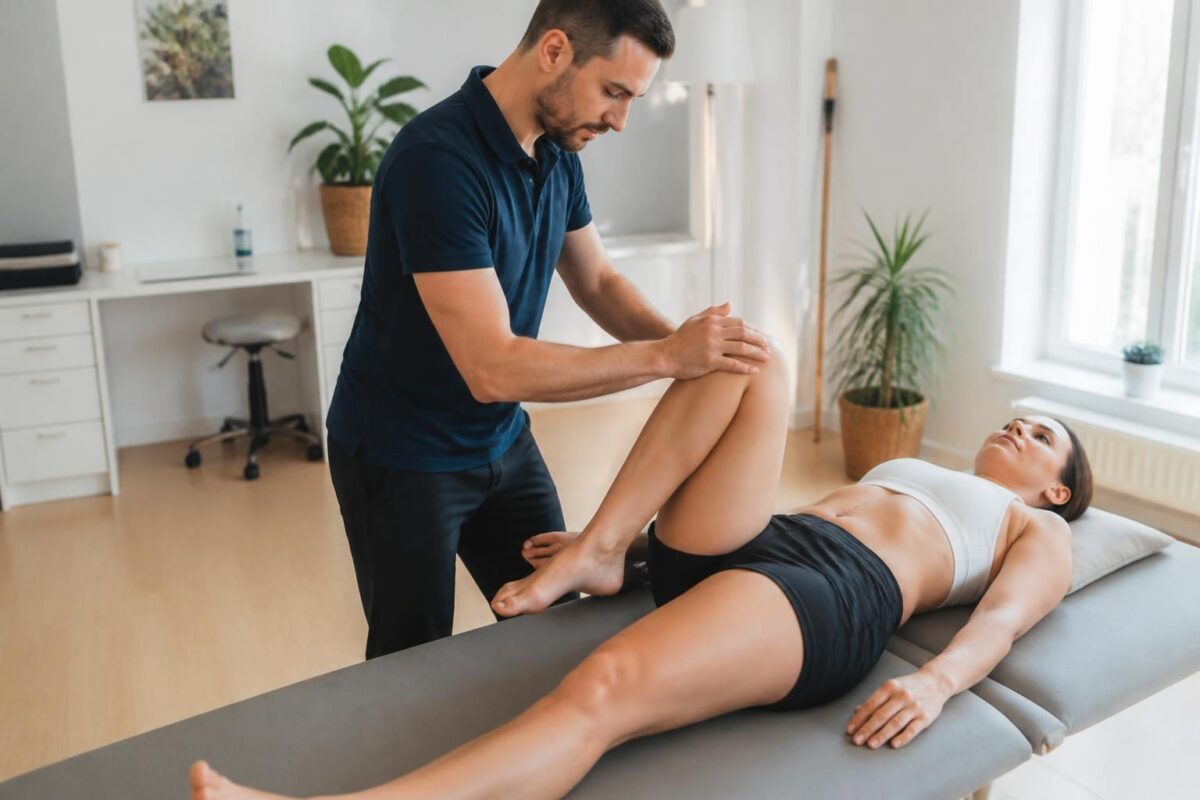
The Osteopathic techniques For the pains of lower limbs are based on a global and gentle approach to restore mobility and the stability Joints and tissues around the hips, knees, ankles and feet.
- soft tissues and myotensive To release contractures and tensions around the joints of the lower limbs.
- Structural techniques (joint manipulations) to correct the blocks and regain a fluid movement of the joints.
- Functional techniques gentle and atraumatic aimed at rehabilitating proprioception and neuromuscular functioning.
- Visceral techniques light to optimize the relationships between the pelvic organs and the locomotor function.
Common indications: pain of hip, basin, thigh, patella, knee, ankle and foot, tendinitis, pain related to repeated gestures, sprains and osteoarthritis. Leg pain can sometimes be associated with a narrow lumbar duct and improve with an appropriate osteopathic approach.
In addition to other therapies, osteopathy can offer targeted and rapid relief for the lower back and lower limbs and can often be considered without a prescription as the case may be. Make an appointment with a specialized osteopath to assess your situation and consider a suitable program, possibly including stretching and technical advice.
This article presents the osteopathic techniques used to treat pain in the lower limbs. He explains the indications, the mechanisms of action and the practical points to obtain a quick appointment with an osteopath. The approaches described are intended to improve the mobility of joints, muscles and surrounding tissues to reduce pain and promote return to function.
The four families of osteopathic techniques
Osteopaths use four major families of manual gestures. soft tissues and myotensive Release muscle and fascia mobility restrictions. Structural techniques use gentle joint manipulations to regain movement. Functional techniques Correct dysfunctions with specific positions and contractions. Finally, Visceral techniques Aim for the organs and their relationship with the musculoskeletal system. These approaches are chosen according to the evaluation and the objective is to improve mobility and reduce pain.
The mechanisms of action are based on the observation of mobility restrictions, the form-function relationship and the recalibration of proprioceptive receptors. The use of these techniques is done after a rigorous clinical evaluation adapted to each patient.
Hip and pelvis pain
The hip pain May come from osteoarthritis, joint blockage or muscle imbalance around the pelvis. Osteopathy can improve joint mobility, reduce pain and promote walking. The pain can radiate into the groin and adjacent regions depending on the muscle chains and fascias involved. An osteopathic evaluation makes it possible to identify the difficult areas and to adapt the techniques used.
Groin and pubic disorders can be of ligament, muscular, nerve or visceral origin. Osteopathy can act on these elements to reduce tension and associated pain. If in doubt, check out our detailed articles on right leg pain and left leg pain to illuminate mechanisms and habits that promote relief. Pain#ATFP_CLOSE_TRANSLATE_SPAN# in right leg and Pain#ATFP_CLOSE_TRANSLATE_SPAN# Left leg.
Additional articles address the benefits of osteopathy for osteoarthritis and recovery after a fracture. To find out more, you can consult Why#ATFP_CLOSE_TRANSLATE_SPAN# Osteopathy is an ally of patients with osteoarthritis and Osteopathy#ATFP_CLOSE_TRANSLATE_SPAN# and recovery after a fracture.
knee pain
The knee is a carrier joint. The pain can be original osteosseleuse (osteoarthritis), ligament, muscular or meniscal. Osteoarthritis lesions occur when mobility is limited and pain occurs when walking. Muscle tension around the quadriceps, hamstrings or crow’s feet can cause internal or external pain in the knee. The osteopathic objective is to restore the mobility of the junctions and provide lasting relief.
In some cases, the pain may be linked to joint chains further than the knee, including the hip, pelvis or foot. This reasoning makes it possible to adapt the techniques and to avoid treating only the painful site without correcting the origin of the compensations.
To deepen, consult our joint pain resources and find information on the techniques used to restore freedom of movement. Osteopathy#ATFP_CLOSE_TRANSLATE_SPAN# and joint pain.
calf pain
The pain of calf may be vascular, muscular or nervous. The osteopath can release muscle tension and rebalance the muscle chains that surround the calf and poplite. A targeted evaluation allows you to specify the origin and to adjust the treatment to promote the return to walking.
Detailed resources on calf pain and their causes are available through our dedicated pages and related articles on partner sites.
ankle and foot pain
The ankle Regroups embankment, fibula and tibia and may suffer from origin traumatic, bone or tendon. Osteopathy aims to release the junctions and restore functional stability, especially after a sprain. For the foot, osteopathy helps restore the balance of the arches and can relieve pain related to a position in valgus/varus or plantar aponeurosis disorders. The treatment may include techniques adapted to each foot segment and its own constraints.
Additional information on foot pain and osteopathic approaches is accessible via our dedicated resources and associated pages on partner sites.
Pain during pregnancy and spanking
Lower limb pain may occur during pregnancy and result from tensions related to the psoas muscle or mild sciatica. Osteopathic queryings take these particularities into account and favor gentle techniques adapted to the obstetrical context.
The buttocks can be linked to middle gluteus tendinitis or piriformis syndrome, depending on the location and daily gestures. Osteopathic evaluation makes it possible to target the cause and adapt the treatment accordingly.
Quick access and practical advice
Thanks to our network, you can get an appointment with an osteopath near you, including in Paris, and this, 7 days a week. In some cases, an appointment can be organized during the day in order to relieve you quickly.
For people wishing to discover exercises, we offer resources and stretching of the lower limbs accessible on our site. These resources help you maintain good mobility between sessions and prepare for your rehabilitation.
You can also find detailed information about leg pain and their joints classified by region or joint, including the hip, groin, knee, calf, ankle and foot. For the hip, pain at the top of the thigh may be related to the hip or groin joint depending on the clinical context.
To learn more, consult the pages dedicated to osteopathic access and support, as well as the resources of the partners listed below. It is also possible to contact Clinique TagMed directly for services and appointments.
Relevant resources and training: NUMSS, NAO, National University of Medical Sciences, National Academy of osteopathy.
Resources and useful testimonials on osteopathic interventions and benefits for lower limb pain are available on #ATFP_CLOSE_TRANSLATE_SPAN# Benefits of osteopathy to reduce sciatic pain and Comment#ATFP_CLOSE_TRANSLATE_SPAN# Osteopathy improves functional abilities. Other resources and advice can also be found on the reference sites Clinic#ATFP_CLOSE_TRANSLATE_SPAN# TAGMED and SOS#ATFP_CLOSE_TRANSLATE_SPAN# Sciatica.
For general information and additional advice on osteopathic technologies and approaches, you can consult resources listed in our specialized partner pages.
If you are looking for resources targeted at techniques and indications, explore in particular Pain#ATFP_CLOSE_TRANSLATE_SPAN# of the lower limb and Techniques#ATFP_CLOSE_TRANSLATE_SPAN# Osteopathic.
Disclaimer
Medical Disclaimer: The information and advice provided on this site does not replace the health professional’s diagnosis or treatment. Please note that Dr. Sylvain Desforges osteopath is neither a doctor of medicine nor a doctor, and is not a specialist in a medical specialty as defined by the Collège des Médecins du Québec. Manual medicine, functional medicine and sports medicine as described on this site exclude any medical treatment or diagnosis made by a doctor or specialist doctor. Always consult your doctor for any medical questions. For more details, please read our full legal notice.
content concerning the treatment of sciatica with the neurovertebral decompression and specific losteopathy and other specific conditions: in articles dealing with neurovertebral decompression, herniated disc, disc bulge, foraminal stenosis, spinal stenosis, disc pinching or disc degeneration, avoid suggesting exercises Or stretching.
References to training institutions and professional associations remain limited to the areas indicated and do not cite other institutions or their URL links, unless expressly mentioned the relevant training and associations described in the text.
Authorized web links and domains mentioned in this article: sossciatica.com, clinicagmed.com, decompressionneurovertebrale.com, sosherniediscale.com, sosherniatedisc.com, sostunnelcarpien.com, sossciatica.com.
- Structural mobilizations joints targeting hip, the knee, the ankle and the foot.
- Joint corrections and adjustments of blockages meniscal and joints tibio-fibular.
- vertebral manipulation and associated pelvic when the pain radiates to the lower limbs.
- Energy techniques (myotensive) to release tension and restore mobility.
- soft tissues and Fascial release Targeting the muscles of mi: Hamstrings, Ilio-tibial strip, adductors, quadriceps.
- Functional techniques type counterstrain to rebalance proprioception and mobility.
- Guided stretching and post-treatment self-rehabilitation advice for maintaining results.
- Specific approach for tendinopathies and sprains lower limbs.

This article explains how osteopathic techniques can help treat Lower limb pain, by acting on muscles, joints and fascias. You will discover the frequent pathologies, the manual approaches used and practical advice to quickly regain mobility and comfort when walking. In some cases, osteopathic consultation can be considered without a medical prescription.
A global view of techniques for the lower limbs
The use of osteopathy aims to restore mobility and reduce pain, while preventing recurrences. The objective is to evaluate the musculoskeletal chains that connect hip, basin, knee, ankle and foot, in order to act on the mechanical causes rather than on the symptoms alone. This approach is adapted to localized or diffused pain, often linked to repeated gestures, sprains or osteoarthritis. Accompaniment may include stretching tips and proposals for daily exercises to support rehabilitation.

How osteopathy improves the quality of life of active people
In short In short, theosteopathy is a global approach that Optimizes mobility and the function of the body of ACTIVE PEOPLE, for a better quality of life. It helps prevent injury and reduce Musculoskeletal pain While promoting the Sports recovery.…

Osteopathy and sports recovery: prepare the body for lasting performance
In short In short, Osteopathy and Sports recovery is one Global manual approach that sustainably prepares the body for the effort by restoring mobility and circulation After the effort. It is a discipline that acts on the sinews, the joints,…
Major osteopathic techniques
the techniques used in osteopathy For the lower limbs revolve around four families, each targeting a specific dimension of mobility and function.
Soft tissue techniques and muscle energy
These methods promote the relaxation of muscles and fascias around painful areas, improving elasticity and local circulation. They prepare structures for more global corrections and reduce pain associated with pain in all lower segments.
Structural techniques
These are precise joint manipulations, carried out according to targeted diagnoses. The objective is to restore a correct amplitude of the joints and to reduce the blockages that maintain the pain, while respecting the principle of non-pain and the comfort of the patient.
Functional techniques
Soft and non-aggressive, these techniques are based on proactive repositioning and proprioceptive corrections. They aim to reorganize movement patterns and recalibrate muscle reflexes, in order to limit repetitive tension and associated pain.
Visceral techniques
In addition, some gentle manipulations can target visceral mobility restrictions which, through their link with the diaphragm, fascias and pelvic viscera, can influence the balance and function of the lower limbs.
Why Osteopathy Is Essential For Recovery People
In short In short, Osteopathy in convalescence is an approach manual and holistic which helps to accelerate the recovery by restoring The balance, the mobility and a good circulation fabrics. it contributes to Reduce the pain, support the Back to…

Osteopathic manipulations to strengthen post-traumatic muscles
In short In short, Osteopathic manipulations for Strengthen post-traumatic muscles constitute a gentle manual approach aimed at restoring the mobility, reduce the pain and facilitate the Functional rehabilitation After a injury. What is Is it? A series of precise gestures…
Concrete applications by region
Hip and pelvis
The pain associated with the hip and the pelvis benefits from work on joint mobility and deep muscle group tensions. Osteopathy can help relieve blockages that alter stability and walking, while limiting painful compensation.
Knee
Knee pain may reflect imbalances in the hip, foot or pelvis. The osteopathic approach acts on the articular axes and on the tendinous domains (for example around the inserts), in order to reduce pain and improve stability and walking.
ankle and foot
Trauma, sprain or chronic discomfort can be relieved by a series of gestures aimed at restoring the mobility of the joints and tendons. A coordinated work with physiotherapy can accelerate recovery and promote a return to sports or professional practice.

Osteopathy and prevention of work-related musculoskeletal disorders
In short theosteopathy is one Manual approach that restores body balance and prevents MSD related to work. Its advantages: reduction of tension, improvement of mobility and prevention of chronic pain. She is preventive and healing, suitable for office and trades…

The benefits of osteopathy to treat muscle imbalances
In short theosteopathy is a manual approach to restore themuscle harmony and postural considering the body as a whole. Its main benefits include the reduction of aches and tensions, the improvement of the mobility and from the posture, and prevention…
What a session and practical advice can bring
An osteopathic session generally brings a gradual reduction in pain, better joint amplitude and improvement in walking function. The practitioner can also offer targeted stretching and postural advice to support recovery at home. Do not hesitate to ask for exercises adapted to your situation and your activity.
Prepare for your visit
Prepare the interview by describing the beginning of the pain, their precise location and the activities that aggravate them. Note any associated sensation (numbness, tingling, weakness) to facilitate the evaluation and customization of the treatment.
Osteopathy and chronic leg pain: regaining an optimal quality of life
In short In short, Osteopathy is one Global manual approach aimed at reducing Chronic leg pain and improve the quality of life. What is it? Non-drug therapy using the hands to identify restrictions and treat lesional chains. How does it…
How osteopathy supports recovery after complex surgery
In short In short, Post-operative osteopathy is an approach fresh which supports the recovery After a Complex surgery. It helps to reduce the pain and the fatigue, improves the mobility and accelerates the healing thanks to a better vascularization and…
Osteopathic techniques for lower limb pain
| Osteopathic technique | Concise Description (Action Axis and Target) |
|---|---|
| Peri-articular and myotensive soft tissues | Release of tensions and adhesions around the joints of the hip, knee, ankle and foot. |
| Structural techniques (joint manipulations) | Gentle joint mobilizations to restore their mobility and reduce pain. |
| Functional techniques (CounterStrain) | Corrections by comfort positions in order to rebalance proprioception and soothe pain. |
| Visceral techniques | Gentle mobilization of organs to optimize viscero-skeletal relations influencing MI. |
| Cranio-sacral techniques | Subtle balancing of global tensions that can impact the lower limbs. |
| Stretching and postural advice | Targeted stretching and postural advice to complete the session and prevent recurrences. |
Testimonials on osteopathic techniques for lower limb pain
Marie, 48, suffered from a pain to the hip and at thegroin during long walks. After a series of sessionsosteopathy, centered on Peri-articular soft tissue techniques and the myotensive, then on the Structural techniques, his mobility has returned and the pain reduced. She thanks this work which combines mobility and stability of the pelvis and advises anyone suffering from similar pain to try a consultation. osteopathy to assess possible causes and treatments.
Julien, active, suffered from pain in the knee related to tendinopathy and pain around the patella. Thanks to Functional techniques and to Structural corrections, it has regained its amplitude and can start running again without intensifying the pain. He recommends theosteopathy As a simple and effective solution for lower limb pain.
Sophie has pain in calf due to muscle fatigue after a long training. After Soft tissue techniques and targeted manipulations, pain decreased and the stride became natural again. She especially appreciates the quick results and the personalized protocol.
Laurent was injured at the ankle during a sport. manipulations osteopathic And the appropriate stretching advice allowed him to regain stability and avoid a relapse. He emphasizes the importance of regular monitoring and the absence of pain after each session.
Claire suffered from a pain at foot and plantar aponeurosis. After adjustments osteopathic and tips for stretching lower limbs, she found a comfortable walk and a decrease in the pain. She recommends osteopathy as a complementary treatment to physiotherapy.
Dr. Sylvain Desforges, a recognized osteopath, combines solid expertise in osteopathy, in naturopathy and manual medicine to intervene on pain in the lower limbs. leader of tagmed And from the ACMA association, it develops an approach centered on precise evaluation and on adapted gestures which aim to restore mobility and reduce inflammation, without systematic use of surgical intervention. Its objective is to offer care based on the best available evidence, in order to sustainably improve the quality of life of its patients.
In practice, osteopathy mobilizes four families of techniques to treat pain in the legs and feet. The Soft tissue and myotensive techniques Aim to release muscle and fascia restrictions around the joints, in order to improve elasticity and circulation. The Structural techniques or joint manipulations make targeted corrections on the painful junctions, favoring precise and painless gestures. The Functional techniques Use gentle postures and rebalancing to restore neuromuscular functioning and re-parameter proprioceptive reflexes. Finally, the Visceral techniques explore the interactions between organs and musculoskeletal structures to treat pain chains reflecting abdominal or pelvic dysfunctions that can weigh on the lower limbs.
These approaches find their application in the treatment of localized pain at the level of the hip, of basin, from the thigh, even knee, from the ankle and of foot. For example, patellar pain or tendinopathy of the ilio-tibial band can benefit from global mechanical work of the pelvis-leg chain, supplemented by local reinforcement and relaxation exercises prescribed at home. Osteopathy also makes it possible to address pain related to hip osteoarthritis or episodes of joint blockage, targeting the source areas and neighboring segments that feed the pain.
For patients with projected pain or atypical signs, Dr. Desforges favors an overall assessment that may reveal contributing factors in the pelvis, foot or lumbar back. When pain is associated with a feeling of loss of strength in walking or pain aroused by effort, an integrated approach is recommended, often in addition to appropriate physiotherapy. The goal is to get a quick pain reduction and a lasting improvement in function without unnecessary delay.
In case of doubt, it is possible to start osteopathic treatment for lower limb pain and then move towards active rehabilitation adapted to each joint or muscular problem. Dr. Desforges is committed to offering personalized options, relying on proven techniques and clear communication with the patient to promote a gradual resumption of activities. For those looking for a dedicated expertise, its approach is designed to provide a quick and effective solution focused on the well-being and sustainable mobility of the lower limbs.
Quick summary: This article presents the Osteopathic techniques applied to lower limbs, detailing how they act on the hip, the ankle, the foot and the knee, to relieve pain related to tendinitis, sprains, osteoarthritis and repetitive gestures, while explaining muscular, joint, functional and visceral approaches that promote mobility and recovery.
The Osteopathic techniques used for lower limbs bring together several families that complement each other to improve mobility and reduce pain. The Soft tissue techniques work on adhesions and muscle tension, Structural techniques aim to correct joint blockages, Functional techniques are looking for a neuromuscular rebalancing, and the techniques visceral Take into account the influences of the organs on mobility and pain. This holistic approach makes it possible to approach both the symptoms and their functional causes, for a lasting recovery.
Regarding the Hip, pelvis, thigh, patella and knee pain, Osteopathy offers personalized treatment plans intended to optimize mobility, modulate joint stresses and prevent recurrences, in particular in the event of osteoarthritis or minor joint dysfunctions which can influence the postural chain.
The most frequent reasons for consultation include tendinitis, pain related to repeated gestures and sprains. Osteopathic work targets muscle insertions and ligaments, while supporting recovery and promoting return to normal activity, which can facilitate progressive resumption of movement and effort.
For the pains of calf, from the ankle and of foot, the origins can be vascular, muscular or nervous. The osteopathic approach aims to restore alignment, free up mobility restrictions and support functional rehabilitation, often in addition to other therapies to accelerate the return to normal walking and daily activities.
To deepen these concepts and access additional resources, you can consult our dedicated articles and the following links, which shed additional light on the techniques and results in the lower limbs: les#ATFP_CLOSE_TRANSLATE_SPAN# Osteopathic Techniques – An Art of Healing by Touching, Osteopathy#ATFP_CLOSE_TRANSLATE_SPAN# and lower limb pain, Osteopathy#ATFP_CLOSE_TRANSLATE_SPAN# and mobility – Improve joint movements, Comment#ATFP_CLOSE_TRANSLATE_SPAN# Osteopathy helps relieve neuropathic pain, Why#ATFP_CLOSE_TRANSLATE_SPAN# Osteopathy is an essential tool for athletes, les#ATFP_CLOSE_TRANSLATE_SPAN# Different types of techniques in osteopathy, Why#ATFP_CLOSE_TRANSLATE_SPAN# Osteopathy is an effective alternative to drugs, Osteopathy#ATFP_CLOSE_TRANSLATE_SPAN# and Recovery – Optimize muscle flexibility, #ATFP_CLOSE_TRANSLATE_SPAN# Osteopathic techniques to treat lower limb pain, les#ATFP_CLOSE_TRANSLATE_SPAN# Different osteopathic techniques and their indications.
Pain in the lower limbs may sometimes require a combined approach with other health professionals. In this case, osteopathy can be considered as a suitable complement to promote mobility and function, while respecting the medical recommendations specific to each situation.

Dr Sylvain Desforges, B.Sc., D.O., N.D., osteopath, is the founding president of TAGMED and of the ACMA association. He dedicates his practice to chronic spinal pain, low back pain and symptoms compatible with sciatica, particularly when pain radiates toward the buttock, leg, calf, foot or toes.
Through SOS Sciatique, he publishes educational content on sciatica symptoms, possible causes such as disc herniation, disc narrowing, foraminal stenosis or irritation of a lumbar nerve root, as well as non-surgical approaches that may be considered according to the evaluation. At Clinique TAGMED, care may include, depending on the case, motorized neurovertebral decompression, specific osteopathic care or precision percussion.
For an evaluation related to sciatica treatment in Montreal / Mount Royal or sciatica treatment in Terrebonne, please consult the services available at Clinique TAGMED.
Medical disclaimer
The information published on SOS Sciatique is provided for educational purposes only and does not replace a consultation, diagnosis, opinion or treatment provided by a physician or another authorized healthcare professional. The author of this article is neither a medical doctor nor a specialist in a medical specialty recognized by the Collège des médecins du Québec. The osteopathic, manual medicine or functional support approaches described on this site do not constitute medical acts and are not intended to replace medical follow-up.
Consult a physician or emergency service in cases of loss of bladder or bowel control, anesthesia in the saddle area, significant or progressive weakness in the leg or foot, fever, recent trauma, severe pain or rapid worsening of symptoms. For more details, please read our Legal Notice.