Osteopathic techniques to ease chronic muscle tension
27/06/2026
Osteopathy and prevention: avoid pain related to aging
28/06/2026
In short
| In short, theosteopathy is one Manual approach and holistic aimed at improving Functional capabilities of the body. She restores the mobility and LSystem balance By relying on thebody unity and the Structure/function relationship. It promotes the Fluid circulation and theself-regulation via the Neuromusculoskeletal system. Key Benefits: Improving mobility, reduction of Functional pain, better posture and relapse prevention. How it works: Overall assessment, gentle techniques and lifestyle tips, patient-friendly. Accessible in the clinic, particularly in Montreal, for functional disorders and posture-related pain, without replacing the medical diagnosis when necessary. |
Osteopathy is a manual approach focused on Tissue mobility and theSystem balance of the body, in order to improve the Functional capabilities on a daily basis. By rebalancing tensions and restrictions, it aims to optimize gestures, posture and endurance.
It is based on key principles, in particular the idea that the body forms a unit, that Structure and function influence each other, and that the Fluid circulation Supports repair and adaptation. By working on these axes, the osteopath improves the Neuromusculoskeletal coordination and the Joint mobility, which results in a posture improvement, a freer breathing and an Optimized digestion.
Thanks to gentle and targeted techniques and movement tips, the body regains its self-regulation, reduces pain and fatigue, and gains in capacity for functional adaptation. This approach is complementary to medical treatments when necessary, with the aim of a lasting improvement in performance and living comfort.
This article, written by an expert health professional, explains how theosteopathy Improves them Functional body capabilities. It describes key mechanisms, clinical feedback and practical benchmarks to optimize mobility, stability and recovery. The objective is to show how a manual approach can strengthen homeostasis and facilitate the accomplishment of daily actions and specific activities.
An approach centered on body unity
The body is seen as an integrated system where each part can influence the others. A voltage in a zone can cause compensation elsewhere. This view leads to an assessment of posture, habits and rhythm of life before applying targeted manipulation. By restoring mobility and balance, osteopathy promotes better overall adaptability and reduced functional pain.
Structure/function and mobility relationship
The shape of the fabrics conditions their use, and the use can modify the structure. By releasing tissue restrictions and improving fascia glide, proprioceptive pathways and motor patterns are normalized. This translates into better amplitude, smoother walking and more effective posture during daily and professional activities.
Traffic and self-regulation
Free flow of fluids, blood and lymph, supports repair and cellular energy. Osteopathic techniques aim to remove the mechanical brakes that hinder exchanges. Improved circulation can result in more homogeneous tissue heat, faster recovery and less fatigue after exercise.
The neuro-musculoskeletal system
The nervous system, muscles and bones form a key interface for movement and control. Easy coordination and reliable proprioception make it possible to perform gestures with precision. By working on segmental mobility and sensory-motricity, osteopathy helps to regain effective and lasting coordination.
Practical integration and security
In clinical practice, we formulate a functional hypothesis, we test it and we target treatment on the segments that offer the best overall leverage. We observe the immediate and deferred response, then we adjust the action plan. We also offer breathing and gentle movement advice to support therapeutic action. If red flags appear, the support is redirected to an appropriate medical evaluation.
To explore certain aspects, you can consult resources on post-surgical recovery and functional rehabilitation, including articles on neurovertebral decompression and mobility related to osteoarthritis and neuropathic pain at specialized sites such as sossciatica.com and sossciatica.com. Additional information on overall support and functional results is also available via Tagmed Clinic.
The neurovertebral decompression And other specialized approaches may be relevant in some contexts. For targeted resources, see neurovertebral decompression and Osteopathy and well-being.
To complete your information, reference texts on displacements and pain mechanisms offer practical benchmarks without opening up to exercises not indicated in certain contexts. You can also consult resources dedicated to problems such as overlying nerve pain and functional disorders, available on sossciatica.com.
As part of the educational approach, osteopathy can be associated with simple advice on daily gestures and postures to preserve functional improvement over time. Additional articles on the benefits and effectiveness of osteopathy for everyday life are available on bienetvous.fr and on sossciatica.com.
In addition, osteopathy offers prospects for integration with other therapies when relevant. For a comparison with other approaches, resources can help to understand the areas of intervention and expected outcomes in a care pathway.
Medical Disclaimer: The information and advice provided on this site does not replace the health professional’s diagnosis or treatment. Please note that Dr. Sylvain Desforges osteopath is neither a doctor of medicine nor a doctor, and is not a specialist in a medical specialty as defined by the Collège des Médecins du Québec. Manual medicine, functional medicine and sports medicine as described on this site exclude any medical treatment or diagnosis made by a doctor or specialist doctor. Always consult your doctor for any medical questions. For more details, please read our full legal notice.
For more general information about osteopathy and its mechanisms, you can consult the following resources that describe the basics and clinical outcomes observed in practice:
Documentation and additional resources:
• Functional mobility and osteoarthritis
Medical Disclaimer: The information and advice provided on this site does not replace the health professional’s diagnosis or treatment. Please note that Dr. Sylvain Desforges osteopath is neither a doctor of medicine nor a doctor, and is not a specialist in a medical specialty as defined by the Collège des Médecins du Québec. Manual medicine, functional medicine and sports medicine as described on this site exclude any medical treatment or diagnosis made by a doctor or specialist doctor. Always consult your doctor for any medical questions. For more details, please read our full legal notice.
For more information on the principles and mechanisms, you can consult the resources below, which describe the foundations and their practical application:
• The 5 principles of osteopathy
• Functional body capabilities
Disclaimer: This text does not replace a medical consultation. For any doubt or information adapted to your situation, make an appointment with a health professional.
- Tissue and joint mobility Optimized for daily gestures.
- Fascial slide restored to reduce resistance and pain.
- Fluid circulation Improved: blood, lymph and cellular exchanges.
- Breathing and posture optimized, less chest tension.
- Self-regulation of the nervous system better managed autonomous.
- Neuromuscular coordination and refined proprioception.
- Body self-correction Activated to support homeostasis.
- Engine control and timing better synchronized segments.
- Effort saving thanks to an optimized cinematic and posture.
- Education and autonomy: Exercises and advice to maintain the gains.

This recommendation explains how osteopathy can improve the body’s functional capabilities by acting on systems unity, structural relationships and self-regulation mechanisms. It highlights the foundations that guide evaluation and interventions, and presents practical benchmarks to optimize mobility, circulation and neuromusculoskeletal control without resorting to a purely pathological approach.
The functional vision of osteopathy
body unity
The body is seen as a whole where the nervous, circulatory, respiratory, tissue and musculoskeletal systems cooperate. A voltage or restriction in a zone can generate compensation elsewhere. In practice, this pushes the practitioner to test the logical links between the complaint and the overall context, including posture, movement history and daily habits, in order to identify the most effective point of intervention.
Structure/function relationship
The shape of the tissues conditions their use and, conversely, repeated gestures or postures influence tissue morphology. This two-way relationship guides the search for mechanical restrictions and their gentle correction, in order to improve mobility and overall function. An improvement in the glide of the fascias can thus rebalance the motor patterns and proprioception.
Artery law and circulation
The free flow of fluids – blood, lymph and cellular fluids – is central to nutrition and tissue repair. Congestion or limited drains hinder trade. Lifting these mechanical brakes optimizes the local healing environment and promotes more effective recovery after exercise or a minor injury.
Self-correction and self-regulation
The body has a capacity for self-regulation and homeostasis. The objective of osteopathy is to create favorable conditions for the body to revitalize its adaptation mechanisms. When the stresses decrease, physiological processes resume their natural course, sometimes with a reduction in tension, more fluid breathing and an improvement in sleep.
Neuromusculoskeletal system
Mobility, coordination and motor control depend on an integrated system that connects nerves, muscles and bone structures. By targeting this interface, osteopathy can improve the stability and accuracy of gestures, which translates into better confidence in movement and decreased pain associated with neuromuscular dysfunction.
Practical applications for functional capabilities
Evaluate and target levers
The practitioner formulates a global hypothesis and verifies it with simple tests. It starts with segments with the best leverage on the entire system, in order to quickly reduce tensions and observe a favorable impact on posture and mobility.
Adapted techniques and safety
Soft and progressive approaches are preferred to restore tissue mobility, without precipitating tissues. Each intervention is adapted to the tolerable of the patient and is accompanied by pain and safety control, with continuous assessment of immediate and deferred responses.
Patient participation and self-management
The active role of the patient is encouraged: lifestyle advice, gentle exercises and daily gestures that support mobility. The objective is to promote sustainable self-correction and to limit relapses through clear collaboration between the patient and the practitioner.
Impact on functional areas
Mobility and posture
By working on junctions and myofascial chains, osteopathy can improve joint amplitude and overall posture. Better mobility results in reduced postural fatigue and increased efficiency in daily activities.
Traffic and recovery
Facilitation of local exchanges improves body heat and accelerates venous or lymph return after exercise, thus promoting faster recovery and a reduction in pain linked to stagnation of fluids.
Proprioception and coordination
By restoring a more precise communication between nerves and muscles, the coordinated action of the body segments improves. This is manifested by a better elasticity of the gesture and a reduction in painful compensatory gestures.
Integration and limits
with medicine and physiotherapy
Osteopathy aims to restore mobility and functional balance, while physiotherapy works above all on active rehabilitation and reinforcement. Together, they can optimize the results, in complementarity with the medical framework when organic pathologies are present.
When osteopathy is particularly useful
It is suitable for non-organic functional disorders, musculoskeletal pain and postural imbalances, especially when mobility and coordination play a major role in the symptom.
Practical tips for optimizing results
Frequency and progress
Planning spaced but regular sessions, adjusted to the acute or chronic stage and to the response of the body, supports self-correction without overloading the tissues.
Lifestyle and simple exercises
Integrating active breaks, diaphragmatic breathing and gentle stretches throughout the day promotes stability and fluidity of movements, prolonging the effects of osteopathic interventions.
| Axis | Concise impact |
|---|---|
| Joint mobility and tissue sliding | Increase theamplitude and the fluidity Movements, facilitating everyday gestures and sporting performance. |
| Soft tissues and fascia | releases the tensions of soft tissues and of fascia to gain flexibility and freedom of movement. |
| Circulation and tissue exchange | Optimize the blood flow and lymphatic, accelerating recovery and regeneration. |
| self-regulation | Activates the mechanisms ofself-regulation, improving inner balance and resilience to stress. |
| Neuro-musoskeletal system | Improves the Neuromuscular coordination and the proprioception, reinforcing the Engine control and stability. |
| Posture and balance | Reduces the Postural compensation and improve thealignment, reducing tensions. |
| Functional pain | Decrease in Functional pain and increase in Movement tolerance. |
| Breathing and energy | Optimizes the breathing and theenergy, by freeing the diaphragm and increasing endurance. |
| Education and prevention | strengthens the Movement habits and the prevention relapses thanks to monitoring and education. |
Testimonials: how osteopathy improves the functional capacities of the body
Before starting treatment, my mobility was limited by pain that prevented me from performing my daily gestures. After a few sessions, I found a Smooth mobility and an breathing Freer, which allowed me to resume my sports activities with better comfort and less fatigue.
As an active person, I greatly demand my body at work and at home. Osteopathy has restored a Effective posture and an Durable flexibility, which helps me accomplish my tasks without pain and preserve my energy throughout the day.
After a sports sprain, my coordination was disturbed. Thanks to targeted techniques, my coordination and my stability rebalanced, and my repeated gestures became less painful, with a performance found in my activities.
Functional digestive disorders impacted my daily life. The osteopathic approach released tensions around the diaphragm and improved the circulation local, bringing better digestive comfort and more stable energy over the hours.
at work, a better Office posture and an breathing deeper have reduced stress and strengthened my mental vigor, my concentration and my productivity on a daily basis. Osteopathy has become a pillar to maintain my functional abilities on a daily basis.
Osteopathy is a manual discipline that aims to optimize the functional capacities of the body by restoring the mobility of tissues and the harmony of the systems that constitute it. By favoring a global approach, she listens to the patient in her singularity and is as much interested in posture and movement as in breathing, digestion or nervous regulation. The objective is not only to reduce the pain, but to unleash the potential of the body’s adaptation so that everyday gestures, sporting activity and work are carried out with less effort and better efficiency.
The theoretical foundations are based on five guiding principles that guide observation, reasoning and clinical action: body unity systems, The structure/function relationship which describes the interdependence between form and use, The artery law Recalling the importance of fluid flow, self-correction as a natural ability of the body to self-regulate, and The neuro-musculoskeletal system as the main interface for mobility and adaptation. Together, these principles make it possible to make precise hypotheses and to aim for reversible dysfunctions rather than heavy organic issues, favoring a gradual and secure approach.
On a practical level, the therapist relies on a Overall assessment To locate restrictions that hinder the function. By favoring safe and progressive gestures, he seeks to restore the Tissue slip and the Joint congruence, which modulates sensory afferents and corrects motor diagrams. With this coherent approach, mobilizing one segment can lead to a lasting improvement in the performance of other segments, demonstrating the continuity between structure and movement.
Concrete examples illustrate this logic: a rigidity of an articulation that pulls the postural chain can limit general endurance; By improving local mobility, respiratory efficiency and overall stability are enhanced. Similarly, stress-related tensions or poor posture can fade when the balance between muscles, nerves and joints is restored and proprioceptive sensors regain their accuracy. This dynamic frees the body’s ability to adjust and excel in daily and sporting gestures.
Beyond technical gestures, osteopathy offers an educational approach. She accompanies the patient with simple exercises and advice on ergonomics and breathing that promote theSelf-rehabilitation and relapse prevention. This accountability, combined with appropriate monitoring, establishes more fluid and sustainable functional old age, while building confidence in the body’s ability to improve naturally.
Finally, osteopathy can be part of a multidisciplinary strategy when necessary. The therapist’s assessment guides the introduction of additional tools or rehabilitation methods that support mobility and traffic, used with discernment and always in the context of evidence-based monitoring. This integrated approach aims to optimize the balance between structure and function so that everyone finds a maximum functional capacity, lasting and adaptable to their personal and professional requirements.
This summary demonstrates how theosteopathy Improves them Functional capabilities of the body by restoring tissue mobility, by rebalancing the systems and supporting theself-regulation, while favoring an approach centered on body unity and structure-function interactions. It describes the founding principles, their practical implications and the benchmarks to distinguish osteopathy from other approaches, in order to inform the reader before any consultation.

How osteopathy improves the quality of life of active people
In short In short, theosteopathy is a global approach that Optimizes mobility and the function of the body of ACTIVE PEOPLE, for a better quality of life. It helps prevent injury and reduce Musculoskeletal pain While promoting the Sports recovery.…

Osteopathy and sports recovery: prepare the body for lasting performance
In short In short, Osteopathy and Sports recovery is one Global manual approach that sustainably prepares the body for the effort by restoring mobility and circulation After the effort. It is a discipline that acts on the sinews, the joints,…
Foundations and Mechanisms
Basically, osteopathy is based on five principles which form a coordinated logic between observation and clinical action. The body unit considers that all systems collaborate and that local disturbances can manifest themselves remotely. The report Structure/function Emphasizes that the shape of the fabrics conditions their use, and that the use can also reshape the structures. The Artery Law Recalls that the circulation of fluids is essential to tissue balance. theself-correction Reminds that the body seeks to self-regulate when the mechanical obstacles disappear. Finally, the Neuromusculoskeletal system is the interface where mobility, motor control and proprioception coordinate.
In practice, these concepts guide the evaluation and choice of techniques to target areas with high leverage. They do not claim to explain all the causes, but they offer a framework for understanding how to improve mobility and promote homeostasis through gestures measured and adapted to the patient’s context.
Why Osteopathy Is Essential For Recovery People
In short In short, Osteopathy in convalescence is an approach manual and holistic which helps to accelerate the recovery by restoring The balance, the mobility and a good circulation fabrics. it contributes to Reduce the pain, support the Back to…

Osteopathic manipulations to strengthen post-traumatic muscles
In short In short, Osteopathic manipulations for Strengthen post-traumatic muscles constitute a gentle manual approach aimed at restoring the mobility, reduce the pain and facilitate the Functional rehabilitation After a injury. What is Is it? A series of precise gestures…
Impact on functional capacities
Restoring tissue and joint mobility helps increase the amplitude and fluidity of movements. This translates into better neuromuscular coordination, more precise proprioception and a reduction in energy costs during daily or sporting actions. At the same time, improving circulation and drainage facilitates recovery after exercise and limits low intensity inflammation. theself-correction, supported by posture and lifestyle advice, makes it possible to maintain the gains obtained and to prevent relapses. For athletes and active people, these gains often result in a lasting improvement in performance and a decrease in joint stiffness, with a lower risk of relapse when the intervention is accompanied by a suitable movement and recovery plan. For more details, see the resources dedicated to the athletes and active people mentioned below.
a better one circulation And optimized drainage promotes recovery after exercise and reduces tension. This supports a Stable posture and an Functional resilience increased in daily and professional activities, while preserving the energy necessary for performance.

Osteopathy and prevention of work-related musculoskeletal disorders
In short theosteopathy is one Manual approach that restores body balance and prevents MSD related to work. Its advantages: reduction of tension, improvement of mobility and prevention of chronic pain. She is preventive and healing, suitable for office and trades…

The benefits of osteopathy to treat muscle imbalances
In short theosteopathy is a manual approach to restore themuscle harmony and postural considering the body as a whole. Its main benefits include the reduction of aches and tensions, the improvement of the mobility and from the posture, and prevention…
Practical applications and resources
Accessible resources show how osteopathy acts concretely. For example, the Benefits for active people and the sportsman illustrate positive feedback on performance and injury prevention. Specialized guides and reviews present the observed mechanisms and results. To go further, check out the following links: Effectiveness in practice, Reduction of joint stiffness and Chronic pain.
To go further in understanding mechanisms and practical implementation, resources like osteomag or Health and well-being Offer clear syntheses, while guides dedicated to athletes and performance discuss the benefits and precautions related to physical activity: Sports and performance and tendinitis.
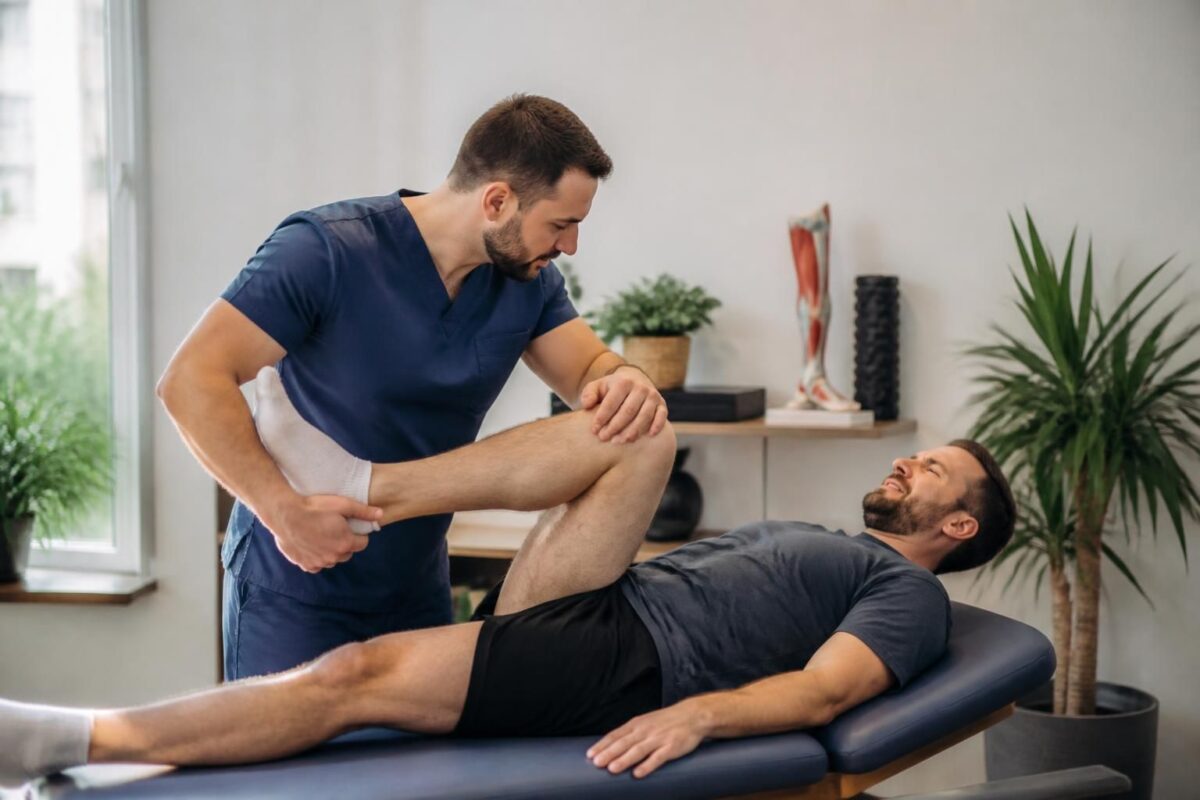
Osteopathy and chronic leg pain: regaining an optimal quality of life
In short In short, Osteopathy is one Global manual approach aimed at reducing Chronic leg pain and improve the quality of life. What is it? Non-drug therapy using the hands to identify restrictions and treat lesional chains. How does it…
How osteopathy supports recovery after complex surgery
In short In short, Post-operative osteopathy is an approach fresh which supports the recovery After a Complex surgery. It helps to reduce the pain and the fatigue, improves the mobility and accelerates the healing thanks to a better vascularization and…

Dr Sylvain Desforges, B.Sc., D.O., N.D., osteopath, is the founding president of TAGMED and of the ACMA association. He dedicates his practice to chronic spinal pain, low back pain and symptoms compatible with sciatica, particularly when pain radiates toward the buttock, leg, calf, foot or toes.
Through SOS Sciatique, he publishes educational content on sciatica symptoms, possible causes such as disc herniation, disc narrowing, foraminal stenosis or irritation of a lumbar nerve root, as well as non-surgical approaches that may be considered according to the evaluation. At Clinique TAGMED, care may include, depending on the case, motorized neurovertebral decompression, specific osteopathic care or precision percussion.
For an evaluation related to sciatica treatment in Montreal / Mount Royal or sciatica treatment in Terrebonne, please consult the services available at Clinique TAGMED.
Medical disclaimer
The information published on SOS Sciatique is provided for educational purposes only and does not replace a consultation, diagnosis, opinion or treatment provided by a physician or another authorized healthcare professional. The author of this article is neither a medical doctor nor a specialist in a medical specialty recognized by the Collège des médecins du Québec. The osteopathic, manual medicine or functional support approaches described on this site do not constitute medical acts and are not intended to replace medical follow-up.
Consult a physician or emergency service in cases of loss of bladder or bowel control, anesthesia in the saddle area, significant or progressive weakness in the leg or foot, fever, recent trauma, severe pain or rapid worsening of symptoms. For more details, please read our Legal Notice.