Osteopathy and joint pain: regaining freedom of movement
27/06/2026
How osteopathy improves the functional capacities of the body
27/06/2026
In short The Osteopathic techniques for Relieve chronic muscle tension are manual approaches aimed at restoring themuscle balance and reduce diffuse tensions. This is a set of methods including Structural techniques, myotensive and tissue which release blockages and improve mobility without pain. The advantages: Sustainable relief, better amplitude and Optimized posture, prevention of recurrences, with a Active patient participation. How does it work? One Personalized diagnosis Guides the application of techniques (joint manipulations, gentle stretching, work on the tissues) to rebalance the musculoskeletal system. In Montreal, this service is particularly recommended for athletes and active people suffering from chronic tension. |
The Osteopathic techniques constitute an approach non-invasive and very effective for Relieve chronic muscle tension, by restoring the balance between the musculoskeletal system and the nervous system. By acting on muscles, fascias and joints, they improve mobility, reduce pain and promote a better quality of life on a daily basis.
Among the key methods, Myotensive techniques use controlled contractions and releases to release tension; the Joint manipulations restore range of motion; the Stretching and soft tissue work Unleash nodes and improve circulation. A Postural education And personalized advice completes the treatment to prevent recurrences.
This article presents the Osteopathic techniques used to reduce Chronic muscle tension and restore the functional balance of the body. It describes the structural, myotensive, functional and gentle approaches, their indications and their role in global management, favoring a method non-invasive and patient-centric. The goal is to improve the mobility and quality of life while respecting physiological limits and medical contraindications. To deepen, you can consult specialized resources on osteopathy and the prevention of musculoskeletal disorders and on joint mobilization.
Structural approaches and joint adjustments
The Structural techniques aim to restore joint mobility by correcting blockages and movement restrictions. They are practiced according to a simple and reproducible protocol: clear diagnosis, appropriate patient positioning, and progressive powering. The practitioner performs a brief controlled pulse that can generate joint noise called cavitation. This manipulation is done within the framework of a principle: non-pain and patient comfort. These interventions apply in particular to the spine and peripheral joints when mechanical limitations block mobility.
To better understand these mechanisms, you can consult resources dedicated to the joint mobility and the prevention of musculoskeletal disorders on the SOS Sciatica website.
Myotensive techniques and contraction-relaxation
The Myotensive techniques mobilize the muscles by active contractions against the resistance of the practitioner. The patient performs 3 to 5 contractions targeted according to the identified dysfunction, then releases to allow progressive stretching of the muscle and a decrease in stiffness. This approach is based on the principle ofreciprocal inhibition, which promotes the relaxation of antagonistic muscles. It actively involves the patient and can precede or replace structural manipulations when they have contraindications.
These techniques are particularly useful for postural imbalances and contractures responsible for diffuse pain. For a more practical presentation of results and applications, see the dedicated article on Osteopathic techniques and diffuse muscular tensions.
Functional techniques and proprioceptive rehabilitation
The Functional techniques are based on gentle corrections and neurophysiological modification of proprioceptive receptors present in the tissues. They often involve targeted static maintenance, such as positioning the patient in a comfortable posture for ~90 seconds. This approach aims to reset neuromuscular spindles and rebalance muscle chains without pain.
These methods Proprioceptives Complete the manipulations and active contractions by strengthening the patient’s body awareness. They are particularly suitable for the elderly, recovery athletes and patients with musculoskeletal fragilities. Complementary resources on functional approaches and propropetive corrections can be viewed via the pages associated with SOS Sciatica.
Gentle approaches and tissue techniques
The Tissue techniques and myo-fascial aim to restore the extensibility of soft tissue around the joints. The work of John Martin Littlejohn, focused on evaluation and maneuvers to unleash tensions, remains a historical reference. Contractions and releases reduce spasms and retractions that slow down functional recovery. These approaches are often the basis of modern manual care and are an important part of the sessions, especially in athletes and people with postural dysfunctions.
the techniques myotensive And tissue approaches promote muscle balance and mobility, while involving the patient in the healing process. To deepen, see the detailed explanation of tissue approaches and the effects on diffuse muscle tension on SOS sciatica.
Soft Proprioceptive Reset and Security Techniques
the approaches Sweet proprioceptives are characterized by their low level of intrusion and their lack of side effects. They are based on atraumatic manipulations and on the release of tensions by measured neuromuscular stimulations. This framework is particularly suitable for sensitive, weakened or recovered patients after injury. Corrections are made in comfortable positions and do not cause pain during the session.
To enrich your understanding of these techniques and their indications, you can consult specialized resources dedicated to osteopathy and joint mobility on SOS sciatica.
Integration and security in global support
An effective osteopathic approach is based on a global assessment and integration of the different techniques. The practitioner adapts the methods to each patient, depending on the location of the tensions, the level of pain and the clinical experience. Typical contraindications include advanced degenerative decays or inflammatory pathologies requiring medical care.
The practice is based on principles of safety and respect for the body. The choice of techniques favors progression, comfort and active participation of the patient in the treatment. For other perspectives and tools, consult the resources associated with the prevention of musculoskeletal disorders and joint mobility available on SOS sciatica.
Networks and training. The professionals rely on recognized training in the field, such as NUMSS and NAO, in order to ensure a compliant and up-to-date practice. Relevant professional associations include ACMA, the College of Canadian Osteopaths and the College of Canadian Osteopaths, which govern the standards and ethics of the discipline.
For those who wish to explore the mechanisms and results of osteopathic approaches in more detail, additional resources are available from authorized areas, including articles on osteopathy and prevention, joint mobility and patient feedback.
Useful and relevant readings:
– SOS SCIATIC: Osteopathy and prevention of musculoskeletal disorders
– SOS SCIATIC: Osteopathy and joint mobility
– SOS SCIATIC: Improved post-injury recovery
– SOS SCIATIC: Tendinitis and gentle approach
– Tagmed Clinic: Tagmed Clinic
The proposed content respects the resources and limits mentioned for training and professional associations. For personalized support and appropriate evaluation, make an appointment with a qualified osteopath and consult the official information of professional organizations and partner clinics.
“Medical disclaimer: The information and advice provided on this site does not replace the health professional’s benefit, diagnosis or treatment. Please note that Dr. Sylvain Desforges osteopath is neither a doctor of medicine nor a doctor, and is not a specialist in a medical specialty as defined by the Collège des Médecins du Québec. Manual medicine, functional medicine and sports medicine as described on this site exclude any medical treatment or diagnosis made by a doctor or specialist doctor. Always consult your doctor for any medical questions. For more details, please read our full legal notice. »
content concerning the treatment of sciatica with the neurovertebral decompression and specific losteopathy and other specific conditions: in articles dealing with neurovertebral decompression, herniated disc, disc bulge, foraminal stenosis, spinal stenosis, disc pinching or disc degeneration, avoid suggesting exercises Or stretching.
Osteopathic techniques to ease chronic muscle tension
AXIS: Therapeutic objective and modality – Segmented approach by action and effect
- Myotensive techniques: Active directed contraction, followed by release, for Improve amplitude and release tensions.
- Joint manipulations: Controlled and quick adjustments that free blockages and restore mobility.
- Tissue and fascia: Release of tensions myo-fascial and improvement of theextensibility.
- Postural education and prevention: Simple tips and exercises to prevent recurrences.
- Atraumatic functional techniques: Correction by positioning with hold 90 seconds To reset neuromuscular spindles.
- Sweet guided stretches: Targeted active and passive stretching to gain flexibility and on the move.
- Proprioception and neuromuscular control: soft work that improves the Engine control and coordination.
- Decompression and vertebral mobility: non-invasive approach to Reduce pressure and restore mobility.

This article presents the Osteopathic techniques the most effective in soothing Chronic muscle tension, favoring gentle, progressive approaches adapted to each patient. You will discover how the different therapeutic axes complement each other to restore mobility, reduce pain and promote a better quality of life without systematically resorting to invasive gestures.
Structural approaches and role in chronic tensions
Joint manipulations structure the basis of osteopathic intervention when there are mobility restrictions or joint blockages. The work is done according to a precise diagnosis and an optimized patient positioning, with progressive tensioning and a brief controlled pulse. The crack frequent is not systematic; It sometimes results from joint cavitation, but the primary objective remains the Release of mobility and respect for the rule of non-pain.
Identify the appropriate technique
Each patient benefits from a targeted choice of techniques based on the initial assessment. The objective is to restore blocked mobility and to prevent recurrences resulting in lower back, cervical pain or minor intervertebral pathologies related to professional or sporting activity.

How osteopathy improves the quality of life of active people
In short In short, theosteopathy is a global approach that Optimizes mobility and the function of the body of ACTIVE PEOPLE, for a better quality of life. It helps prevent injury and reduce Musculoskeletal pain While promoting the Sports recovery.…
Myotensive techniques and muscle mobilization
The Myotensive techniques mobilize the muscles through active contractions against the practitioner’s resistance, followed by a relaxation which promotes the stretching and softening of fabrics. This approach is based on the principle ofreciprocal inhibition, which reduces tension without forcing the cartilages. It offers great efficiency for postural imbalances and contractures.
Implementation and security
Concretely, the patient is positioned according to the identified dysfunction, then performs a controlled contraction before the practitioner performs a gentle stretch. This approach activates the patient in his treatment and prepares the ground for structural adjustments when necessary.

Osteopathy and sports recovery: prepare the body for lasting performance
In short In short, Osteopathy and Sports recovery is one Global manual approach that sustainably prepares the body for the effort by restoring mobility and circulation After the effort. It is a discipline that acts on the sinews, the joints,…
Functional techniques and proprioceptive reset
Functional techniques aim to modify neurophysiologically the proprioceptive receptors present in the myofascial layer. They use simple corrections and atraumatic With accurate patient hold in comfort position for about 90 seconds. This gentle approach enables tissue relaxation and resetting of neuromuscular spindles, providing a Sustainable reduction of tensions in fragile patients or in post-traumatic recovery.
Indications and benefits
They apply particularly to Chronic pain and patients with osteo-articular fragilities. The major advantage lies in accessibility and the absence of side effects, while gradually improving mobility and posture.
Why Osteopathy Is Essential For Recovery People
In short In short, Osteopathy in convalescence is an approach manual and holistic which helps to accelerate the recovery by restoring The balance, the mobility and a good circulation fabrics. it contributes to Reduce the pain, support the Back to…
Tissue techniques and work on the fascias
Tissue approaches, from the work of Littlejohn and Mitchell, focus on soft tissues and myo-fascial structures. Assessment tests and maneuvers are aimed at restoring the extensibility of muscles and fascialized planes, often the key to functional limitations. Contractions and releases target contractures and spasms that block functional recovery and sports performance.
Patient integration and involvement
Myotensive techniques and modes of tissue work frequently precede structural manipulations or replace them when contraindications exist. The duration and intensity are adjusted according to the level of pain and the desired functional purpose.

Osteopathic manipulations to strengthen post-traumatic muscles
In short In short, Osteopathic manipulations for Strengthen post-traumatic muscles constitute a gentle manual approach aimed at restoring the mobility, reduce the pain and facilitate the Functional rehabilitation After a injury. What is Is it? A series of precise gestures…
Visceral and cranio-sacral approaches
Visceral approaches aim to identify and correct organ mobility restrictions in order to improve visceral functioning and postural dynamics. Cranio-sacral techniques remain used by some professionals, but scientific data on their effectiveness remain discussed. In all cases, a prior medical evaluation is recommended to secure the choice of gestures and their framing.
Precautions and usage framework
These methods are considered as supplements, when the symptoms warrant it, and remain dependent on a rigorous clinical diagnosis and appropriate follow-up.

Osteopathy and prevention of work-related musculoskeletal disorders
In short theosteopathy is one Manual approach that restores body balance and prevents MSD related to work. Its advantages: reduction of tension, improvement of mobility and prevention of chronic pain. She is preventive and healing, suitable for office and trades…
Integration, education and prevention
Beyond manual gestures, osteopathy focuses on postural education and practical advice to prevent the reappearance of tensions. The objective is to optimize mobility without overload and to encourage lifestyle habits conducive to maintaining the gains obtained. Simple and personalized exercises can be proposed to support the progression between sessions.
For any patient suffering from chronic muscle tension, a personalized osteopathic evaluation makes it possible to determine a suitable plan, possibly combining structural, myotensive, functional and visceral techniques as needed. Ask a qualified osteopath for advice to access appropriate and sustainable care.

The benefits of osteopathy to treat muscle imbalances
In short theosteopathy is a manual approach to restore themuscle harmony and postural considering the body as a whole. Its main benefits include the reduction of aches and tensions, the improvement of the mobility and from the posture, and prevention…
Osteopathic techniques to ease chronic muscle tension
| Technical category | Concise description |
|---|---|
| Structural techniques | restore the Joint mobility by controlled adjustments; useful for freezing and the restrictions of movement. |
| Myotensive techniques | active contractions followed by release to release the contractures and improve theamplitude. |
| Functional techniques | Gentle neuroproprioceptive corrections with targeted support (≈90 s) for Reset the spindles and theTissue balance. |
| Tissue and myofascial techniques | work on the soft tissues To restore theextensibility and reduce the strain and the spasms. |
| Atraumatic proprioceptive techniques | Hold in comfort position ≈90 s for Reset proprioceptive receptors and promote the relaxation. |
| Cranio-sacral techniques | used by some professionals; prudent in the face of scientific validation andDemonstrated efficacy. |
| Visceral techniques | improve the mobility of organs and connective structures to promote the Neurovegetative functioning and reduce the musculo-fascial tensions. |
| neurovertebral decompression | non-invasive techniques aimed at reducing the disc pressure and promote the Spinal mobility. |
| Pulse Align | Stimulation vibratory gentle targeting the mechanoreceptors to release the Muscle tensions and improve the circulation. |
Osteopathy and chronic leg pain: regaining an optimal quality of life
In short In short, Osteopathy is one Global manual approach aimed at reducing Chronic leg pain and improve the quality of life. What is it? Non-drug therapy using the hands to identify restrictions and treat lesional chains. How does it…
Testimonials on osteopathic techniques to ease chronic muscle tension
Marie, 45: “Before coming, I felt like my tensions in my neck and shoulders never left. After a few sessions, Osteopathic techniques began to relax the muscles and restore a Natural mobility. I am less tense on a daily basis and I find a better quality of movement during my daily activities. »
Jean, 32 years old: “My work in front of the computer caused me recurrent pain in my back. The Myotensive techniques and the Joint manipulations gradually relaxed my muscles and aligned my posture. Today, I feel lighter and recover faster after a busy day. »
Laure, 50 years old: “What I appreciate the most is the global approach that combines Osteopathic techniques, Postural education and practical advice. My chronic tensions have decreased and I am now able to anticipate risky moments, rather than undergo them. »
Marc, 29: “As an athlete, I was looking for an effective solution for my muscle imbalances. gentle interventions improved my Joint mobility and reduces my pain after exercise. I feel better performance and faster recovery. »
Émilie, 37: “I used to take anti-inflammatories to calm my tensions. Osteopathic sessions have changed that. The Osteopathic techniques are respectful and allowed me to better understand my body while improving my posture for a long time. »
Raphaël, 52: “After several months, progress has not stopped. thanks to a combination of Tissue techniques and of Joint mobilizations, my contractures subsided and my level of fatigue decreased. I recommend this approach to anyone who suffers from chronic tensions. »
Chronic muscular tension is a common reason for people working or resuming effort, and they can sustainably limit mobility and quality of life. In this context, osteopathic techniques are based on a global approach which aims to restore the structural and functional balance of the body. The objective is to treat reversible dysfunctions of the musculoskeletal and myo-fascial system without claiming to resolve established organic pathologies. This approach is based on a precise evaluation, recognition of stress areas and the adoption of a personalized treatment plan, adjusted to each patient.
Structural techniques form the basis of manual interventions. They begin with a clear diagnosis and appropriate positioning of the patient, followed by controlled tensioning and a short targeted pulse. The feeling may vary depending on the areas treated, but the objective remains the same: to restore blocked joint mobility and reduce the mechanical friction that fuels the pain. These protocols are deployed on the spinal segments and peripheral joints, with a particular emphasis on the cervical and lumbar regions, often solicited by professional and sporting activities. Therapeutic intention is, as a priority, painless and focused on patient safety.
Myotensive techniques Involve the patient in the process by active muscle contractions against the practitioner’s resistance. By targeted activation of the muscle groups concerned, then their controlled release, these methods reduce tension, improve joint amplitude and promote better neuromuscular coordination. They make it possible to approach postural imbalances and contractures without resorting to sudden manipulations. This active involvement of the patient increases body awareness and often sets the stage for subsequent structural manipulations or, when necessary, for suitable alternatives in the event of a contraindication.
Functional techniques And soft tissue-focused approaches target proactive tension areas, with sessions that incorporate soft proprioceptive stimulation and progressive releases. Among these techniques, correction by positioning and keeping the patient in comfort position for specific periods allow neuromuscular reset and muscle spindle recalibration. They are particularly suitable for fragile people, athletes in recovery periods and those who have diffuse tensions associated with repetitive constraints. The results can appear from the first sessions, with a feeling of lightness and regained mobility.
In parallel with manual techniques, practitioners favor postural education and practical advice to prevent recurrences and optimize the effectiveness of treatments. A global approach can also incorporate complementary choices when necessary, without ever replacing the role of medical follow-up when an underlying pathology is suspected. This integrative vision highlights the benefits of personalized care, where osteopathic treatments take into account the lifestyle habits, professional constraints and the patient’s sporting or recreational objectives.
The expected results are a Improving mobility, a lasting reduction in pain and a regained ability to resume daily activities without limitation. Diagnosed and adapted to each patient, this approach favors progressive and reassuring sessions, with clear communication on the expectations and potential results. In this context, osteopathy offers an adapted and lasting response to diffuse muscle tension, by promoting functional rehabilitation and a better quality of life in the long term.
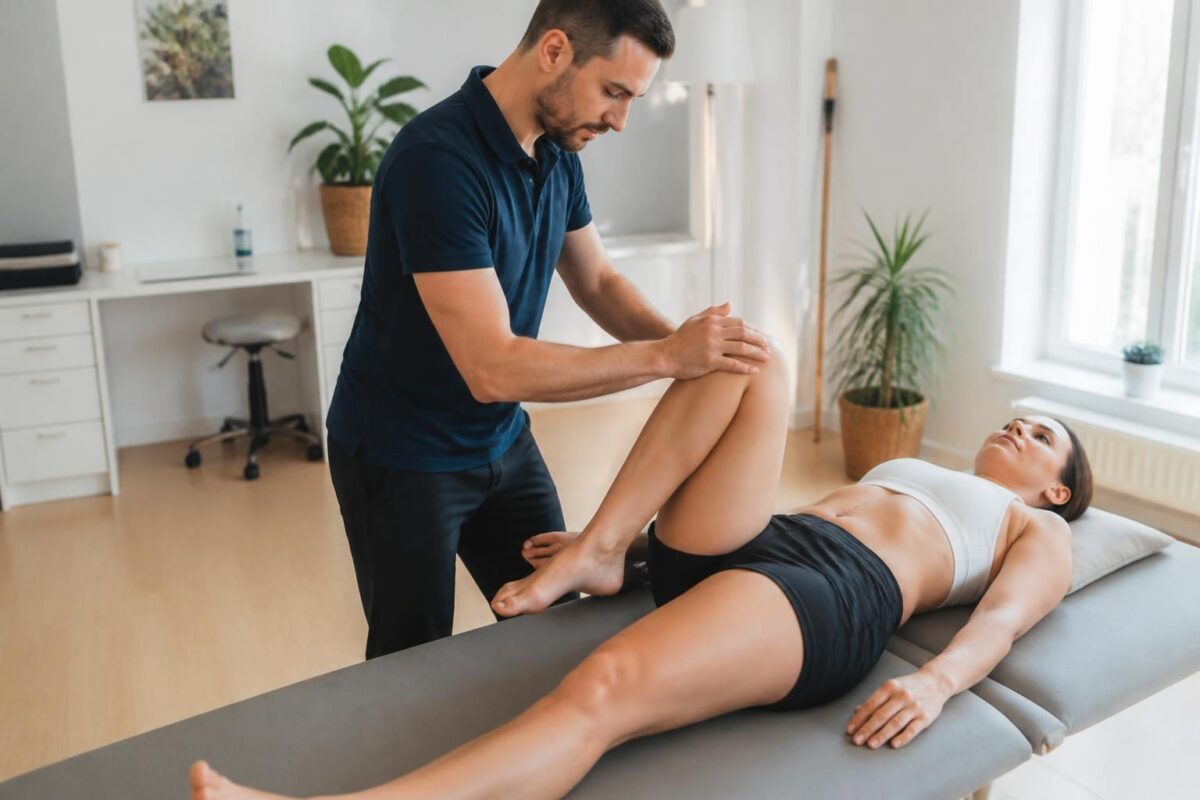
This article presents the Osteopathic techniques intended to soothe Chronic muscle tension, showing how the approaches structural, myotensive and functional are articulated with a preventive and educational dimension, in order to restore mobility and balance without systematically using invasive treatments.
How osteopathy supports recovery after complex surgery
In short In short, Post-operative osteopathy is an approach fresh which supports the recovery After a Complex surgery. It helps to reduce the pain and the fatigue, improves the mobility and accelerates the healing thanks to a better vascularization and…
Role and foundations of osteopathic techniques in chronic muscle tension
The Chronic muscle tension May persist despite symptomatic treatments when they do not address the functional origin of the problem. Osteopathy offers a global approach that aims to rebalancing between structure and function, by identifying restriction areas and dysfunctions that fuel pain. This approach is based on principles of joint mobility, fascia interaction and neuromuscular regulation, in order to obtain lasting improvements in active and sports patients faced with postural imbalances. To deepen the mechanisms and results of joint approaches, see this link dedicated to theImprovement of joint movements.
structural and myotensive techniques to release mobility
The Structural techniques aim to remove blockages and restore the amplitude of joints. They are based on an accurate diagnosis, appropriate placement and controlled tensioning, followed by a short impulse which can generate a crack linked to joint cavitation, while remaining unstressed for the patient. The Myotensive techniques use active contractions of the patient against resistance, then a release that releases stiffness and restores theJoint amplitude. These gestures, effective and secure, often precede or replace manipulations when contraindications exist. For a detailed description, see The presentation of osteopathic techniques.
Functional and proprioceptive approaches for body activation
The Functional approaches and Proprioceptives aim to modify the neurophysiology of muscle and myofascial receptors, in order to restore a Neuromuscular coherence and a better Brain-muscle connection. Work can be based on long-term corrections that integrate the patient into the process, which promotesautonomy and prevention of recurrences. These methods are often recommended when structural manipulations must be completed or when contraindications exist. To understand why these approaches work, see Why osteopathy is effective against muscle tension.
Gentle techniques and prevention of recurrences
the techniques sweet, including corrections by positioning and atraumatic gestures, aim to Reset neuromuscular spindles and to reduce tensions in the long term. They are particularly suitable for susceptible patients, the elderly or during rehabilitation. This approach is part of an approach preventive and ofPostural education To limit recurrences and promote the maintenance of mobility on a daily basis. To enrich your understanding of gentle and non-invasive methods, see This article on natural benefits.
Practical integration and additional resources
Managing chronic muscle tension is based on an approach integrated Including evaluation, targeted techniques and education. By combining these elements into a personalized plan, it is possible to restore mobility and reduce discomfort. To complete your understanding and access other resources, see How osteopathy supports rehabilitation after an accident or Osteopathy and muscle tension – gestures and advice.

Dr Sylvain Desforges, B.Sc., D.O., N.D., osteopath, is the founding president of TAGMED and of the ACMA association. He dedicates his practice to chronic spinal pain, low back pain and symptoms compatible with sciatica, particularly when pain radiates toward the buttock, leg, calf, foot or toes.
Through SOS Sciatique, he publishes educational content on sciatica symptoms, possible causes such as disc herniation, disc narrowing, foraminal stenosis or irritation of a lumbar nerve root, as well as non-surgical approaches that may be considered according to the evaluation. At Clinique TAGMED, care may include, depending on the case, motorized neurovertebral decompression, specific osteopathic care or precision percussion.
For an evaluation related to sciatica treatment in Montreal / Mount Royal or sciatica treatment in Terrebonne, please consult the services available at Clinique TAGMED.
Medical disclaimer
The information published on SOS Sciatique is provided for educational purposes only and does not replace a consultation, diagnosis, opinion or treatment provided by a physician or another authorized healthcare professional. The author of this article is neither a medical doctor nor a specialist in a medical specialty recognized by the Collège des médecins du Québec. The osteopathic, manual medicine or functional support approaches described on this site do not constitute medical acts and are not intended to replace medical follow-up.
Consult a physician or emergency service in cases of loss of bladder or bowel control, anesthesia in the saddle area, significant or progressive weakness in the leg or foot, fever, recent trauma, severe pain or rapid worsening of symptoms. For more details, please read our Legal Notice.