Osteopathic manipulations to treat postural imbalances
27/06/2026
Osteopathy and joint pain: regaining freedom of movement
27/06/2026
In short
| In short, theosteopathy is one Manual approach essential for athletes, which improves the mobility fabrics andbalance of the body to optimize the performance. Its key advantages include theImproved joint mobility, the Injury prevention and an recovery faster after exercise, thanks to gentle mobilization and an approach holistic of the body. Presented as a non-invasive solution, it fits easily into the training program and can be adapted to each discipline, especially in Montreal for athletes looking for clear and lasting results, without invasive recourse. |
In the sports world, theosteopathy is a Essential tool that supports athletes at every step of their practice. It acts in depth on mobility and balance to optimize performance and limit injuries.
- Mobility and amplitude Recovered thanks to soft manual techniques that release the tensions of the tissues and joints, facilitating the technical gestures and the stride.
- Injury prevention By correcting muscle imbalances and asymmetries that overload critical areas.
- Accelerated recovery Thanks to better circulation and relaxation gestures that reduce aches and inflammation.
- Improved coordination and proprioception, favoring more fluid and precise movements.
- Global approach Who considers the body as an interconnected whole, adapted to each discipline and each athlete profile.
This article explains why Osteopathy is an essential tool for athletes. It acts on the body as a whole. It improves the mobility, warns the imbalances and accelerates the recovery. She supports the performance through better coordination and better use of the tissues during exercise.
Improved mobility and range of motion
The basic principle is simple. theosteopathy Uses gentle mobilization and precise tissue palpation. This restores the mobility of joints and connective tissue layers. Movements become smoother and more effective during training and competition. Better mobility also reduces muscle fatigue and improves technique.
Prevention of imbalances and injuries
Athletes often have asymmetries related to repeated effort. The osteopath observes the posture and the muscle chains. It can correct tensions and rebalance loads on body segments. This approach decreases the risk of microtraumas and overuse injuries.
Recovery and reduction of pain after exercise
After exercise, osteopathy helps restore circulation and relax the muscles. The tensions released allow a faster return to training and competition. The interventions aim to reduce pain and promote sustainable recovery without medication.
Neuromuscular coordination and proprioception
Osteopathy promotes body awareness and neuromuscular integration. By working on fascias and muscle chains, it improves motor coordination and responsiveness. This translates into better technical gestures and a reduction in the risks of false movements.
Integration into the training program
Osteopathy is integrated as a complement to the training plan. It can be used in pre-competitive times to optimize mobility and stability, then in recovery period to accelerate the return to full performance. This approach is enriched when the athlete also follows dietary and recovery advice provided by sports professionals.
How is an osteopathic session in the athlete
The session begins with a clear questioning of the reasons for consultation and sporting history. The osteopath then evaluates the movements, palpales the tissues and identifies the areas of friction or tension. The diagnosis guides the choice of manual techniques used. The interventions aim to restore the overall balance without pain and respecting the limits of the body.
Training and professional executive
The practice is based on training recognized by the competent bodies. Reference institutions include NUMSS, NAO, National University of Medical Sciences and National Academy of osteopathy. Relevant professional associations include ACMA, College of Canadian Osteopaths and College of Canadian Osteopaths. For athletes, the osteopath often collaborates with the sports team and sports professionals to ensure consistency of care and training program.
Links to deepen
For additional information, see the following resources:
Why osteopathy is an effective alternative for athletes,
The benefits of osteopathy to prevent muscle imbalances,
Osteopathy and cervical pain,
Osteopathy and recovery after surgery.
For further information on approaches and outcomes, see also official domain resources and associated clinics, such as Tagmed Clinic.
articles and associated resources related to the practice and results in sports osteopathy can be consulted on sossciatica.com.
Medical Disclaimer: The information and advice provided on this site does not replace the health professional’s diagnosis or treatment. Please note that Dr. Sylvain Desforges osteopath is neither a doctor of medicine nor a doctor, and is not a specialist in a medical specialty as defined by the Collège des Médecins du Québec. Manual medicine, functional medicine and sports medicine as described on this site exclude any medical treatment or diagnosis made by a doctor or specialist doctor. Always consult your doctor for any medical questions. For more details, please read our full legal notice.
Axis of action : Sustainable performance and Active prevention
- Mobility and joint flexibility
- Balance Body and trunk stability
- proprioception and coordination
- Recovery Accelerated post-effort
- Prevention Injuries and overloads
- Management Tensions and fascias
- Performance optimal on the training cycle
- Confidence in gestures and movements

Osteopathy is an essential tool for athletes, as it affects body mobility, injury prevention and performance. By treating root causes rather than just symptoms, it accompanies long-term training, recovery and performance consistency. This text offers clear recommendations on why this manual approach is a key lever for any sportsman seeking his best performance.
Mobility and fluidity of sporting gestures
Optimal joint amplitude is the basis of an efficient and energy-efficient movement. Osteopathy uses gentle manual techniques to restore the mobility of joints, connective tissues and muscles, which improves the quality of technical gestures and coordination. By working on all the body chains, it frees the blocking points that slow down the sporting gesture and to avoid the limitations that occur during intensive training.

How osteopathy improves the quality of life of active people
In short In short, theosteopathy is a global approach that Optimizes mobility and the function of the body of ACTIVE PEOPLE, for a better quality of life. It helps prevent injury and reduce Musculoskeletal pain While promoting the Sports recovery.…
Injury Prevention and Body Balance
Identification of imbalances and tensions
Athletes often have asymmetries due to their discipline or the overuse of certain areas. The osteopathic approach identifies these imbalances and adjusts tensions on the muscle chains and fascias, thus reducing the risk of microtraumas and recurrent pain.
Impact on posture and stability
By improving the postural balance and stability of the bust, hips and spine, osteopathy supports better load distribution during exercise. This increased stability translates into less anticipated fatigue and a lower risk of injury during acceleration, turns or jumping phases.

Osteopathy and sports recovery: prepare the body for lasting performance
In short In short, Osteopathy and Sports recovery is one Global manual approach that sustainably prepares the body for the effort by restoring mobility and circulation After the effort. It is a discipline that acts on the sinews, the joints,…
Fast recovery and fatigue management
Recovery is also a question of effective evacuation of metabolic waste and recovery of tissue flows. Targeted techniques promote lymphatic drainage and improve blood circulation, which reduces body aches and accelerates tissue repair after exercise. This optimized recovery makes it possible to chain the sessions with a better quality of work and a reduction in downtime.
Why Osteopathy Is Essential For Recovery People
In short In short, Osteopathy in convalescence is an approach manual and holistic which helps to accelerate the recovery by restoring The balance, the mobility and a good circulation fabrics. it contributes to Reduce the pain, support the Back to…
Performance and neuromuscular coordination
Beyond pure mobility, osteopathy supports neuromuscular coordination. By improving the interaction between the nervous and muscular systems, it refines the timing of gestures, proprioception and precision of movements. Notable improvements are observed in the demanding technical gestures (shoots, sprints, jumps, races with turns) when the muscle chains work in harmony rather than in isolation.

Osteopathic manipulations to strengthen post-traumatic muscles
In short In short, Osteopathic manipulations for Strengthen post-traumatic muscles constitute a gentle manual approach aimed at restoring the mobility, reduce the pain and facilitate the Functional rehabilitation After a injury. What is Is it? A series of precise gestures…
Practical integration into the sports routine
To make the most of osteopathy, it is recommended to include regular visits to the training schedule, in coordination with training cycles and recovery periods. A personalized follow-up allows you to adjust the treatments according to the sport, the level and the periods of competition. In addition, gentle exercise tips to do at home, targeted warm-up protocols and specific stretching suggestions reinforce the beneficial effects and extend the results between consultations.
| Aspect | Impact |
|---|---|
| Mobility and amplitude | Improves fluidity of gestures and performance |
| Injury prevention | Reduces risks through musculoskeletal balance |
| Post-effort recovery | Accelerated recovery and decrease in body aches |
| Neuromuscular balance | Better coordination and efficiency of movements |
| Voltage detection | Early intervention to prevent injury |
| Custom Plan training | Suitable for discipline and competitive schedule |
| complementarity with training and physiotherapy | Holistic approach and synergy to care |
| Sustainable performance | Maintenance and improvement of long-term performance |
“As a top athlete, osteopathy has become my number one ally. She improves my mobility and accelerate my recovery Between training, which allows me to push my limits without exhausting myself. »
“After several seasons, I had recurring pain in my lower back. The osteopath worked on my entire body to correct the imbalances and reduce these aches lumbar without medical prescription. »
“Before a long run, blocking tensions slowed me down. the sessions target the muscle chains and strengthen my proprioception and my balance, which improves my stride and my stability. »
“My coach appreciates the effects on the prevention injuries. By aligning the body and the movements, my performances improve without load skipping or relapse of tendinopathy. »
“For team sports, osteopathy allows a better coordination and smoother locomotion. I recover faster and I find my technical gestures more naturally. »
“After a small injury, the osteopathic accompaniment accelerated my recovery And avoided the late return, while showing me simple postural adjustments to make on a daily basis. »
“Gentle manipulations respect the integrity of the joints and the body. I feel a pain reduction and an Mobility found that allow me to train longer and more serenely. »
“Finally, osteopathy is a preventive and global approach. It helps me to understand my body, to correct tensions and to keep my level of performance throughout the year without sacrificing my recovery. »
In the sports world, theosteopathy is not an option, but a strategic lever to optimize the performance and securing the continuity of athletes’ careers. This expert, recognized for his commitment to health innovation and his holistic approach, places the athlete’s body at the heart of a personalized and preventive program, capable of transforming each session into a tangible improvement in the field.
For an athlete, the first added value lies in the mobility and thebalance tissues and joints. An optimized range of motion immediately translates into a smoother technique, better effort saving and pain reduction during training and competition. This global vision makes it possible to avoid compensations that lead to injuries and overloads, thus promoting longevity and continuous progression.
But the action goes far beyond mere mobility. theosteopathy Acts on the proprioception and neuromuscular coordination, strengthening the signals between the nervous system and the muscles. By harmonizing the muscle chains and improving sensory feedback, it makes technical gestures more precise, accelerates recovery and reduces fatigue after exercise, whether in running, swimming, football or in racket sports.
The techniques used, gently, target areas of tension and functional imbalances. Precise palpation, soft tissue work and myotensive or functional approaches allow movement to reset and restore normal physiological flow. For problems related to the spine, back or pelvis, the osteopath provides an appropriate response that promotes faster recovery and a reduction in time outside competitions.
In sports, theosteopathy Ideally integrates with a multidisciplinary team. The rigorous assessment and evidence-based approach provide a robust basis for developing appropriate training plans, in collaboration with coaches, physiotherapists and sports doctors. The objective is clear: to preserve health, optimize training loads and extend the sporting career while improving the recovery.
This course is also based on the reasoned use of complementary techniques when they benefit from performance and recovery. Light drainage, targeted manipulation and muscle relaxation methods help eliminate residual tension, promote better circulation and prevent recurrences. Each athlete thus benefits from a tailor-made protocol, adapted to their level, discipline and competitive schedule.
By this constant work, this practitioner demonstrates that theosteopathy Can transform not only the way an athlete trains, but also his ability to recover, progress and remain competitive in the long term. To find out more about its approach and the services offered, contact the Tagmed Clinic and request a personalized assessment.
This summary highlights why theosteopathy is an essential tool for athletes, as it acts on the mobility, corrects imbalances and optimizes the recovery and the performance through a global and personalized approach. It allows your body to better adapt to loads, improve neuromuscular coordination and reduce recurrent pain that slows down progress.

Osteopathy and prevention of work-related musculoskeletal disorders
In short theosteopathy is one Manual approach that restores body balance and prevents MSD related to work. Its advantages: reduction of tension, improvement of mobility and prevention of chronic pain. She is preventive and healing, suitable for office and trades…
Key benefits for athletes
By working on all muscle chains and connective tissues, theosteopathy Restores a mobility harmonious and prevents blockages that limit technical gestures. This translates into a better performance and more efficient management of training loads, while decreasing the probability of overwork injury.
practice also promotes proprioception improved and articulatory stability, essential elements for precise movements and rapid changes of direction specific to high-level sport. For those looking for a preventive approach, osteopathy offers a global assessment that can reveal invisible tensions and anticipate discomfort before they turn into pain.
To deepen the mechanisms and beneficial effects, you can consult specialized resources on the mechanisms of action and feedback from athletes.

The benefits of osteopathy to treat muscle imbalances
In short theosteopathy is a manual approach to restore themuscle harmony and postural considering the body as a whole. Its main benefits include the reduction of aches and tensions, the improvement of the mobility and from the posture, and prevention…
Injury prevention and management
Prevention requires rapid identification of areas of tension and dysfunctions that can progress to acute or chronic injuries. The osteopath uses gentle and targeted techniques to release tension, restore tissue balance and prevent overloads that slow down training. This proactive approach is particularly valuable in sports requiring repetitive gestures and explosive efforts.
In addition to a structured training program, osteopathy becomes a sustainable prevention lever, capable of reducing work stoppages and improving the continuity of sports progress. For an overview of the role of osteopathy in the face of pain and sports recovery, see this dedicated guide and feedback from athletes.
To enrich your understanding, discover resources like those that explain how osteopathy acts on spinal pain and facilitates post-injury recovery: Action#ATFP_CLOSE_TRANSLATE_SPAN# on spinal pain and LA#ATFP_CLOSE_TRANSLATE_SPAN# Post-injury recovery.
Osteopathy and chronic leg pain: regaining an optimal quality of life
In short In short, Osteopathy is one Global manual approach aimed at reducing Chronic leg pain and improve the quality of life. What is it? Non-drug therapy using the hands to identify restrictions and treat lesional chains. How does it…
Quick recovery and adaptation
After exercise, osteopathy contributes to a more effective recovery by improving circulation and tissue drainage, which facilitates muscle repair and reduction of aches. Targeted muscle relaxation and fascia rebalancing techniques help accelerate the return to performance and prepare the body for subsequent training loads without overload.
This approach can be supplemented by advice on diet and hydration, in order to optimize nutritional intake and inflammation management, which directly contributes to shorter recovery times and effective adaptation of the athlete.
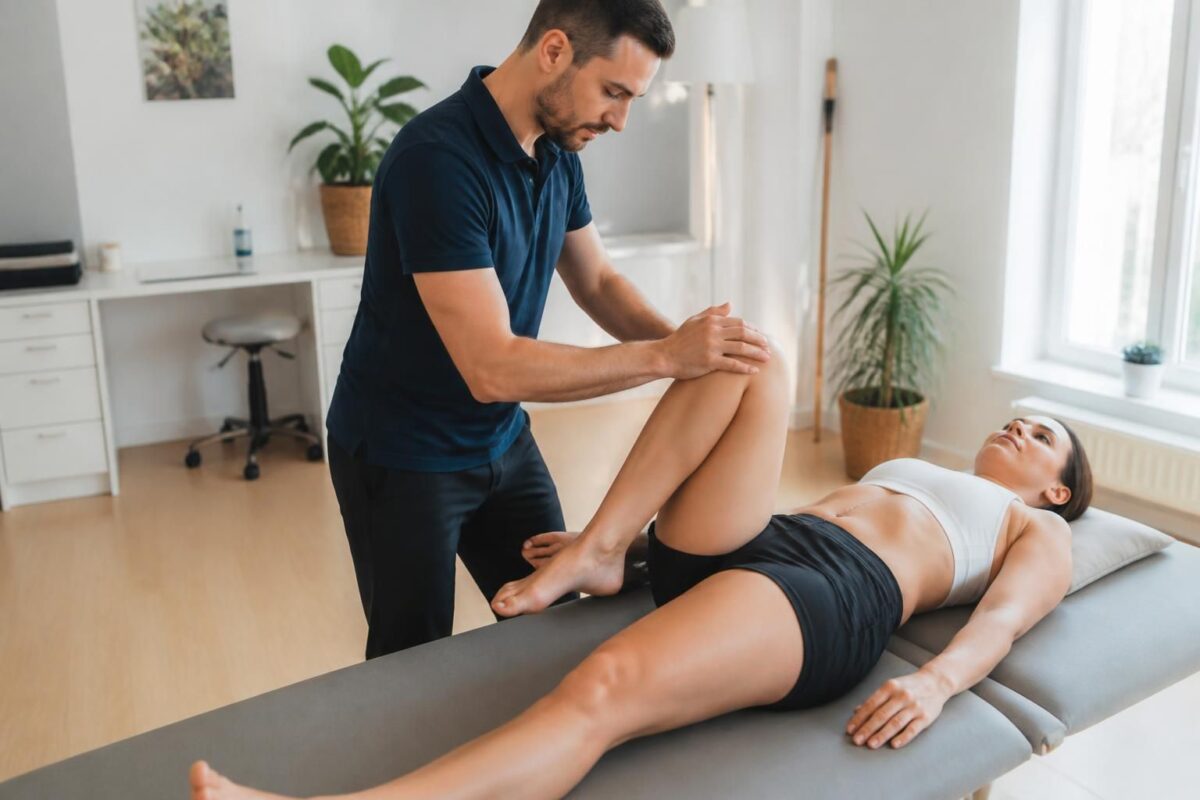
How osteopathy supports recovery after complex surgery
In short In short, Post-operative osteopathy is an approach fresh which supports the recovery After a Complex surgery. It helps to reduce the pain and the fatigue, improves the mobility and accelerates the healing thanks to a better vascularization and…
Integration into the training program
Osteopathy is ideally integrated as a regular component of a physical preparation plan, with planned sessions based on the competitive schedule and training cycles. This coordination with coaches and physiotherapists makes it possible to maintain a postural balance and an mobility constants, while adjusting the protocols according to individual needs.
Additional resources demonstrate how osteopathy supports performance and recovery in athletes, and how it can be associated with other approaches to enhance overall effectiveness.
When to consider osteopathy
It is relevant to consult an osteopath in case of recurrent pain, joint blockages, persistent muscle fatigue or a change in perceived performance. A preventive approach, carried out before the appearance of pain, can also preserve the continuity of training and prolong the sports career.
To deepen the foundations and benefits, refer to specialized resources that describe the mechanisms and benefits of osteopathy in sport, particularly in prevention and recovery.

Dr Sylvain Desforges, B.Sc., D.O., N.D., osteopath, is the founding president of TAGMED and of the ACMA association. He dedicates his practice to chronic spinal pain, low back pain and symptoms compatible with sciatica, particularly when pain radiates toward the buttock, leg, calf, foot or toes.
Through SOS Sciatique, he publishes educational content on sciatica symptoms, possible causes such as disc herniation, disc narrowing, foraminal stenosis or irritation of a lumbar nerve root, as well as non-surgical approaches that may be considered according to the evaluation. At Clinique TAGMED, care may include, depending on the case, motorized neurovertebral decompression, specific osteopathic care or precision percussion.
For an evaluation related to sciatica treatment in Montreal / Mount Royal or sciatica treatment in Terrebonne, please consult the services available at Clinique TAGMED.
Medical disclaimer
The information published on SOS Sciatique is provided for educational purposes only and does not replace a consultation, diagnosis, opinion or treatment provided by a physician or another authorized healthcare professional. The author of this article is neither a medical doctor nor a specialist in a medical specialty recognized by the Collège des médecins du Québec. The osteopathic, manual medicine or functional support approaches described on this site do not constitute medical acts and are not intended to replace medical follow-up.
Consult a physician or emergency service in cases of loss of bladder or bowel control, anesthesia in the saddle area, significant or progressive weakness in the leg or foot, fever, recent trauma, severe pain or rapid worsening of symptoms. For more details, please read our Legal Notice.