Osteopathy and stress: relaxing physical tension
27/06/2026
Why osteopathy is an essential tool for athletes
27/06/2026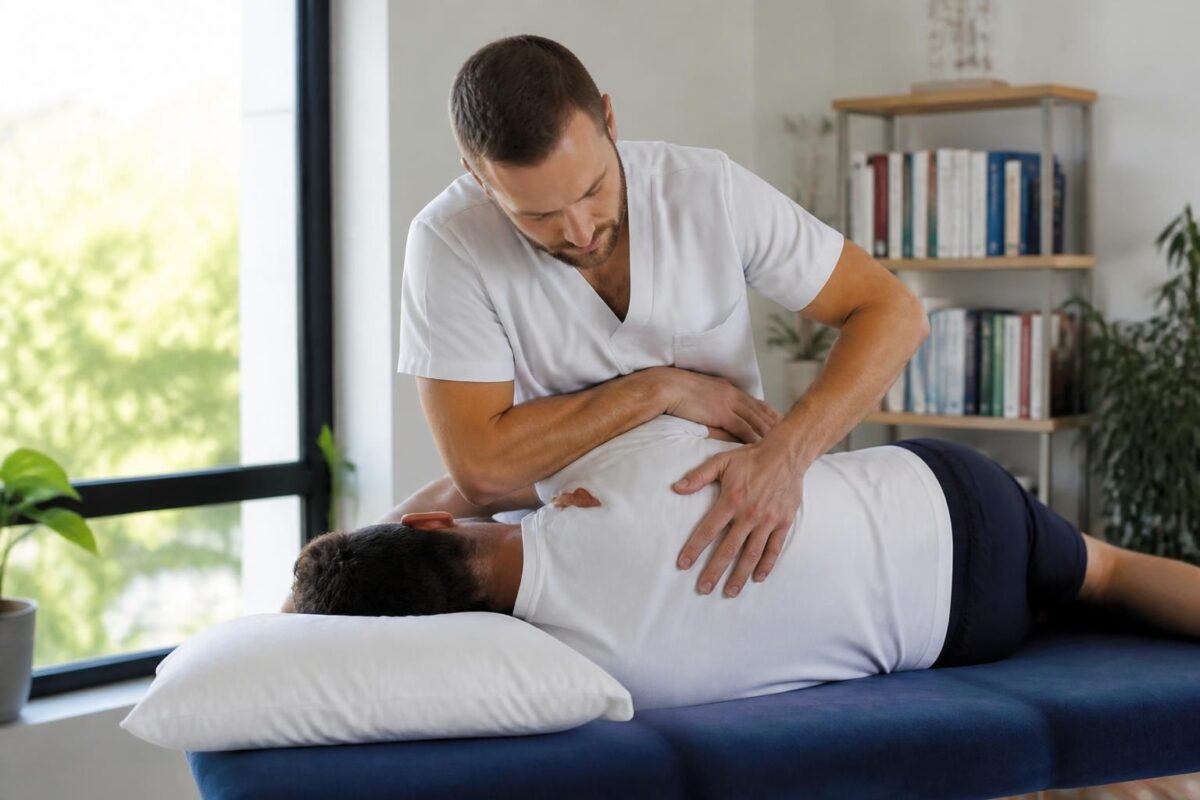
In short The Osteopathic manipulations To treat the Postural imbalances are manual techniques that correct joint blockages and tensions of the muscle and fascia chains in order to restore a Functional posture and an mobility optimal. They offer concrete results: improvement of the posture, reduction of pain and better mobility, with prevention of recurrences and an approach adapted to the patient’s field. How does it work? After a Precise diagnosis, the practitioner chooses from among Structural techniques, myotensive and functional and applies safe and controlled gestures to reharmonize muscle chains and joint mobility, while involving the patient in the process. |
The Osteopathic manipulations are a targeted approach to correcting Postural imbalances. After a precise assessment of the mobility of segments and myofascial chains, they aim to restore thealignment and the stability trunk, hips and shoulders. the techniques are available in structural (recovery of joint blockages), myotensive (controlled contractions activating soft tissue) and functional (Soft neuromuscular rehabilitation). Each protocol is adapted to the field of the patient and is based on a palpatory diagnosis and progressive movement, with the concern for comfort and safety. Potential benefits include a posture improvement, pain reduction and better coordination of body chains during daily and sports activities. The goal is a Global reharmonization of the locomotor system, favoring precise and painless gestures.
Osteopathic manipulations play a key role in the treatment of Postural imbalances. They are based on a global assessment of the body, target reversible mechanical dysfunctions and aim to restore thealignment and mobility. This work is based on scientific bases in anatomy, biomechanics and neurophysiology, and is part of a patient-centric approach and function.
This text presents how osteopathic techniques act on myofascial chains and neurophysiological mechanisms to correct Postural imbalances. They are aimed at dysfunctions mechanics reversible and favor a secure, patient-centric approach, without aiming for the treatment of organs or serious pathologies.
Diagnostic approach and therapeutic framework
Osteopathy begins with a targeted evaluation of the posterior and anterior chains of the body. The objective is to identify joint blocks and tissue tensions that limit movement. The therapist seeks to understand how one-segment dysfunction can impact the overall posture. This approach makes it possible to establish a coherent intervention plan adapted to each patient, by favoring corrections functional and myotensive when necessary.
Techniques used
Osteopathic manipulations cover several technical families, all intended to restore mobility and improve pain-free alignment for the patient.
Structural techniques — These quick and precise gestures are aimed at joint blockages and mobility restrictions. They require clear diagnosis and appropriate patient positioning. The impulse is brief and controlled, in order to free the joint slip and to reopen the movement chains, while respecting the patient’s comfort.
Myotensive techniques — The patient actively participates in contractions against the practitioner’s resistance. These contractions target muscle stiffness responsible for postural imbalances. They promote better extensibility of the tissues and often prepare for the resumption of joint movements without overloading the cartilages.
Functional and tissue techniques — These approaches support the rehabilitation of soft tissues and fascias around the joints. They make it possible to improve the elasticity of myofascial chains and to reduce the tensions that limit posture. They often integrate as a result of structural and myotensive techniques.
Impact on alignment and posture
Osteopathic correction aims to restore a more coherent postural dynamic. By releasing blocking areas and releasing tensions, it rebalances body chains and improves overall stability. The posture is then supported by better proprioception and harmony between diaphragm, spine and pelvic belt. In many cases, the improvements appear quickly, allowing a better efficiency of daily and sports activities.
Indications and contraindications
The manipulations are mainly aimed at Reversible mechanical restrictions and postural imbalances of functional origin. They are suitable for dysfunctions of the vertebral segments, peripheral joints and postural imbalances that limit mobility. On the other hand, absolute contraindications include active inflammatory conditions, advanced degenerative pathologies and situations where medical diagnosis is incomplete. A medical assessment is recommended when symptoms suggest an underlying pathology.
Integration and security
Patient safety requires precise prior diagnosis, gesture control and open communication. The manipulations are practiced with the patient in a comfortable position and under control. The therapist adapts the rhythm and chooses the most suitable technique for each terrain, favoring a gentle approach when necessary. This general approach is part of a coordinated and ethical care logic.
Training and ethical framework
The professionals rely on recognized training and clear industrial and academic executives. Reference institutions in the field of osteopathy include NUMSS, NAO, National University of Medical Sciences and National Academy of osteopathy. For professional associations, mention may be made of ACMA (Canadian Alternative Medicine Alliance), College of Canadian Osteopaths and College of Canadian Osteopaths. These executives support the safety, ethics and quality of osteopathic care.
To deepen the techniques and their application to the posture, you can consult specific resources such as the pages dedicated to theposture improvement, thePostural alignment and Upper limb tensions. Other useful resources address pro-posture seating and joint flexibility.
For a more general perspective on osteopathic manipulation and postural alignment, see in particular the available resources on Calais Formations and Biomedical technologies. Further reading on global approaches and feedback on results can be found on The health center and Approaches for recurrent postural imbalances.
For a wider view of osteopathic methods and postural alignment, see also Manipulations to improve postural alignment.
additional reference on the techniques and indications, in an educational framework, can be found on Techniques to improve joint flexibility and Reducing painkiller addiction.
For a general presentation of osteopathy and postural alignment, see All about osteopathy and postural alignment.
Medical Disclaimer: The information and advice provided on this site does not replace the health professional’s diagnosis or treatment. Please note that Dr. Sylvain Desforges osteopath is neither a doctor of medicine nor a doctor, and is not a specialist in a medical specialty as defined by the Collège des Médecins du Québec. Manual medicine, functional medicine and sports medicine as described on this site exclude any medical treatment or diagnosis made by a doctor or specialist doctor. Always consult your doctor for any medical questions. For more details, please read our full legal notice.
Medical Disclaimer: The information and advice provided on this site does not replace the health professional’s diagnosis or treatment. Please note that Dr. Sylvain Desforges osteopath is neither a doctor of medicine nor a doctor, and is not a specialist in a medical specialty as defined by the Collège des Médecins du Québec. Manual medicine, functional medicine and sports medicine as described on this site exclude any medical treatment or diagnosis made by a doctor or specialist doctor. Always consult your doctor for any medical questions. For more details, please read our full legal notice.
- Overall alignment : Correction of column and muscle chain imbalances.
- vertebral mobility : Recovery of blocked amplitudes for a fluid posture.
- muscle balance : Rebalancing agonist/antagonist groups around segments.
- Proprioception and stability : Relearning of motor patterns and postural control.
- Breathing and posture : Better diaphragm–thoracic wall coordination to stabilize the spine.
- Structural techniques : Targeted joint corrections to release blockages and restore alignment.
- Myotensive techniques : Controlled contractions to release muscle tension without pain.
- Functional techniques : Corrections by positioning comfort and hold over 90 seconds.
- Fasial approaches : soft tissue and myofascial chain work to restore extensibility.
- Postural education : Practical advice to prevent recurrences and maintain gains.

Osteopathic manipulations offer a targeted approach to treating Postural imbalances By acting on thealignment, the Myofascial chains and the proprioception. They are aimed at reversible mechanical dysfunctions of the locomotor system and do not claim to correct organic pathologies. This synthesis recalls the foundations, techniques and practical integration to restore a sustainable and functional posture. The approach is based on a Overall assessment, precise gestures and progress adapted to the patient’s terrain.
Assess postural imbalance
A first step is to observe the posture and probe the mobility of the spinal segments and belts. The analysis focuses on tense muscle groups, myofascial chains and breathing asymmetries that influence imbalance. The practitioner identifies blocking areas, compensations and repeated postural patterns, in order to formulate clear and measurable goals for treatment. This evaluation guides the choice of techniques and the progressiveness of the gestures, while placing the comfort and safety of the patient at the center of the gait.

How osteopathy improves the quality of life of active people
In short In short, theosteopathy is a global approach that Optimizes mobility and the function of the body of ACTIVE PEOPLE, for a better quality of life. It helps prevent injury and reduce Musculoskeletal pain While promoting the Sports recovery.…
The foundations of osteopathic manipulations for postural
direct and indirect structural techniques
Structural manipulations aim to remove joint blockages and restore normal joint slip. Depending on the case, we favor an approach direct, by bringing the segment to its functional limit with a brief and controlled pulse, or an approach indirect, which favors proprioceptive reorganization without forcing the movement. In any case, the gesture is precise, fast and carried out within the framework of a secure protocol, which contributes to restoring Joint mobility and segmental stability.
Myotensive techniques and functional techniques
The Myotensive techniques Exploit active patient contractions against the practitioner’s resistance to correct muscle imbalances and postural tensions. They prepare the joints for more fluid movements and strengthen neuromuscular coordination. The Functional techniques Atraumatics, which solicit the patient in a comfortable position for about 90 seconds, promote resetting of neuromuscular spindles and integration of corrections in all body chains. These approaches favor the active involvement of the patient and are particularly suitable when contraindications to rapid manipulations exist.

Osteopathy and sports recovery: prepare the body for lasting performance
In short In short, Osteopathy and Sports recovery is one Global manual approach that sustainably prepares the body for the effort by restoring mobility and circulation After the effort. It is a discipline that acts on the sinews, the joints,…
Complementary approaches and security
To amplify and perpetuate the effects, tissue and proprioceptive work are associated with posture and daily ergonomic advice. The Osteopathic diagnosis prerequisite and respect for contraindications ensure appropriate and safe practice for each patient. The objective is to restore lasting alignment of the spine, belts and postural chains, while preserving tissue integrity.
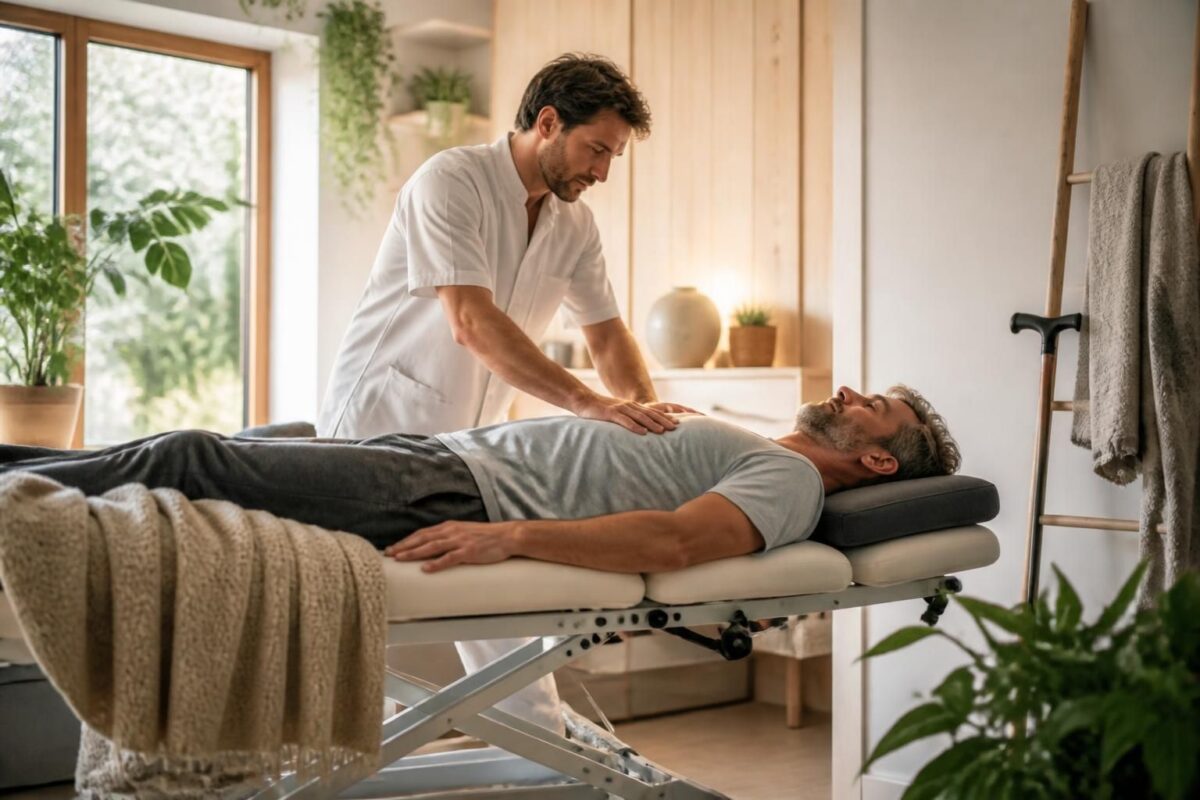
Why Osteopathy Is Essential For Recovery People
In short In short, Osteopathy in convalescence is an approach manual and holistic which helps to accelerate the recovery by restoring The balance, the mobility and a good circulation fabrics. it contributes to Reduce the pain, support the Back to…
Integration and prevention
The treatment aims at the patient’s autonomy through simple exercises, diaphragmatic breathing techniques and appropriate postural hygiene. By associating regularity and gradual progression of gestures, the objective is to reduce recurrences and maintain functional gains. The global approach focuses on continuity of care and postural education as a sustainable basis for prevention.

Osteopathic manipulations to strengthen post-traumatic muscles
In short In short, Osteopathic manipulations for Strengthen post-traumatic muscles constitute a gentle manual approach aimed at restoring the mobility, reduce the pain and facilitate the Functional rehabilitation After a injury. What is Is it? A series of precise gestures…
Comparative table of osteopathic manipulations for postural imbalances
| Aspect | Description |
|---|---|
| Objective | correct the Reversible dysfunctions systemal musculoskeletal and myo-fascial to restore thePostural balance. |
| Approaches | techniques structural, indirect and myotensive targeting mobility and posture. |
| Evaluation | Palpatory diagnosis of freezing and channels myofasciales. |
| directions | Reversible postural dysfunction and cervical, dorsal or lumbar imbalances in active ingredients. |
| Role of the patient | Active participation via contractions and conscious posture. |
| Expected effects | Improved mobility and reduction of Mechanical pain. |
| precautions | Compliance with the indications and avoid handling if compromised safety. |
| Integration | Incorporates postural advice and appropriate physical activities to maintain results. |

Osteopathy and prevention of work-related musculoskeletal disorders
In short theosteopathy is one Manual approach that restores body balance and prevents MSD related to work. Its advantages: reduction of tension, improvement of mobility and prevention of chronic pain. She is preventive and healing, suitable for office and trades…
Testimonials on osteopathic manipulations for postural imbalances
“Since I started the sessions, my posture straightened up and my Lower back pain decreased significantly. The Osteopathic manipulations, carried out with precision and softness, targeted the Postural imbalances who handicapped me on a daily basis. »
“The adjustments are specific and unstressed; I found a better mobility and increased stability at work. »
“At the office, my back was vaulted; After a few sessions, my spine Find her natural line and my breathing improves. »
“techniques centered on soft tissues and the Muscle Corrections have released Muscle tensions which were shooting at my column. »
“I won in confidence and in balance; my neck pain have disappeared and I feel lighter. »
“Asathlete, my posture and my breathing have improved; My performance benefits directly. »
The osteopath practitioner described in this biography is dedicated to Postural imbalances and offers Osteopathic manipulations targeted to restore alignment and overall stability of the body. his approach aims to correct dysfunctions reversible of the musculoskeletal system in order to improve the posture, mobility and quality of life of the patient, without claiming to solve established organic pathologies.
Faithful to a tradition that has its roots in historical empirical gestures, it relies on the foundations anatomical, biomechanical and neurophysiological solids. This modern synthesis sheds light on the mechanisms by which repeated imbalances or poor postural habits can lead to pain and functional limitations. The objective is not a one-time correction, but a lasting reharmonization of the relationships between the segments and the musculo-fascial chains that support the spine, scapulo-menton, pelvic and lumbar belts.
The main techniques revolve around several complementary families. Structural techniques are used when joint blockages or mobility restrictions are identified and require a brief but precise pulse. Myotensive techniques Involve active muscle contractions against the practitioner’s resistance to release tension and rebalance muscle chains. Functional techniques Aim for proprioceptive rehabilitation and improved neuromuscular integration, with protocols adapted to patient sensitivity. Tissue/myofascial techniques Work on soft peri-articular structures and fascias to increase elasticity and freedom of movement. the global paradigm can also include approaches visceral or other gentle techniques when the needs warrant, while remaining within the framework of an individual and secure assessment.
Before any intervention, a In-depth osteopathic diagnosis Is posed: Mobility assessment, connective tissue quality, postural discrepancies and functional irregularities. The gesture is adapted to each patient, carried out in a context of comfort and of security, with constant communication to ensure consent and well-being. Contraindications and warning signals are rigorously examined, in order to rule out any manipulation when safety or efficiency is compromised.
From a practical perspective, the treatment of postural imbalances aims to rehabilitate body chains in synergy: cervical, dorsolumbar and pelvic alignment, rebalancing of the shoulders and spine, and optimization daily posture. The clinical results are manifested by restored mobility, reduced stress and rest, as well as better functional endurance. The approach focuses on active involvement of the patient, who receives advice on exercises, ergonomics at work and postural habits to adopt to prevent recurrences.
Finally, this approach emphasizes an approach Scalable and personalized, where osteopathic manipulations are integrated into a global care program. Safety, ethics and coherence with the patient’s field guide each step, in order to propose a reliable and sustainable path towards a better posture and a better quality of life.
This article summarizes the use of Osteopathic manipulations To correct the Postural imbalances, detailing the mechanisms, main approaches and precautions to be known. He highlights an approach overall, centered on the restoration of mobility, the balance of myofascial chains and the improvement of posture on a daily basis, while favoring the personalized and secure approach for each patient.

The benefits of osteopathy to treat muscle imbalances
In short theosteopathy is a manual approach to restore themuscle harmony and postural considering the body as a whole. Its main benefits include the reduction of aches and tensions, the improvement of the mobility and from the posture, and prevention…
Foundations and objectives of osteopathic manipulations for postural imbalances
The Postural imbalances often result from a sequence of joint blockages and muscle tension that are part of the myo-fascial chains. the manipulations aim to target these reversible dysfunctions in order to restore a segmental mobility and a more balanced postural function, without claiming to solve established organic pathologies. This approach is based on anatomical, biomechanical and neurophysiological In order to promote an overall resumption of alignment and spinal and pelvic stability.
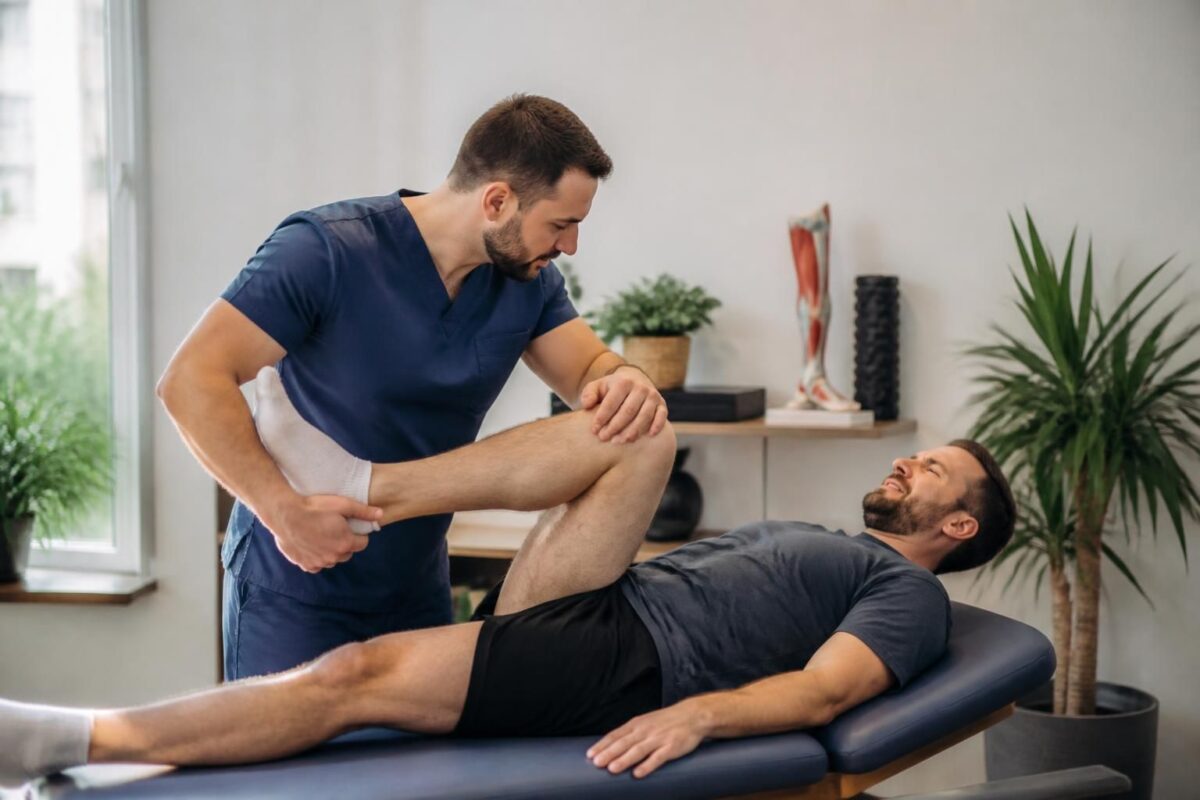
Osteopathy and chronic leg pain: regaining an optimal quality of life
In short In short, Osteopathy is one Global manual approach aimed at reducing Chronic leg pain and improve the quality of life. What is it? Non-drug therapy using the hands to identify restrictions and treat lesional chains. How does it…
The major families of techniques and their application
Structural techniques : These direct manipulations use brief and precise pulses to lift joint blockages and restore intersegmentary slip. The maintenance of the gesture is done within the framework of a clear diagnosis and appropriate positioning of the patient, often accompanied by a cracking associated with the joint cavitation. The objective remains the Liberation from mobility and patient comfort, without pain.
Myotensive techniques : They actively mobilize the patient by 3 to 5 contractions against the practitioner’s resistance. This approach aims to reduce muscle tension and rebalance the forces around dysfunction, with direct patient involvement and better body perception. They can precede or replace certain structural manipulations as appropriate.
Functional techniques : based on long-term atraumatic corrections (about 90 seconds of holding in comfort position), they aim to modulate the neurophysiology of proprioceptive receptors and to reset myo-fascial chains. These methods are particularly suitable for fragile patients or in recovery, and they offer a gentle approach to restore postural balance.
Tissue and myo-fascial techniques : These approaches, inspired in particular by the work of Littlejohn and Mitchell, focus on the extensibility of soft tissues around the joints. They make it possible to treat contractures and postural imbalances, especially in athletes and people exposed to postural compensation. They are an important part of modern manual practice.
Visceral techniques : envisaged in addition when functional digestive or visceral dysfunctions alter balance and comfort. They require a prior medical diagnosis and are intended to optimize the mobility of the thoracic and abdomino-pelvic organs, with a gentle and progressive approach.
Cranio-sacral approaches : Used by some professionals, these techniques are the subject of debate in terms of scientific validation. They are considered with caution and within the framework of a wider therapeutic set, without claiming universal efficacy.
Integration and consistency : The osteopathic approach sometimes combines direct and indirect manipulation, as well as complementary techniques (myotensive, fascial or cranio-sacral) for a correction that fits into the overall dynamic of the patient and promotes lasting consolidation.
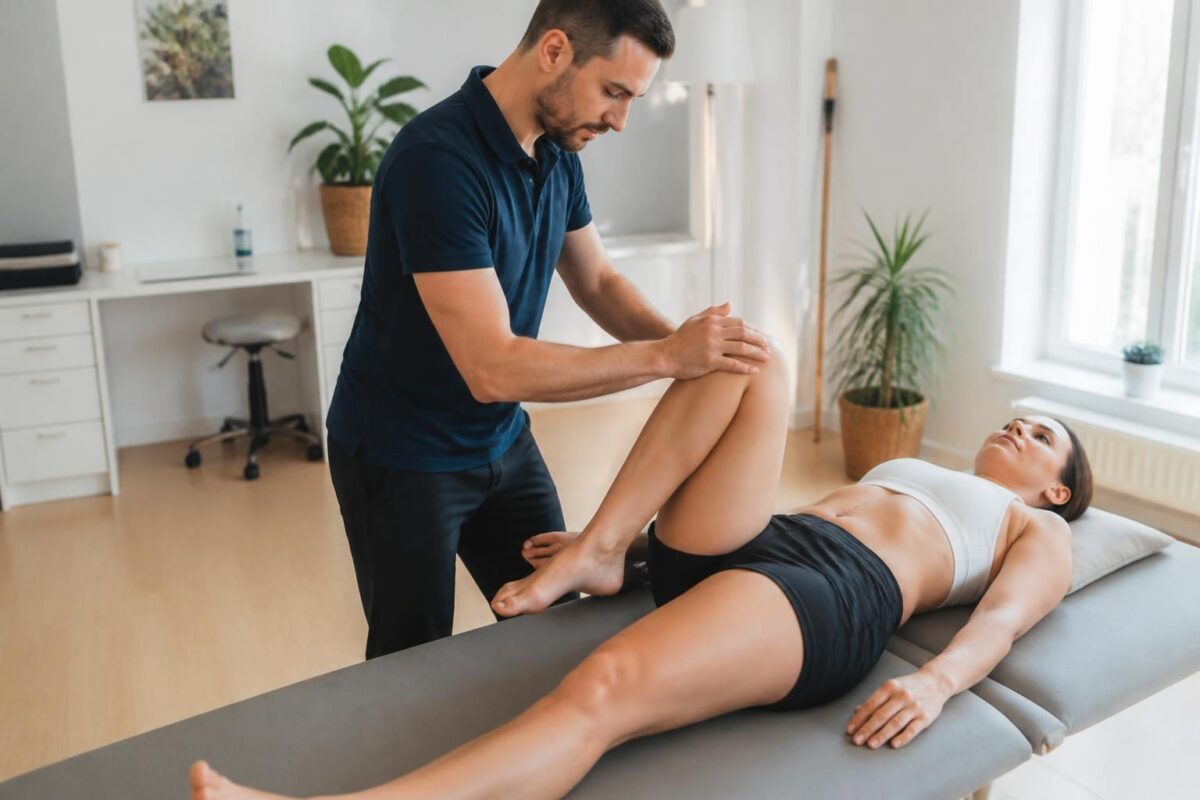
How osteopathy supports recovery after complex surgery
In short In short, Post-operative osteopathy is an approach fresh which supports the recovery After a Complex surgery. It helps to reduce the pain and the fatigue, improves the mobility and accelerates the healing thanks to a better vascularization and…
Indications, contraindications and safety
The manipulations are mainly aimed at Reversible mechanical dysfunctions and to Segmental blockages that limit mobility. Typical indications include cervical, thoracic and lumbar disorders, mechanical pain without active inflammation and residual amplitude limitations after mild trauma. On the other hand, the absolute contraindications concern inflammatory, infectious or tumoral conditions, proven osteoporosis, significant vertebral malformations and certain vascular or neurological insufficiencies which require prior medical advice. Osteopathic diagnosis remains essential to determine whether the procedure is justified and safe for the patient.
The safety of the care is based on proper preparation of the tissues, control of the gesture and clear communication with the patient. The practitioner adapts the intensity and rhythm of the manipulations according to the terrain, the pain and the tolerance of the patient, in order to avoid any discomfort or aggravation and to preserve the confidence necessary for the effectiveness of the treatment.
Clinical integration and safety
The osteopathic intervention is part of a process overall and systemic. It takes into account postural chains, diaphragm, autonomic nervous system and general postural balance. Safety and professional ethics remain priorities: the practitioner adapts the protocol to each patient, favors gradual progression and favors informed consent and the comfort of the recipient throughout the session.
Additional resources
To learn more, see the following resources:
- Techniques#ATFP_CLOSE_TRANSLATE_SPAN# Osteopathic: Methods and therapeutic indications
- Handling#ATFP_CLOSE_TRANSLATE_SPAN# Osteopathy
- les#ATFP_CLOSE_TRANSLATE_SPAN# Osteopathic manipulations to treat chronic pain
- Techniques#ATFP_CLOSE_TRANSLATE_SPAN# Osteopathic manipulatives
- Optimize#ATFP_CLOSE_TRANSLATE_SPAN# Physical Recovery
- Techniques#ATFP_CLOSE_TRANSLATE_SPAN# Osteopathic — Methods and Applications
- LES#ATFP_CLOSE_TRANSLATE_SPAN# Osteopathic manipulations to treat postural imbalances
- #ATFP_CLOSE_TRANSLATE_SPAN# Osteopathic approaches for tendon pain
- Why#ATFP_CLOSE_TRANSLATE_SPAN# Osteopathy is effective against sciatica
- Techniques#ATFP_CLOSE_TRANSLATE_SPAN# for sprain pain

Dr Sylvain Desforges, B.Sc., D.O., N.D., osteopath, is the founding president of TAGMED and of the ACMA association. He dedicates his practice to chronic spinal pain, low back pain and symptoms compatible with sciatica, particularly when pain radiates toward the buttock, leg, calf, foot or toes.
Through SOS Sciatique, he publishes educational content on sciatica symptoms, possible causes such as disc herniation, disc narrowing, foraminal stenosis or irritation of a lumbar nerve root, as well as non-surgical approaches that may be considered according to the evaluation. At Clinique TAGMED, care may include, depending on the case, motorized neurovertebral decompression, specific osteopathic care or precision percussion.
For an evaluation related to sciatica treatment in Montreal / Mount Royal or sciatica treatment in Terrebonne, please consult the services available at Clinique TAGMED.
Medical disclaimer
The information published on SOS Sciatique is provided for educational purposes only and does not replace a consultation, diagnosis, opinion or treatment provided by a physician or another authorized healthcare professional. The author of this article is neither a medical doctor nor a specialist in a medical specialty recognized by the Collège des médecins du Québec. The osteopathic, manual medicine or functional support approaches described on this site do not constitute medical acts and are not intended to replace medical follow-up.
Consult a physician or emergency service in cases of loss of bladder or bowel control, anesthesia in the saddle area, significant or progressive weakness in the leg or foot, fever, recent trauma, severe pain or rapid worsening of symptoms. For more details, please read our Legal Notice.