

Osteopathy and shoulder pain: a natural solution
27/06/2026
How Osteopathy Reduces Pain Relief
27/06/2026
In short The Osteopathic manipulations To treat the Chronic pain constitute a manual approach aimed at restoring theBody balance and promote theself-regulation natural. The main advantages include a Sustainable reduction pain, a Improving mobility and support non-invasive and personalized, suitable for back pain, at neck pain and others musculoskeletal disorders. The operation is based on the evaluation of the interactions between the musculoskeletal, visceral and nervous systems, then the application of Palpatory techniques and of engagement Adapted to release restrictions and stimulate natural healing. At Lausanne, this service is particularly recommended for Chronic pain persistent and associated conditions, offering an effective and practical solution to sustainably improve the quality of life. |
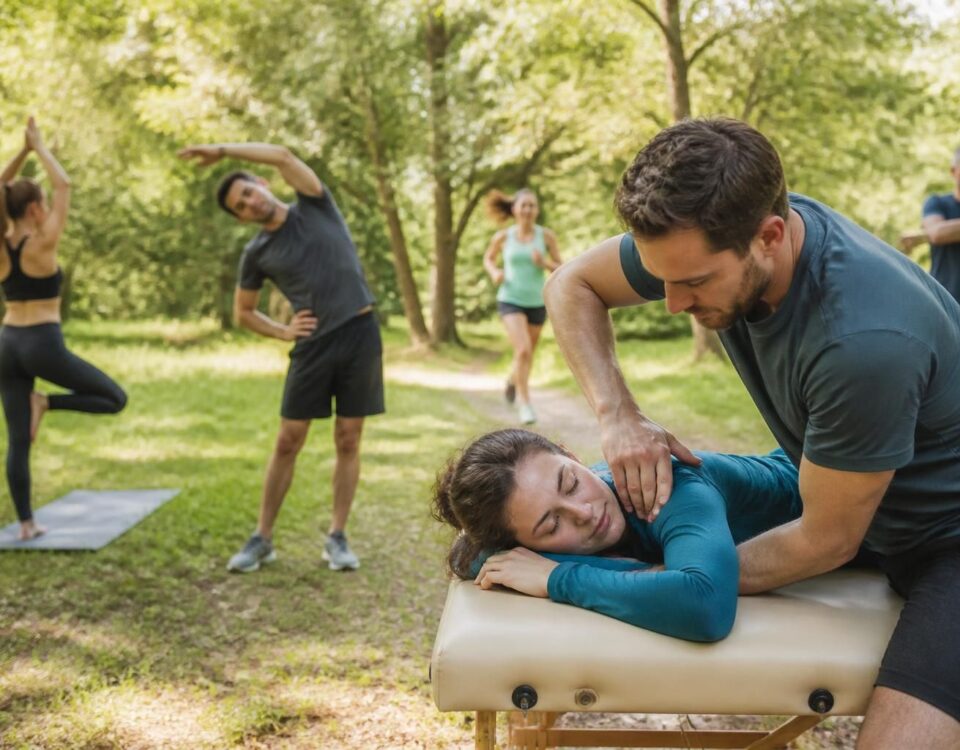
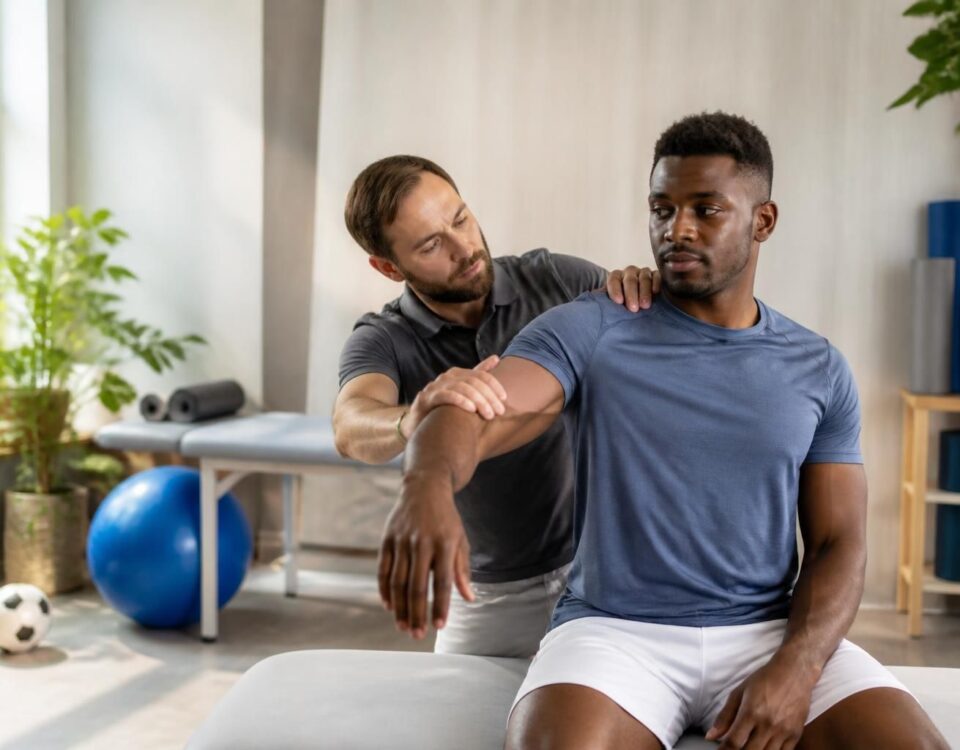
The Osteopathic manipulations offer an effective approach for Chronic pain By acting on the causes rather than on the symptoms. thanks to manual techniques targeted at the sinews, the joints and the soft goods, they improve mobility, reduce tensions and stimulate the mechanisms ofself-healing of the body. This approach holistic Aim for theOverall balance And can reduce pain for a long time, especially for low back pain, neck pain and joint pain. In addition to a healthy life plan (posture, adapted physical activity), osteopathic manipulations are part of a pathway non-invasive and personalized.
This article explains how the Osteopathic manipulations can contribute to the treatment of Chronic pain. It describes the mechanisms of action, the indications, the course of a session and the prospects for improving the quality of life. The objective is to provide clear and practical information for patients and professionals.
Principles and mechanisms
theosteopathy is based on the vision of a body as a functional unit. The system musculoskeletal, visceral, cranial and nervous continually influence each other. The practitioner favors an approach holistic and mainly uses his hands to assess and deal with tensions. This palpatory sensitivity makes it possible to identify areas of restricted mobility and to choose appropriate gestures.
The principle ofself-regulation is central. The body has healing abilities that must be accompanied by appropriate techniques. By removing mechanical restrictions and promoting better fluid circulation, the body can restore its balance. This approach explains why some patients see lasting improvements after a few sessions.
Indications and expected results
The pain lumbar, cervical and thoracic often respond favorably to osteopathic manipulations. pain related to functional disorders, sciatica And various joint pains can also be relieved. Osteopathy can also help correct certain postural disorders that maintain pain at a distance.
In the context of chronic pain, the osteopathic approach is often offered as supplements to other treatments. Clinical feedback and observations support the idea that the manual approach can improve mobility and pain perception, while promoting overall wellness. For resources and examples, see the dedicated content on SOS#ATFP_CLOSE_TRANSLATE_SPAN# Sciatica — Osteopathy and chronic pain.
Techniques and safety
Osteopathy uses different techniques adapted to the patient and his problem. the gestures are based on joint manipulations, work on the soft tissues, techniques fasciades, as well as approaches visceral or cranial. Each gesture is explained and executed with the patient’s consent, while respecting its limits and comfort.
Safety and ethics are at the heart of the practice. The patient is invited to discuss his objectives and concerns, in order to adapt the treatment and avoid any aggressiveness in the gestures.
Special cases and content without exercises for certain conditions
For situations involving a neurovertebral decompression, disc herniation, disc bulge, foraminal or spinal stenosis, or disc degeneration, the osteopathic approach focuses on evaluation and manual techniques without prescribing exercises or stretches in the frame of this article. The objective is to provide comfort and improve function as part of an individualized care plan. For specialized information on neurovertebral decompression, you can consult the resources dedicated to this area.
Additional resources and information on these specialized approaches can be accessed via dedicated web resources, including pages dedicated to neurovertebral decompression and associated pain management.
Accessibility and location of the firm
The choice of a well-located osteopathic practice influences the regularity of the visits and, consequently, the effectiveness of the treatment. In urban areas, access by public transport facilitates repeated appointments, which is important for chronic pain requiring regular follow-up. A practical location supports compliance and allows the patient to maintain a consistent plan of care.
Training and professional executive
The practice of osteopathy is part of a rigorous training framework. Recognized training courses include institutions such as Numss and NAO, as well as National University of Medical Sciences and National Academy of osteopathy. In Canada, recognized professional associations include ACMA, the College of Canadian Osteopaths and the College of Canadian Osteopaths. These benchmarks ensure the quality and safety of care.
course of an osteopathic session
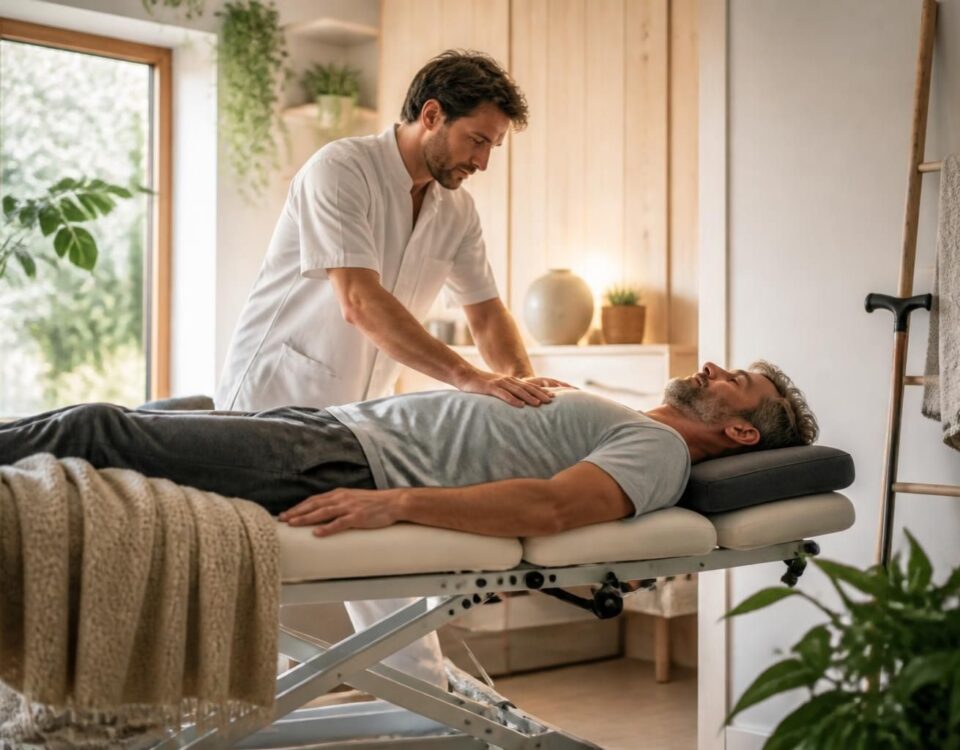
The first consultation begins with a detailed history. The professional collects the history, current symptoms and factors that aggravate or relieve them. It examines posture and evaluates mobility through simple tests. The treatment is then adapted and explained to the patient. The gestures are carried out with the consent and comfort of the patient.
complementarity with other approaches
Osteopathy is part of a multidisciplinary approach. It can be combined with other therapies to optimize pain reduction and function improvement. The doctor and the osteopath cooperate to ensure complete and appropriate care for each patient.
To deepen the scientific aspects and progress, see the associated resources on LES#ATFP_CLOSE_TRANSLATE_SPAN# Recent innovations in the field of osteopathy.
References and useful resources
Additional information on the mechanisms and results of osteopathy can be viewed through the following resources: Relieve#ATFP_CLOSE_TRANSLATE_SPAN# Joint pain without medication thanks to osteopathy, Benefits#ATFP_CLOSE_TRANSLATE_SPAN# of osteopathy for lower back pain, and Techniques#ATFP_CLOSE_TRANSLATE_SPAN# Osteopathics: Methods and Indications.
For information relating to clinical practice and training, associated resources such as Clinic#ATFP_CLOSE_TRANSLATE_SPAN# TAGMED can be consulted to observe the hospital setting and the services offered.
Medical Disclaimer: The information and advice provided on this site does not replace the health professional’s diagnosis or treatment. Please note that Dr. Sylvain Desforges osteopath is neither a doctor of medicine nor a doctor, and is not a specialist in a medical specialty as defined by the Collège des Médecins du Québec. Manual medicine, functional medicine and sports medicine as described on this site exclude any medical treatment or diagnosis made by a doctor or specialist doctor. Always consult your doctor for any medical questions. For more details, please read our full legal notice.
- Touch diagnosis and targeting restrictive areas
- Various techniques : Mobilizations, work of the fascias, visceral and cranial
- Objective : Restore mobility and fluid circulation
- Principle : Stimulation of self-regulation and natural healing
- sessions : Progression, comfort and consent
- Results : lasting improvement of the function
- directions : Chronic musculoskeletal pain and postural disorders
- Treated areas : column, hips, shoulders, knees
- Mechanisms : Voltage reduction and optimized alignment
- progress : rapid anamnesis, targeted examination, treatment and advice
- Security : complement to medicine, not substitute
- Expected results : Decreased pain and better mobility
- Frequency : Regularity and activity program
- Limitations : Variable efficiency and need for multimodal approach

This sheet shows you how the Osteopathic manipulations can help treat Chronic pain, favoring an approach overall and adapted to each patient. You will discover the mechanisms of action, the indications, the course of a session and practical advice to optimize the results and sustainably improve your quality of life.
Understanding the Osteopathic Approach to Chronic Pain
The foundations of an integrative practice
Osteopathic manipulations are based on a vision of the body as a functional unit. The therapist identifies the mobility restriction areas and acts by manual techniques aimed at releasing tension and improving the circulation of body fluids. This approach holistic Takes into account the relationships between the musculoskeletal, visceral and nervous systems, in order to promote theself-regulation and physiological balance.
how they act on chronic pain
By restoring mobility and releasing tensions, they alleviate nociceptive messages and restore function. The effects observed include reduced pain, increased range of motion and decreased symptoms when treatment was previously insufficient. The approach is personalized according to the patient and the evolution of his pain.

How osteopathy improves the quality of life of active people
In short In short, theosteopathy is a global approach that Optimizes mobility and the function of the body of ACTIVE PEOPLE, for a better quality of life. It helps prevent injury and reduce Musculoskeletal pain While promoting the Sports recovery.…

Osteopathy and sports recovery: prepare the body for lasting performance
In short In short, Osteopathy and Sports recovery is one Global manual approach that sustainably prepares the body for the effort by restoring mobility and circulation After the effort. It is a discipline that acts on the sinews, the joints,…
Benefits and indications
For what disorders and for whom
Low back, cervical and joint pain frequently respond favorably to manipulations. Chronic pain linked to prolonged postures, muscle tension and visceral dysfunctions can also benefit from this type of care. This approach is suitable for athletes, active adults or people looking for a non-drug alternative to limit side effects.
Security conditions and limits
osteopathic manipulations are designed to be non-invasive and adapted to each patient. They are part of a safety approach, with a preliminary assessment and appropriate progression. They do not replace a medical consultation when necessary and may be associated with other therapies for a global treatment plan.
Why Osteopathy Is Essential For Recovery People
In short In short, Osteopathy in convalescence is an approach manual and holistic which helps to accelerate the recovery by restoring The balance, the mobility and a good circulation fabrics. it contributes to Reduce the pain, support the Back to…

Osteopathic manipulations to strengthen post-traumatic muscles
In short In short, Osteopathic manipulations for Strengthen post-traumatic muscles constitute a gentle manual approach aimed at restoring the mobility, reduce the pain and facilitate the Functional rehabilitation After a injury. What is Is it? A series of precise gestures…
course of a session and practical advice
What happens when handling
During the session, the therapist begins with a anamnesis targeted, then performs joint, fascial or cranial assessments and manipulations. Each gesture is explained to the patient and executed with his consent, respecting comfort and personal limits.
Tips for optimizing results
To maximize benefits, combine manipulations with appropriate physical activity, good lifestyle and post-treatment advice. Stay regular in the consultations and report any unusual reactions. The objective is a lasting and progressive improvement, without pain after the sessions.

Osteopathy and prevention of work-related musculoskeletal disorders
In short theosteopathy is one Manual approach that restores body balance and prevents MSD related to work. Its advantages: reduction of tension, improvement of mobility and prevention of chronic pain. She is preventive and healing, suitable for office and trades…

The benefits of osteopathy to treat muscle imbalances
In short theosteopathy is a manual approach to restore themuscle harmony and postural considering the body as a whole. Its main benefits include the reduction of aches and tensions, the improvement of the mobility and from the posture, and prevention…
Why choose an osteopathic approach for chronic pain
Personalized and sustainable support
Osteopathic manipulations offer a Custom solution and lasting For pain management, favoring prevention and functional rehabilitation. This approach can help reduce drug dependence and enhance quality of life.
Osteopathy and chronic leg pain: regaining an optimal quality of life
In short In short, Osteopathy is one Global manual approach aimed at reducing Chronic leg pain and improve the quality of life. What is it? Non-drug therapy using the hands to identify restrictions and treat lesional chains. How does it…
How osteopathy supports recovery after complex surgery
In short In short, Post-operative osteopathy is an approach fresh which supports the recovery After a Complex surgery. It helps to reduce the pain and the fatigue, improves the mobility and accelerates the healing thanks to a better vascularization and…
Osteopathic manipulations and chronic pain — Comparator table
| Aspect | Description |
|---|---|
| Therapeutic objective | sustainably relieve the chronic pain and restore the mobility By correcting mechanical restrictions and voltages. |
| Key principles | Approach holistic Focused on body-mind interactions and rebalancing of musculoskeletal, visceral and nervous systems. |
| Common techniques | Joint manipulations, work of soft tissues, Techniques fasciales and sometimes technical cranial. |
| Typical indications | back pain, neck pain, dorsalgia, sciatica and pain related to chronic postures. |
| Potential Benefits | reduction of pain, improvement of the mobility and of comfort daily. |
| Limits and precautions | not universal; Requires assessment and coordination with other specialists depending on the cause. |
| Rhythm of the sessions | regular sessions over several weeks; adaptation according to the patient’s response. |
| Safety and side effects | generally well tolerated; possible temporary aches and slight transient aggravation. |
| Expected results | Progressive and lasting improvement after several sessions, with better functional ability. |
| complementarity | Optimized with physiotherapy, exercises and lifestyle; May reduce drug needs. |
Testimonials on osteopathic manipulations to treat chronic pain
Valérie, 52, suffered from Chronic lumbar pain which limited his daily activities. After several sessions centered on Osteopathic manipulations and work on fabrics, she found a Notable decrease in pain and a better mobility. Today, she can get up and move without this stiffness that once annoyed her.
Jean, 38, suffered from Recurrent neck pain and of Occasional migraines. After appropriate care and Osteopathic manipulations, the painful episodes have spaced out and its quality of sleep improved, allowing him to resume his professional activities and leisure without fear of a crisis.
Sophie, 62, felt Diffuse joint pain and tensions that were spreading. thanks to a protocol dosteopathy personalized, she observed a reduction of tensions and an posture improvement, which facilitated his movements and his daily routines.
Pierre, 44, sportsman, used the Osteopathic manipulations as Injury prevention and to optimize its Post-workout recovery. After a few sessions, he felt a better flexibility and an Performance progression without persistent pain.
In the field of contemporary care, Osteopathic manipulations play a key role in the treatment of Chronic pain. This manual approach is based on a philosophy that favors the prevention, rehabilitation and overall well-being of the patient. By favoring individualized care, osteopathy aims to reduce the grip of pain that persists and to restore the capacity of an active and fulfilling life.
The practice is based on a Integrative vision of the body, where each structure is in interaction with the others. The body is seen as a functional unit where the systems musculoskeletal, visceral, cranial and nervous constantly dialogue. The practitioner’s hands are the main tool for evaluation and treatment, allowing for fine detection of restriction areas and a targeted intervention adapted to each patient.
The concept ofself-regulation Forms the philosophical base of osteopathy. The idea is that the body has natural healing abilities that can be released by levitating mechanical blockages and improving the circulation of bodily fluids. When restoring balance and mobility, the body can trigger regulatory mechanisms that promote long-lasting well-being, even in situations where pain has long persisted.
The Therapeutic applications Widely cover chronic back and neck pain, sciatica, joint pain and functional pathologies. Osteopathy is also addressed to postural disorders that cause painful compensation from the initial problem. At the same time, sports performance can benefit from osteopathic support to prevent injuries and optimize recovery, whether you are an amateur or professional athlete.
The techniques used are varied and adapted to each individual. They include Joint mobilizations, approaches fasciasal, as well as interventions visceral and cranial when the situation requires it. The treatment is always explained to the patient, and the choice of gestures is done in the respect of comfort and personal limits, with particular attention paid to safety and informed consent.
The course begins with a in-depth anamnesis and an evaluation of posture and movements. the practitioner identifies the aggravating factors and concept of Personalized therapeutic strategy, sometimes involving exercises to be carried out at home and regular reassessments to adjust the care plan and optimize the results over the long term.
Finally, osteopathy is part of a logic of collaboration with other health professionals. It complements conventional medical approaches and can help reduce drug reliance when integrated into a comprehensive, multidisciplinary care plan. The choice of a certified and experienced practitioner remains essential to guarantee safety, quality and continuous therapeutic progression.
This summary highlights that the Osteopathic manipulations constitute an approach holistic for the Chronic pain, aimed at restoring the mobility, to stimulate theself-regulation of the body and to be integrated into a multidisciplinary care course to sustainably improve the quality of life.
The Osteopathic manipulations are based on the idea that the body is a functional unit: Manual techniques used seek to remove mobility restrictions and restore balance to tissues and joints, which can lead to a reduction pain and a lasting improvement in functions. This approach is based on a philosophy ofself-management and self-repair capacity, conducive to perceptible results after a few sessions in many patients with chronic pain.
Several clinical data and feedback converge to show a Lasting pain reduction and an Functional improvement In people with lower back, cervical or sciatica pain, as well as in various functional contexts. Recent professional resources and syntheses underline the importance of individualized assessment and appropriate therapeutic progression for each patient. For further information, we can consult analyzes that summarize theEfficiency#ATFP_CLOSE_TRANSLATE_SPAN# Osteopathic manipulations on chronic pain.
Typical indications include Lower back pain, the neck pain and associated joint pain, while taking into account postural aspects and functional symptoms. Osteopathy can be particularly useful in the prevention and management of sports injuries, in pregnancy and postpartum situations, and in the treatment of functional pathologies that do not fully respond to conventional treatments. To explore the specific benefits in postpartum women or people with scoliosis, refer to these pages respectively: Advantages#ATFP_CLOSE_TRANSLATE_SPAN# for postpartum women and Advantages#ATFP_CLOSE_TRANSLATE_SPAN# for people with scoliosis.
This practice is naturally part of an approach complementary to conventional medicine and can be part of a Multidisciplinary treatment plan, sometimes in reduction of drug treatments. For a broader vision of benefits and integration prospects, we can consult resources that present osteopathy as pain manager, particularly in the context of chronic pain and integrative approaches: Osteopathy#ATFP_CLOSE_TRANSLATE_SPAN# and pain management.
Finally, the choice of the practitioner and an in-depth first consultation remain decisive. Focusing on a certified and experienced osteopath, discussing therapeutic objectives and considering a progression adapted to your own pace are key elements to maximize benefits and ensure the safety of treatment. Additional professional resources and testimonies can shed light on this choice and situate osteopathy in a modern and reactive health setting: Osteopathy#ATFP_CLOSE_TRANSLATE_SPAN# and chronic pain.

Dr Sylvain Desforges, B.Sc., D.O., N.D., osteopath, is the founding president of TAGMED and of the ACMA association. He dedicates his practice to chronic spinal pain, low back pain and symptoms compatible with sciatica, particularly when pain radiates toward the buttock, leg, calf, foot or toes.
Through SOS Sciatique, he publishes educational content on sciatica symptoms, possible causes such as disc herniation, disc narrowing, foraminal stenosis or irritation of a lumbar nerve root, as well as non-surgical approaches that may be considered according to the evaluation. At Clinique TAGMED, care may include, depending on the case, motorized neurovertebral decompression, specific osteopathic care or precision percussion.
For an evaluation related to sciatica treatment in Montreal / Mount Royal or sciatica treatment in Terrebonne, please consult the services available at Clinique TAGMED.
Medical disclaimer
The information published on SOS Sciatique is provided for educational purposes only and does not replace a consultation, diagnosis, opinion or treatment provided by a physician or another authorized healthcare professional. The author of this article is neither a medical doctor nor a specialist in a medical specialty recognized by the Collège des médecins du Québec. The osteopathic, manual medicine or functional support approaches described on this site do not constitute medical acts and are not intended to replace medical follow-up.
Consult a physician or emergency service in cases of loss of bladder or bowel control, anesthesia in the saddle area, significant or progressive weakness in the leg or foot, fever, recent trauma, severe pain or rapid worsening of symptoms. For more details, please read our Legal Notice.