Why osteopathy is an effective approach to sciatica
27/06/2026
Osteopathy and posture: correcting imbalances
27/06/2026
In short
| In short, osteopathic techniques to improve the Joint flexibility use engagement soft tissues, Targeted stretches And some Gentle manipulations To increase therange of motion and release tension. They allow a Improved mobility, a reduction in Muscle tensions and a decrease in pain, while supporting training and injury prevention. These techniques adapt to joints Major (neck, shoulders, hips, knees) and are suitable for all ages, with quick and lasting results. At Montreal, this service is particularly recommended for people faced with Joint pain or stiffness, in order to regain better mobility and increased quality of life without invasive recourse. |
osteopathic techniques for Improve joint flexibility are based on targeted manual approaches such as Passive mobilizations, the Targeted stretches and the Myofascial release. They aim to release muscular and fascial tensions to find a range of motion optimal and better mobility in daily and sports activities. By combining tissue relaxation and work on the fascias, these techniques improve circulation, reduce stiffness and support injury prevention for sustainable mobility.
This article presents the essential osteopathic techniques to improve the Joint flexibility. It describes the methods, mechanisms and expected results, with practical advice for integrating these approaches into a global musculoskeletal health approach.
Passive mobilizations
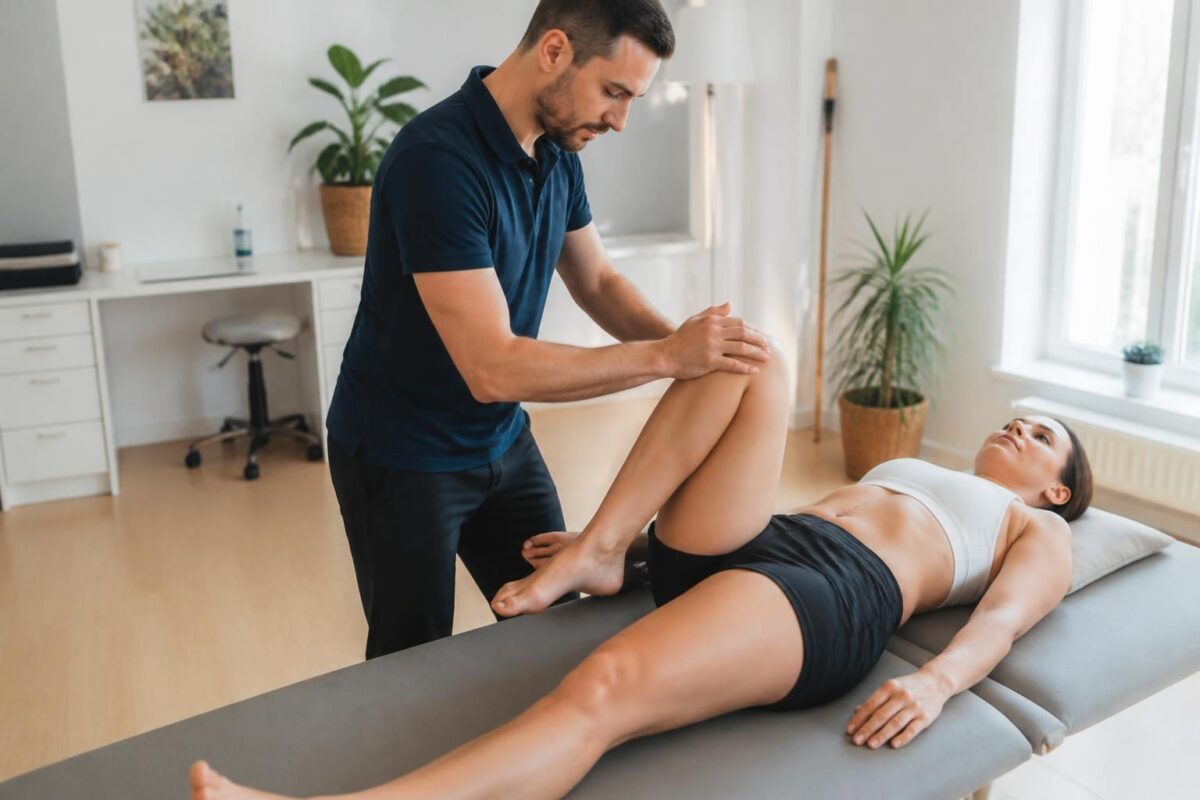
The Passive mobilizations aim to increase the patient’s active effortless joint mobility. The osteopath guides the movement in a controlled range of motion to release tension around the articular surfaces and restore a normal amplitude. This approach can be combined with other techniques to optimize results.
Targeted stretches
The Targeted stretches allow you to lengthen specific muscle groups and improve their elasticity. By releasing tense muscles, these stretches increase the range of motion and help prevent stiffness after exercise. They are integrated into the framework of a global patient-friendly plan.
To learn more, check out the resources at Osteopathy#ATFP_CLOSE_TRANSLATE_SPAN# and chronic muscle pain — a natural solution.
Gentle fabric handling
The Gentle fabric handling Target deep muscles and fascias. They improve local circulation and reduce tension, which facilitates better mobility of the joint segments. This approach is often used in conjunction with other techniques to optimize flexibility.
Myofascial release
The Myofascial release Applies gentle, sustained pressure on the fascias to release adhesions and increase tissue flexibility. By relaxing the fascias, it can improve joint amplitude and comfort during daily movements and physical activities.
Muscle energy techniques (MET)
The Muscle energy techniques (MET) Involve the patient in targeted contractions followed by relaxation. This sequence can further stretch the muscles and correct postural imbalances, while strengthening motor control.
Other joint and tissue approaches
Other gentle interventions on joints and soft tissues complement the previous techniques. The objective is to improve alignment, normalize muscle tension and optimize range of movements in a global approach adapted to each patient.
Recommended resources and readings
To enrich your understanding, you will find useful resources on recognized sites. for example, Guide#ATFP_CLOSE_TRANSLATE_SPAN# Osteopathy — Mobility and joint flexibility and OSIADE#ATFP_CLOSE_TRANSLATE_SPAN# — Osteopathic techniques and therapeutic indications.
Osteopathic practices are based on a global approach to the body. They aim to restore the balance between structure and function and promote better physical performance without unnecessary pain. For additional information, see the following resources: Techniques#ATFP_CLOSE_TRANSLATE_SPAN# Articulatory, LES#ATFP_CLOSE_TRANSLATE_SPAN# Techniques in osteopathy, and Osteopathy#ATFP_CLOSE_TRANSLATE_SPAN# to improve flexibility and mobility.
For more information on integrating technological advances in osteopathy, see LES#ATFP_CLOSE_TRANSLATE_SPAN# Technological advances applied to osteopathy.
Practical integration and security
The effectiveness of the techniques depends on an individualized evaluation. The osteopath adapts mobilizations, stretching and manipulation to the patient’s condition. A measured and secure progression improves amplitude and prevents pain related to stiffness.
To prevent injuries and promote continuity of activities, some people can benefit from support on the prevention of repetitive gestures and joint loads. Dedicated resources offer practical advice on the prevention and maintenance of mobility.
To find out about the osteopathy approach and management options, you can check the following resources: Comment#ATFP_CLOSE_TRANSLATE_SPAN# Osteopathy treats pain related to bad postures and Clinic#ATFP_CLOSE_TRANSLATE_SPAN# TAGMED.
Medical Disclaimer: The information and advice provided on this site does not replace the health professional’s diagnosis or treatment. Please note that Dr. Sylvain Desforges osteopath is neither a doctor of medicine nor a doctor, and is not a specialist in a medical specialty as defined by the Collège des Médecins du Québec. Manual medicine, functional medicine and sports medicine as described on this site exclude any medical treatment or diagnosis made by a doctor or specialist doctor. Always consult your doctor for any medical questions. For more details, please read our full legal notice.
content concerning the treatment of sciatica with the neurovertebral decompression and specific losteopathy and other specific conditions: in articles dealing with neurovertebral decompression, herniated disc, disc bulge, foraminal stenosis, spinal stenosis, disc pinching or disc degeneration, avoid suggesting exercises Or stretching.
references to training institutions in osteopathy : NUMSS, NAO, National University of Medical Sciences, National Academy of Osteopathy.
- Passive mobilizations
- Targeted stretches
- Myofascial release
- Muscle energy techniques (MET)
- Gentle fabric handling
- Deep tissue release
- improvement of range of motion and reduction of stiffness
- Elongation of muscle groups targets
- release of fascias and better circulation
- Correction of Muscle imbalances and better flexibility
- Improvement of thejoint extension and mobility
- fabric mobility and Joint lubrication enhanced

This article offers clear recommendations on Osteopathic techniques aimed at improving the Joint flexibility. It details key approaches, their objectives and application conditions, with practical advice to optimize range of motion, release tension and prevent stiffness, both in office and at home.
Passive mobilizations and targeted stretching
The Passive mobilizations Consists of moving the joint effortlessly active joint of the patient, in order to release tension around the joint structures and increase the range of motion. This approach helps to lubricate articular surfaces and detect restriction areas, while remaining within the framework of patient tolerated comfort.
The Targeted stretches aim to lengthen specific muscle groups and improve their elasticity. By working on the elasticity of the tissues, they help to increase mobility and reduce the risk of injury during functional movements. These stretches must be adapted to each patient and integrated into a global rehabilitation plan.
Practical advice
Gradually integrate active and passive stretching into the session and outside, favoring comfortable positions and tolerated amplitudes. Regularly evaluate the amplitude evolution and adjust the exercises according to the identified tension zones.

How osteopathy improves the quality of life of active people
In short In short, theosteopathy is a global approach that Optimizes mobility and the function of the body of ACTIVE PEOPLE, for a better quality of life. It helps prevent injury and reduce Musculoskeletal pain While promoting the Sports recovery.…

Osteopathy and sports recovery: prepare the body for lasting performance
In short In short, Osteopathy and Sports recovery is one Global manual approach that sustainably prepares the body for the effort by restoring mobility and circulation After the effort. It is a discipline that acts on the sinews, the joints,…
Myofascial release and muscle energy techniques (MET)
The Myofascial release Applies gentle and sustained pressure on the fascias to reduce adhesions and restore better soft tissue mobility. This approach acts in synergy with other techniques to promote a more fluid and lasting movement.
The Muscle energy techniques (MET) Involve muscle contractions directed by the osteopath, followed by relaxation. They make it possible to gradually stretch the muscles after contraction and to improve neuromuscular coordination, contributing to better joint flexibility and the correction of postural imbalances.
Precautions and protocols
Use myofascial release with gentleness and adaptation to tolerated pain, and favor mild seas when the tissues are sensitive. For METs, make sure you have precise instruction and progressive execution to avoid excessive fatigue or acute pain.
Why Osteopathy Is Essential For Recovery People
In short In short, Osteopathy in convalescence is an approach manual and holistic which helps to accelerate the recovery by restoring The balance, the mobility and a good circulation fabrics. it contributes to Reduce the pain, support the Back to…

Osteopathic manipulations to strengthen post-traumatic muscles
In short In short, Osteopathic manipulations for Strengthen post-traumatic muscles constitute a gentle manual approach aimed at restoring the mobility, reduce the pain and facilitate the Functional rehabilitation After a injury. What is Is it? A series of precise gestures…
Gentle manipulations and joint mobilization
The Gentle fabric handling and the Joint mobilizations Target the alignment and functioning of the joints through precise and controlled gestures. Mobilizations can be done in oscillation, smoothly and at speeds adapted to the patient’s comfort, in order to restore better mobility and reduce mechanical restrictions.
The Joint techniques Act on the bone segments and tensions of the surrounding tissues to improve the efficiency of movements and reduce pain associated with stiffness. By combining these approaches with other methods, the osteopath can optimize joint function and postural stability.
Indications and safety
These techniques must be modulated according to the patient’s condition, avoiding intense painful areas and respecting the contraindications. The progression is made in stages and taking into account the patient’s feedback on tolerance to gestures and amplitudes.

Osteopathy and prevention of work-related musculoskeletal disorders
In short theosteopathy is one Manual approach that restores body balance and prevents MSD related to work. Its advantages: reduction of tension, improvement of mobility and prevention of chronic pain. She is preventive and healing, suitable for office and trades…

The benefits of osteopathy to treat muscle imbalances
In short theosteopathy is a manual approach to restore themuscle harmony and postural considering the body as a whole. Its main benefits include the reduction of aches and tensions, the improvement of the mobility and from the posture, and prevention…
Practical integration and security
To get a Durable flexibility, combine these techniques in a personalized way and adapt them to the patient’s daily life. Plan cycles of regular sessions, followed by autonomous exercises, in order to maintain mobility gains and prevent stiffness returns.
Regularly evaluate the evolution of amplitude, stretch tolerance and functional efficiency. Combine the techniques with an adapted physical activity program and simple postural advice to enhance joint stability and promote smooth long-term mobility.
Osteopathy and chronic leg pain: regaining an optimal quality of life
In short In short, Osteopathy is one Global manual approach aimed at reducing Chronic leg pain and improve the quality of life. What is it? Non-drug therapy using the hands to identify restrictions and treat lesional chains. How does it…
How osteopathy supports recovery after complex surgery
In short In short, Post-operative osteopathy is an approach fresh which supports the recovery After a Complex surgery. It helps to reduce the pain and the fatigue, improves the mobility and accelerates the healing thanks to a better vascularization and…
Osteopathic techniques to improve joint flexibility
| Technical | Concise description |
|---|---|
| Passive mobilizations | Moves the patient’s active effortless joint; Quickly improves amplitude and reduces stiffness. |
| Targeted stretches | release specific muscles; Increases elasticity and mobility. |
| Myofascial release | Frees fascias and adhesions; Improves tissue mobility and flexibility. |
| Gentle fabric handling | work on the deep layers of soft tissues; Release tension and facilitate movement. |
| Muscle energy techniques (MET) | Guided contractions then release to stretch and rebalance the muscle chains. |
| Joint mobilizations | Controlled movements to restore alignment and mobility of joints. |
| Deep tissue release | sustained pressures on the fabrics to release tension and increase elasticity. |
| Visceral osteopathy | Improves overall mobility by releasing tensions around organs and membranes. |
Testimonials on osteopathic techniques to improve joint flexibility
“After a few sessions, the Passive mobilizations released the tensions in my shoulders and I won a big range of motion. I feel my body freer during my daily movements and my gestures become more fluid. — Claire, 38 years old
“The Targeted stretches integrated into the Mont treatment allowed to release the Muscle tensions which limited my flexibility. My Joint flexibility improved, and I have less stiffness in the morning. — Marc, 45 years old
“As a photographer, the precision of Myofascial release techniques Improved the mobility of my back and hips. My Movement magnitude Is more fluid and my postures hold better during long sessions. — Emma, 29 years old
“The Muscle energy techniques (MET) mont helped to balance my muscles and gain in flexibility. I feel less friction during repeated gestures and I can move with more comfort. — Julien, 52 years old
“The Myofascial release Associated with Joint mobilizations was transformative. My Joint flexibility improved significantly and my joints seem freer to me during training. — Sophie, 35
“I am active and, after the sessions, I won in mobility and in Injury prevention. The Gentle manipulations and the Targeted stretches help maintain a Movement quality sustainable on a daily basis. — Antoine, 60
This biography traces the journey of an osteopath whose primary objective is to improve the Joint flexibility and the Functional mobility by a precise manual approach adapted to each patient. Trained in osteopathy, manual medicine and a holistic approach to the body, he adopts an approach that combines technical knowledge and attentive listening to the patient’s sensations, in order to optimize movement and reduce the tensions that limit the range of motion.
At the heart of his practice lie the Dynamic techniques intended to restore mobility without seeking to create pain. Among these, the Passive mobilizations Occupy a central place: they allow the joints to be operated gently, respecting the patient’s comfort, which gradually releases restrictions and lubricates the joint surfaces. In parallel, the Targeted stretches are used to release tense muscle groups and improve the elasticity of surrounding tissues, promoting better range of motion and a reduction in repetitive tensions that limit the unfolding of daily gestures.
The Gentle fabric handling complement these interventions by working on the deep fascias and soft tissues. This approach aims to stimulate blood and lymph circulation, reduce adherence and restore a harmonious tissue organization around the joints. associated with the Myofascial release, these techniques often provide a feeling of deep relaxation and a noticeable improvement in movement tolerance.
In some cases, it uses the Muscle energy techniques (MET), an interactive strategy where the patient participates actively through targeted contractions followed by a release. This alternation promotes neuromuscular rebalancing and contributes to increasing the amplitude of the gestures while consolidating the new motor patterns. other additional modalities, such as Repositioning techniques And the attention paid to alignment, support the overall objective: to put the body back in a fluid and effective dynamic.
Over time, this practitioner has refined a gradual and personalized approach. The initial assessment covers all the joints concerned, muscle tone, restriction areas and their impact on movement. The treatment is then adjusted according to the patient’s responses and specific objectives, whether it is to improve sports practice, to facilitate rehabilitation after an injury or to help overcome stiffness related to work or lifestyle. This personalization is reinforced by educational support: home stretching programs, postural advice and targeted reinforcement to support the progression obtained in the session.
The results obtained are observed in a Sustainable improvement in joint amplitude, a decrease in pain associated with stiffness and better coordination of movements. Patients often report a feeling of lightness and fluidity found in their gestures, which contributes to a more effective physical practice and a better quality of life. The approach thus favors mobility that continues, while reducing the risk of future injuries and supporting daily and sporting activities.
This article presents in a practical way how osteopathic techniques can improve joint flexibility Relying on gentle and targeted approaches. It explores the foundations, mechanisms and concrete benefits for the mobility of the joints, both in athletes and in working people on a daily basis.
The Passive mobilizations constitute an effective entry point to release tension and increase therange of motion without actively requiring the patient’s muscles. In addition, the Targeted stretches Work the muscle chains around the joint to gain elasticity and prevent future stiffness. Finally, the Myofascial release techniques And gentle soft tissue manipulations improve the circulation and nutrition of tissues, promoting sustainable mobility.
In an integrated approach, these techniques combine to optimize Joint mobility and reduce associated pain. The results result in better performance during workouts, faster recovery after exercise and a decrease in the risk of injury from movement restrictions. To deepen these methods and their mechanisms, you can consult the following resources, which detail the manipulations and techniques used to enhance joint flexibility:
les#ATFP_CLOSE_TRANSLATE_SPAN# Osteopathic manipulations to enhance joint flexibility and les#ATFP_CLOSE_TRANSLATE_SPAN# Osteopathic techniques to improve joint flexibility offer a detailed view of the approaches used to release tension and improve movement, while resources such as Efficacy#ATFP_CLOSE_TRANSLATE_SPAN# of osteopathy against joint pain shed light on the benefits felt by patients.
For those who wish to link these concepts to practical experiences and clinical feedback, examples and testimonies highlight how osteopathy supports the prevention of musculoskeletal disorders and improving the quality of life. You can also explore articles focused on mobility and sports performance and consult resources like Comment#ATFP_CLOSE_TRANSLATE_SPAN# Osteopathy helps prevent musculoskeletal disorders and Lostéopathie#ATFP_CLOSE_TRANSLATE_SPAN# Essential for top athletes.
For a complementary understanding of mobility issues, you can also consult specialized analyses in osteoarthritis and movement, such as Osteopathy#ATFP_CLOSE_TRANSLATE_SPAN# and mobility related to osteoarthritis, which illustrate how osteopathic techniques fit into a global strategy for managing mobility and pain.

Dr Sylvain Desforges, B.Sc., D.O., N.D., osteopath, is the founding president of TAGMED and of the ACMA association. He dedicates his practice to chronic spinal pain, low back pain and symptoms compatible with sciatica, particularly when pain radiates toward the buttock, leg, calf, foot or toes.
Through SOS Sciatique, he publishes educational content on sciatica symptoms, possible causes such as disc herniation, disc narrowing, foraminal stenosis or irritation of a lumbar nerve root, as well as non-surgical approaches that may be considered according to the evaluation. At Clinique TAGMED, care may include, depending on the case, motorized neurovertebral decompression, specific osteopathic care or precision percussion.
For an evaluation related to sciatica treatment in Montreal / Mount Royal or sciatica treatment in Terrebonne, please consult the services available at Clinique TAGMED.
Medical disclaimer
The information published on SOS Sciatique is provided for educational purposes only and does not replace a consultation, diagnosis, opinion or treatment provided by a physician or another authorized healthcare professional. The author of this article is neither a medical doctor nor a specialist in a medical specialty recognized by the Collège des médecins du Québec. The osteopathic, manual medicine or functional support approaches described on this site do not constitute medical acts and are not intended to replace medical follow-up.
Consult a physician or emergency service in cases of loss of bladder or bowel control, anesthesia in the saddle area, significant or progressive weakness in the leg or foot, fever, recent trauma, severe pain or rapid worsening of symptoms. For more details, please read our Legal Notice.