

How Osteopathy Helps Relieve Neuropathic Pain
28/06/2026
Osteopathic techniques to treat lower limb pain
28/06/2026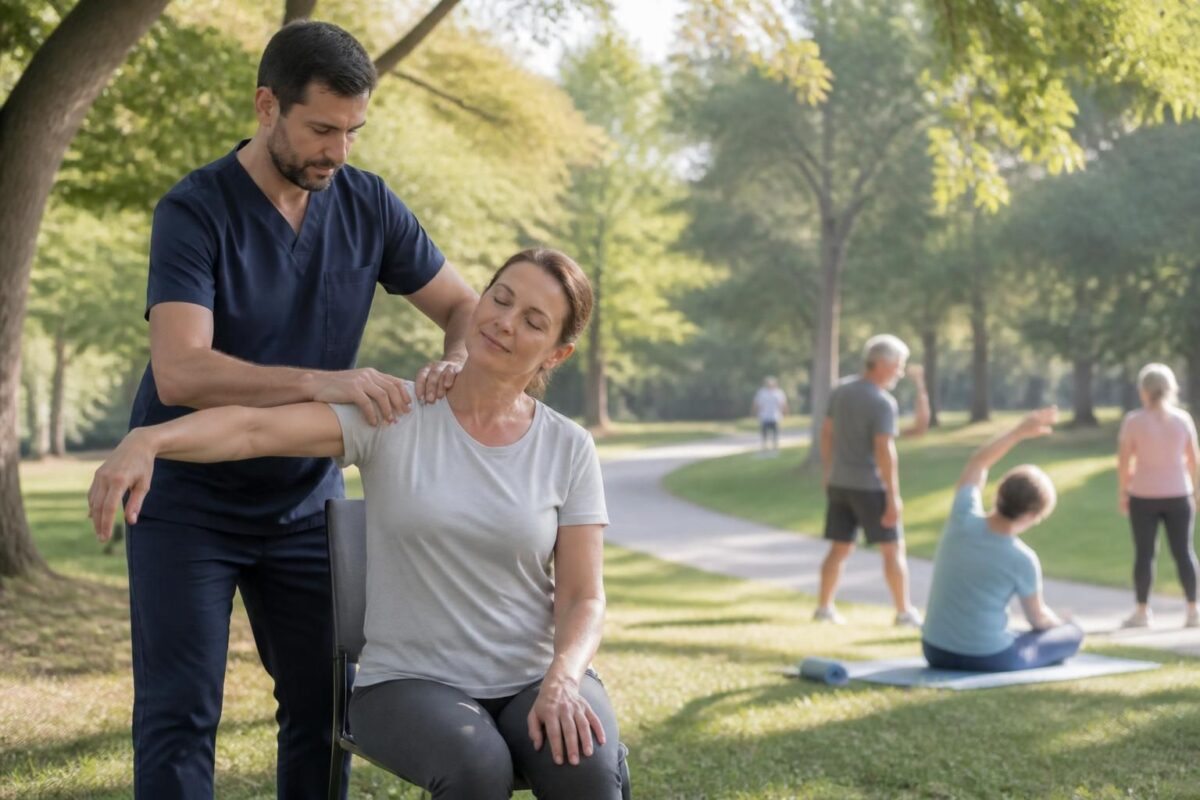
In short |
| In short, theosteopathy and the Joint mobility aim to preserve the flexibility and maintaining autonomy on a daily basis. What is the theme? It’s a manual approach fresh which helps the joints to remain mobile and elastic fabrics, without aggressive gestures. Advantages: Improving mobility, pain reduction and stiffness, better posture and balance, better sleep and Improved breathing. How does it work? A gait personalized and fresh, adapted to each patient, and which completes the medical follow-up with non-invasive techniques. In Montreal, this service is particularly recommended for seniors and working people who want to maintain their autonomy and prevent aging-related discomforts. |
With age, tissue elasticity can decrease and muscle mass decreases. theosteopathy offers solutions soft and suitable To support seniors and preserve flexibility and the mobility on a daily basis.
- maintenance of mobility and the amplitude of daily gestures
- relief of Chronic pain Without excessive drug use
- Improved posture and balance To prevent falls
- better sleep and breathing For optimized recovery
Each session is adapted to the state of health and aims to preserve Autonomy and daily living comfort.
This article explains how Osteopathy can support the Joint mobility and preserve the flexibility in the elderly. He describes simple approaches, sweet and adapted to maintain autonomy and comfort on a daily basis.
Mobility issues with age
With age, tissues lose elasticity and muscle mass may decrease. This can limit everyday gestures and increase pain or stiffness. maintain the mobility and the flexibility of joints becomes a priority for autonomy.
The role of the osteopath in seniors
The osteopath acts with gestures sweet and suitable to support the quality of life. The goal is to improve the posture, thebalance and breathing, while respecting the patient’s history and medical context.
Techniques used and approach
The techniques used are chosen for comfort and safety. They avoid sudden manipulations and are based on progressive gestures that respect tissues and joint structures. The approach is patient-centric and completes the medical follow-up.
Concrete daily benefits
Regular sessions can help walk With more confidence and to get up without pain. They promote better rest and support theautonomy in daily activities. Good mobility can also reduce tension and improve breathing.
Integration with global monitoring
Osteopathy is part of a global health approach. It completes the medical follow-up without replacing the diagnosis or treatment. training courses recognized as NUMSS, nao, National University of Medical Sciences and National Academy of osteopathy Offer a solid foundation for practice.
Examples and feedback
Patients report smoother mobility and increased comfort after several sessions. Professionals observe a decrease in joint tension and better freedom of movement in everyday gestures.
Useful links and resources
To learn more, you can check out these resources:
The benefits of osteopathy for active people
Osteopathy and the elderly – Preserving mobility and comfort on a daily basis
How osteopathy helps prevent age-related pain
Osteopathy and joint mobility – Preserve flexibility
Practical elements and useful advice are presented to help everyone maintain the Joint mobility and to support the flexibility On a daily basis, in addition to appropriate medical follow-up.
Medical disclaimer : The information and advice provided on this site does not replace the advice, diagnosis or treatment of a health professional. Please note that Dr. Sylvain Desforges osteopath is neither a doctor of medicine nor a doctor, and is not a specialist in a medical specialty as defined by the Collège des Médecins du Québec. Manual medicine, functional medicine and sports medicine as described on this site exclude any medical treatment or diagnosis made by a doctor or specialist doctor. Always consult your doctor for any medical questions. For more details, please read our full legal notice. »
- Evaluation amplitude and limitations
- Mobility preserved in everyday gestures
- Soft goods soft and loose tension
- Posture and balance to prevent falls
- Sleep and breathing improved by relaxation
- Drill simple and suitable to practice daily
- stretches targeted to gain flexibility
- Recovery and rest to repair fabrics
- hydration and joint nutrition
- Monitoring Regular osteopathic to adjust the program

This article presents how theosteopathy can help preserve the flexibility and the Joint mobility thanks to gestures sweet and suitable, in addition to medical follow-up. With age, tissue elasticity and muscle mass may decrease, resulting in stiffness and discomfort. Osteopathy offers concrete solutions to maintain everyday actions and promote a better quality of life.
Understanding joint mobility and its challenges
The Joint mobility Describes the ability of the joints to perform fluid and coordinated movements. When the support structures — cartilage, ligaments, capsule — lose their flexibility, movements become more difficult and less effective. Maintaining this mobility means preserving autonomy and limiting pain associated with everyday life.

How osteopathy improves the quality of life of active people
In short In short, theosteopathy is a global approach that Optimizes mobility and the function of the body of ACTIVE PEOPLE, for a better quality of life. It helps prevent injury and reduce Musculoskeletal pain While promoting the Sports recovery.…

Osteopathy and sports recovery: prepare the body for lasting performance
In short In short, Osteopathy and Sports recovery is one Global manual approach that sustainably prepares the body for the effort by restoring mobility and circulation After the effort. It is a discipline that acts on the sinews, the joints,…
The role of the osteopath to preserve flexibility
Key Goals
An osteopath practitioner assesses the areas of tension and adapts his gestures to restore the amplitude without causing discomfort, ensuring that everyone’s medical history is respected. The goal is threefold: Maintain mobility joints, Relieve pain installed without excessive use of medication, and Prevent falls By improving balance and stability.
Integration in medical follow-up
The osteopathic approach comes in addition to appropriate medical follow-up. It favors safety, progressiveness and comfort, in order to support patients in their daily activities and their functional rehabilitation.
Why Osteopathy Is Essential For Recovery People
In short In short, Osteopathy in convalescence is an approach manual and holistic which helps to accelerate the recovery by restoring The balance, the mobility and a good circulation fabrics. it contributes to Reduce the pain, support the Back to…

Osteopathic manipulations to strengthen post-traumatic muscles
In short In short, Osteopathic manipulations for Strengthen post-traumatic muscles constitute a gentle manual approach aimed at restoring the mobility, reduce the pain and facilitate the Functional rehabilitation After a injury. What is Is it? A series of precise gestures…
gentle and adapted techniques
What distinguishes the osteopathic approach
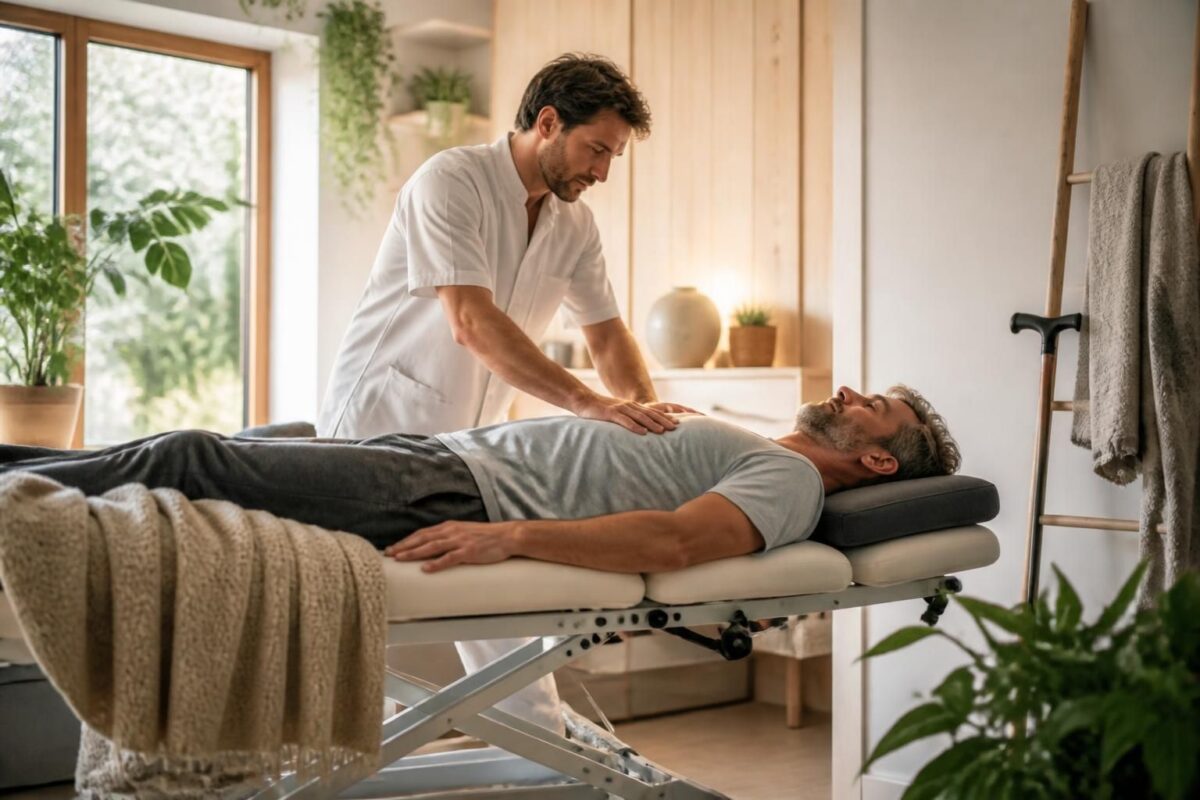
the techniques used with seniors remain specific and sweet, excluding any sudden manipulation. The objective is to restore mobility while preserving the well-being of the patient, adapting each session to the general condition and background. The osteopath can combine light mobilization gestures, targeted pressure and work on breathing to promote better oxygenation and restful rest.
Comfort and safety
Each session is designed to offer maximum comfort and a minimum of tension. Listening to the body and slow progression makes it possible to integrate exercises into daily life without disturbing the usual activities.

Osteopathy and prevention of work-related musculoskeletal disorders
In short theosteopathy is one Manual approach that restores body balance and prevents MSD related to work. Its advantages: reduction of tension, improvement of mobility and prevention of chronic pain. She is preventive and healing, suitable for office and trades…

The benefits of osteopathy to treat muscle imbalances
In short theosteopathy is a manual approach to restore themuscle harmony and postural considering the body as a whole. Its main benefits include the reduction of aches and tensions, the improvement of the mobility and from the posture, and prevention…
Exercises and routines to adopt
Daily mobility exercises
Simple and regular gestures support the flexibility Joints: gentle rotations of the shoulders and hips, controlled flexions and extensions, and light stretches ending each session. The objective is to integrate these movements into a short and progressive routine.
Frequency and progress
Start with daily sessions of 5 to 15 minutes, then gradually increase the duration and amplitude according to the feelings and advice of your osteopath. Various routines, adapted to the age and level of form, make it possible to solicit all the joints without overload.
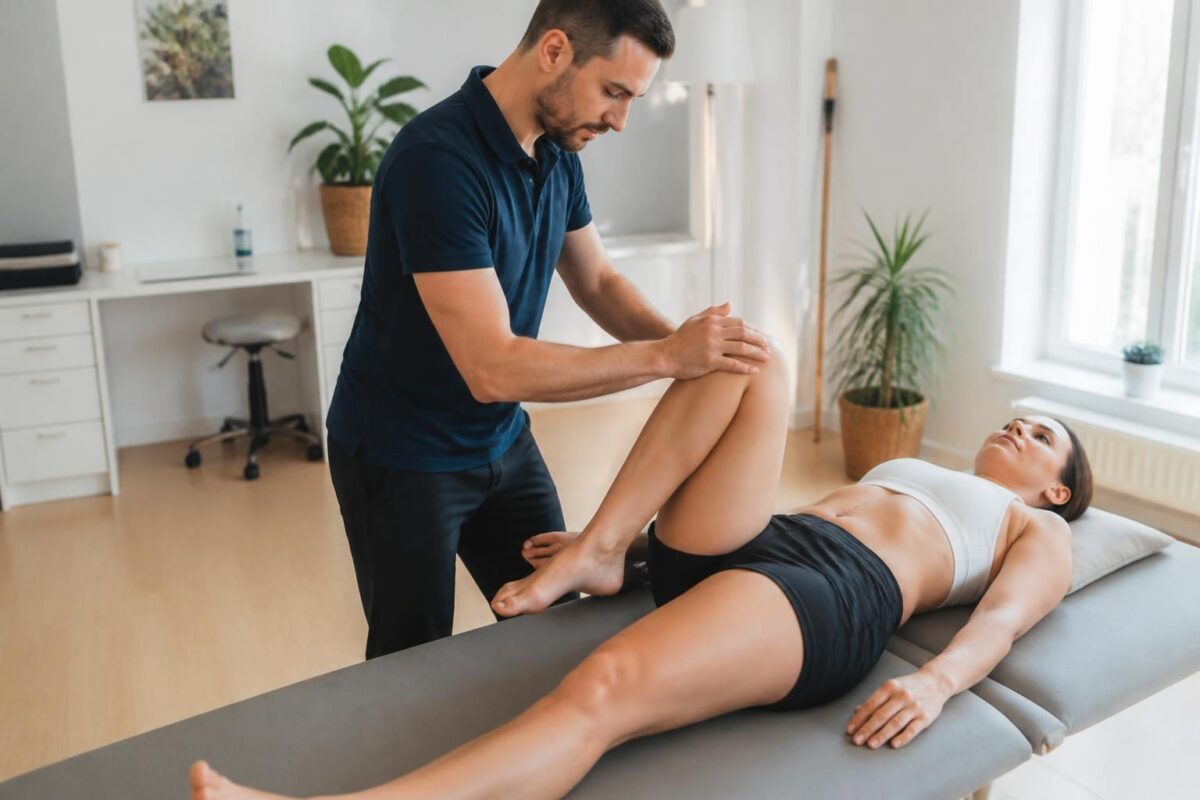
Osteopathy and chronic leg pain: regaining an optimal quality of life
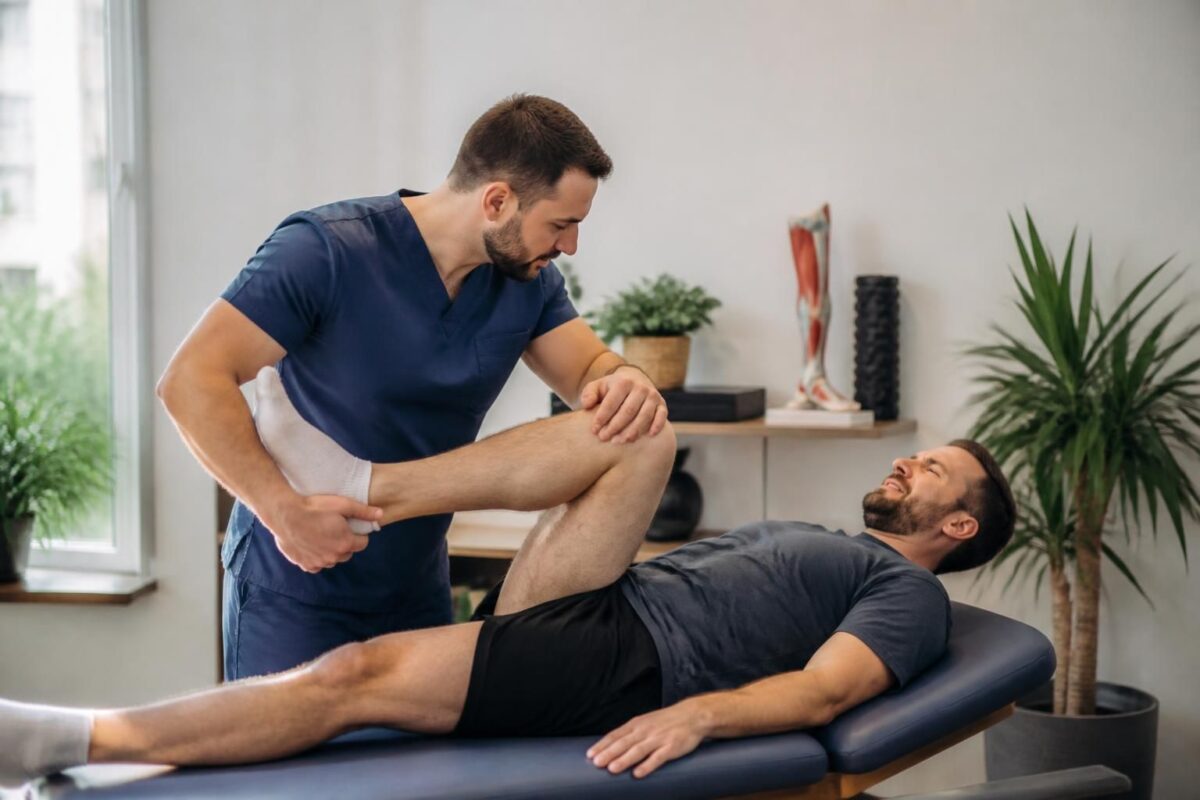
In short In short, Osteopathy is one Global manual approach aimed at reducing Chronic leg pain and improve the quality of life. What is it? Non-drug therapy using the hands to identify restrictions and treat lesional chains. How does it…
How osteopathy supports recovery after complex surgery
In short In short, Post-operative osteopathy is an approach fresh which supports the recovery After a Complex surgery. It helps to reduce the pain and the fatigue, improves the mobility and accelerates the healing thanks to a better vascularization and…
Practical advice on a daily basis
Integrate mobility into the day
Avoid prolonged postures and plan short active breaks. Alternate sitting and standing positions, adjust seat height and use simple aids as needed. Hydration and balanced diet support tissues and promote optimal recovery.
Support and progress
Adopt a routine adapted to your daily life and remain attentive to the signs of overwork. In case of pain that persists or worsens, consult your osteopath quickly to adjust the program and prevent future stiffness.
Stiff monitoring and prevention
When to consult
Check if you are experiencing persistent pain, a marked decrease in amplitude, or slow improvement after setting up an exercise program. Regular monitoring helps to adapt techniques and optimize progress in the long term.
| Aspect | Concise impact |
|---|---|
| Mobility articular | Helps to preserve the amplitude and the flexibility of the joints for everyday gestures. |
| Pain | Reduces chronic pain by gentle techniques, without excessive drug use. |
| Posture and balance | Improves posture and balance, decreasing the risk of falls. |
| Sleep and breathing | Promotes sleep and breathing through appropriate relaxation. |
| techniques in use | Gentle and adapted approach, without sudden manipulations, complementary to medical follow-up. |
| Frequency and follow-up | Regular sessions and coordination with the attending physician for a personalized protocol. |
| Earnings dailies | Easier to walk, get up painlessly and maintain autonomy. |
| Security and tolerance | Respectful sessions of background and constraints, with individual adjustment. |
| Drill and autonomy | Simple and regular exercises to integrate into the daily routine to support mobility. |
Testimonials on losteopathy and joint mobility: preserving flexibility
Mary, 75 : “From my osteopathy sessions, my Joint mobility improved significantly and my flexibility is back. I get up without pain and I can bend down and get up easily, making my Daily gestures. It’s a real found comfort. »
John, 68 : “The approach fresh and adapted helped me to find a better posture and one balance more stable. I walk longer and feel safer when I come across obstacles on the ground, which reduces the risk of chutes. »
Claire, 72 years old : “Thanks to the regular sessions, my mobility and my flexibility maintain themselves. My daily gestures require less effort and my sleep is more restorative. »
Suzanne, 80 : “Sweet joint techniques help better breathe and to sleep deeper. My flexibility come back and my joints pull me less. »
Louis, 66 : “The adapted exercises offered during the sessions easily fit into my routine and work out a marked improvement in my Joint mobility and my flexibility. »
With age, the tissues gradually lose their elasticity and muscle mass can decrease, leading to joint pain, stiffness and reduced mobility. In this context, theosteopathy proposes a global and adapted approach, aimed at preserving and restoring the flexibility structures and to promote a better quality of life on a daily basis. It is based on the balance between targeted stimulation and respect for the body’s capabilities to support everyday actions without abruptness.
THE ROLE OF THEosteopath With seniors is guided by careful listening and a global assessment of musculoskeletal and neurovascular status. From this analysis, he employs Adapted manual techniques and progressive, without brutal manipulation. The objectives are multiple: maintain theJoint amplitude To facilitate daily movements, reduce chronic pain without excessive drug use, and enhance body stability to improvebalance and prevent falls, while enrolling in a comprehensive and coordinated care approach with other health professionals.
The methods used with the elderly focus on safety and comfort. They favor light mobilizations, breathing techniques and postural advice that support the movement without causing discomfort. Each session is adapted to the patient’s state of health and can complete the usual medical follow-up. The approach remains gentle, respectful and evolving, in order to promote better mobility while respecting everyone’s pace and background.
The benefits result in tangible improvements in everyday life: walking more freely and with more confidence, getting up painlessly and enjoying more restful sleep thanks to smoother breathing and reduced tension. By working on Joint mobility, Osteopathy supports autonomy in domestic and social activities, improves overall comfort and provides a favorable environment for well-being. For many seniors, this support becomes a real support to preserve the pleasure of moving.
Adapted exercises and regular monitoring sustainably strengthen the flexibility and joint function. Osteopathy is based on simple routines to integrate on a daily basis: soft movements and progressive stretching, joints mobilized by conscious gestures and adapted warm-ups before physical activity. Repetition and measured progression make it possible to gradually improve the range of movements and limit muscle tension. Regular support promotes grip and the measurement of progress.
To remember: the Joint mobility is the basis of daily life and physical activity, whatever the level of form. The maintenance methods are based on varied and adapted exercises to preserve the flexibility and prevent discomfort. Feedback and practical advice make it possible to refine the programs and adapt the gestures according to age and abilities. Osteopathy is distinguished by its gentleness, its preventive component and its coordination with medical treatments, in order to ensure a coherent and personalized approach.
In a modern logic of care, osteopathy appears to be a valuable partner for seniors wishing to remain mobile and active. By supporting joint mobility and promoting better respiratory and nervous dynamics, it helps to improve daily comfort and overall well-being. This approach is based on principles based on clinical evidence and clear communication with the patient and other health professionals to ensure appropriate and harmonized care.
This summary shows how theosteopathy can preserve the flexibility and the Joint mobility among seniors, favoring approaches sweet, adapted exercises and daily habits that support autonomy and comfort.
With aging, the tissues gradually lose their elasticity and muscle mass can decrease, which can result in pain and decreased mobility. theosteopathy offers solutions sweet and personalized to accompany these changes and maintain an optimized quality of life.
THE ROLE OF THEosteopath with seniors aims to Maintain joint mobility and the amplitude of everyday gestures, while Relieving chronic pain without excessive drug use. This approach is part of a daily prevention and comfort approach.
It can also contribute to Improve posture and balance, in order to prevent falls and promote reliable body stability. Moreover, by working on breathing and sleep, it can promote more restorative rest and better general oxygenation.
the techniques used in the elderly are specific and sweet, excluding sudden or uncomfortable manipulations. The approach is lady of the night And can complete the usual medical follow-up, adapting each session to the state and needs of each one.
Concrete benefits emerge when targeted sessions and exercises become a habit: walking more easily and with more confidence, getting up without pain, better sleeping and recovering, and maintaining autonomy in daily activities. theosteopathy Acts as a valuable ally to preserve mobility and comfort, especially when the goal is to remain active and autonomous without unnecessary suffering.
To optimize the results, adapted exercises and regular monitoring help maintain the flexibility and the Joint mobility in the long term. Simple routines of stretching and warming up, integrated into everyday life, contribute to maintaining flexible joints and preventing tension.
To remember: Joint mobility Conditions daily movement and supports physical activity. Maintenance through targeted exercises, associated with appropriate osteopathic practice, can significantly improve quality of life and comfort in everyday gestures.
To enrich your understanding and discover complementary approaches, consult the following resources:
Why osteopathy is essential for a good quality of life,
Osteopathy and recovery: optimize muscle flexibility,
Osteopathy and aging well: preserve your mobility and autonomy,
The benefits of osteopathy to reduce sciatic pain,
Joint mobility and maintenance,
Naturopathy and joint flexibility,
Osteopathy and joints: preserve your mobility on a daily basis,
Good habits to preserve mobility,
Osteopathy and tendinities: a gentle and natural approach,
Osteopathy and posture: regain optimal body alignment.

Dr Sylvain Desforges, B.Sc., D.O., N.D., osteopath, is the founding president of TAGMED and of the ACMA association. He dedicates his practice to chronic spinal pain, low back pain and symptoms compatible with sciatica, particularly when pain radiates toward the buttock, leg, calf, foot or toes.
Through SOS Sciatique, he publishes educational content on sciatica symptoms, possible causes such as disc herniation, disc narrowing, foraminal stenosis or irritation of a lumbar nerve root, as well as non-surgical approaches that may be considered according to the evaluation. At Clinique TAGMED, care may include, depending on the case, motorized neurovertebral decompression, specific osteopathic care or precision percussion.
For an evaluation related to sciatica treatment in Montreal / Mount Royal or sciatica treatment in Terrebonne, please consult the services available at Clinique TAGMED.
Medical disclaimer
The information published on SOS Sciatique is provided for educational purposes only and does not replace a consultation, diagnosis, opinion or treatment provided by a physician or another authorized healthcare professional. The author of this article is neither a medical doctor nor a specialist in a medical specialty recognized by the Collège des médecins du Québec. The osteopathic, manual medicine or functional support approaches described on this site do not constitute medical acts and are not intended to replace medical follow-up.
Consult a physician or emergency service in cases of loss of bladder or bowel control, anesthesia in the saddle area, significant or progressive weakness in the leg or foot, fever, recent trauma, severe pain or rapid worsening of symptoms. For more details, please read our Legal Notice.