



Sciatic pain in Terrebonne: how to recognize nerve irritation
24/07/2026
Sciatica Treatment in Terrebonne: Factors to Assess Before Care
25/07/2026
IN SHORT The sciatica related to a posterior pelvic tilt is a pain that can travel down the sciatic nerve to the foot. This pain occurs when the pelvis tilts backward and disrupts the alignment of the trunk. What are the benefits? A targeted rehabilitation and posture advice can help alleviate pain, restore pelvic balance, and prevent recurrences without necessarily resorting to surgery. How does it work? The program combines core muscle strengthening, appropriate stretching and postural advice, potentially supplemented by aids such as orthotic insoles if necessary. |
The sciatica is a pain that follows the path of the sciatic nerve, a long nerve that extends from the lower back to the foot. With a posterior pelvic tilt, the lumbar curve decreases, and the alignment of the trunk is altered, which can increase muscle tension and pull on the nerve roots.
This postural alteration can cause <strong/radiating pain that descends along the sciatic nerve, potentially reaching the back of the leg and sometimes the foot. The mechanism relies on the compression or irritation of the nerve roots and on muscle imbalances around the pelvis, such as tension in the psoas or sacroiliac joint tension.
To relieve this, it is often effective to combine targeted rehabilitation, trunk strengthening, and posture improvement to reduce nerve pull and the spreading of pain along the leg.
This article, written by a healthcare professional and expert, explains why sciatica can descend along the leg when the pelvis is in posterior tilt. It describes simple mechanisms, clinical signs, diagnosis, and management approaches. It also offers prevention advice and reliable resources for further exploration of the topic.
Understanding the link between posterior pelvic tilt and sciatic pain
The posterior pelvic tilt is a backward inclination of the pelvis. It alters lumbar alignment and hip support. This position can increase the tension on the nerves that make up the sciatic nerve. When posture changes, the pain can become radiating, meaning it starts from the lower back and spreads to the back of the buttock and then into the leg.
Signs and mechanisms
Typical signs include lower back pain associated with discomfort or pain that travels down one of the legs. There may be a sensation that the leg is shorter, a slight limp, or muscle tension around the pelvis. The tilt can also alter ground support and foot alignment, which may influence gait and walking comfort.
Diagnosis and evaluation
Diagnosis is based on clinical examination. The professional evaluates posture, bony landmarks, and pelvic mobility. Simple flexion tests and observation of walking help to detect asymmetry. X-rays can highlight a difference in limb length and pelvic tilt. Additional tests may be considered based on symptoms to clarify the cause and severity.
Management and prevention
Correcting a pelvic tilt relies on a multidisciplinary approach. Consulting a podiatric assessment and, if necessary, orthotic insoles, can help restore daily alignment. Rehabilitation guided by a professional can aim to rebalance forces around the pelvis and prevent recurrences. Working on daily posture, taking breaks, and adapting movements in work or sports contribute to limiting tensions and improving walking and comfort.
To enrich your knowledge, you can consult the following resources:
Sciatica and pregnancy,
Sciatic pain and nerve irritation,
Scientific references,
TAGMED Clinic,
Neurovertebral decompression,
Sos Herniated Disc,
Sos Herniated Disc,
Sos Carpal Tunnel.
When and how to act
A persistent imbalance can lead to chronic lower back pain and discomfort during daily activities. If the pain persists for more than a few weeks, or if it is accompanied by worrying signs (marked weakness, significant numbness, loss of control of sphincters), it is important to consult a professional quickly.
For more information about options and differences between approaches, you can consult the following resources:
Sciatica aggravated by twists,
Sciatica and pregnancy,
Sciatic pain dossier.
For general information and therapeutic approaches, resources like Sos Sciatica and Sos Herniated Disc may be relevant.
It is often helpful to discuss with a specialist who can suggest a tailored approach. In this context, certain facilities offer assessments and specialized treatments. You can inquire at the TAGMED clinic in Montreal or Terrebonne to discuss an appropriate management plan.
Advantages of organized follow-up: a targeted assessment can include a global evaluation of the pelvis and, if necessary, an appropriate correction of the pelvic girdle and lower back. A tailored approach can help restore symmetry and limit the tensions that promote descending pain.
Useful resources and professional references:
Scientific references,
Sciatica despite physiotherapy.
Medical disclaimer: The information and advice provided on this site do not replace the opinion, diagnosis, or treatment of a healthcare professional. Please note that Dr. Sylvain Desforges, osteopath, is neither a doctor of medicine nor a physician, and is not specialized in a medical specialty as defined by the Collège des médecins du Québec. Manual therapy, functional medicine, and sports medicine, as described on this site, exclude any treatment or medical diagnosis made by a doctor or specialist. Always consult your doctor for any medical questions. For more details, please read our complete Legal Notice.
Axis: How posterior pelvic tilt can explain sciatic pain that radiates down the leg.
- Posterior pelvic tilt modifies the lumbar angle and the posterior support.
- It can increase the pressure on the roots of the sciatic nerve.
- Disrupted pelvic alignment changes the nerve pathway and can irritate it.
- Typical result: low back pain that “radiates” along the nerve down to the foot.
- The sciatic nerve originates in the lower back, passes through the buttock, and descends along the leg; posterior tilt can modify this pathway.
- Pain is often burning or piercing and worsens when walking or stretching the leg.
- Neighboring muscles (gluteals, psoas, lumbar) contribute to tension and irritation.
- Management involves targeted rehabilitation and postural correction; insoles may be considered in case of leg length inequality.

This article explains how a pelvic tilt in posterior position can make sciatic pain painful and radiate the pain along the sciatic nerve down to the foot, describing the mechanisms, diagnosis, and avenues for management and prevention.
Anatomical Mechanisms: Posterior Pelvic Tilt and Sciatic Nerve
Posterior Tilt and Lumbar Balance
Posterior tilt is a backward tilt of the pelvis that can modify the alignment of the spine and the tension exerted on the discs and nerve roots. This modification can increase pressure on the lumbar structures and the nerves that run through the lower back, particularly around the sacrum and sacroiliac joints. This effect can promote nerve tension and lead to irritation of the roots.
The Pathway of the Sciatic Nerve
The sciatic nerve is the longest and most voluminous in the body. It originates in the lumbar spinal cord, traverses the pelvis, and then runs down the thigh to the foot. Any modification of pelvic alignment can influence this pathway and increase sensitivity along the nerve, especially when tensions or compressions occur around the sacrum and lumbar region.
Why Pain Can Radiate Down the Nerve
Radiating Pain and Tension Mechanisms
A posterior pelvic tilt can increase the traction exerted on the nerve roots. This traction, combined with possible inflammation, is manifested by radiating pain that spreads from the lower back, crosses the buttock, and travels down the back of the legs, sometimes to the foot. This is typical of radiculopathy in the involved lumbar segments.
Complementary Factors
Tensions related to the psoas or other muscles of the pelvic girdle can accentuate the tilt and modify postural balance. Leg length inequalities or inappropriate postural habits can also maintain or worsen the tilt, prolonging the pain and its pathway along the nerve.
Diagnosis and Clinical Indicators
Signs and Assessment
Diagnosis is based on postural observation and clinical examination, with verification of strength, reflexes, and pelvic mobility. Functional tests and X-rays can quantify any potential leg length difference and pelvic tilt. In the case of persistent pain, imaging such as MRI or CT scans can help clarify lumbar and pelvic origins.
Management and Rehabilitation
Goals and Therapeutic Approaches
The strategy combines rehabilitation and postural corrections: strengthening core muscles (trunk), working on appropriate stretching of the psoas and gluteal muscles, and pelvic rebalancing. The use of orthotic insoles may be considered when a leg length inequality or asymmetric support is identified. Pain often can be reduced without surgery through a progressive and personalized approach, with particular attention to breathing and pain.
Prevention and Practical Tips
Posture and Daily Habits
Adopting a symmetrical sitting and standing posture, using lumbar supports, and practicing regular stretching contribute to preventing pelvic tilt. Maintaining a varied physical activity, core strengthening exercises, and monitoring lifting habits help prevent chronic tensions. In case of pain or limping, quickly consulting a specialist allows adjustments to the rehabilitation plan and avoids chronicity.
When to Consult and Whom to Contact
Reminder of Contacts
A sports doctor, a physiotherapist, an osteopath, or a podiatrist can collaborate to precisely diagnose the pelvic origin and implement a personalized program. In case of acute pain, loss of sensitivity, or marked weakness, prompt management is recommended.
| Element | Concise description |
|---|---|
| Origin | Sciatica: irritation of the lumbar roots; retroversion of the pelvis can increase tension on these nerves. |
| Pain pathway | The pain follows the path of the nerve: buttock, thigh, back of the leg; retroversion can influence this pathway through pressure. |
| Triggering factors | Prolonged movements and postures can trigger; a misaligned pelvis increases tensions. |
| Retroversion and pain | The tilt of the pelvis can amplify traction on the roots and favor irradiation during movements. |
| Typical signs | Burning pain, paresthesia, and sometimes weakness in the leg; worsens when walking. |
| Diagnosis | Clinical examination; imaging (MRI/CT) if necessary to assess the root origin and the connection to the pelvis. |
| Treatment | Pain relief and targeted rehabilitation; rare surgery if major deformity exists. |
| Prevention | Strengthening the trunk, stretching, correct posture, and lifting; balanced physical activity. |
| Practical advice | Adopt a suitable seating position, active breaks; consult quickly if pain persists. |
Testimonials: Sciatica and retroversion of the pelvis — why the pain can go down
My name is Sophie, 38 years old, sales manager. My sciatica appeared after months of pain that started in my lower back, went up through the buttock, and then down my leg to the foot. A retroversion of the pelvis was discovered, which altered the alignment and compressed the sciatic nerve. The pain was burning and could radiate down to the foot. Since I worked on my posture and followed targeted exercises, the pain has decreased, and my daily activities have become more manageable.
My name is Marc, 52 years old, truck driver. The repeated sitting-standing motion triggered a radicular pain that started in my lower back and radiated behind the buttock, then down to the back of the leg. The diagnosis revealed a retroversion of the pelvis, changing my support and increasing pressure on the sciatic nerve. With a physiotherapy program and orthopedic insoles, I regained better stability, and the descending pain became rarer. Today, I can resume my trips without painful exhaustion.
My name is Léa, 28 years old, graphic designer and often sitting. An inexplicable tension in the psoas led me to a retroversion of the pelvis, which shifted the balance and intensified a radiating pain that went down the leg. After adjusting my posture, doing gentle stretches, and strengthening my core muscles, the pain subsided, and I find my walking smoother at work as well as during my sports activities. I realized that a misaligned pelvis can influence the path of the sciatic nerve.
Antoine, 45 years old, amateur cyclist, also experienced a retroversion of the pelvis that triggered lumbar and radicular pain during repeated efforts. The pain started from the lower back, passed through the buttock, and went up the leg, with a burning sensation along the sciatic nerve. Thanks to targeted abdominal and lumbar strengthening work, and appropriate stretches, I regained a more stable posture and more comfortable rides on the bike and in daily life. The pain can go down, but it can also be controlled with good muscle balance and proper posture.
Pierre, 60 years old, active retiree, found that the retroversion of the pelvis could accompany lumbar pain and a radiating pain that seemed to go down to the hip and thigh. After a precise diagnosis and a rehabilitation program including stabilization exercises and stretches, complemented if necessary by podiatric advice, he was able to stabilize his pelvis and limit symptoms. He reports having regained ease in daily movements and better energy for leisure activities, with fewer painful episodes and less discomfort related to prolonged sitting or standing.
Biography: Sciatica and retroversion of the pelvis — why the pain can go down
Dr. Sylvain Desforges, expert in osteopathy, naturopathy and manual medicine, heads the TAGMED clinics as founding president and leads a multidisciplinary approach focused on the patient. Central to his journey is innovation in health care and the management of chronic pain. His work is based on a fine understanding of the biomechanical mechanisms linking the pelvis and the sciatic nerve, and he seeks to combine the latest technologies with proven clinical practices to restore mobility and comfort. His commitment aims to provide evidence-based care to optimize the health and well-being of the individuals he supports.
In his practice, Dr. Desforges highlights a key reality of pain related to sciatica and retroversion of the pelvis: mechanical triggers located at the level of the pelvis can modify lumbar alignment and elongate or compress the nerve roots, causing pain that can travel down the path of the sciatic nerve to the foot. By working on pelvic dynamics, he shows that correcting imbalances can change the strength of tensions on the discs and sacroiliac joints, reducing nerve irritations and radiating symptoms. This approach combines precise manual techniques, targeted rehabilitation, and therapy techniques that act on inflammation and pain.
To address these issues, Dr. Desforges integrates advanced technologies such as spinal decompression, laser, and shock waves, used in conjunction with a personalized rehabilitation program. These tools allow, depending on the case, for rapid relief of nerve irritation, promotion of tissue recovery, and support for the biomechanical rebalancing process. His approach is always adapted to the patient: it combines postural and functional evaluation, trunk strengthening strategies, and targeted stretches of the protractor and abductor muscles to restore pelvic symmetry and stability of the spine.
Dr. Desforges’ philosophy is based on a multidisciplinary and individualized approach. The diagnosis is supported by a rigorous clinical examination, sometimes supplemented by imaging assessments and electrodiagnostic tests to specify the nerve origin and severity of the conditions. Regarding treatment, he primarily favors non-surgical approaches focused on rehabilitation, measured stretching, and controlling weight and posture. When necessary, he can propose targeted interventions and coordination with other specialists to ensure a quick and safe return to activities.
Outside of direct care, Dr. Desforges is committed to providing a clear understanding of pain mechanisms and prevention. His approach advocates learning proper postures in daily life, correcting asymmetries, and implementing a progressive program of strengthening and mobility. His role is to guide each patient toward sustainable autonomy, integrating the latest technological advances in the service of tangible and measurable recovery. This approach, applied to the issue of “sciatica and posterior pelvic tilt,” offers an integrated vision to understand why pain can radiate down and how to prevent it sustainably.
His leadership in the TAGMED clinics and his commitment to the ACMA association illustrate a career dedicated to optimizing care and promoting effective and safe solutions for those suffering from radicular pain related to pelvic imbalances. For those seeking a proactive and personalized approach, his journey and services depict a concrete path to well-being without systematically resorting to invasive treatments.
This summary explains how sciatica and posterior pelvic tilt can intertwine: a pelvic inclination modifies lumbar alignment and can increase tension or compression on the nerve roots of the sciatic nerve, causing pain that can radiate down the leg. The phenomenon is often linked to mechanical mechanisms, inflammation, and anatomical variations; the approach prioritizes postural assessment, targeted rehabilitation, and when necessary, aids such as orthotic insoles or a multidisciplinary approach.
The link between posterior pelvic tilt and sciatica lies in the orientation of the pelvis and its effect on lumbar curvature. In posterior tilt, the sacrum and ilium adopt a configuration that may increase tension on the nerve roots and reduce space in the foramen, raising the risk of irritation or compression during certain movements, especially during bending or exertion. This may explain why pain can radiate along the path of the nerve and manifest as lumbosacral radiculopathy.
The diagnosis is based on a clinical examination and sometimes images, and the treatment prioritizes non-surgical approaches: postural correction, strengthening of the trunk and hip muscles, and suitable stretching of the psoas, hamstrings, and glutes. In cases where imbalances persist or worsen, orthopedic interventions or customized insoles may be considered. To better understand the mechanisms and approaches, you can consult resources like this guide on pelvic tilt.
Preventing episodes means adopting good postural hygiene and a rehabilitation program: core strengthening, abdominal and lumbar muscle reinforcement, and strengthening the deep muscles around the pelvis, with progressive stretching and a gradual return to activity. Paying attention to posture at work, fixing imbalances, and maintaining a healthy weight can reduce tension and limit episodes. Practical advice and targeted exercises can be found in resources dedicated to pelvic tilt and prevention of low back pain.
To assess the impact on pain and measure progress, tools like the sciatica impact score can be useful, and regular follow-ups with your doctor, physiotherapist, or osteopath will ensure adequate progression. If pain persists despite treatments, specialized resources explain options and rehabilitation paths, including post-surgery when necessary: sciatica despite medications and sciatica after surgery.
Note that cases where pain radiates even without major injury require personalized evaluation, and multidisciplinary work among physiotherapists, podiatrists, and doctors can optimize outcomes. Additional resources discuss prevention and treatment concepts, including practical aspects and testimonials: rehabilitation and nerve pain.
Cases of persistent pain or recurrence after a period of improvement may lead to an evaluation of professional impact; resources like the sick leave due to sciatica explain the implications and possible paths.
If pelvic tilt is associated with significant symptoms, specific approaches and tailored rehabilitation are described in clinical guides, such as Doctissimo – pelvic tilt or Clinique Med – pelvic tilt.
To better understand the mechanisms and rehabilitation approaches, you can also consult professional resources: chronic sciatica and why the pain persists.

Sciatica and popular stretches: why to stay cautious
IN BRIEF Sciatica causes pain that radiates from the lower back down the leg. Popular stretches, such as the pigeon pose or hamstring stretches, are not always suitable: pulling on an irritated nerve can worsen the symptoms. Favor gentle movements,…

Sciatica and Pilates: movements to adapt
IN SHORT Sciatica causes pain that can radiate from the lower back down to the leg. The Pilates Reformer can promote a gradual return to movement and strengthen core control, provided that the movements, range, and resistance are adapted. Favor…

Sciatica and core stability: variable tolerance depending on symptoms
IN BRIEF Core strengthening in case of sciatica consists of progressively strengthening the trunk muscles. Its tolerance varies depending on pain and symptoms: suitable without worsening the pain, it can support mobility and the resumption of activities, but does not,…

Sciatica and lunges: leg pain to watch out for
IN BRIEF Sciatica is pain that starts from the lower back or buttock and radiates down the leg. If a lunge triggers or worsens this pain, stop the movement and adjust your activity: this exercise does not address sciatica. Consult…

Sciatica and deadlifts: risk depending on the cause
IN BRIEF Sciatica and deadlifts are not always incompatible: the risk depends on the cause of the pain and its intensity. During acute episodes, it’s best to avoid heavy loads and seek medical or physiotherapy advice before resuming. A gradual…

Sciatica and squats: why caution is needed
IN BRIEF Sciatica does not always prohibit squats, but a deep or loaded squat can aggravate symptoms, especially during a flare-up. Gradually resume with a neutral back and a comfortable range of motion, and stop if the pain travels down…
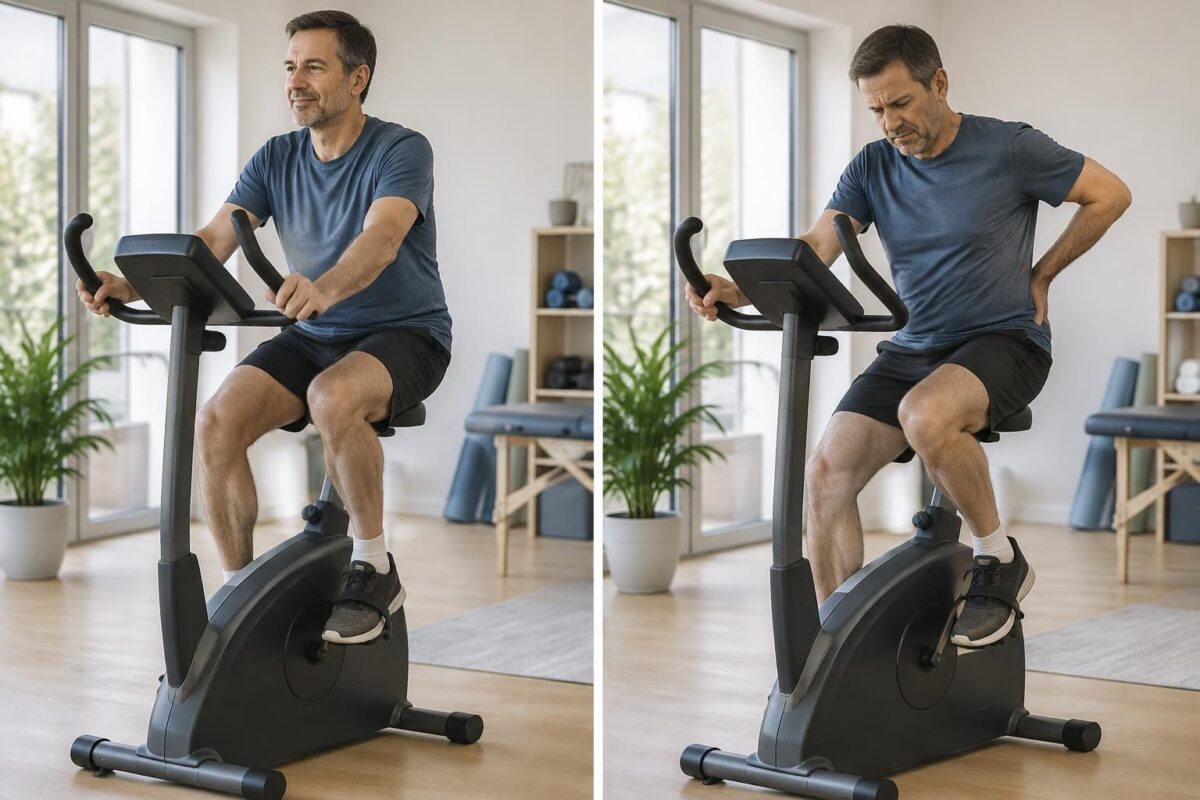
Sciatica and stationary bike: useful or aggravating depending on the case
IN BRIEF The stationary bike with sciatica can help you stay active if the pain is mild and stable. Start with a short session, at low resistance and in a comfortable position. If the pain goes further down the leg,…

Sciatica and cycling: sitting, bending, and symptoms
IN BRIEF Sciatica is pain related to irritation of the sciatic nerve, which can extend from the buttock down to the leg. Cycling may sometimes be possible if symptoms are mild and stable: a comfortable seat, a less bent posture,…

Dr Sylvain Desforges, B.Sc., D.O., N.D., osteopath, is the founding president of TAGMED and of the ACMA association. He dedicates his practice to chronic spinal pain, low back pain and symptoms compatible with sciatica, particularly when pain radiates toward the buttock, leg, calf, foot or toes.
Through SOS Sciatique, he publishes educational content on sciatica symptoms, possible causes such as disc herniation, disc narrowing, foraminal stenosis or irritation of a lumbar nerve root, as well as non-surgical approaches that may be considered according to the evaluation. At Clinique TAGMED, care may include, depending on the case, motorized neurovertebral decompression, specific osteopathic care or precision percussion.
For an evaluation related to sciatica treatment in Montreal / Mount Royal or sciatica treatment in Terrebonne, please consult the services available at Clinique TAGMED.
Medical disclaimer
The information published on SOS Sciatique is provided for educational purposes only and does not replace a consultation, diagnosis, opinion or treatment provided by a physician or another authorized healthcare professional. The author of this article is neither a medical doctor nor a specialist in a medical specialty recognized by the Collège des médecins du Québec. The osteopathic, manual medicine or functional support approaches described on this site do not constitute medical acts and are not intended to replace medical follow-up.
Consult a physician or emergency service in cases of loss of bladder or bowel control, anesthesia in the saddle area, significant or progressive weakness in the leg or foot, fever, recent trauma, severe pain or rapid worsening of symptoms. For more details, please read our Legal Notice.


